Jouni Kaipainen
4.3K posts

Jouni Kaipainen
@kaipjo
Yliopistotutkija. Taloustieteilijä./ Keskustelen täällä yksityishenkilönä. Senior Researcher. Economist.


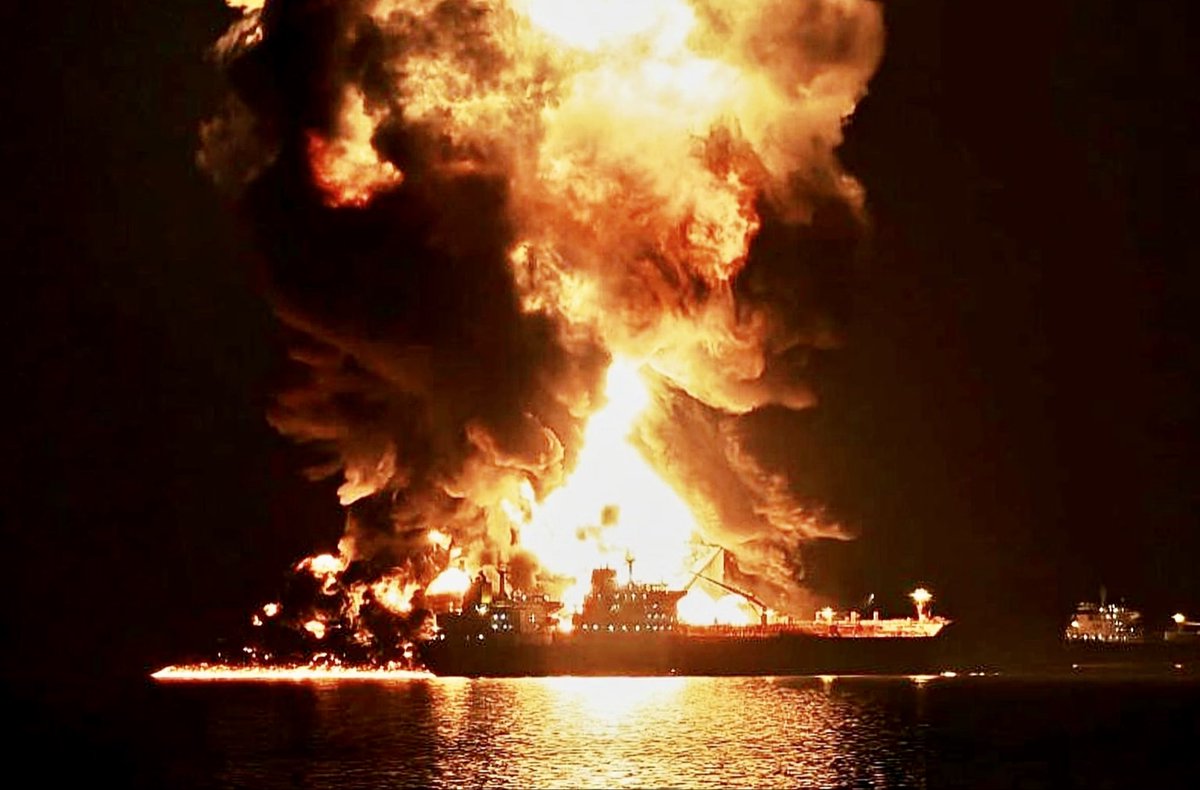
BREAKING: Everyone is watching the Strait of Hormuz for oil and fertilizer. Almost nobody has noticed that it is also shutting down MRI machines, semiconductor fabs, and the global aerospace supply chain. Helium. The second lightest element in the universe. No substitute exists for it. You cannot synthesize it. You cannot replace it. And roughly one-third of the world’s supply just went offline. Qatar produces 30 to 33 percent of global helium as a byproduct of LNG processing at Ras Laffan, home to the largest helium production facilities on Earth. When the Hormuz blockade triggered LNG force majeure declarations and attacks hit Qatari infrastructure, the helium stopped flowing with it. Prices have doubled in spot markets. And helium has a property that makes this crisis structurally different from oil, fertilizer, or any other commodity caught behind the strait. It evaporates. Continuously. Even in sealed containers, helium boils off. The global supply chain operates on roughly 45 days of buffer before existing inventory simply ceases to exist. You cannot stockpile helium the way you stockpile crude oil in salt caverns or grain in silos. If the supply stops for six weeks, the buffer is gone. Not depleted. Gone. Returned to the atmosphere where it is too diffuse to economically recapture. This is why the industries that depend on helium are facing a crisis that no financial instrument can solve. Semiconductor manufacturing requires ultra-pure helium for wafer cooling in lithography and for leak detection in sub-5-nanometre chip fabrication. TSMC, Samsung, and Intel cannot produce advanced processors without it. Every AI chip, every smartphone processor, every data centre GPU in the current generation traces its manufacturing lineage through a helium-cooled process. If fabs run dry, the production lines stop. Not slow. Stop. MRI machines require liquid helium to cool superconducting magnets to near absolute zero. Hospitals cannot substitute another gas. When helium supply tightens, MRI availability falls. During previous shortages, hospitals rationed scans. A sustained one-third supply cut puts diagnostic imaging capacity at risk across every healthcare system that depends on magnetic resonance. Aerospace depends on helium for purging rocket fuel systems, pressurising tanks, and testing for leaks in systems where failure means explosion. NASA, SpaceX, ULA, and every launch provider in the Western world runs on helium. Fibre optic cable manufacturing requires helium atmospheres. Quantum computing research requires helium-3 isotopes for cryogenic cooling. The US is the world’s largest helium producer and has some buffer capacity. Algeria and Russia produce meaningful volumes. Overland rerouting from Qatar through Oman and Saudi Arabia is theoretically possible but logistically slow and capacity-limited. None of these alternatives can replace one-third of global supply within the 45-day evaporation window that defines the crisis timeline. The same 21-mile strait that is starving the food system is now threatening the technological infrastructure of modern civilization. The fertilizer trapped behind Hormuz determines whether four billion people eat. The helium trapped behind Hormuz determines whether the chips powering the AI revolution get manufactured, whether cancer patients receive diagnostic scans, and whether rockets carrying communications satellites reach orbit. One chokepoint. Two invisible supply chains. Both irreplaceable. Both operating on biological or physical deadlines that no ceasefire retroactively extends. The world built petroleum reserves. It never built fertilizer reserves. It never built helium reserves either. The pattern keeps repeating. The lesson keeps being ignored. Full analysis: open.substack.com/pub/shanakaans…

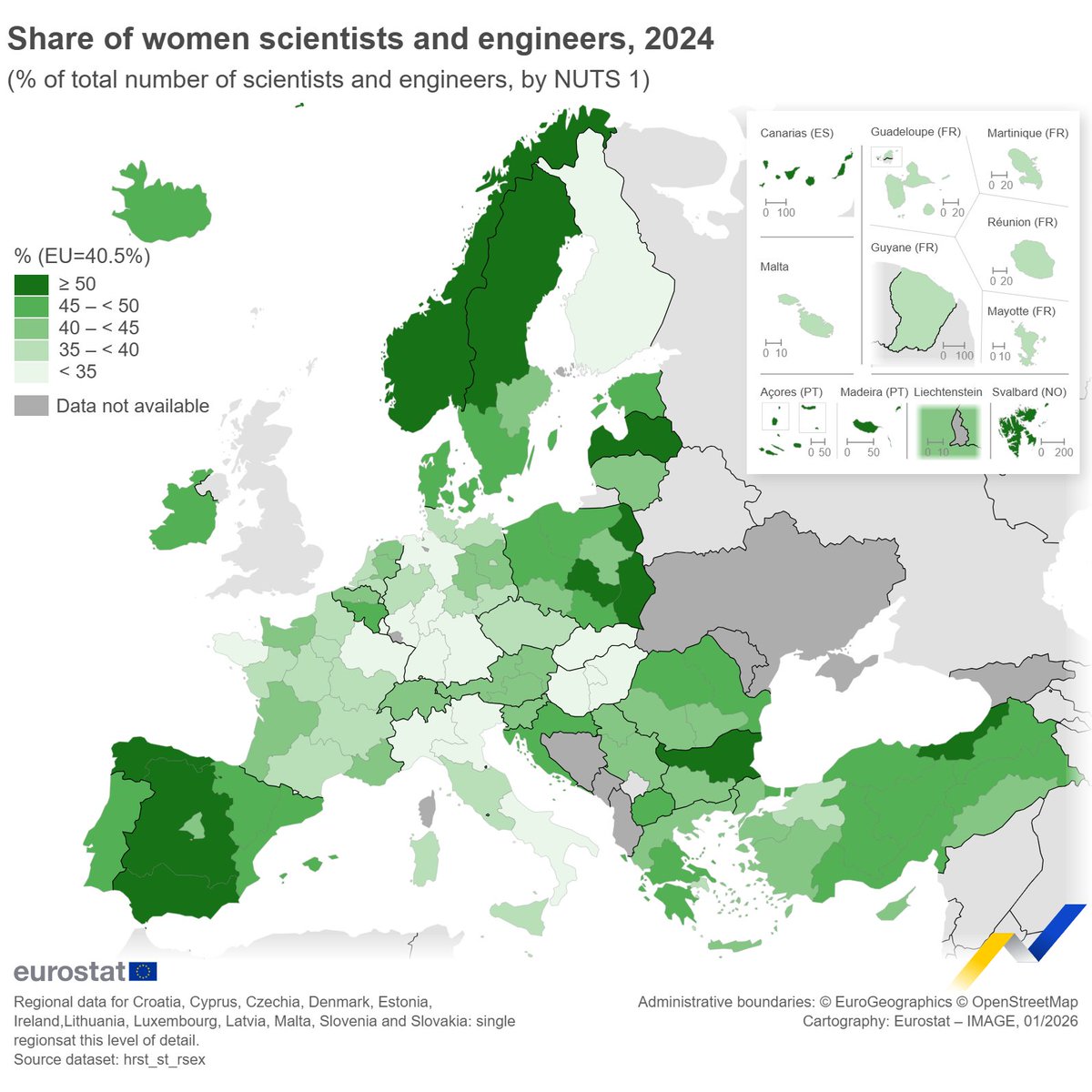
2024-2025 nopeimmin kasvanut maakunta oli Lappi! Netvisor/ Talouspulssi 2026


I've been wanting to write this for a while: an article on the key characteristics of the Chinese health system, as a patient. It's something that I - perhaps unfortunately - have come to have a lot of experience with in my eight years in China. I've been to the doctor as a patient dozens of times. My wife delivered our first daughter in a Chinese hospital, and had cancer surgery in Shanghai. My younger daughter - who once completely severed her thumb in an unfortunate accident in rural Gansu - had emergency surgery in a small clinic there (her thumb is fine now!). We spent the entire covid episode in China. And, to this day, I still go back to China every year to do my routine health tests or the occasional procedure (like a thyroid biopsy in Harbin last year). In other words, when it comes to the Chinese health system, I've seen a lot. What's fascinating about the Chinese health system, and that's true in general about many things in China, is that it never inherited Western dogma about how things were supposed to work, it's completely unconstrained by what everyone else has decided is "normal". And, as a result, you end up with things that would simply sound impossible to any Western patient: a consultation with the head cardiologist of one of Shanghai's best hospitals for less than $10, blood test results in under 30 minutes, and a system where you can walk in, see three specialists and walk out with a diagnosis and your medicine - all before noon. As I argue in the article that's all enabled by 3 characteristics that sound super unorthodox: 1) extremely short consultation times, less than 5 minutes 2) no GP gatekeepers (you go straight to see specialists) 3) systematic testing for every patient, even if you just have a cold Each one sounds wrong. And in fact when I describe them to doctor friends in the West they immediately explain to me why that can't possibly work, and how their own system is far superior. Except that it does work, I checked the numbers (on top of my personal experience): the Chinese system handles close to 10 billion total outpatient visits a year (nhc.gov.cn/cms-search/dow…), or about 7 visits per person per year on average, and the average wait time is only about 18 minutes (gov.cn/yaowen/shipin/…). Contrast this with France, my country, where people already go to the doctor A LOT, but still less than in China: only 5.5 visits per person per year (evaluation.securite-sociale.fr/home/maladie/M…). And the French system can't even handle this lower volume: when you can see a specialist straight away in China - you don't even need to make an appointment in advance - you need to wait months to see one in France (50 days on average for a cardiologist, for instance: drees.solidarites-sante.gouv.fr/sites/default/…). I've personally managed to see 3 specialists AND do all related tests AND get the test results AND get diagnoses AND buy the medicine to cure me - all in the space of a morning at a hospital in Shanghai. That would have undoubtedly taken me a whole year in the French system. My purpose here is not to argue that the West should replicate the Chinese health system wholesale, but to ask an honest question: what if some of the things we take for granted about healthcare aren't nearly as inevitable as we think? Is it completely unthinkable that we've developed some dogmas that are costing us - in money, in time, and occasionally in lives? That's the whole point of my article: describing a health system built from first principles by people who never assumed we in the West knew better - up to you to decide if they have a point. Enjoy the read here: open.substack.com/pub/arnaudbert…

Elon Musk just said saving for retirement becomes pointless in 10 to 20 years. Not speculation. Math. Musk: “Don’t worry about squirreling money away for retirement in like ten or 20 years. It won’t matter.” We passed the event horizon. Retirement savings assumes scarcity persists. It won’t. AI and robotics collapse labor costs to zero. Living costs follow. You’re not saving for security. You’re saving for a world that stops existing. Musk: “If any of the things that we’ve said are true, saving for retirement will be irrelevant.” Age of Abundance isn’t vision. It’s physics. Economic laws executing whether you believe them or not. 5,000 days. Fourteen years. Global GDP uncaps. Production approaches infinite. Net worth as concept dies. Only scarcity left is meaning. Money stops being the constraint. Timeline is shorter than your brain accepts. Fourteen years. We transition from survival work to Universal High Income in that window. Event horizon isn’t coming. You’re in it. Operating under old rules while ground disappears beneath you means you already lost. Production costs hit zero through automation. Everything priced on human labor reprices instantly. Housing. Food. Goods. Services. All reset when scarcity evaporates. Traditional planning assumes structure persists. Save for decades. Retire on capital returns in scarcity markets. That model shatters when abundance becomes baseline. You’re optimizing for a world vanishing while the replacement materializes. Your strategy becomes obsolete before you finish executing it. The retirement you’re building toward assumes costs stay high. They collapse. And your savings designed for expensive scarcity become irrelevant in cheap abundance. Every dollar you put away for future scarcity is a bet against the transformation already happening. And that bet loses the moment production costs hit zero and the economy you planned for stops functioning. You’re not preparing for the future. You’re clinging to a past that’s ending whether you accept it or not. And fourteen years from now, the question won’t be whether you saved enough. It’ll be why you wasted time saving for conditions that don’t exist anymore.