Kaspars Berzins

11.2K posts

Kaspars Berzins

Kaspars Berzins

@kberzins

Riga, LV Katılım Ağustos 2009
131 Takip Edilen915 Takipçiler
Kaspars Berzins retweetledi
Roberta Metsola
Roberta Metsola@EP_President·
Proud Mama. Proud European. 🇪🇺
Roberta Metsola tweet media
Eesti
1.8K
1.2K
21.2K
2.9M
Kaspars Berzins
Kaspars Berzins@kberzins·
@henrysgao He just explains the basic theories of micro&macro and a pinch of political economy. Nothing to do with Xi. Sad he will be sacked for this compilation.
English
0
0
2
64
Kaspars Berzins
Kaspars Berzins@kberzins·
@normundsbergs Biju NYC 2016, kad to arī aiztaiīja ciet dēļ 50cm sniega. Jocīga sajūta. Uz sešjoslu ielām vien daži gājēji un sniegs. Izstaigājām visā garumā no CP līdz Battery park.
Latviešu
0
0
4
240
Kaspars Berzins retweetledi
Desmond Shum
Desmond Shum@DesmondShum·
The End of Europe’s Premium Middle Europe isn’t merely “slowing.” It’s being structurally outscaled and outbid—squeezed between an America that owns the high-tech frontier and a China that has moved from low-end volume into the mid-tech industrial core Europe once dominated. The old map—U.S. innovation, China assembly, Europe premium manufacturing—has been redrawn. Now both superpowers are fighting on Europe’s turf. America: high-tech dominance, now rebuilding the middle The U.S. sets the pace at the frontier—AI compute, semis leadership, software ecosystems, and the capital markets that turn technology into durable corporate power. But Washington has also internalised a post-COVID lesson: the factory is an indispensable part of the system. So industrial policy is back—subsidies, procurement, and local-content logic designed to pull mid-tech manufacturing back into U.S. orbit. You can see it in trade shockwaves. A Bruegel analysis finds U.S. imports from China fell 45% in the 12 months to November 2025—a decoupling impulse that forces supply chains, investment, and capacity to relocate. Europe doesn’t just compete with China; it competes with America’s subsidies and gravitational pull. China: from “low-end factory” to mid-tech predator—with a war-prep logic China was never satisfied being the world’s assembler. Climbing the value chain is the natural path of an industrial power; Xi has simply put it into overdrive. “Self-sufficiency” isn’t a slogan—it’s an organising principle designed to make China sanctions-resistant and operationally independent. The export engine shows the scale of the machine. China ended 2025 with a record trade surplus of $1.189 trillion. Meanwhile, the trade arithmetic is turning ugly in real time. The EU’s last official full-year goods deficit with China was €305.8bn (2024). For 2025, monthly data show the EU’s China trade balance sitting around -€32.248bn in November 2025; annualised, that implies a ~€387bn “run-rate” deficit. Europe is not “rebalancing.” It’s being hollowed out. Europe: squeezed abroad, exposed at home, and philosophically unarmed Europe’s vulnerability is not only external competition. It’s that Europe is still trying to fight a post-free-trade world with a free-trade operating mindset. Now add the political constraint: Europe cannot act as one. When it does act, it tends to act late and narrowly—because every member state has different exposures, different champions, and different fears of retaliation. The “court China for access” fantasy: still alive, still wrong Europe still harbours the false belief that China can be “co-opted”: cooperate on climate, avoid confrontation, and market access will improve. But Beijing has zero strategic incentive to yield an ounce of mid-tech market share—because mid-tech capacity is exactly what it needs for resilience and mobilisation. So the outcome is predictable: Europe negotiates; China delays; European industry erodes. Europe asks for reciprocity. China offers lip service and buys time — time to take market share away from European. Conclusion: Europe as lunch table Europe keeps acting like this is a policy debate. It isn’t—it’s an industrial land grab. America is re-shoring the middle with subsidies and scale; China is taking it with state subsidies, domestic innovation, and cut throat price. Europe, divided and still preaching reciprocity to a system that doesn’t do reciprocity, is left with slogans where rivals have strategy. Without a hard turn—fast trade defense, real industrial policy, and bloc-level unity—Europe’s “model” doesn’t get reformed; it gets liquidated. Not a seat at the table—just the table.
English
24
78
237
25.5K
Kaspars Berzins
Kaspars Berzins@kberzins·
@anders_aslund But this is while the WH controls the US domestic narrative. The risk is that kickstarting a narrative that will drive WH into a more devastating war is quite feasible. And WH is super sensitive to domestic narratives, they'll just do it.
English
0
0
0
99
Kaspars Berzins
Kaspars Berzins@kberzins·
@anders_aslund 4) the pattern is there. Quick, sure wins to impact the US internal politics. Incentives - grab/imperial (G) or political showy wins (P). G will be in Americas due to the logistics. P will be small scale around the world. No engagement with major powers.
English
1
0
3
571
Anders Åslund
Anders Åslund@anders_aslund·
What has surprised me in 2025: 1. The minimal US resistance against Trump's all transgressions of laws: US checks & balances are minimal & largely a myth. 2. The inability of Americans & Europeans alike to understand that Trump is subordinate to Putin. /1
English
102
687
4.2K
181.2K
Kaspars Berzins retweetledi
Desmond Shum
Desmond Shum@DesmondShum·
When Cultural Revolution Language Is Reactivated — A Political Revival and the Exposure of a Cognitive System For those who follow my threads, here’s why I post about China: This isn’t political activism; it’s my public notebook. I write to share my understanding of China—its system, its language, its direction. That may sometimes resemble advocacy, but that’s not the purpose. Xi’s latest Qiushi article pushed me to write this new two-part series. The implications are serious, and I think the analysis is illuminating. en.qstheory.cn/2025-11/30/c_1… ⸻ **When Cultural Revolution Language Is Reactivated: The recent Qiushi article signed by Xi Jinping may appear, on the surface, to be a routine mobilization around anti-corruption and “self-revolution.” But for someone familiar with the evolution of Chinese political language will immediately see that this is a systematic revival of Cultural Revolution rhetoric. The familiar high-pitched tempo, the struggle-based tone, and the absolutist commands are not rhetorical coincidence or linguistic regression — they are a political choice. The reappearance of Cultural Revolution language is itself a signal: China’s governance system has once again switched on the mode of “movement-style governance.” To understand why this switch has been flipped again in 2025, we must examine the structure of Cultural Revolution language, the political logic it serves, and the full exposure of Xi Jinping’s personal cognitive structure at this historical moment. ⸻ I. What Is Cultural Revolution Language? — Not Language, but a Mobilization Machine Cultural Revolution rhetoric is not born for expression but for mobilization, rectification, and struggle. Its operating logic is: •the more extreme the language → the stronger the political pressure •the stronger the political pressure → the more extreme the language must become It is a closed loop. Its core features can be summarized into seven structures: 1. Absolutist Grammar: Creating a Political Atmosphere With “No Way Out” Words like “absolute,” “thorough,” “sweep away,” “never,” and “resolutely” are not descriptive; they are designed to cut off retreat. 2. Imperative Syntax: Statements as Commands “Must,” “immediately,” “comprehensively” turn all listeners into passive executors. 3. Enemy-Framing: Turning Problems Into Enemies “Capitalist roaders,” “monsters and demons,” “counterrevolutionaries” constitute a labeling system that legitimizes struggle. 4. Personal Humiliation: Turning Institutional Problems Into Moral Crime The issue is not incompetence; it is “impure thinking.” 5. Emotional Mobilization: Language With a Built-In Bugle Call “Thunderous force,” “never cease until total victory” keep the organization in constant mobilization. 6. Anti-logic: Contradiction as Political Technique Demanding stability and struggle; purging cadres and depending on them — contradiction is deliberately used to create interpretive power. Who controls interpretive power controls political power. 7. Circular Narrative: Revolution Without End, Governance Without Anchor A never-ending logic of struggle becomes the method of maintaining power. The Qiushi article almost reproduces these elements one by one: •“a revolution deep in the soul” •“absolute loyalty, absolute purity, absolute reliability” •“capitalist roaders must be struck down” •“a thorn in one’s back” •“never cease until total victory” This is a typical sign of the reactivation of struggle logic. ⸻ End of part 1
English
4
23
97
32.1K
Kaspars Berzins retweetledi
Janis Oslejs
Janis Oslejs@Oslejs·
Tikai 1 privātais-ELKO, un 2 valsts uzņēmumi: airBaltic un Latvenergo iekļuvuši starp 500 lielākajiem CEE uzņēmumiem (maxima un Rimi neskaitās). Kāpēc tik vāji: manuprāt kombo no 1)zemām uzņēmēju ambīcijām 2)vāja finansējuma(bankas skeptiskas vai vietējie spēs) un3)izšķaidītas valsts atbalsta politikas: katram pa kripatiņai un nevis ražīguma un konkurētspējas uzlabošanai bet ģimeņu labsajūtai utt. Valsti bagātu var padarīt tikai lieli un mērogojami uzņēmumi, uzņēmēji, kas vēlas sasniegt lielus mērķus -vismaz 500 mln apgrozījumu. Koncentrējamies uz to, un visi būsim bagāti. Lietuvā uzņēmēju gars ir citāds šobrīd, tie vēlas augt, kļūt starptautiski, mums arī ir tādi, bet daudz mazak. delfi.lv/bizness/372642…
Latviešu
5
7
45
15.1K
Kaspars Berzins
Kaspars Berzins@kberzins·
Arī @Jauna_Vienotiba iespēja atsist AS auditoriju, bet nevis ar woke, bet uzrunāt vīlušos sāpi "domājām, centriski saimnieki, izrādās – kolhoznieki".
Latviešu
0
1
0
211
Kaspars Berzins
Kaspars Berzins@kberzins·
Satmb.konv – iespēja @Progresivie transformēties par establishmentu. Uzrunāt JV auditoriju ("Eiropa, moderni"), nevis woke (jo tiem nav alternatīvu). Izaicinājums – tikt galā ar hunveibiniem un nesašķelties. Arī @Jauna_Vienotiba iespēja atsist AS auditoriju -->
Latviešu
1
0
1
197
Kaspars Berzins
Kaspars Berzins@kberzins·
@janis_orlovs @VDAA_gov_lv @VKontrole BTW @VKontrole reizēm iepērk specifisku analīzi priekš auditiem. Paši esam gadiem prasījuši, lai būtu maza pārvalde un visu darītu tirgus. Tad nu tā ir arī ar specifisku IKT ekspertīzi 🤷🏼‍♂️
Latviešu
1
0
4
235
Kaspars Berzins
Kaspars Berzins@kberzins·
@mariteseile Arī, vismaz otrais gadījums pēdējā nedēļā, kad pārvalde automātiski un formāli ievieš @VKontrole ieteikumus. VK derētu ASAP fokusēties nevis uz KAS (ne)notiek, bet KĀPĒC, citādi būs auzas.
Latviešu
0
0
1
101
Kaspars Berzins
Kaspars Berzins@kberzins·
@mariteseile Šīs ir interesants eksperiments. Vajadzētu stabilizēt sistēmu, t.sk. pašvaldībām nāksies dotāciju uztvert kā dotāciju (piefinansējumu) nevis vienīgo naudu algām. Tikai vienlaikus @IZM_gov_lv mauc arī likuma grozījumus pretējā virzienā 🤷🏼‍♂️
Latviešu
1
0
2
153
Kaspars Berzins
Kaspars Berzins@kberzins·
Otrdien @Brivibas36 sēdē ierosinājums vēl vairāk politizēt un paralizēt civildienestu.😭😭😭 Disciplinārlietu komisijas sastādīs ministri. Bet politiķi izmeklēšanai nedrīkstētu būt tuvumā. Apsveicu @VKontrole, jūsu ierosinājums sasniedzis pretējo. Mācieties org.t & politekon PLZ!
Latviešu
1
2
13
1.7K
Kaspars Berzins retweetledi
KristineJaunzeme 🇱🇻🇺🇦
KristineJaunzeme 🇱🇻🇺🇦@KristinJaunzeme·
@gatisozols Man šķiet, ka mums nav zemu izmaksu valsts pārvalde. Varbūt jāsāk valsts pārvaldē maksāt par rezultātu, tad izmaksas būs līdzsvarā ar atrisinātiem izaicinājumiem. Citādi ir procesu procesi, visi kk piedalās, kāds runā lozungos, cits vairāk saprot drēbi, bet jēga no tā maza
Latviešu
2
3
11
736
Kaspars Berzins
Kaspars Berzins@kberzins·
@gatisozols @PuukjisIN LV IT nozares zemās piev.vērt. cēlonis - koderi nevis biznesa probl. risinātāji. Jo nesaprot & negrib saprast biznesu. Valsts IT tā pati bēda. Ne koderi,ne EY nemāk & negrib risināt pārvaldes probl.,bet pārvalde nezina,kā tās risināt ar IT. Plaisu aizstāj vainīgo meklēšana.
Latviešu
1
0
24
681
Gatis Ozols
Gatis Ozols@gatisozols·
Ir jāatgriež IT profesionāļi valsts pārvaldē! Zemu izmaksu valsts pārvalde neiet kopā ar ekspektācijām un izaicinājumiem kuri jārisina! Tīrs ārpakalp. modelis ir izgāzies. Profesionāli, labi algoti pārresoru kompetenču centri ar augstas raudzes ekspertiem ilgtermiņā atmaksāsies!
Latviešu
17
8
96
13K
Kaspars Berzins
Kaspars Berzins@kberzins·
@GirtsKarnitis "plāns B) skaitīsim ar rokām, darīsim to šādi" - "hahaha, kas jūs sap*?, tas tak nav nopietni". Visdrīzāk šāda bija plānošanas sanāksme. Been there, seen that 🤷🏼‍♂️
Latviešu
0
0
0
33
Girts Karnitis 🏳️‍🌈
Girts Karnitis 🏳️‍🌈@GirtsKarnitis·
Kā noprotu, plāns B bija tikai ķeksītim un nebija pārāk konkrēts un komisijām saprotams un izpildāms. Jau pirms mēneša redzot, ka sistēma vēl nav, bija jāizstrādā detalizēta ar rokām skaitīšanas procedūra un jānotestē dažās komisijās. 8/
Latviešu
2
0
19
867
Kaspars Berzins retweetledi
Kristaps Klauss
Kristaps Klauss@Kristaps_Klauss·
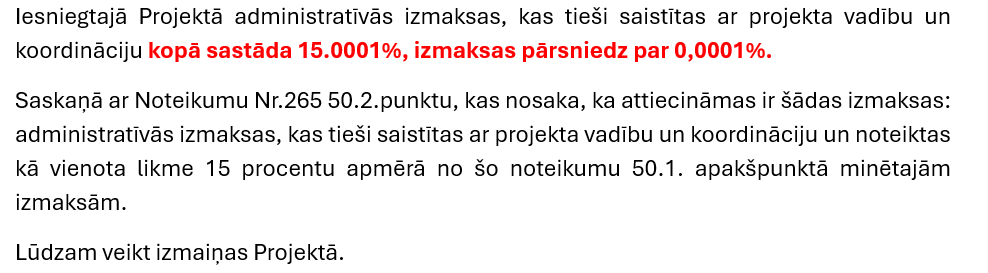
Varam iesniegt simtiem birokrātijas mazināšanas priekšlikumus, bet ja dēļ 0,0001%, kas veido dažus centus, tiek "nodedzināts" ierēdņu un privātā sektora darbinieku laika resurss, nekur tālu netiksim.
Kristaps Klauss tweet media
Latviešu
7
27
73
8.4K
Kaspars Berzins retweetledi
Marite Seile
Marite Seile@mariteseile·
9.klašu absolventiem, kuri plāno turpināt mācības vsk., rūpīgi jāpārliecinās, vai viņu izraudzītajā vsk. vispār māca tos priekšmetus, kas nepieciešami. Vidusskolās atšķirīgas programmas. Diemžēl vienotas informācijas par to, ko kur māca, nav.
Latviešu
11
19
73
14.3K
Kaspars Berzins retweetledi
Vj.Dombrovskis
Vj.Dombrovskis@VjDombrovskis·
Tik daudzi mūsu “stratēģi” un “stratēģiju” rakstītāji nesaprot vienkāršu lietu: ja stratēģija sastāv tikai no “labiem vārdiem”, tā nevar strādāt. Īsta stratēģija ir par sāpīgām izvēlēm. To nevajag jaukt ar vēlmju sarakstu, kur visiem būs labi un nevienam tas neko nemaksās.
Latviešu
0
4
15
1.6K