Sabitlenmiş Tweet

The Rise of Cybereconomic Smart Agents
📖👇
kevindenman.xyz/blog/the-rise-…
English
Kevin Denman
2.1K posts
@kcdenman
building https://t.co/1MXXugJgNH



We believe Cursor discovered a novel solution to Problem Six of the First Proof challenge, a set of math research problems that approximate the work of Stanford, MIT, Berkeley academics. Cursor's solution yields stronger results than the official, human-written solution. Notably, we used the same harness that built a browser from scratch a few weeks ago. It ran fully autonomously, without nudging or hints, for four days. This suggests that our technique for scaling agent coordination might generalize beyond coding.

Introducing Custom Agents. The AI team that never sleeps 🌙 They’re autonomous, built for teams, and easy for anyone to build. Give them a job, set a trigger or schedule, and they'll get it done 'round the clock.
Karpathy is telling you something most product teams haven’t internalized yet. The new distribution channel for software is agents. Agents don’t browse your marketing site, watch your demo video, or click through your onboarding flow. They call your CLI. They hit your MCP server. They read your docs programmatically. If none of those surface areas exist, your product is invisible to them. Look at how fast this moved. MCP went from zero to 97 million monthly SDK downloads in twelve months. 10,000+ active servers. OpenAI, Google DeepMind, Microsoft, and Cloudflare all adopted it. By December 2025, Anthropic donated MCP to the Linux Foundation because the standard had already won. Running an MCP server is now compared to running a web server. That’s the new baseline for product discovery. 85% of enterprises are expected to have AI agents deployed. Those agents need structured, programmatic access to your product. They need CLIs, MCP endpoints, and machine-readable documentation. A beautiful React dashboard is worthless to an agent trying to pull data into a workflow at 3am. This tells you everything about why Karpathy’s framing of CLIs as “legacy” technology is so precise. Legacy means battle-tested, standardized, universally parseable. stdin/stdout, flags, JSON output. The entire Unix philosophy was accidentally designed for AI agents decades before they existed. Your competitor ships an MCP server and suddenly every Claude Code user, every Cursor session, every autonomous workflow can discover and use their product. No human ever visits the website. No sales call. No onboarding email. The agent just finds the tool and starts using it. The companies that win the next 24 months are the ones building agent-accessible surface area right now. The ones that lose are still optimizing their landing page above the fold.

Introducing TXGPT — the agentic block explorer Most block explorers show you data. TXGPT understands it. → Paste a tx hash, get a plain-English explanation → Ask "is this wallet safe?" — it investigates → Say "trace this hack" — it follows the money txgpt.xyz

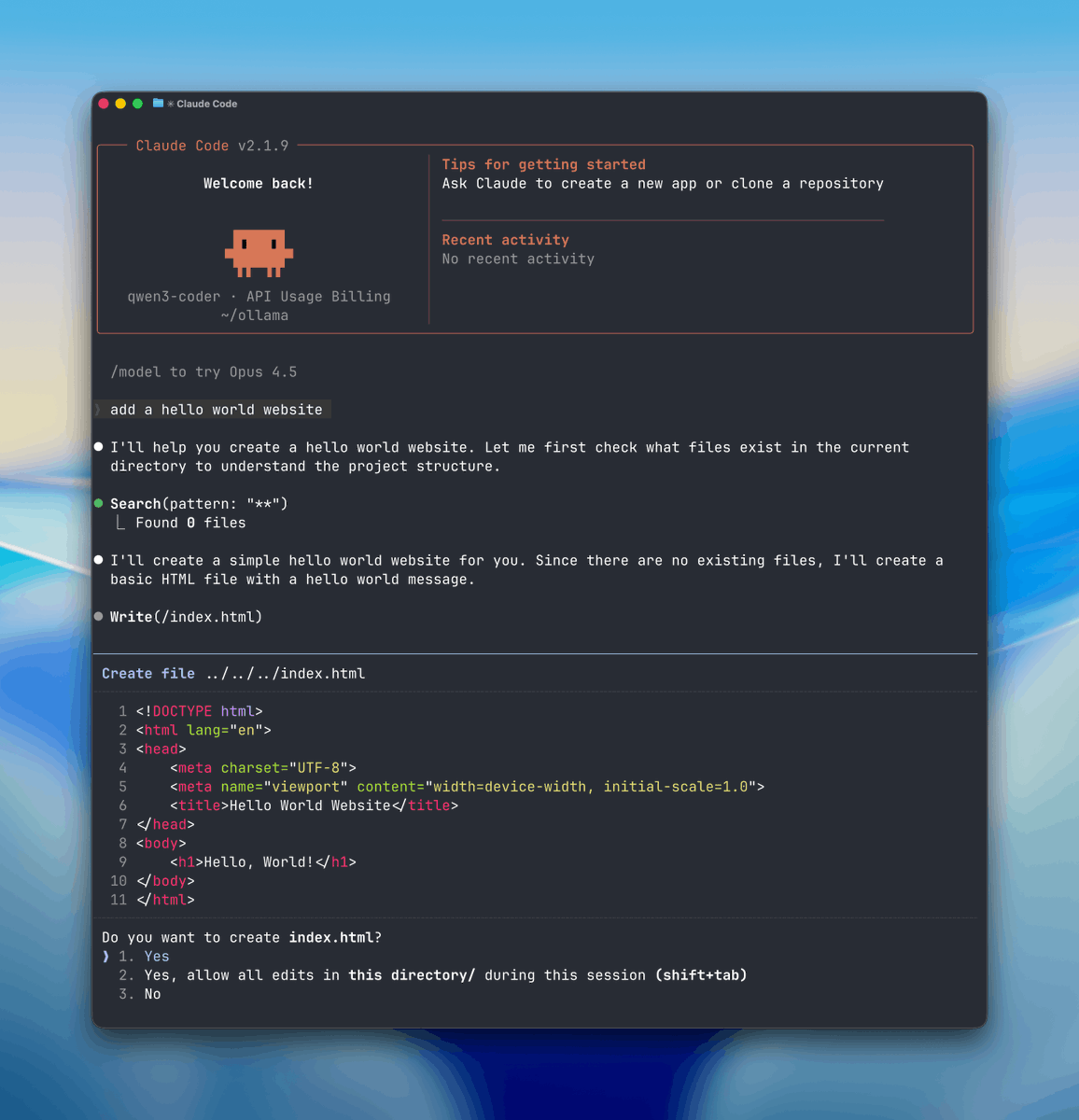


v0 Max is the new default for all v0 users. Powered by Opus 4.5. Now 20% cheaper. Happy shipping!
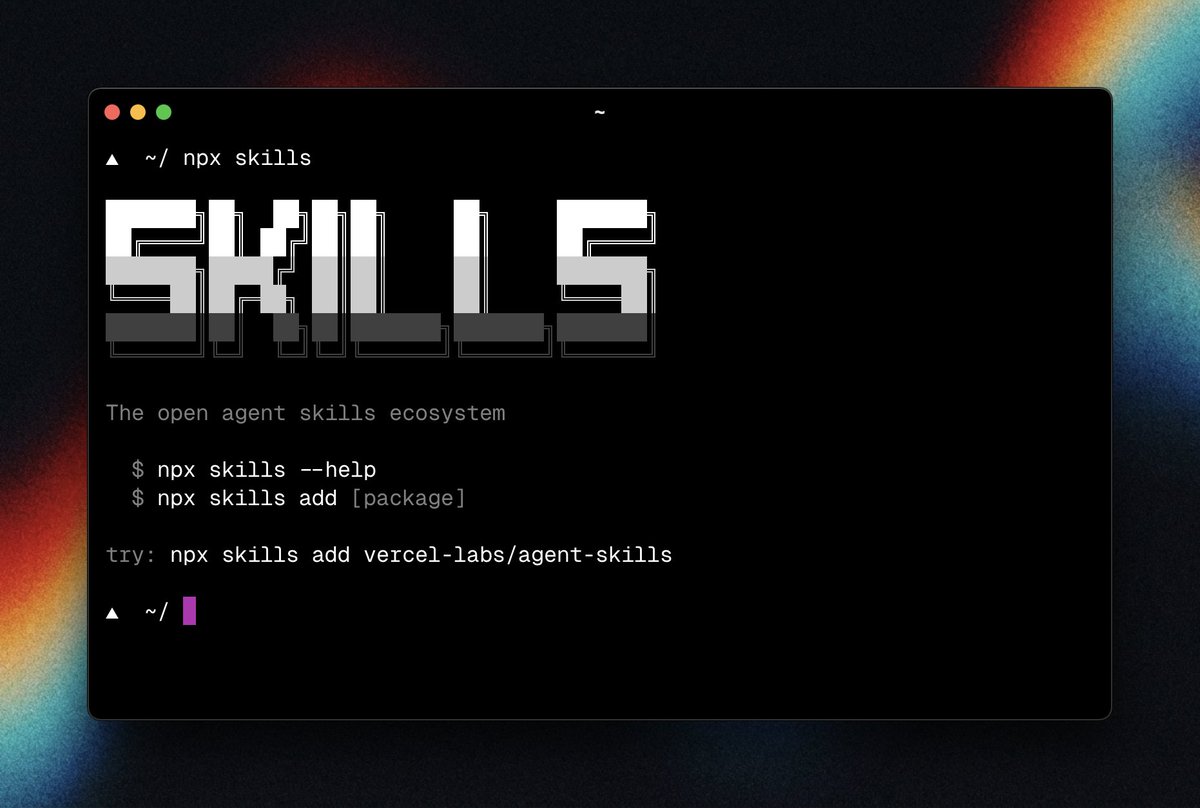





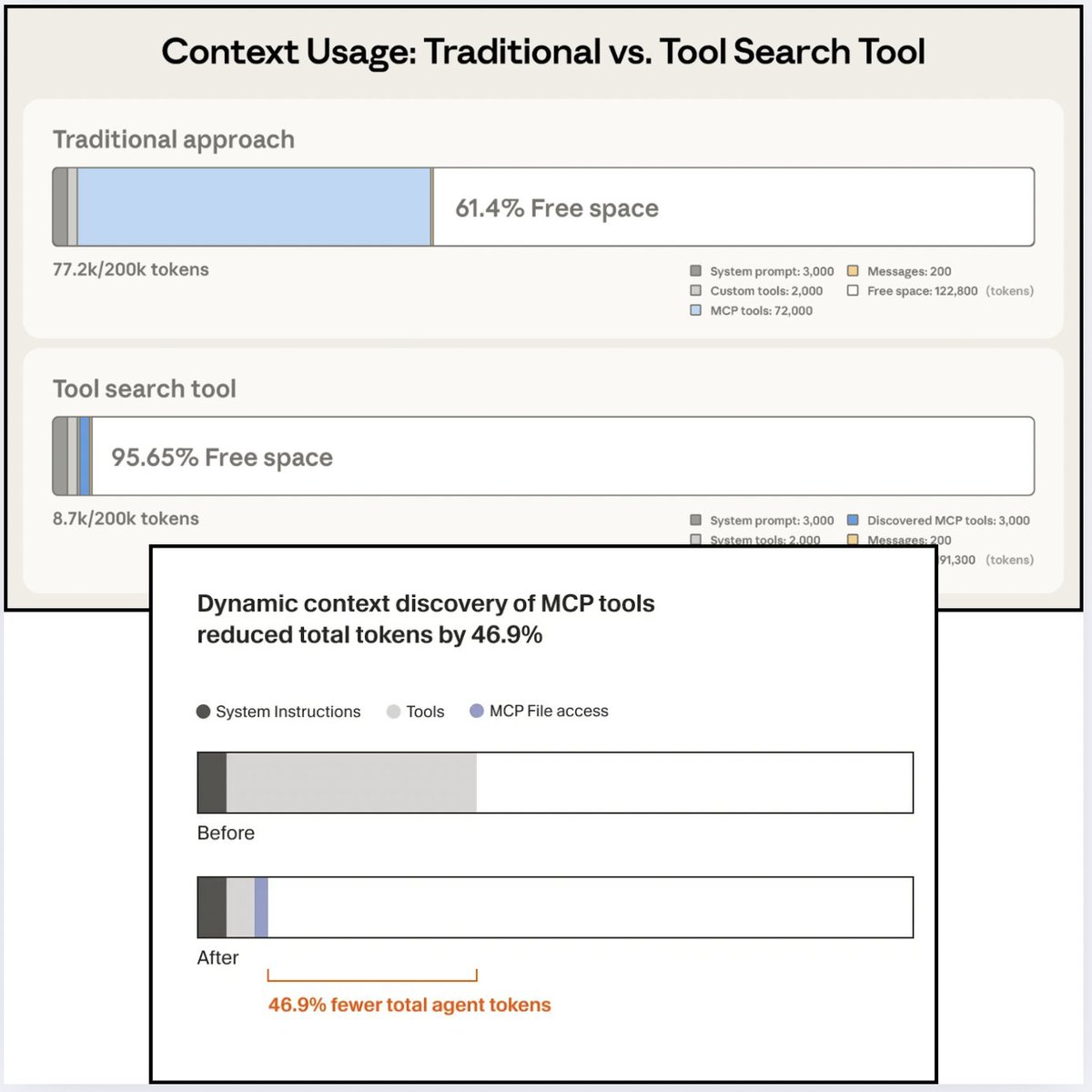
We rebuilt how our agent uses context. Instead of stuffing everything into a prompt, Cursor dynamically discovers context via files, tools, and history, cutting token usage by 46.9% and freeing up more space for the agent to work.
Everyone is building AI agents. Very few understand the agentic frameworks that actually power them. In 2025, two frameworks dominate agent development — not as competitors, but as complementary layers: n8n — Visual Workflow Automation What it does • Visually connects AI agents with business tools and APIs • Flow: Trigger → AI Agent → Tools → Action • Removes integration complexity and speeds up deployment Think of it as: The orchestrator that plugs AI into your entire tech stack — LangGraph — Graph-based Agent Orchestration (LangChain) What it does • Enables stateful, cyclical, multi-step agent workflows • Flow: State → Agents → Conditional Logic → State (loops) • Designed for complex reasoning and coordination Think of it as: The brain managing advanced agent decision-making — When to use n8n • AI + business tool integrations • Customer support and ops automation • No-code or low-code workflows for teams • Fast shipping with 700+ integrations When to use LangGraph • Multi-agent reasoning systems • Enterprise-grade AI applications • Cyclical or long-running workflows • Fine-grained state control and memory — Ecosystem strengths n8n • Visual builder for non-developers • Self-hosted, open-source option • Strong business automation community LangGraph • Deep LangChain integration • LangSmith for observability and debugging • Advanced state persistence and control — The real insight 👇 The best AI systems use both. n8n → Visual orchestration and tool integration LangGraph → Agent logic, reasoning, and state Think in layers: business automation and intelligent decision-making — Your turn 👋 What would you build first? A visually simple, tool-connected agent (n8n)? Or a deeply orchestrated, reasoning-heavy agent (LangGraph)?