

Kirill Klimuk
276 posts

Kirill Klimuk
@kklimuk
Currently at Runway Financial, formerly VP of Engineering at Northbeam, head of payments eng at @GustoHQ and CTO of Nebo.
Long Beach, CA Katılım Ocak 2011
538 Takip Edilen129 Takipçiler


so we raised a new round, but haven't told anyone yet
our investors are like, hey put our money to use how come burn isn't going up
i gotchu fam
introducing burn rate by runway
an award winning, blind taste-tested (by me!) hot sauce, wrapped in a genuine $100 bill
for $13.99
English
If you like working with people that work hard, care about each other, and focus on the customer, come work with me at @runwayco!
We're hiring engineers to make financial planning fun.
Send me a DM if you're interested.
English
@joshmuccio Looks like Google Podcasts is getting deprecated in favor of YouTube Music. (support.google.com/youtubemusic/t…)
Would you mind updating your RSS feed guide?
English
@RnaudBertrand The thesis strikes me as very similar to Lenin’s “Imperialism” - industrial capital trying to perpetuate itself by subjugating the less developed countries. Does that sound about accurate?
English

I just finished reading “Sub-Imperial Power” by Clinton Fernandes, a former Australian intelligence officer and now professor of international and political studies at the University of New South Wales.
Full disclosure, Clinton sent me the book and wrote a nice dedication on it, calling me a “public educator”, which is a nice way of saying I tweet too much 😄
But I wouldn’t write this if I didn’t really like the book, which I actually believe is essential reading if you want to understand Australian geopolitics, or are interested in geopolitics generally.
The book makes one of the best descriptions of the “rules-based international order” that I’ve read, describing in details how Australia isn’t a vassal or a client state of the U.S., like many believe, but rather a “sub-imperial power”. What this means is that Australia, as well as other “sub-imperial powers” like Israel or the UK, are essentially the henchmen of the US’s current “imperial” rule, tasked with preserving it in their respective regions. Which means that as henchmen they aren’t so much victims of an hegemonic US rule but instead feel that they derive such disproportionate benefits from it that they’re willing to go to great length to help the US preserve this rule against the actual victims, those who disproportionately lose out from the order.
One of the most interesting aspects of the book is how it departs from the theories of realism, championed by the likes of John Mearsheimer or Stephen Walt, who assert that all states - regardless of culture, religion, social hierarchy or political system - will act in the same way because they all prioritize survival and security above all else. They assert that given that maximizing power is the best way to survive in the international system, if they had the opportunity all states would seek to become hegemons like the US is today, or imperial Britain was yesterday.
Fernandes makes a very different case, which I actually think is a far better explanation of how the world actually works, and of the historical behavior of various states. His point is that there’s something unique about US geopolitics, and that of Western colonial states before it, in that they have these extremely aggressive characteristics - the impulse to subjugate and pillage others - that actually often harm their security rather than safeguard it. And he explains this with the undue power the moneyed class has over the state in those systems of government. Which is hard to deny if one looks at things historically: for instance it is the East India Company that initiated the colonization and pillage of India, not the British state that only came afterwards to essentially pacify growing rebellion in India so as to perpetuate the ongoing pillage. Or take a more recent example: the war in Iraq. It makes very little sense from an American security or survival perspective but it makes eminently good sense from a US oil company or economic hegemony perspective. Or again the current conflict in Gaza, which is extremely negative for American security as it generates busloads of hatred throughout the Muslim world against America and diverts American attention from more consequential geopolitical challenges. But it makes sense if you look at it from the standpoint of perpetrating a hegemonic system.
In other words, Fernandes’ point is that the key characteristic of the “rules-based international order” relates to the actual structure of the American (or British, French, Australian, etc) social and economic system, which seeks to enforce an order where the whole world is open to the penetration and control of their respective national moneyed classes. Which is why the order is about hegemony, and not about security, and why the former so often comes at the expense of the latter.
It’s interestingly something that John Mearsheimer often laments about if you listen to him: “why would the U.S. act in such foolish ways that go against what my realist theories recommend?”. He was adamantly opposed to the war in Iraq, warned for many years about the risk of a clash with Russia in Ukraine if we expanded NATO, and keeps speaking out against the U.S.’s unequivocal support of Israel. And by doing so Mearsheimer actually admits that realism doesn’t quite explain the behavior of states and that his theories are therefore not quite right. Fernandes here offers an explanation that better predicts the actual behavior of the US and its “sub-imperial powers”: you cannot understand states’ behavior if you limit yourself to a state-centric view, you also need to look at the unique characteristics of their political, social and economic system.
A last interesting point is that, given the fact he argues that states’ political and economic systems play a key role in defining their geopolitics, Fernandes’s book implies a prediction that as China’s power rises, it will behave in vastly different ways than the U.S. and its imperial henchmen. Given the Chinese system, it will undoubtedly seek to maximize its power but this time it will actually be for its own security and survival, and not to serve the interests of its moneyed class, and as such will behave in much less aggressive ways than the US. Again, interestingly Mearsheimer kind of admits this too because he repeatedly says “when I am in China, I’m amongst my people”: as in they follow his realist theories much more faithfully than the US. We can already see the contours of this: it’s absolutely obvious that the Chinese state isn’t at the mercy of its moneyed class, quite the contrary, China is not exactly a country where billionaires have an easy life 😂 Same thing with respect to hegemony: China just doesn’t do military alliances (it doesn’t have any), foreign interference or coups d’états. In fact they haven’t as much as fired a single bullet abroad in over 4 decades. On the contrary, it seeks to create an order with indivisible security and mutual respect embedded in the system, where it’d ideally be the most powerful state - sure - but not for the purpose of pillaging or subjugating others but because this guarantees its security and stability. Which is exactly how it behaved for 1,800 years when it was the most powerful state on the planet before the industrial revolution: it never went around trying to colonize and pillage the world as it believed this would eventually come at the expense of its own security, much like it comes at the expense of American security and interests today. Instead it sought relationships of trade and mutual respect that maximize security and stability over the long term.
Anyhow you should really read the book, it’s all too rare that such a book gets written by Western academics. You typically get the usual utter bullshit about the inherent superiority of Western values and various ill founded theories as to why we should rule the world. This gives you a peak outside the matrix.

English

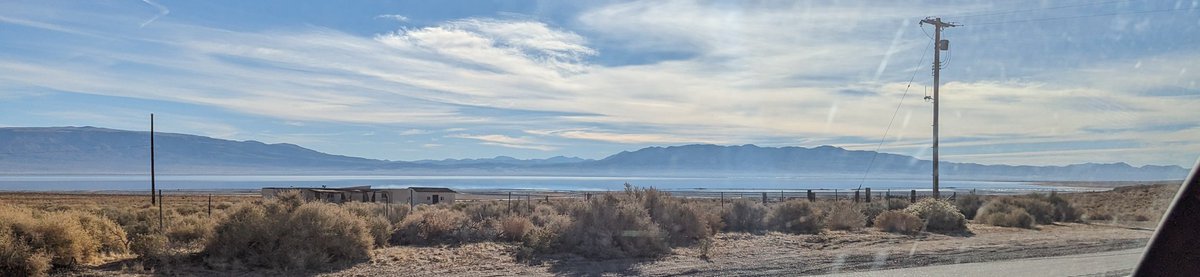
It accidentally filled a bit last winter from the big snowpack. But draining it was a colossal mistake and we should fix it.
English
@cassidoo Here's my solution to this week's question:
gist.github.com/kklimuk/4a362a…
English
Kirill Klimuk retweetledi

The Mercury payments flow is pretty sweet.
(Payer causes Mercury to send a link to a business they need to pay, which lets them fill in name, entity, W-9, bank details, etc or prefill most of that by signing into their own Mercury account. Payer then can send within Mercury.)
English
For the record, I think @jmhorp is correct but the reason you’ll often see very different results from this is it comes out differently if you deflate by CPI.
Washington, DC 🇺🇸 English
so much depends
upon
the choice of
inflation index
PCE or CPI
chained
or an unchained
index
Jeremy Horpedahl 🥚📉@jmhorp
Gen X today is signficantly wealthier than Boomers were at about the same age: $600,000 for Gen X vs $500,000 for Boomers Millennials today are about equal in wealth to Boomers at the same age, just over $100K All inflation adjusted!
Washington, DC 🇺🇸 English
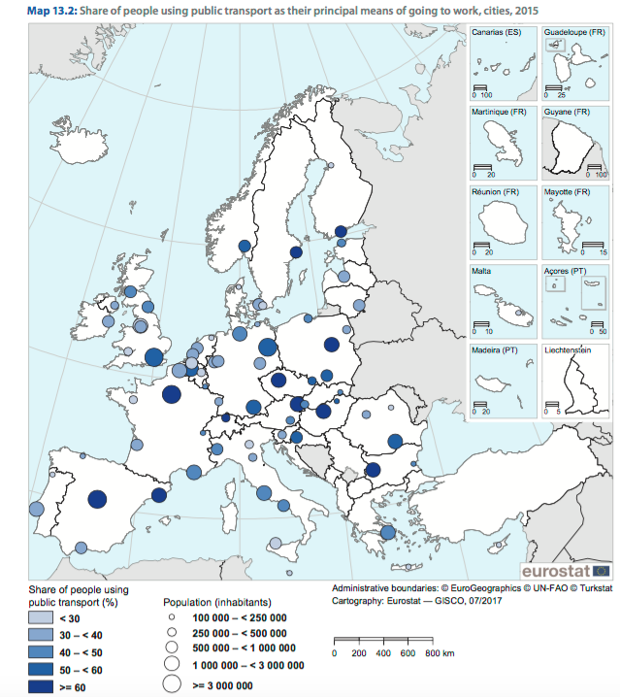

Stunning visual—public transit in America
Two thoughts:
1) Glad to live in NYC
2) Curious how a graphic of Europe compares
h/t @TurnerNovak

English

Another reminder that George W. Bush would have been a decent President if he hadn't invaded Iraq:
Jeremy Neufeld@JeremyLNeufeld
The National Academy of Sciences concluded PEPFAR has saved *millions* of lives Read the inaugural interview in Statecraft to understand how good ideas were turned into concrete policy⬇️
English
Kirill Klimuk retweetledi
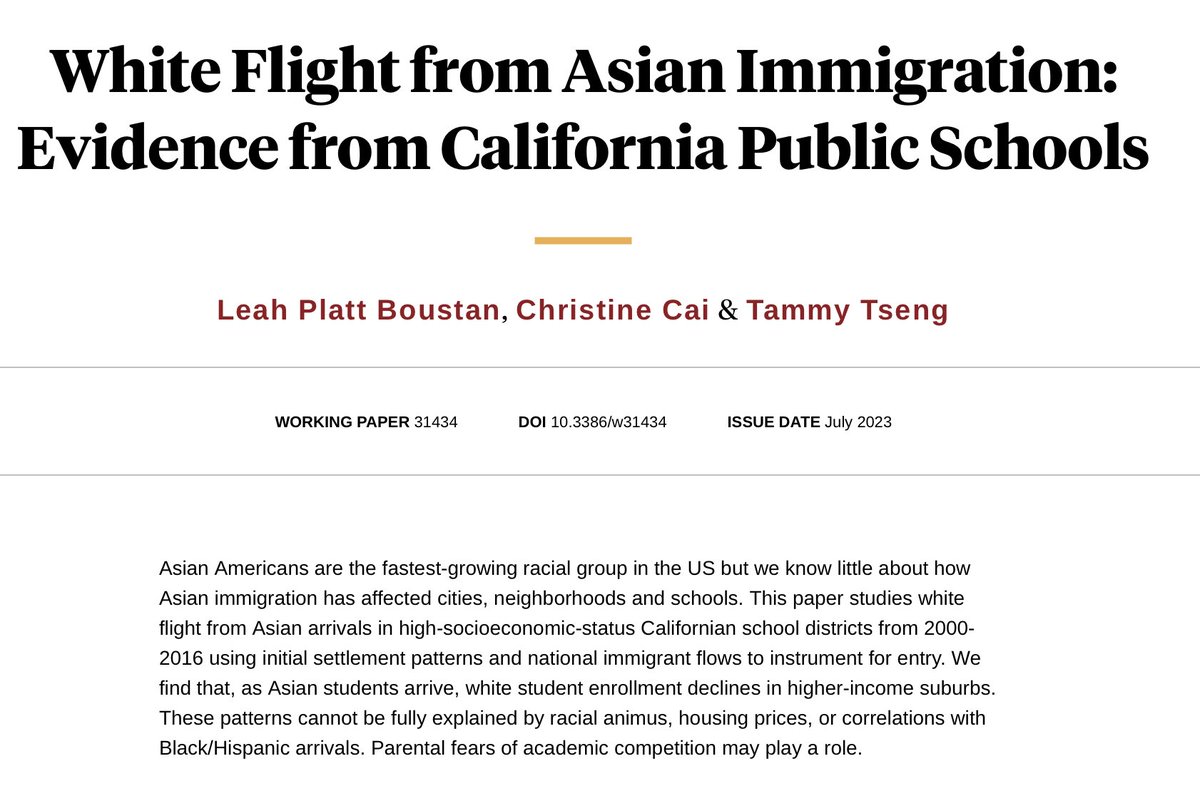
The limits of peer effects: When Asians move into rich neighborhoods, white people start to move out because they don't want their kids to lose relative class rank in school.
nber.org/papers/w31434
English
Kirill Klimuk retweetledi
The outline of the US government's response to the failure of Silicon Valley Bank is now clear, and the US didn't mess around. Clearly there was real concern about deposit flight and funding driven contagion.
The response has three legs --
1/
federalreserve.gov/newsevents/pre…
English
Kirill Klimuk retweetledi
Kirill Klimuk retweetledi

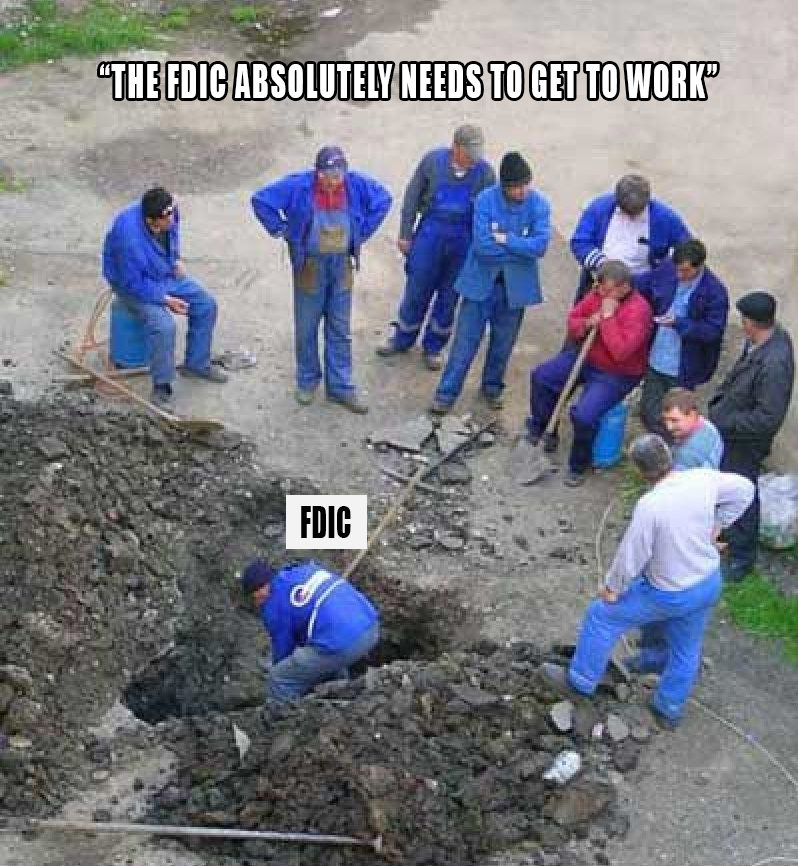
The most important thing the FDIC and the US Government can do right now is *make the receivership as short as possible*
There are thousands of US startups that banked at SVB, often as their *sole bank*. $250K per account is not going to last long.
From the FDIC website:

English
@Noahpinion Isn’t the point to reduce the number of people with said opinion?
It might be true that the dunking reduced the number of people with said opinion but also made the remaining crowd more radicalized.
English
Dunking doesn't work. The YIMBYs won the dunk wars but it just made the anti-YIMBYs more psychotic. The pro-vax people won the dunk wars but it just made the antivaxxers more insane. The idea that you can dunk your political foes into oblivion has just never been right.
English
Kirill Klimuk retweetledi

Kirill Klimuk retweetledi
Researchers just found that gas stoves are responsible for 12.7% of childhood asthma cases.
Recently I read dozens of studies about gas stoves and indoor air quality.
I also installed monitors in our home and ran my own tests.
Here's what I learned.
English

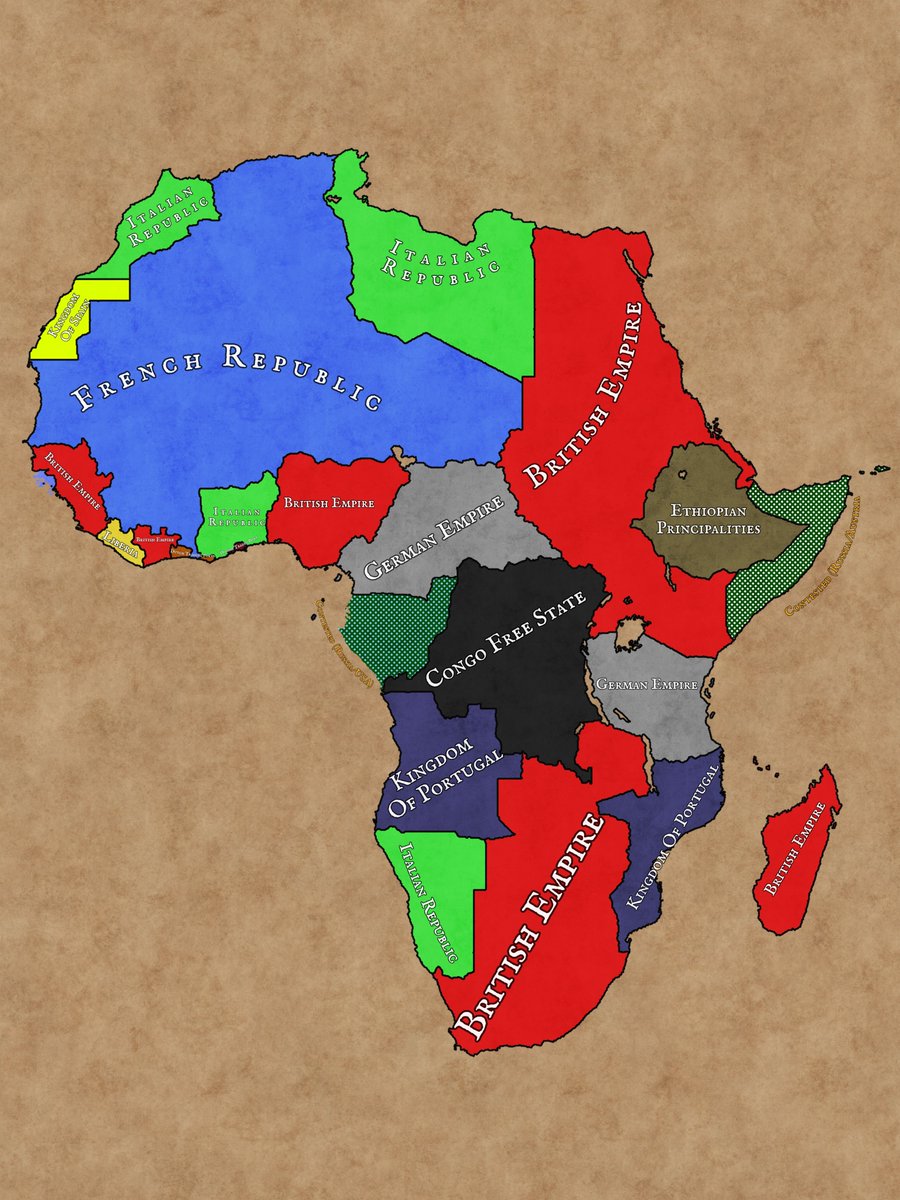
We are playing V3 MP with SMMP.
Which Berlin Congress map do you think should be agreed upon?
Which Great Power is getting the short end of the stick here?

English
@Scott_Wiener Where does amending or repeal and replace stand in the state legislature?
English

CA courts are continuing their multi-decade quest to fetishize CEQA away from its original goal — environmental evaluation of projects like dams & highways — into a catch-all tool to obstruct any change, no matter how environmentally beneficial.
We need to right-size CEQA.
English
🧵CEQA — the law that swallowed CA — is poised to get worse: An even more powerful tool to oppose housing via a “people are pollution” argument.
A court is poised to rule noise from new residents (college students) triggers CEQA b/c students are the type of ppl who make noise.🙄
Chris Elmendorf@CSElmendorf
A Christmas Eve surprise from Court of Appeal in UC Berkeley "students are pollution" CEQA case. tl,dr: UC Berkeley & state housing + antidiscrimination policy got a lump of coal in their stockings. CEQA is about to get much, much worse unless the Leg or the AG steps in. 1/25
English
Kirill Klimuk retweetledi

The stuff uncovered in the Twitter whistleblower report is much crazier than anything in the "Twitter files" but it's much less politically/tribally salient so it got no attention. Going to do a thread on some of the craziest things, in no particular order.
English