Gottlieb Freudenreich 🦇🔊 | 🔴

974 posts

Gottlieb Freudenreich 🦇🔊 | 🔴 banner
Gottlieb Freudenreich 🦇🔊 | 🔴

Gottlieb Freudenreich 🦇🔊 | 🔴

@knollmann1

Environmental and Digital Engineer. Data Scientist and technology enthusiast. Slaying Moloch

Katılım Haziran 2020
1.7K Takip Edilen119 Takipçiler
Gottlieb Freudenreich 🦇🔊 | 🔴 retweetledi
Mohamad Safa
Mohamad Safa@mhdksafa·
I don't think people understand the gravity of the situation as the UN is preparing for possible nuclear weapon use in Iran. This is a picture of Tehran. For you uneducated, untraveled, never-served, warhawks licking your chops at the thought of bombing it. It's not some low population desert. There are families, children, family pets. Regular working class people with dreams. You're sick to want war. Tehran is a city of nearly 10,000,000 people. Imagine nuking Washington, Berlin, Paris, London, or beyond, bombed with nuclear weapons. I gave up my diplomatic career to leak this information. I suspended my duties so as not to be part of or a witness to this crime against humanity, in an attempt to prevent a nuclear winter before it is too late. Yesterday, nearly ten million people protested “No Kings” in the United States. The possibility of the use of nuclear weapons must be taken very seriously. It's dangerous. Act now. Spread this message worldwide. Take the streets. Protest for our humanity and future. Only the people can stop it. History will remember us.

Mohamad Safa tweet media
English
4.1K
56.7K
141.2K
11.5M
Gottlieb Freudenreich 🦇🔊 | 🔴 retweetledi
Rico Grimm
Rico Grimm@gri_mm·
Die Energiewende wird leichter, als viele denken. Das liegt an einem weitverbreiteten Missverständnis, das Skeptiker ausnutzen, um Angst zu schüren. Denn: Nein, wir müssen das fossile System nicht 1:1 ersetzen. Wir brauchen nicht alle Primärenergie von heute. „Primärenergie“ ist die Energie, die den natürlichen Quellen entnommen wird. Ein Liter Heizöl enthält 10 Kilowattstunden (kWh), ein Kilogramm Steinkohle 8 kWh usw. Zurzeit verbraucht die Menschheit global 180.000 TWh Primärenergie. Erneuerbare stellen davon deutlich weniger als zehn Prozent. Um die fünf Prozent. Das ist ein Fakt, aber komplett irreführend. Denn Primärenergie ist ein bedeutungsloses Konzept in einer elektrifizierten Welt. Es sagt uns, wie viel Energie in Energiequellen steckt, bevor wir sie umwandeln. Aber nicht diese Energie ist für uns wichtig, sondern die erzeugte Energie. Wir müssen alle Energiequellen umwandeln, damit sie nützlich werden. Schließlich kippt niemand ein Fass Öl (159 Liter) in seinem Wohnzimmer aus und erwartet, dass es wärmer wird. Und bei der Umwandlung sind elektrische Systeme deutlich effizienter als fossile. Jede kWh Energie, die wir in ein elektrisches System stecken, kommt mit höherer Wahrscheinlichkeit dort an, wo wir es verbrauchen wollen: am Rad, im Ofen, in der Wärmepumpe. Der Motor eines E-Autos ist 2-4 mal effizienter als ein Verbrenner, weil er weniger Abwärme erzeugt. Eine Wärmepumpe kann aus 1 kWh Strom bis zu 4 kWh Wärme erzeugen, da sie mit der Umgebungstemperatur arbeitet. Ein Gasboiler wiederum verheizt das Gas und das war’s. Verbrenner-Autos sind eigentlich Heizungen auf Rädern. (AKWs sind gigantische Wasserkocher.) Wer also mit Grafiken vom Primärenergiebedarf herumwedelt und die Energiewende damit kritisieren will, sitzt einem Trugschluss auf. Es ist, als hätten sich die Leute in den 1920ern vor die ersten Autos gestellt und gefragt: „Und? Wie viel Hafer frisst das Ding jeden Tag?“ In Deutschland schmeißen wir wegen der Umwandlungsverluste jedes Jahr mehr als 30 Prozent unserer Primärenergie weg. Weltweit waren es vor der großen Elektrifizierung mehr als 50 Prozent. Mal eine Frage: Gehst du in den Supermarkt, öffnest die Packung mit zehn Eiern, siehst darin drei kaputte Eier und zahlst zufrieden? Du bist ja nicht blöd. Wir als Gesellschaft sind es schon. Wir haben 30 Prozent Verschwendung in unserem System eingebaut und hielten das so lange für normal, wie es keine Alternative gab. Aber jetzt gibt es eine. Wer mit Primärenergie-Charts herumwedelt oder Technologieoffenheit in Deutschland fordert, sagt eigentlich: „Lasst uns weiter verschwenden!“
Rico Grimm tweet media
Deutsch
299
670
1.7K
84.9K
Gottlieb Freudenreich 🦇🔊 | 🔴 retweetledi
Claudio Zanetti
Claudio Zanetti@zac1967·
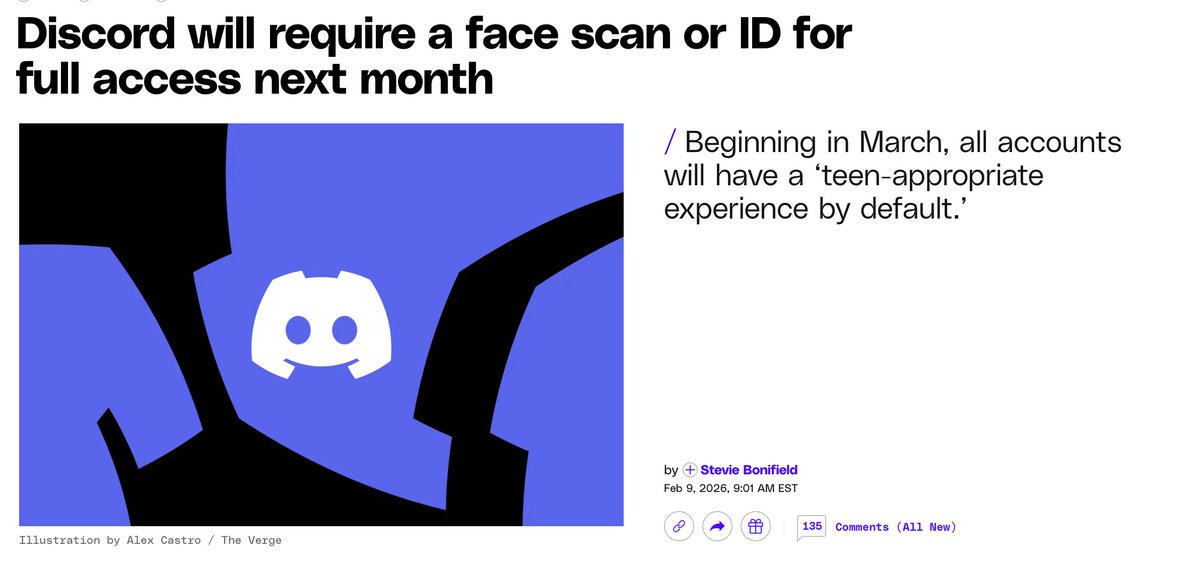
Dahinter stecken die gleichen Leute, die im Internet Klarnamen verlangen...
Claudio Zanetti tweet media
Deutsch
62
2.8K
10.8K
100.8K
Gottlieb Freudenreich 🦇🔊 | 🔴 retweetledi
Alan MacLeod
Alan MacLeod@AlanRMacLeod·
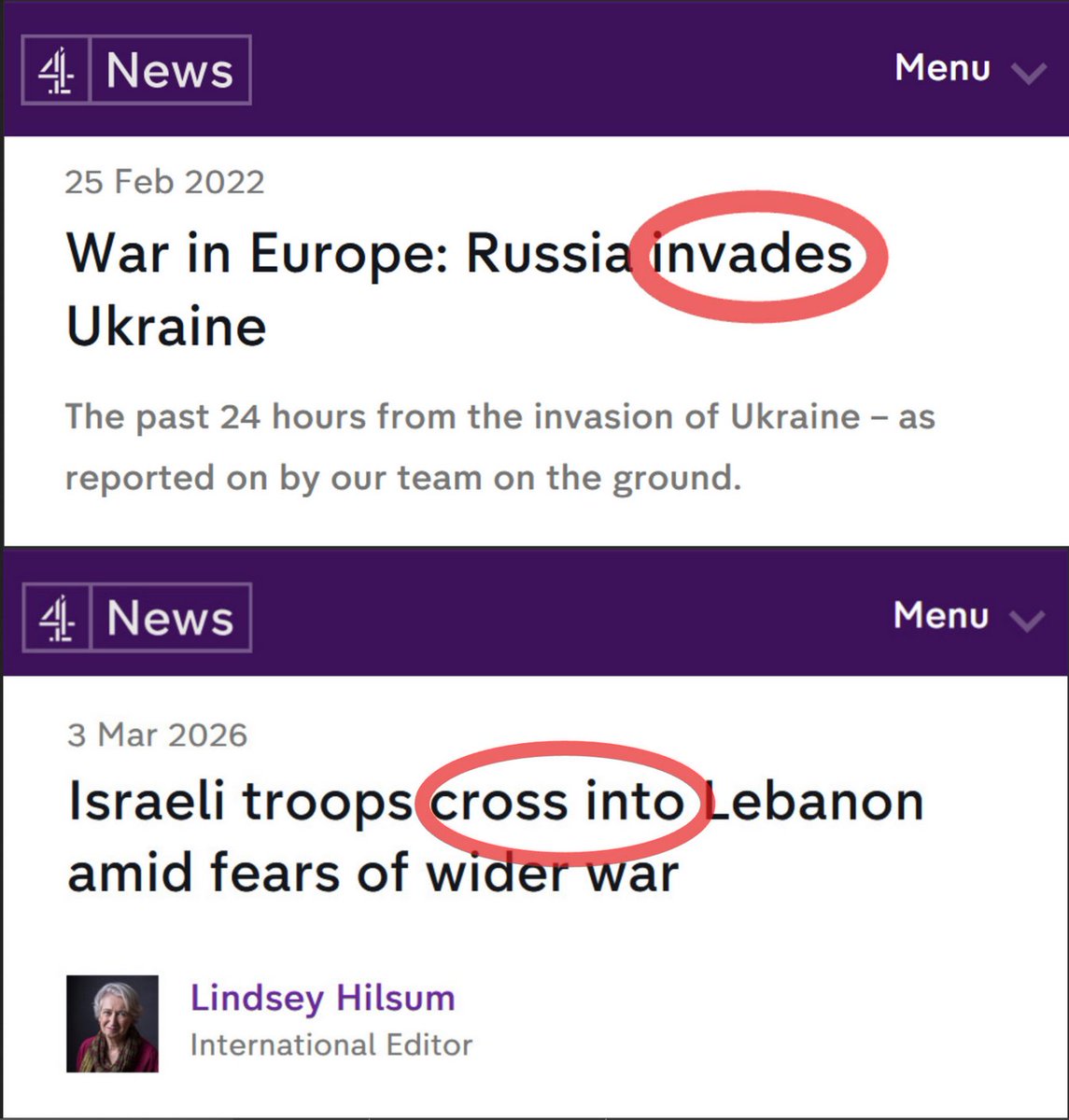
This is just one trick media use to manufacture consent for war.
Alan MacLeod tweet media
English
739
50.9K
214.1K
2.2M
Gottlieb Freudenreich 🦇🔊 | 🔴 retweetledi
HighKwollity
HighKwollity@lowercosts·
Wisst ihr noch? Als überall woanders Glasfaser installiert & nur in 🇩🇪 unter unionsgeführter Regierung "die Optimierung von Kupferkabel" durchgezogen wurde? So um die Dimensionen geht's hier⬇️ Da werden WIR Jahrzehnte lang für draufzahlen & auch noch abgehängt werden Glatte 6
Bundesministerium für Wirtschaft und Energie@BMWE_

„Wir haben Wort gehalten. Das Habecksche Heizungsgesetz wird abgeschafft“, so Ministerin Katherina Reiche. Für alle Eigentümer gilt künftig: freie Heizungswahl - vom Einfamilienhaus auf dem Land bis zur Mietwohnung in der Stadt.

Deutsch
66
435
2.7K
60.5K
Gottlieb Freudenreich 🦇🔊 | 🔴 retweetledi
RYAN SΞAN ADAMS - rsa.eth 🦄
Absolute privacy nightmare. Governments pushing AML/KYC on the app layer - they think its a good idea to have citizens submit biometrics and IDs to every third party who requests it. Can they at least mandate zk solutions where the user can prove identity without submitting it to every corporation on the planet? Bureaucrats "accidentally" legislating a surveillance state and broken security for their citizens. We need a digital civil rights act now.
RYAN SΞAN ADAMS - rsa.eth 🦄 tweet media
English
201
231
1.5K
126.2K
Gottlieb Freudenreich 🦇🔊 | 🔴 retweetledi
Matthew Todd 🌏🔥
Matthew Todd 🌏🔥@MrMatthewTodd·
⏰ 1988 — NASA warns climate change will bring more droughts, floods, and extreme storms. 1990s — Fossil fuel industry funds campaigns to undermine climate science. 2015 — Paris Climate Agreement sets 1.5°C as the danger threshold. 2018 — David Attenborough warns collapse of human civilisation is a real risk. 2023 — Scientists say exceeding 1.5°C is now likely within the next decade. 2024 — Hottest year ever recorded on Earth. 2016–2024 — Donald Trump and Reform UK, backed by fossil-fuel interests, deny or downplay the human cause of climate change despite overwhelming scientific consensus. 2025 — Global carbon emissions still at record highs. 2026 — Social media continues to be flooded by fake bots telling the public climate science isn’t true, Media continues to refuses to inform the public of the magnitude of the threat. Extreme weather events continue to increase. youtu.be/2Jq23mSDh9U?si…
YouTube video
YouTube
Official Weather UK ☀️@Official_WXUK

Devastating scenes from Weycroft, Axminster this morning. I'm surprised we only have one severe flood warning issued. #StormChandra 📸 James Loveridge Photography, Facebook

English
39
577
1.5K
53.2K
Prof. Dr. phil. fake.* Oskar-Maria Hanfmöger🦉🥦🍄
Diese Länder treten Trump's "Board of Peace" Club bei: Argentinien Armenien Aserbaidschan Bahrain Belarus Ägypten Ungarn Indonesien Israel Kosovo Kasachstan Jordanien Marokko Pakistan Paraguay Katar Saudi-Arabien Türkei Vereinigte Arabische Emirate Usbekistan und Vietnam
Deutsch
68
15
87
6.5K
Gottlieb Freudenreich 🦇🔊 | 🔴 retweetledi
vitalik.eth
vitalik.eth@VitalikButerin·
Now that ZKEVMs are at alpha stage (production-quality performance, remaining work is safety) and PeerDAS is live on mainnet, it's time to talk more about what this combination means for Ethereum. These are not minor improvements; they are shifting Ethereum into being a fundamentally new and more powerful kind of decentralized network. To see why, let's look at the two major types of p2p network so far: BitTorrent (2000): huge total bandwidth, highly decentralized, no consensus Bitcoin (2009): highly decentralized, consensus, but low bandwidth - because it’s not “distributed” in the sense of work being split up, it’s *replicated* Now, Ethereum with PeerDAS (2025) and ZK-EVMs (expect small portions of the network using it in 2026), we get: decentralized, consensus and high bandwidth The trilemma has been solved - not on paper, but with live running code, of which one half (data availability sampling) is *on mainnet today*, and the other half (ZK-EVMs) is *production-quality on performance today* - safety is what remains. This was a 10-year journey (see the first commit of my original post on DAS here: github.com/ethereum/resea… , and ZK-EVM attempts started in ~2020), but it's finally here. Over the next ~4 years, expect to see the full extent of this vision roll out: * In 2026, large non-ZKEVM-dependent gas limit increases due to BALs and ePBS, and we'll see the first opportunities to run a ZKEVM node * In 2026-28, gas repricings, changes to state structure, exec payload going into blobs, and other adjustments to make higher gas limits safe * In 2027-30, large further gas limit increases, as ZKEVM becomes the primary way to validate blocks on the network A third piece of this is distributed block building. A long-term ideal holy grail is to get to a future where the full block is *never* constituted in one single place. This will not be necessary for a long time, but IMO it is worth striving for us at least have the capability to do that. Even before that point, we want the meaningful authority in block building to be as distributed as possible. This can be done either in-protocol (eg. maybe we figure out how to expand FOCIL to make it a primary channel for txs), or out-of-protocol with distributed builder marketplaces. This reduces risk of centralized interference with real-time transaction inclusion, AND it creates a better environment for geographical fairness. Onward.
English
1.1K
1.4K
7.3K
1.3M
Gottlieb Freudenreich 🦇🔊 | 🔴 retweetledi
vitalik.eth
vitalik.eth@VitalikButerin·
This is what I worry Europe will get negatively polarized into: an ideology taking pride in a neat, sanitized online environment free of evil corporate and fascist pathogens. I hope European govs do not go this way, and instead take a Pirate Party approach of user empowerment. First, what's wrong with the tweet I'm quoting: The idea that there should be "no space" for something you dislike is fundamentally a totalitarian and anti-pluralistic impulse. It's incompatible with being in an environment that you do not fully control. This is especially true for categories that are subjective and controversial, because you end up trying to fully remove things you think are pathogens, when other people have good faith disagreements, and because you give yourself the maximalist goal of not even giving them breathing room, you create conflict and end up building the machinery of technocratic authoritarianism to impose your victory in the conflict. So sorry, if you want to be a free society, you have to bite the bullet that some people, somewhere, will be selling things that you consider dangerous and saying things you consider disinformation and vicious lies. What is the goal to shoot for? You want to create an environment where those things don't dominate. This is the problem with twitter today: not that it's a safe space where 1000 people talk to each other in a corner about how heritage americans are the master race and putin is good or whatever, but that that crap gets shoved in our face on a mass scale, and the algorithms actively favor it. The right metaphor is not castles and walls, but biological - think, why European forests don't have tropical lizards. Having incentives for social media platforms to have less of those things instead of more is fundamentally reasonable, @audreyt has talked about how Taiwan has done something similar. You also want to do this in a way where it's clear what the underlying principle is, so it's not a vehicle for imposing arbitrary and frequently changing expert-consensus agendas. You also want to empower users, rather than working against them. People want to see and buy good things instead of bad things. Often the problem is that competition is too difficult in the current market. I actually supported the USB-C standardization mandate; it created more interoperability and thus improved competition and convenience. I would support incentivizing social platforms to be more open, and to be more transparent (eg. my proposal to require algorithms to be continuously published with a 1-2 year delay, with zk-proofs to ensure that the algorithm being used in real time exactly equals the one that gets published later) Being able to better identify what messages are coming from what communities is also good, though I don't support the direction of banning anonymity of individual posters, rather I would want to see more macro-scale analytics, eg. seeing what communities are most strongly saying and amplifying content that semantically matches a particular idea; this can be done in privacy-preserving ways. There is a real opportunity to reaffirm freedom of speech in a unique and different way, that emphasizes pluralism and pushes against unbalanced attempts to manipulate the discourse by individual powerful actors. We want to do this, not go down the dark path of having something that claims to support fundamental rights but actually is not trusted by anyone to be anything other than the fundamental right to follow the footsteps of a few technocratic experts.
Digital EU 🇪🇺@DigitalEU

𝗡𝗢 space for cyberbullying. 𝗡𝗢 space for dangerous products. 𝗡𝗢 space for hate speech. 𝗡𝗢 space for scams. 𝗬𝗘𝗦. With the Digital Services Act, what is illegal offline remains illegal online. 🔗 link.europa.eu/gbRf9h

English
642
833
5.2K
627.5K
Gottlieb Freudenreich 🦇🔊 | 🔴 retweetledi
Carlos
Carlos@agent_of_change·
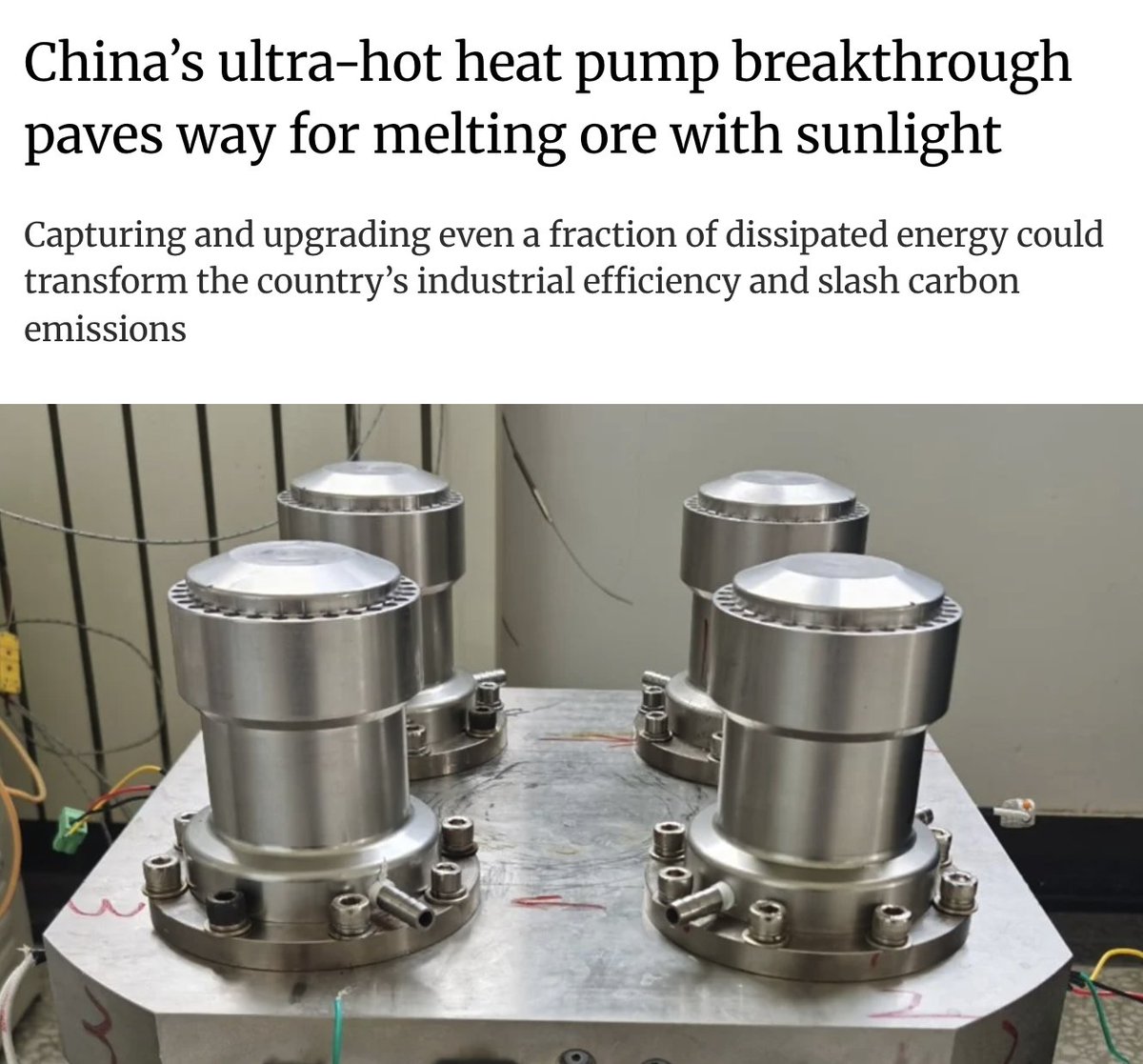
Another exciting development from the Chinese Academy of Science, with important implications for decarbonising heavy industry. "Luo’s team envisions that, by 2040, ultra-high-temperature heat pumps could deliver zero-carbon heat of up to 1,300 degrees, ushering in a green industrial revolution powered by sunlight, nuclear reactors and waste heat. At the heart of this breakthrough lies a novel heat-driven thermoacoustic heat pump."
Carlos tweet media
English
18
264
1.5K
57.2K
Gottlieb Freudenreich 🦇🔊 | 🔴 retweetledi
ZKsync
ZKsync@zksync·
Skip the cold start. Launching a new chain usually means starting with zero liquidity. That ends today. With ZKsync Interop enabled by our Atlas upgade, all ZK Chains can interact natively with @Ethereum DeFi. This means Enterprises leveraging Prividiums to tap into Ethereum liquidity for the first time, while maintaining their own private environment.
English
119
217
1.2K
473.9K
Gottlieb Freudenreich 🦇🔊 | 🔴 retweetledi
Ethereum
Ethereum@ethereum·
1/ Fusaka is coming December 3rd. Ethereum’s next major upgrade shows that the network can grow to meet global demand, without compromising on decentralization or permissionlessness. Whether you’re a user, builder, institution, or operator, here’s how Fusaka will impact you.
Ethereum tweet media
English
470
1.6K
7.1K
1.4M
Gottlieb Freudenreich 🦇🔊 | 🔴 retweetledi
fabda.gold
fabda.gold@fabdarice·
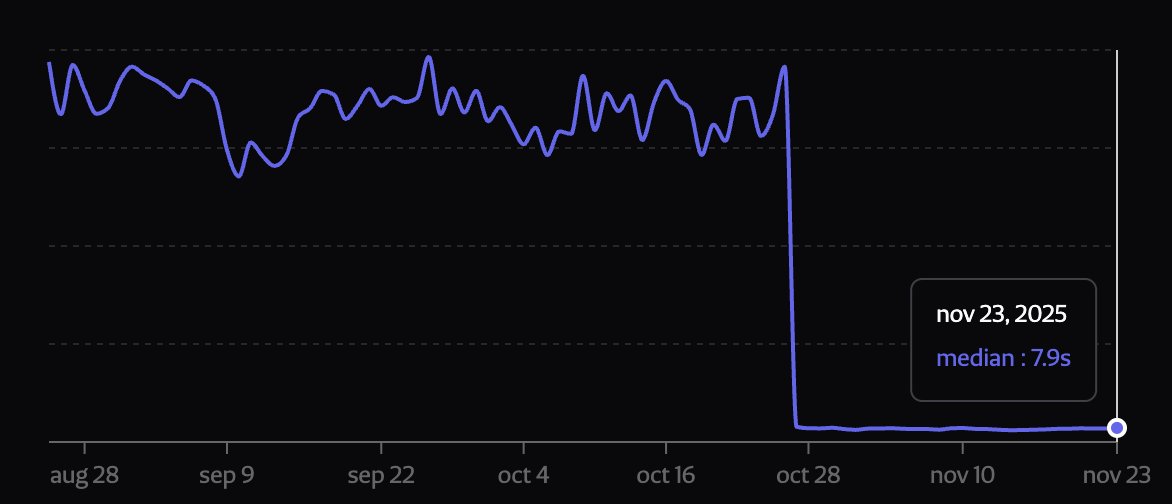
Latency to prove Ethereum blocks have dropped to 7.5 sec (from 3m30) in the past 30 days, while cost have dropped by 66%. 🤯 zkEthereum 🤯
fabda.gold tweet media
English
46
63
749
39.1K
Gottlieb Freudenreich 🦇🔊 | 🔴 retweetledi
Ethereum Foundation
Ethereum Foundation@ethereumfndn·
1/ Now live: the Ethereum for Institutions site Ethereum is the neutral, secure base layer where the world's financial value is coming onchain Today, we’re launching a new site for the builders, leaders, and institutions advancing this global movement
English
169
472
2.2K
789.5K
Gottlieb Freudenreich 🦇🔊 | 🔴 retweetledi
Jan Rosenow
Jan Rosenow@janrosenow·
One of the key barriers to electrification is the price ratio of electricity to fossil gas prices. In part, this price ratio is affected by political choices: the tax rate on electricity used in industry is much higher in most European countries than the tax rate on fossil gas. That creates a disincentive for electrification and an incentive for a continuation of the status quo. There are many options for reforming taxes and levies which I and colleagues looked at here: sciencedirect.com/science/articl… Source: @ember_energy
Jan Rosenow tweet media
English
8
59
175
10.1K
Gottlieb Freudenreich 🦇🔊 | 🔴 retweetledi
Joseph Chalom
Joseph Chalom@joechalom·
JP Morgan permitting Bitcoin and Ethereum as loan collateral for institutions is a big leap forward for digital assets. The largest US bank is signaling that digital assets are mature enough to sit alongside treasuries and equities as institutional-grade collateral. While the impact on Bitcoin is high, the implications for $ETH are even more profound. $ETH isn’t just a store of value - it’s a productive asset. Having worked at BlackRock, I’ve seen how these incremental steps from the launch of $ETH ETFs to the use of $ETH as collateral steadily build institutional confidence. Each layer of adoption makes the next one inevitable. The message is clear: high-quality digital assets like $ETH are becoming integral to the modern financial system.
English
74
151
919
98K
Gottlieb Freudenreich 🦇🔊 | 🔴 retweetledi
Dr Paul Dorfman
Dr Paul Dorfman@dorfman_p·
Dr Paul Dorfman tweet media
ZXX
23
129
428
11.9K
Gottlieb Freudenreich 🦇🔊 | 🔴 retweetledi
Justin Drake
Justin Drake@drakefjustin·
Progress toward real-time proving for Ethereum L1 is nothing short of extraordinary. In May, SP1 Hypercube proved 94% of L1 blocks in under 12 seconds using 160 RTX 4090s. Five months later Pico Prism proves 99.9% of the same blocks in under 12 seconds, with just 64 RTX 5090s. Average proving latency is now 6.9 seconds. Performance has outpaced Moore's law ever since Zcash pioneered practical SNARKs a decade ago. Today's Pico Prism results are a striking reminder of that exponential curve. Beyond performance, zkVM diversity is remarkable. At least nine zkVMs are racing toward real-time proving: Airbender, Ceno, Jolt, OpenVM, Pico Prism, R0VM, SP1 Hypercube, Ziren, ZisK. That diversity is strength, similar to CL and EL client diversity. Fusaka, expected in December, will simplify real-time proving. EIP-7825 caps per-tx gas usage, enabling more parallel proving via subblocks. MODEXP, a prominent "prover killer", is being repriced with EIP-7823 and EIP-7883. By year's end several teams will prove every L1 EVM block on a 16-GPU cluster, drawing less than 10kW total. The 10kW target—about the same as a Tesla home charger—matters for on-prem proving in garages and offices, eliminating reliance on cloud proving. gigagas frontier L1 throughput has grown 100x since genesis ten years ago, from 20 kilogas/sec to 2 megagas/sec. With zkEVMs we can 100x again, in half the time. The key is to bypass validators as Ethereum's current scalability bottleneck. Lean execution proofs also decentralise validation. Goodbye 4TB NVMe, 8 cores, 64GB RAM recommended by EIP-7870. A Raspberry Pi running statelessly, or even a phone, will soon suffice. The scalability vs decentralisation dilemma is dying. Zooming out, the lean Ethereum vision is gigagas L1 and teragas L2. Gigagas L1 (10K TPS) means high-value payments, trading, and social apps directly on mainnet. Teragas L2 (10M TPS) means welcoming the entirety of finance onto Ethereum. Nov 22: Ethproofs day demo Behind the scenes teams are preparing a special Devconnect demo. In 38 days my home validator will run on zkEVM proofs. My mighty Geth node will go dark—no more execution client. Devconnect Argentina is Ethereum's world fair. World fairs unveiled the lightbulb, running water, cars, refrigeration, phones, escalators. Real-time proving is Ethereum's lightbulb moment. Ethereum's future is bright. Believe in something :)
Brevis@brevis_zk

Announcing Pico Prism, the state-of-the-art zkVM for Ethereum real-time proving. 99.6% of blocks proven under 12 seconds, 6.9s average with 64 RTX 5090 GPUs. This marks a major step toward scaling Ethereum by 100x and a future where you can validate the chain from a phone.

English
221
477
2.3K
860.8K
Gottlieb Freudenreich 🦇🔊 | 🔴 retweetledi
rip.eth
rip.eth@ripeth·
liquidity is on ethereum by far
rip.eth tweet media
English
152
176
1.3K
156.4K