Sabitlenmiş Tweet
Sherāgim_Kouch-Ārvich
723 posts

Sherāgim_Kouch-Ārvich
@kouch16057
֎R1B/R-CTS8966 ✵House of Kouch-Ārvich ΨKurMāni ✹Sarmato-Mādian Confederation ✹Magi ✹GelĀmārdi ✹Parthian politically
Katılım Eylül 2023
1.1K Takip Edilen276 Takipçiler

@CaudilloXIV You have known nothing outside of your room and you comment?
English

Pretty soon they’re gonna start claiming Bosnia as rightful Kurdish territory
YadHawrami@yadfarooq
My beloved kurdistan 😍⌚️
English
Sherāgim_Kouch-Ārvich retweetledi

@LastKurdBender The Salah ad-Din Ayyubi on the flag I meant
English

Namo Fazil has made weight and now the fight is officially on 🔥🔥
Her bijî Şêrê Kurd ✌🏻✌🏻
Zagron 🏔️🦅@LastKurdBender
Namo Fazil 🤜🏻🤛🏻 Agit Kabayel
English

Team Melli kit revealed for the 2026 FIFA World Cup
As @Shalii34 called weeks ago, they took the same kit and slapped a cheetah on it and changed the font. 😂

Erfan Hoseiny@Eri1806
Expect the Team Melli kit reveal any moment now.
English

@MehrzadBakuri We are the Aryans the Gods of the stories meant to go by these trials brother
English

They'll do anything except actually fight
Clash Report@clashreport
Iranian Pahlavi supporters marching in Copenhagen in coordinated military-style uniforms.
English

@Malak356775433 @ozbegtin_balasi He doesn’t have that phenotype that’s interesting
English

@acdmma_ America’s reputation will get buried at the White House
English

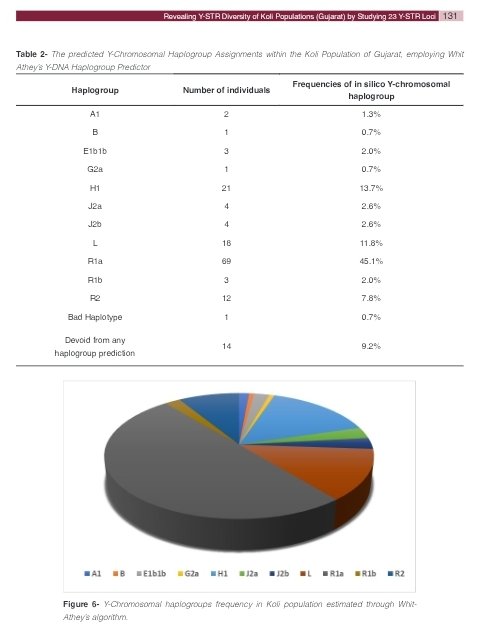
Y haplo of Koli people Gujarat
R1a at 45%
Sample size 153
journals.nauss.edu.sa/index.php/AJFS…

English

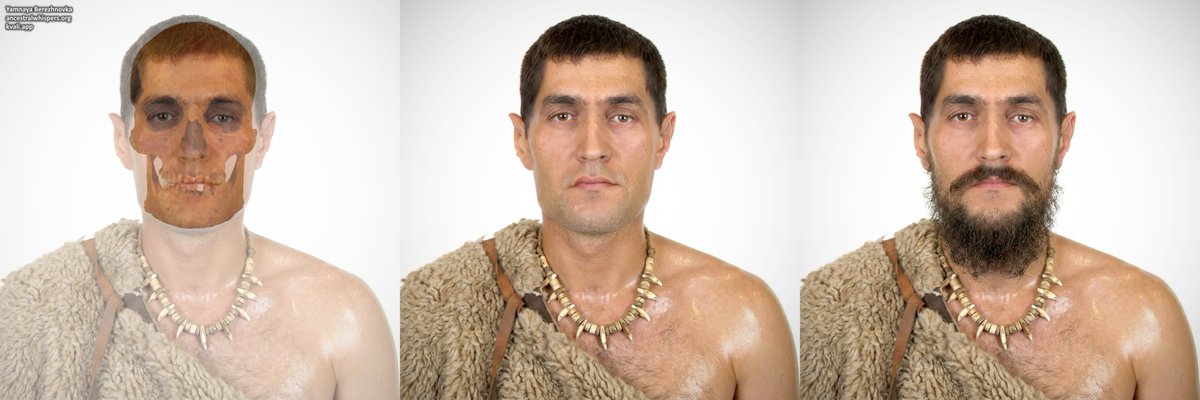
Facial reconstruction of a 5,200-year-old Yamnaya man from Volgograd region
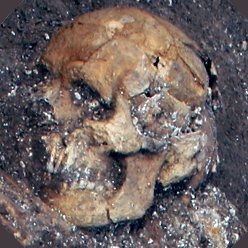
I. V. Sinitsyn excavated a large kurgan containing 25 burials from different cultures; of these, two belonged to the Yamnaya culture. Burial 22 (the reconstructed individual) was likely the main one. Based on the grave construction, burial rite, and the form and decoration of a vessel, Sinitsyn considered burial 22 to be the earliest not only in this kurgan but in the local Yamnaya culture.
In burial 22, a skeleton lay on its back in an oval pit with strongly bent legs. Near the head stood a clay vessel decorated with complex patterns of wavy and dotted bands. The skeleton was heavily covered with red ochre.
The skull from this burial belonged to a male no older than 18–20 years. Despite its considerable absolute size, it does not give an impression of massiveness; the facial skeleton is distinctly gracile.
The skull is dolichocranial (index 73.4), elongated (188 mm), relatively broad (136 mm), pentagonal in shape from above and roof-shaped when viewed from the occipital side.
The cranial vault is high; the forehead is fairly steep and broad (78–79 mm). The glabella protrudes slightly (3 points), the brow ridges are weakly developed (1 point), and their projection is minimal.
The occiput is sloping, the external occipital protuberance is weakly developed, and the mastoid processes are short and rather massive, though their relief is weak.
The total facial height is medium (114 mm), the upper facial height is small (67 mm), and the face is not wide (128 mm). The orbits are relatively large.
The face could be described as somewhat prognathic; nevertheless, the entire facial region - the nose, upper jaw, and lower jaw - protrudes fairly strongly forward beyond the glabella line.
The nose has a clearly defined convex bridge, of medium size (width 24.7 mm). The alveolar part of the upper jaw is short; the teeth are orthognathic, the bite is pincer-like. The enamel height of the first incisor is 7.5 mm.
The anthropological diagnosis of this skull presents no difficulty. It is a typical Europoid skull. It shows no archaic traits of early Homo sapiens. Nor does it resemble the ancient Neolithic types from the rapids region of the Dnieper. It is noticeably more refined, smaller, and more gracile. It also bears no resemblance to the European skulls from Oleniy Ostrov or the Ladoga region. This individual, of Europoid type, is very close to the modern Mediterranean type. (Gerasimov 1955)


English

@kleeposting @SunofKhorshid We need the original Sarmatian version of it
English

Just imagine how bland and dead the same movie, with the same script and actors, would be in the hands of Christopher Nolan
Stunna ⛧@wentsickomode
Excalibur - 1981
English

@Rashavandi @Iranic_Genomes What about Sultan Sahhak , Baba Yadegar and Baba Tahir Hamedani etc these are more important my guy
English

@kouch16057 @Iranic_Genomes The other yarezanis sheikhs are also R1b-Z2103 Aryan Scythes.... nothing new... i know even without looking at those syncretistique beliefs i understand immediately R1a-Z93 and R1b-Z2103 at Work! Baamm
English

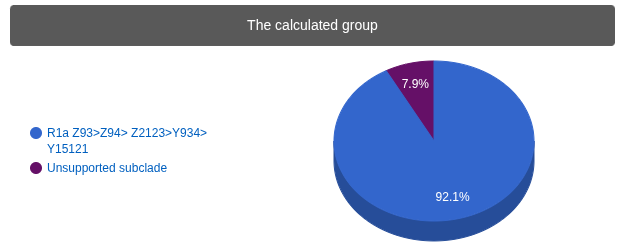
We at the Iranic Genomes Project are happy to report that the haplogroup of Baba Hindu Lorestani, teacher of Shah Khoshin and a founder of the Yarsani religion, has been ascertained based on descendant testing at the Y37 level!
The descendant testing in question surveyed the Lak tribal confederacy of Iran's Central Zagros region, spanning Lorestan, Ilam, Hamadan and Kermanshah provinces. The testers in question lacked a tribe, but were found to be descended from Baba Hindu Lorestani, who was originally from Sistan.
Baba Hindu was a famous poet and religious preacher that lived in Lorestan around 1000 years ago, known as the teacher of many foundational Yarsani elders. Some worth noting are Shah Khoshin and Pir Firuz Hindi.
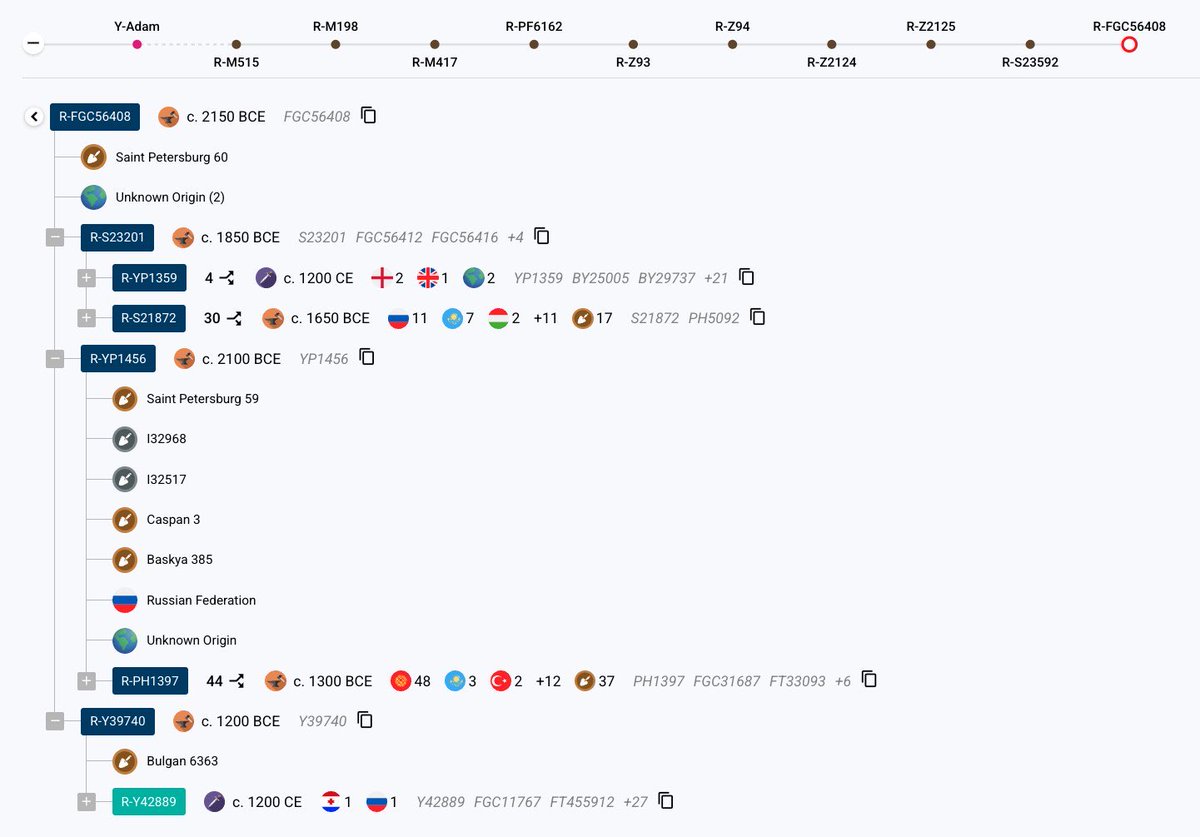
The tested haplogroup can be revealed as R1a-Y15121, a subclade of R1a-Z93.
Link to YFULL tree:
yfull.com/tree/R-Y15121/

English

@Rashavandi @Iranic_Genomes Na it can’t be that it’s mainly due to him. Lack of data for now bro.
English

@kouch16057 @Iranic_Genomes Bro ustad knows what he is saying :) again Hind and R1a-Z93 :))))))
English

@Iranic_Genomes Thanks brother he is a secondary member of early Yarsanism nice
English

@kouch16057 Baba Hindu Lorestani was a famous Yarsani elder and poet. Please refer to the following:
yarsanmedia.org/ku/?p=3965
English