Karunakar Rayker

8.8K posts

Karunakar Rayker banner
Karunakar Rayker

Karunakar Rayker

@krayker

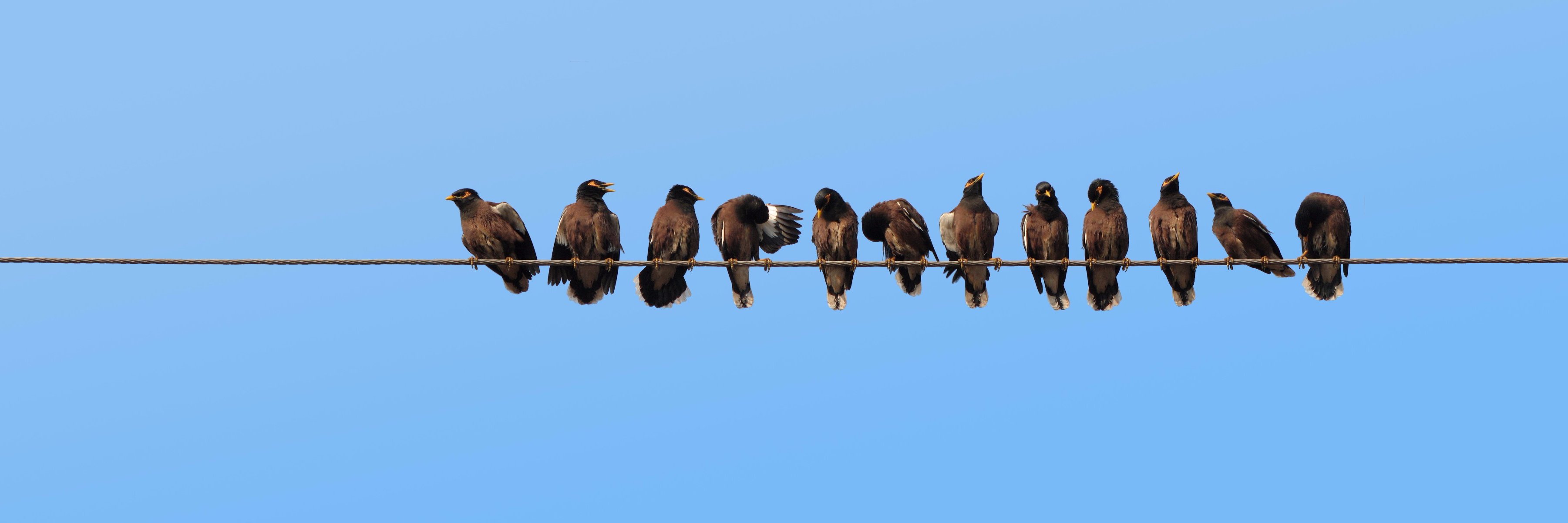
Design @Karkinoshealth | UX, Design, Healthcare IT | Interests: Systems, Privacy, Birding, Photography, Sundry topics, Flâneur. Opinions mine. RT ≠ endorsement.

Bengaluru, India Katılım Ağustos 2011
300 Takip Edilen530 Takipçiler
Karunakar Rayker retweetledi
Weather Monitor
Weather Monitor@WeatherMonitors·
7-year-old Ishank from Ranchi, India just set a world record by swimming 29km across the Palk Strait (Sri Lanka to India) in just 9 hours and 50 minutes. The youngest ever to conquer this route! (April 30, 2026)
English
149
1.4K
7.2K
252K
Karunakar Rayker retweetledi
Sonal Bhutra
Sonal Bhutra@sonalbhutra·
India’s emergency number is now 112, but many people still dial 100 out of habit. In an emergency, that confusion can waste precious minutes. Countries like the United States have made 911 second nature. One number, quick response, clear systems. 112 needs recall, reliability and a lot of marketing. Make 112 visible everywhere, as familiar as UPI Ensure faster, more consistent response across cities Integrate it into maps, phones and apps for easy access
English
112
415
2.9K
207.3K
Karunakar Rayker retweetledi
The Curious Tales
The Curious Tales@thecurioustales·
Your brain is wired to quit at the exact moment you're about to break through. Most people think they quit because they lack discipline or motivation. They blame their willpower. They assume successful people have some genetic advantage or superior mental toughness. The real reason runs much deeper. Neuroscientists at UC San Diego studied brain scans of people learning complex motor skills over several months. They discovered something counterintuitive: during the weeks when learners felt most frustrated and considered quitting, their brains were undergoing the most dramatic structural changes. New neural pathways were forming at accelerated rates. Myelin sheathing around neurons was thickening rapidly. The very period that felt like stagnation was actually when the most profound rewiring was happening. The participants had no conscious awareness of this transformation. Subjectively, they felt stuck. Objectively, their brains were rebuilding themselves. Your nervous system interprets sustained incompetence as a survival threat. When you attempt something new and fail repeatedly, ancient circuits fire that once kept your ancestors alive by making them avoid dangerous situations. The same neural pathways that prevented early humans from repeatedly approaching predators now prevent modern humans from repeatedly approaching challenges. Competence feels safe. Incompetence feels like death. Every time you miss the shot, fumble the presentation, or write garbage, your amygdala sends distress signals. Your brain floods with cortisol. Your body creates the same physiological experience it would create if you were being chased by something that wanted to kill you. After days or weeks of this neurochemical assault, quitting feels like escape from genuine danger. But what the UC San Diego researchers revealed changes everything about how we should interpret that discomfort. The biochemical chaos you feel during extended periods of failure is actually evidence that deep learning is occurring. Your brain consumes massive amounts of energy to build new neural architecture. The exhaustion, frustration, and sense of being overwhelmed are byproducts of construction, not signs of inadequacy. People who master difficult skills have accidentally discovered something profound: they've learned to interpret the discomfort of incompetence as evidence they're in exactly the right place. They've trained themselves to recognize the specific feeling of neural restructuring and chase it instead of avoiding it. The shift is so subtle most people never notice it happening. But once it clicks, the entire relationship with difficulty inverts. Watch someone who genuinely enjoys the learning process. They don't celebrate successes the way normal people do. They celebrate failures that teach them something. They get excited by obstacles that reveal gaps in their understanding. They treat confusion as information, not as evidence they should quit. They've rewired their internal reward system to crave precisely the experiences most people avoid. What makes this psychological rewiring possible is understanding that competence emerges from chaos, not from clarity. Your first attempts will be embarrassingly bad because your brain is literally constructing the neural infrastructure required for skill. The timeline for moving from "terrible" to "decent" is always longer than you expect because biological change operates on its own schedule. Most people never reach competence because they interpret the gap between where they are and where they want to be as evidence they're not cut out for it. They quit during the exact window when their brain is doing the rewiring that would eventually make them good. The secret is learning to love that window. The period that feels like failure is actually the period when your brain is working hardest on your behalf. The discomfort you're avoiding is the discomfort of becoming someone new.
The Curious Tales tweet media
DAN KOE@thedankoe

Most people quit because they forget that you have to be bad at something before you can be good at it. It's so obvious. You suck. Of course you're not going to win in 2 weeks. But if you can learn to enjoy extended periods of failure, you will make it very, very far in life.

English
46
751
3.7K
229.4K
NS Ramnath
NS Ramnath@rmnth·
AI is now writing community notes.
NS Ramnath tweet media
English
1
0
1
143
Carl Bovis
Carl Bovis@CarlBovisNature·
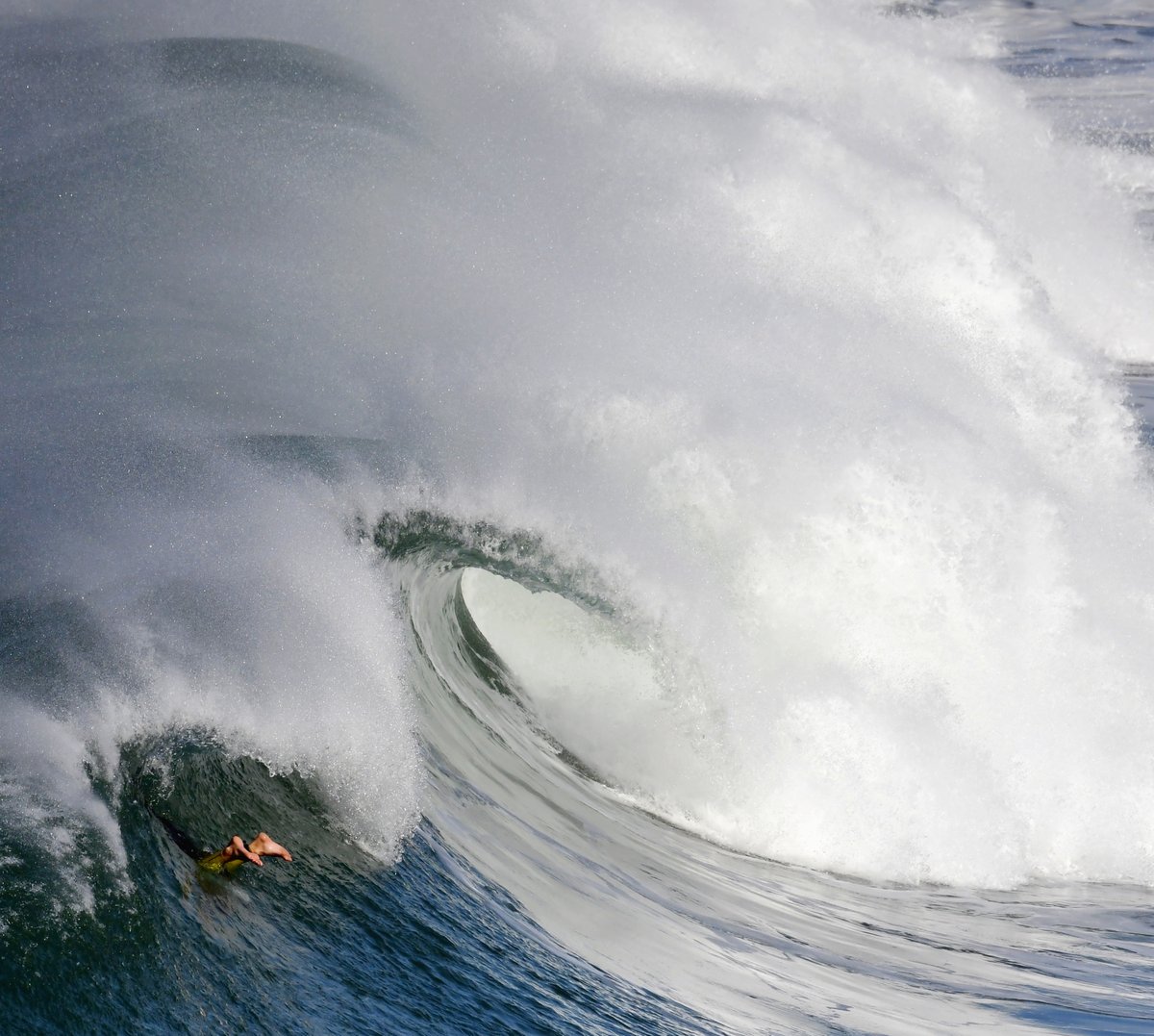
Feet!
Carl Bovis tweet media
English
26
54
539
12.5K
Karunakar Rayker
Karunakar Rayker@krayker·
@rmnth Very popular around coastal Karnataka too. There are some joints near Car Street, Mangalore that serves this refreshing beverage. Great to beat the summer heat!
English
0
0
0
60
NS Ramnath
NS Ramnath@rmnth·
LR Nannari Sarbath used to be super popular in Thanjavur/Trichy area when I was growing up. No bus journey was complete without a large glass of Nannari, especially in the summer. Found the syrup. Planning to try it today.
NS Ramnath tweet media
English
5
0
21
1.1K
Karunakar Rayker
Karunakar Rayker@krayker·
@rmnth Poignant photos. Beautiful visual prose. Those photos he captured with his camera, have immortalized those moments. He captured the moment. His photos captivated us all. Touching tribute, @rmnth.
English
0
0
1
29
Karunakar Rayker retweetledi
Parimal
Parimal@Fintech03·
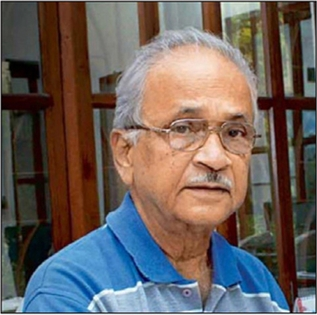
In 1971, amidst the mud & blood of refugee camps, 1 man defied the entire medical world. While doctors begged for IV drips that did not exist, Dilip Mahalanabis mixed salt & sugar in plastic drums & told the dying to drink. He was a ghost who used the physics of the human gut to defeat Cholera. He never patented his formula, choosing to save millions instead of making millions. He died in 2022, an unrecognized giant who gave the world its most successful medicine for the price of a pinch of salt. Born in 1934 in West Bengal, Dilip Mahalanabis was a pediatrician by training. He was a researcher at the Johns Hopkins University International Centre for Medical Research & Training in Calcutta. He spent his early career in the Silo of elite academic research, studying how fluids move through the human body. Despite his elite training, he was a man of the people. He did not want to stay in a comfortable air-conditioned hospital while a crisis was brewing. During the 1971 Bangladesh Liberation War, millions of refugees poured into West Bengal. A cholera epidemic broke out in the camps. People were dying in heaps. There were not enough IV fluids/needles/trained doctors. The conventional medical wisdom said: "Only IV drips can save a cholera patient." Dr. Mahalanabis knew the physics of S.N. De’s discovery. He knew that if he could get the concentration of salt & sugar exactly right, the gut would pump the water back into the body. He prepared the Oral Rehydration Solution (ORS) in massive drums, using untrained volunteers to distribute it to dying refugees. The mortality rate dropped from 30% to 3%. He proved that a 5 paise solution was more effective than a 50 rupees IV bag. He never patented ORS. He believed that something so fundamental to human survival should belong to the world. Because there was no money/corporate patent attached to his name, the world used his work but forgot his face. For decades, he lived quietly in Calcutta. He was a global consultant for the WHO, helping eliminate cholera in dozens of countries, yet in his own neighborhood, he was just the retired doctor from down the street. He died in 2022. It was only after his death that many of his relatives & neighbors realized he was the man The Lancet described as the creator of the most important medical advance in the 20th century. We finally awarded him our 2nd highest civilian honor, Padma Vibhushan, but it came after he passed away. He lived & died a Ghost.
Parimal tweet mediaParimal tweet media
English
32
688
1.7K
40.7K
Karunakar Rayker retweetledi
Internet Archive
Internet Archive@internetarchive·
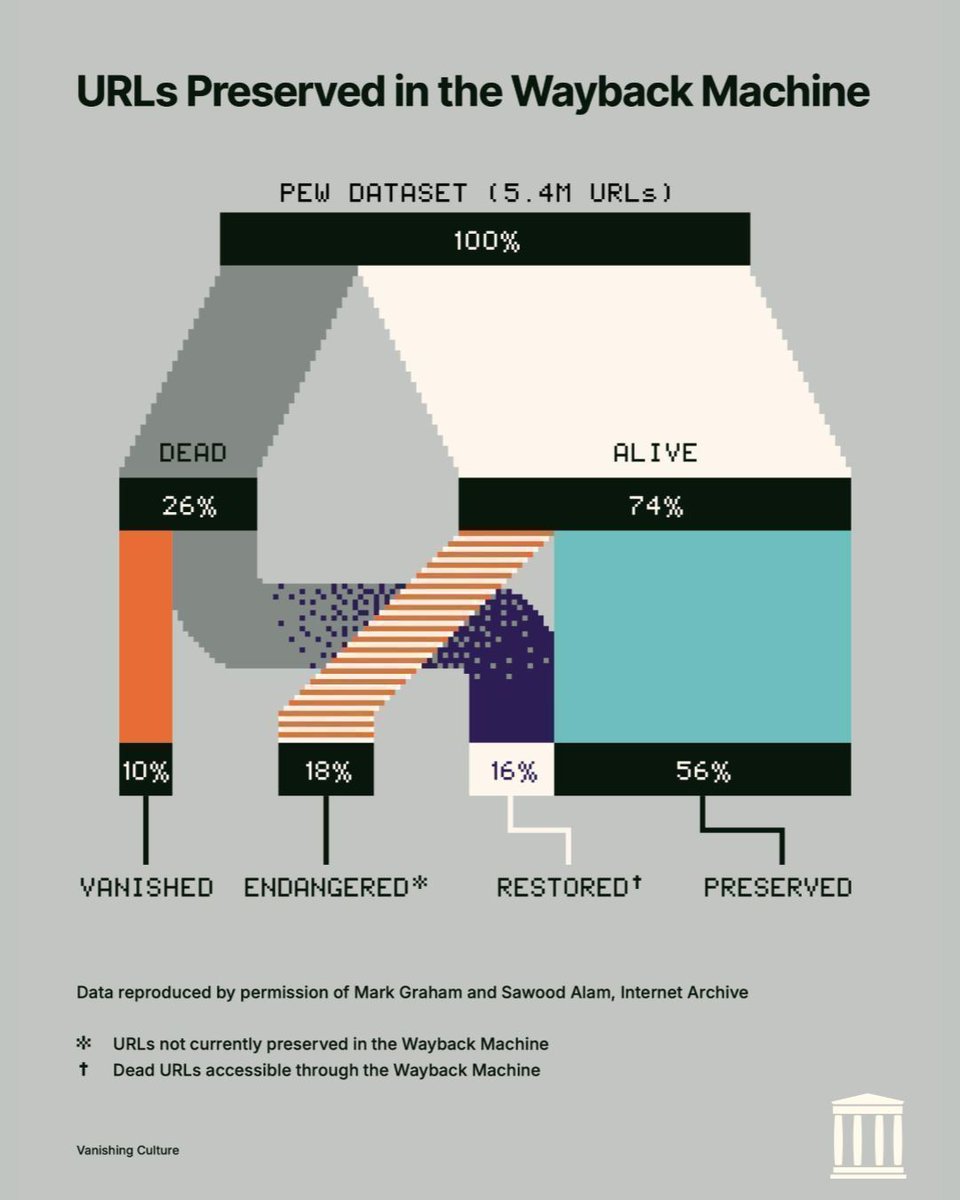
The web is disappearing 🕳️ According to a Pew Research Center report, 26% of pages from 2013-2023 are no longer accessible. But that’s not the whole story. In a new study published in Internet Archive's book, VANISHING CULTURE, data scientists working with the Wayback Machine have found: 16% have been restored through the Wayback Machine. 56% are preserved before they disappear. Preservation is the remedy for cultural loss. 📚 Read VANISHING CULTURE free from the Internet Archive 📖 Download & read: archive.org/details/vanish… 🛒 Purchase in print: betterworldbooks.com/product/detail… #VanishingCulture #DigitalMemory #InternetArchive #BookTwitter
Internet Archive tweet media
English
166
4.5K
12.4K
459K
Karunakar Rayker retweetledi
кєνín
кєνín@notcee_fan·
Twitter brand is so strong it was renamed and it’s still Twitter.
English
1.4K
22K
243.4K
3.4M
Karunakar Rayker retweetledi
Parimal
Parimal@Fintech03·
Scientists from the US & Europe had to fly to India to learn how to read the planet from him. He turned the Indian Rain into a global Data Stream for climate science. To his neighbors, he was likely just a man obsessed with collecting rainwater in buckets; to the globe, he was the Admin of Earth’s Timeline. In the 1950s, scientists knew how to date very old things (billions of yrs) & very young things (C-14 for the last 50000 yrs). But there was a Blind Spot in the timeline: the last 100 to 1000 yrs, the era that defines our current climate crisis. Dr. Devendra Lal realized that when cosmic rays smash into the atmosphere, they create Silicon-32. This isotope falls with the rain & gets trapped in the layers of the ocean & ice. Silicon-32 is incredibly rare. Detecting it is like looking for a single specific grain of sand in a desert. To find it, we needed massive data sets which in his world, meant 1000s of liters of water. While Western scientists tried to simulate these processes in sterile labs, Lal used the Direct Energy of the Indian climate. During the heavy Monsoons, Lal & his team at TIFR did not just stay indoors. They set up massive collection systems. They were essentially using the entire Indian subcontinent as a capture card for cosmic data. He proved that the Monsoon was a Conveyor Belt that brought cosmic isotopes from the stratosphere down into the deep-sea sediments. He turned a Natural Disaster into a Precision Tool. Because of Lal’s work, we could suddenly read how fast ocean currents move, the circulation logic of the planet. Before Lal, the deep ocean was a black box. His Silicon-32 method acted as a Timestamp. By measuring the decay of the Silicon-32 he found in ocean sponges & sediments, he could tell exactly how many yrs ago that water was last at the surface. When the US launched the GEOSECS (Geochemical Ocean Sections Study) project (the most ambitious ocean mapping in history), they depended on his protocols. The global admin of the project was a man who had perfected his craft in a Bombay lab. Lal once spent weeks collecting giant ocean sponges because they were the Hard Disks that absorbed his isotopes. To the world, these were just sea-scrubbers; to Lal, they were archived data packets of the 18th century.
Parimal tweet media
English
27
490
1.2K
20.3K
Karunakar Rayker retweetledi
Nicholas Fabiano, MD
Nicholas Fabiano, MD@NTFabiano·
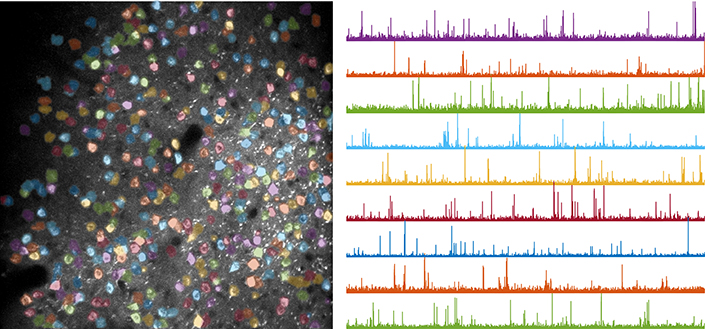
Addiction to short-form videos is associated with reduction of brain activity in the frontal lobe and weakened focus.
Nicholas Fabiano, MD tweet media
English
401
8.3K
27.4K
5M
Karunakar Rayker retweetledi
Give A Shit About Nature
Give A Shit About Nature@giveashitnature·
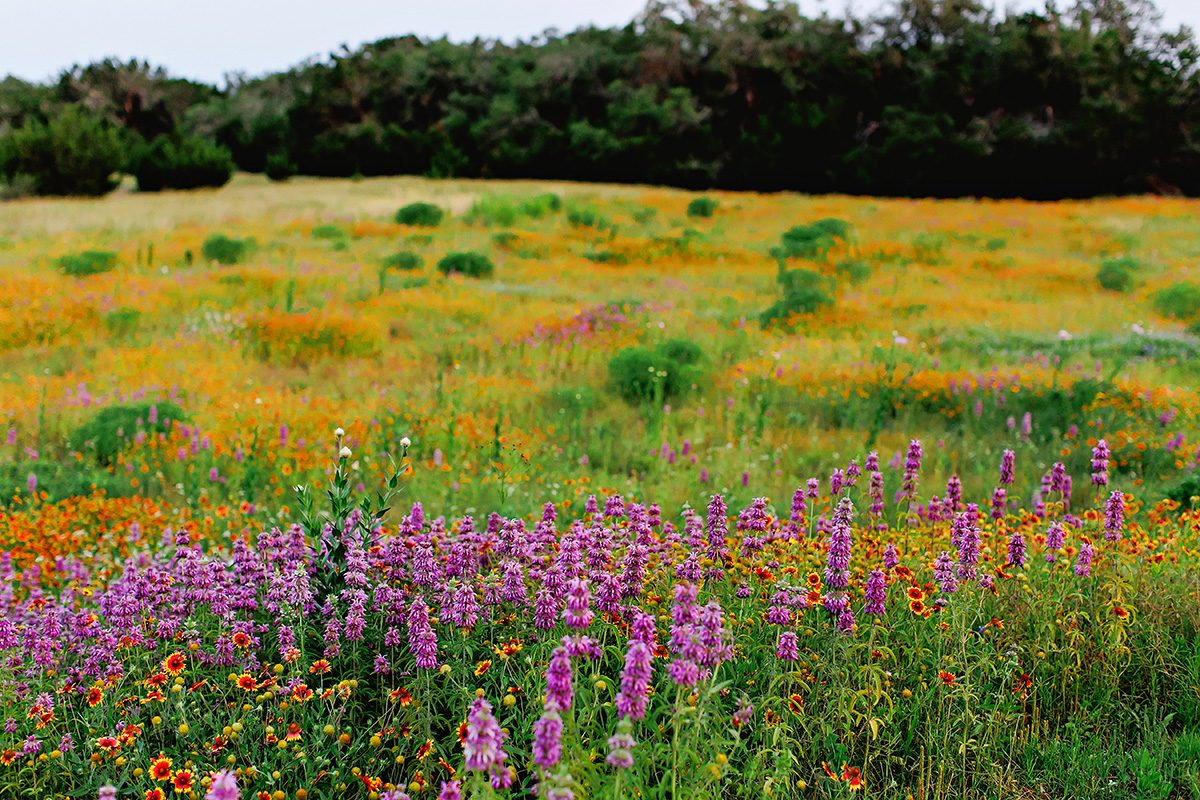
Studies show farmers who plant strips of wildflowers through their crops need less pesticide, and often get better yields. A Swiss study on winter wheat found that fields with wildflower strips had 40 to 53% fewer leaf beetle pests than fields without. Crop damage dropped 61%. The mechanism is simple. Wildflowers feed hoverflies, lacewings, parasitic wasps, ladybugs, and ground beetles. Those insects eat the aphids, beetle larvae, and caterpillars that farmers would otherwise spray for. A few meters of wildflowers hosts an unpaid pest control crew. In apple orchards where no insecticides had been used for five years, plots with wildflower alleyways had 9.2% damaged fruit. Control plots without flowers had 32.5%. The UK is now running a five-year trial across 15 farms placing 6-meter flower strips through the middle of fields, not just at the edges, because the beneficial insects can't reach the center of a large field otherwise. This works the same way in a backyard vegetable garden as it does on a commercial farm. Plant native flowering species near your tomatoes, beans, and squash. The pests still show up. The predators show up too, and they get there for free. Our fields were never supposed to be monoculture.
Give A Shit About Nature tweet mediaGive A Shit About Nature tweet media
English
72
1.8K
5.3K
104.8K
Charles Assisi
Charles Assisi@c_assisi·
🚨 This landed in my WhatsApp and it genuinely infuriates me. A brazen fake @mahanagargas message — logo, business account, the works — threatening to “disconnect my connection immediately” tomorrow (23rd April, 10:30 pm) unless I call “Mr Rahul Joshi” on 9181930820. Manufacturing fear around something as basic as cooking gas, preying on ordinary families who can least afford to be disrupted or defrauded. These guys must be cooked. This is social engineering, designed to extract OTPs, bank details or “verification payments.” These scams are proliferating. Slow down. Verify everything. Block. Report. Share this if it saves even one household from falling into their trap. Screenshot attached.
Charles Assisi tweet media
English
2
1
1
230
Karunakar Rayker retweetledi
Ian Miles Cheong
Ian Miles Cheong@ianmiles·
Marc Andreessen just revealed the Elon Musk philosophy that completely broke his brain: "The best product in the world shouldn't even need a logo." We all know Elon is relentless about quality. As Marc puts it: "Do you want the best car in the world or not, right? Like that's Elon's mentality... And it's working very well." But at a recent event, Elon took this mindset to a completely different level. He dropped a perspective so jarring that Marc initially thought it was a joke. Elon’s thesis? "You shouldn't even have to have your name on the product. It's just obvious. Everybody knows." The logic is brutal but simple. If you build the undeniable, undisputed best thing in the world, everybody uses it. And because everybody uses it, you don't need to slap your branding all over it to prove it's yours. Think about that. We spend endless hours agonizing over marketing, tweaking brand colors, and putting our logos on every square inch of what we build. But the ultimate flex isn't a flashy logo. The ultimate flex is building something so undeniably brilliant that its mere existence is the brand.
English
850
2K
17.9K
29.9M
Karunakar Rayker retweetledi
Rhys
Rhys@RhysSullivan·
LLMs are weird because it's like having a brilliant employee who never stops working but is also a compulsive liar
English
268
1.1K
19.2K
405.3K
Karunakar Rayker retweetledi
Jay Van Bavel, PhD
Jay Van Bavel, PhD@jayvanbavel·
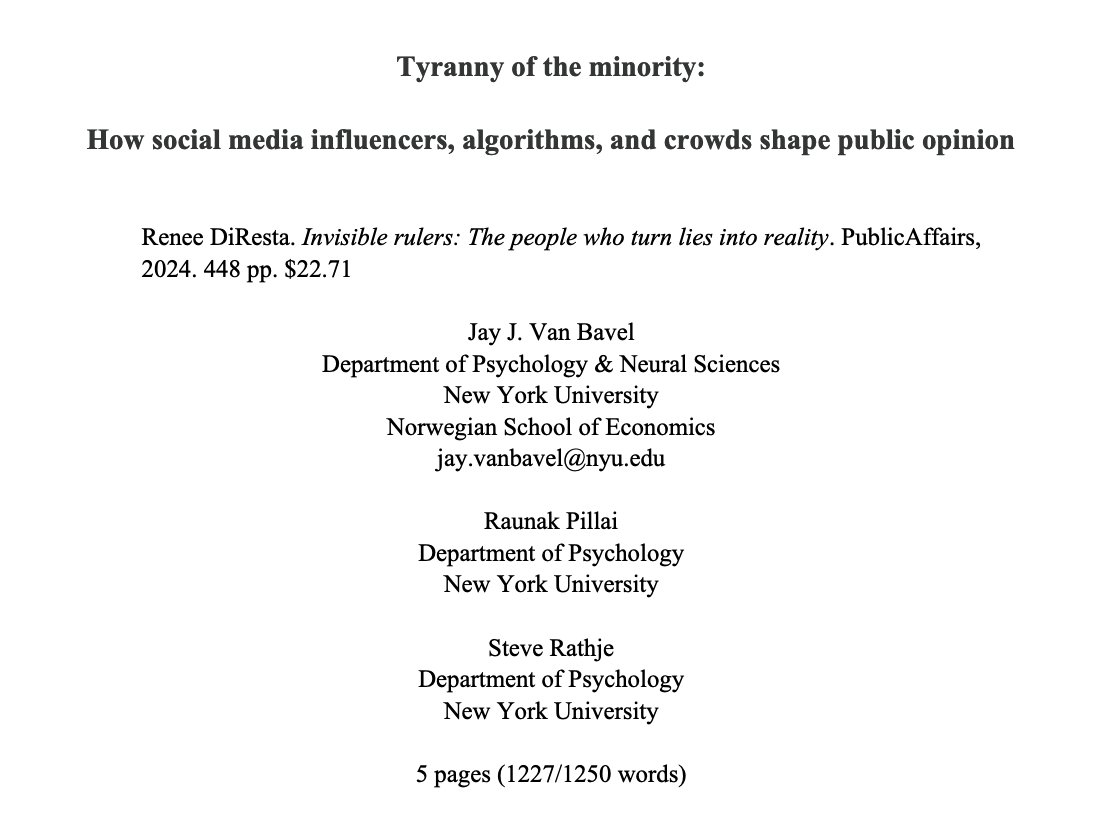
A small fraction of online actors now exerts outsized influence over what the public sees, believes, and argues about. In a new short review paper, we trace how social media influencers can turn fringe claims into viral narratives—often by exploiting a feedback loop between influencers, algorithms, and crowds. As such, the modern information environment enables a tyranny of the minority: extreme and coordinated voices dominate attention, distort perceived social norms, and create a “funhouse mirror” version of public opinion that makes fringe positions look common and conflict look inevitable. We synthesize emerging evidence that a tiny number of highly active users drives a disproportionate share of misinformation and toxicity, and explain how platform incentives reward moralized, identity-salient, and emotionally charged content. We conclude by outlining pragmatic responses—individual, institutional, and policy-level—and by highlighting how generative AI could either accelerate bespoke realities or help rebuild shared understanding, depending on how these systems are designed and governed. osf.io/preprints/psya… We (@PillaiRaunak & @steverathje2) reviewed @noUpside's fantastic book "INVISIBLE RULERS" and connected it to the research we have been doing on this topic for the past decade.
Jay Van Bavel, PhD tweet media
English
42
576
1.3K
115.7K
Karunakar Rayker retweetledi
Bob Golen
Bob Golen@BobGolen·
Scientist: "My findings are meaningless when taken out of context." Media: "Scientist admits his findings are meaningless."
English
30
383
5.6K
59.8K