Ryan Kibler

38 posts

Ryan Kibler

Ryan Kibler

@kribler

Protein whisperer and resident 3D printing artist @UWproteindesign

Seattle, WA Katılım Aralık 2009
147 Takip Edilen196 Takipçiler
Ryan Kibler retweetledi
Adam Broerman
Adam Broerman@adam_broerman·
We sought to make proteins both potent and FAST. We used #proteindesign to design precise control over protein interaction lifetimes, enabling us to construct rapid-response circuits, biosensors, and switchable cytokines. Now published @Nature! Links to paper and tutorial below.
English
11
99
450
31.9K
Ryan Kibler retweetledi
Biology+AI Daily
Biology+AI Daily@BiologyAIDaily·
Drugit: crowd-sourcing molecular design of non-peptidic VHL binders @NatureComms 1. This paper introduces Drugit, a novel small molecule design interface built into the Foldit citizen science game, enabling non-experts to design protein-targeting molecules using intuitive tools and real-time feedback. 2. Using von Hippel-Lindau (VHL) E3 ligase as a model, players participated in ten weekly puzzle rounds to design non-peptidic VHL binders with improved drug-like properties such as lower polarity and better permeability. 3. Over 6,500 unique compounds were submitted by 160 Foldit players, covering broader chemical space than known VHL ligands. Submissions were filtered and triaged through cheminformatics tools, docking, and expert review. 4. One player-designed compound was synthesized, shown to bind VHL via NMR, and co-crystallized with the protein. The bound structure confirmed key pharmacophores and preserved the intended player-conceived binding mode. 5. Remarkably, the binding compound was designed by a player with no formal medicinal chemistry training, underscoring the potential of gamified citizen science in early drug discovery. 6. The final hit compound features a hydroxy-piperidinone core—a novel bioisostere of the canonical hydroxyproline motif—and showed improved predicted ADME properties, including reduced efflux and better solubility. 7. Drugit’s integrated scoring system (RosettaLigand), property filters (e.g., TPSA, cLogP), and user-friendly tools empowered players to design chemically feasible, synthetically accessible molecules in a guided, iterative environment. 8. Post-game refinement included docking (Glide), torsion checks, and absolute binding free energy calculations (FEP+ and Biggin ABFE), ensuring high-confidence candidate selection for synthesis and testing. 9. The co-crystal structure revealed that the experimentally validated eutomer maintained essential hydrogen bonds and binding pocket complementarity, providing a starting point for PROTAC development with enhanced pharmacokinetics. 10. Drugit showcases a scalable and democratized approach to molecular innovation, combining AI-guided design, game-based interaction, and open-access pipelines to engage a global community in drug discovery. 💻Code: drugit.org (client download) 📜Paper: nature.com/articles/s4146… #drugdiscovery #crowdsourcing #foldit #computationalchemistry #citizenscience #VHL #PROTACs #moleculardesign #bioinformatics #rosetta #structurebaseddesign
Biology+AI Daily tweet media
English
0
16
72
7K
Ryan Kibler
Ryan Kibler@kribler·
@AjasjaLjubetic @lucas_nivon That said, if I started this project today with all modern tools, I would use RFDiffusion for backbone perturbation and ProteinMPNN for general sequence design, but I would still design hydrogen bond networks with HBNet. It is simply the best tool for this
English
2
2
7
595
Ajasja 💻🧬🔬
Ajasja 💻🧬🔬@AjasjaLjubetic·
@lucas_nivon Amm, that's true, but this project started before AI was taking over. And Ryan worked with Scott Boyken a lot, so he's very familiar with HB-net.
English
1
0
0
170
Lucas Nivon 🇺🇸
Lucas Nivon 🇺🇸@lucas_nivon·
Important new steps in oligomer protein design, and using Rosetta physics based approaches as well including HBnet. Not. All of protein design is deep learning, must choose right tool first the job!
Biology+AI Daily@BiologyAIDaily

Design of pseudosymmetric protein hetero-oligomers @NatureComms 🚀 New paper from David Baker!🚀 1. This study introduces a divide-and-conquer strategy for designing pseudosymmetric protein hetero-oligomers with multiple unique subunits, which are essential for creating complex biological systems and materials. 2. The method starts with de novo designed symmetric homo-oligomers, redesigning individual subunit interfaces using hydrogen bond networks (HBNets) to ensure specificity, then recombines these to form hetero-oligomers. 3. This approach was successfully applied to create ABC heterotrimers, A2B2 heterotetramers, and more complex structures like A2B2C2 heterohexamers, showcasing high specificity and structural integrity. 4. The pseudosymmetric assemblies created here provide a modular platform for constructing larger protein architectures, including functional nanocages, with applications in drug delivery, signaling, and materials science. 5. Evolutionary insights are mirrored in the design, using principles observed in natural pseudosymmetric complexes, like Sm and LSm protein assemblies, to enhance structural and functional diversity. 6. Experimental validation through structural and biophysical methods, including crystallography, SAXS, and mass spectrometry, confirms the accuracy and stability of the designed hetero-oligomers. 7. The platform demonstrates scalability and versatility, allowing for the systematic exploration of diverse structural and functional protein assemblies. @KostelicMarius @BasileWicky @kribler @UWproteindesign 💻Code: github.com/rdkibler/pseud… 📜Paper: nature.com/articles/s4146… #ProteinDesign #StructuralBiology #Bioengineering #SyntheticBiology

English
1
1
6
975
Ryan Kibler retweetledi
The Nobel Prize
The Nobel Prize@NobelPrize·
BREAKING NEWS The Royal Swedish Academy of Sciences has decided to award the 2024 #NobelPrize in Chemistry with one half to David Baker “for computational protein design” and the other half jointly to Demis Hassabis and John M. Jumper “for protein structure prediction.”
The Nobel Prize tweet media
English
510
8.4K
19.3K
9.1M
Ryan Kibler retweetledi
Institute for Protein Design
Institute for Protein Design@UWproteindesign·
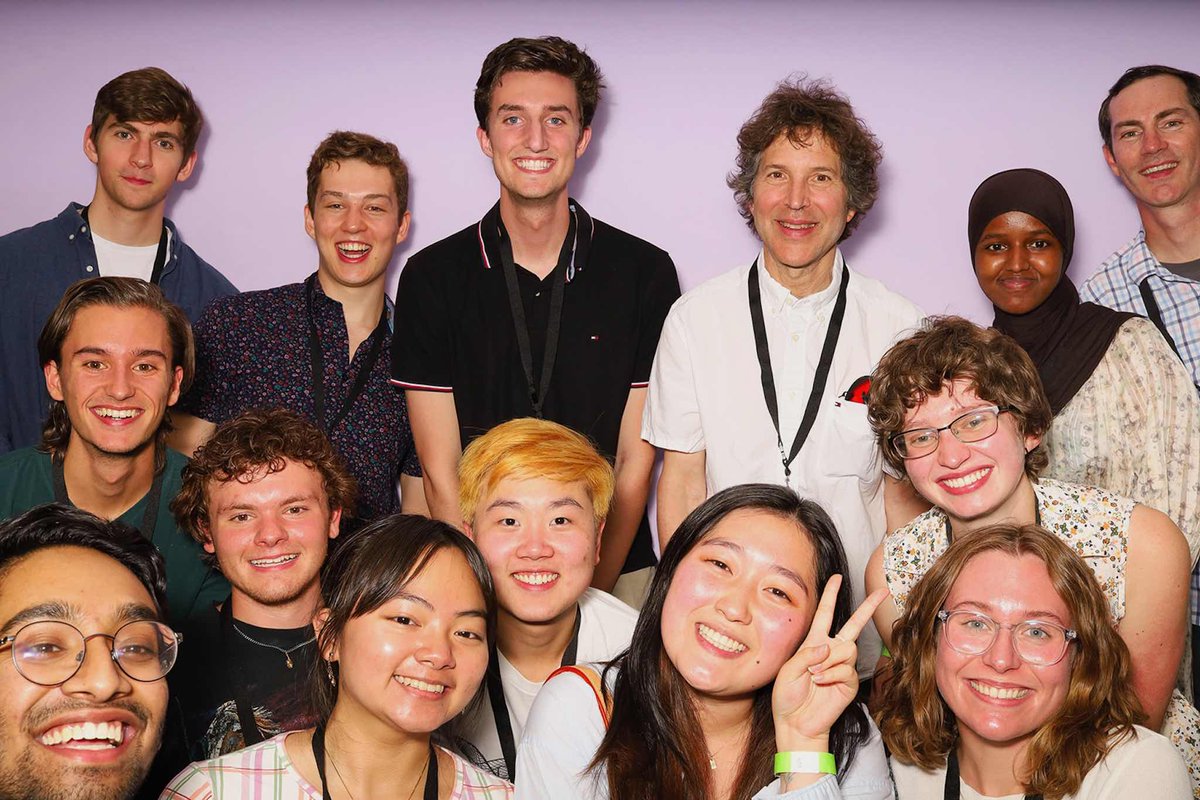
Join JUPITER and leverage AI for good! This research training program offers @UW undergrads the chance to use #AI and computational biology to tackle real-world challenges. Shape a better future in medicine, sustainability & technology. Apply by Aug 27. ipd.uw.edu/undergraduate-…
Institute for Protein Design tweet media
English
3
16
45
14.8K
Ryan Kibler retweetledi
Tim Huddy
Tim Huddy@tim_huddy·
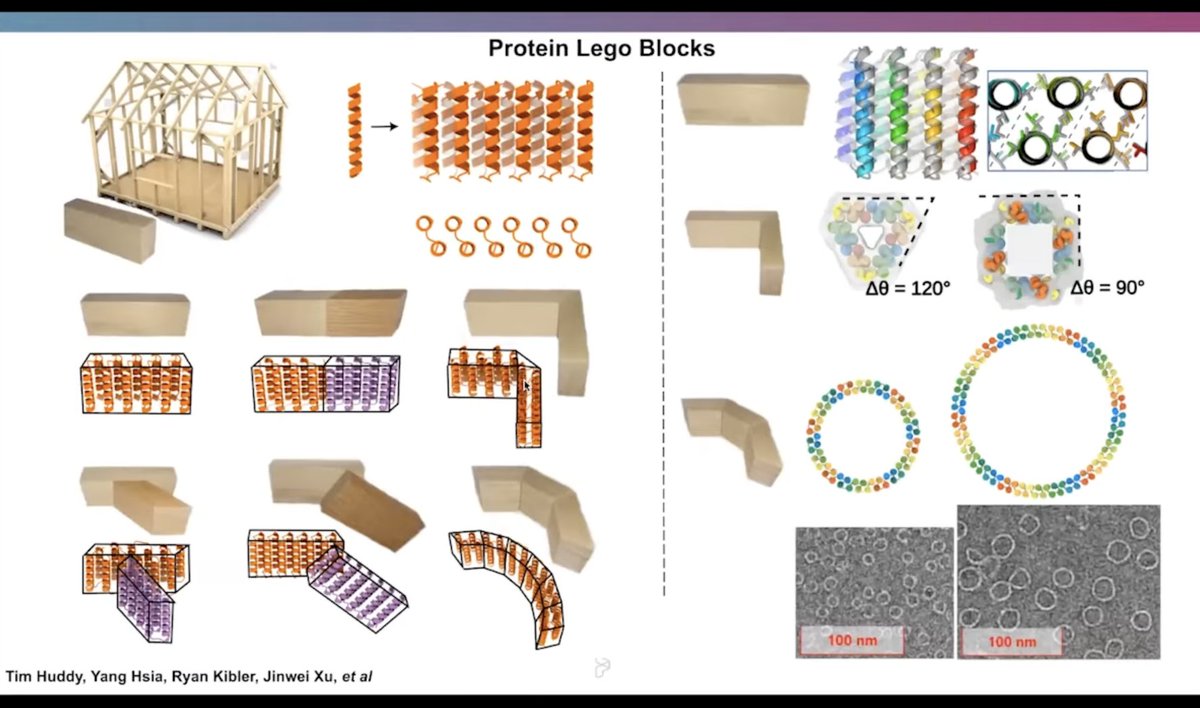
Geometrically standardized features give @LEGO_Group blocks their ability to be intuitively assembled into structures. Here we show that designed proteins can be made to a similar standard, enabling useful features in nanomaterials such as scalable size: biorxiv.org/content/10.110…
English
3
20
52
8.8K
Ryan Kibler retweetledi
UAW
UAW@UAW·
“We will be striking until we get a fair contract. Our priority has always been ensuring that science at UW is sustainable and inclusive, and that means fair pay so we can all afford rent, take care of our families, and stay in the careers we love.” ow.ly/1vTQ50OIiUt
English
0
19
52
5.4K
Ryan Kibler retweetledi
Cole DeForest
Cole DeForest@coledeforest·
PUMPED that our paper introducing Light-Activated SpyLigation (#LASL) is now live at @NatureChemistry! We show bioactive proteins can be stably photo-assembled from split fragment pairs in solution, in biomaterials, and in living mammalian cells. nature.com/articles/s4155… (1/13)
Cole DeForest tweet media
English
10
45
308
50.6K
Ryan Kibler retweetledi
Roman Jerala
Roman Jerala@rjerala·
To regulate cellular processes in #syntheticbiology it is useful to bring 2 proteins into proximity, to reconstitute function, guide localization, transcription... We report that from a single 4 helical bundle several pairs can be made. @NatureComms nature.com/articles/s4146… 🧵
English
2
19
75
7.1K