
Sabitlenmiş Tweet
krish3
6.2K posts

krish3
@krishpod7
Senior Lecturer Podiatry and Prescribing #150leader #ahp #coach #leadership #fellow #education #wounds #qi #apprenticeship #mumof2
Katılım Haziran 2018
2.3K Takip Edilen2.9K Takipçiler

Inspired by the energy at #cx2026 @ExceLLondon looking forward to presenting today on “standard care for foot ulcers are we actually delivering?” @UniNhantsFHES

English
krish3 retweetledi

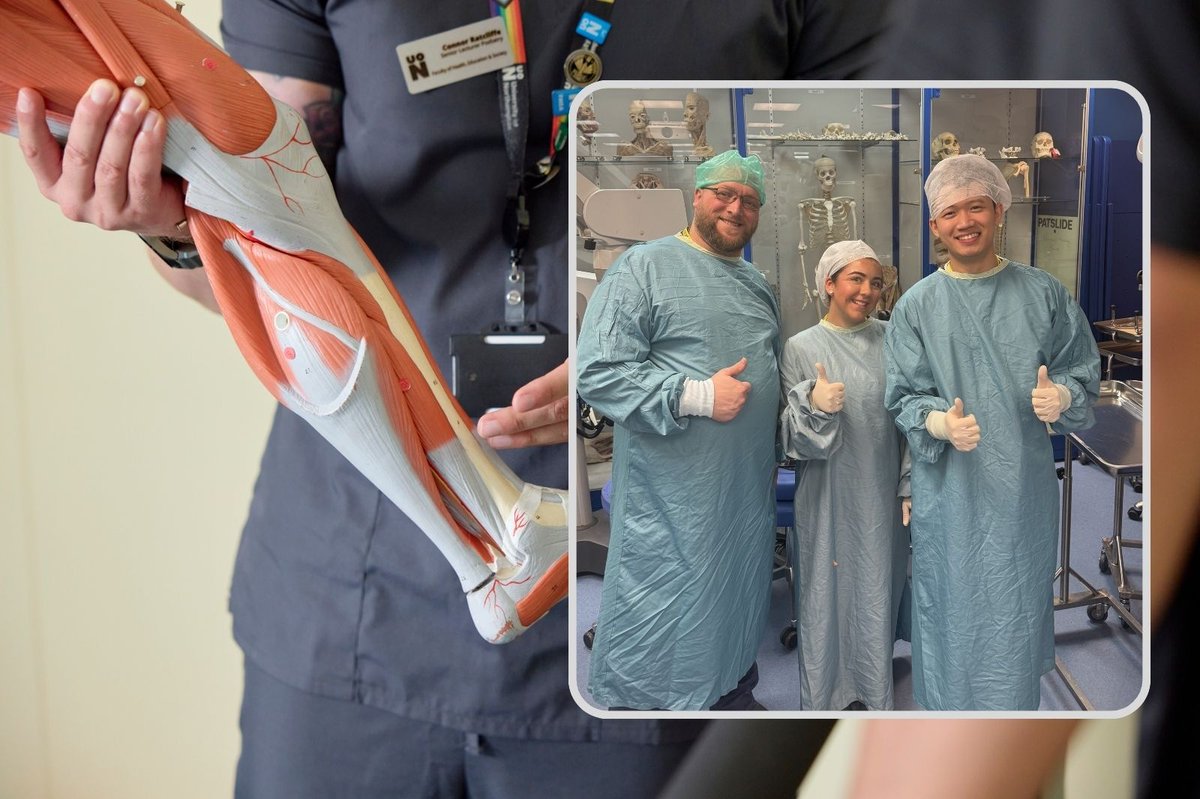
“There is a shortage of #podiatrists so I highly recommend anyone considering #Podiatry as a career to look at the UON Apprenticeship offer.”
Our latest @Apprenticeships Week story is about Jonathan one of our first Podiatry apprentices.
bit.ly/4rI6y6C
#NAW2026
English
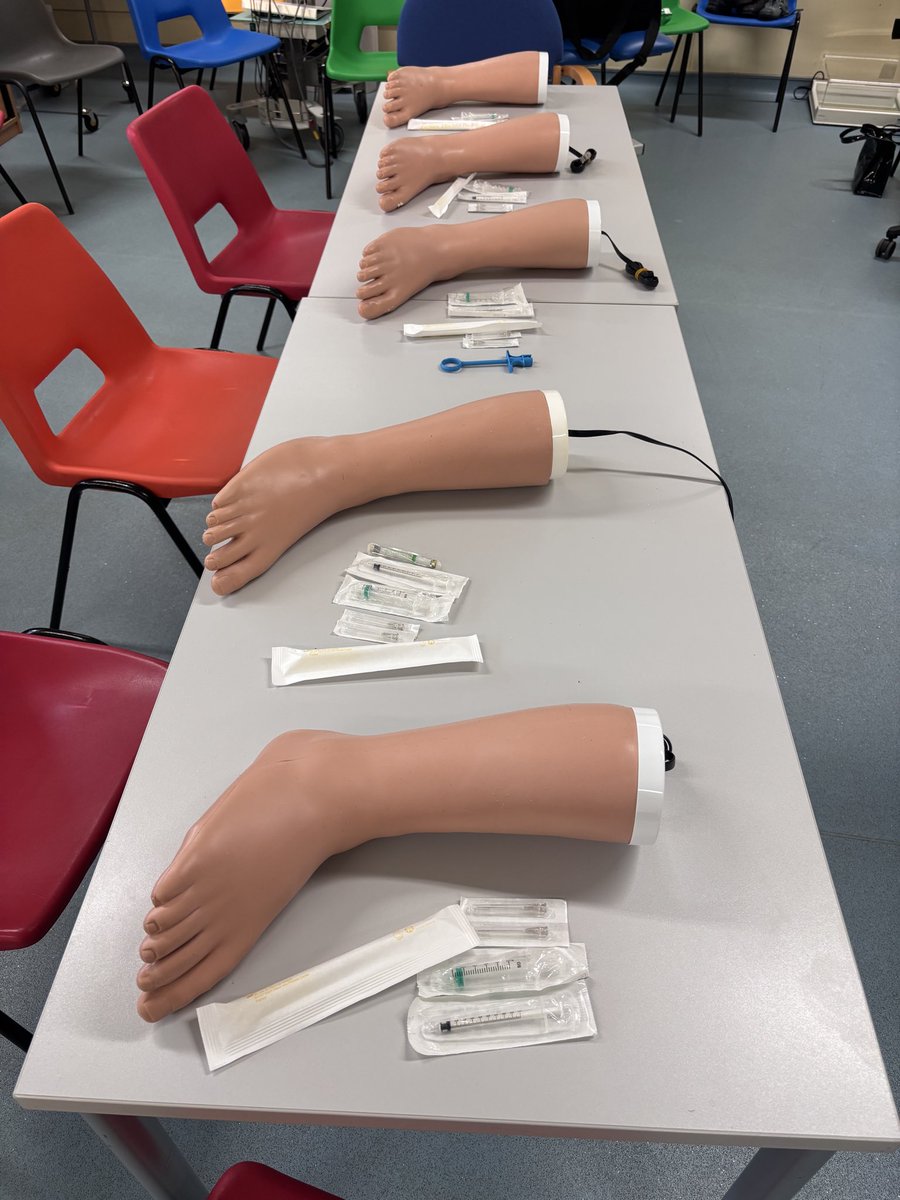
Practical skills morning in Podiatry!
Our final-year students got hands-on today practising local anaesthesia techniques including:
🔹 Ankle blocks
🔹 Tibial nerve blocks
🔹 Digital blocks
Great to see their confidence and clinical precision growing as they prepare for practice
English
krish3 retweetledi

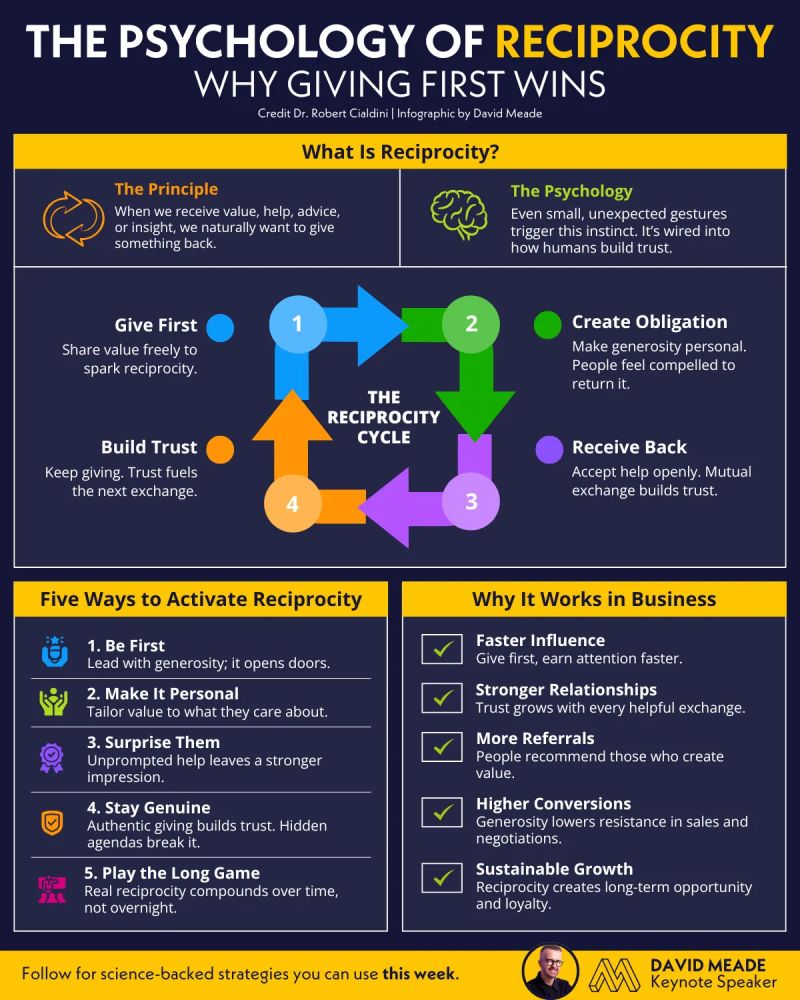
Reciprocity is one of the most important principles for leaders of change.
At a simple level, reciprocity means a mutual exchange between people where each party gives & receives value, creating a balance that benefits everyone involved. But it's deeper than that. It's about mutual benefit & collective growth. Reciprocal relationships are built on mutual giving, receiving and creating community, rather than one-way transactions.
Increasing numbers of organisations are investing in “social network analysis” (SNA) to understand their internal relationships & the extent to which these relationships enable or block change. SNA shows that reciprocity creates the best kind of sustainable, trust-based relationships that support long-term change. By contrast, many organisations exhibit “simple brokering” rather than reciprocity. That means that individuals (“brokers”) fill gaps between disconnected groups or individuals in an organisation. Brokering can be fragile & psychologically costly/exhausting if you’re in this role.
In change leadership, reciprocity succeeds where brokering alone may struggle because it builds the relational infrastructure that makes information sharing, collaboration & sustained commitment possible. By contrast, brokering often means transactional approaches focused on short-term exchanges; less sharing & less learning.
As change leaders, we have to be role models of reciprocity. That means being the people who create the conditions for reciprocal relationships by being the ones who give first. If we want cooperation, support &/or engagement from others, we need to offer cooperation, support &/or engagement first. Even when we are working with people & teams who are challenging, resistant &/or “don’t get us”, we have to give first.
A beautiful blog on reciprocity from @SisDrSandra: linkedin.com/pulse/reciproc….
Graphic from David Meade on the power of "giving first" taken from: linkedin.com/posts/davidmea….
I also want to acknowledge @DrNicolaBurgess who has helped me more fully appreciate the power & importance of reciprocity through her excellent research studies.
English
👣 We’re hiring! @UniNorthants is looking for a Clinical Lead Podiatry to lead our clinic, support our team, and help shape the next generation of podiatrists. Closing date: 27/10/2025 Apply here: jobs.northampton.ac.uk/vacancy/clinic…
English
krish3 retweetledi
Energy is a topic that has been growing in traction in the field of organisational & system change. I describe energy as the vitality that enables the system and the people in it to work together in a cohesive way, develop, grow and improve.
Most change initiatives don’t die because of a lack of planning. They die because the energy for keeping them moving forwards gets shifted elsewhere or gets exhausted. Leaders play a critical role as enablers of this vital resource for change.
Energy becomes exponentially more important as the kinds of change initiatives we engage in get more more complex, covering bigger systems. The amount of energy it takes to create coherence & cohesiveness in cross-functional, cross-organisational change is substantial. If we don’t build in a focus on energy, the system gets pulled apart by factors like conflicting objectives, gravity, friction & information decay.
A framework I find helpful is to contrast the “anatomy” & “physiology” of change. We need to work with & sustain a focus on both for the long term.
This post is inspired by a fantastic piece by Miguel Pantaleon in @medium: @MiguelPantaleon/system-maps-are-energy-blind-f244121b96f9" target="_blank" rel="nofollow noopener">medium.com/@MiguelPantale….

English
krish3 retweetledi
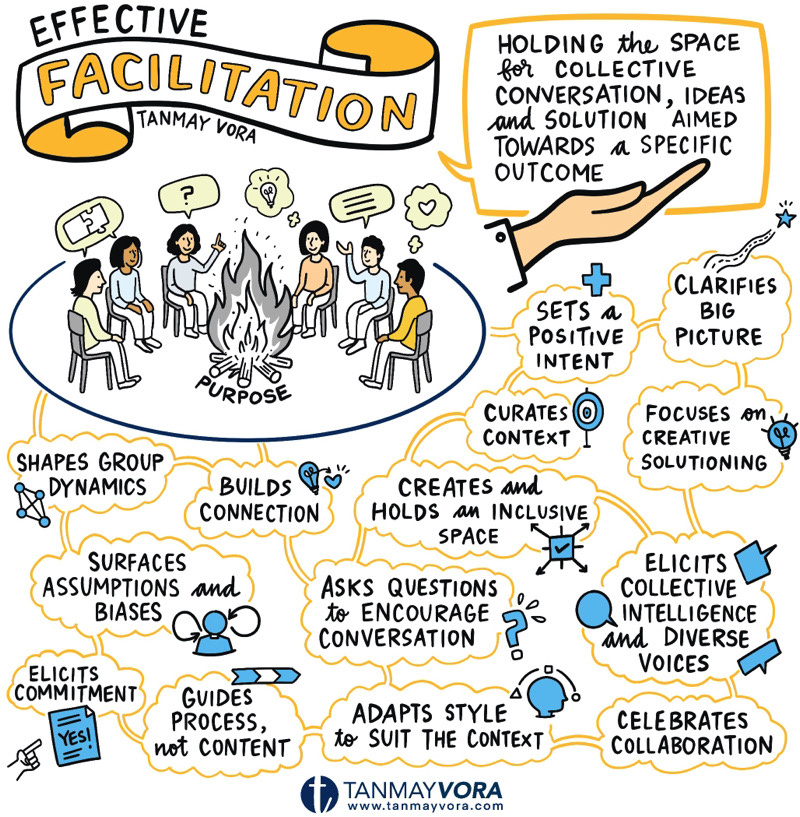
Facilitation skills are not just for change & improvement "experts". Every leader should have them.
Organisations that integrate facilitation into their leadership approach report more productive & engaged teams, improved innovation & better decision-making.
Facilitative leadership is even more important in the era of AI. AI can analyse trends, detect patterns & generate content, but it can't replicate the trust built through dialogue, or the remarkable outcomes that can emerge when people collaborate to make sense of complex issues together.
How we might go about making facilitative leadership the norm:
1) Integrate facilitation into leadership development activities, providing training, coaching, resources & safe spaces to practice.
2) Have senior leaders role model facilitative approaches.
3) Build understanding of situations where we should limit the number/style of decisionmakers & those where we should be facilitative.
4) Make facilitative approaches the leadership norm/expectation & build them into organisational processes.
5) Encourage peer learning so leaders can share experiences, discuss challenges & learn from one another.
Inspired by a very good new blog & sketchnote from @tnvora: tanmayvora.com/what-effective….
English
krish3 retweetledi
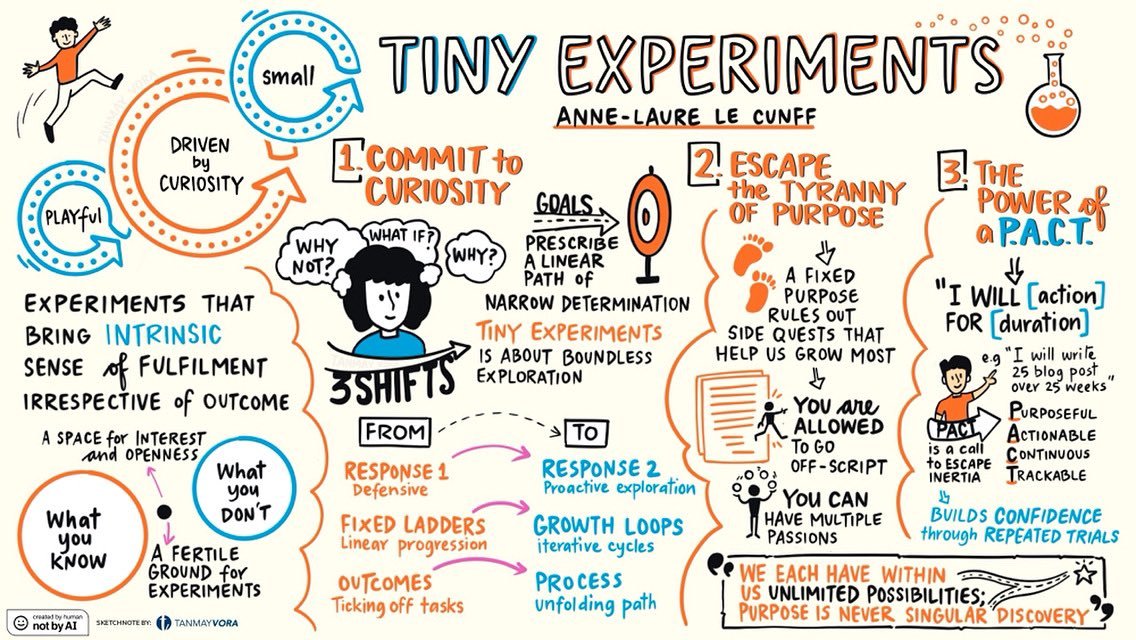
I have long been an advocate of the power of small tests of change, so I am reading "Tiny Experiments", a new book by @neuranne. Some of the key ideas:
1) Systematic curiosity over linear goals: We always have the potential for growth & learning even in uncertain situations. This approach contrasts with traditional goal-setting, which can be rigid & limiting.
2) Unlearning "cognitive scripts" (internalised patterns). By questioning these scripts, we can discover new possibilities & paths.
3) Designing tiny experiments: Small, manageable experiments that allow for flexibility and adaptation. This encourages continuous learning & improvement without the pressure of fitting into predefined notions of success.
Book review by Matt Rutherford: mattrutherford.co.uk/book-tiny-expe…
Summary by @sobrief_ : sobrief.com/books/tiny-exp…
Sketchnote of key concepts by the brilliant @tnvora.
English
krish3 retweetledi
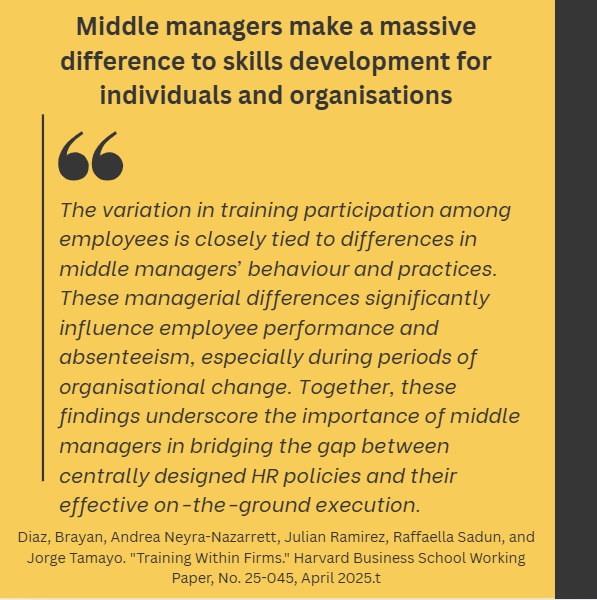
Never underestimate the power & importance of good mid-level managers. New research in a @HarvardHBS working paper: the attitude & support of mid-level managers can make or break the impact of training programmes for frontline employees. Organisations invest huge sums in employee training programmes to improve productivity, which often fail to deliver. Variation in training participation/engagement among employees is closely tied to differences in the behaviour & practices of their line managers. Managers who support & encourage training create the conditions for better employee performance & less absenteeism. Frontline teams with "high training" managers get more training during times of high pressure &/or organisational change & get better results, despite having to deal with increased demand.
Implications:
1) For policymakers/senior leaders: understand that top-down skill mandates are likely to be ineffective without local buy-in.
2) Include middle managers in the design & implementation of organisation-wide training initiatives.
3) Incorporate managerial incentives & practices into the design of training programmes.
3) View the process of training intervention in the wider context of the leadership support that employees are likely to get or not get.
hbs.edu/faculty/Pages/….
English
krish3 retweetledi
“There’s a lot going on in this space. At our event, employers can talk to academics and understand what these programmes mean to them.”
Next Thu, employers will find out how our Degree #apprenticeships can benefit them.
🎙️/ @NLiveRadio - player.autopod.xyz/872801
English
krish3 retweetledi
The "J-Curve" of change is a helpful concept when thinking about the trajectory of a change initiative. Leaders assume that they will see early results from the implementation of change but performance often gets worse before it gets better.
There are many reasons for it; disruption to existing systems, people fearful of & getting used to new ways of working; it's a learning curve for the system.
One of the worst things that happens as a result of the J-Curve is "leadership tampering": leaders impatient for results who start to fiddle with the new system before new arrangements get a chance to work through.
There are many things we can do to reduce the impact of the J-Curve:
1) Stay focused on shared purpose & values, giving people the confidence to move towards a different future that is more compelling than the status quo
2) Anticipate that an "implementation lag" may happen and set expectations based on that
3) Provide support - technical, emotional, learning
4) Involve everyone in the change process, so it is done "with" people, not "to" them
5) Adjust, based on learning & feedback, through small test of change
This article is from @dviney who developed the concept of the J-Curve: david-viney.me/post/the-j-cur….

English
krish3 retweetledi
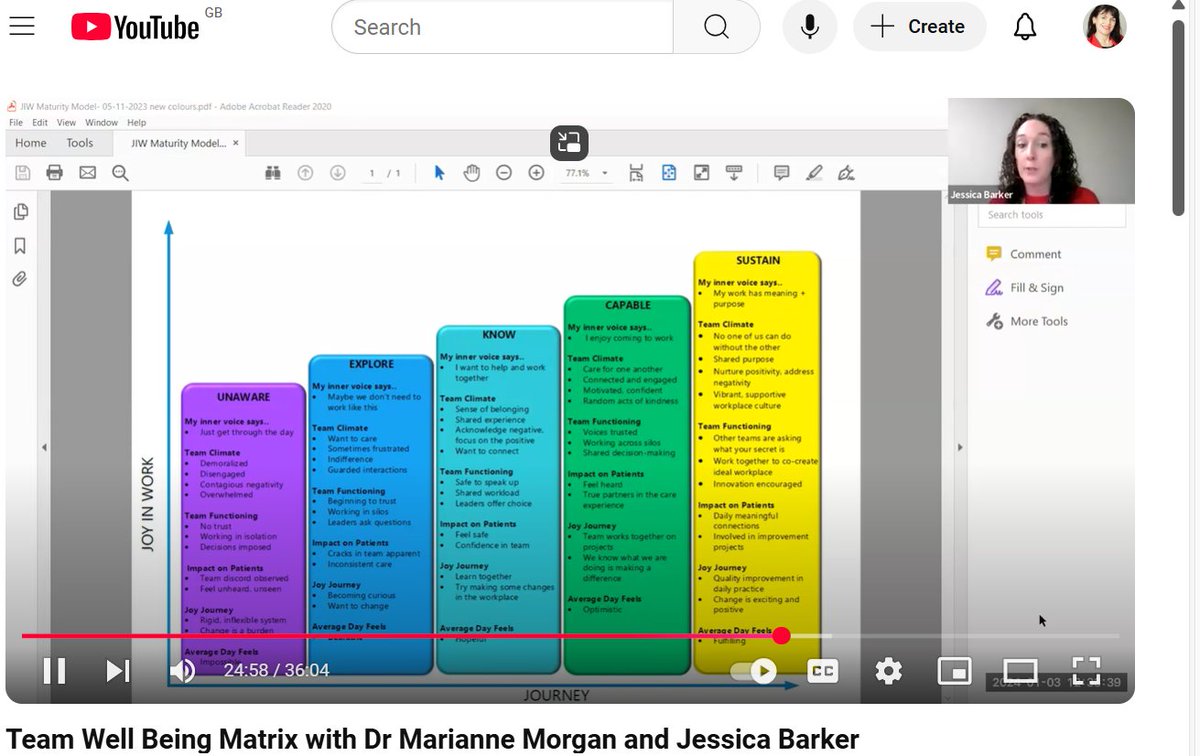
There's been a fantastic response to my post about "Creating team joy & wellbeing: a guide for leaders" by Marianne Morgan & Jessica Barker. There's also a podcast about it, with the authors in conversation with @GatewayMedic:
youtube.com/watch?v=--wxHt…

YouTube
Helen Bevan@HelenBevan
"Creating team joy & wellbeing: a guide for leaders". This is a super resource, designed by leaders in health & care, to help teams and leaders assess where they’re at, identify how to grow as a team & make meaningful changes to improve team well-being. It includes practical change ideas, coaching strategies & ways to engage teams in this work: interiorhealth.ca/sites/default/…. Hi res image: interiorhealth.ca/sites/default/…. These resources were created by Jessica Barker & Marianne Morgan from @Interior_Health in Canada.
English
krish3 retweetledi
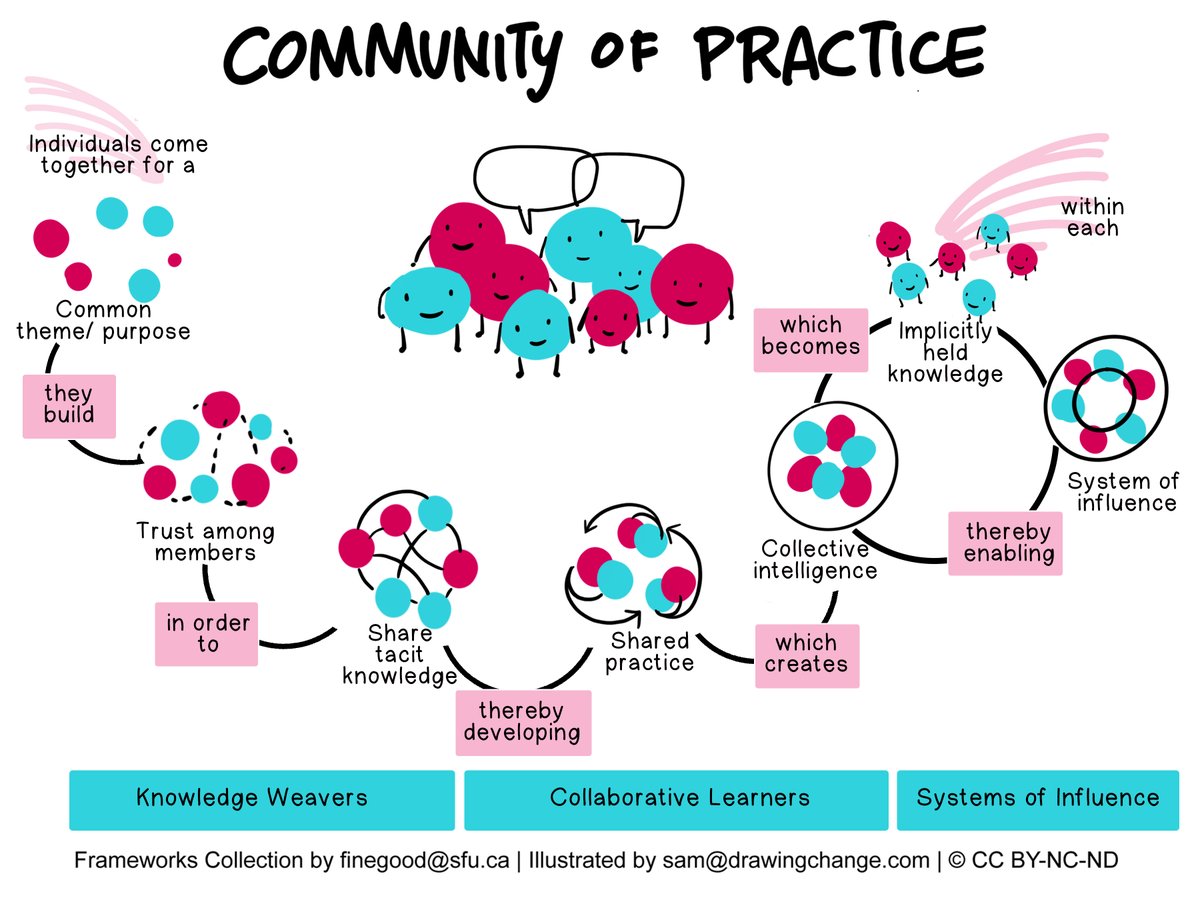
The stage of maturity of your learning/improvement network or community of practice impacts how much difference it can make. @SFU Faculty of Science identifies three stages:
1) "Knowledge Weaving" prioritises the exchange of tacit knowledge within the network or community. Collaboration & connection enable valuable experiential knowledge to be exchanged.
2) "Collaborative Learning" is about taking that tacit knowledge further to support members to experiment & learn, generating new & emergent approaches which are further shared.
3) "Systems of influence" extend influence beyond the community or network by advocating & supporting systemic change in response to complex challenges.
Many networks/CoPs in health & care never get beyond stage one, when their potential is so much greater.
sfu.ca/complex-system….
For deeper analysis of the principles: margaretwheatley.com/articles/using…
English
krish3 retweetledi
This week's In the news is out. Media coverage includes:
🖼️ Students bring the refugee heritage of @DelapreAbbey to life
🎓 Lecturer Elisha Horrocks writes about networking
👩⚕️ @DeborahAmu56081's @NursingTimes blog is about preceptorships...and more!
northampton.ac.uk/news/in-the-ne…

English
krish3 retweetledi

🚨 Calling all UK clinicians 🚨
Help shape the future of CLTI pain management by sharing your expertise in a short survey! Your input will directly influence design of an RCT on analgesia for ischaemic pain. 5min=real impact!
@VSGBI @vs_pad @SPCSociety
docs.google.com/forms/d/e/1FAI…
English
krish3 retweetledi
People's wellbeing continues to be in healing hands with @UniNhantsFHES graduates, enhancements to our degree programmes and new courses set to start very soon!
See @ChronandEcho for more.
northamptonchron.co.uk/education/uon-…
@MartynWyres/@RachelMorrisLo1/@catevans10/@krishpod7

English
krish3 retweetledi
How, as leaders, do we motivate people to do their most productive work? New research says that too often we make assumptions linked to "agency theory": that people need strong managerial control, targets, monitoring & regulation to work effectively. The researchers say that assumptions based on "self-determination theory - creating the conditions so people are intrinsically motivated to do their best work (autonomy, competence, and relatedness) - get significantly better results. The key is to shift assumptions to shift practice: sloanreview.mit.edu/article/what-l…. Via @mitsmr.
I paired this with a graphic from Landmark: landmarkspace.co.uk/wp-content/upl…

English
krish3 retweetledi
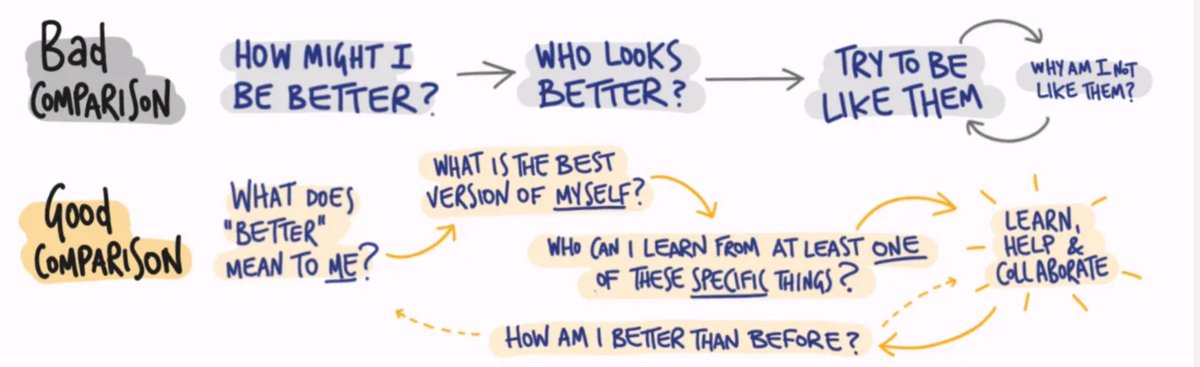
We are constantly comparing ourselves to others. Social comparison can be a source of distress or development. It can create feelings of inadequacy, reduced self worth, unrealistic standards. When managers compare themselves to (& envy) team members, it can lead to abusive supervision.
Yet comparison can lead to inspiration, motivation & perspective. Researchers found a 10.9% increase in productivity when coworkers could compare themselves with & learn from others.
How can we better navigate comparison at work?
1) Choose to not compare in situations we cannot control or change
2) Compare with the goal of learning & improving
3) Compare ourselves with the right person- ideally someone who is slightly better at something.
sloanreview.mit.edu/article/a-bett…. Via @mitsmr. Graphic: @stefano_studio
English
krish3 retweetledi
When we take part in an unproductive meeting, the effect isn't just the immediate impact of a waste of our time. The effect can go on for hours or even days. It's called a "meeting hangover": a period of diminished focus, motivation or productivity following a bad meeting. Researchers found that more than a quarter of meetings produced meeting hangovers. Five insights from meeting science to prevent meeting hangovers:
1) More active, thoughtful facilitation
2) Cut the guest list ruthlessly
3) Turn agendas into action plans
4) Make every minute count & don’t run over
5) Demand accountability, every time
hbr.org/2025/02/the-hi…. Via @brentnreed

English
krish3 retweetledi
Power gradients (the gap between those with the most power & least power in a team or system) create risks, barriers to communication, a negative sense of "us & them", less innovation & poorer patient & performance outcomes. Jade Garratt says that addressing power gradients is THE most effective lever for increasing psychological safety within a team. This means:
1) Reducing the power held or overtly displayed by the most powerful individuals; &/or
2) Increasing the power & influence of those with the least.
There are many ways to reduce power gradients. It doesn't necessarily require radical rethinking of the authority structure (& we may redraw the structure yet not reduce the power gradient): psychsafety.com/reducing-power…. Via @tom_geraghty (sign up for his weekly newsletter on psychological safety. It's brilliant)

English