Lakshman Nataraj

9.7K posts

Lakshman Nataraj

Lakshman Nataraj

@laks316

AI Enthusiast and Researcher. Specialize in Artificial Intelligence, Signal and Image Processing, Computer Vision, Machine Learning and Cyber Security

Chennai, India Katılım Ekim 2011
1.7K Takip Edilen738 Takipçiler
Lakshman Nataraj retweetledi
IIT Bombay
IIT Bombay@iitbombay·
Congratulations to IIT Bombay team comprising George Christopher Panneer Selvam (Phd student) and Hari K (postdoctoral fellow) led by Prof. S. Shankaranarayanan, Physics for being awarded the first prize in the 77th Edition of Gravity Research Foundation (USA) essay competition-2026. Link: arxiv.org/pdf/2605.13042 This competition has a storied history dating back to 1949, with past winners including Stephen Hawking and Roger Penrose. The Science: Can we "hear" the dark universe? For decades, the nature of Dark Matter - the invisible "glue" that holds galaxies together - has remained one of science’s greatest mysteries. A leading candidate is the "Primordial Black Hole" (PBH), a tiny relic left over from the first fractions of a second after the Big Bang. While these black holes have the mass of an entire mountain range or a large asteroid (anywhere from 100 billion to 100 quadrillion tons), they are incredibly compact. An asteroid-mass black hole is smaller than a single atom, yet it carries the gravitational punch of a physical object hundreds of kilometers wide. However, because these black holes don’t emit light, they are nearly impossible to find. In this essay, we propose a new way to "see" the invisible. Our theory suggests that interstellar hydrogen gas can act as a "quantum sensor". When a asteroid-mass black hole passes through a cloud of hydrogen, its extreme gravitational curvature physically warps the atoms. This warping causes the hydrogen to absorb radio waves in a unique, complex pattern we call a "Gravitational Spectral Forest". By tuning next-generation radio telescopes to listen for this "forest", astronomers may finally be able to confirm the existence of primordial black holes, solving a 50-year-old mystery about the origin of our universe. This is only the second time in the history that a research group from an Indian Institution has received the first prize. First time was by late Prof. Padmanabhan in 2008. #Gravity #DarkMatter #BlackHoles #IITBombay #Physics #ANRF #ANRF_ARG #ANRF_CEO #QuantumSensing #Astrophysics #DST
IIT Bombay tweet media
English
3
35
203
6.5K
Lakshman Nataraj retweetledi
Anjney Midha
Anjney Midha@AnjneyMidha·
if you run an ai lab, pls ensure your team has read this before putting any charts out into the world
Anjney Midha tweet media
English
55
123
2K
1.3M
Lakshman Nataraj retweetledi
NVIDIA AI
NVIDIA AI@NVIDIAAI·
Say hello to open source deep research for your favorite agent harness. Our AI-Q agent skill packages the work of building a research pipeline into a portable skill. Drop it into your harness, and the agent delegates a research task to a local or hosted AI-Q server and gets back a detailed report with citations. See it in Codex below 👇
English
46
113
994
73.8K
Lakshman Nataraj retweetledi
Rohit
Rohit@ai_rohitt·
🚨 Anthropic just showed a 27-minute workshop on how to actually do prompts for Claude. Taught by the people who built it. Free. No registration. No paywall. I've seen $300 courses that don't cover what they teach in the first 8 minutes. Watch it and bookmark it now.
English
43
648
3.5K
508.6K
Lakshman Nataraj retweetledi
Ihtesham Ali
Ihtesham Ali@ihtesham2005·
A 22-year-old graduate student in Kazakhstan got so angry at journal paywalls in 2011 that she built a pirate website holding 88 million scientific papers, and last month she turned the whole thing into an AI that lets you ask one question and get the actual research as the answer. Her name is Alexandra Elbakyan, and the website is called Sci-Hub. The AI she just launched is called Sci-Bot. It lives at sci-bot.ru and almost nobody outside academia knows it exists yet. Here is the story, because it is one of the strangest things to happen in science publishing in the last 50 years. Elbakyan was born in Almaty in 1988, the year the Soviet Union started to collapse. She taught herself programming at 12. She read Soviet science books that explained things her family used to call miracles. She got into computer security at university and graduated in 2009 with a degree she barely needed because by then she was already a serious hacker. Alexandra moved to Moscow that fall. Then Germany. Then a research internship in the United States. She was working on brain-computer interfaces, the kind of research that requires you to read hundreds of papers a year just to keep up with the field. And every single one of those papers was locked behind a journal paywall that cost between 30 and 50 dollars to read once. She did the math. A graduate student in Kazakhstan could not afford to read science. The first thing she did was learn how to get around the paywalls one paper at a time. She passed the trick around to other students. They asked her for papers constantly. She got tired of doing it manually. So in September 2011, in three days, she wrote a script that automated the whole thing. A user pastes a DOI. The script logs in through a donated institutional credential. The paper comes back free. The website caches it. The next person who asks for that paper gets it instantly because the previous request already saved a copy. That was Sci-Hub. Three days of code. One graduate student. Done. 15 years later, the cache holds 88 million scientific papers. Almost every piece of scholarly literature published before 2020 is sitting on her servers. Researchers in 190 countries use it. Studies in Nature have shown that roughly half of all academic paper downloads worldwide now go through Sci-Hub, not the publishers who actually own the copyrights. Elsevier sued her in 2015 and won a 15 million dollar judgment. She did not pay. The American Chemical Society sued her and won an injunction. She did not comply. Courts in India, France, Russia, and the UK have tried to block the domain. She just moves it. Sci-hub.se. Sci-hub.ru. Sci-hub.ee. The site has had over 20 domains and is still up. Nature put her on its list of the 10 people who mattered most to science in 2016. The New York Times compared her to Edward Snowden. The Verge called her the pirate queen of science. She has not been to the United States in over a decade because she would be arrested at the airport. The Sci-Bot launch in April 2026 is the part that nobody is talking about. She took the 88 million paper database and put a small language model on top of it. You ask a question in plain English. The model searches the entire shadow library, pulls the relevant papers, synthesizes an answer grounded in real citations, and links you to the full text of every source. Free. No login. No institutional credential. No paywall. Three real scientists tested it for a Chemical and Engineering News article last month. They asked it medical and chemistry questions. The radiologist said the answer he got was usable. The chemist said the gaps in recent literature were obvious but the older science was solid. The publisher community is furious. What she built is what the paid academic AI tools are trying to build. Except the paid ones are limited to what their parent publisher legally owns. Hers is limited to almost nothing. Alexandra still lives somewhere in Russia. She does not give her address. She does not do video interviews. She gives talks over Skype with the camera off. She runs the largest illegal library in human history from a laptop and a donation page. A graduate student who could not afford to read science built the system the entire scientific community now quietly depends on. The publishers have spent a decade trying to shut her down. She just shipped an AI that makes their entire business model outdated.
Ihtesham Ali tweet media
English
140
2.4K
6.9K
301.6K
Lakshman Nataraj retweetledi
SkalskiP
SkalskiP@skalskip92·
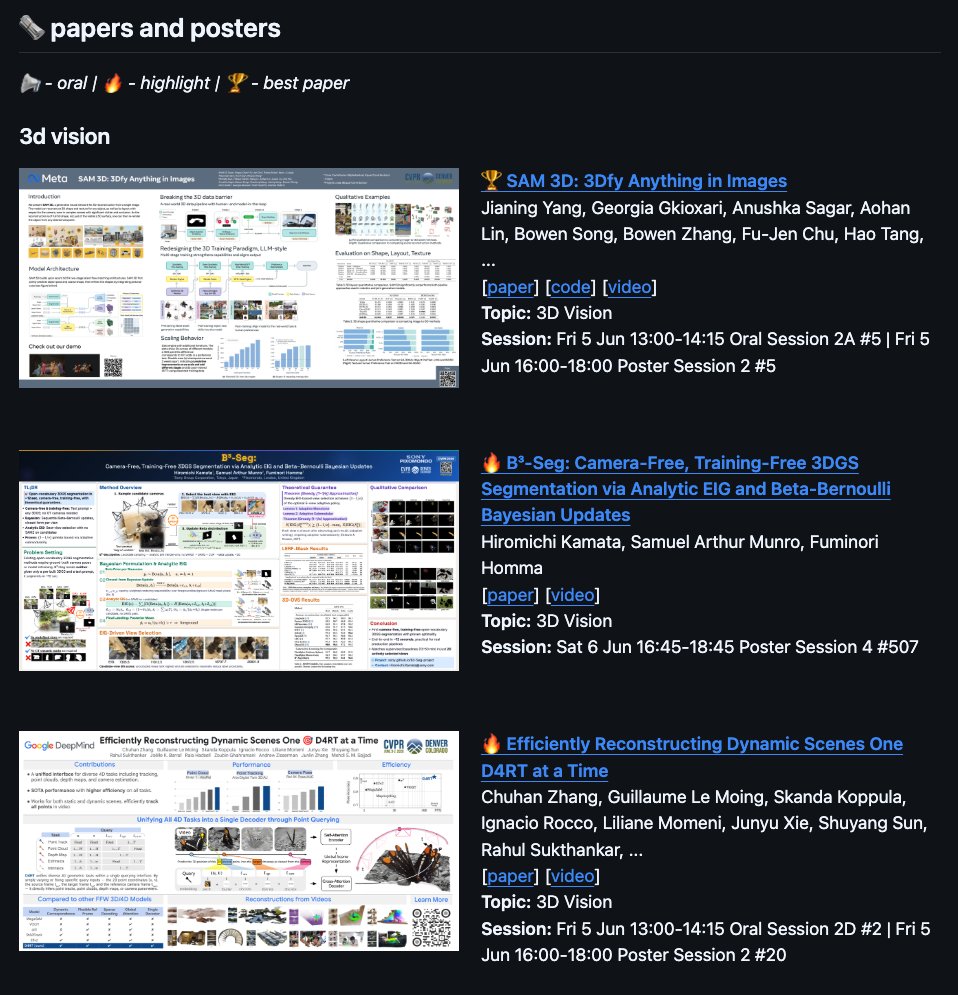
CVPR is 2 weeks away putting together a list of must-see papers with links to code, demos, and posters; all in one place link: github.com/SkalskiP/top-c…
SkalskiP tweet media
English
6
30
209
12K
Lakshman Nataraj retweetledi
Dwarkesh Patel
Dwarkesh Patel@dwarkesh_sp·
New blackboard lecture w @reinerpope How do chips actually work – starting with basic logic gates, and working up to why GPUs, TPUs, FPGAs, and the human brain each look the way they do. 0:00:00 – Building a multiply-accumulate from logic gates 0:16:20 – Muxes and the cost of data movement 0:25:59 – How systolic arrays work 0:39:00 – Clock cycles and pipeline registers 0:51:40 – FPGAs vs ASICs 1:03:14 – Cache vs scratchpad 1:07:16 – Why CPU cores are much bigger than GPU cores 1:11:49 – Brains vs chips 1:15:22 – A GPU is just a bunch of tiny TPUs Look up Dwarkesh Podcast on YouTube/Spotify/etc to watch. Enjoy!
English
94
718
5.6K
904K
Lakshman Nataraj retweetledi
Google for Education
Google for Education@GoogleForEdu·
Summer is for upskilling—and we’ve got the perfect series for you. 🫵 ✔️Flexible: bite-sized sessions for busy days ✔️Practical: hands-on support with Gemini & NotebookLM ✔️Actionable: skills you can use right away Explore sessions here: goo.gle/ges
English
4
22
103
8.9K
Lakshman Nataraj retweetledi
Tata Steel
Tata Steel@TataSteelLtd·
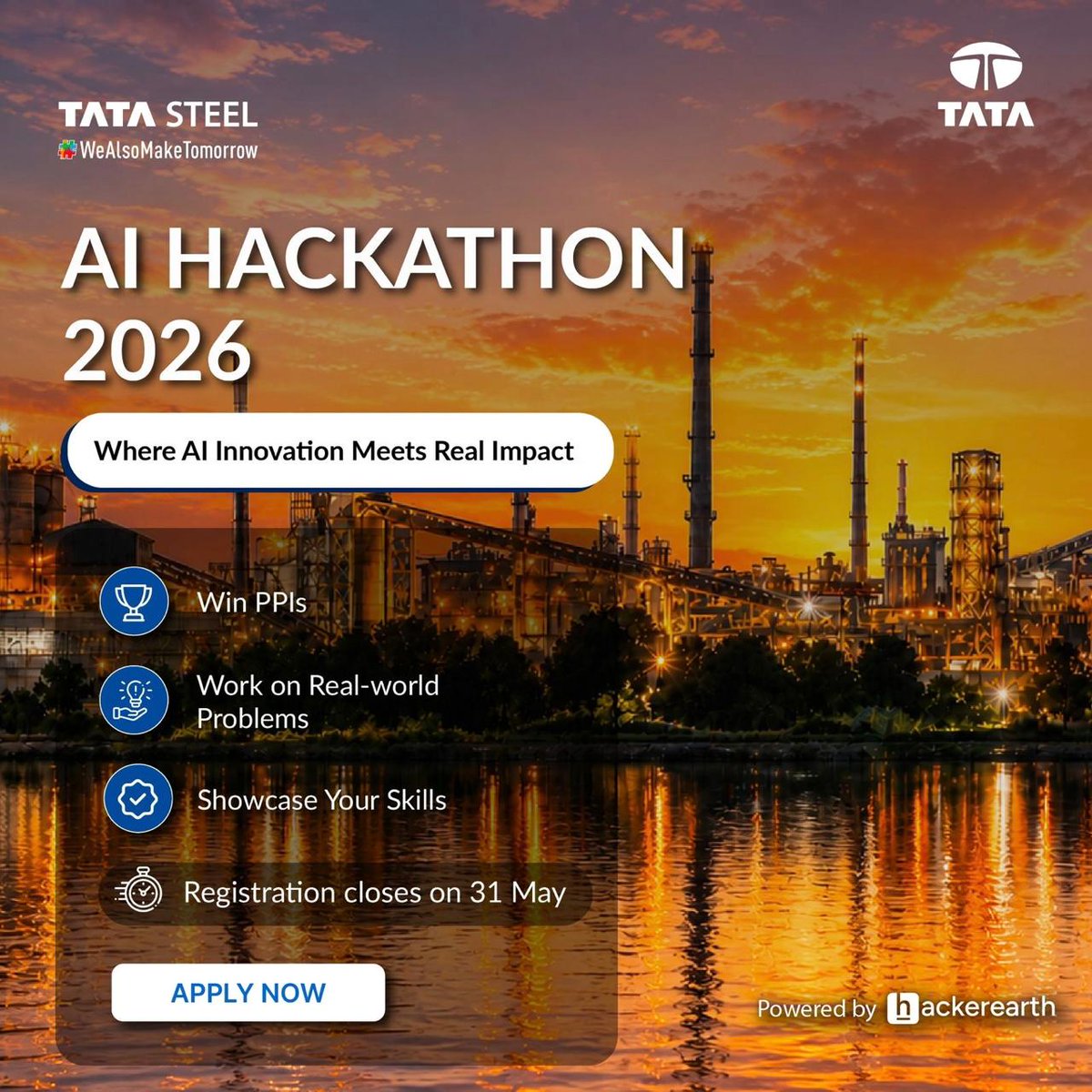
We’ve always believed the best solutions don’t wait for the future, they build it. With the Tata Steel AI Hackathon 2026, we are doing exactly that. This is your chance to solve real-world AI challenges that actually matter. Push your skills to the limit, compete for Pre-Placement Interviews (PPIs), earn mentorship from Tata Steel’s leadership, and unlock exciting rewards. Registration closes May 31, so don’t miss out! Apply now and start building tomorrow, today. Register here: hackerearth.com/community/chal… #TataSteel #WeAlsoMakeTomorrow #TataSteelAIHackathon #AI
Tata Steel tweet media
English
1
3
31
1.7K
Lakshman Nataraj retweetledi
Anusandhan National Research Foundation
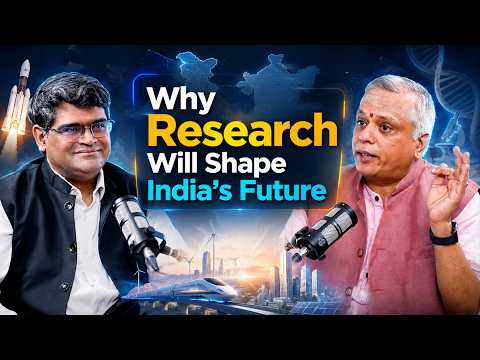
𝗗𝗿. 𝗦𝗵𝗶𝘃𝗸𝘂𝗺𝗮𝗿 𝗞𝗮𝗹𝘆𝗮𝗻𝗮𝗿𝗮𝗺𝗮𝗻 𝗶𝗻 𝗰𝗼𝗻𝘃𝗲𝗿𝘀𝗮𝘁𝗶𝗼𝗻 𝘄𝗶𝘁𝗵 𝗣𝗿𝗼𝗳. 𝗠𝗮𝗵𝗲𝘀𝗵 𝗣𝗮𝗻𝗰𝗵𝗮𝗴𝗻𝘂𝗹𝗮 𝗼𝗻 𝘁𝗵𝗲 𝗹𝗮𝘁𝗲𝘀𝘁 𝗲𝗽𝗶𝘀𝗼𝗱𝗲 𝗼𝗳 𝗵𝗶𝘀 𝗣𝗼𝗱𝗰𝗮𝘀𝘁! 𝗪𝗮𝘁𝗰𝗵 𝘁𝗵𝗲 𝗲𝗽𝗶𝘀𝗼𝗱𝗲 𝗵𝗲𝗿𝗲: youtube.com/watch?v=xIPI5C…
YouTube video
YouTube
Anusandhan National Research Foundation tweet media
English
1
7
18
1.4K
Lakshman Nataraj retweetledi
marimo
marimo@marimo_io·
If you can vibe code anything these days ... do we still need notebooks? We're going live in 24 hours to find out with @HamelHusain to discuss. 🗓️ May 22, 2026 at 1 PM PST. Link below ⬇️
marimo tweet media
English
1
4
14
941
Lakshman Nataraj retweetledi
Georgia Channing
Georgia Channing@cgeorgiaw·
OlmoEarth v1.1 just dropped (thx @allen_ai) 🌍 This family of Earth observation foundation models for satellite imagery tasks (e.g. mangrove change tracking, forest loss driver classification) just got 3X CHEAPER/FASTER to run. The trick is redesigning what a token represents. Sentinel-2 inputs used to get one token per resolution (10m/20m/60m). v1.1 collapses them → 3x fewer tokens, quadratically cheaper compute.
Georgia Channing tweet media
English
3
24
182
8.1K
Lakshman Nataraj retweetledi
alphaXiv
alphaXiv@askalphaxiv·
alphaXiv 🤝 ACM CAIS We’re excited to announce our partnership with the ACM Conference on AI and Agentic Systems! alphaXiv will serve as the complimentary research hub for accepted papers and system demos, helping the community discover, understand, and build on top of the latest research from @CAISconf. You can now browse accepted papers and system demos on alphaXiv, link below!
alphaXiv tweet media
English
2
14
52
6.4K
Lakshman Nataraj retweetledi
Goodfire
Goodfire@GoodfireAI·
The most popular way to interpret AI is missing the bigger picture. Models think in curved shapes. But sparse autoencoders (SAEs) work with straight lines. Can they still capture models’ curved neural geometry? Yes, but not how you might think! (1/7)
Goodfire@GoodfireAI

Neural networks might speak English, but they think in shapes. Understanding their rich *neural geometry* is key to understanding how they work – and to debugging and controlling them with precision. Starting today, we’re releasing a series of posts on this research agenda. 🧵

English
22
150
1K
158K
Lakshman Nataraj retweetledi
Google
Google@Google·
$2M in prizes. Build with Gemini. Ship products that impact the world. Learn more and register ↓ geminixprize.com
English
11
33
226
47.8K
Lakshman Nataraj retweetledi
Google
Google@Google·
We’re offering $2M in prizes to builders who want to change the world for the better. 🌍 We just launched the Build with Gemini XPRIZE hackathon at #GoogleIO — a global competition challenging you to leverage our agentic tools to build real-world solutions that drive positive, lasting change.
GIF
English
53
137
1K
124.9K
Lakshman Nataraj retweetledi
Shubham Sharma
Shubham Sharma@HappyyPablo·
open sourcing Marlin-2B 🐟 a tiny VLM to extract structured information from videos Marlin is finetuned for two questions devs want to ask in their videos: what is happening, and when? Best open model in its weight class, competitive with Gemini-2.5-flash at only 2B params 🧵
English
133
520
4.6K
294.6K