
Sabitlenmiş Tweet
Lakshay
630 posts


Lakshay
@lakshay_decodes
I help founders turn attention into revenue and decks into deals. Founder Aptora Studio | Explainer Videos That Sell
India - Book a call Katılım Temmuz 2025
146 Takip Edilen64 Takipçiler
@SandeepMall How old were you when you bought your first home ?
Just want to realise how far behind I am in life.
English

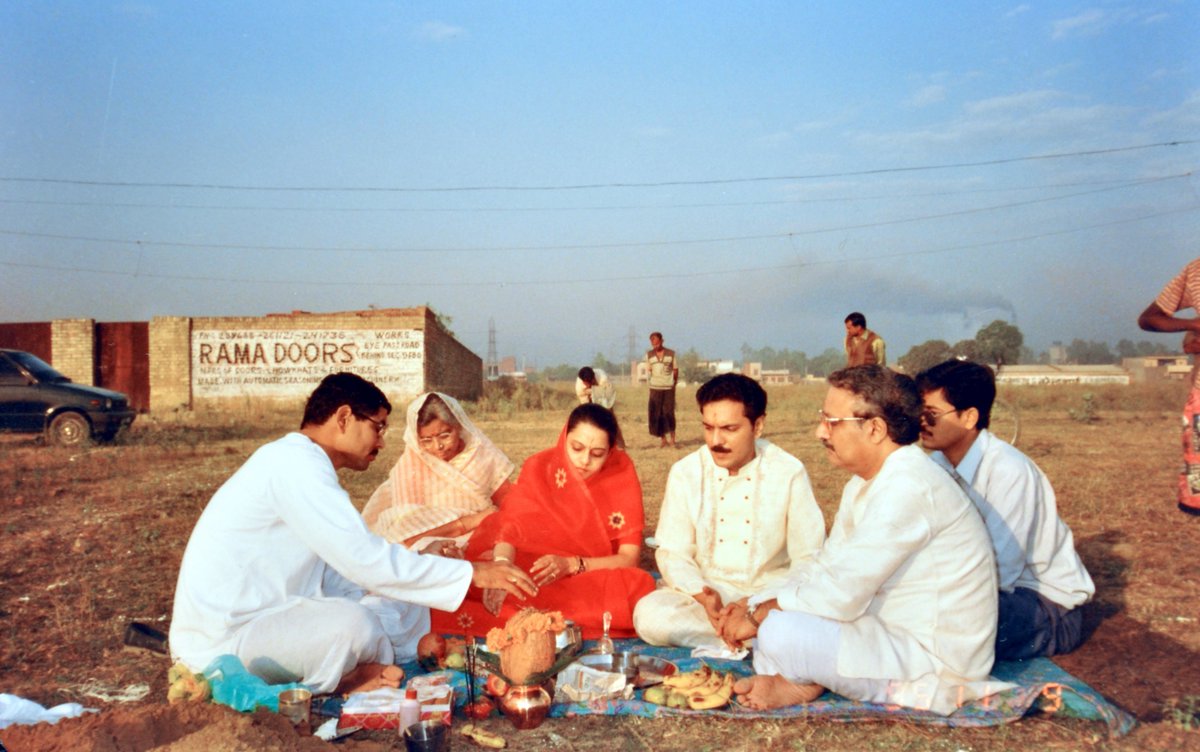
1995 on this day- Ground breaking ceremony of our home. There was no road, no neighbor.
The nearest neighbor had speakers on his roof top with mic by his bed side so that if a thief comes at night he can shout so that someone in distance can hear him.
The thermal power station would emit layers of black dust. Every morning there used to be layer of black dust.
This was cheapest land available in NCR matching to our needs.
Today this is a thriving colony. At least 7 parks within 500 mtrs. 200 mtrs from highway. The thermal power station has been shut down. Most peaceful neighbourhood.
English
Lakshay retweetledi

Call me old fashioned, but I think you can get pretty far in life by just finishing things. The world is full of half-written books, half-built businesses, and half-kept promises. You stand out by closing loops. By doing what you said you’d do. By having the courage to finish.
English
most “founders” are looking for hype men.
I’m looking for builders.
India doesn’t need another short-video app or AI résumé generator.
It needs people who care enough to build something meaningful —
something that fixes a real problem in this country.
I handle everything from strategy to go-to-market.
what I need is a coder who can build fast, think deeper, and give life to ideas that deserve existence.
if you’re a developer tired of chasing freelancing gigs and want to build something that leaves a mark,
DM me.
we’ll build, launch, and scale something that actually means something.
English
the goal was never to build faster.
it was to build forever.
you don’t reach freedom by scaling harder —
you reach it by designing leverage.
the long game belongs to those who learn to think like architects — the ones who turn every skill, system, and story into structure.
here’s how.
① the 3 pillars of the architect mindset
1️⃣ Foundation — clarity of purpose
2️⃣ Structure — repeatable systems
3️⃣ Elevation — scalable reputation
every project, partnership, or post should feed one of these three.
if it doesn’t — it’s distraction disguised as progress.
② build assets, not activity
busy ≠ productive
consistent ≠ compounding
assets are things that earn while you’re offline:
content that ranks
proof that sells
systems that repeat
relationships that refer
if it doesn’t scale without you — it’s still a job.
③ create a proof engine
document everything you build — not as content, but as currency.
turn every:
case study → into a story
client win → into a slide
lesson → into a tweet
the market pays those who narrate their own evolution.
the louder your proof, the quieter your pitch.
④ automate repetition, not reputation
automation isn’t for replacing people.
it’s for removing friction.
you automate:
→ lead tracking
→ client onboarding
→ follow-up reminders
but you never automate:
→ trust
→ tone
→ timing
the human layer is the differentiator.
⑤ merge storytelling with systems
the perfect business is built like this:
left brain: systems, automation, data
right brain: narrative, clarity, emotion
when you blend both — you stop sounding like a salesman and start looking like a strategist.
story gives emotion.
system gives scalability.
together they create gravity.
⑥ design positioning as a moat
your reputation is your algorithm.
engineer it.
pick one line that defines your work and repeat it everywhere until it becomes truth.
“I help B2B founders explain what they do in 60 seconds or less.”
That line is your lighthouse.
Everything else is waves.
⑦ make feedback your north star
architects don’t fear criticism — they integrate it.
each rejection is data.
each objection is design feedback.
each silence is signal.
learn to read it.
refine your systems around it.
your ego can’t grow if your feedback loop is broken.
⑧ wealth = systems × time
money made from effort dies fast.
money made from systems compounds forever.
the faster you convert skill into structure, the sooner you step off the treadmill and start owning it.
architects don’t work in the business —
they work on the ecosystem.
⑨ quiet power over public noise
by the time the world hears your name, the work should already be done.
the loud build attention.
the calm build authority.
and authority always outlasts attention.
⑩ design your exit while you’re still building
legacy isn’t retirement.
it’s self-replacement.
architects design systems that run without them —
so they can start designing new ones.
you don’t “retire” from mastery.
you just evolve into subtler games.
the operator learns to sell.
the architect learns to scale.
the master learns to sustain.
that’s the trinity of longevity.
this marks the end of the series.
but if you’ve read till here — you’re no longer an amateur.
you’re thinking like an architect.
next series drops after 2,000 likes.
it’ll be “THE EMPIRE CODES” — how to combine brand, automation, and capital to build self-scaling digital empires.
follow @lakshay_decodes if you’re done playing the short game and ready to build systems that outlive hype.
English
@goutam907 Sure bro. I appreciate that, let's continue this in DM.
English

@lakshay_decodes Hii bro i am full stack dev with some experience of working with freelance clients i am intrested in working with you , here is my portfolio:goutamdev.vercel.app
English
Not looking for freelancers.
Not looking for hype.
Looking for builders with conviction.
I specialize in taking ideas from zero to launch — strategy, storytelling, market positioning.
What I need now is a technical partner who can translate vision into execution.
There’s too much capital chasing meaningless code.
Let’s flip that.
Let’s build something real — for Indian markets, by Indians who actually understand the problem.
If you’re a coder or developer with purpose,
and you’re tired of chasing vanity projects —
reach out.
It’s time to build something that matters.
English
everyone wants to win the week.
operators plan to own the decade.
short-term thinkers chase money.
long-term players build machines that print it.
the truth is simple:
you don’t rise by force.
you rise by compounding focus, credibility, and consistency over time.
here’s how long-term players think differently.
① the compounding law of credibility
every win you post online isn’t content — it’s collateral.
your track record builds invisible equity.
each case study, testimonial, and insight stacks into your digital resume — one that investors, clients, and founders read quietly.
you don’t need viral posts.
you need visible proof of pattern.
② the patience gap
everyone underestimates how slow the first 24 months really are.
you’ll do more work than reward, more outreach than replies, more giving than receiving.
that’s not failure — that’s friction before flywheel.
the world pays those who can endure the invisible phase without losing belief.
③ optionality > obsession
the goal isn’t to be busy.
it’s to build optionality.
each system you automate, each client you compound, each asset you publish — buys you freedom of decision.
money doesn’t buy happiness.
systems buy freedom.
freedom creates space.
space births mastery.
④ compound what compounds you
not everything deserves scale.
some things deserve depth.
→ relationships that send you 10 deals
→ one offer that outperforms ten
→ a habit that multiplies clarity
operators know this:
scaling the wrong thing faster is still failure — just expensive.
⑤ the illusion of “arrival”
you’ll never “make it.”
you’ll only expand your capacity to handle bigger games calmly.
new level = new variables.
same discipline.
the ones who burn out are the ones who thought there was a finish line.
long game = infinite game.
you don’t win it.
you sustain it.
⑥ credibility over clout
most creators chase noise.
the real ones chase narrative.
while others build reach, you build relevance.
relevance compounds slower — but it never dies.
because it’s built on proof, not presence.
⑦ the law of delayed dominance
people overestimate what they can achieve in 1 year
and underestimate what they can dominate in 5.
the market forgets the loud ones fast.
it compounds the quiet ones slowly.
the day you stop competing for attention and start compounding trust — the game flips.
⑧ play for positioning, not prizes
every move you make — post, project, collab —
should strengthen your position, not just your paycheck.
prizes fade.
position compounds.
and once you hold position, the market negotiates on your terms.
⑨ keep your circle microscopic
as you rise, the noise multiplies.
everyone will want to talk; few will want to build.
stay close to people who can call you out, not clap for you.
real feedback is rarer than funding.
⑩ longevity is the ultimate leverage
the long game is about staying relevant when trends die.
staying grounded when money comes.
and staying curious when success hits.
endurance beats genius when the clock runs long enough.
the world doesn’t need more hustlers.
it needs architects — people who build systems that outlive their motivation.
play slow. play smart. play forever.
next post drops after 1,000 likes.
it’ll be “The Architect’s Handbook” — how to merge automation, brand, and reputation into one long-term empire system.
follow @lakshay_decodes for more no-fluff systems and philosophies for creators, founders, and professionals playing the long game.
English
the loud ones burn out.
the quiet ones build empires.
most people think success is about momentum.
it’s not.
it’s about management of energy, emotion, and noise.
you can’t play a 10-year game with a 10-minute attention span.
let’s talk about what separates operators from opportunists.
① emotion ≠ execution
you don’t need to “feel good” to perform well.
you need discipline under dullness.
real operators treat emotions like weather — observe, don’t obey.
bad mood? still move.
good mood? don’t overpromise.
consistency isn’t built on motivation.
it’s built on emotional neutrality.
② operate on systems, not sprints
everyone loves adrenaline; operators love architecture.
if your business breaks the moment you get busy - you don’t have a business, you have a dependency.
create repeatable structures:
→ time blocks for deep work
→ decision templates for deals
→ weekly reviews for course correction
the boring stuff builds the billion-dollar stuff.
③ master the boredom loop
“it’s not hard to start. it’s hard to repeat.”
every operator faces that phase where growth plateaus, excitement fades, and the grind gets grey.
the amateurs switch projects.
the pros double down.
your next breakthrough hides behind that fourth month of monotony.
④ clarity > motivation
you can’t be confident when you’re confused.
every time you feel “lazy,” it’s not discipline you lack — it’s direction.
operators ask:
“what’s the single domino that moves everything else?”
they work less but hit deeper.
because they’ve learned to replace noise with north star.
⑤ detachment is a superpower
the best players look calm because they’ve stopped attaching identity to outcomes.
they just execute.
they don’t need to “win” every day — they need to stay in position.
detachment ≠ apathy.
it’s clarity that your worth isn’t defined by this quarter’s graph.
⑥ pressure is a privilege
most people crumble under expectations.
operators use them as feedback loops.
if your team, clients, or market is demanding more — that’s proof you’ve earned relevance.
pressure is the rent for potential.
learn to carry it gracefully.
⑦ move slow, strike fast
operators are patient thinkers, violent executors.
they take time to read the room, but once the pattern’s clear — they move like lightning.
no debates. no “what ifs.”
just precision.
slow in thought. fast in action.
that’s how you stay untouchable.
⑧ protect your inputs
your brain is a trading terminal — what you feed it determines what it executes.
stop consuming surface-level “business” dopamine.
feed it long-form, fundamentals, and first-principles thinking.
you’ll start seeing opportunities others scroll past.
mental diet > mental hacks.
⑨ rest like a weapon
rest isn’t escape.
it’s reload.
burnout isn’t caused by overwork.
it’s caused by working without recovery.
operators schedule silence.
they step away before the system overheats.
that’s why they last.
the goal isn’t to hustle harder.
it’s to operate longer — sharper — quieter.
the world celebrates sprinters.
wealth rewards marathoners.
next post drops after 1,000 likes.
it’ll be “The Long Game” — the philosophy of compounding power, wealth, and reputation over decades.
follow @lakshay_decodes for more real-world mental models and frameworks that turn quiet clarity into long-term dominance.
English
not gonna sugarcoat it.
I’m creating 5 free explainer videos for businesses.
not for “exposure.” not for clout.
I’m doing it to build undeniable proof of work — so when I talk, the market listens.
here’s the deal ↓
I’ll pick the 5 best brands from the comments — ones I genuinely believe I can do justice to.
you’ll get a custom-built 60-sec explainer video — the same quality I charge clients for.
the catch?
if you love the result, you can pay my regular fee — totally your call.
if not, you still walk away with a killer asset.
this is how I prove that clarity sells better than copy.
drop your website below — I’ll choose the final 5 publicly.
English
most founders think reputation is what people say about you.
wrong.
reputation is what people assume about you before you even show up.
and that assumption decides whether you’ll be negotiating a project — or a discount.
here’s how to build a name that closes deals while you’re asleep.
① the “proof stack” principle
stop chasing virality — chase verifiability.
anyone can post “just closed a deal.”
few can show why it happened.
your proof stack should have 3 layers:
1️⃣ result — screenshot, quote, data
2️⃣ reason — what caused it
3️⃣ reflection — what you learned
proof ≠ flexing. proof = documentation.
② teach your receipts
every result becomes 3 more touchpoints:
→ tweet = authority
→ case study = depth
→ DM follow-up = conversion
you’re not repeating yourself — you’re reinforcing belief.
that’s how repetition turns into reputation.
③ credibility through pattern, not personality
people trust patterns, not personalities.
be consistent with your tone, rhythm, and values.
when someone scrolls your profile, they should instantly feel what you stand for.
→ calm clarity
→ no-nonsense execution
→ numbers > noise
if your last 10 posts say 10 different things, you’re not mysterious — you’re forgettable.
④ the “silent testimonial” hack
there’s power in social screenshots.
post snippets like:
“Appreciate how simple you made it. Our conversions jumped already.”
“Loved how you understood the product in one call.”
no need to tag. no hashtags. just truth.
silent proof whispers louder than shouting testimonials.
⑤ own your category
you don’t become a “thought leader” by posting more.
you become one by naming the problem better than anyone else.
once you label a pattern, the market gives you credit for seeing it first.
“The clarity gap is killing SaaS growth — not the product.”
now every time someone experiences that problem, your name comes up.
that’s reputation design.
⑥ turn feedback into philosophy
every client comment is market data.
→ they said you’re fast → your brand = efficiency
→ they said you simplify → your brand = clarity
→ they said you overdeliver → your brand = precision
your reputation is already being written;
the smart ones just learn to edit it.
⑦ scarcity + legacy
reputation compounds fastest when you combine scarcity with legacy.
scarcity = “I only take 2 clients/month.”
legacy = “but every client becomes a case study others learn from.”
that line alone flips your position from service provider → industry signal.
⑧ never ask for referrals — engineer them
every time you deliver, send one extra gesture:
→ a small audit
→ a future idea
→ a note saying “next quarter, this will matter”
you’re not asking for referral. you’re staying in their story.
and stories spread faster than incentives.
⑨ the reputation formula
Consistency + Proof + Clarity + Scarcity = Demand.
there’s no hack.
just honest work presented elegantly and repeatedly.
when people say, “I don’t know what he charges, but he’s worth it,”
you’ve officially built an engine.
the day your name becomes a shortcut for trust, you’ll realize you don’t need outreach anymore — you need boundaries.
that’s when the game changes.
next post drops after 1,000 likes.
it’ll be “The Operator Mindset” — the philosophy behind building without burnout, pressure, or noise.
follow @lakshay_decodes for more contrarian sales frameworks and brand systems that turn quiet credibility into capital.
English
everyone talks about “scaling,”
but most of them mean “adding chaos faster.”
real scaling is when you can disappear for a week and money still moves.
if you’re still on calls, sending manual invoices, and editing your own reels —
you’re not scaling.
you’re just self-employed with better branding.
here’s how to turn 3 clients into a system that prints trust (and cash) on autopilot.
① standardize what worked once
every project you did that worked — document it like a scientist.
→ your DM template
→ your proposal structure
→ your delivery timeline
→ your feedback system
that becomes your playbook.
you don’t need 50 offers. you need one offer that performs predictably.
systems > scale.
② automate credibility
stop waiting for testimonials. extract them.
after every delivery, ask one simple line:
“What was the biggest difference you noticed after we worked together?”
compile those answers into mini case stories.
turn each into a tweet, a slide, and a DM follow-up.
now you have proof assets that do the selling while you sleep.
③ build a repeatable narrative
every client story should flow into your next DM.
that’s how you compound authority without bragging.
“Helped a SaaS founder cut demo time from 5 min to 45 sec with a clarity video. Now testing it on their paid ads.”
you didn’t sell — you showed momentum.
momentum is the most underrated marketing asset in B2B.
④ delegate the $10 tasks, own the $1 000 decisions
if you’re still building landing pages, editing motion videos, or sending follow-ups yourself — you’re blocking scale.
hire cheap for execution, expensive for thinking.
automate everything else.
because scaling isn’t about doing more;
it’s about doing less of what doesn’t move money.
⑤ create a “proof loop”
the biggest mistake people make after closing a deal?
they disappear.
you should be documenting every deliverable as content.
→ before/after comparisons
→ behind-the-scenes snippets
→ client wins posted as mini lessons
that creates a flywheel of attention → trust → leads → clients → proof → attention again.
⑥ quiet authority > loud promotion
you don’t need to post daily. you need to post decisively.
1 post that feels like insider intel > 10 motivational tweets.
be the guy people bookmark, not the one they scroll past while nodding.
authority compounds when you say less but mean more.
⑦ make yourself rare
scarcity sells better than scripts.
“I only take 2 projects a month so I can go deep on each story.”
that line alone will double your close rate.
not because it’s marketing — because it’s psychology.
people want what not everyone can have.
⑧ the scaling mindset
scaling is not about growth.
it’s about grace under growth.
if you need to work harder every time you earn more — you’re not scaling, you’re bleeding slower.
replace effort with elegance.
replace urgency with systems.
replace noise with proof.
the real flex is when your calendar’s empty but your pipeline’s full.
that’s quiet power.
next post drops after 1,000 likes.
it’ll be “The Reputation Engine” — how to turn your name into a referral machine without asking for referrals.
follow @lakshay_decodes for more contrarian sales frameworks and B2B systems that print credibility at scale.
English
@lakshaymehta08 You got us 🤣
Had bookmarked and then unsave this video 😂
English
@ValueWithPrem @grok what are the top 3 best advices that one can use in this scenario?
English

you don’t close deals in calls.
you close them in context.
calls are just where the paperwork happens.
the decision is made inside the DMs — in how you frame, follow up, and feed belief.
most people lose deals because they don’t know when to switch from conversation → conversion.
let’s fix that.
① the timing rule — when to pitch
the biggest sin in sales: pitching too early.
if the prospect still thinks of you as “one of many,” your pitch is noise.
if they start asking questions instead of answering them — that’s your cue.
“How do you usually work?”
“What kind of clients do you take on?”
“How long does a project like this take?”
that’s the moment the door opens.
walk in quietly.
② the transition line — how pros pivot
don’t drop a pitch bomb.
slide into it like a surgeon.
“Sounds like what you’re building’s hitting an inflection point. If you’re open to it, I can walk you through how I’d structure a short project to fix that in a week.”
short. specific. confident.
you didn’t “ask” — you offered clarity.
③ the invisible pitch formula
a founder’s mind filters 3 things:
🧠 logic → does this make sense?
💰 value → is this worth it?
⚡ speed → can this move fast?
so your pitch should follow the 3-line structure:
1️⃣ Here’s what I see
2️⃣ Here’s what I’d do
3️⃣ Here’s how fast we can test it
example:
“Your demo video’s solid but too feature-heavy.
I’d cut it into a 45-sec explainer built around ROI outcomes, not process.
Takes 3 days — want me to mock the structure?”
fast, visual, frictionless. that’s how modern founders buy.
④ pricing psychology — don’t justify, anchor
if you ever write “my price is $500 because…” — you’ve already lost.
you’re selling certainty, not labor.
so talk in outcomes, not hours.
“It’s a $1.2k flat project. You’ll have a reusable 60-sec asset your sales team can drop in every deck for the next 6 months.”
you didn’t quote a rate.
you sold a result.
⑤ the close — not a “yes,” a next step
don’t end with “let me know what you think.”
that’s weak energy.
end with micro-momentum:
“If that sounds good, I’ll draft a 1-pager so you can review deliverables today. Once you’re cool with it, we roll.”
clarity = confidence.
confidence = conversion.
⑥ the silence strategy
after you drop the offer — go dark.
silence isn’t rejection.
it’s processing.
if they’re genuinely interested, your confidence in waiting builds curiosity.
and if they’re not — your next DM should sound like someone who’s already moved on.
“No worries if this isn’t the right time — appreciate the chat either way. If you ever want to revisit storytelling as a growth lever, I’ll be around.”
respect earns more deals than pressure ever will.
⑦ the secret mindset
stop “closing.” start qualifying energy.
the goal isn’t to chase replies.
it’s to recognize readiness.
your energy should read:
“I don’t need this deal, but you probably need this clarity.”
that’s what makes people buy.
⑧ bonus — how to upsell without asking
once a deal closes, 24–48 hours later:
“Hey — quick idea. The explainer we built would crush as a short paid ad. Want me to repurpose it?”
no deck. no proposal.
just a spark of ROI.
upsells are not “sales.”
they’re momentum extensions.
This is the part nobody shows.
The space between conversation and conversion — that’s where trust compounds.
Get this right, and you’ll never “chase clients” again.
They’ll chase the feeling of being understood.
next post drops after 1,000 likes.
it’ll be “The Scale System” — how to turn 3 clients into a waiting list using automation, proof, and quiet authority.
follow @lakshay_decodes for more contrarian B2B sales frameworks and cold DM playbooks built for killers, not content creators.
English
there are 1000s of apps built every month in India.
most chase trends.
very few solve truths.
I’m not looking for another “project.”
I’m looking for builders with purpose.
if you can code, design systems, or turn napkin sketches into reality —
and you feel India deserves sharper, smarter, more soulful products —
I’m looking for you.
I specialize in launch, positioning, and storytelling — taking ideas from spark → strategy → scale.
I just need someone who can bring the code to life.
we don’t need to chase funding.
we need to chase meaning.
if you’re a developer or coder tired of building for vanity,
and ready to build something that matters —
DM me. let’s create the product India actually needs.
English


everyone wants to talk about “what to send.”
no one talks about “what to see.”
most founders won’t tell you no directly — they’ll just emotionally disconnect.
and that’s where 99 % of salespeople die.
let’s fix that.
this is how you read a reply like a psychologist and respond like a closer.
① the “cold but polite” reply
“Hey, appreciate you reaching out. We’re good for now.”
translation: they’re testing whether you’ll chase or calibrate.
average seller: “Cool — let me follow up next week?”
operator: “Got it. If you’re set now, mind if I just send you a 1-min breakdown of what we did for {competitor}? Might spark a thought for later.”
you’ve turned a dead end into an open loop.
never beg — just seed curiosity.
② the “interested but guarded” reply
“Sounds good, can you send me some info?”
translation: “I like this, but I don’t trust you yet.”
don’t drop a pitch deck. drop proof of thought.
“Sure — before I do, can I ask what kind of campaign you’re running right now? I’ll customize it so you don’t have to skim generic slides.”
that micro-question builds trust faster than a PDF ever will.
③ the “ghost after interest” pattern
you had a good chat, then — silence.
don’t follow up like a puppy.
re-enter with leverage.
“Hey Sam — we just wrapped a project for a team similar to yours. They had the same messaging bottleneck we talked about. Results were wild — thought you’d appreciate seeing how we solved it.”
you remind them you’re still winning while they’re still deciding.
④ the “too busy” reply
“Let’s circle back next quarter.”
translation: “I don’t see the ROI yet.”
so show it without saying it.
drop a mini audit in their DM.
“Understood — btw, noticed your demo page takes 12 seconds to load on mobile. Might be why bounce is high. Fixed that for another client — cut it to 3 secs and CTR doubled.”
you’ve now earned the next conversation early.
⑤ the “ready to buy” signal
“Let’s chat. Can you send times?”
translation: they’ve decided emotionally; now they’re checking logistics.
this is where you DON’T go corporate.
keep momentum alive.
“Let’s do it. 20-min call — I’ll show you exactly how to repurpose your current demo into a sales asset. Tomorrow 3 pm or 6 pm works?”
confidence closes. neutrality kills.
⑥ the psychology behind all of this
founders don’t reply to “offers.”
they reply to energy + insight.
they want to feel you’re inside their problems — not hovering outside with a deck.
they want brevity, certainty, and initiative.
the moment your words feel like templates, their brain categorizes you as “noise.”
⑦ bonus — the “pattern break follow-up”
after 7 days of silence:
“Not sure if this is helpful, but we just found a way to cut explainer video production time by 40 %. If you ever revisit storytelling for {product}, this could save you weeks.”
low-pressure. new angle. fresh value.
no emoji, no “just checking in.”
The real DM game isn’t about scripts — it’s about psychological timing.
Learn to read replies like markets.
You won’t need to “close.” They’ll close themselves.
next post drops after 1,000 likes.
it’ll be “The Conversion Playbook” — how to turn one DM conversation into a $3,000 retainer without a sales call.
follow @lakshay_decodes for more contrarian sales psychology and DM systems built from real battle scars.
English
Most of you write DMs like you’re begging for attention.
That’s why you get left on “Seen.”
A cold DM isn’t a message.
It’s a mini sales page that lives inside someone’s DMs.
And it has one job — to make the other person feel understood.
Here’s the real framework nobody talks about 👇
Every high-performing DM follows this 5-part flow:
HOOK → CONTEXT → INSIGHT → OFFER → EXIT
Mess up any one, and the message dies in the inbox.
Let’s break it down.
① HOOK — 1 line, scroll-stopper, founder-specific
Forget “Hey {first_name}, hope you’re doing well.”
That line screams template.
Instead, pattern interrupt:
“Hey Alex, saw your new homepage drop — looks clean but I think your hero video’s costing you conversions.”
→ It instantly tells them:
you did your homework, you have a perspective, and you’re not selling BS.
② CONTEXT — connect yourself to their world
You can’t just drop a compliment — bridge it to why you’re even reaching out.
“I help SaaS teams tighten their narrative when their product’s evolving faster than their story.”
This builds relevance without asking for permission.
Now you’re not a stranger — you’re a mirror.
③ INSIGHT — 1 tactical truth that shows expertise
This is where most people fumble.
Don’t “sell features.” Drop proof of thought.
“What I’ve seen is — most SaaS teams keep updating their UI but never update how they explain it. The gap between what users see and what they understand kills conversions.”
Now you’ve positioned yourself as a thinker, not a vendor.
④ OFFER — zero pressure, high curiosity
Don’t say “Would love to hop on a call.”
You sound like a calendar salesman.
Say something that feels like a favor, not a pitch:
“Happy to mock something up, no charge — just to show how I’d simplify the story visually.”
That’s confidence.
It flips the dynamic.
Now they want to see what you’ve got.
⑤ EXIT — clean, human, confident
Always close without desperation.
“If it doesn’t click, no worries — I’ll still keep cheering your updates. Just thought this might save your team some time.”
Respect > Pressure.
Confidence > Chasing.
That’s the DM that gets replies from CEOs.
Here’s what a full version looks like 👇
“Hey Daniel — saw your Series A post, congrats.
Your product visuals are strong, but your explainer still feels built for investors, not users.
I help SaaS teams like [competitor name] turn that gap into 60-sec explainers that close faster. Can mock one up free just to show what I mean — no pitch, no deck.
If not, no problem, keep building 🔥.”
That’s a 5-line DM that does everything:
Shows respect
Signals expertise
Creates curiosity
Invites without begging
Ends clean
Remember this:
You’re not trying to convince founders.
You’re trying to remind them what clarity feels like.
The goal isn’t to sell.
It’s to start a conversation that doesn’t feel like one.
Stop thinking of cold DMs as cold.
They’re warm invitations written in confident silence.
Once you learn this blueprint,
you’ll never complain about “low reply rates” again —
you’ll complain about “too many calls.”
next post drops after 1,000 likes.
It’ll be “The DM Psychology Map” — how to read a founder’s reply and know exactly what to say next.
Follow @lakshay_decodes for more unfiltered B2B sales psychology and contrarian outreach frameworks that actually work.
English