León Barrena Rodríguez & Partners LLP
127 posts

León Barrena Rodríguez & Partners LLP
@lbrglobal
Where legal precision becomes market advantage. [email protected]


BREAKING: The US Supreme Court "casts doubt" on President Trump’s bid to roll back birthright citizenship, signaling a potential rejection of a central part of his immigration plan, per Bloomberg. President Trump is sitting in the front row of the court’s public section amid the oral arguments.


#IMPORTANTE La Fiscalía de Tabasco confirma la muerte de tres personas y una más herida tras explosión en Refinería Olmeca. De acuerdo con las primeras versiones, un transformador explotó a causa de la lluvia y la chispa alcanzó combustible. aztecanoticias.info/4rHk3mP

The looming ground war around the Strait of Hormuz is exposing a major strategic miscalculation by segments of the Mexican political right, which remains politically anchored to Trump and Israel while ignoring the growing fracture inside the American conservative movement itself. Many conservative actors in the region remain politically tethered to Donald Trump and to a strongly pro-Israel posture without recognizing that the internal dynamics of the American right are undergoing a significant recalibration. The sovereignist wing of the America First movement is staunchly opposed to foreign military commitments and is asserting itself as a defining force in the Republican coalition heading toward 2028. Figures such as Tucker Carlson, Marjorie Taylor Greene, and Thomas Massie represent a current inside the U.S. right that views prolonged Middle Eastern wars as a direct threat to American sovereignty and domestic stability. Within that framework, unconditional alignment with Israeli military priorities is being questioned by parts of the base that fear the United States could be drawn into another large-scale overseas conflict. Furthermore, the public criticism by Carlson of regional conservative figures, including Argentine president Javier Milei, illustrates that the sovereignist faction is prepared to distance itself from foreign ideological allies if it believes they are tied to Israeli networks or agendas that could compromise the America First narrative. This evolution places the Mexican and broader Latin American right in a strategically exposed position. Many of these movements have anchored their geopolitical outlook to Trumpism and to an uncompromising pro-Israel posture, assuming that a future Republican administration would apply economic pressure, diplomatic coercion, or security leverage against left-leaning governments in the hemisphere. That assumption increasingly looks like a misreading of U.S. political realities. The same American conservative factions that oppose intervention in Ukraine and long wars in the Middle East are unlikely to support expansive geopolitical activism and military entanglements in Latin America. The U.S. political cycle is also far less predictable than many regional actors assume. A recessionary environment and the political burden of a prolonged ground conflict with Iran could significantly weaken the current administration’s standing. In that scenario, Democrats would likely regain control of the House of Representatives come November and potentially return to the presidency by 2028. If that occurs, Mexican and broader Latin American conservative movements that structured their strategy around a durable Trump alignment will find themselves politically exposed and strategically isolated. The underlying problem the Mexican right faces is analytical complacency. Significant segments of the movement, dominated by older generations, appear to be basing their regional strategies on a static view of the United States political landscape while the internal balance of power inside American conservatism is shifting quickly. In intelligence terms, they are planning against a political map that may not exist by the end of the decade. If the sovereignist wing of the American right consolidates its influence while rejecting foreign entanglements, it will have little interest in maintaining ideological clients abroad. When that moment arrives, Washington will simply move on to its own priorities. Regional actors who built their political strategies around external patronage will discover that the support they assumed was permanent was never guaranteed in the first place.


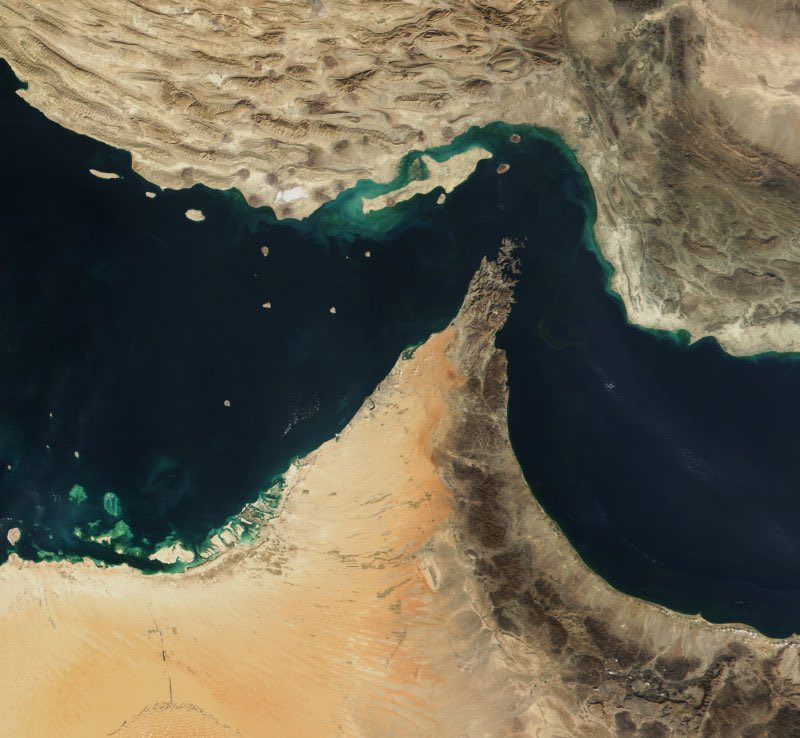
A prolonged shutdown of the Strait of Hormuz combined with a direct U.S.–Iran war would transmit a strategic shock into Mexico through energy markets, trade flows, and security dynamics rather than through direct military exposure. The Strait is the single most critical energy chokepoint in the global system, handling roughly 20% of the world’s oil supply and large volumes of LNG. Any disruption rapidly spikes global energy prices and destabilizes markets. The early signals are already visible: oil, gas, and shipping prices have surged as tankers halt transit and insurers withdraw coverage from the region. For Mexico, the immediate economic effect would be contradictory. Higher oil prices would boost fiscal revenue for the government and strengthen export earnings from crude, but the energy system underneath the economy is vulnerable. Mexico’s electricity grid, particularly through the state utility CFE, depends heavily on natural gas imported from Texas via pipelines. Even if the U.S. remains energy secure, a Hormuz-driven oil spike typically raises global gas benchmarks and transportation costs, increasing the price of the gas feeding Mexico’s power generation and industrial sector. The result is inflation pressure across manufacturing, electricity, fertilizers, and food production. Agriculture would feel the shock quickly because fuel, fertilizer, and transport are all energy-sensitive inputs. The geopolitical implications run deeper than energy prices. If the United States becomes fully engaged in a Middle East theater, strategic attention and military assets would inevitably shift away from the Western Hemisphere. That redistribution creates temporary strategic slack in North America, which historically increases activity by non-state actors and transnational criminal networks. Cartels, already operating as hybrid criminal-insurgent organizations, would test the boundaries of that distraction. A second layer of concern lies in asymmetric retaliation. Iranian-linked or proxy networks could attempt influence or disruption operations globally, including the activation of sleeper cells or covert networks in regions where Iranian diplomacy and commercial activity have historically existed. Mexico’s mineral position introduces a separate strategic dimension. Modern precision weapons and cruise missiles require large quantities of specialized materials. Silver is one example. A single Tomahawk missile contains hundreds of ounces of silver in its electronics and guidance systems. Mexico is the world’s largest silver producer, and in a prolonged conflict this supply chain becomes strategically significant for U.S. defense production. That positions Mexico not only as an industrial partner but as a critical materials supplier in wartime manufacturing. Financial spillover would also be significant. U.S. markets are already stretched by elevated valuations and geopolitical risk. Energy shocks historically tighten financial conditions, raise inflation expectations, and reduce investor risk tolerance. Because Mexico is tightly integrated with U.S. capital markets and trade cycles, any sustained volatility on Wall Street would transmit rapidly through currency pressure, investment delays, and export demand fluctuations. The net result is a paradox. Mexico would not be a battlefield in a U.S.–Iran war, but it would become strategically entangled in the conflict’s second-order effects. Energy inflation, trade volatility, supply-chain realignment, and security distractions would all converge simultaneously. At the same time, Mexico’s role inside North American industrial production and its control of key minerals like silver would increase its importance to the U.S. war economy. In geopolitical terms, a Hormuz shutdown would push Mexico further into the strategic core of the North American system precisely as global instability expands beyond the Middle East.


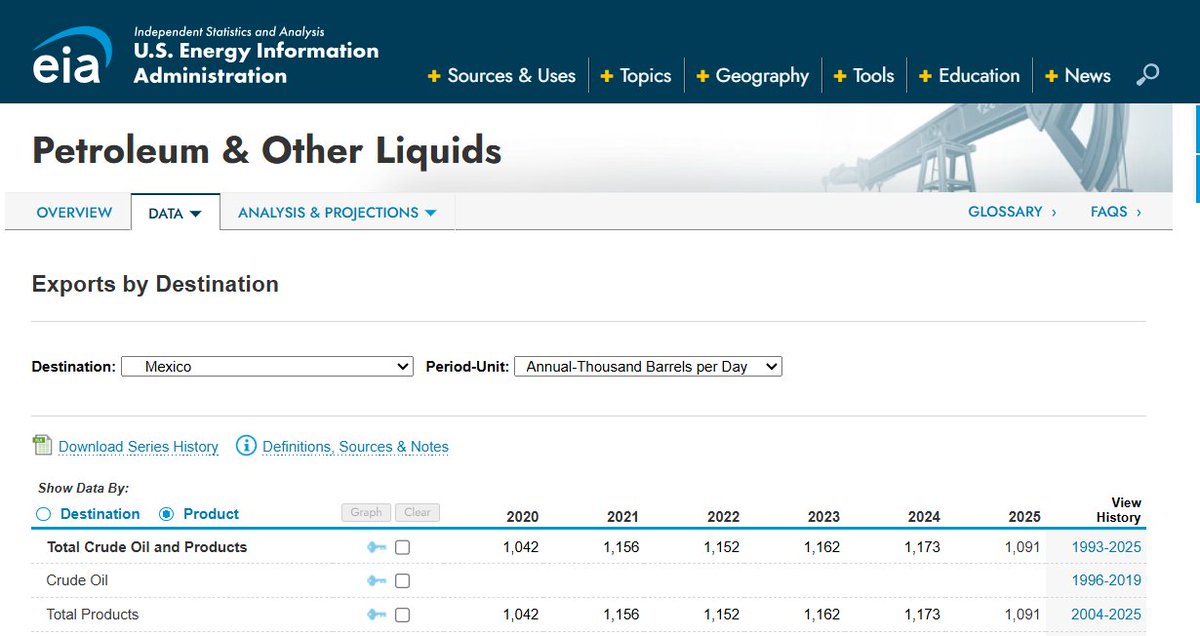
We double-checked the official 2025 data and would like to rectify our original assessment. We were referring to refined petroleum products overall, not just gasoline. According to the U.S. EIA, total U.S. petroleum product exports to Mexico averaged about 1.09 million barrels per day in 2025. By contrast, finished motor gasoline alone was about 162.8 million barrels for the year, or roughly 446,000 barrels per day. So ~400,000 b/d is a gasoline number, not a total refined-products number. That said, after rechecking the data, we should correct our earlier estimate: the 2025 figures do not support 1.9 million b/d of imported refined petroleum products, but 1.09 million b/d.


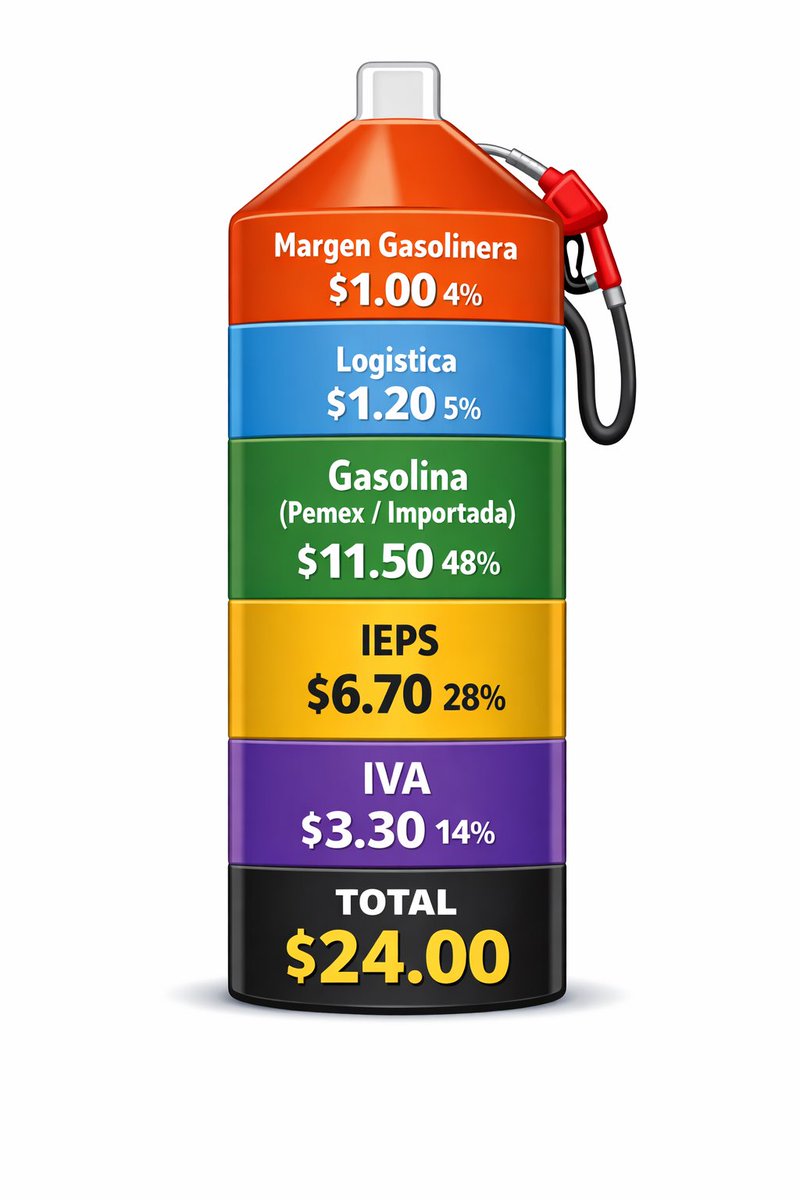
Our Mexico City desk can confirm that Pemex and senior Mexican government officials privately acknowledge that the spike in crude prices near $100 and the paralysis risk in the Strait of Hormuz expose a structural vulnerability in Mexico’s energy system that is far more severe than the government publicly admits. Roughly 20% of global oil flows move through the Strait of Hormuz, making any disruption a systemic shock to global energy markets. The current price surge reflects the market beginning to price in that risk. If Iran mines the strait or tanker traffic remains constrained, the shock would not remain confined to oil markets. It would propagate through refined fuels, petrochemical products, insurance, and global trade simultaneously. Mexico enters this environment with an unusually fragile energy balance. Despite being an oil producer, the country depends structurally on imported fuels and imported natural gas. The United States exports more than 1.9 million barrels per day of refined petroleum products to Mexico, covering over 70% of the country’s gasoline, diesel, and jet fuel consumption. In parallel, CFE´s electricity production has become structurally dependent on U.S. pipeline gas. Approximately 74% of Mexico’s natural gas demand is satisfied through imports from the United States, most of it flowing from Texas shale basins. This dual dependency means Mexico’s energy security is effectively externalized. Under normal conditions, that dependency is manageable because U.S. supply is abundant and cheap. In a war-driven energy shock, however, the system becomes exposed. Oil above $100 immediately raises refined product prices in the Gulf Coast market where Mexico buys most of its gasoline. At the same time, global LNG competition and oil-linked contracts tend to push natural gas prices upward. Mexico does not maintain significant strategic reserves of gasoline or natural gas to buffer these shocks. If global prices spike while domestic prices are artificially suppressed, the imbalance manifests not as higher prices but as shortages. The current discussion inside the Mexican government about using the IEPS tax mechanism or pressuring fuel distributors to hold gasoline below 24 pesos per liter reflects exactly this risk. Fiscal subsidies or price caps can temporarily dampen inflation, but they do not change the physical supply constraint. When governments suppress prices during supply shocks, consumption remains high while suppliers reduce deliveries or divert fuel to higher-paying markets. This results in shortages, rationing, and fiscal strain. Mexico experienced a version of this dynamic in 2022, when fuel subsidies cost the treasury more than $15 billion. The strategic concern becomes more acute if the Hormuz crisis escalates into a prolonged conflict between Iran and the United States. In that scenario, Washington’s political and military focus would shift heavily toward the Middle East. Energy markets would tighten globally, and the United States would prioritize domestic stability and allied supply chains critical to its own industrial base. Mexico’s heavy reliance on U.S. fuels and gas means that any tightening of Gulf Coast supply would immediately propagate south through pipeline and shipping networks. The paradox is that Mexico remains an oil producer while lacking fuel security. The country produces crude but lacks sufficient refining configuration and capacity to meet domestic demand, forcing it to export crude while importing gasoline and diesel. At the same time, the power sector increasingly runs on imported natural gas. This combination leaves Mexico exposed to exactly the kind of external shock now emerging from the Middle East. If the Sheinbaum administration does not begin securing strategic fuel reserves, alternative supply arrangements, or emergency storage capacity, the country risks entering a supply shock environment within weeks if the conflict persists. Rising global prices, combined with domestic price suppression, would push Mexico toward the classic symptoms of energy stress: fiscal drain, fuel shortages, electricity cost spikes, and inflationary pressure across transport and agriculture. The problem is no longer oil prices alone. It is the structural fragility of Mexico’s hydrocarbon balance. A prolonged disruption in global energy markets would expose how little buffer the country has built into its system. Without rapid contingency planning, the combination of global war risk, price suppression, and external energy dependence could push Mexico into a full supply shock scenario.


The United States is formally incorporating Mexico into the North American security architecture through critical minerals supply integration. The objective is supply certainty for minerals essential to US defense production and industrial resilience. This framework treats mineral access as a national security requirement rather than a trade convenience and embeds Mexico directly into US strategic planning timelines and enforcement mechanisms. The action plan operationalizes this integration by committing both governments to coordinated trade controls, price stabilization mechanisms, and regulatory alignment. These tools are designed to insulate US defense supply chains from external coercion and market volatility. Mexico’s role is to function as a proximate, politically managed supplier node that reduces reliance on adversarial or unstable external sources. This approach proceeds despite longstanding US assessments that elements of the Mexican state are compromised by narco aligned institutions. The plan reflects a calculated risk acceptance model. Washington is prioritizing supply chain control over internal governance purity. Risk is mitigated through structured trade rules, investment screening, regulatory oversight, and coordinated crisis response rather than trust in Mexican institutional integrity. The North American project remains intact and active because it is strategically indispensable. Geography, resource endowment, and production proximity outweigh governance concerns. Mexico is not being treated as a fully trusted security partner but as a necessary component within a controlled and monitored supply system engineered to serve US defense and industrial requirements. In effect, this is managed incorporation. Mexico is being locked into the US security economy through mineral dependency, market guarantees, and regulatory convergence. This reduces Mexico’s strategic optionality while strengthening US supply dominance.


@memeticsisyphus She’s just saying what her cartel bosses tell her to say. Let’s just say that their punishment for disobedience is a little worse than a “performance improvement plan” …