

Raj
1.3K posts

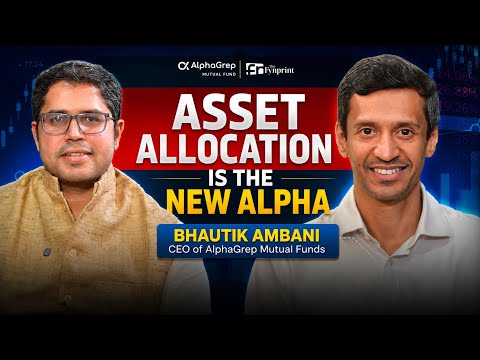
Alphagrep mutual fund is launching its very ever scheme, a multi asset. True to its hedge fund DNA, the AMC intends to rebalance aggressively. So aggressively that it wants to beat even pure equity funds using asset allocation as a strategy. How? Watch the full podcast!
youtu.be/qIvYIgkSno0?si…
#mutualfunds #hedgefund #partnered
YouTube
English

So many big accounts are promoting Sumeet Industries.
Makes you wonder if the money is really worth risking the goodwill they've built over the years.
Running a marketing agency for 10+ years taught me one thing:
"Never sell your goodwill for money."
There are easier ways to make money using your X account than selling your credibility.
Trust takes years to build and one such promotion to lose.

English


@StockyMind its good, it can go up to 200, but it needs to break the IB bullish.
English



CAT question - 99% failed : is it a tea cup or a coffee cup ?

English
@MaiHoonSaurabh Hope Nifty participates. Without it, the rally feels like a train trying to move without an engine. 😅x.com/learning30391/…
Raj@learning30391
@TheTradeScout The biggest difference is that last time Nifty was leading the charge. This time, it doesn't seem interested. Without Nifty participating, I'd remain cautious. Nifty needs to take the lead, otherwise, I'm not convinced this liquidity is sustainable. just my few cents.
English

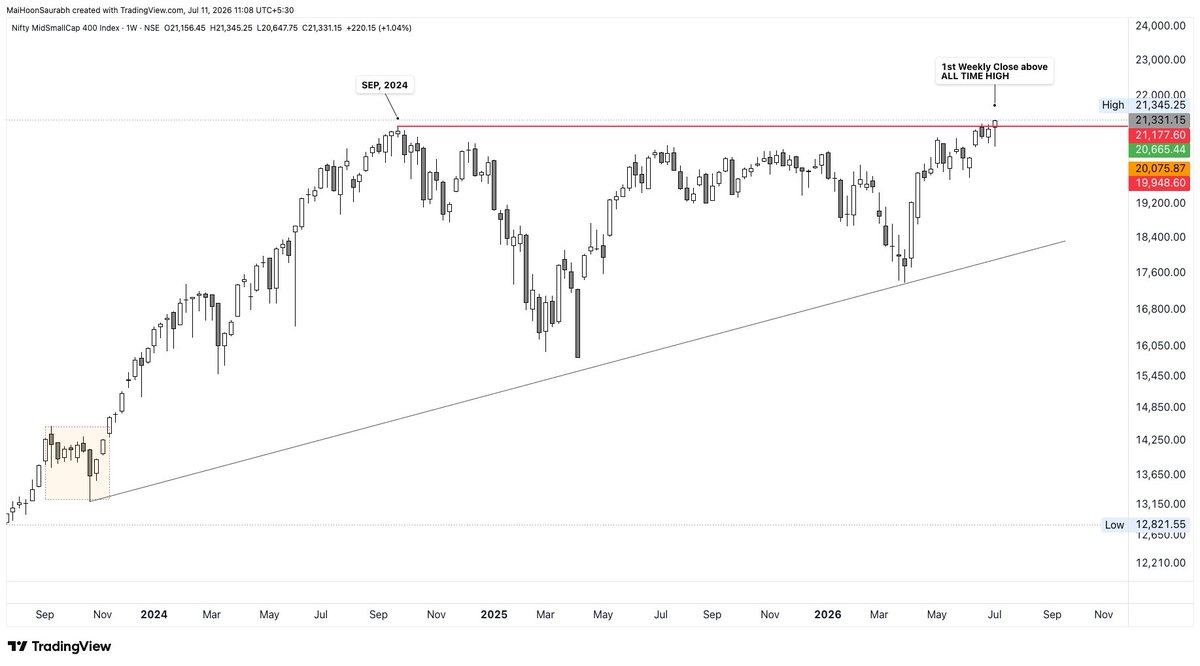
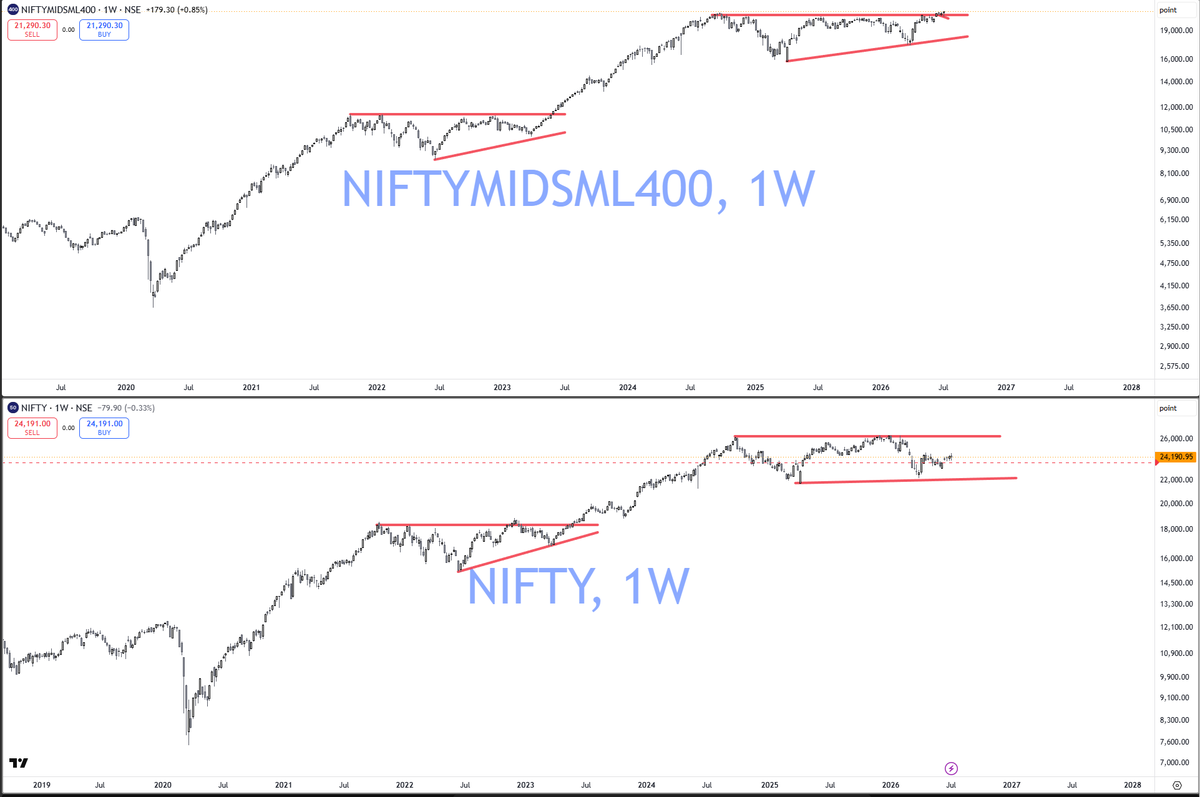
NIFTYMIDSML400 has closed above its ALL TIME HIGH for the 1st time in almost 2 yrs.
Interesting times might be waiting ahead.
Staying Alert and staying Ready...
English

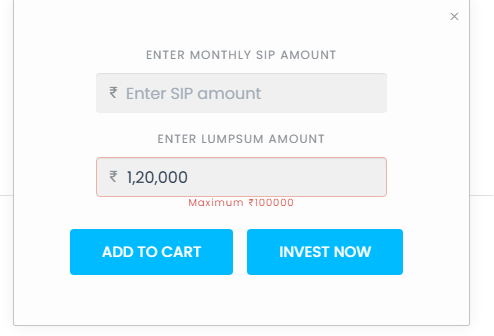
@AashishPS Hi Aashish, does your Midcap Fund have a ₹1 lakh limit on lumpsum investments? Somebody recieved this message on Kuvera and was wondering whether this restriction is specific to Kuvera or imposed by the AMC itself.
English

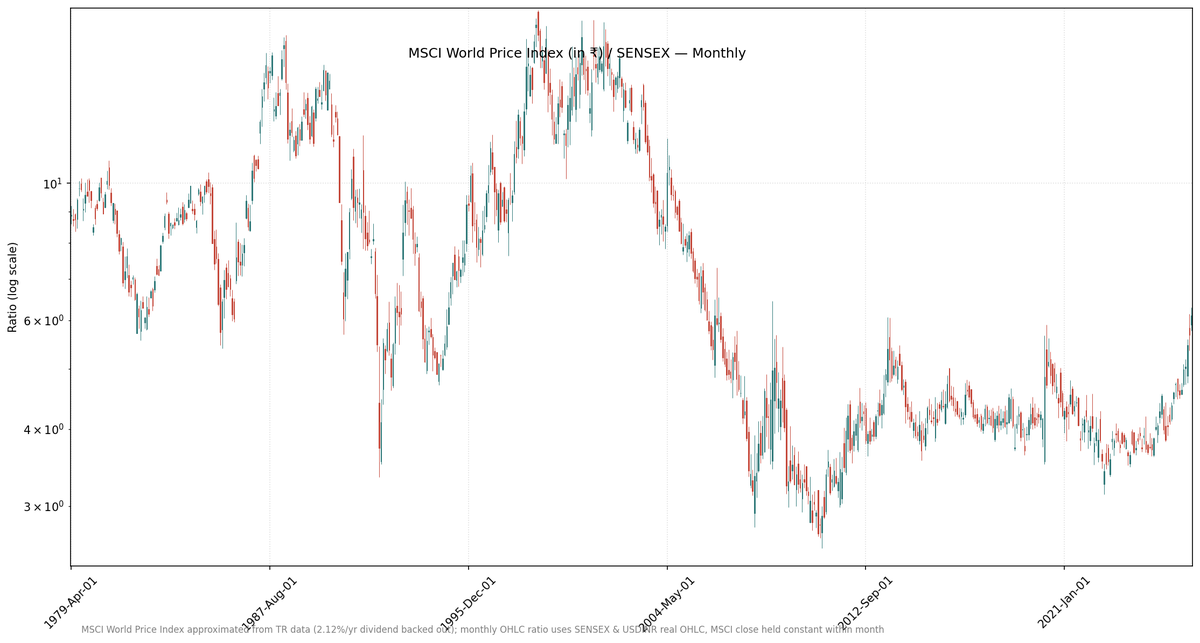
@InvesysCapital Here's the same chart over multiple decades. Does it tell the same story you're conveying, or is the story changing? 🙂
English

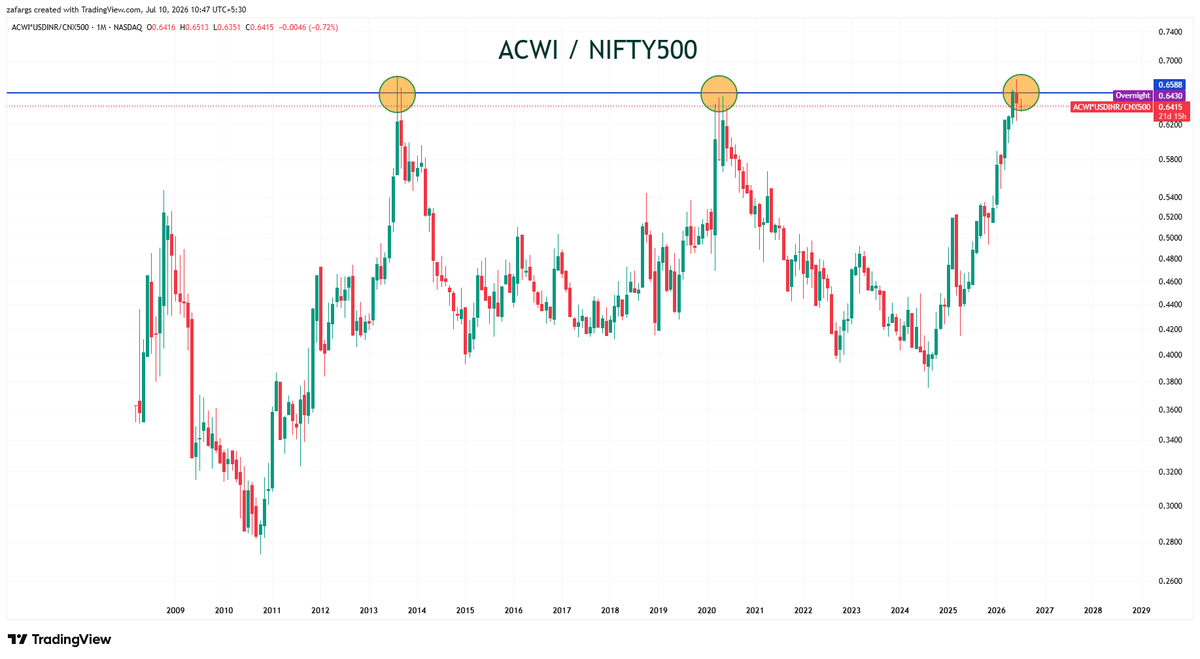
@InvesysCapital Aree Zafar bhai, Why only short period, that will bring in the bias
sensex is availble from 1979, MSCI all world from 1970's, usdinr is from 1973.
English
@TheTradeScout The biggest difference is that last time Nifty was leading the charge. This time, it doesn't seem interested.
Without Nifty participating, I'd remain cautious.
Nifty needs to take the lead, otherwise, I'm not convinced this liquidity is sustainable. just my few cents.
English

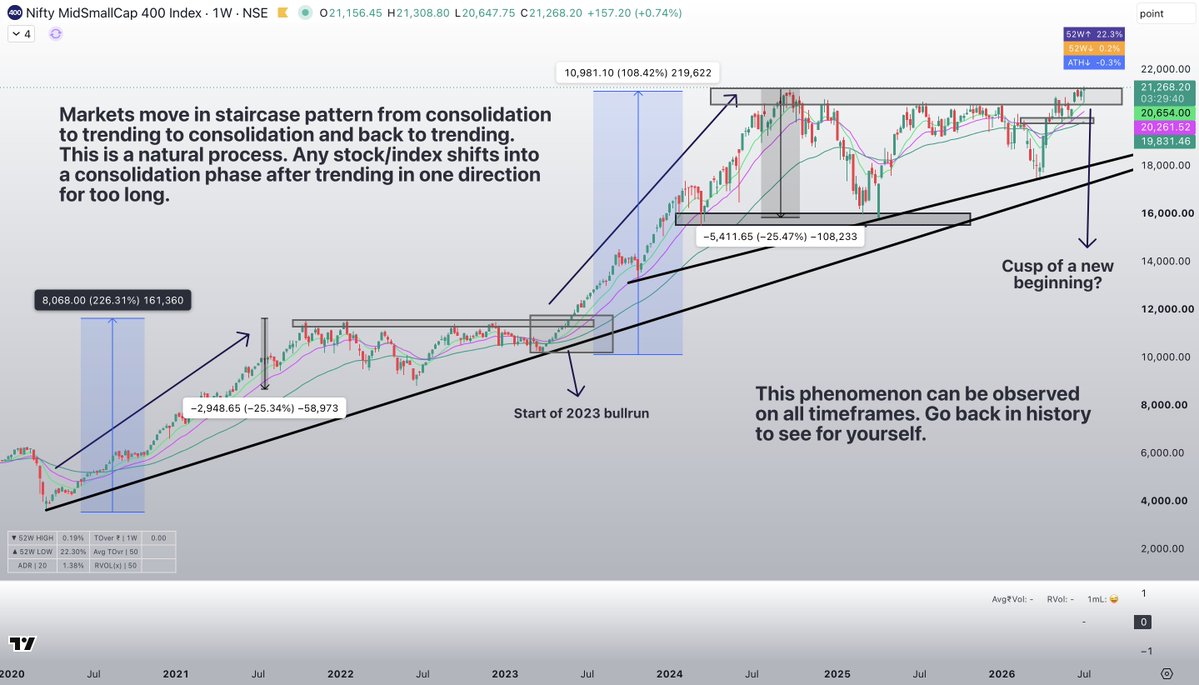
After a period of almost 2 years of consolidation. Are we entering a new era? Only time will tell, but things are aligning in favour of a bull run. Prepare to multiply your portfolio. Manage risk always.
Vivek Gautam@TheTradeScout
CAN THIS REPEAT? 🙀 The objective of this post is to spread awareness & set realistic expectations for the times ahead. I'm not scaring you, but preparing you mentally because a long consolidation period will come eventually, and everyone will have to deal with it including me.
English
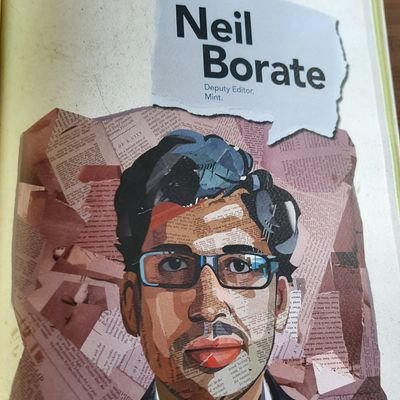
Neil Borate@ActusDei
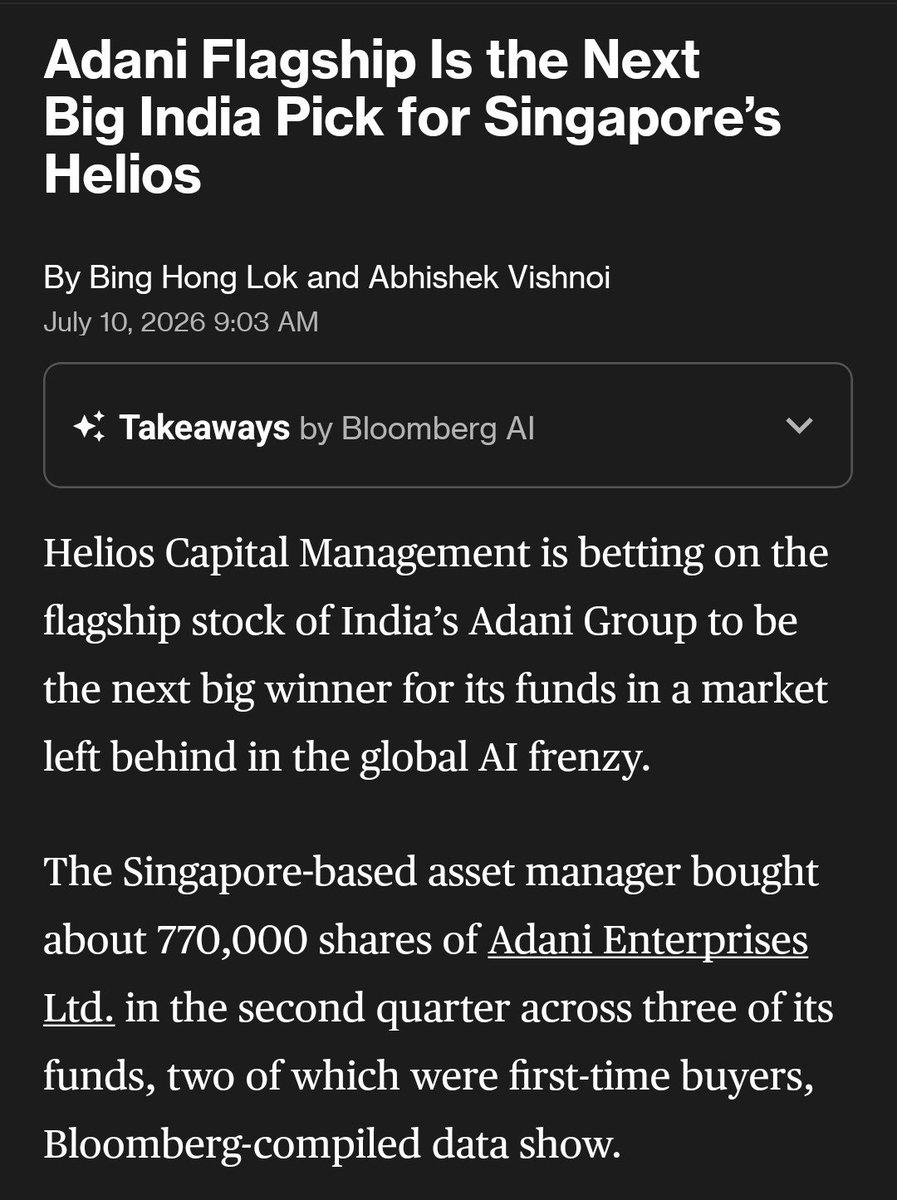
Among active funds, Adani is mostly held by arbitrage or similar funds (which hedge it away). Exception is Quant Mutual Fund which has about 8% assets in Adani companies and has risen to the top of the charts. Story by @jashkriplani, @Abhinavkaul and me. livemint.com/money/personal…
QME
One other fund house was very bullish on Adani, a few years ago. Remember?
English


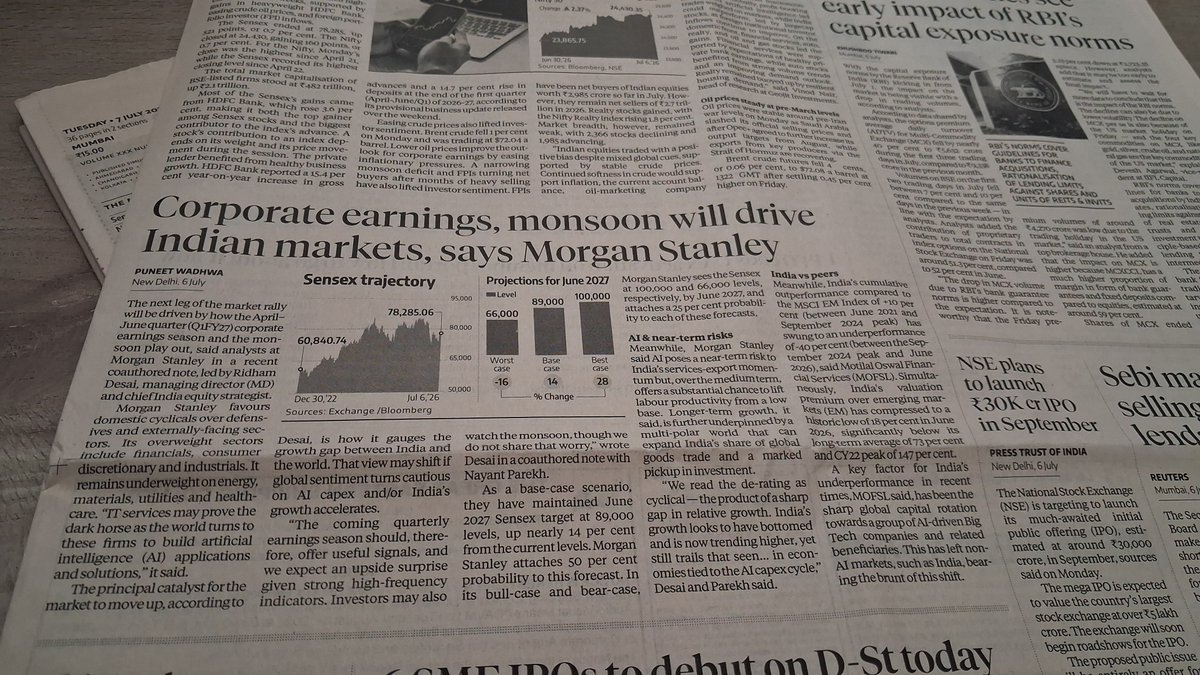
Morgan Stanley's 2027 Sensex forecast:
Base case: 89,000. 14% upside. Confidence: 50%. So basically a coin toss.
Worst: 66,000. Best: 100,000.
That's a 34,000 spread. For context, that's wider than the entire rally from the 2022 low to today.
Somewhere between "markets crash 16%" and "markets rally 28%" lies the answer. Truly the cutting edge of financial forecasting.
At this point just publish a dartboard and save everyone the 2000 word note.
English
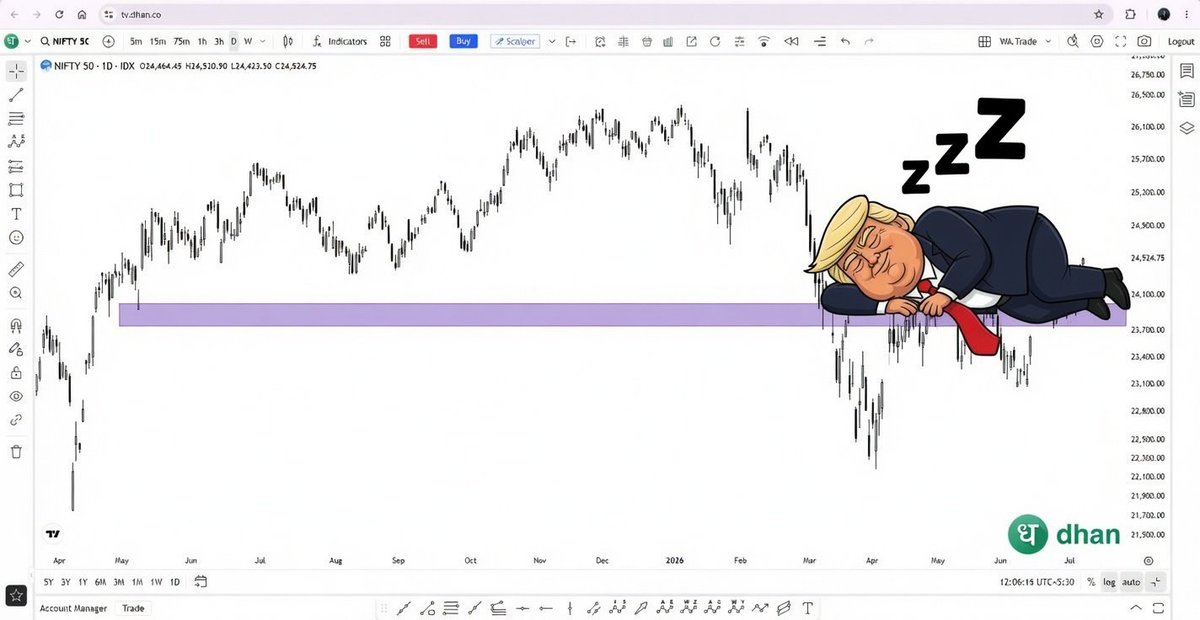
@tightvcptrader my current risk is reduce to micro 0.06%, thats the only way i can survive without damaging the equity curve in this environment 😅
English

@MaiHoonSaurabh great catch, thanks for share. how is LLOYDSENT looking, took a bite there 😀as I could not enter in the LLoyd engineering due to gapup.
English
Lloyds Engineering wasn't a simple pullback to the EMAs. It was very Special ❤️
Let us learn what made it so Special.
✨It was the 1st Pullback after the Big Base Breakout.
Usually the Best Lowest Risk Entry point after the confirmed Breakout. Never ever miss the 1st Pullback.
✨It was the Retest of the Breakout Level
✨It was a Confluence of 9EMA Pullback + Pivot Retest
If you find this confluence, give it Extra weightage.

Saurabh Gupta 📈@MaiHoonSaurabh
LLOYDSENGG Now
English
Some clean Charts to Track for the Next Week
3rd one is my Favourite
Disclaimer: None of these setups are a Buy/Sell recommendation.
English