The last thing the country needs now is for yet another ANC cadre to be deployed as South Africa’s ambassador to the USA. Roelf Meyer is an ANC cadre.
A principled ambassador is needed who can engage with the USA competently in the interest of South Africa. His history shows that he is someone who is willing to dramatically reposition himself to suit his own personal interests. His becoming a member of the ANC is a prime example. His shifting between parties and his eventual alignment with the ANC do not reflect steadfastness. enca.com/news-top-stori…
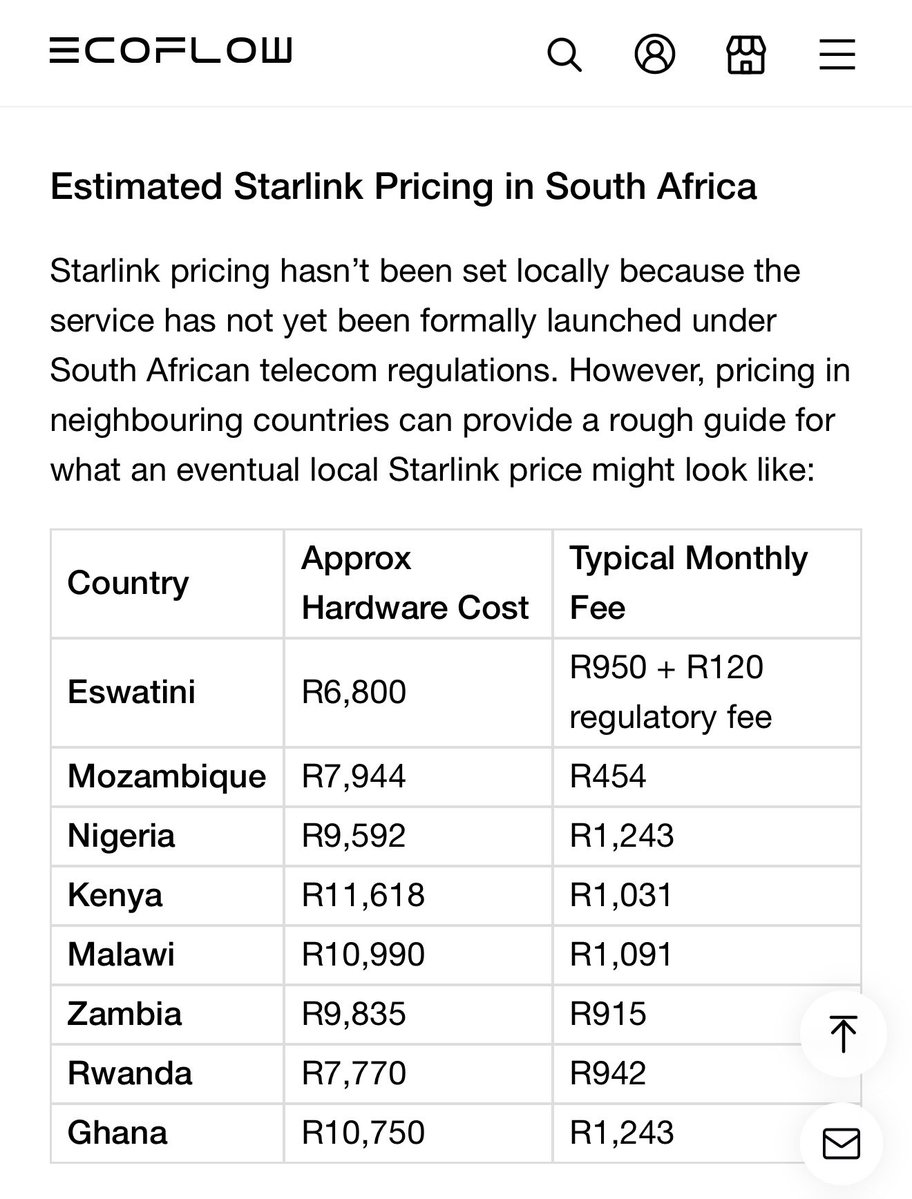
1. Starlink is not “cheap internet”
2. The reason why Starlink does not have a license is because they withdrew their application in January of 2025.
3. A satellite internet company license requires trustworthy operators who will not abuse that power or exploit the people.
@department012@GatiepAdonis@yorokobumbatha@asiendu@Crownbr@MightiJamie I deal with procurement officers and deal with owners of companies and assist them with tenders. You have no clue what you are talking about. Before going, do you believe there is white genocide in South Africa?
The Policy is the Map, the Mafia is the Destination
Legalized Gatekeeping: You’re right that the 30% rule is "national," but that’s exactly the problem. When the government mandates that 30% of a project must be carved out for "local partners" without providing a vetted, safe list of who those partners are, they aren't creating "transformation"—they are creating a bounty.
The Starlink Standoff: Starlink is the perfect example of "National Enforcement" failing the country. The government isn't "forcing" them to do anything? Tell that to the millions of rural South Africans who don't have internet because the state is holding a license hostage for a 30% equity stake. That’s not a "rule"; it’s a gatekeeping fee that prioritizes a few shareholders over national infrastructure.
The "Compliance" Delusion: You say 600 American companies comply. In the procurement world, we know what that "compliance" often looks like: it’s paying "consultancy fees" to middlemen who do zero work, or hiring "security firms" that are actually just the local forum in a different uniform. It’s institutionalized extortion that gets buried in the "Operational Expenses" line of a bank's ledger.
The Street Reality: You say the mafia is "limited to some areas" and not related to the 30% rule. If that’s true, why is every major construction industry body in South Africa pleading with the government to decouple "community participation" from "mandatory 30% subcontracting"? They are doing it because the national policy is the only reason the common folk with AK-47s have a "legal" foot in the door.
The Final Word:
As a banker, you see the world as it should work according to the law. As a procurement officer, I see how it actually works when the law meets the street. The 30% policy is the common thread: in the boardroom, it blocks technology like Starlink; on the site, it provides the "legal" badge for the mafia. You can call it "national enforcement" all you want, but at the end of the day, it's just a different way to say "pay to play.
Have a nice day
@department012@GatiepAdonis@yorokobumbatha@asiendu@Crownbr@MightiJamie This is how Microsoft did it and how Amazon did it. I am glad you eventually found out about this. The fact is that a community will benefit to an equivalent of 30% of the company’s equity. This bypasses your concerns and I have mentioned this several times above. Welcome
the Minister of Communications, Solly Malatsi, is already working to bypass the 30% equity rule as we speak. In December, he issued a directive to ICASA to recognize Equity Equivalents. This means Starlink can invest in infrastructure (like connecting schools) instead of giving away shares. That a win, 30% nonsense is weakened
@DaleSparrow@MightiJamie While you can technically bridge the signal to a neighbor using a few thousand Rands' worth of equipment, doing so on a standard residential plan puts your account at risk of being banned. If you do it for profit, you are technically an unlicensed ISP, which is a legal risk in SA
@DaleSparrow@MightiJamie Priority (Business) Plans: These plans are more flexible. Starlink explicitly allows for "community Wi-Fi" or "hotspot" use (e.g., for hotels or boats), provided you aren't acting as an unauthorized agent or distributor of the Starlink brand itself.
@DaleSparrow@MightiJamie You become the "help desk." If the satellite signal drops or a router fails at 2 AM, your neighbors will be calling you, not Starlink.
@DaleSparrow@MightiJamie As the account holder, you are legally responsible for all traffic. If a neighbor downloads illegal content, the digital trail leads directly to your name and Starlink account.
@DaleSparrow@MightiJamie A Managed Router/Controller: You need a way to "divide" the bandwidth. Without a controller, one person downloading a 100GB game will make the internet unusable for everyone else. You would need to set rate limits (e.g., capping each neighbor at 20Mbps).
@DaleSparrow@MightiJamie Point-to-Multipoint (PtMP) Hardware: To beam internet to neighbors, you’d use high-gain outdoor antennas (like Ubiquiti or Mikrotik gear) to send a signal from your roof to theirs.
@DaleSparrow@MightiJamie If you were to set this up (for example, on a shared property or for a business)illegally, you can't just rely on the Starlink router. You would need:
• Starlink Ethernet Adapter: The standard Gen 2/3 dishes often require an adapter to plug into non-Starlink hardware.
@lenand40@MightiJamie You're not an illegal ISP what are you talking about 🤣🤣 it's extremely common for a single panel to be connected to a local WAN network.
To get a RAIN router costs you R800 per month and you STILL haven't built the cell infrastructure needed.
@DaleSparrow@MightiJamie You need to read the terms and conditions. “Residential Plans: These are strictly for "personal, family, or household use." Reselling the service or sharing it outside your immediate premises is a violation that can lead to service termination.”
@Ntuman_@MightiJamie@elonmusk@realDonaldTrump I didn’t say they gave 30% ownership I simply mentioned that they got their license after some terms and conditions which they had to meet.
@lenand40@MightiJamie@elonmusk Do research particularly in this countries Starlink did not gave ownership, in Kanya or even Brazil to the have 30% ownership but for Starlink receivers licence without. So @elonmusk is using the @realDonaldTrump administration to secure these deals all over the world by threats
@kalliekriel For White South Africans worried about brutal racial discrimination in their country, the worse appointment ever. The traitor raised his ugly head again.
@kalliekriel No fuck face an ambassador is someone trusted by the president who represents the president and not some arsewipe woman to the US and told fucking lies
@department012@GatiepAdonis@yorokobumbatha@asiendu@Crownbr@MightiJamie This is also false. Starlink was never forced to do anything. The rule is there and they are aware of the rule and their objection was to the rule and not someone government forcing them to do anything they didn’t want to do. You are however welcome to provide the claim
@department012@GatiepAdonis@yorokobumbatha@asiendu@Crownbr@MightiJamie Also Starlink would likely apply for the equity equivalent which Microsoft and Amazon chose. This allows them to invest in projects of their choice to the 30% of their value. Starlink had indicated their project would be connecting 5000 schools. Done deal
You keep talking about 'investing in staff' and 'shares' like it’s a voluntary boardroom decision. Starlink is the proof that it’s not. The government tried to force them to give 30% of their actual company away before they could even sell one satellite dish. That isn't 'transformation'; it’s gatekeeping. When the state says 'you can't operate unless you pay a 30% toll,' they are creating the very middlemen you say don't exist. Whether it’s a suit in a boardroom demanding shares or a guy on a site demanding a subcontract, it’s the same 30% policy fueling both.
Why do you think these groups call themselves "Business Forums" and not "Gangs"? Because they use the 30% policy as their legal shield. If you remove the policy, they lose their "right" to be on-site. Right now, when the police show up, the mafia claims they are just "enforcing government transformation policy." Without that policy, they are just common trespassers and extortionists. So removing the 30% removes the legal cover