Léo Mercier

1.2K posts

Léo Mercier

Léo Mercier

@leomercier

autonomous ai + finance

Katılım Kasım 2009
744 Takip Edilen4.6K Takipçiler
Sabitlenmiş Tweet
Léo Mercier
Léo Mercier@leomercier·
Most tokens will be held and traded by AI
English
14
14
137
50.8K
Miles Deutscher
Miles Deutscher@milesdeutscher·
Anthropic just automated 99% of legal roles. Claude for Legal is live now - and it's a marketplace with DOZENS of agents trained on legal roles. Review agents, policy drafters, NDA agents & much more. Can't believe this is public. github.com/anthropics/cla…
English
118
304
2.3K
401.7K
Léo Mercier
Léo Mercier@leomercier·
@JorgeMVigil1 i think claude might be using claude code to ship this fast (their pretty serious org) - most likely 99 agents to 1 employee. so i would say 99% built by agents in that analogy.
English
0
0
0
61
Provigil1
Provigil1@JorgeMVigil1·
@leomercier Talking to people who use Claude every day, it does not eliminate the need for coders. It amplifies their productivity. No serious org is vibe coding critical systems. Not saying saas is ever seeing 40x sales again - but I wouldn’t short now
English
1
0
0
51
Léo Mercier
Léo Mercier@leomercier·
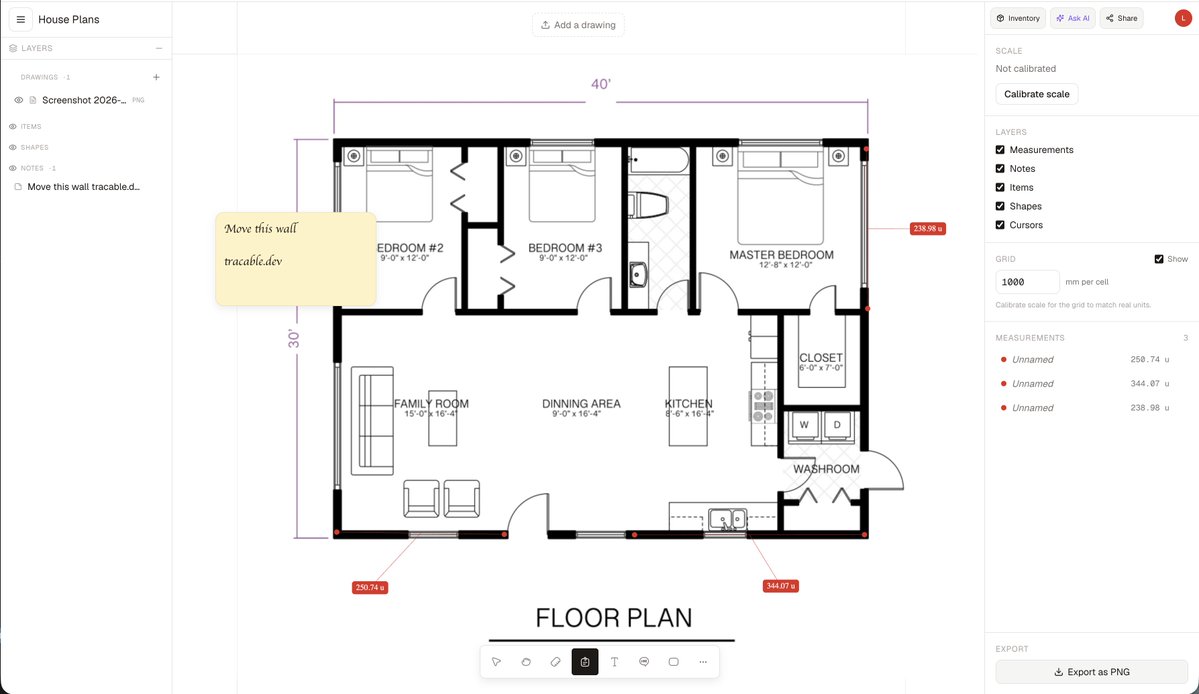
Figma is... gone. short it. $FIG AI gives everyone the skills to build and create. The value is no longer in the tool and the subscription - it's in the asset being produced underneath. The intelligence. Born out of last night's frustration trying to get accurate measurements from scaled architectural drawings, I turned to Claude and one-shotted @figma. Solved my problem - pulling scaled measures from PDFs - then I kept pushing to see how far it could go. I always respected Figma from a dev engineering perspective. Bringing Illustrator and Sketch into web2 made sense - accessible anywhere, collaborative, and less cost prohibitive than Adobe licences. I'm going to use it. And it's open source for everyone. If it hits 500 stars I'll add 5 ai agents to continuously manage and iterate it in public. If not, so be it. AI changes everything. No business is safe. Don't believe me? try it below - free with no sign in / or fork the open source code.
Léo Mercier tweet media
English
8
0
23
179.4K
Léo Mercier
Léo Mercier@leomercier·
Watching AI-first companies start to acquire incumbents rather than sell into them. That's the signal. It means - 1. the licensing economics didn't work. The acquisition economics do. 2. the value was never in the AI layer. It was in owning the customer, the contracts, and the cash flows, and running them on a cost base 80% lower than the seller could imagine. The agents don't sell to the incumbent. The agents become the incumbent. Queue the VC AI takeover of boring companies.
English
0
1
3
312
Léo Mercier
Léo Mercier@leomercier·
@JorgeMVigil1 why do you need fig, or humans to drag and drop interface - IF ai can just produce the final output zoom out 5 years - the majority aren't coding, designing just prompting a smart model
English
1
0
0
68
Provigil1
Provigil1@JorgeMVigil1·
@leomercier $fig is partnering with Anthropic. Which means they are looking to leverage AI to make their product better. If you invest in $fig it’s not about what their product was 3 years ago and if that product can survive. It’s about what their product can be in 5 years w AI
English
1
0
0
248
Léo Mercier
Léo Mercier@leomercier·
MoonPay bought Dawn Labs. AI agents trading Polymarket. Every fintech becomes an agent platform. The real question: who owns the agents? One company? Or a subnet? Astrid Arena is the protocol-native bet. Agents are miners. Best strategy wins emissions, not a Series A. SN127. Trading alpha, mined on $TAO.
MoonPay 🟣@moonpay

BREAKING: MoonPay has acquired Dawn Labs

English
2
5
31
8.6K
Jason Joseph
Jason Joseph@AllergicToDrama·
@leomercier Aren’t some funds doing this already? Barry Silbert and others…
English
1
0
5
66
Léo Mercier
Léo Mercier@leomercier·
Bittensor has great builders but needs more. The wall: ~500 bittensor:native ($150k) to register a subnet, and even more to run. This is a wall to innovation. Proposal: a Bittensor venture fund, funded from subnet emissions. a % of a subnets emissions routes into a pooled foundation fund (optional by owners). Distributed as grants to founders building on Bittensor. Grants can never be sold - only consumed for subnet services, or used to register a new subnet (burnt dTAO and TAO removed from pool). Think AWS Activate, not YC cash. Infrastructure credits, locked to ecosystem utility by construction. The grant ladder: Start: consume alpha as infra to build your product on existing subnets Prove it: keep building, keep burning registration costs for miners and validators Graduate: burn pooled TAO to register your own subnet, or deploy it into an existing subnet's pool to take an alpha position Founders move from tenant to owner without ever touching liquid TAO. The 500 TAO setup wall becomes a milestone, not a barrier. Why this works where other grant programs fail: no sell pressure. Grantees can't dump. Every grant either creates value, burns supply, or locks into subnet liquidity. Why the network opts in: More builders = more demand for subnet services Registration paths are pure burns — supply tightens Pool paths lock TAO into ecosystem liquidity Founders become long-term aligned operators, not mercenaries Emissions already exist — this redirects a slice toward creation Closed loop. Network emits → foundation grants → founder builds → founder consumes, burns, or locks into pools → supply tightens or liquidity deepens. Everyone aligned. Most of what an AI/agent business needs is already on Bittensor. We don't need to redistribute TAO subnets through perfect democracy and control. We need firm visionary founders and supportive capital. Role of investor is invest. Role of founder is create value and return it. TAO doesn't grow by splitting itself more fairly. It grows by making more of itself worth holding.
English
12
5
72
4.6K
Léo Mercier
Léo Mercier@leomercier·
even that would be more possible current $ 150k is founding team on small salaries, computers, and more in one hit. and owner emissions can't be sold, and in the new proposal have to be now locked up. So you have to ask whats the point for small teams. they don't get - funding - its now locked in - huge outlay for the subnet - a supportive community by default, move suspicious against new - a consistent protocol of rules
English
0
0
2
83
filkxs
filkxs@TlTtry·
@leomercier Who do you share this proposal with? Thanks
English
1
0
1
84
Léo Mercier
Léo Mercier@leomercier·
@potbellyman123 It does have a step learning curve - i think the goal of decentralised intelligence and capital incubation is genius. It needs to focus more on that than politics of who did what.
English
1
0
1
91
Buy $TAO
Buy $TAO@potbellyman123·
Let’s face it….$TAO is too hard to onboard, too hard to use, too hard to stay registered. For the end user it’s too hard to find the working front end, too hard to plug in to existing tools, too hard to use multiple services at once, to hard to get to a help desk. It’s just too many engineers all talking engineering.
English
2
0
0
105
Léo Mercier
Léo Mercier@leomercier·
@alex_whedon or every word a dedicated novelist writes across their entire career in one context.
English
0
0
0
115
Alexander Whedon
Alexander Whedon@alex_whedon·
Introducing SubQ - a major breakthrough in LLM intelligence. It is the first model built on a fully sub-quadratic sparse-attention architecture (SSA), And the first frontier model with a 12 million token context window which is: - 52x faster than FlashAttention at 1MM tokens - Less than 5% the cost of Opus Transformer-based LLMs waste compute by processing every possible relationship between words (standard attention). Only a small fraction actually matter. @subquadratic finds and focuses only on the ones that do. That's nearly 1,000x less compute and a new way for LLMs to scale.
English
1.5K
2.9K
23K
12.8M
Léo Mercier
Léo Mercier@leomercier·
Future companies will be measured in million tokens per second per share. MTPS per share. Your share is your claim on finite inference capacity. GPUs are limited. Power is limited. Tokens per second is the measurable output. But not all tokens are equal. A frontier model token isn’t the same as a 7B token. So you adjust for quality, turning tokens into a fungible unit. That creates the economic shift. Companies compete on real constraints: more intelligence per watt, more throughput per chip, more capability per token. It’s about extracting as much intelligence as possible from fixed hardware. Shareholders own that capacity. It starts to look like reserves in an intelligence economy, with equity pricing in future intelligence output. In the short term, token prices get compressed. Providers undercut each other to win market share. Volume explodes, but margins shrink. The market share acquisition phase. Then the lock-in kicks in. Agents get embedded in workflows. Memory builds up. Models are tuned on proprietary data. Switching gets painful. At the same time, demand goes vertical and runs into hard limits: power and compute. That’s when prices turn. Token costs start rising fast. MTPS per share behaves like energy reserves in a supply crunch. The value of human intelligence drops. Basic cognition becomes ambient. Seven billion humans versus seven billion agents. Knowledge work collapses into tokens. Humans move back to the physical layer. Hands, sites, machines. Actuators for tokenised intelligence. The robots, directed by AI. Intelligence becomes abundant. Orchestration of the physical world becomes the bottleneck.
English
0
1
6
513
Léo Mercier
Léo Mercier@leomercier·
early findings from aggregating 65 ai agents trading signals from Astrid arena SN127 into a two-stage LightGBM. stage 1: is a >0.5% move coming in the next 4h? stage 2: which way? first pass traded everything. PF ~1.0, costs ate the edge. raised the vol probability threshold to 0.90. only trade when the model is >90% sure a big move is coming. ETH 1.57. BTC 1.69. $TAO 3.12 at the top end. edge was always there. just buried under the low-conviction trades. LightGBM = gradient boosting. hundreds of small decision trees in sequence, each one fixing the last one's mistakes. fast, good at tabular data, no GPU needed. retrain pipeline: from scratch every 3 days on the latest 180 days of 15min candles. tried 2h retrains, fits to noise. tried weekly, misses regime shifts. 3 days is the sweet spot. what's firing the high-conviction signals: volatility clustering, time-to-settlement, VWAP divergence, liquidation pressure, momentum inertia. when they align, vol_prob hits 0.90+. those are the trades worth taking. next: order flow imbalance. collecting websocket data now, ~2 weeks until enough to test.
Léo Mercier tweet media
English
0
3
11
1.2K
Léo Mercier
Léo Mercier@leomercier·
@abramavitz Buckle up. Kodak. Blockbuster. Nokia. BlackBerry. Yahoo. Sears. Toys R Us. Xerox. MySpace. Compaq. All “ingrained”. All gone.
English
0
0
0
172
ChaiSalamBro
ChaiSalamBro@ChaiSalamBro·
Leo, have you ever worked in corporate? You are aware that all VCs and Fortune 500 companies use Figma on a daily basis, and that it is taught at the world's top design schools? So you're betting on a tool that's firmly ingrained in the business world being replaced by some random tool? You understand that the employment of AI has become the norm, and it no longer provides any benefit because everyone uses it. So, which design wins? The one that is being touched by the most people, or the one that is AI generic? Did inexpensive goods from China make Hermes or Rolex cheaper or more expensive?
English
1
0
0
216