
Elijah Levine
1.6K posts


Elijah Levine
@levineel42
Recent @Wharton grad, CEO of @BlackMountainIG, which builds and invests in real estate and technology companies that are helping make the world a better place
Salt Lake City, Utah Katılım Haziran 2014
784 Takip Edilen978 Takipçiler
Elijah Levine retweetledi

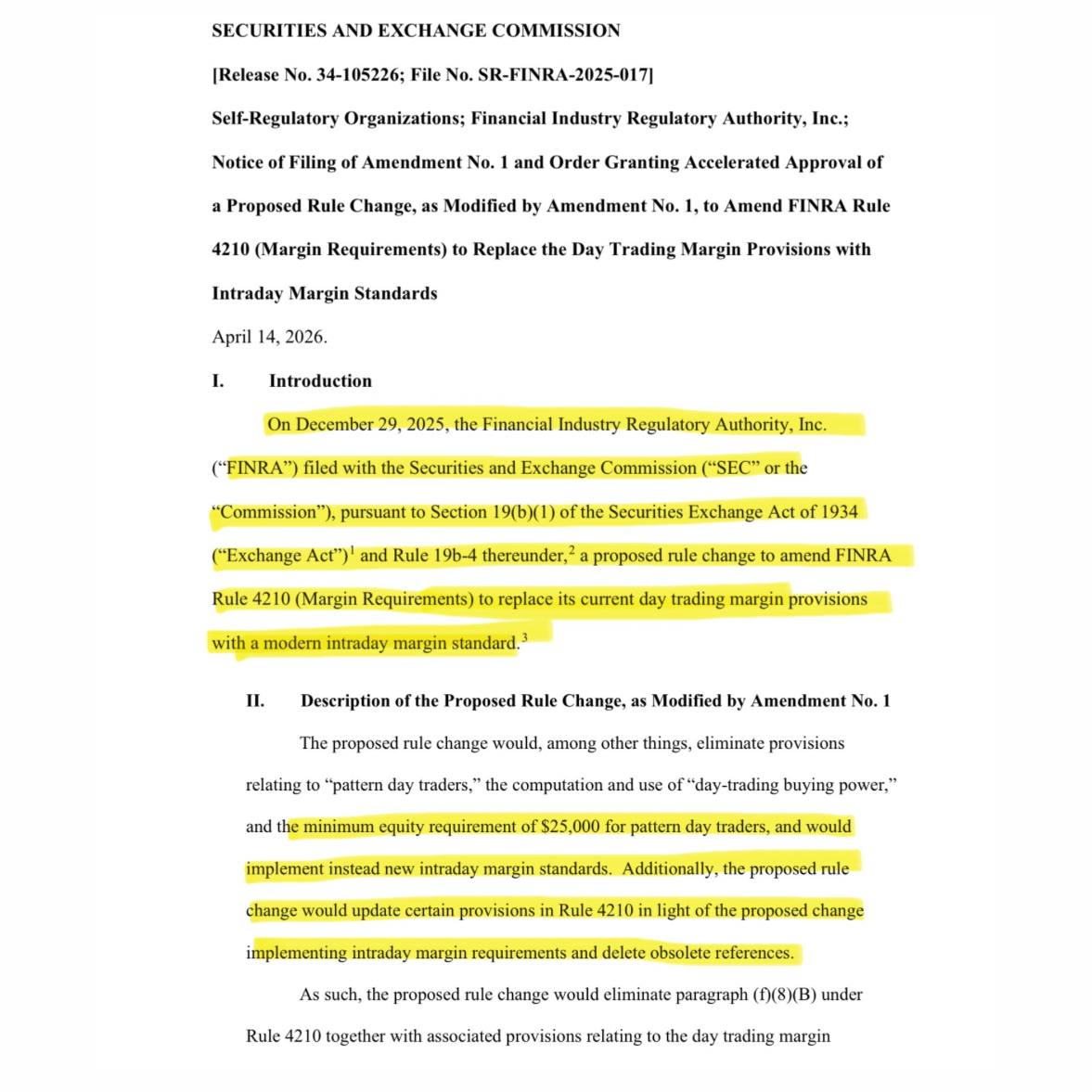
BREAKING: The SEC just officially eliminated the $25,000 minimum rule for day trading.
This is the biggest change to retail trading in 24 years.
Since 2001, if you wanted to make more than 3 day trades in a 5 day period, you needed at least $25,000 sitting in your account at all times. If you dropped below that, your broker would lock you out of day trading completely.
This rule blocked millions of retail traders from actively participating in markets simply because they did not have enough capital.
That rule is now gone.
The SEC today approved FINRA's proposed change which replaces the fixed $25,000 requirement with a real time margin system.
Instead of a fixed dollar threshold, brokers will now monitor your actual risk exposure throughout the day and adjust your buying power based on the real risk of your positions, not an arbitrary account balance.
Now you no longer need $25,000 to day trade. You just need enough margin to cover the actual risk of your open positions.


English
Elijah Levine retweetledi
🚨 THE FED IS NOW PRIVATELY PREPARING FOR A POSSIBLE $2 TRILLION CREDIT MARKET COLLAPSE.
For the first time in over a decade, the Fed has started directly asking U.S. banks to hand over their exposure numbers to the private credit market.
This is the exact move regulators make when they stop trusting public numbers and start preparing for real stress.
Bloomberg reported on April 11 that the Fed has formally reached out to major U.S. banks for detailed information on how much risk they're carrying from private credit firms, and whether stress inside that sector could spread into the wider financial system.
Here's why this is happening now.
Over the past few weeks, three of the largest private credit funds in the market have limited investor withdrawals:
- Blue Owl Capital restricted redemptions on its $14B fund
- BlackRock capped withdrawals on its $26B HPS Corporate Lending Fund after investors requested $1.2B in redemptions
- Cliffwater capped withdrawals on its $33B fund after investors tried to pull 14% and only 7% was allowed to exit
Three of the biggest names in the industry, all hitting redemption limits within a short period. That's not random. That's investors trying to get out faster than the funds can return their money.
At the same time, Apollo executive John Zito publicly said private equity marks are wrong across the board. He said he "literally thinks all the marks are wrong."
His estimate: loans to a typical mid size software company bought between 2018 and 2022 could recover only 20 to 40 cents on the dollar in a slowdown. That implies losses of 60 to 80 percent.
So the pattern:
- Investors trying to withdraw from private credit funds
- Funds blocking those withdrawals
- A senior Apollo executive saying valuations across the industry aren't real
- The Treasury calling a meeting with insurance regulators this month to discuss the $2T private credit market
- The Fed directly asking banks for their exposure numbers
Now here's why this matters far beyond the U.S.
Private credit has grown to around $2T over the past decade, but it's not isolated. It sits in the middle of the global financial system. Pension funds, insurance companies, sovereign wealth funds, and foreign banks all have money parked in these funds because they were marketed as higher yielding and more stable than public bonds.
If valuations are revised down the way Apollo's own executive is suggesting, the losses don't stay with a handful of U.S. firms. They flow directly into:
- Public and private pension funds across Europe, Canada, Japan, and the Gulf that allocated heavily to private credit for yield
- Insurance companies, some of the largest buyers of private credit whose solvency ratios are tied to these valuations
- Banks in the U.S., Europe, and Asia that lend to the private credit firms themselves, which is exactly what the Fed is now trying to measure
Most people miss this part. A private credit fund limiting withdrawals isn't just a problem for that fund. The banks lend to the funds. The funds lend to private equity. Private equity owns thousands of mid sized companies. Those companies employ millions.
When valuations at the top are wrong, the entire chain underneath is mispriced.
The exposure also ties directly into the AI infrastructure buildout. Blue Owl alone is behind some of the largest AI infrastructure deals in the world:
- $27B joint venture with Meta in Louisiana
- $15B deal with Crusoe in Texas
- $5B backing CoreWeave
Oracle now carries over $100B in debt, much tied to AI infrastructure that will take years to generate returns. Companies like CoreWeave, Crusoe, and others are funding their buildouts through private credit rather than public bond markets.
The structure works as long as AI revenue grows fast enough to service the debt.
If it slows, the stress doesn't stay in tech stocks. It moves straight into the credit side of the system, which is the exact part the Fed is now trying to get a clearer picture of.
Globally, this is also colliding with:
- Japan dealing with the weakest yen in decades and rising bond yields
- Europe trying to manage weak growth and stretched sovereign balance sheets
- China still working through its own property and local government debt problems
- A U.S. consumer already showing signs of strain at the lower end
The world financial system has been running on elevated debt and loose valuations for years. Private credit is one of the largest and least transparent parts of that system.
If the valuations are wrong, if redemptions keep accelerating, and if AI revenue assumptions disappoint, losses could cascade through pensions, insurers, and banks across multiple countries at the same time.
Fed Chair Jerome Powell said last month he doesn't currently see private credit issues infecting the wider financial system. St. Louis Fed President Alberto Musalem said stress is "largely limited" to the sector.
But the fact the Fed is now pulling exposure numbers directly from banks suggests the central bank wants to verify that for itself rather than take those statements at face value.
And this happens when regulators are no longer comfortable being surprised by what they find later. If stress inside this $2T market turns into actual losses, it won't stay inside the U.S., and it won't stay inside one sector.
It will move through pensions, insurers, banks, and AI infrastructure debt across the global system at the same time.


English
Elijah Levine retweetledi

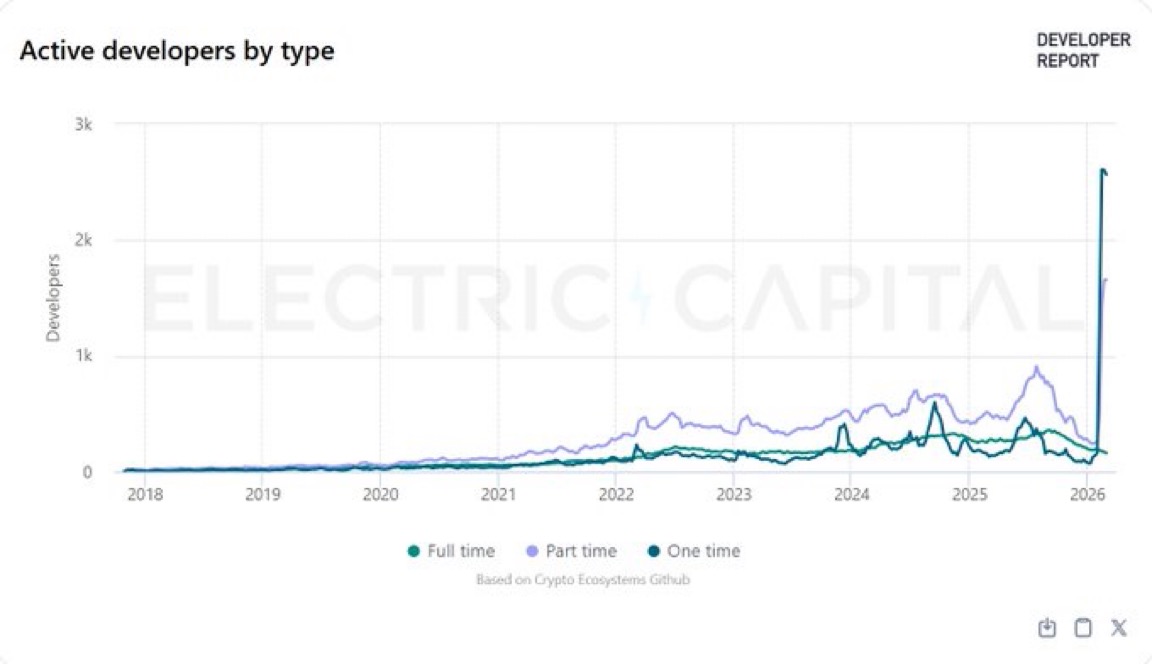
Something interesting happening with developers in crypto right now.
Over the last year, the number of developers on $ICP has grown +380%.
At the same time:
$AVAX −28%
$SOL −17%
$SUI −16%
$ETH −15%
$NEAR −10%
$ADA −10%
$BTC −1%
While most ecosystems are losing builders, $ICP is quietly attracting more of them.
And in crypto, developers usually move before the market does. 👀
English

POD UP! 🚨
-- Epstein Files
-- Is SaaS dead? Software stocks crash out
-- Moltbook panic
-- SpaceX-xAI merger
-- Trump's Fed pick
(0:00) Besties intros: Brad Gerstner joins the show
(3:16) Epstein Files
(15:45) SaaS stocks crash out
(35:11) Moltbook panic
(47:37) Trump selects Kevin Warsh as new Fed Chair
(1:00:50) SpaceX and xAI merge
(1:10:45) Brad's major win with Trump Accounts
English
Elijah Levine retweetledi

ETHEREUM’S WAVE 3 ISN’T FOR DEGENS. IT’S FOR BANKS.
JPM launches tokenized funds
ZK EVMs go institutional
ETH becomes the global settlement layer
Retail is sleeping on ETH.
Institutions are hardwiring it into the next financial system.
English

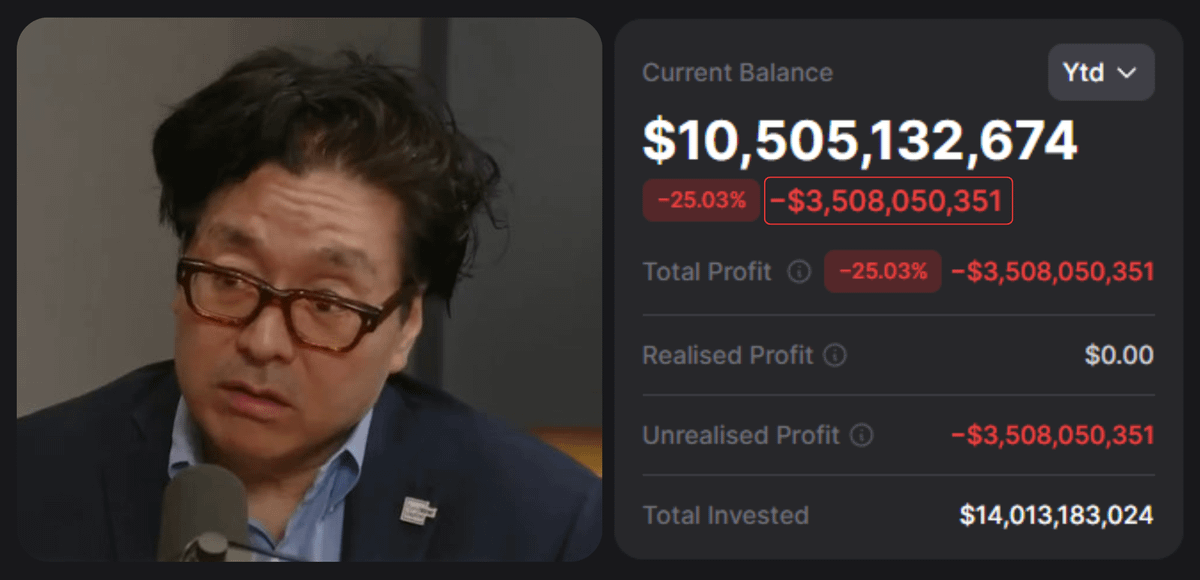
💥BREAKING:
TOM LEE'S BITMINE IS SITTING ON $3.5 BILLION IN UNREALIZED LOSSES ON $ETH.
English
@AppleCard is the best credit card product on the market by far
English
Tulsi Gabbard on Russiagate Hoax Evidence and How She’s Reforming Politi... youtu.be/ZVPz_mSOV-U?si… via @YouTube
Probably one of the most important discussions of today. Thank you, @TulsiGabbard @DavidSacks @Jason @friedberg @chamath @theallinpod

YouTube
English
Elijah Levine retweetledi

"worst cycle ever, no true altszn" - story about fragmented liquidity, Solana trenchers and human greed;
you wanted faster execution, lower fees and fun experience - Solana brought that to the table, giving birth to the first efficient onchain 'coin-sino', whilst also kick-starting the dispersion issue. that's okay, as 'slow and expensive' ETH has moved away towards institutional yield, SoV and RWA layer. I'm sure a little dispersion never hurt anybody, especially if we can all make more money.
you weren't satisfied.
you wanted even earlier & faster entries, more memetics, more toys you play with for a day and discard them like street prostitutes - Pumpfun gave you exactly that. dilution quickly went from "bad" to "what the fuck". you started aping coins mere seconds after launch. "this could run". run? where? unemployment center?
have we had enough? not even close.
you developed bots, scripts, trackers, AI tools to increase efficiency, speed and execution - at what cost? more freedom to ape into more coins. more incentives for serial ruggers, I mean devs, sorry, to automate coin launches at the expense of ~99%.
please daddy, fragment the liquidity even further!
suffice to say, whilst damaging crypto for years to come, barely anyone has turned profit. "Data from Dune reveals that 99.6% of Pump.fun traders have yet to achieve more than $10,000 in realized profits."
pathetic. you've shot yourself in the foot. quite literally.
as if the situation wasn't dire enough, this all brought the attention of outsiders. B-tier celebrities all scrambled to launch their own token, only to extract even more from already damaged participants.
then it all broke in January 2025. Trump. Melania. final nail in the coffin. they've heard the lengths of which you absolute fucking degenerates will go to just to turn profit. they launched their own token, mere days before inauguration. literal crime. whilst you hear many stories of people acquiring generational wealth, you forget this is a zero-sum game. who was on the other side of those trades?
while everyone screamed "this surely sparks the beginning of Solana casino!" - euthanasia rollercoaster officially began. that was it. no, really , statistically that was the top of trenches. slow erosion begins.
desperate, clinging onto hopes and dreams of "just one 100x", most failed to realize the game has always been rigged against their favor. you have better odds in an actual casino. no, really, you statistically do.
9 months later, as participants have [somewhat] awoken themselves from the false dream, everything that's left on the rollercoaster today are 'metas'. we went from thousands of coins/day, to once a month metas that saturate faster than Gainzy can press the sell button to dump on his followers.
what are we left with? streamer coins? capital markets? 1.) What
.. the fuck is even that?
and whilst many would consider such a post, or even sentiment to be a "bottom signal" [lol, lmao even], they forget what awaits at the end of euthanasia rollercoaster - "The Euthanasia Coaster is a hypothetical steel roller coaster and euthanasia device designed with the sole purpose of killing its passengers".
only death can pay for life.
only after dying are we truly free.
rebirth.
this won't change until regulations tighten up the space - allowing money to concentrate, instead of dilute.
it will take years for the cleanse.

English

Elijah Levine retweetledi

Falling mortgage rates are the beginning of the end for home prices.
Buckle up folks

English
Elijah Levine retweetledi

Strategy #1: Attack the Food System
Trump approved SNAP waivers to remove junk food from food stamps.
Nebraska: Signed
Indiana: Signed
Iowa: Signed
Agriculture Secretary Brooke Rollins: "This has never happened before under Republican or Democrat administrations."
But wait, there's more...
English
Elijah Levine retweetledi

"The fatal vulnerability is Europe’s near-total dependency on U.S. cloud providers."
Demand for *real* sovereign cloud is growing. The Internet Computer, self-writing, Caffeine and UTOPIA (both imminent), will play important roles creating solutions.
politico.eu/article/donald…
English
Elijah Levine retweetledi

sorry but i’m siding with the guy who:
—built rockets while politicians built narratives
—put his entire fortune on the line to revive American manufacturing
—got mocked, investigated, sued, and still showed up
—handed speech back to the public while every institution begged him not to
Elon never had to fight for this country, he chose to
and he’s still choosing to, in real time, with every risk he takes
can’t say that about most billionaires
can’t even say it about most presidents
English
Elijah Levine retweetledi


@DavidSacks The people aren’t dumb and the media are slowly but surely figuring it out
English

Why does the media always want to portray crypto in the worst light? I did not “dump” my cryptocurrency; I divested it. Obviously I would have preferred not to, but government ethics rules required it. It’s an honor to serve President Trump and the American people.

English