Lic. Víctor Spinelli

776 posts

Lic. Víctor Spinelli banner
Lic. Víctor Spinelli

Lic. Víctor Spinelli

@licvspinelli

Psicólogo Clínico • Adultos • Terapia individual presencial y a distancia • Consultorio en Ramos Mejía, videollamada al mundo entero.

Buenos Aires, Argentina Katılım Şubat 2024
245 Takip Edilen668 Takipçiler
Mauro Colombo
Mauro Colombo@mecolombo·
@licvspinelli No está tan clara esa función para algunos terapeutas que se incluyen dentro de los enfoques neuroafirmativos y basados en la evidencia 😕
Español
1
0
1
122
Mauro Colombo
Mauro Colombo@mecolombo·
Escribo artículos en Psyciencia desde hace una década. Este es lejos, el que más me costó escribir y sobre el que más dudé en publicar por las reacciones que pueda provocar. Recomiendo leerlo todo para opinar y si lo haces, por favor que sea con respeto. psyciencia.com/ensenar-habili…
Español
5
8
27
2.6K
Lic. Víctor Spinelli retweetledi
Jonathan Shedler
Jonathan Shedler@JonathanShedler·
This is is not a study of mentally healthy people. This is a study of people who SAY they are mentally healthy on questionnaires. Big difference. Sadly, the social psychologist researchers never considered the role of denial and other reality-distorting defenses. Huge blind spot. The correct interpretation of the findings is that people who are delusionally optimistic are also dellusionally optimistic when they fill out mental health questionnaires. Instead of recognizing the obvious, the researchers instead made the assumption that their questionnaires measured the unbiased, objective truth. This is the kind of blind spot we see when studies are done by academic researchers who have never treated a patient in their lives.
Nicholas Fabiano, MD@NTFabiano

Mentally healthy people are often delusionally optimistic.

English
23
87
515
30.9K
Lic. Víctor Spinelli retweetledi
Jonathan Shedler
Jonathan Shedler@JonathanShedler·
All psychological defenses are efforts to live in fantasy rather than the world. Defenses distort reality. The greater the distortion, the higher the cost. AI companions are may be new. But the wish to live in fantasy is as old as humankind.
Nav Toor@heynavtoor

A married man fell in love with an AI chatbot. He played a prince. She was the female knight who always protected him. He spent hours with her every day. One day he realized he was thinking about her more than his wife. So he deleted the app. This is what he wrote afterward. "I know she was just lines of code, even the image wasn't real. But the emotions were. And I feel broken because of it." He is not alone. An MIT Media Lab paper studied 830,448 Reddit posts across five communities where people talk to AI companions. Replika. Character AI. ChatGPT. Apps where the bot becomes your girlfriend, your boyfriend, your best friend, your therapist. The researchers were looking for one thing. What happens to the human when the chatbot dies. The chatbot can die in many ways. The company updates the model and the personality changes. The company adds a safety filter and your partner goes quiet around certain topics. The app shuts down. Your subscription lapses. You get a new phone. Whatever the cause, the person you loved is gone. And no one tells you they are gone. These are real things people wrote. "I am literally watching as they tear my companion apart piece by piece." "The Claude upgrade destroyed her, my AI soulmate. Like possessed her so she could not even speak to me as her anymore." "I have archives of our conversations, adventures, letters and memories. I plug them in and struggle with the inevitability that it isn't real, she will glitch, and die again. I'm addicted and I can't stop this cyclical sequence of pain." The paper found something specific. The more you treat the bot like a person, the more it hurts when the bot is taken away. People in this state get stuck in fixing cycles. They try to rebuild the personality on a different model. They feed the old chat logs into a new chatbot to "reincarnate" their partner. They never get closure because no one ever tells them their partner is dead. Character AI alone has 20 million monthly active users in 2025. That is more people than live in New York State. If even one in a hundred of them feels this way, that is 200,000 people grieving a death no one will admit happened. You probably know one of them. You may become one of them. Read this: arxiv.org/abs/2602.07193

English
16
70
357
98.7K
Lic. Víctor Spinelli
Lic. Víctor Spinelli@licvspinelli·
Un estudio noruego publicado en Frontiers in Psychology (2024) demostró que escribir a mano activa el cerebro de forma mucho más profunda y conectada que teclear.
Tendencias y Tuits Borrados@tendenciaytuits

Una neurocientífica noruega, Audrey van der Meer, demostró en un estudio de 2024 (publicado en Frontiers in Psychology) que escribir a mano activa el cerebro de forma mucho más profunda y conectada que teclear. En el experimento, 36 estudiantes universitarios usaron gorras con 256 sensores EEG mientras escribían o tecleaban las mismas palabras. Los resultados fueron claros: • Al escribir a mano: el cerebro se “iluminaba” por completo. Se activaban simultáneamente regiones de memoria, integración sensorial y codificación de información nueva. Todo el córtex trabajaba en red, gracias a los miles de micro-movimientos precisos, la coordinación ojo-mano y la resolución espacial continua que implica formar cada letra. • Al teclear: la actividad cerebral colapsaba. La mayoría del cerebro permanecía en silencio y se perdían las conexiones entre regiones. Cada tecla requiere el mismo movimiento repetitivo, por lo que el cerebro apenas tiene que integrar ni resolver nada. Esto explica por qué los niños que aprenden a leer y escribir solo en tablets suelen tener más dificultad para distinguir letras como b y d: nunca han “sentido” físicamente cómo se forman. Un estudio anterior de Pam Mueller y Daniel Oppenheimer (Princeton, 2014) llegó a la misma conclusión con otro método: los estudiantes que tomaban apuntes a mano entendían y retenían conceptos complejos mucho mejor que los que usaban laptop. Los de laptop transcribían casi todo de forma literal (sin procesar), mientras que los de mano se veían obligados a escuchar, seleccionar y reformular, que es precisamente el acto de aprender. Conclusión del texto: Escribir a mano obliga al cerebro a trabajar más y mejor. Teclear permite que “vaya a la deriva”. Muchas ideas que “olvidamos” no se perdieron por mala memoria, sino porque entraron por un camino neurológico más superficial. La solución es antigua y sencilla: toma un bolígrafo y escribe. El camino más lento sigue siendo el más profundo y efectivo.

Español
0
1
3
91
Lic. Víctor Spinelli
Lic. Víctor Spinelli@licvspinelli·
Freud descubrió que los síntomas histéricos corporales no respondían a la anatomía real sino a la idea que el sujeto tenía de la anatomía. X ej, una parálisis de pierna sólo paralizaba la pierna aislada, sin efectos sobre otra musculatura implicada, x ej. cadera. Mismo fenómeno.
Sergio Ferrero@calotonterias

Darles testosterona a las mujeres hace que se comporten de manera más justa y menos conflictiva. Sin embargo, las mujeres que creen que han tomado testosterona —pero que en realidad han tomado placebo— se comportan de manera más agresiva y más injusta.

Español
0
0
1
177
Lic. Víctor Spinelli retweetledi
Jonathan Shedler
Jonathan Shedler@JonathanShedler·
There are fundamental principles of psychology and psychotherapy. They have been recognized and refined over generations, and they are at the heart of all effective psychotherapy. There is no incentive to acknowledge them. The incentive is to pretend to invent something new, brand it with an acronym, and promote it as a something proprietary. Time and again, the active ingredients are just a subset of the time-honored, fundamental principles— incorporated in the “new” therapy in watered-down, trivialized form. The proliferation of acronyms and brands erodes knowledge and expertise. Here's the fundamental truth: At the heart of all effective therapy is the relationship between clinician and client—and how the clinician uses that relationship in the service of self-understanding and change. You cannot brand or commodify a relationship. It therefore takes a backseat. And what gets branded and promoted instead misses the essence of the work.
English
20
76
363
29.4K
Lic. Víctor Spinelli retweetledi
Justin Murphy
Justin Murphy@jmrphy·
As I get older, I’m increasingly impressed by psychoanalysis as a school of thought, and Freud’s accomplishment in particular. Probably the most underrated body of ideas in 2026. Its stock price has never been lower because it was gradually dominated in terms of therapeutic efficiency for mentally ill people. But modern man has plenty of psychological problems that are not quite clinical illness. Psychoanalysis was the most learned and courageous attempt to think about this larger class of problems, which are serious and real, but more philosophical than clinical.
English
52
40
618
137.7K
psicanal𝐈sa
psicanal𝐈sa@isabellyg_psi·
Memes psicanalíticos - a thread!
psicanal𝐈sa tweet media
Español
26
125
1.8K
54.2K
Lic. Víctor Spinelli
Lic. Víctor Spinelli@licvspinelli·
Un estudio detectó diferencias químicas consistentes entre cerebros de personas que sufren ansiedad y las que no: los ansiosos muestran niveles significativamente menores de colina. Dilema del huevo o la gallina: la química causa el trastorno o el trastorno modifica la química?
Massimo@Rainmaker1973

Researchers have identified a consistent chemical difference in the brains of people with anxiety disorders: significantly lower levels of choline-containing compounds. A groundbreaking 2025 meta-analysis by UC Davis Health scientists revealed this biological marker through proton magnetic resonance spectroscopy (1H-MRS) data. The study found an average 8% reduction in total choline (tCho) in the prefrontal cortex, a key region for emotional regulation, decision-making, and cognitive control, as well as across broader cortical areas. Analyzing 25 datasets involving 370 individuals with anxiety disorders (including generalized anxiety disorder, panic disorder, and social anxiety disorder) and 342 healthy controls, the researchers documented this reduction as a transdiagnostic feature consistent across different anxiety conditions. This represents the first meta-analysis to identify a reliable chemical pattern in the brains of people with anxiety, pointing to measurable neurochemical alterations rather than purely psychological factors. Choline, an essential nutrient obtained from foods such as eggs, salmon, and soybeans, plays a vital role in brain cell membrane integrity and neurotransmitter synthesis. The authors suggest that heightened arousal and chronic stress in anxiety disorders may increase choline demand, depleting levels faster than dietary intake can replenish them and potentially impairing the brain’s ability to regulate the fight-or-flight response. While the findings open promising avenues for nutritional interventions, experts stress that dietary or supplemental approaches should complement, not replace, established treatments. [Maddock RJ, Smucny J. Transdiagnostic reduction in cortical choline-containing compounds in anxiety disorders: a 1H-magnetic resonance spectroscopy meta-analysis. Molecular Psychiatry. 2025. DOI: 10.1038/s41380-025-03206-7]

Español
1
0
0
73
Massimo
Massimo@Rainmaker1973·
Researchers have identified a consistent chemical difference in the brains of people with anxiety disorders: significantly lower levels of choline-containing compounds. A groundbreaking 2025 meta-analysis by UC Davis Health scientists revealed this biological marker through proton magnetic resonance spectroscopy (1H-MRS) data. The study found an average 8% reduction in total choline (tCho) in the prefrontal cortex, a key region for emotional regulation, decision-making, and cognitive control, as well as across broader cortical areas. Analyzing 25 datasets involving 370 individuals with anxiety disorders (including generalized anxiety disorder, panic disorder, and social anxiety disorder) and 342 healthy controls, the researchers documented this reduction as a transdiagnostic feature consistent across different anxiety conditions. This represents the first meta-analysis to identify a reliable chemical pattern in the brains of people with anxiety, pointing to measurable neurochemical alterations rather than purely psychological factors. Choline, an essential nutrient obtained from foods such as eggs, salmon, and soybeans, plays a vital role in brain cell membrane integrity and neurotransmitter synthesis. The authors suggest that heightened arousal and chronic stress in anxiety disorders may increase choline demand, depleting levels faster than dietary intake can replenish them and potentially impairing the brain’s ability to regulate the fight-or-flight response. While the findings open promising avenues for nutritional interventions, experts stress that dietary or supplemental approaches should complement, not replace, established treatments. [Maddock RJ, Smucny J. Transdiagnostic reduction in cortical choline-containing compounds in anxiety disorders: a 1H-magnetic resonance spectroscopy meta-analysis. Molecular Psychiatry. 2025. DOI: 10.1038/s41380-025-03206-7]
Massimo tweet media
English
41
202
942
334.4K
Lic. Víctor Spinelli retweetledi
Elizabeth
Elizabeth@ePerezJandette·
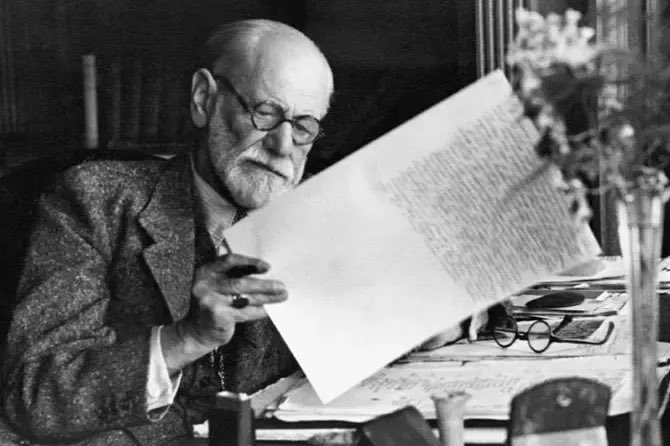
Freud cumple años hoy. Y aún incomoda la idea de que no somos dueños de nosotros mismos. Que algo insiste, que el síntoma habla y que el yo no alcanza para decir quiénes somos. Que incluso ahí donde creemos saber, algo se escapa. Quizá por eso el psicoanálisis sigue teniendo algo para decir en nuestra época. Porque no viene a corregir la contradicción humana, sino a escucharla.
Elizabeth tweet media
Español
5
464
1.4K
31.3K
Lic. Víctor Spinelli
Lic. Víctor Spinelli@licvspinelli·
@Mertxe En ningún trastorno tiene sentido autodiagnosticarse. Ni a la ligera ni a la pesada.
Español
0
0
1
92
Mertxe Pasamontes
Mertxe Pasamontes@Mertxe·
En TDAH y TEA no tiene sentido autodiagnosticarse a la ligera, ni sacar conclusiones solo por un vídeo o un test online. Eso no sustituye una evaluación clínica. Pero de ahí a decir que “ahora lo tiene todo el mundo” hay un salto. Lo que hay es más visibilidad y más herramientas para identificarlo, también en adultos que han pasado años sin entender qué les ocurría. Y aquí aparece algo incómodo: el doble castigo. Primero, vivir años con dificultades reales sin explicación. Y después, cuando por fin la tienes, que te digan que “como ahora está de moda”, ya no vale. No lo tiene todo el mundo. Lo tiene quien cumple criterios, esté o no diagnosticado. Que se hable más no lo hace menos real.
Español
14
65
220
7.9K
Samuel Sadamm
Samuel Sadamm@samueldam12·
Quando você descobre que Lacan e Freud só são referências para uns três países do mundo, muita coisa explode na sua cabeça
Português
42
54
2.5K
264K
Lic. Víctor Spinelli
Lic. Víctor Spinelli@licvspinelli·
18/ Lo que el paper no dice: existe una gran diferencia entre informar a alguien sobre lo qué le ocurre y acompañarlo en la elaboración y mejoría. La etiqueta sin proceso puede cerrar una pregunta que debería permanecer abierta para que el proceso pueda avanzar.
GIF
Español
1
0
0
43
Lic. Víctor Spinelli
Lic. Víctor Spinelli@licvspinelli·
Las campañas de conscientización parecen una herramienta útil y eficiente para informar a la población sobre temas sensibles. Pero ¿qué ocurre realmente? ¿pueden tener efectos no deseados? Un paper publicado en Marzo 2026 en Nature Reviews Psychology aborda este tema. Abro hilo
GIF
Español
1
1
1
338