Line Monkey MD

2.7K posts

Line Monkey MD banner
Line Monkey MD

Line Monkey MD

@linemonkeymd

Image-Guided Surgery blog for the new generation brought to you by Kavi Devulapalli, MD. MPH. #IGSurg (formerly #irad).

Worldwide Katılım Temmuz 2019
2.5K Takip Edilen2.9K Takipçiler
Line Monkey MD retweetledi
Adam Bruggeman, MD
Adam Bruggeman, MD@DrBruggeman·
CMS just dropped the CY 2027 Physician Fee Schedule proposed rule. At 1,592 pages, it is one of the most consequential rulemakings in years for independent physician practices, and almost none of the headlines are capturing what is actually at stake. The long and short of it is that Congress let the 2.5% conversion factor fix expire, so non-APM physicians are looking at a -1.68% cut on January 1. That alone would hurt. Buried in this rule are structural changes that compound the damage in ways that will outlast any year-end patch. This week I am walking through what matters most for independent practices: Tuesday: The conversion factor cut and what Congress has to do about it before year-end. Wednesday: The proposal to slash payment 50% when you bill an E/M and a procedure on the same day, and why we beat this back in 2019 and can do it again. Plus, the new JAMA data showing how much uncompensated post-op work physicians are already doing that CMS is not counting. Thursday: The two biggest structural threats buried deeper in the rule. A complete overhaul of how practice expense RVUs are calculated, and a comment solicitation that could let CMS define "employed" vs. "independent" in ways that devastate facility-based independent practices in 2028. Friday: Fix It Friday. Specific comment asks and legislative actions with real deadlines. Comment deadline: September 14, 2026. You have eight weeks. Let's make them count.
Adam Bruggeman, MD tweet media
English
15
30
114
12.9K
Line Monkey MD
Line Monkey MD@linemonkeymd·
Anish Koka, MD@anish_koka

Some background before commenting on some elements of the proposed rule. The Physician Fee Schedule (PFS) was established in legislation passed in 1989, and went into effect in 1992. Prior to that Medicare paid physicians based on "customary, prevailing and reasonable" (CPR) charges. Essentially a cost plus approach that existed for hospitals before the Inpatient Prospective Payment System (IPPS) went into effect. Fundamentally, a cost plus approach was breaking the budget, so the government turned to setting prices for services delivered. The framework for price setting was the RVU architecture. Every covered physician service is assigned a CPT code which has 3 RVU components. Work RVU, Practice Expense RVU, Malpractice RVU. Payment = (wRVU+PE RVU+MP RVU) x geographic practice cost adjustment x Conversion Factor (CF). The CF is what converts RVUs to dollars. This equation fundamentally determines what a physician is worth in dollars. In 2024 the CF was $32.74. Every year CMS sets a low CF, and every year congress intervenes with a temporary patch. Its important to understand that the goal for CMS is not to "pay physicians well", the goal for CMS is to be budget neutral. In 1997, Congress passed the Balanced Budget Act that introduced the Sustainable Growth Rate (SGR) formula. This tied the conversion factor yearly update to GDP growth. If physicians increased the amount of services they delivered more than GDP growth, the SGR required the CF to be reduced to make up for it. By the mid 2000s, the gap was so great that the SGR formula was calling for a 20% cut. Congress overrode the SGR cut every year with 'doc fix' patches. MACRA act of 2015 got rid of the SGR and replaced it with MIPS and Alternative Payment Models (ACOs). This fixed the CF cut, by mandating an increase in the CF by 0.25%-0.75% / year (Inflation is 3-5% / year). None of this changes the fact that CMS is forced to be budget neutral. If CMS increases RVUs and payments for E&M, it must reduce the CF to keep total outlays the same. Within the physician fee schedule , any RVU increase for one set of services must be offset somewhere else. It is zero sum. So with an mind, the proposed fee schedule does a number of things, not all bad, but one of the provisions is really bad. CMS is proposing to reduce payment when a separately identifiable office/outpatient E/M visit is furnished by the same physician on the same day as a procedure. The most expensive procedure would be paid at 100%, the other procedure at 50%. Commonly a 25 modifier is used to indicate a same day separate procedure so physicians get paid. CMS is arguing that a same day E/M code is not like a standalone E/M code. The case CMS is going after is the patient who is evaluated for a problem on day x and a procedure is decided on. When the patient comes back 20 days later for their procedure, the patient is seen/evaluated again. This argument was bad when CMS floated a version of it in 2019 and it's still bad now. The -25 modifier exists precisely because CMS already acknowledged this problem and built the solution. Modifier -25 requires that the E/M be a significant, separately identifiable service above and beyond the usual pre-procedure evaluation. It is not supposed to be billed when the E/M is merely the routine pre-procedure assessment. The modifier is the mechanism that's supposed to prevent the double-dipping CMS is now claiming to fix with a payment cut. If the problem is modifier -25 abuse, the correct response is enforcement and auditing, not a blanket 50% payment reduction on every legitimate same-day E/M-plus-procedure encounter. Three scenarios CMS ignores: 1. Patient presents with a new problem or acute change; you evaluate it, decide independently to perform a procedure, and do so — the E/M decision-making is entirely separable 2. Patient has a scheduled procedure but presents with a comorbidity requiring separate assessment and management decision before you proceed. 3. A cardiology specific example. Patient presents with chest pain, you see , evaluate, and decide to do an echocardiogram the same day. The stated rationale is a pretext for a budget cut. CMS needs to offset the cost of other proposals. The appropriate remedy for what amounts to modifier -25 abuse is targeted audit activity, not a structural 50% payment reduction on a category of encounters that includes large numbers of legitimate, non-overlapping clinical situations. There are more sensible places in the PFS that make a lot of sense to go after -- telehealth and remote monitoring are probably abused to a significant degree by third parties, and deserve some fairly significant cuts (remember you need to cut something in a budget neutral world), but the best approach would be to not continue playing the zero sum game. The current framework is binary: you're either enrolled in Medicare and bound by its payment rates and rules for all covered services, or you opt out entirely and private-contract with everyone. There is no middle path where you remain a Medicare participating physician but can also negotiate separate payment arrangements with individual patients for covered services. Win-win : Allow private contracting for enrolled physicians - let physicians enter into a voluntary agreement with a Medicare beneficiary to charge above Medicare rates for covered services, without losing their Medicare enrollment or being required to opt out entirely. I'll reiterate: Budget neutrality means every dollar of E/M increase gets clawed back somewhere else. The CF trajectory is negative no matter what Congress does The system is structurally incapable of paying physicians fairly under its current constraints. The only reason this is politically survivable is that Medicare patients have no alternative. They can't voluntarily pay more even if they want to — the law forbids enrolled physicians from collecting above the limiting charge, and it forbids patients from contracting around that. The coercion runs in both directions. This would require a statutory fix -- currently the BBA 1997 act requires a full opt out for physicians, not selective contracting. Congress was concerned that selective private contracting would create a two-tiered system where wealthy Medicare patients could buy better access. Not surprisingly, the two-tiered system Congress feared has materialized anyway, just through different mechanisms: almost everyone right now that can afford it pays for a concierge physician. Allowing selective private contracts is this is a market freedom argument, not a physician enrichment argument. The goal is to preserve access to high quality physicians. The alternative is either no physicians... or even worse access to lower quality physicians. To Summarize: 1. The same day reduced payment for procedure/clinical proposal is a bad idea. CMS should crack down on truly "add on" services by audits, not with a blanket rule that hurts appropriate service delivery. 2. Fixing the larger issue of the zero sum nature of the medicare budget is a statutory fix all physicians should unite behind : allow for selective private contracting with Medicare patients. I urge physicians to comment on the proposed rule: Go to regulations.gov/docket/CMS-202… Suggest: 1. Describe actual patient scenarios where the same-day E/M and procedure are genuinely non-overlapping. 2. Make sure to note that if this is finalized, the rational response is to split some encounters across two visits, which costs Medicare more and greatly inconveniences patients.


English
0
0
2
2K
Line Monkey MD retweetledi
Scott Tzorfas, MD
Scott Tzorfas, MD@STzorfas·
MEDICARE PATIENTS: Please repost this message so other Medicare patients see it. Your community doctor is disappearing. Over the past 15 years, America has lost the vast majority of its independent private practices. As independent physicians disappear, patients are waiting months to see a doctor and access to timely care is being threatened. If Medicare continues on its current course, more physicians will be forced to opt out of Medicare or close their practices, putting your access to your trusted community doctor at risk. Medicare policy is being made without a private practicing physician at the table—and patients will ultimately pay the price. Call 1-800-MEDICARE (1-800-633-4227) and email HAC@cms.hhs.gov today. Tell CMS to protect independent private practice medicine and make sure a private practicing physician has a seat at the table. After you call or email, reply “DONE” in the comments. Together, we can make sure CMS hears from hundreds of thousands of MEDICARE PATIENTS. @CMSGov @mcuban @AARP
English
10
60
133
15.4K
RJ
RJ@northwoods1980·
Independent community hospital with a number of smaller hospitals. We are doing nothing but improving every six months in terms of our compensation. And have gotten much stronger year after a year. While others seem to be going in the opposite direction. We are an independent group. Everyone is an equal partner in terms of the diagnostic and interventional radiologist. Very functional group.
English
1
0
2
83
Line Monkey MD
Line Monkey MD@linemonkeymd·
Fellow IRs: We have seen shifts in the marketplace as it pertains to IR and DR services. We do the healthcare system no favors subjecting ourselves to faulty FMV metrics and continued consolidation. Say no to bad deals and build outside of hospitals. Do not let fear stop you.
English
3
2
19
4.4K
Line Monkey MD
Line Monkey MD@linemonkeymd·
@northwoods1980 You aren’t employed for now. Over 50 groups coast to coast have gone from private to employed in the last 2 years. Protective moats include indoendent community hospitals (a dying breed) and rural locations (sub 500k catchment). Which one are you?
English
2
0
1
78
RJ
RJ@northwoods1980·
That's definitely not my or our experience. You have a lot of leverage in today's market with Hospital systems. Large subsidies are becoming the norm. Nothing to do with becoming employed and we are definitely not employed and would never even consider losing our independent practice. Figuring out all of the angles to retain your advantage, make yourself very sticky as the key.
English
1
0
0
95
Line Monkey MD
Line Monkey MD@linemonkeymd·
@northwoods1980 Sure except you end up depending on technical for payment it’s a slippery slope to employment and that’s exactly what’s happening across all of medicine. Move out of the hospital. Own your own practice. Global payments for IR in an OBL or a combo of pro and facility in an ASC.
English
1
0
3
250
RJ
RJ@northwoods1980·
We all know IR isn’t what it used to be from a reimbursement standpoint. In most hospital-based radiology groups, the procedural side is often far less profitable than diagnostic radiology and, in some settings, may even operate at a loss. That said, IR is an enormous source of leverage moving forward because replacing those procedural skills with AI is a completely different challenge than replacing image interpretation. I’d argue for an even stronger coalition between IR and diagnostic radiologists with a unified strategy when negotiating with hospital systems. Professional reimbursement may continue to decline, but hospital subsidies, call coverage, and even daytime procedural support are increasingly becoming the norm. Those discussions are far more effective when the group presents a single, unified front.
English
1
0
5
1.2K
Austin Bourgeois
Austin Bourgeois@AustinBourgeois·
Conebeam helping find the third artery supplying the prostate #PAE #iRad
Austin Bourgeois tweet mediaAustin Bourgeois tweet mediaAustin Bourgeois tweet media
English
2
0
26
3.7K
Line Monkey MD
Line Monkey MD@linemonkeymd·
@CRNAskillz Keep more of what you make because of less admin bloat. Who are you and what do you do?
English
1
0
0
126
Line Monkey MD
Line Monkey MD@linemonkeymd·
@CRNAskillz Easy. Less bloat and better care. Hospitals are full of tremendous bloat. Look to the many independent practices making it happen day in and day out. The strongest will survive
English
1
0
4
274
DeLoDoesIt4ThePeople
DeLoDoesIt4ThePeople@CRNAskillz·
@linemonkeymd How do you substantiate this approach vs the extra overhead and lower reimbursement of a standalone clinic or surgery center?
English
2
0
1
291
Line Monkey MD retweetledi
Scott Tzorfas, MD
Scott Tzorfas, MD@STzorfas·
Marc Cuban is right. We’re not making enough noise. Enough is enough. There are over 150,000 private practice physicians in America. If you’re a physician, email HAC@cms.hhs.gov. If you’re a patient who wants to keep your independent private practice doctor, email HAC@cms.hhs.gov and call 1-800-MEDICARE (1-800-633-4227). Tell CMS: “Stop cutting physician reimbursement. Stop burying private practices in regulations. Protect patients’ access to independent physicians.” Make your voice heard!! You can also use my website below to contact your United States representatives: SavePrivatePracticeMedicine.org
English
2
5
21
515
Line Monkey MD retweetledi
Doctor Money Matters
Doctor Money Matters@drmoneymatters·
@DrOz clearly doesn’t want anyone to go to med school anymore and be able to practice independently. He must think the system is working well run by massive insurance companies and mega health systems.
Dr. Oz CMS@DrOzCMS

We're proposing one of the biggest Medicare updates in years—strengthening primary care, expanding accountable care, and modernizing physician payments. The goal is simple: help clinicians spend less time on paperwork, more time with patients, and deliver better outcomes.

English
0
2
24
3.2K
Austin Bourgeois
Austin Bourgeois@AustinBourgeois·
Central recan for dialysis related left brachiocephalic occlusion #iRad
Austin Bourgeois tweet mediaAustin Bourgeois tweet media
English
3
2
28
2.3K
theficouple
theficouple@theficouple·
You can literally just: - Invest in index funds - Buy 3 rental properties - Own a home you pay off early - Avoid consumer debt - Keep 6 month emergency fund ...Do this and you will be uncomfortably rich.
English
52
66
1.5K
173.5K
Line Monkey MD
Line Monkey MD@linemonkeymd·
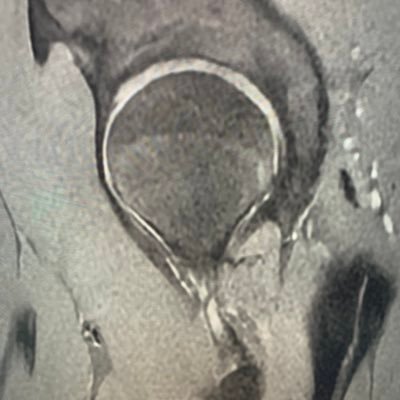
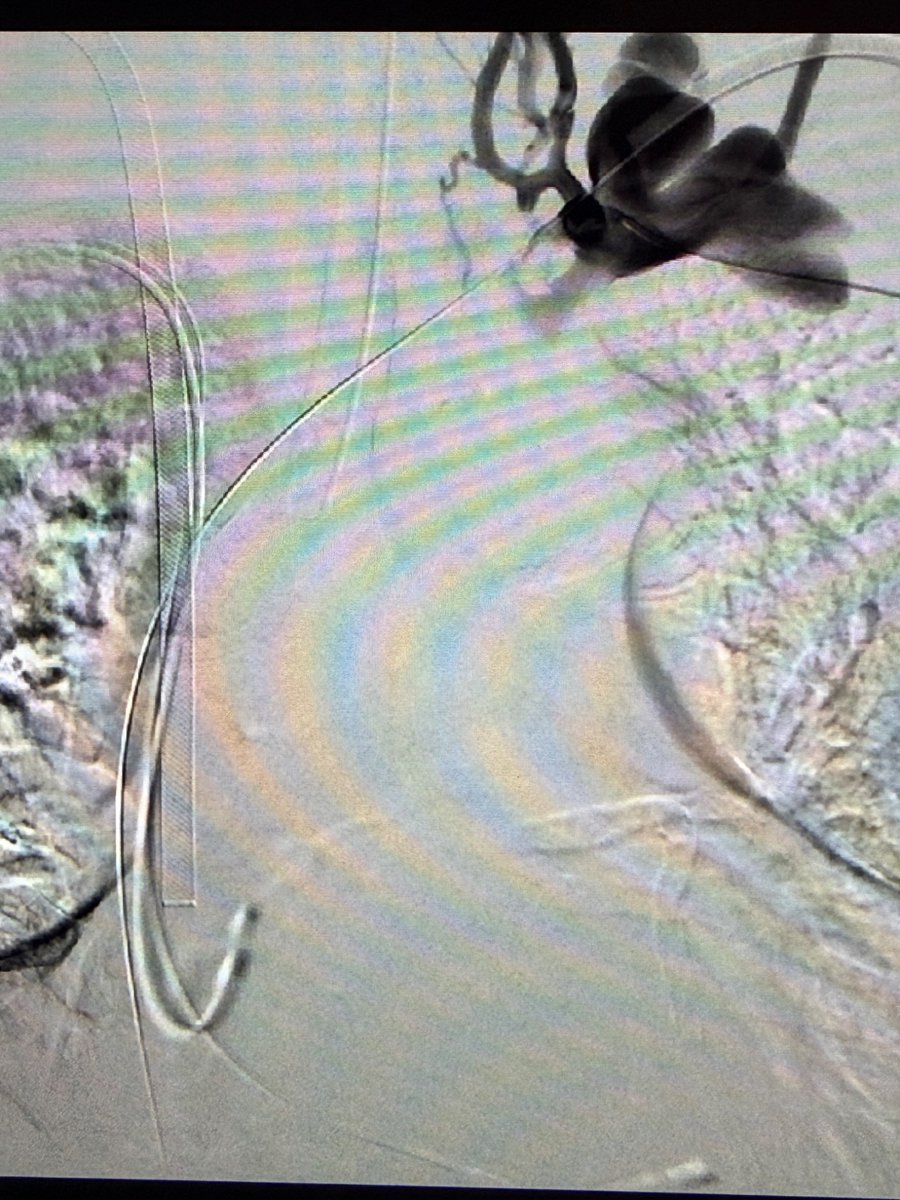
@t_intheleadcoat @keithppereira @drochohan @AustinBourgeois @CHICKVIR @brianchiong @kmadass @SDhandMD @saherssabri @drvarshana @laronecampbell @SIRRFS @thegestgroup @IRKhalsa @AmputationSuck @drcostantino1 @msran124 @IR_Doctor @shamitsdesai @TheRealDoctorOs Tough territory as there will be overlap from inferior gluteal, PFA and circumflex. Need to isolate branches with selective catheterizations and no reflux to tell for sure. Close front door and backdoor. Liquid ideal, coils fine. Perc thrombin if too much of a science project.
English
1
1
5
479