

Cicrus
1.1K posts




Cicrus retweetledi

Spent my Saturday analysing the 28-point plan. The result:
If the US is seriously considering enforcing this plan, it would place itself in violation of:
• 13 binding treaties and international instruments
• 23 political commitments, declarations, and authoritative resolutions
• 35 explicit articles, clauses, and legal principles
Total: 71 separate international legal or political obligations.
Full analysis below — and keep in mind that even this list is far from exhaustive.
.........
This is structured by principles. Under each principle I first state the core rule, then list key treaties/commitments, and show which points of the Witkoff–Dmitriev 28-point plan collide with them.
(References to the plan use its point numbers.)
I. Non-recognition of territorial acquisition by force and Ukraine’s territorial integrity
Core idea: No state may recognize as lawful any territorial change achieved by aggression; all states must respect Ukraine’s territorial integrity within its internationally recognised borders.
Key commitments and instruments the US is bound to or has endorsed
UN Charter
– Article 2(4): prohibition on the threat or use of force against the territorial integrity or political independence of any state.
– Creates peremptory norms (jus cogens) and erga omnes obligations not to recognize or assist serious breaches.
UN General Assembly resolutions on Ukraine’s territorial integrity
– Resolution 68/262 (2014) “Territorial integrity of Ukraine” (Crimea).
– Resolution ES-11/1 (2022) “Aggression against Ukraine”.
– Resolution ES-11/4 (2022) “Territorial integrity of Ukraine: defending the principles of the Charter of the United Nations”, which:
• declares the referendums and annexation of Donetsk, Kherson, Luhansk and Zaporizhzhia “invalid” and “illegal under international law”;
• calls on all states not to recognize these territories as part of Russia and demands Russia’s full withdrawal.
Declaration on Friendly Relations (UNGA Res. 2625, 1970)
– States that no territorial acquisition resulting from the threat or use of force shall be recognized as legal
Definition of Aggression (UNGA Res. 3314, 1974)
– Reiterates that no territorial acquisition or special advantage resulting from aggression is or shall be recognized as lawful.
OSCE Helsinki Final Act (1975) and Charter of Paris for a New Europe (1990)
– Inviolability of frontiers; territorial changes only in conformity with international law and by peaceful agreement, not by force.
PACE Resolution 2605 (June 2025) on the legal and human rights aspects/consequences of Russia’s aggression
– Stresses that inviolability of borders and non-recognition of territorial acquisitions resulting from use of force are core tenets of international law and of the rules-based order.
UNGA Resolution ES-11/5 (2022) on remedies and reparations for Ukraine
– Reaffirms Ukraine’s sovereignty and territorial integrity, and links it to accountability and reparations.
How the Witkoff–Dmitriev plan conflicts
– Point 21:
• “Crimea, Luhansk and Donetsk will be recognised as de facto Russian, including by the United States.”
• Kherson and Zaporizhzhia “frozen along the line of contact,” amounting to de facto recognition.
• Part of Donetsk Oblast that Ukraine currently controls is to be vacated by Ukraine and the withdrawal zone is to be “internationally recognised as territory belonging to the Russian Federation.”
– Point 2: “All ambiguities of the last 30 years will be considered settled” – in context, this means settling Russia’s unlawful territorial gains and closing the file.
By agreeing to these, the US would:
• directly contradict multiple UNGA resolutions it voted for (68/262, ES-11/1, ES-11/4, ES-11/5);
• breach the customary principle of non-recognition of territorial acquisition by force;
• undermine OSCE commitments and the PACE line that such acquisitions must never be recognized.
II. Sovereign right of states to choose their own alliances and foreign policy (no “sphere of influence”)
Core idea: Every sovereign state has the right to determine its own security arrangements and alliances; no other state may veto that choice or coerce it to change orientation.
Key commitments
UNGA Resolution 2625 (Friendly Relations, 1970)
– Every state has the right “to choose its political, economic, social and cultural systems, and to determine freely its foreign policy.”
– No state may compel another to subordinate its sovereign decisions.
OSCE Helsinki Final Act (1975)
– States may belong or not belong to alliances and organizations; they have the right to neutrality and to choose their own security arrangements.
OSCE Charter of Paris (1990)
– Affirms freedom of states to choose their own security arrangements.
OSCE Istanbul Summit Declaration (1999)
– “Each participating State has an equal right to security” and “the right to choose or change its security arrangements, including treaties of alliance.”
– No state or group of states may claim any pre-eminent responsibility for others’ security (direct rejection of “spheres of influence”).
OSCE Astana Commemorative Declaration (2010)
– Reaffirms inherent right to choose or change security arrangements, including alliances.
How the plan conflicts
– Point 3: “Russia will not invade neighbouring countries and NATO will not expand further.”
– Point 7: Ukraine must enshrine in its constitution that it will not join NATO, and NATO must amend its own statutes to exclude Ukraine permanently.
– Point 8: NATO agrees never to station troops in Ukraine.
This would:
• institutionalise a Russian veto over Ukraine’s (and potentially other states’) security choices;
• contradict the OSCE acquis (Helsinki, Paris, Istanbul, Astana) to which the US is a participating State;
• run against UNGA 2625’s prohibition on compelling a state to alter its foreign policy orientation.
If the US were to sponsor or enforce this arrangement, it would be acting contrary to its own commitments to these principles.
III. Prohibition of aggression and duty not to reward or stabilise its results
Core idea: Aggression is “the supreme international crime”; states must not aid or assist in maintaining situations created by aggression and must cooperate to end such breaches.
Key commitments
Nuremberg Charter and Nuremberg Principles (UN, 1950)
– Aggressive war defined as a crime against peace.
– Aggression is “the supreme international crime” because it contains all others.
UN Charter and UNGA Resolutions ES-11/1 and ES-11/4
– Russia’s invasion is characterized as aggression and a breach of the Charter; states must not recognize outcomes of aggression and must demand withdrawalUNGA Res. 3314 (Definition of Aggression)
– Annexation or occupation of territory by force constitutes aggression; no territorial advantage from aggression is lawful.
ILC Articles on State Responsibility (Arts. 40–41)
– For serious breaches of peremptory norms (like aggression and territorial acquisition by force):
• no recognition of the situation as lawful;
• no aid or assistance in maintaining that situation;
• obligation to cooperate to bring the breach to an end.
PACE Resolution 2605 (June 2025)
– Qualifies Russia’s conduct as continued aggression and stresses that the inviolability of borders and non-recognition of territorial acquisitions from use of force are foundations of the rules-based order;
– supports creation of a special tribunal for the crime of aggression and comprehensive accountability.
How the plan conflicts
– Point 21 again: locks in territorial gains from aggression and requires US recognition.
– Point 13: rapid reintegration of Russia into the global economy, including G8 return and large-scale strategic cooperation, without prior withdrawal and accountability.
– Point 14: remaining frozen Russian funds are partly turned into a joint US–Russian investment vehicle, incentivising the status quo rather than its reversal.
By endorsing such a settlement, the US would be:
• stabilising and legitimising the main fruits of a recognized act of aggression;
• potentially violating the duty not to recognize or assist serious breaches of peremptory norms;
• contradicting the direction of PACE and broader Western policy to insist on accountability and full respect for territorial integrity before normalisation.
IV. Prohibition of amnesty for war crimes, crimes against humanity and other core international crimes
Core idea: Serious international crimes must be investigated and prosecuted; blanket amnesties for such crimes are incompatible with modern international law.
Key commitments
Geneva Conventions (1949) – US party
– Common Article 1: obligation to “respect and ensure respect” for the Conventions.
– Grave breaches (wilful killing, torture, inhuman treatment, unlawful deportation, etc.) must be searched for and prosecuted (GC I Art. 49, GC II Art. 50, GC III Art. 129, GC IV Art. 146).
Customary international humanitarian law (ICRC Rule 158)
– States must investigate war crimes allegedly committed by their nationals or on their territory, and prosecute the suspects;
– No amnesty is permitted for war crimes.
Convention Against Torture (CAT, 1984) – US party
– Articles 4–7: obligation to investigate and prosecute torture; amnesty for torture is incompatible with these duties.
Nuremberg Charter and Principles
– No immunity for officials (Article 7); no defence of “just following orders” (Article 8); war crimes and crimes against humanity are crimes under international law and cannot be neutralised by domestic measures or political deals.
UN Security Council and Secretary-General practice
– Repeated statements and policies that UN-endorsed peace agreements must reject amnesty for genocide, war crimes, crimes against humanity and gross human rights violations.
PACE Resolution 2605 (and earlier PACE texts)
– Calls for full accountability, supports the special tribunal for the crime of aggression, and stresses that there can be no impunity for serious crimes committed in Ukraine.
How the plan conflicts
– Point 26:
• “All parties involved in this conflict will receive full amnesty for their actions during the war and agree not to make any claims or consider any complaints in the future.”
This is a blanket, across-the-board amnesty covering all parties and all acts during the war, without distinction between lawful and unlawful conduct.
If the US were to sponsor and enforce such a clause, it would:
• contradict its obligations under the Geneva Conventions and CAT to prosecute grave breaches and torture;
• run counter to the customary prohibition on amnesty for war crimes and other core crimes;
• undermine the Nuremberg-based anti-impunity framework;
• directly conflict with PACE’s push for a special tribunal and with the broader international effort toward accountability for crimes committed in Ukraine.
V. Victims’ right to remedy, reparations and justice
Core idea: Victims of gross violations of human rights and serious violations of IHL are entitled to truth, justice, and reparation; states cannot pre-empt these rights by political deals or “no claims” clauses.
Key commitments
UN Basic Principles and Guidelines on the Right to a Remedy and Reparation (2005)
– Victims of gross violations of international human rights law and serious violations of IHL have the right to:
• equal and effective access to justice;
• adequate, effective and prompt reparation;
• access to relevant information concerning violations.
UNGA ES-11/5 (2022) on remedies and reparations for Ukraine
– Reaffirms the need for an international mechanism for reparation for damage, loss or injury arising from Russia’s internationally wrongful acts in UkraineCouncil of Europe’s Register of Damage and PACE texts
– Council of Europe and PACE support creation of a Register of Damage and mechanisms for full reparation to Ukrainian victims and the state of Ukraine.
How the plan conflicts
– Point 26 (again):
• “All parties… agree not to make any claims or consider any complaints in the future.”
– This would extinguish, by political fiat, the claims of victims to justice and reparations.
– Point 14:
• Frozen Russian assets are partly repurposed into US–Russia profit-sharing ventures, and European frozen assets are unfrozen, rather than being dedicated in full to a victim-centred reparations mechanism consistent with ES-11/5 and CoE practice.
US support for such provisions would be at odds with:
• its own vote for ES-11/5;
• the emerging international reparations framework for Ukraine;
• the general UN principle that victims’ rights cannot be traded away in peace deals.
VI. Collective commitments on sanctions, non-normalisation, and accountability for aggression
Core idea: Sanctions and diplomatic isolation are tools to enforce respect for international law; states have committed to sustain them until aggression ends and accountability is ensured.
Key political and legal commitments
Multiple UNGA resolutions and state practice on sanctions and non-recognition of Russia’s annexations (2014–2024).
PACE Resolution 2605 and prior PACE texts
– Call for sustained pressure and accountability, including a special tribunal, until Russia ceases aggression, withdraws, and pays reparations; stress that normalisation and lifting of sanctions must be linked to compliance with international law.
NATO, EU and G7 statements (which the US has signed onto)
– Commitments to maintain sanctions and political non-recognition until Ukraine’s territorial integrity is restored and accountability ensured.
How the plan conflicts
– Point 13: phased reintegration of Russia into the global economy, including a new long-term US–Russia economic cooperation agreement and re-admission to the G8, without tying this to full withdrawal, reparations and accountability.
– Point 14: use of frozen assets in ways partly aligned with rebuilding but significantly directed to joint US–Russia profit-making structures, and unfreezing of European funds, contrary to emerging EU/CoE approach that frozen assets should serve as a lever for reparations and law-compliant outcomes.
By supporting such a package, the US would be undermining the unified sanctions and accountability front it has itself helped build and committed to maintain.
If the United States were to support and enforce the Witkoff–Dmitriev 28-point plan in its current form, it would run contrary to, or directly collide with, at least six clusters of international commitments:
Non-recognition of territorial acquisition by force and Ukraine’s territorial integrity (UN Charter; UNGA 68/262, ES-11/1, ES-11/4, ES-11/5; OSCE; PACE 2605).
Sovereign right of states to choose their alliances and foreign policy (UNGA 2625; Helsinki, Paris, Istanbul, Astana OSCE documents).
Prohibition of aggression and the duty not to reward its fruits (Nuremberg, UN Charter, UNGA 3314, ILC Articles, PACE 2605).
Prohibition of amnesty for war crimes and other core international crimes (Geneva Conventions, CAT, customary IHL, Nuremberg, UN and regional practice).
Victims’ right to justice and reparations (UN Basic Principles; UNGA ES-11/5; CoE Register of Damage; PACE).
Collective commitments on sanctions, non-normalisation, and full accountability for Russian aggression (PACE, NATO/EU/G7 statements).
VII. Conflict With the North Atlantic Treaty (Washington Treaty, 1949)
(Treaty establishing NATO)
The Witkoff–Dmitriev plan contradict both the letter and the foundational principles of the North Atlantic Treaty of 1949.
The United States, as a founding member and depositary of the Treaty, would violate its obligations were it to support or enforce such provisions.
1. Violation of Article 10 – The Open-Door Principle
Article 10 states:
“The Parties may, by unanimous agreement, invite any other European state… to accede to this Treaty.”
This means:
NATO membership is open to any European democracy able to contribute to security;
The choice belongs to NATO members and the applicant state;
No third state (Russia or otherwise) can veto membership.
Conflicts with the plan
– Point 7: requires Ukraine to amend its constitution to renounce NATO membership permanently.
– Point 3: requires NATO to halt enlargement.
– Point 7 (second part): demands NATO itself amend its charter to exclude Ukraine categorically.
Supporting these provisions would mean:
the US agrees to abolish Article 10 in practice;
the US accepts a Russian veto over NATO membership, contradicting the Treaty;
the US repudiates NATO’s legally binding open-door policy.
This would be a direct contradiction of the US-endorsed principle that “each state has the right to choose or change its security arrangements,” embedded in the 1949 Treaty and reaffirmed in every major NATO summit declaration.
2. Violation of Article 1 – Peaceful Settlement and Prohibition of Threat or Use of Force
Article 1 requires Parties to:
“settle any international dispute… by peaceful means”
and
“refrain from the threat or use of force in any manner inconsistent with the purposes of the United Nations.”
Conflicts with the plan
Supporting a settlement that:
ratifies territorial gains obtained through aggression;
legitimises Russian coercion of Ukraine’s foreign-policy orientation;
imposes security constraints on Ukraine under threat of resumed force;
…would align the United States with an outcome produced by the illegal use of force, contrary to the spirit and purpose of Article 1.
NATO’s legal framework cannot be used to validate the consequences of aggression.
3. Violation of Article 2 – Strengthening Free Institutions
Article 2 commits Allies to:
“strengthen their free institutions.”
Imposing a forced constitutional arrangement on Ukraine — dictating its alliance choices from outside — is incompatible with:
democratic self-determination,
sovereignty,
independence of foreign policy choices.
Support for such a provision would put the US against the principle of free institutions the Treaty requires it to promote.
4. Violation of NATO Summit Declarations (binding political commitments)
While not formal treaty law, NATO Summit Declarations—from London (1990) to Madrid (2022)—are binding political commitments that interpret the Treaty.
All reaffirm:
the open-door policy;
no third-country veto;
sovereign equality of partners;
support for Ukraine’s sovereignty and territorial integrity.
Supporting the Witkoff–Dmitriev plan would contradict multiple clear statements of the North Atlantic Council.
5. Violation of US commitments as depositary of the Treaty
The United States, as depositary of the North Atlantic Treaty, bears special responsibility for upholding:
the validity of the Treaty,
the integrity of Article 10,
the independence of NATO decision-making.
Agreeing to outside constraints on NATO enlargement would be incompatible with that role.
6. Summary of NATO-Related Conflicts
Supporting the Witkoff–Dmitriev plan would put the United States in contradiction or tension with:
Article 10 – by accepting a Russian veto and abolishing NATO’s open-door policy.
Article 1 – by legitimising territorial gains from aggression.
Article 2 – by forcing political/constitutional restrictions on Ukraine’s free institutions.
Decades of NATO acquis – by reversing principles repeatedly reaffirmed by the North Atlantic Council.
US obligations as Treaty depositary – by endorsing external constraints on the Treaty’s functioning.
In short:
The plan requires the United States to violate the foundational principles of the North Atlantic Treaty, especially the open-door policy, sovereign equality, and collective defence architecture.
English
Cicrus retweetledi
We are asking Ukrainians to defeat the armies of Putin and Kim Jong Un. In their efforts to do so, Ukrainians helped bring down Assad. Ukrainian resistance is one of the most stunning military achievements in modern history.
English
Cicrus retweetledi

🎉 Big News: #ORBital marketplace is Live! 🚀
A new chapter begins for the @CounterpartyXCP ecosystem as we unveil the ORBital marketplace (formerly known as the Counterparty marketplace)—our first ALPHA designed to revolutionize NFT trading and collecting.
🔗 Discover the marketplace here 👉 orbital.market
#Bitcoin #Counterparty #NFTs #NFTCommunity #tradingmarket
🧵 Thread 👇

English
Cicrus retweetledi

It will help us a great deal here in Romania if this video about the pro-Russian candidate gets to as many views as possible. Do help out with that if you can.
youtu.be/RcBjGlbg3xk?si…

YouTube
English
Cicrus retweetledi

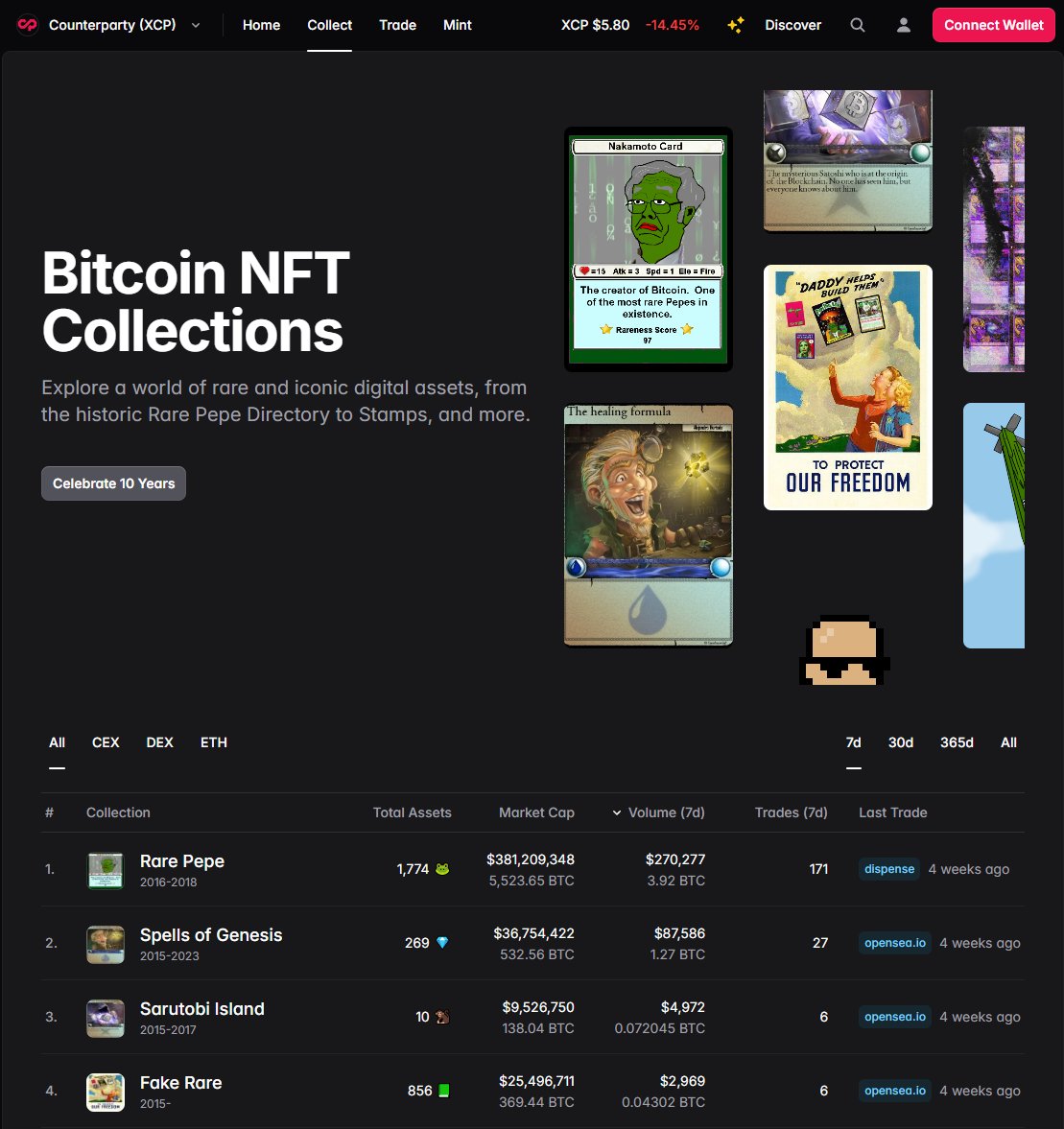
your reminder that @droplister is an absolute leader for the contemporary cutting edge design of @CounterpartyXCP block explorers: @xcp_io
xcp.io/collect
English
Cicrus retweetledi
Cicrus retweetledi

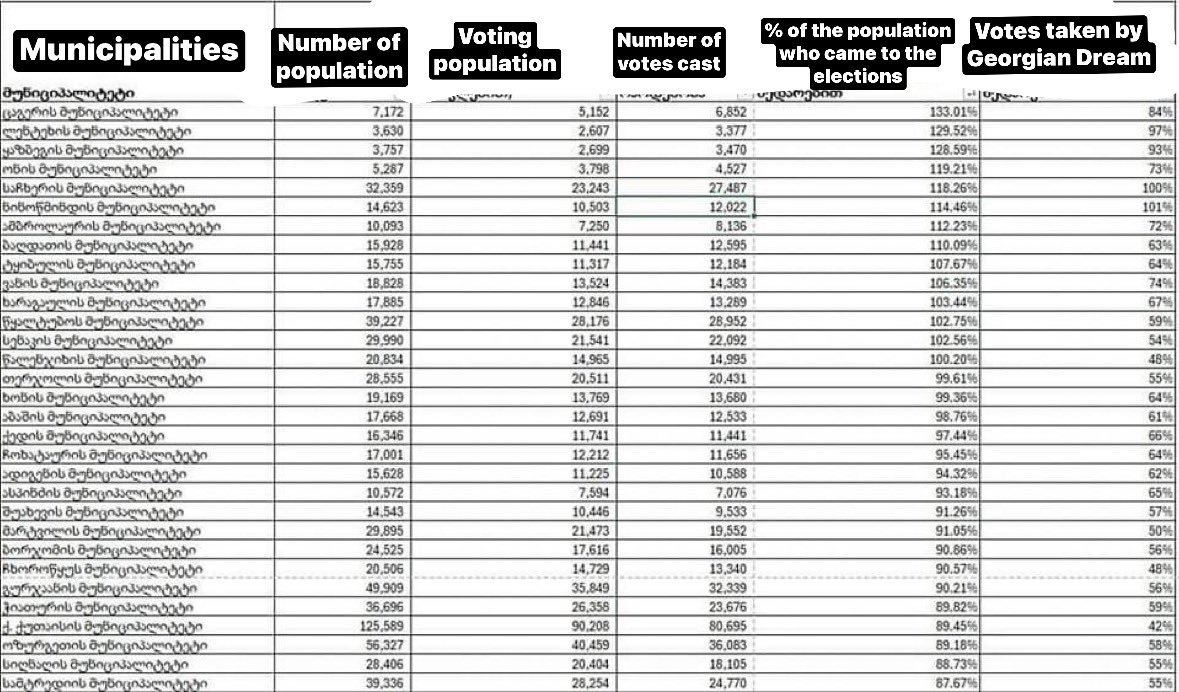
FRAUD IN GEORGIA
Georgian Dream has received more votes than the total number of voters in specific settlements.
English
Cicrus retweetledi

Just in the past 6 months, Russians have poisoned European water supplies, tryed to crash civilian airliner, burned european shopping malls, sabotaged French and German train networks...and STILL western countries refuse to give Ukraine what they ask for.
It's incredible.
Mila.Alien 🇺🇦@mila__alien
According to Foreign Policy, this summer, mysterious intruders have been breaking into Finnish water towers and treatment plants. They’ve stolen nothing, but there are other reasons for breaking into water treatment plants: to scout them out for future attacks — or to cause the public to worry about the safety of the water in their taps. By disabling water treatment or adding a contaminant, an intruder could turn the life-giving liquid into a source of disease. There is suspicion that Russia might be behind these attacks. The water attacks in Finland started in Porvoo, a town on the southern coast. Finland’s southern coast is ordinarily rather quiet, but its immediate neighbor is the Gulf of Finland, the passageway for ships going to and from St. Petersburg. By mid-July, there had been 11 break-in attempts into Finnish water towers and treatment plants. But the intruders didn’t reach any sensitive parts in the water plants and towers. Authorities are asking: Who would have an interest in breaking into Finnish water plants? "The water treatment companies have said that the break-ins are not a normal situation, and that’s making people worried," retired Maj. Gen. Pekka Toveri, a former chief of Finnish military intelligence, said. "And one goal of Russia’s gray-zone aggression is to create fear." A retired Lt. Gen. Arto Raty added: "We have no evidence showing who is behind these actions, but naturally in speculations the finger is pointing to the east." Finland is not the first country to see its water supply targeted. For example, this May, Janet McCabe, the deputy administrator of the U.S. Environmental Protection Agency (EPA), warned that China, Russia, and Iran were "actively seeking the capability to disable U.S. critical infrastructure, including water and wastewater." Friends from Finland, what is the situation now and what do the authorities think? Source: foreignpolicy.com/2024/07/26/rus…
English
Cicrus retweetledi
We remember the Babyn Yar massacre on Sept 29 - 30, 1941, when 34,000 Jews were murdered by Nazis. Today, Russia falsely claims it’s “de-Nazifying” Ukraine by engaging in crimes against humanity in a country that was brutalized by both the Nazi and Soviet regimes.
English
Cicrus retweetledi

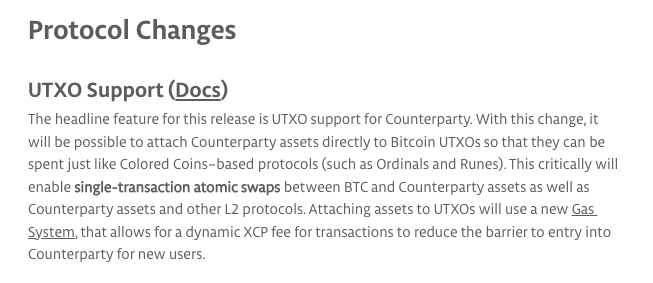
What @0xLeoInRio might not know is that @CounterpartyXCP is releasing UTXO support...
It will be possible to attach Counterparty assets directly to Bitcoin UTXOs so that they can be spent just like Colored Coins–based protocols (such as Ordinals and Runes)
@0xLeoInRio 🤝 @agkrellenstein
@MagicEden🤝 @CounterpartyXCP
Viva La Vandal@viva_la_vandal
@0xLeoInRio @TheApeBitcoiner Here’s the dune dashboard for all collections on Counterparty including Stamp collections, it would be great to be able to trade these of collections like Rare Pepes and Bitcoin Stamps on ME, they get ignored by most influencers dune.com/queries/402628…
English
Cicrus retweetledi

PepsiCo is a great example of a morally bankrupt company hiding behind a facade of “responsibility”.
Pepsi operates 19 plants and employs about 60,000 people in russia.
1/n

English
Cicrus retweetledi

I would like to address the recurring question of those “ordinary Russians” who “shouldn’t be sanctioned”.🧵1/7
English
Cicrus retweetledi

Today marks the 10th anniversary since the forces of the Moscow-based terror organization (aka the Russia) downed #MH17, killing 298 people, 80 of whom were children
Never Forget! Russia will not stop until russia is stopped!
English
Cicrus retweetledi

3-ton Russian bombs on Ukrainian civilians. Don't look away.
Julian Röpcke🇺🇦@JulianRoepcke
#Breaking Today, Russia dropped the first FAB-3000 M-54 UMPK on Ukraine, hitting the Nova Poshta number 1 building inthe frontline village of #Lyptsy, Kharkiv region. ➡️The 3 ton heavy bomb (1.2 tons warhead) missed the building by 15 meters, but still caused heavy damage to it.
English
Cicrus retweetledi

If you've been on Twitter in recent days, I think you may have noticed a global trend of tweets with the caption "I hated Russians way before it was cool".
That's why I decided to make a thread with some facts about why people hate Russians and Russia.
Read Below
1/11 ↓

English
Cicrus retweetledi

So the Xitter algorithm is hiding posts about the deportations of people from the occupied Baltics by the s0viets (ru🐍🐍ians) that began today and continued from 1940 to 1953.
Well guess what?
Here’s a thread about it!
I promise you’ll find at least some facts you didn’t know 🧵

English
Cicrus retweetledi

On 14 June 1941, 10 205 Estonians, including infants and elders, were deported to Siberia by the Soviet regime.
Most of them died, only a few managed to return. But we remember them all.
Today, Russia uses deportations as a weapon against Ukraine.
juunikuuditamine.eihr.ee/eng/

English
Cicrus retweetledi

My grandfather landed at Normandy 80 years ago today. He was 23 at the time.
When I was in school (late 1980s), the teacher gave us an assignment to interview a WWII veteran. I went to my grandfather’s house to ask him about it.
The Greatest Generation had survived the Great Depression, the Dust Bowl, and WWII. They had seen incredible hardship. Yet, they never talked about it. My grandfather was very much of that stoic mindset.
That day, though, he decided to open up.
He described wading from the boat while the Germans poured absolute hellfire down on them from all directions. He told me he had never seen carnage like that. He described it as a “slaughterhouse.”
He said, “I knew I was going to die that day, so I sat on top of a Donald Duck [amphibious tank] and we rode straight up the hill into machine gun fire. I was very surprised when I survived.”
I asked how he felt about saving the world.
He said, very simply, “That’s hindsight. At the time, we didn’t know how the war would end, or if it would ever end. [D-Day] was self-preservation; we were trying to stop Hitler in Europe before he came across the ocean. We had a job to do, so we did it.”
I’ve been mulling this lately, given the situation in Ukraine. Once again, autocracy is fashionable and Europe is staring down a gun barrel. We are distracted with domestic issues and we’re pretending the situation overseas doesn’t concern us - just like we were in 1940.
But it does concern us. We may not think we’re at war with the powerful totalitarian regimes of the world, like Russia, Iran, and China, but THEY believe they’re at war with US.
They are using a new strategy, unimaginable in previous generations, called “hybrid warfare.” Hybrid warfare is a combination of cyberwarfare, terrorism, information warfare, political warfare, and physical warfare. The idea is to cause constant chaos, even far from the battlefield, to destroy an enemy’s cohesion and to wear down its ability and will to fight.
Isn’t that what’s happening? Russia and China are buying our politicians and influencers. Daily, they are attacking our computer systems, undersea cables, energy supplies, manufacturing abilities, and shipping lanes. They are destabilizing places like Venezuela, the Middle East, and Africa. They are loading our news networks and social media sites with disinformation, propaganda, and conspiracy theories to cause political chaos and intentionally break down trust in Western societies. They want us spread thin, confused, exhausted, and not knowing whom to trust. The autocratic regimes cannot beat us on the physical battlefield - YET - but kinetic war becomes unnecessary if their enemies collapse internally.
WWIII has already started. We’re in it now.
Poor Ukraine just happens to be the crossroads of this new global conflict, the place where old-fashioned combat overlaps with these newer warfare methods. Many of us want to ignore the plight of the Ukrainians. We think Putin will stop when he gets what he wants in Ukraine. But we’re confusing what we want with what Putin wants. We may want peace, or to not be bothered, but Putin wants conquest. Putin has stated his goal is to rebuild the Russian Empire. He’s telling us his ambitions, so we’d be fools not to listen.
Beyond Ukraine, Putin wants Moldova. He’s already planning for that; Russia has established a large colony in the eastern part of that country. Via political interference, Putin has installed governments sympathetic to him in Hungary and Austria. Looking at a map, one could imagine Putin’s army marching through those four countries right into the heart of central Europe. While we were sleeping, Putin has spent his 25 years in power setting his chess board up.
We need to start dealing with this menace head-on by not letting the first country in that chain fall. That means Putin’s advance must be stopped in Ukraine. Should he taste victory there, Putin will continue pushing West. He will use the victory as a propaganda trophy to further wear down Western morale and drive a wedge between NATO countries.
We don’t know how this war will end, or if it ever will. But we have a job to do - and an opportunity to prevent this situation from getting worse.
Let’s give Ukraine everything she needs to win.

English
Cicrus retweetledi

Some were yesterday disappointed that the US have not entirely lifted the ban on US weapons, which stills prevents Ukraine from using ATACMS against targets in Russia and, yes, this is still something which needs to remedied. The West still drags its feet and there are still too many who don't grasp that this will only prolong the war. But when we look at this specific decision then it is a technicality, which correction is a question of time. I doubt that it will be even announced. It will just happen. But this not even the core message. Please indulge me.
The point is to push and eventually cross Putin's so-called "red lines" and by doing so expose their hollowness. 2 years ago, an announcement from the West of that kind would have been unthinkable. Rewind it to even before February 2022, and many would have called you absolutely unserious to even consider something like this, despite the fact that Russian attacks from Russia itself can be traced all the way back to 2014. It was known to all parties what Russia was doing and the West kept on looking the other way, in hopes that Putin will be satisfied with his latest catch.
Putin tactics have always worked when the West backed down. In fact, this was the only reason why they worked in the first place. Other than that, Putin's tactics are shallow. There is no special cunningness. It was simply his confidence that the West would shy away and, honestly, he had also reason to be. All the way up to February 2022 it worked more or less according his will.
Putin's endgame has always been to restore Russia in the borders of the Soviet Union and projecting direct power in Europe's East and the world. But he also understood that Russia cannot stand in a direct confrontation against the West. He needed to do it exactly how he used to do it between 2007 and 2022, clandestinely, using corruption, lying, terror and while having some incredible luck it worked to a certain extent.
However, his luck ran out when facing the sheer will of the Ukrainian people. Putin has lived under the misconception that the Ukrainian people will accept an imposed regime the same way as the Russian people in its slavish fashion accepts their regime. He couldn't have been more wrong.
This is the point where things have started to sideways for Putin. He was compelled to use less subtle methods, using blunt force which did more harm than good, even for him, but to no avail. At some point he realized that he faced a dead end with his methods. He then thought he has to go full throttle into Ukraine and decided probably relatively alone to launch the full scale war in February 2022. He recorded the ridiculous meeting with his ministers on 21st February 2022. I still remember how Putin specifically dressed down Director Naryshkin, spymaster of the SVR, like a school boy when this one spilled the beans regarding the annexation of the Ukrainian regions, a part in Putin's playbook which was scheduled for later that year and not now. This moment screamed so loudly how fake the Russian narrative is and that everything is just a (bad organized) ploy, where not even the most senior Russian officials could keep the lie straight.
As thin Putin's strategic thinking is as big was his overconfidence to take Kyiv in 3 days. And this would have been really the only way to disable Ukraine's statehood. A swift decapitation was the only way for Putin's plans to materialize. The moment this failed, the war has gotten a life of his own, something Putin couldn't control at all. The collapse of the Russian armies in the North, Kharkiv and Kherson showed Putin's exposure of having the emperor's new clothes in the most visible fashion. Russia - the aggressor - has become a laughing stock in the world. Putin in face of defeat had to make dangerous decisions which in itself contained the risk of not being enough when the West adjusted to them.
What remains for Putin now is only to react, bluff and hope that the West stops and falls back to old habits. This is his only card at hand. He needs to deter the West from doing the right thing, and tries this left and right. Every time an announcement of that kind - like the permission of Western weapons against Russian soil - comes out, his hope gets severely pummeled. However, this is not even the worst for Putin. Even the most iron regime needs a loyal underbody in the ministries and generality. Putin must constantly convince them that his long-term plan works, but this always blows up in his and their faces when a decision of that kind is announced. It makes Putin and them livid to make even more riskier decisions for them. The Wagner uprising showed how fast this can go. The Russian army disappeared overnight. Putin had to organize dump trucks to block Moscow. He was finished. Wagner was moving almost unimpededly through Russia. Only Prigozhin's decision to stop (and having himself killed later) saved Putin, for now. Btw. this is no way to praise Prigozhin. It only serves as as an example how unstable the regime in Moscow is. Any new Russian government which not completely reverses the Putin regime's wrong trajectory shouldn't bother even trying to topple Vladimir. This will have to end, entirely.
This is why I constantly point out, when Russian red lines are getting crossed. This is the point and story. They are as hollow as Putin's threats. That talk of "nuclear" strikes is self-defeating, because it shows the absolute state of nervousness within the Russian regime, and while the topic of nuclear weapons is a serious one, it must not be overlooked what their real purpose is. It is to deter others from destroying the nation. The truth, however, is that Russian statehood is not threatened, at least not by the West. It is the Russian regime which feels threatened to be gone tomorrow. But you can imagine that nobody in the world, not even China, India or others in the global south will need only a second to decide, whether they want to have a radioactive world on one hand or Putin's regime fall over their own miscalculations on the other hand. We know that China and India have severely warned Putin from not making that wrong move and this warning sticks. If the Russian regime and by extension the Russian Federation falls apart due to Moscow's miscalculations, just like the Soviet Union did, then this is fate. The world will move on, most certainly far better than before.
Coming back to my initial paragraph. The West has to do what must be done, but in far higher strength, frequency and speed. The more Russian lies and bluffs are getting exposed, the more the Putin regime gets out of balance and the sooner we can end this war. When it comes to Ukraine's and Western interests, then no self-imposed restrictions must be applied. Whatever is necessary to defeat Russia, must be put on the table and executed at once. Nobody other than the Ukrainians know better what is needed for that purpose. Get it done and get it done faster. As US President Franklin D. Roosevelt once eloquently said:
"There's nothing to fear but fear itself."

English