looping's golf carts
158 posts
looping's golf carts
@looping1990
We manufacture high-quality golf carts and sightseeing buses, and we accept orders worldwide! Email:[email protected]
china Katılım Mayıs 2011
80 Takip Edilen15 Takipçiler



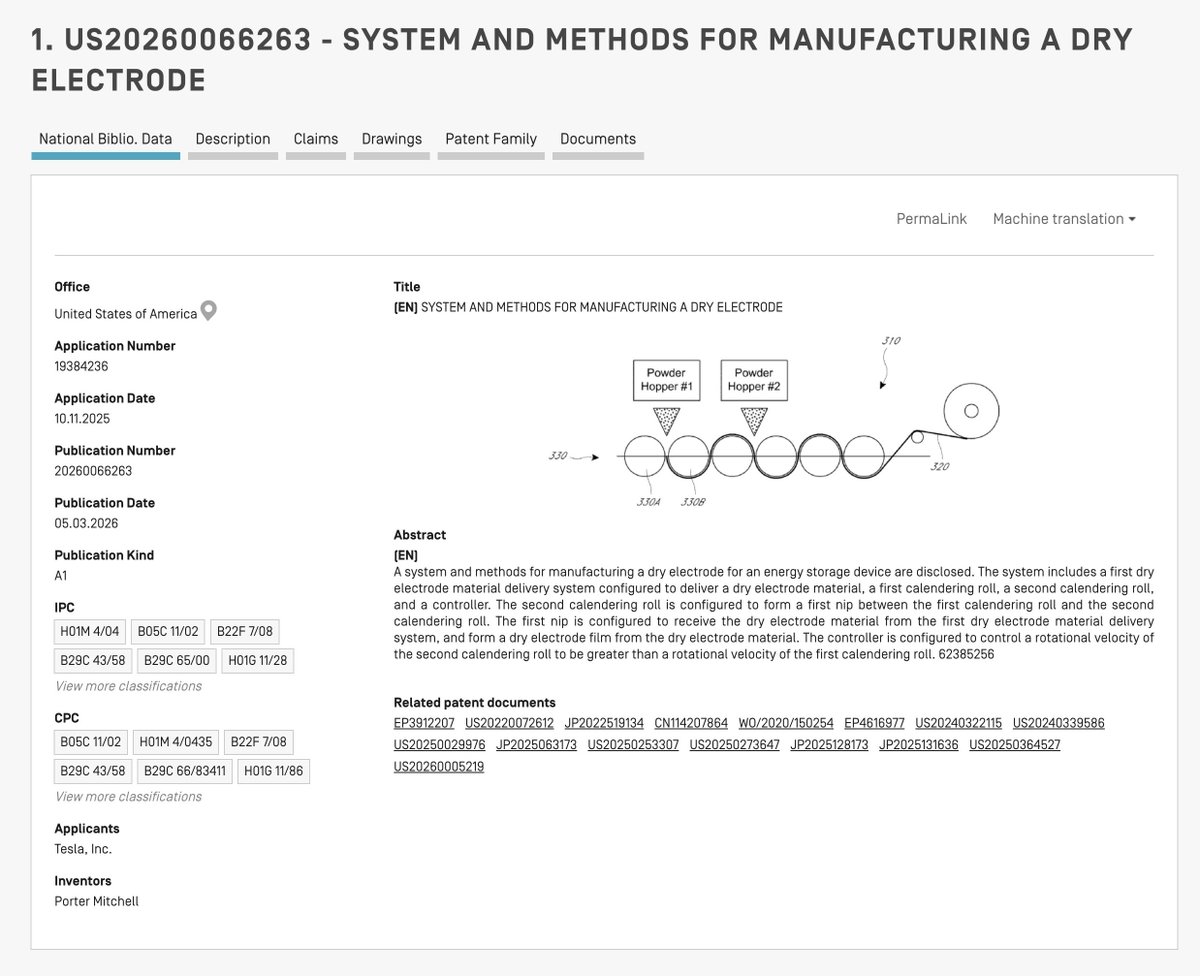
BREAKING 🚨 @Tesla HAS ENGINEERED A SYNCHRONIZED MULTI-ROLL CALENDERING MACHINE THAT USES DIFFERENTIAL ROLLER SPEEDS TO EFFORTLESSLY TURN DELICATE DRY POWDERS INTO CONTINUOUS BATTERY ELECTRODES 🔋
For years, mastering the "dry battery electrode" has been the holy grail of Tesla's manufacturing roadmap. The promise was always massive: eliminate the toxic, energy-guzzling drying ovens used in traditional battery making, drastically shrink the factory footprint, and slash production costs.
But handling delicate, dry chemical powders at industrial speeds has proven incredibly difficult. Early attempts relied on brute force, crushing the powders with immense pressure just to get them to stick together—a process that was hard on both the machinery and the materials.
Now, it appears Tesla has finally cracked the code, replacing that destructive pressure with an elegant mechanical dance.
The secret to this manufacturing breakthrough lies in rotational physics rather than brute force. By programming each successive roller in their new lamination machine to spin slightly faster than the one behind it, Tesla creates a gentle shear force that pulls the dry powder along.
This clever manipulation of speed eliminates the need for the massive pressures and thick, free-standing films that previously held back dry battery manufacturing.
These exact mechanics are laid out in patent US20260066263A1, which was published on March 5, 2026, under the title "System and methods for manufacturing a dry electrode." This document gives us an unprecedented look at how the company intends to scale up its next-generation energy storage products without relying on outdated wet processes.
Instead of depending on toxic liquid slurries or giant drying ovens, the new system handles free-flowing particles with remarkable grace. The machine supports the fragile powder film entirely on the rollers themselves from start to finish.
This delicate touch is exactly what allows them to seamlessly process advanced, air-sensitive chemistries directly onto metal foils. To understand why this shift is so significant, we first have to look at the messy, expensive hurdles that have defined battery making for decades.
⚖️ The problem: Overcoming the limits of traditional electrode manufacturing
Battery manufacturing has historically relied on wet processes. These traditional methods require mixing active materials, which are the core chemical ingredients that actually store and release electrical energy, with toxic liquid solvents.
This mixing creates a wet, thick batter known as a slurry. The slurry is then coated onto a metal foil, a thin conductive sheet that acts as the backbone of the battery to collect the electricity.
After coating, this wet layer must be passed through massive drying ovens to evaporate the liquids. This entire baking step consumes immense amounts of energy and takes up a huge amount of factory floor space.
Dry electrode manufacturing attempts to solve this massive inefficiency by removing the liquids entirely. Older dry processing systems tried to achieve this by using heavy pressure and exceptionally high shear, which is an intense frictional rubbing or smearing force similar to aggressively spreading cold butter on delicate bread.
These extreme forces were needed to pack the dry powders into a cohesive film, meaning a solid, continuous sheet of material that tightly holds itself together. The resulting film then had to be physically strong enough to support its own weight as it floated and moved across the gaps in the machinery.
Building a machine to handle these intense pressures while keeping the fragile, unsupported film intact proved to be highly complex and prohibitively expensive. This is exactly where Tesla’s new architecture steps in, replacing brute force with a far more sophisticated mechanical dance.
💡 Tesla's solution: A synchronized multi-roll calendering architecture
Tesla designed a specialized calendering machine, which is essentially a heavy pressing device that flattens materials much like an industrial pasta maker. This architecture uses multiple rollers arranged in a continuous sequence.
Instead of forcing the dry powder into a standalone sheet that has to hang freely in the air, the system feeds the raw dry powder directly into the first set of rollers.
The true innovation of this design lies in how the machine controls the speed of these rotating cylinders. Every subsequent roller in the sequence is programmed to rotate slightly faster than the one right before it.
This deliberate speed difference creates a gentle shear force within the powder mixture. We can think of this shear force as a mild stretching and aligning action, very similar to how a baker gently stretches dough to make it perfectly smooth.
This gentle pulling action causes the newly formed dry film to naturally adhere to the faster moving roller, making it cling to the metal surface almost like a magnet.
The film simply rides along the solid surface of the rollers through the entire machine rather than floating across open gaps. Because the delicate film is constantly supported by the steel rollers beneath it, it never has to be structurally strong enough to support its own weight. By keeping the material anchored to the rollers, Tesla was able to strip away layers of unnecessary hardware that previously cluttered the production line.
⚙️ Mechanical simplicity: Removing idler rolls, reducing pressure, and adding heat
Older machines required numerous idler rolls, which are unpowered cylinders that simply help route materials along a path, and dancer rolls. We can think of dancer rolls as weighted movable pulleys that bob up and down to maintain a constant tension on a moving web.
These extra components were necessary to guide the fragile and unsupported film through the open air from one processing section to the next. The Tesla design completely eliminates the need for these extra guiding wheels.
The film simply passes directly from one nip point, the tight pinching area where two heavy rollers meet to squeeze the material together, straight to the next.
The brilliance of Tesla's multi-roll system is also its modularity. The architecture isn't fixed. The machine can be configured with anywhere from three rolls creating two pinch points up to seven rolls creating six pinch points, depending on the exact thickness and density required for a specific battery chemistry.
Furthermore, it is not just about physical pressure and speed. It is also about heat. The system allows for precise, independent temperature control for every single roller. The final roller in the stack, for example, can be heated to a specific degree to assist with the final lamination. It isn't just mashing the powder onto the foil. It is creating a permanent thermo-mechanical bond.
Because the equipment does not have to fight against the weakness of a free floating film, the machinery requires much lower pressures to compress the powder to the desired thickness. The equipment can therefore be built smaller and lighter while still achieving high precision tolerances, meaning the exact microscopic accuracy required for the final battery electrode to function safely and efficiently. However, even the most advanced rollers cannot perform miracles on plain dust.
To achieve this level of precision, the raw material itself must be fundamentally engineered to hold together under this gentle pressure.
🌪️ The invisible spiderweb: Dry fibrillization
Before the powder ever reaches the machine to begin this rolling process, it undergoes a crucial physical transformation. According to the patent, the raw battery ingredients are first fed through a high-shear device.
This is a powerful machine, such as a jet-mill, which uses high-speed streams of air or intense friction to violently crash particles into one another. The mixture fed into this mill includes the energy-storing active materials, the conductive particles that help electricity flow smoothly through the battery, and the dry binders. These binders act as a powdered chemical glue designed to hold the entire structure together.
This intense pre-mixing step physically stretches those dry binder particles. The intense friction forces them to unravel and form a microscopic matrix of thin, web-like fibers. We can think of this process like pulling a dense cube of sugar into fluffy, interlocking strands of cotton candy. This sticky, fibrillized network is the secret sauce that successfully holds the active battery materials together without needing a single drop of toxic liquid solvent.
When this spiderweb powder finally hits the rollers, the machine is not just compressing loose sand. It is flattening a cohesive, interconnected structural matrix that is already clinging to itself. Handling this delicate and sticky web of powder requires extreme care, as uneven dumping will cause clumps that ruin the precise tolerances of the final battery.
🎛️ Mastering powder flow: The funnel shaped charging hopper
To manage this tricky material, the physical journey into the machine begins at a highly specific funnel shaped charging hopper. This component is essentially a large storage reservoir used to hold and continuously dispense the fibrillized mixture without destroying its delicate web-like structure.
This container is designed to maintain a perfectly constant level of bulk material. A rotary metering roller sits at the bottom of this hopper. This spinning cylindrical tool acts much like a water wheel portioning out equal scoops of water, and it is equipped with small indented pockets called cells that are sized exactly to the microscopic grain size of the powder.
As the roller turns, a flexible doctor blade strips the powder precisely. We can think of this thin and flat scraping tool acting just like a baker using a straight edge to level off a measuring cup of flour so the amount is absolutely perfect.
The measured powder is then conveyed to an oscillating brushing device, a specialized brush that rapidly swings back and forth to distribute the mixture.
This meticulous brushing process ensures the powder is perfectly uniform. It completely avoids any cavity formation, meaning unwanted empty air pockets or uneven clumps, and prevents material decomposition before it even touches the moving conveyor surface.
Once this uniform layer is established, Tesla deploys high-tech sensors to ensure that every single micron of the material meets their rigorous standards.
🔬 High precision hardware: Gamma gauges and playless bearings
Controlling a fragile powder film across multiple rotating cylinders requires immense mechanical precision. The text reveals the integration of Gamma gauges.
These are highly advanced sensors that use safe levels of radiation to peer through the material, much like a medical X-ray checks for bone density. They constantly monitor the film thickness and specific mass, meaning the exact weight and concentration of the powder packed into a given area, as it is being manufactured in real time.
To maintain these incredibly tight tolerances required for high density battery electrodes, the calendering rollers are fixed in a unique position. They use playless conical bearings.
We can think of these specialized tapered mounts as perfectly snug sockets that completely eliminate any wobbling or vibration in the heavy spinning cylinders.
The faces of these individual rolls can also be customized with hard face ceramic or chrome coatings. They can even be patterned as an embossing roll, a textured stamp that presses a permanent physical pattern into the material, to impart specific textures directly to the electrode surface. This level of microscopic control is impressive on its own, but it becomes truly transformative when the machine has to handle complex, non-continuous patterns on the fly.
🗜️ Intelligent lamination: Solving the intermittent coating challenge
Modern battery designs often require intermittent electrodes. These are essentially strips of foil where the active battery material is applied in separated patches, leaving blank spaces of bare metal in between.
We can picture this layout like the dashed white lines painted down the center of a highway. These bare spaces are absolutely necessary for attaching electrical tabs, the small conductive metal strips that act as bridges to carry the electrical current out of the battery cell and into the device.
Laminating these patchy films creates a severe mechanical issue. The lamination rollers, which are massive spinning cylinders that bond the layers together much like an industrial strength sticker machine, exert immense force.
When these heavy rollers suddenly reach a blank gap in the powder coating, the sudden lack of thickness causes the heavy metal to slam violently together. This aggressive slamming not only damages the expensive machine over time but also easily tears the delicate metal foil.
To solve this destructive problem, Tesla integrated intelligent gap control actuators into the laminator. We can think of these actuators as lightning fast mechanical pistons or shock absorbers that can precisely push back against the machinery. Sensors carefully monitor the moving web and detect exactly when a blank uncoated area is approaching the rollers. The central computer controller then instantly engages these opposing actuators to perfectly counteract the heavy crushing force normally used to stick the layers together. This rapid adjustment maintains a perfect and constant gap between the rollers so they can glide smoothly over the bare foil without making any destructive contact.
But avoiding a violent collision is only half the battle; what happens to the continuous sheet of powder when the rollers lift up? The patent outlines a specific "peeling" mechanism. The machine actively peels the un-laminated powder film away from the bare metal current collector. By utilizing a doctor blade to assist in peeling away this waste material, the machine leaves behind perfectly clean, bare metal gaps for the electrical tabs while the un-bonded powder can potentially be recycled back into the system.
🕸️ Automated material handling: Self webbing belts and on the fly adhesives
Tesla has built automated material handling directly into the machinery to reduce factory operator intervention. This means the equipment moves and manages the delicate battery components entirely on its own, greatly reducing the need for human workers to manually adjust the line.
The system can be designed to be completely self webbing, which is a clever mechanical trick where the machine basically threads itself. We can think of this like a modern sewing machine that automatically pulls the thread exactly where it needs to go without requiring a steady hand.
A continuous belt, essentially a long looping conveyor, runs under the rolls. This belt actually rises up during the delicate startup process of stringing the material through the equipment to automatically guide the fragile powder layer in the proper direction toward the next roll nip.
If the electrode formulation requires a binder, which is a chemical glue used to hold the active energy storing particles together, the machine features an entirely separate powder hopper.
This dedicated storage bin can apply adhesive directly to one side of the film on the fly, meaning it adds the glue while the materials are actively moving at full production speed.
This neat addition completely eliminates the separate manufacturing step of pre coating the metal current collector foils with adhesive before they even enter the machine. By consolidating these disparate steps, Tesla has managed to turn an entire factory wing’s worth of equipment into a single, sleek production unit.
🏭 Factory optimization: Consolidating the production line
The physical layout and structural design of the equipment allows Tesla to align two powder delivery systems on the exact same machine. We can think of these delivery systems as giant and precisely calibrated spice shakers that constantly sprinkle the active battery ingredients.
One hopper feeds the top roller and another feeds the bottom roller, while a central copper or aluminum foil is fed directly through the middle of the spinning cylinders.
The machine compresses both dry films and bonds them to both sides of the metal foil at the exact same time. This bonding process acts like a massive mechanical sandwich press that firmly sticks the active ingredients to the metal core.
It combines the calendering, laminating, and slitting steps into a single continuous action. Calendering tightly flattens the powder into a precise thickness, laminating permanently glues those flattened layers to the foil, and slitting finally cuts the wide master sheet into the narrow strips needed to assemble individual battery cells.
This streamlined flow does more than just save space; it provides the precise environment needed to work with the volatile and experimental chemistries of the future.
🚀 The strategic masterstroke: Securing Tesla’s present and future
The key invention of this patent—the continuous multi-roll calendering machine utilizing differential roller speeds—directly solves Tesla's immediate manufacturing bottlenecks. By entirely eliminating the massive and energy-hungry drying ovens required for wet battery slurries, Tesla can drastically shrink the physical footprint of its factories today. This consolidation translates to significantly lower capital expenditures and reduced operating costs, ultimately driving down the sticker price of their electric vehicles and heavy-duty energy storage systems.
But looking toward the future, this low-force lamination technique is what secures Tesla's position at the forefront of next-generation energy storage. Because the gentle rolling process does not crush delicate chemical structures, engineers can seamlessly transition these exact production lines to advanced, highly sensitive chemistries. This opens the door to energy-dense lithium metal powders, high-capacity silicon oxides, molten sulfur, and even solid-state electrolytes. Building this physical grid using a completely dry process allows engineers to finally move beyond traditional lithium-ion constraints, paving the way for vehicles that charge faster and drive much further on a single plug.
Furthermore, producing lighter and more energy-dense power sources is absolutely critical for untethered applications beyond passenger cars. High-performance dry electrodes will be the exact technology needed to power advanced humanoid robots, allowing machines like Optimus to operate for full work shifts without a bulky battery pack. It is also a foundational requirement for aerospace innovations, advanced satellite networks, and orbital technologies.
The implications of this patent even stretch beyond energy storage entirely. The ability to continuously print high-density, porous films without using toxic wet solvents is a holy grail for several other massive industries. The patent explicitly notes that this exact machinery can be used to manufacture ultracapacitors, hydrogen fuel cell components, and even water purification electrodes, potentially lowering the cost of industrial water desalination worldwide.
By mastering this fundamental manufacturing step through clever rotational physics, Tesla isn't just improving car batteries; they are building the exact power foundation required to electrify the broader economy and support the next decade of advanced engineering.
English


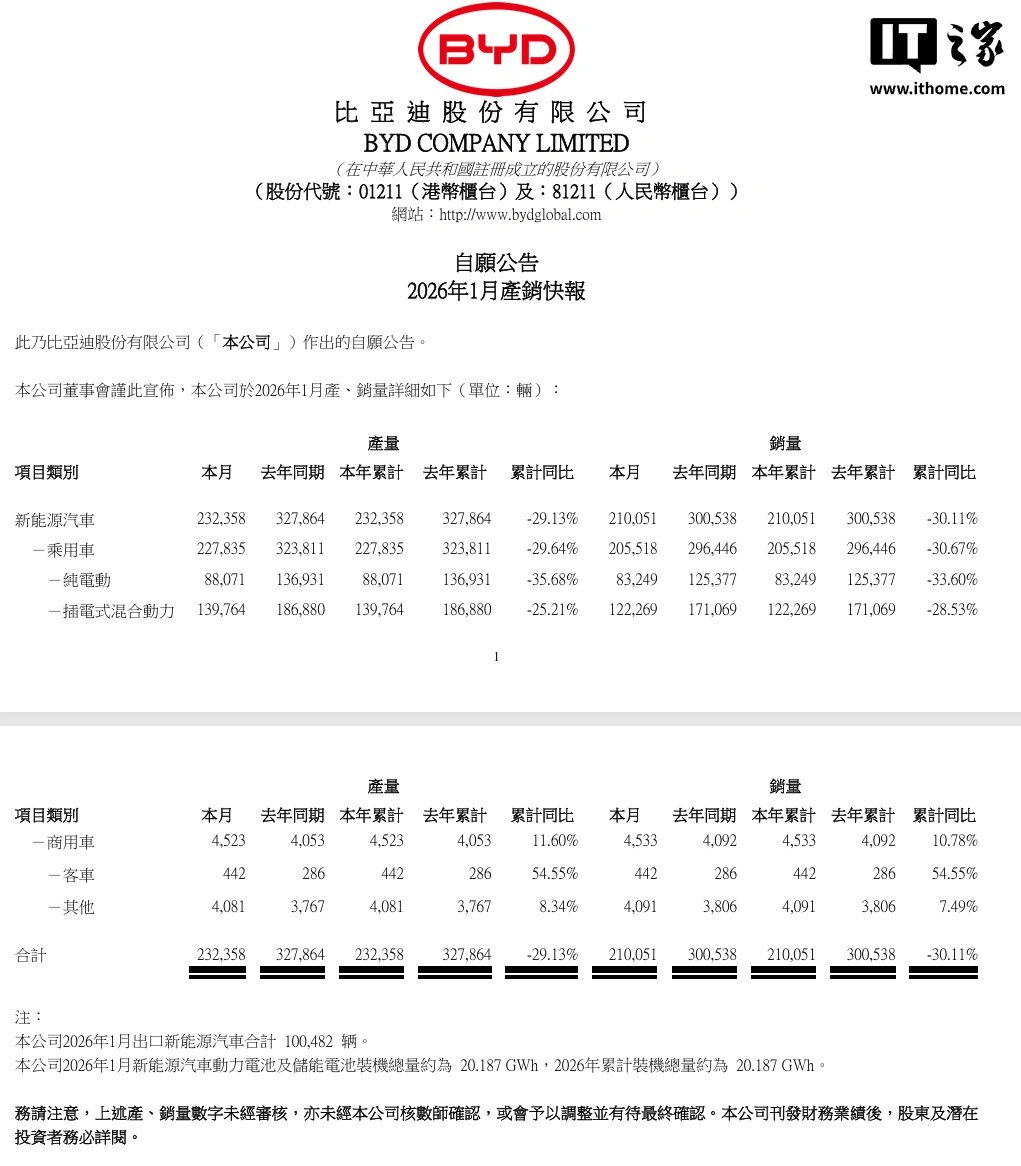
BYD's January sales was only 210,051, including 100,482 in overseas mkt & 4533 commercail vehicles.
It also had 20.187 GWh battery sales.
This is down 30% YoY.
I will have to wait for registration # to come out. It isn't clear if this is due to just de-stocking or really poor sales.
One thing is that NEV sales are definitely down this yr vs last (based on my previous reporting on this), but this is still a massive drop.
English

🇨🇳 TESLA MODEL Y FALLS OFF 800-METER CLIFF IN CHINA... DRIVER WALKS AWAY
This is absolutely insane.
A Tesla Model Y plunged off an approximately 800-meter cliff in China, tumbling down a mountainside.
The vehicle was completely destroyed, windows shattered, body mangled beyond recognition.
But the A- and B-pillars held.
The passenger cabin didn't collapse.
The battery didn't ignite.
The driver suffered only minor injuries.
Rescue crews had to dismantle the wreckage to recover the vehicle.
Local reports are calling it a "miracle of survival."
This is what happens when a car is engineered with safety as a priority, not an afterthought.
Tesla's rigid structural design and low center of gravity from the battery placement aren't just marketing points.
They're the reason this driver is alive.
800 meters is over 2,600 feet.
That's not a fender bender.
That's falling off a mountain.
Most vehicles would have become a coffin.
The Model Y became a survival pod.
Source: @elonmusk / @ray4tesla
English

Tesla Self-Driving 14.1.3 adds Cocaine mode
The release notes say it will drive like someone who just railed a fat line of cocaine

English

【华盛顿邮报11日报道:中国的人口危机意味着劳动力即将枯竭】报道指出,中国人口自2022年达到14亿峰值后开始下降,劳动人口急剧减少。联合国预测,到2050年中国人口将降至12.6亿,其中约40%为60岁以上老人;到2100年更将减半至6.3亿,超过一半人口为老年人。
这一局面源于上世纪的计划生育政策,尽管政府先后放宽三胎,推出育儿补贴,但高昂的抚养成本和年轻人对婚育的厌倦,使生育率持续下降。
目前,中国的结婚率降至2013年的一半,许多年轻人拒绝结婚生子。与此同时,寿命延长导致老龄化加剧,养老金体系面临巨大压力。政府甚至采取措施限制公众对婚姻价值的质疑,国家媒体甚至批评美化离婚的脱口秀小品。
经济学家易纲警告,“中国制造业产能目前占全球总量的30%。但这一比例肯定会下降,因为中国没有足够的劳动生产率,”易纲表示。“中国制造业产能的崩溃是不可避免的。”

中文

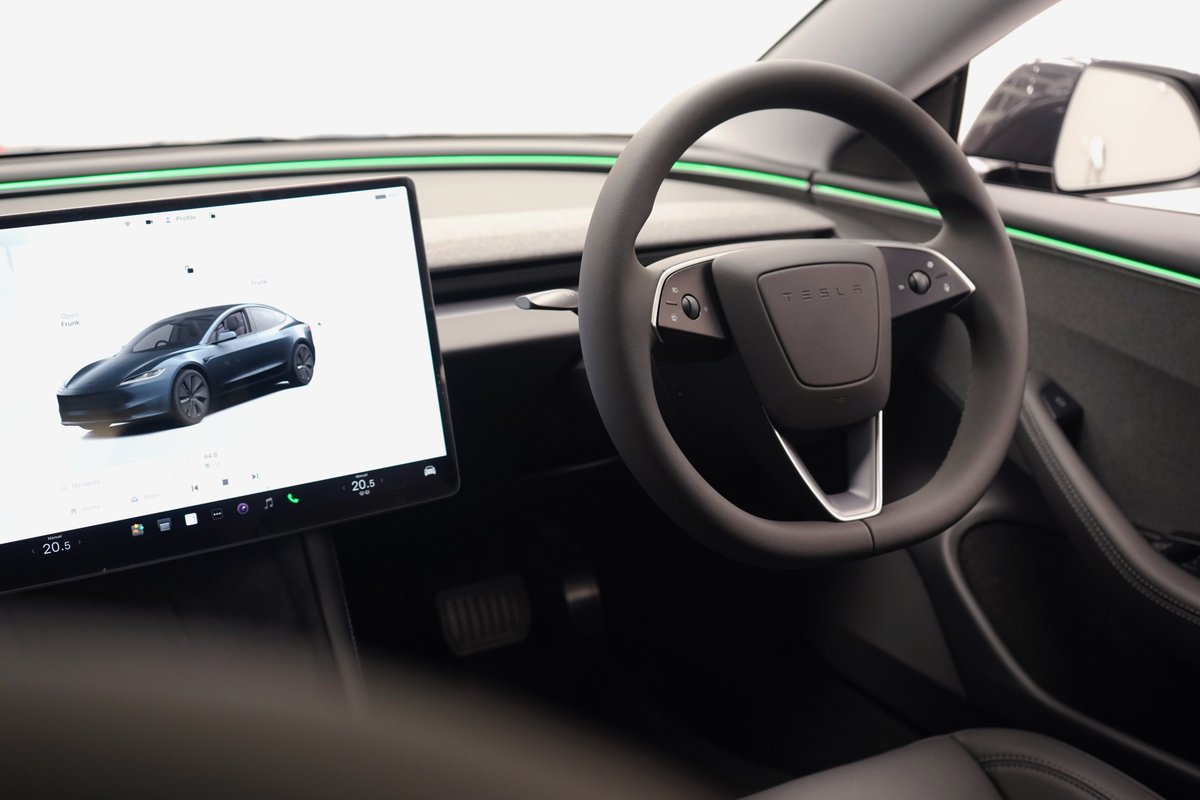
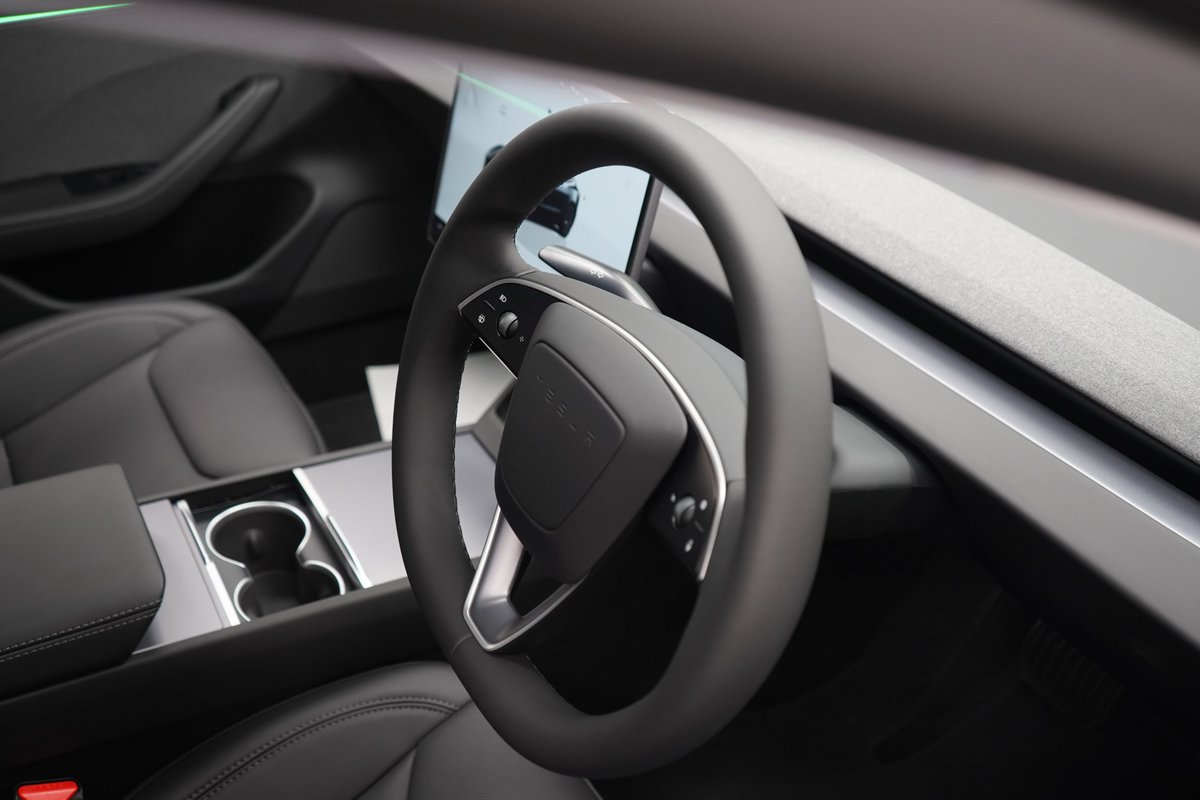
Model 3 with new hardware is now on display at all Experience Centers
English


@JoeTegtmeyer @Tesla does that mean robotaxi rely on HD maps?
English

More @Tesla mapping going on tonite in Austin. This was headed north on Congress towards the Capitol building.
English


Musk said AI5 is planned for second half of 2025. Think about Robotaxi starting production/scaling soon and...... 👀👀👀
Elon Musk@elonmusk
@wholemars Then HW5, which has been renamed to AI5, in the second half of next year. The Tesla AI5 computer has ~10X the capability of HW4 computer and Tesla makes the whole software stack.
English


🚨 NEWS: Tesla just shared big updates in a private Wall St. session led by IR head Travis Axelrod (via Morgan Stanley):
Optimus:
• Gen 3 goal: 100K/month
• Investor tour of production by Q4 2025
• Neural nets bigger than in Tesla cars
Robotaxi:
• Austin launch on track
• 10–20 vehicle fleet, invite-only
Dojo:
• Dojo 2 in 2026, cheaper than Nvidia
• Dojo 3 coming by 2028
Bullish? $TSLA
Sawyer Merritt@SawyerMerritt
NEWS: Tesla has shared new tidbits of info during a session with Wall Street analysts, led by IR head Travis Axelrod. via Morgan Stanley's new $TSLA note: • Optimus: Tesla wants to offer investors tours of low-scale manufacturing by Q4 2025 • Tesla is still on track to launch its Robotaxi service in Austin. Initial fleet of 10-20 cars. Will be invite only at first. • Tesla can currently make 12 Optimus robots at a time on the second floor of Fremont. Production capacity is currently 1k/month. Second-gen line is targeting 10k/month. Third-gen line 10x the second-gen line. Tesla wants to build thousands of Optimus robots by the end of this year. • Neural nets for Optimus are far larger than the ones for their cars • Tesla Dojo 2 (D2) comes out in 2026. Will be more efficient than Dojo 1 and cheaper than comparable Nvidia solution. Not expected to be "1 for 1" as competitive to Nvidia. Dojo 3 expected to come out in 2028. Company thinks it can narrow the performance cap for Application-Specific Integrated Circuit. Tesla believes that 10x-ing their computer and acquiring much cheaper chips could result in a major unlock.
English

Year 2035: Optimus bots performing surgery — no humans in sight.
English