Luiz F. S. Borges

1.3K posts

Luiz F. S. Borges banner
Luiz F. S. Borges

Luiz F. S. Borges

@luizfsborges_

Fundador e presidente da @kortexcorp | @kortexlearn Desenvolvendo neurotecnologias que representem o melhor benefício para a humanidade.

Substrato neural Katılım Ocak 2024
291 Takip Edilen96 Takipçiler
Luiz F. S. Borges retweetledi

Science Corporation
Science Corporation@ScienceCorp_·
What does it take to engineer a smaller, lighter, and more ergonomic PRIMA? Watch Episode 1: Our team tackles the next generation PRIMA Glasses.
English
2
10
45
5.5K
Luiz F. S. Borges retweetledi
Marwa ElDiwiny
Marwa ElDiwiny@MarwaEldiwiny·
Elektro the Robot at the 1939 New York World’s Fair..
English
6
12
66
5.8K
Luiz F. S. Borges retweetledi
Boston Dynamics
Boston Dynamics@BostonDynamics·
Balancing commercial goals and robotics research can be tricky, but with Atlas we're making it work.
English
322
1.2K
7K
429.6K
Luiz F. S. Borges retweetledi
CJ
CJ@SCI_Borg24·
People often ask me if I have direct, telepathic connections to the digital world, such as Grok operating in my brain. I've always wanted an encyclopedic memory, but alas, that's not how the N1 works. Currently, the BCI is a tool that allows me to do, without my hands, what my hands could once do. My hands could never virtually connect with Grok, but they could open the Grok app and type in prompts and hit Enter. Similarly, my brain can now go to Grok, type through a virtual keyboard that appears on the screen, and hit Enter. I'm not saying the brilliant @elonmusk won't get there at some point, but for now the N1 is a hand substitute for cursor control. In order to get the cursor to do what I want, with my mind, I have to train the system. I went through a process called Body Mapping, in which the Neuralink engineers monitored which areas of my body still elicited the strongest signals from my brain. Together, we then chose which "shortcuts" we wanted to use. For example, when I clench my right fist, this translates to a mouse right-click. It is not necessarily an intuitive "think about right clicking your finger on a mouse to generate a right-click on your screen." Once you and the N1 team select the best signals to substitute for right and left clicking, then you must calibrate that system. Of the two dozen or so N1 patients so far, there is a wide range of frequency for calibration, from twice per day to once per two weeks. It is a combination of personal preference and need, based on how well the cursor is retaining your programmed behavior. The photos are the front and back of an actual N1 brain implant device that Sehej brought to show me. In the video, I am using the Neuralink calibration app to teach the system (and train my own instincts) what a right click, a dwell (no click), and a left click are. My speed usually tops out at 40, because I'm old. In my meeting with Sehej tomorrow, I will finally be graduating to generating a middle click.
CJ tweet mediaCJ tweet media
English
22
28
324
12.5K
Luiz F. S. Borges retweetledi
Saint Nomad
Saint Nomad@Saint_n0mad·
we have come a long way
Saint Nomad tweet mediaSaint Nomad tweet mediaSaint Nomad tweet mediaSaint Nomad tweet media
English
6
22
229
15.2K
Luiz F. S. Borges retweetledi
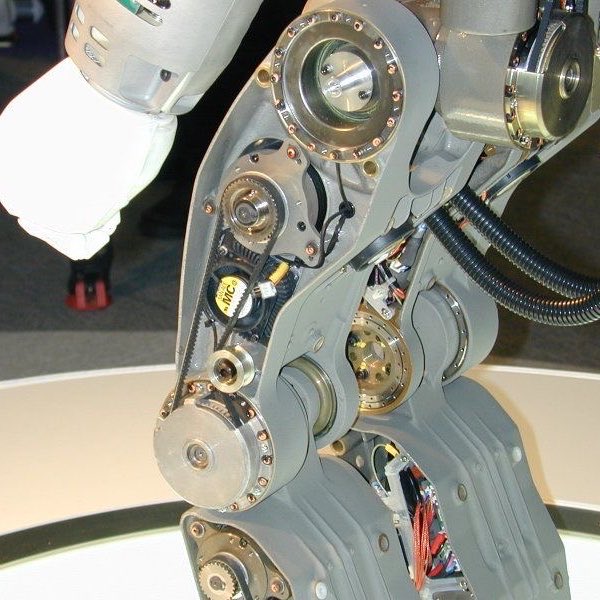
Brett Adcock
Brett Adcock@adcock_brett·
ZXX
99
164
1.7K
119.4K
Luiz F. S. Borges retweetledi
Figure
Figure@Figure_robot·
Today we’re giving an update on ramping F.03 production at BotQ In the last 120 days, Figure scaled manufacturing 24x - from 1 robot/day to 1 robot/hour We will manufacture 55 humanoid robots this week
English
196
398
3.2K
474.6K
Luiz F. S. Borges retweetledi
1X
1X@1x_tech·
Building Your NEO
English
108
228
2.2K
637.5K
Luiz F. S. Borges retweetledi
Mike Kalil
Mike Kalil@mikekalilmfg·
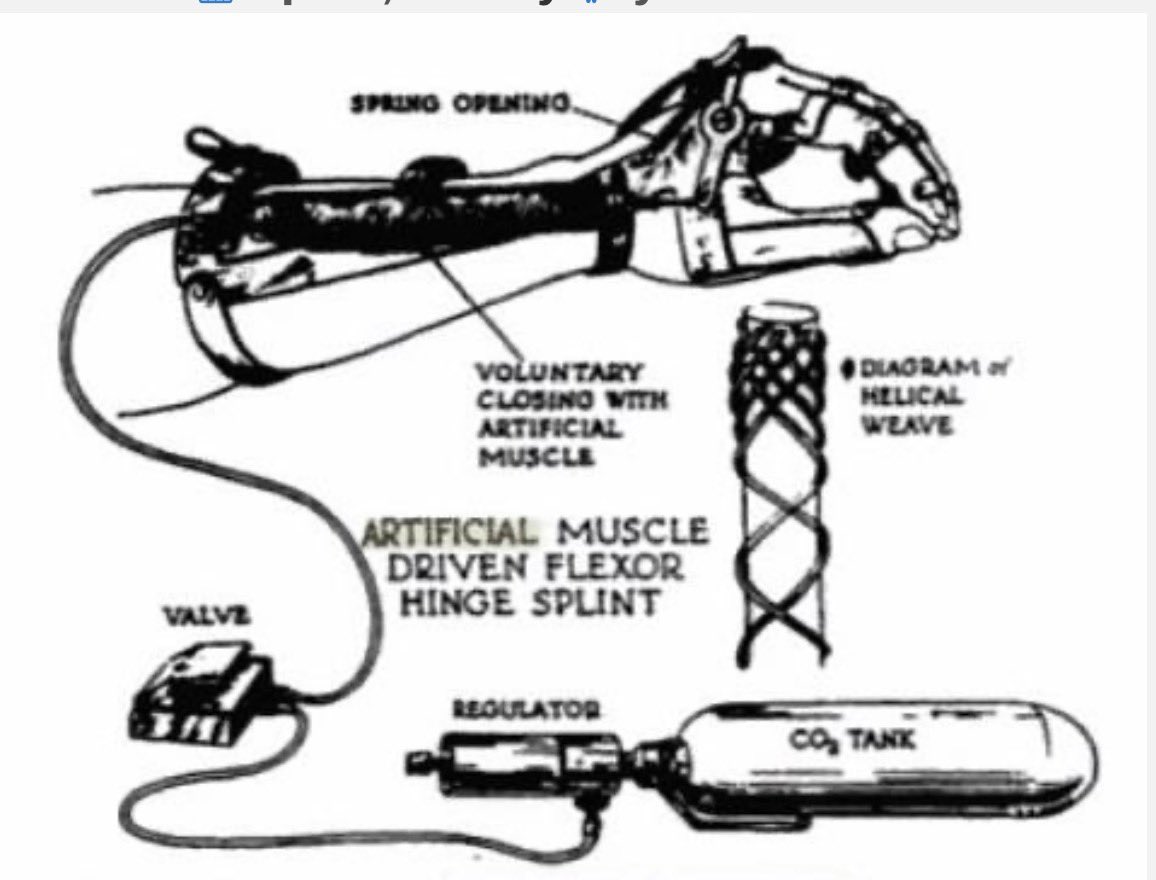
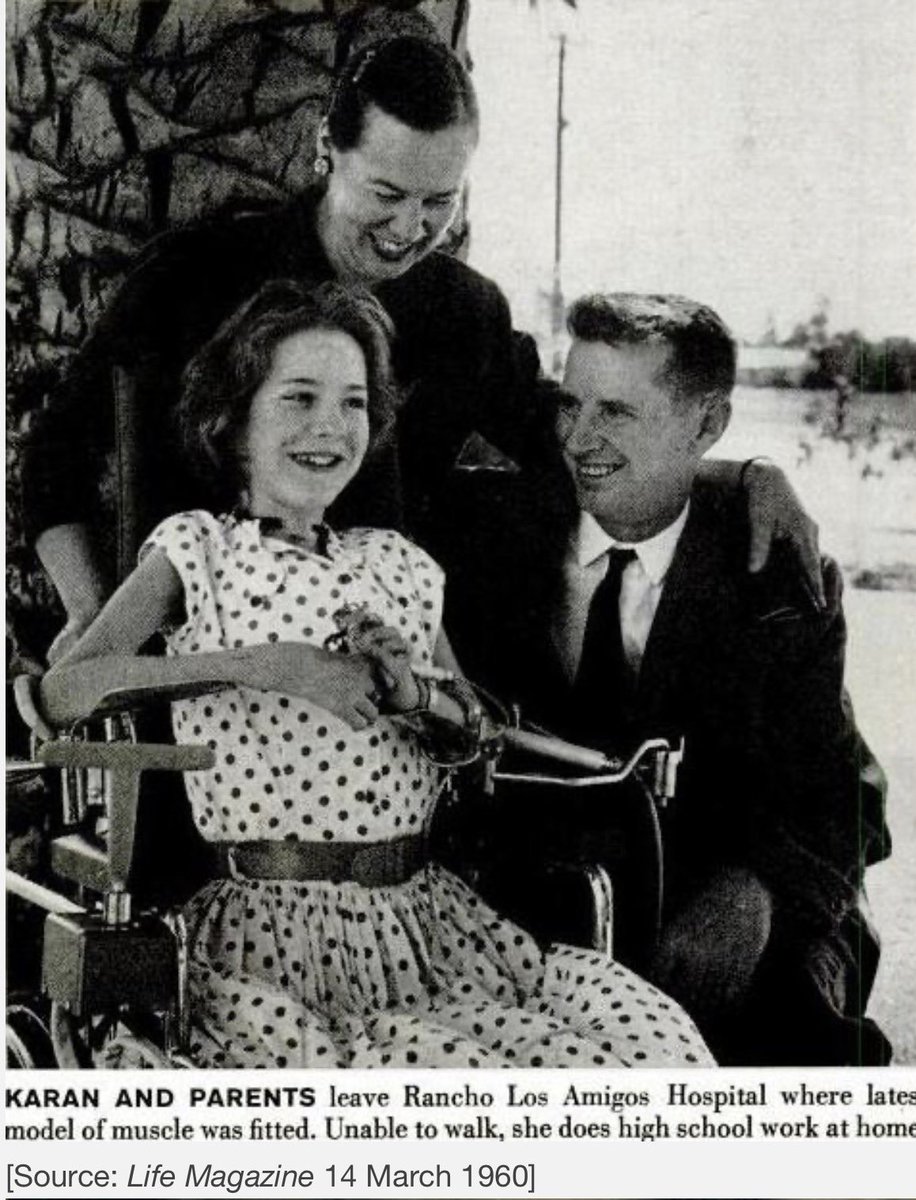
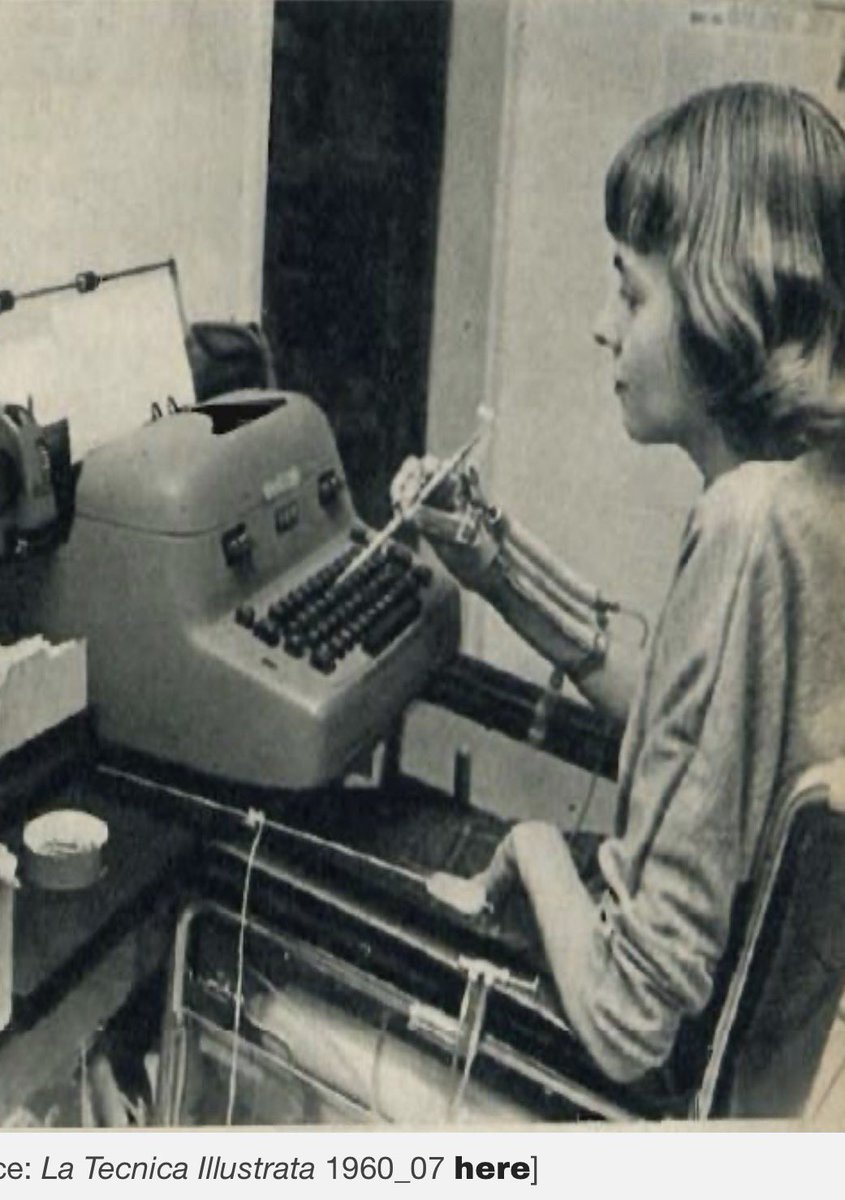
The modern path toward artificial muscles actually dates back to the 1950s with research by Joseph McKibben. The American physicist and engineer’s early career included work on the Manhattan Project at Los Alamos, where he contributed to the development of the first atomic bomb under Robert Oppenheimer. Years after the war, his focus shifted from nuclear research to human-centered engineering. When polio crippled his 13-year-old daughter, he set out to make a powered brace to help her do tasks with her hands and arms gain. In severe cases, the virus caused paralysis by attacking nerve cells in the spinal cord that send signals from the brain to muscles. Even without complete paralysis, survivors often had reduced muscle strength and struggled to maintain balance. Orthopedic braces available at the time could hold limbs in place but they couldn’t help them move or do anything. McKibben’s idea was fundamentally different: a lightweight, flexible system that could mimic real muscle function, contracting and relaxing to assist joint motion. It came to be known as the McKibben Artificial Muscle. He collaborated with Hal Schulte, a physician and researcher, to refine the concept. The pneumatic system used a rubber tube encased in a braided mesh. When pressurized, the tube expanded outward but was constrained by the braid, which made it contract lengthwise. The system was too bulky for practical use by people, but it continued to evolve through industry. In the 1980s, the Japanese tire manufacturing company Bridgestone industrialized the McKibben concept with the Rubbertuator. Engineers refined the braided pneumatic actuator with improved rubber materials and reinforced sheathing for better endurance and fatigue resistance. As multi-material 3D printers entered the mainstream, building soft muscle-like systems became much more practical. It meant engineers could easily print soft and rigid parts together in a single structure. Silicone casting and molding systems made it easier to quickly manufacture flexible components, while laser cutters enabled precise shaping of soft materials. Meanwhile new microfabrication techniques, like soft molding and microfluidics, made it possible to add tiny internal channels for fluids.
Mike Kalil tweet mediaMike Kalil tweet mediaMike Kalil tweet media
Mike Kalil@mikekalilmfg

Artificial Muscles Are About to Make Lifelike Robots and Cyborgs Mainstream The human body spent millions of years perfecting muscles to master movement. Scientists still don’t fully understand how they work, but the race to replicate them is well underway. Amid a global push toward humanlike robots, a new class of artificial muscles is rapidly advancing. Research labs and robotics firms are building on breakthroughs born out desperation decades ago. They say they’re close to making the eerily humanlike systems commercially viable. If they’re right, this could be the beginning of a future filled with robots indistinguishable from humans, cyborgs with capabilities beyond biological limits, and clothing that comes alive with interaction. The modern path toward artificial muscles actually dates back to the 1950s with research by Joseph McKibben, an American physicist and engineer whose early career included work on the Manhattan Project at Los Alamos, where he contributed to the development of the first atomic bomb under Robert Oppenheimer. Years after the war, his focus shifted from nuclear research to human-centered engineering. When polio crippled his 13-year-old daughter, he set out to make a powered brace to help her do tasks with her hands and arms gain. In severe cases, the virus caused paralysis by attacking nerve cells in the spinal cord that send signals from the brain to muscles. Orthopedic braces available at the time could hold limbs in place but they couldn’t help them move or do anything. McKibben’s idea was fundamentally different: a lightweight, flexible system that could mimic real muscle function, contracting and relaxing to assist joint motion. It came to be known as the McKibben Artificial Muscle. He collaborated with Hal Schulte, a physician and researcher, to refine the concept. The pneumatic system used a rubber tube encased in a braided mesh. When pressurized, the tube expanded outward but was constrained by the braid, which made it contract lengthwise. It remained primarily a proof of concept because of technical limitations. The system was too bulky for practical use by people, but it continued to evolve through industry and research periods. As multi-material 3D printers entered the mainstream, building soft muscle-like systems became much more practical. It meant engineers could easily print soft and rigid parts together in a single structure. Silicone casting and molding systems made it easier to quickly manufacture flexible components, while laser cutters enabled precise shaping of soft materials. Meanwhile new microfabrication techniques, like soft molding and microfluidics, made it possible to add tiny internal channels for fluids.

English
0
3
16
822
Luiz F. S. Borges retweetledi
hunter
hunter@hunterlanier·
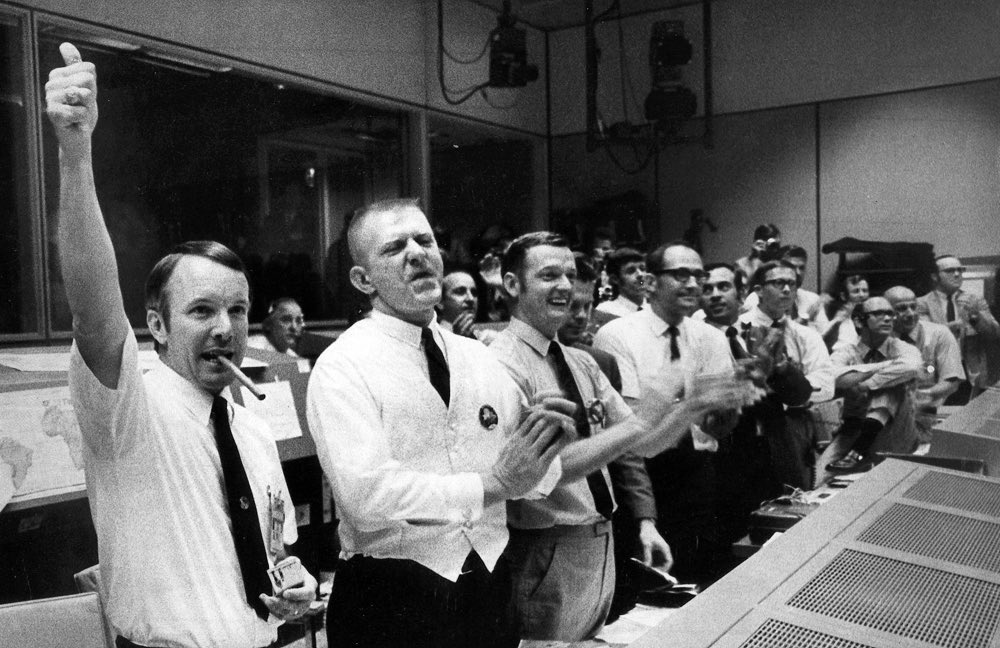
Had a good discussion with someone today about why the literature and overall vibes from Apollo era NASA feels so different compared to now. Two things: 1. The average age of a NASA engineer during the Apollo era was 28 2. Most of them were first generation engineers who didn’t really have the engineering background So you take a bunch of 21-32 year olds who grew up on a farm, and now you tell them we are going to do something nobody’s ever done before. It leads to things being as simplified as they need to be. There is enough duct-tape work that things actually get done. Society has forced us into a evermore theoretical world where we have forgotten what it feels like to beat the puzzle pieces into place with a hammer. This is why many of the textbooks from this time period are actually very pleasant to read through. They were often written by or for someone who had nothing but outside life experience, trying to understand it. Our generation is taking Artemis back to the moon and also Mars in the same way this generation did. I think we have a lot to learn from how they did things, and I’m glad to see a return to this type of engineering. I can’t help but think about how many projects I didn’t finish because I couldn’t do them well enough to my standards in my head, and I should have just wrapped the thing in duct-tape and crossed the finish line
hunter tweet media
English
45
149
1.6K
72.4K
Luiz F. S. Borges retweetledi
Asher Perlman
Asher Perlman@asherperlman·
Asher Perlman tweet media
ZXX
57
4.6K
72.5K
782.8K
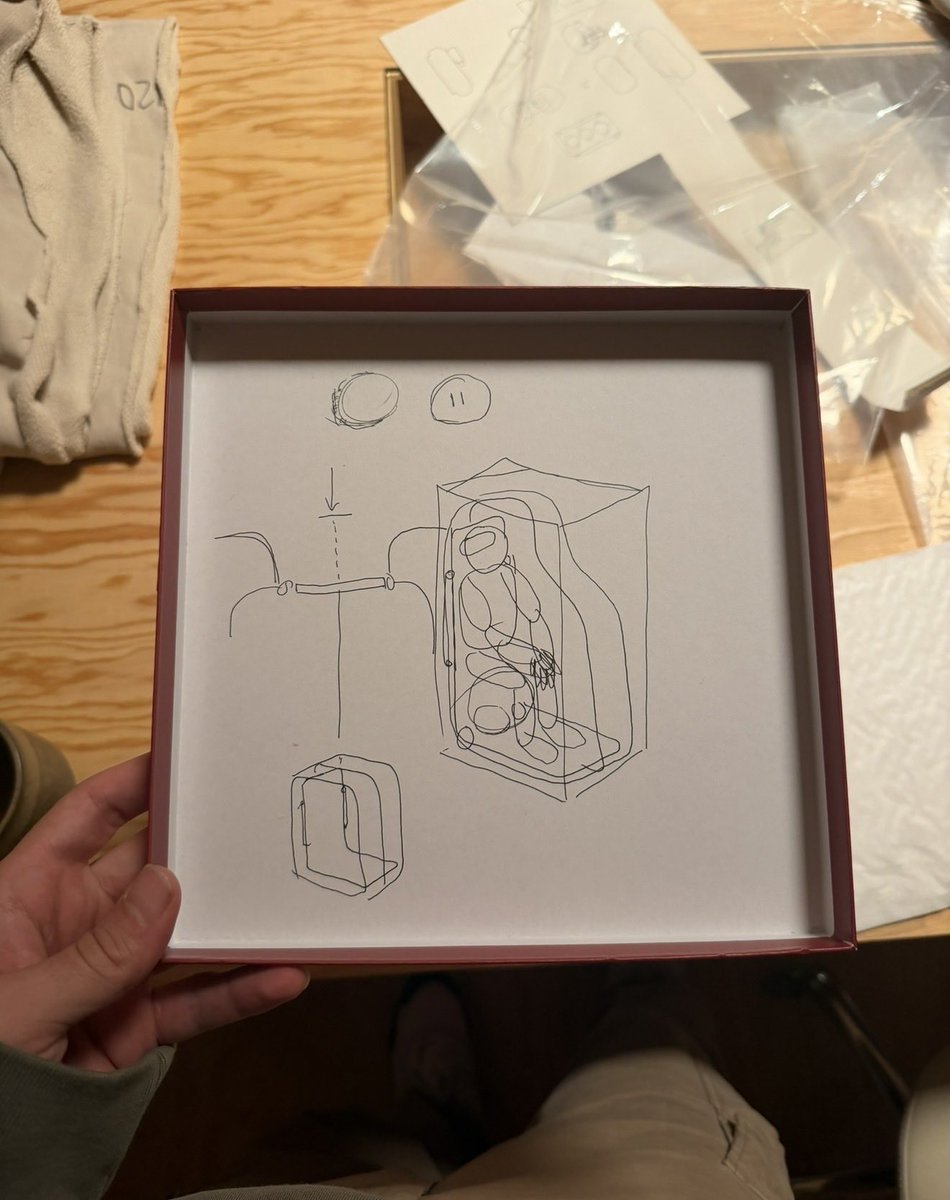
Luiz F. S. Borges retweetledi
MTS
MTS@MTSlive·
Good morning
MTS tweet media
English
12
48
672
14.2K
Luiz F. S. Borges retweetledi
pfung
pfung@philfung·
"eFlesh" (e-flesh.com) sounds like porn site, but its a robot tactile sensor developed at NYU 😊 You'll need a magnet, a magnetometer sensor board ($5 on adafruit for 1 x 1), and 3d print the skin. This is a real low-cost and versatile way to make grid pressure sensing.
Lukas Ziegler@lukas_m_ziegler

Open-source magnetic tactile sensor for $5! 🧲 Researchers introduced a magnetic tactile sensor that's low-cost, and easy to fabricate, democratizing tactile sensing for robotics. Operating in unstructured environments like homes and offices requires robots to sense forces during physical interaction. Yet the lack of a versatile, accessible tactile sensor has led to fragmented solutions and often force-unaware, sensorless approaches. Building an eFlesh sensor requires four components: a hobbyist 3D printer, off-the-shelf magnets (less than $5), a CAD model, and a magnetometer circuit board. The sensor is 3D printed with magnets embedded in the middle layer. Based on chosen mechanical properties, magnets displace in response to contact forces, measured by a magnetometer underneath. An open-source design tool converts simple OBJ/STL files into 3D-printable STLs. This enables application-specific sensors for robot hands, grippers, quadruped feet, and more. Slip detection generalizes to unseen objects with 95% accuracy. Visual-tactile control policies improve manipulation by 40% over vision-only baselines, achieving 90% success on precise tasks like plug insertion and credit card swiping. All design files, code, trained models, and conversion tools are openly available. Project page: e-flesh.com ~~ ♻️ Join the weekly robotics newsletter, and never miss any news → ziegler.substack.com

San Francisco, CA 🇺🇸 English
2
6
46
7.5K
Luiz F. S. Borges retweetledi
Prep Propaganda 👔
Prep Propaganda 👔@prep_propaganda·
You need to display more trinkets, knick-knacks, heirlooms, you need to be rejecting minimalism
Prep Propaganda 👔 tweet media
English
52
243
2.8K
50.4K
Luiz F. S. Borges retweetledi
Larissa
Larissa@laridiniz·
No início do mestrado eu usava o computador pra tudo, até que meu orientador, durante uma aula, fez um longo desabafo sobre isso. Ele falou que observava a capacidade de retenção de informação dos estudantes virando água ao passar dos anos e principalmente dos que usavam pc. +
Mushtaq Bilal, PhD@MushtaqBilalPhD

Students who take notes by hand get better grades than those who use laptops, especially in STEM fields.

Português
41
130
4.1K
299.1K
Luiz F. S. Borges retweetledi
T.Yamazaki
T.Yamazaki@ZappyZappy7·
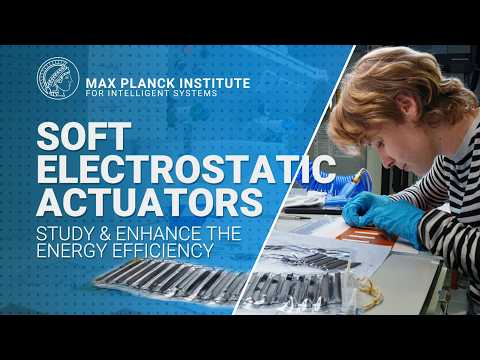
『ソフト静電アクチュエータのエネルギー効率を測定する手法』 電気エネルギーから機械エネルギーへの変換効率を体系的に評価 youtu.be/FGXSJLs_O-o #SoftRobot #electrostatic #actuator #energy #efficient #MPI_IS #MaxPlanckInstitute
YouTube video
YouTube
T.Yamazaki@ZappyZappy7

ダチョウから着想を得た脚部クラッチにより、最小限の制御でエネルギー効率の高い歩行を実現した鳥ボット youtu.be/wwH40rYJt9g #BirdBot #robot #robotics #Biorobotics #BioRob #biomimicry #バイオミミクリー #生物模倣 #ダチョウロボット

日本語
0
25
177
16.2K