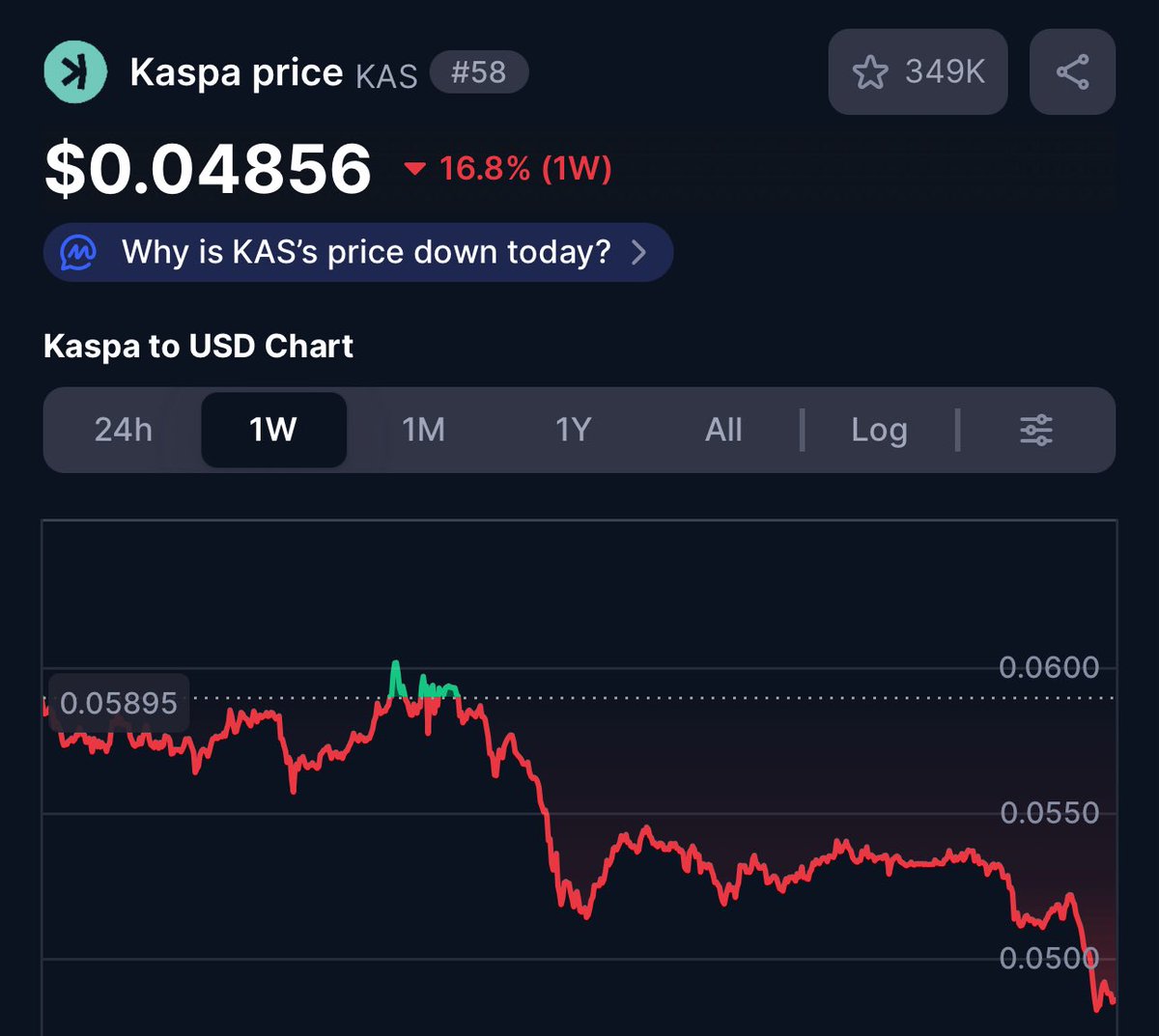
1412
1.7K posts
1412 retweetledi

I AM QUITTING MY JOB TO GO FULL IN CLAUDE
Just asked him to:
"Analyze misspriced Polymarket markets opportunities for arbitrage and find wallets that are using it to copy"
Turned $2K into $12K in one night
Monitored ~1k+ wallets
I just realized that there are many arbitrage bots that I can't beat without code knowledge
But I can find them and copy
So Claude created a monitoring terminal and copytraded found wallets using TG copytrading bot
It's not a script and not even the bot, it's an AI agent that is improving with each found wallet
Fetching wallet behaviour, how it's trading, arbitrage, what's sized and timings
70% win rate, 7 wallets copytrading rn from ~500 monitored, bot never paused, never gambling, just math and profit
Giving This Free for 24 hours. To get it:
1. Comment the word 'Claude'
2. Like and Retweet this post
3. Follow me @marryevan999 (so i can DM you)
English
1412 retweetledi

1412 retweetledi

Pewdiepie has won the game of life.
He ruled YouTube with more than 115 million subscribers and then chose to walk away on his own terms.
> 36 years old
> multimillionare
> moved to japan
> spends his days with family
> posts videos only when hes inspired
> studies philosophy
Happy to see someone from the early youtube days enjoy life instead of being chronically online
English
My 2025 Limitless Rewind is here! 🎉
I'm a "The Scalper" trader!
limitless.exchange/rewind/0xEb15e…
English
1412 retweetledi

After i saw @coinathlete post about making a project on @NotebookLM about #Kaspa i decided to do my own project also Kaspa: Beyond the Blockchain
Despite Kaspa's Brand new futuristic tech its core beliefs are actually super old school its like a throwback to the very first days of Crypto
Lets spread and share this to the world my fellow Kaspians! $KAS
English
1412 retweetledi

We’ve partnered with @pieverse_io to give away 5 Purr-Fect Agent WL spots to our community.
How to participate ↓
Like, RT, and reply to this post. You’re in.
Winners announced tomorrow at 2 PM UTC. Good luck!

English
1412 retweetledi
Forget sequential blocks. $KAS treats state transitions as a continuous stream of causally-related transactions. By separating block production from state commitment, the execution model becomes:
Completely Lock-Free
Hardware-Efficient
Highly Parallel
👇
x.com/hus_qy/status/…

Hans Moog@hus_qy
Kaspa’s runtime architecture achieves scalability not by optimizing block-level throughput, but by rethinking the role of blocks entirely. Instead of treating state transitions as discrete batches that must be processed sequentially, Kaspa models them as a continuous stream of causally-related transactions, with blocks serving only as logical markers that define the boundaries of possible reorgs. This shift in perspective moves the performance bottleneck away from "how fast can we process everything inside a block" toward "how can we parallelize all currently known tasks across the entire DAG". When a block contains a spike of non-parallelizable work, traditional blockchains must stall until the block is fully processed. Kaspa does not. Because unrelated transactions can be scheduled immediately - even those belonging to future blocks - the system avoids idle CPU cycles and eliminates the classic straggler problem. Most existing DLT architectures tightly couple block production with state commitments, proofs, or other finalization steps, making their execution model inherently sequential. Even if they support some parallelism within a block, they still wait for a block to finish before moving on to the next one. This introduces unnecessary latency and forces the runtime to juggle responsibilities that are orthogonal to efficient workload distribution. Kaspa’s strict separation of concerns allows the entire execution model to collapse into a minimal, expressive, and highly generic framework - small enough to run any ACL (access-control list) enabled VM at essentially bare-metal performance. Its design models causal dependencies at the lowest hardware-relevant level, enabling an execution flow that is: - completely lock-free - free of WAL flushes or global sync barriers - based entirely on eventual consistency This results in a simpler, more scalable, and far more hardware-efficient architecture than anything deployed in blockchain systems today. In effect, Kaspa does for distributed ledgers what TensorFlow and CUDA Graphs did for machine learning: it exposes a parallel execution model that can scale seamlessly with modern hardware, turning theoretical throughput into practical reality (the 64000 TPS that Solana achieves in the lab let's bring that to practice). I am extremely excited about this as this is exactly what I always wanted to build with IOTA and now it's finally done. We are still working on implementing the higher levels of abstraction like designing a capability based linear type system abstraction for state management and resource access that gets rid of the need for manual capabilities wiring like in SUI and there is still a bit of work left but I don't think that you will ever be able to build a more scalable architecture than directly modeling the causal structure of state changes down to the lowest hardware layer. Kaspa is going to melt faces my friends and it's going to be so much better that it will be impossible to ignore! And it's such a simple API with Rayon level abstraction ... I am seriously getting a nerd-gasm just looking at the code 😅: github.com/hmoog/kas-l2/b… This goes out to KEF and the entire community: Thank you so much for allowing me to take part in this journey - this really feels like coming home! 🥰
English
1412 retweetledi

1412 retweetledi

[𝕏] Kaspa Founder Yonatan Sompolinsky Rejects #Binance Top 100 Blockchain Invite, Criticizes Exchange for Promoting Casino Tokens Over Fair-Launched Cypherpunk Projects
$BNB $KAS

English
1412 retweetledi

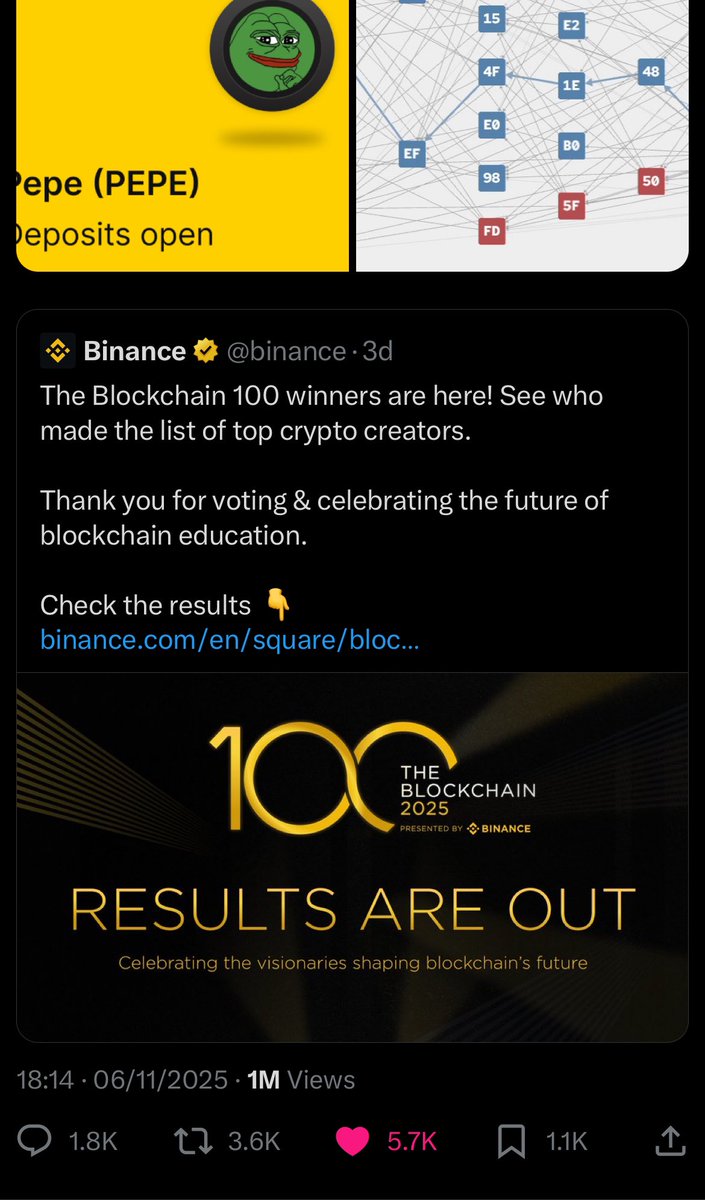
Not even 24hrs and HashDags post has over 1 million impressions.
Do you think binance are listening?
$KAS #Kaspa
English
1412 retweetledi
@hashdag recent post 👇
x.com/hashdag/status…
has reached 1 Million Views
The power of this message roars upon the roots of cypherpunk movement 🫡
$KAS #Kaspa #KAS #binance #Yonathan #CryptoRevolution #CryptoMarket #Decentralization #FairLaunch #ProofofWork #CryptoTrilemma

Yonatan Sompolinsky@hashdag
@binance,
Thanks for including me in the top 100 blockchain people list, appreciate the signal!
I must decline the Dubai invite though. I do not wish to disrespect, but many of the award voters are avid kaspians who rooted for my kaspa status at least as much as for my research. Let them win or count me out.
Crypto has turned from a euphoric cypherpunk project to a house-friendly casino. You may not be the culprit, but as a top player you hold the lion’s share of the responsibility to correct this, and the October crash your USDe oracle glitch helped trigger adds to what needs to be addressed.
There are three classes of crypto, as @mert put it recently: commercial crypto, casino crypto, cypherpunk crypto. <
English
1412 retweetledi

@binance,
Thanks for including me in the top 100 blockchain people list, appreciate the signal!
I must decline the Dubai invite though. I do not wish to disrespect, but many of the award voters are avid kaspians who rooted for my kaspa status at least as much as for my research. Let them win or count me out.
Crypto has turned from a euphoric cypherpunk project to a house-friendly casino. You may not be the culprit, but as a top player you hold the lion’s share of the responsibility to correct this, and the October crash your USDe oracle glitch helped trigger adds to what needs to be addressed.
There are three classes of crypto, as @mert put it recently: commercial crypto, casino crypto, cypherpunk crypto. <> A TBTF CEX should know better and play a different game with hardcore crypto projects.
When binance lists a green frog three weeks post its “launch” but skips a fair-launched-Nakamoto-Consensus-100ms-upgrade-ATH-top-20-the-only-nonbitcoin-marathon-mined project, this is not merely binance rationally calculating; it is also binance molding the market in a way that is alas misaligned with the roots of the movement.
You may feel that kaspa’s sovereign money thesis is boring – that bitcoin is already money and that implementing an internet-speed bitcoin is useless - fine. Wrong but fine. But what’s the thesis for the green frog?
Money is a classic chicken-and-egg product. It is a scam up until one moment before tipping point, “most of the value comes from the value that others place in it.” Considering your resources and influence, I think it's safe to say you can serve as both the egg and the chicken and make it worth your while to push sound attempts towards tipping point.
@cz_binance tweeted recently that “strong projects will be listed.” But binance is part of what defines "strong", it bears responsibility for the market’s compass and impulse and definition of strong. It is not a read-only entity.
Binance listing fees are legit, they are just unfit for category cypherpunk. Kaspa devs and early supporters fairly mined less than half what satoshi and hals mined. We don’t have a 20% ZEC-style founders’ reward or protocol-enforced dev fund; this is not a jab at ZEC and the wonderful @Zooko, who was crashing in my car on a late Thursday back in the low ZEC MC days – if somebody deserves to win it is zooko – but assuming binance is not taking a maxi bet, it should revisit its relationship with hardcore crypto.
We are here through bull and bear, ICOs NFTs XYZs; and we are the source of confidence that restores faith and capital inflow post meme-induced or CEX-induced crashes.
Please fix this.
Thanks again,
hashdag
cc @michaelsuttonil
Exhibit A: Binance Innovation Zone
Exhibit B: 10 bps Nakamoto Consensus


Binance@binance
The Blockchain 100 winners are here! See who made the list of top crypto creators. Thank you for voting & celebrating the future of blockchain education. Check the results 👇 binance.com/en/square/bloc…
English
1412 retweetledi

gm gm -
new badge just dropped 👀
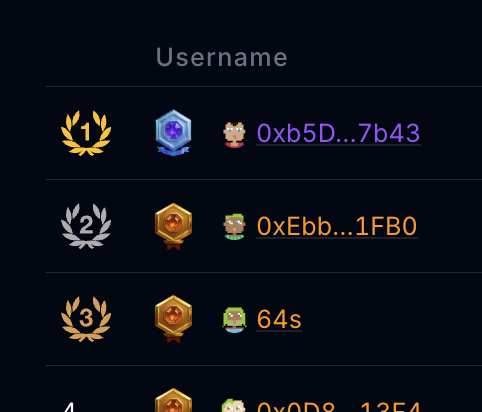
pumped to announce i'm joining as a Limitless Ambasassador!
i've been predicting @trylimitless since season 1, and am currently #3 on leaderboard this month!
loving the daily and hourly crypto markets ⚡️
check it out - i'll help you win!
English
1412 retweetledi

1412 retweetledi
1412 retweetledi
Got my @Tangem Ambassador-Branded Wallet Card Set today 😍🥳
Also get your Tangem Wallet Card now and choose different themes of card wallets Or tangem ring
Dont forget to use the code: MHIEE
at checkout to enjoy 10% discount
what’s more exciting than this?? 👇
Tired of choosing between self-custody and convenience?
Tomorrow, the game changes. 💥
The full details of Tangem Pay are dropping, bringing your crypto out of the wallet and into the real world with the power of Visa, all while you keep the keys.
🔑 Your crypto. Your control. Real-world payments.
#TangemPay #Visa #SelfCustody #Crypto #Web3

English
1412 retweetledi

This is the reason $KAS is not on @binance yet. We need to pay to play.
The fact we have a grassroots, multi billion dollar network without paying anyone is a bullish statement for #Kaspa.
Study $KAS.
Wolfie@Kaspa_HypeMan
@JuanMato14 @netflix "peanuts" would be $1M - $3M They demanded 3% MAX SUPPLY from us last week, 28,700,000,000 x .03 = 861,000,000 $KAS or $41,112,750 USD
English
1412 retweetledi