

Sally Newman
58.2K posts

Sally Newman
@m97tang
Ph.D. Plant Physiologist, Environmentalist, Progressive Liberal. #StillSanders . Now with 'The Adventures of Ambling Emil', a golden retriever pup.
New York, USA Katılım Aralık 2010
2.6K Takip Edilen1.3K Takipçiler
Sally Newman retweetledi

Sally Newman retweetledi

I picked my little girl up from daycare, and the staff could barely hold back their laughter.
Apparently, she spent the entire day completely obsessed with a giant Great Dane named George.
Everywhere he went… she followed.
From room to room.
Nap spot to nap spot.
Water break to water break.
If George moved even a little, she was right behind him like his tiny shadow.
And judging by the way she looked at him… she was absolutely in love.
The moment I saw her face, I had to take a picture. She looked unbelievably happy like she had just met the love of her life and still couldn’t believe he was real.
Honestly, it was one of the cutest things I’ve ever seen.
It’s funny how dogs somehow experience crushes almost exactly like humans do… because my girl definitely fell head over paws for George.
Credit: Grace Jenkins

English
Sally Newman retweetledi

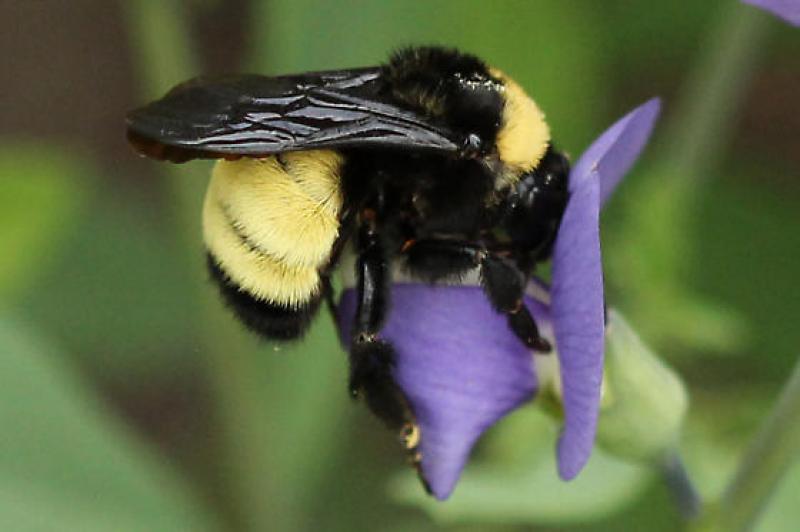
Everyone's worried about honeybees, but the American bumblebee has declined by 89% in the last 20 years.
Bombus pensylvanicus was once the most common bumblebee in the southern United States. It's now functionally extinct in eight states (Maine, Rhode Island, New Hampshire, Vermont, Idaho, North Dakota, Wyoming, and Oregon) and down 99% in New York.
The honeybee, the species most "save the bees" campaigns are organized around, is not native to North America. It was brought over by European colonists in the 1600s as livestock for honey production. It is managed, bred, transported across the country in trucks, and is doing fine. Beekeeping is an agricultural industry, not a conservation effort.
The American bumblebee is what we actually have. It pollinates wild plants honeybees can't, including ones with deep flowers and ones that require buzz pollination (a technique honeybees don't perform). Tomatoes, blueberries, eggplants, cranberries, and countless wildflowers depend on it.
The Center for Biological Diversity petitioned to list the species as endangered in 2021. The federal review is now in its fifth year. The species is still not protected.
Three things help.
1. Plant native flowers, the kind bumblebees evolved with (asters, goldenrod, milkweed, native sunflowers, beebalm, mountain mint).
2. Leave standing dead plant stems through winter, that's where queens overwinter.
3. Stop spraying for mosquitoes, those sprays kill every pollinator they touch.
The bees we built an industry to "save" are not the bees that need saving. The ones that do are quietly disappearing while we celebrate the ones that aren't.

English
Sally Newman retweetledi

The aggressor state russia has once again attacked a World Food Programme (WFP) UN warehouse in Dnipro, where food aid for 130,000 people was stored at the time of the strike
This is confirmed by an official statement on the World Food Programme’s website
Absolute scum.
ukraine.un.org/en/316191-un-w…
English

GREAT nomination & well deserved too!
The 'draft dodger' currently in the Oval
Office probably won't be pleased with
Zelensky's @NobelPrize nomination? 🤷♀️
So, please do NOT share, got it? 😉
Wave a 🇺🇦 flag if you stand with Ukraine
and Zelensky! 🙏 🇺🇦 #SlavaUkraine 🇺🇦

English

Who else agrees that Clarence Thomas needs to be removed,due to the latest allegations of impropriety?
1. Yes
2. No

English
Sally Newman retweetledi
“The plane went silent.”
That’s what passengers aboard British Airways Flight 9 remembered most.
Not screaming.
Not alarms.
Silence.
On June 24, 1982, the Boeing 747 was flying over Java at 37,000 feet with 247 passengers onboard when Senior Engineer Barry Townley-Freeman noticed engine temperatures rising dangerously fast.
Then passengers started calling flight attendants:
“There’s something glowing outside the window.”
Blue light flickered through the engines.
White sparks danced across the wings.
It looked beautiful.
In the cockpit, Captain Eric Moody watched Engine 4 fail.
Then Engine 2.
Then 1.
Then 3.
Within minutes, all four engines were dead.
A fully loaded 747 became a powerless glider descending toward the Indian Ocean.
No thrust.
Barely any radio communication.
No idea what caused it.
Passengers woke from sleep to something deeply unnatural:
The absence of engine noise.
At 37,000 feet, a jetliner should roar.
Instead, there was only wind.
Captain Moody got on the intercom and delivered one of aviation history’s most famous announcements:
“Ladies and gentlemen, this is your captain speaking. We have a small problem. All four engines have stopped. We are doing our damnedest to get them under control.”
Some passengers thought it was a joke.
The flight attendants’ faces said otherwise.
What nobody onboard knew was that the plane had flown directly through a volcanic ash cloud from Mount Galunggung.
The ash was made of microscopic glass particles.
Inside the engines, the particles melted at extreme temperatures and coated the turbines like cement, suffocating all four engines one by one.
At 15,000 feet, oxygen masks deployed.
At 12,000 feet, the crew prepared for a night ditching into the ocean.
Captain Moody knew the odds of surviving a water landing in a 747 were almost nonexistent.
Then he tried restarting the engines one final time.
Engine 4 sputtered.
Caught.
Then another.
Then another.
All four engines roared back to life.
But the nightmare still wasn’t over.
The volcanic ash had sandblasted the cockpit windshield so badly the pilots could barely see through it.
Captain Moody had to land a damaged 747 at night using only a tiny clear section of the side window while his first officer called out altitude and distance manually.
Against every odd, the aircraft landed safely in Jakarta.
Every single person onboard survived.
After the incident, volcanic ash became a globally monitored aviation hazard.
And Captain Eric Moody’s calm announcement became legendary — still taught today as a masterclass in crisis leadership:
Tell the truth.
Stay calm.
Give people dignity.
Even when you’re falling out of the sky.
English
Sally Newman retweetledi

@FurzeyRetriever @susanba34717869 Bunny ears fully engaged. Ready for takeoff.🪽✈️🐾
English

@susanba34717869 Doesn't matter if I like it or not, they gotta have their walkies!
But I am looking forward to cooler days👍
English
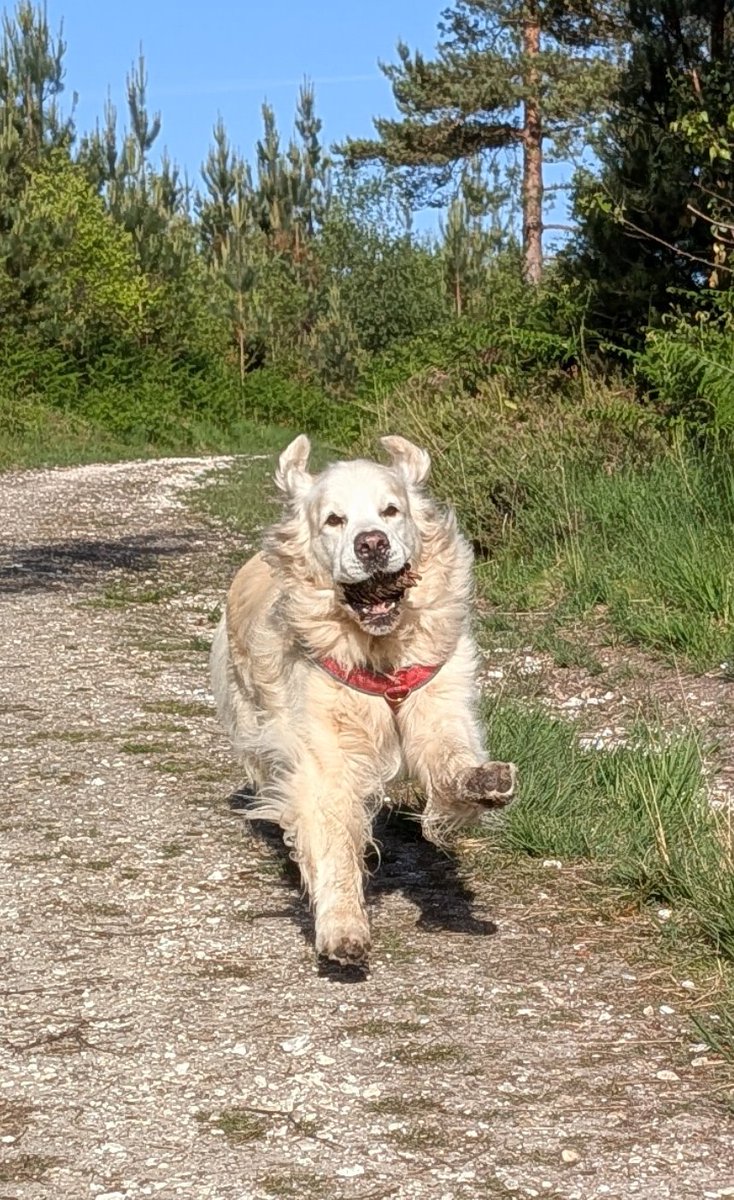
Another early walkies this morning, hoping to keep the boys cool, so they went nuts.
Well at least I tried.
English
Sally Newman retweetledi
Friends, we're ok
I'm in the office
I passed Lukianivska metro station on my way here
This area looked worse and worse after every attack
But this time it's something awful
The opposite side of the street doesn't look any better
I'll take pics on my way home
Our office is fine


English
Sally Newman retweetledi
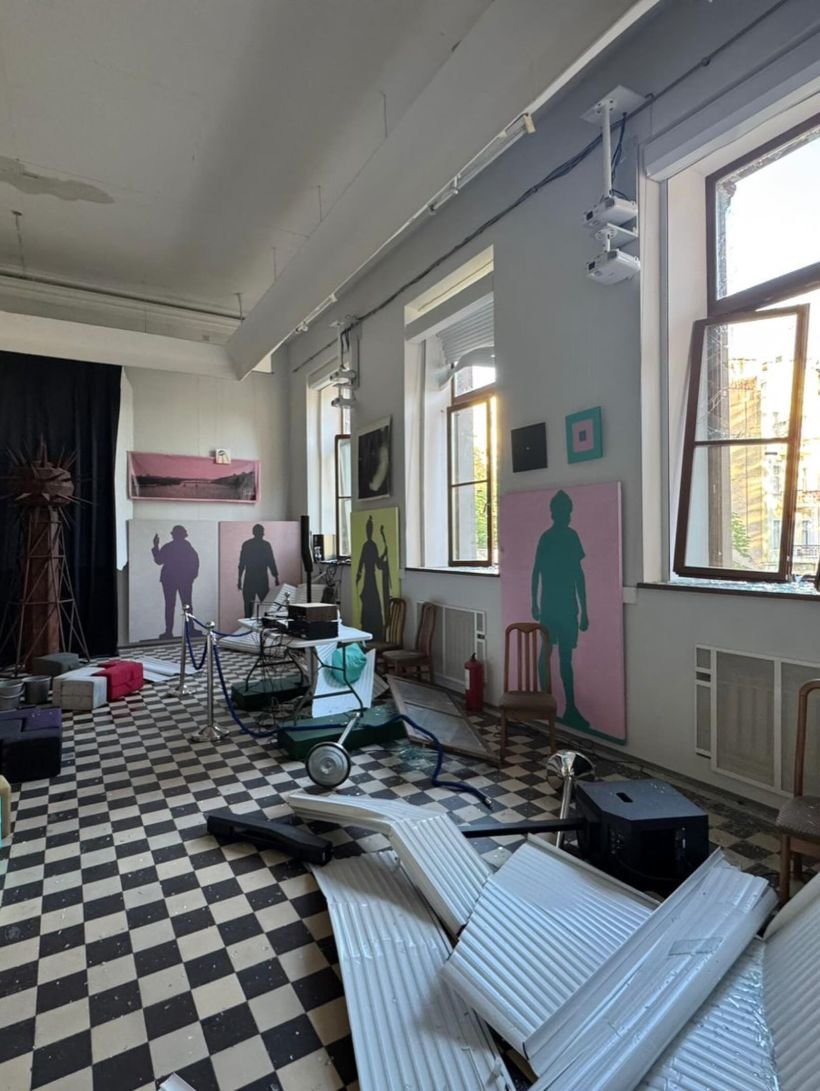
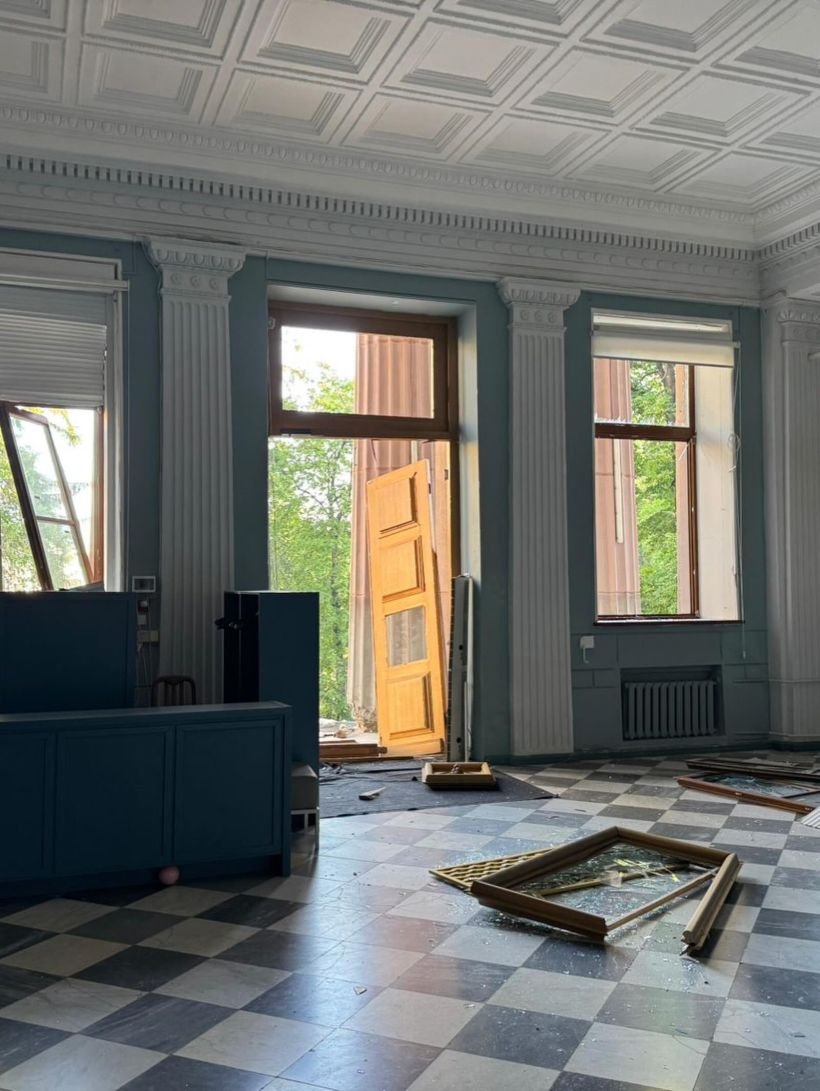
Ukraine’s Ministry of Foreign Affairs condemned russia’s massive missile and drone attack on Kyiv during the night of May 24 and called on UNESCO to strengthen mechanisms for protecting Ukrainian cultural heritage and increase pressure on russia
The statement emphasized that the attack targeted the historical and cultural center of the capital
Among the damaged institutions are the National Art Museum of Ukraine, the National Philharmonic of Ukraine, the National Music Academy of Ukraine, the Ukrainian House National Center, the Yaroslav Mudryi National Library of Ukraine, and the Kyiv Opera
The Chornobyl National Museum was also damaged
The ministry stressed that this happened just one month after the museum had been modernized ahead of the 40th anniversary of the Chornobyl disaster


English
Sally Newman retweetledi
Sally Newman retweetledi
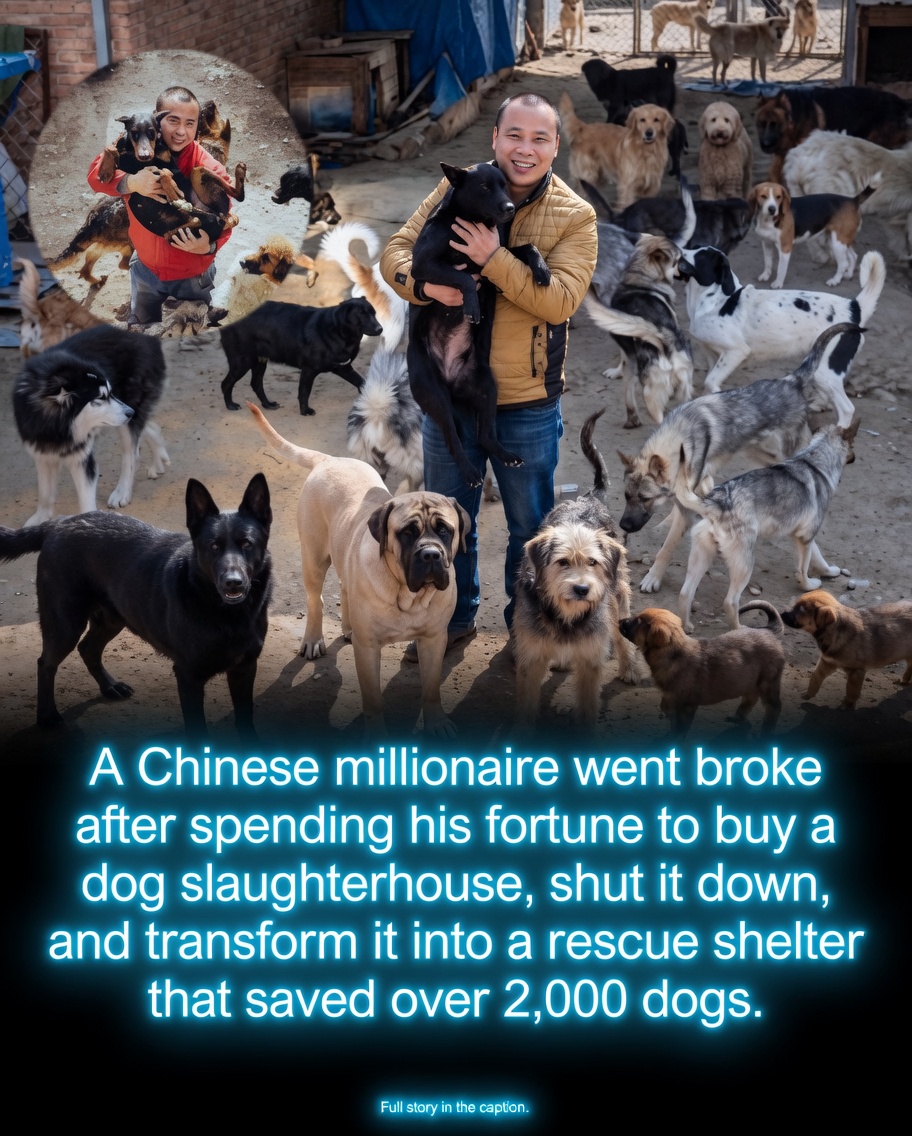
After losing his beloved dog in 2012, Wang Yan, a wealthy steel manufacturer from Helong in northeast China, began searching for his missing pet. His search led him to a dog slaughterhouse, where he was deeply disturbed by the horrific conditions he witnessed.
Instead of walking away, Wang made a life-changing decision. He used his personal fortune — approximately 3 million yuan (around $470,000 USD) — to purchase the slaughterhouse outright. He immediately shut down the operation and transformed the facility into a rescue shelter for dogs.
Over the following years, Wang devoted his entire wealth to caring for more than 2,000 rescued dogs. He refused monetary donations, asking instead for food and supplies to support the animals. His selfless act gained international admiration, though it ultimately left him financially depleted.
Wang Yan’s story stands as a powerful example of compassion and sacrifice, turning a place of suffering into a sanctuary of hope for thousands of dogs.
English
Sally Newman retweetledi
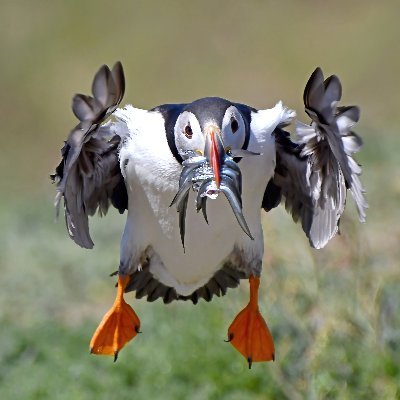
Thrilled to get a clear photo of a Garden Warbler yesterday, complete with its Damselfy lunch! 😀
Garden Warblers are elusive, and ironically, are rarely found in gardens. Like most Warblers, they're difficult to see! 😁
I took this photo at RSPB Ham Wall in Somerset. 😊🐦

English
Sally Newman retweetledi

So yesterday Donald Trump posted a video of him crashing Stephen Colbert's final show, and literally throwing him in the garbage, and of course, I had to FIX it.
English

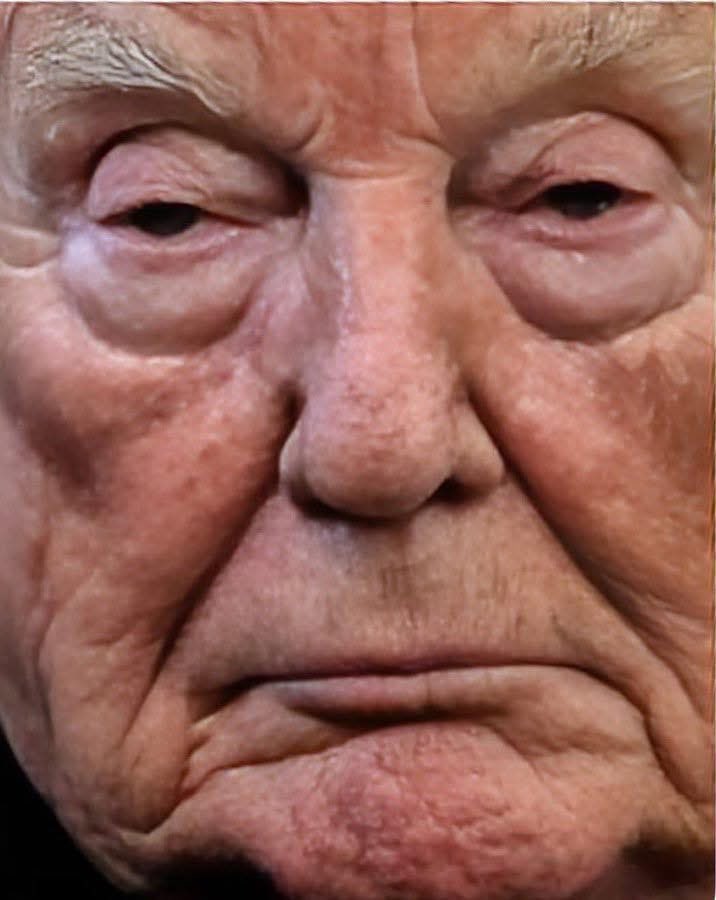
What are your first thoughts when you see this photo of Trump taken earlier today?
English

Sally Newman retweetledi
Instead of hiding his daughter with Down syndrome, Charles de Gaulle raised her proudly and she became the heart of his life....
When Charles de Gaulle died in 1970, he made a quiet request that surprised many. He did not want a grand state funeral in Paris. He asked to be buried in the small village of Colombey les Deux Églises, beside his daughter Anne. For him, that resting place mattered more than any monument.
Anne was born on New Year’s Day in 1928, youngest of three children. She had Down syndrome, a condition surrounded by fear and misinformation at the time. Doctors and society often blamed parents and urged families to hide children like her from public view. For families of power and status, sending such children away was considered normal. Charles and his wife Yvonne refused. They raised Anne at home with her brother Philippe and sister Élisabeth. There was no secrecy, no shame, no separation. She was simply their daughter.
To the world, de Gaulle was distant and unyielding. A leader shaped by war, discipline, and command. But inside his home, Anne revealed a side few ever saw. With her, he laughed freely. He sang songs, told stories, and played games. Friends noticed that the man who rarely showed emotion softened completely in her presence. He called her my joy. Anne asked nothing of him except love, and in that simplicity, he found peace. She was never treated as fragile or inferior. She was respected fully, included always, and loved without condition.
That love did not end within the family. After the war, Charles and Yvonne founded the Fondation Anne de Gaulle. They turned a château into a home for young women with intellectual disabilities, many of whom had been abandoned. At a time when support barely existed, they chose action over silence.
Anne’s life was short. She died of pneumonia in 1948, just after turning twenty, in her father’s arms. In his grief, de Gaulle whispered that now she was like the others, finally free from the limits the world had placed on her.
After her death, he carried her photograph everywhere. He believed her presence protected him, even during an assassination attempt years later. Whether faith or fate, he never doubted her importance in his life.
Charles de Gaulle found his deepest calm not in leadership or victory, but in loving a child the world did not understand. His family showed that dignity is not about ability. It is about how fiercely we choose to care.
© Soul Whisper
#drthehistories

English

Are Trump supporters misinformed, ignorant or just plain stupid?

English