Marco Pouget

907 posts

Marco Pouget banner
Marco Pouget

Marco Pouget

@make_boluo_

Sinologist at FAU Erlangen-Nürnberg and LMU Munich, interested in premodern Chinese (intellectual) history and written culture.

Katılım Mart 2024
212 Takip Edilen259 Takipçiler
Marco Pouget
Marco Pouget@make_boluo_·
@CiaoCiaota My seal will have to change its shape. Maybe a little horse (my Chinese name is 馬).
English
1
0
2
53
Markus Samuel Haselbeck
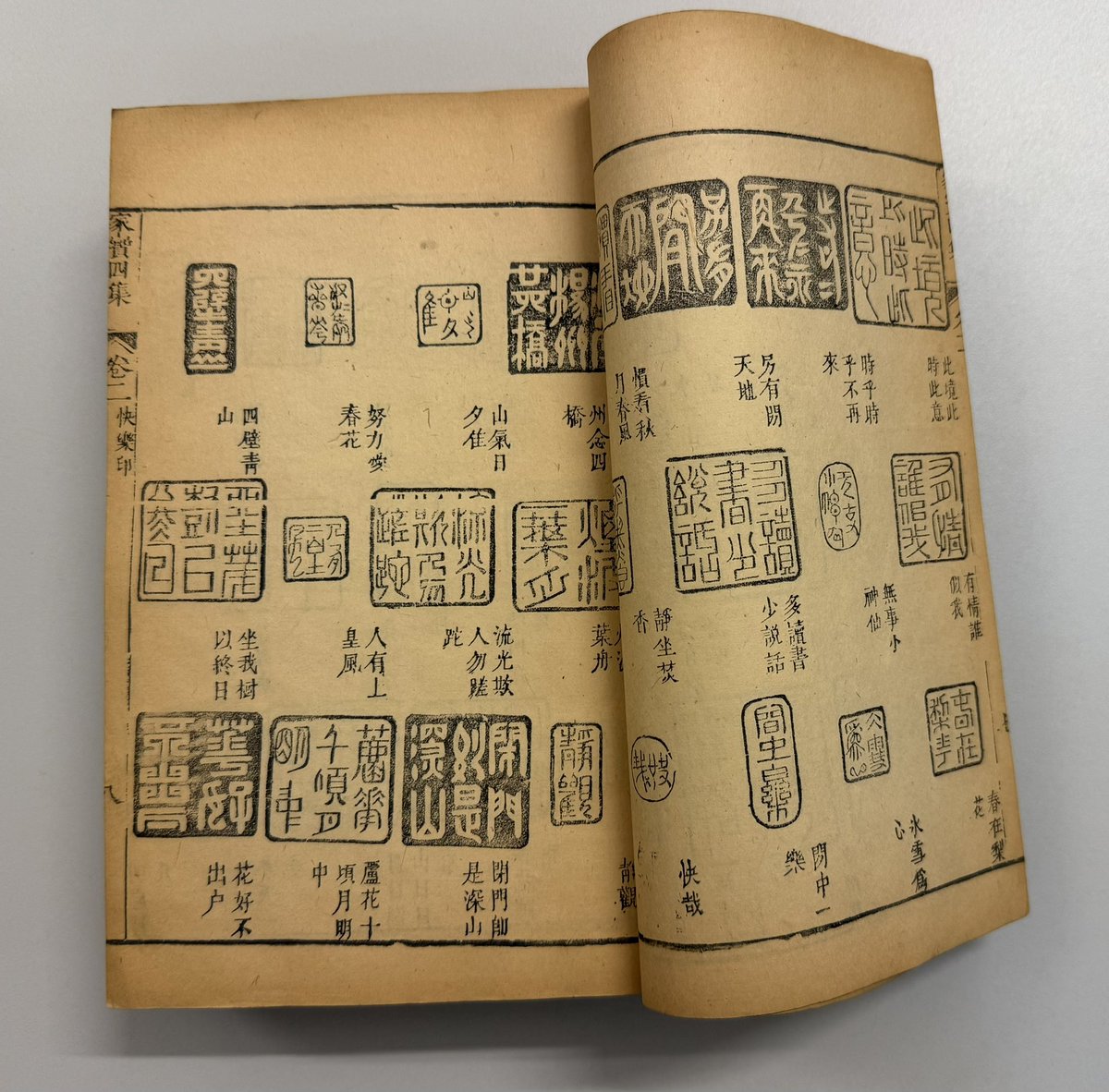
Let me share some pages from the 傳家寶書 that depict seals. I love the variety of scripts, shapes, sizes, and character placements used here. The one that looks like a jug of alcohol is definitely my favorite! Which one do you like the most? #ChinaBooks #Sinology
Markus Samuel Haselbeck tweet mediaMarkus Samuel Haselbeck tweet mediaMarkus Samuel Haselbeck tweet media
Markus Samuel Haselbeck@CiaoCiaota

The popular scientific encyclopedia 傳家寶書 (or 傳家寶全集), written by 石成金, contains many beautiful illustrations! In addition to depictions of seal stamps and scholarly objects, I especially like the pictures that accompany these poems. #ChinaBooks #Sinology #ChinesePoetry

English
4
16
76
6K
Marco Pouget
Marco Pouget@make_boluo_·
@julianorobertrj Yes, there are translations of other texts, but do you think they reach a non-specialist circle to a comparable extent? Besides, there is a clear discrepancy in numbers, wouldn't you agree? (With the exception of the Lunyu, there are typically at most a handful).
English
1
0
1
44
Robert E. Juliano
Robert E. Juliano@julianorobertrj·
@make_boluo_ Perhaps because you are unaware of the careful and rigorous published scholarly works on and translations of the Zhou Yi 周易 Zhou Changes, the Yijing 易經 Classic of Changes, the Zhuangzi 莊子, Lunyu 論語 (Analects of Confucius), etc.
English
1
0
1
189
Marco Pouget
Marco Pouget@make_boluo_·
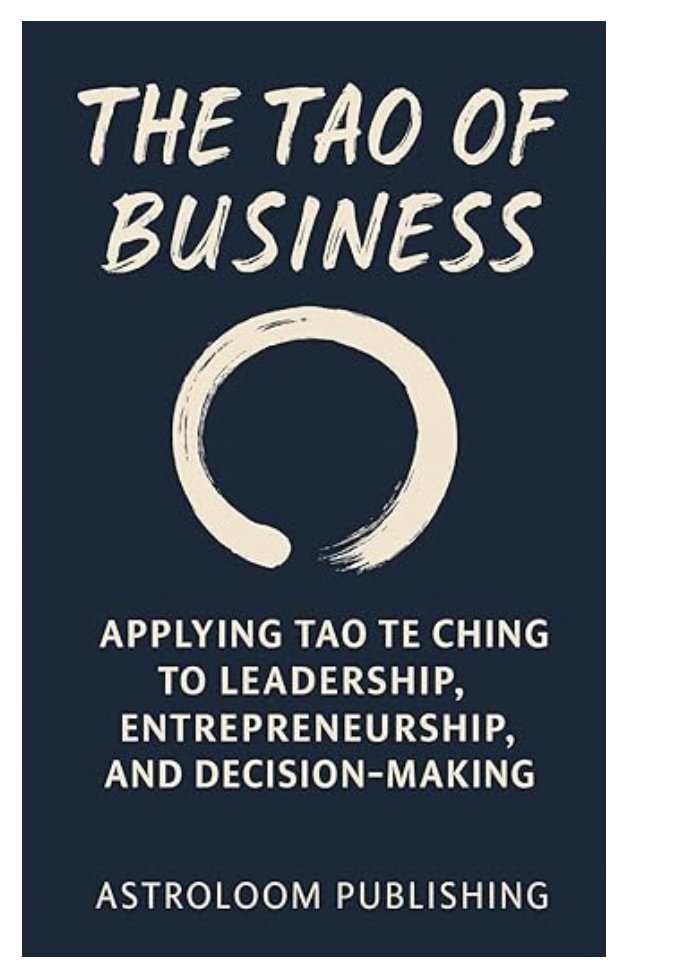
No disrespect to the author or press, and the Daodejing is obviously of monumental importance. But how come this seems to be the only text people care about? I happen to know there are other interesting and important Chinese texts worth translating, too. Genuinely curious.
Yale University Press@yalepress

In this new translation of the TAO TE CHING, David Bentley Hart reveals the metaphysical, moral, and poetic depth of Laozi’s classic. Born of the Axial Age, it explores the tension between flesh and spirit, renewed here with striking clarity and relevance.

English
14
4
108
11.8K
Marco Pouget
Marco Pouget@make_boluo_·
@Solzi_Sez I find the language of the Daodejing more enticing than its contents, personally (maybe my interpretations merely reflect my close-mindedness).
English
1
0
2
187
Sol 솔
Sol 솔@Solzi_Sez·
On the upside, the endless versions of the Daodejing, which infuriatingly say irreconcilable things, was the impetus that drove me to learn Classical Chinese. The funny thing is that once I could read it, I lost interest. Pretty basic and not THAT interesting.
Marco Pouget@make_boluo_

No disrespect to the author or press, and the Daodejing is obviously of monumental importance. But how come this seems to be the only text people care about? I happen to know there are other interesting and important Chinese texts worth translating, too. Genuinely curious.

English
5
1
36
3.5K
NeiJingLover
NeiJingLover@NeiJingLover·
@Solzi_Sez @make_boluo_ @Ryan_Weller The DDJ is written like tweets w great hooks. The 1st line of each DDJ ch seems understandable - way easier to grasp right off the bat than fish turning into birds or cicadas & frogs. Or Yao…who’s that? :) You need a lot of cultural context to participate in the Zhuangzi imo.
English
2
0
4
62
Sol 솔
Sol 솔@Solzi_Sez·
@make_boluo_ @Ryan_Weller Good question. I have tried with people I know who never move past the Daodejing to introduce them sideways into Zhuangzi, but they have no interest. I kinda feel like I know why, but can’t quite vocalize it.
English
1
0
4
60
Marco Pouget
Marco Pouget@make_boluo_·
@Solzi_Sez Following that logic, one would imagine that an exoticising and/or fetishising rendition of Jinpingmei or an orientalist reimagining of Xiyouji would sell very well, right? (Not to say that this is akin to present Daodejing translations, just comparing).
English
2
0
5
203
Sol 솔
Sol 솔@Solzi_Sez·
@make_boluo_ Positive: Because of 1960’s new age mysticism, combined with general Western esotericism, and further combined with “being creative” and making your own [new age esoteric] version. Negative: Because all other Chinese philosophy is practical and concrete, which turns them off.
English
1
0
11
255
Marco Pouget
Marco Pouget@make_boluo_·
@MichaelMjfm (A hyper-focus on one text can, of course, be negative, e.g. in that it essentialises a culture and is at the detriment of other noteworthy texts.)
English
0
0
2
75
Marco Pouget
Marco Pouget@make_boluo_·
@MichaelMjfm I did not say it shouldn't exist or that there is a problem (though some have argued that). I am curious as to why it is this particular text over all others that is so popular. This is not the first or only translation of the Daodejing, there really is a record number.
English
2
0
3
224
🪭🪼🖤
🪭🪼🖤@grapefruitism·
@make_boluo_ It's like asking why The Odyssey is the only ancient greek 'text' we care about. It's not, it's just very important and so we revisit it often!
English
2
0
2
161
Peter Wang
Peter Wang@PeterWang873584·
@make_boluo_ @edwardW2 Because contemporary Western culture gets the ick whenever anything Confucian or rather, not woo woo Buddhist Taoist magical go with the vibes, comes into its field of view.
English
1
0
4
276
Marco Pouget
Marco Pouget@make_boluo_·
@Ryan_Weller Yes, but why do people buy this one over all the others? Why not e.g. the Zhuangzi (which is all the rage within Chinese Philosophy)?
English
1
0
3
126
Straw Man
Straw Man@Ryan_Weller·
@make_boluo_ 1) It's short. 2) It's open to different interpretations. 3) Non-specialists will buy it.
English
1
0
9
312
Yun Xie
Yun Xie@Yun__Xie·
“preferably in that order” Found a funny footnote in a Sinology paper: “The notion of transcriptional variety even took root in sinological folklore, as the unwritten rites de passage of early European sinology were said to include marrying a Chinese partner, conceiving..
Yun Xie tweet media
English
3
16
208
10.7K
Marco Pouget retweetledi
Wolfgang Behr / 畢鶚 (氒/厥/攸)
Jobs: Early‑career researcher for the PNRR project LIVEDIE – "Living and Dying in the Tarim Basin". Experience with early Chinese documentary sources and solid competence in Classical Chinese are essential (apply by June 3): tinyurl.com/3bb8z7rd
English
0
2
3
233
Marco Pouget retweetledi
Petruchio
Petruchio@petruch10·
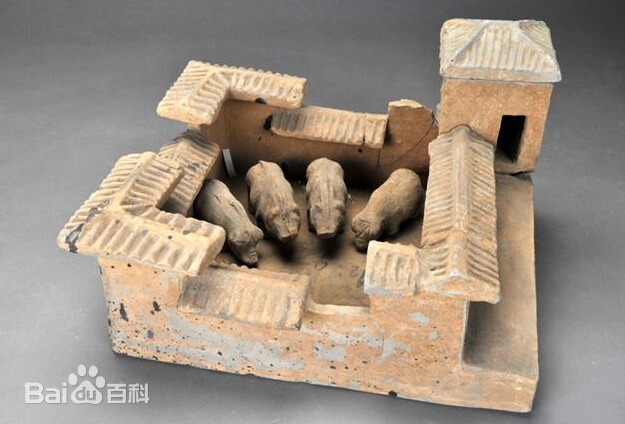
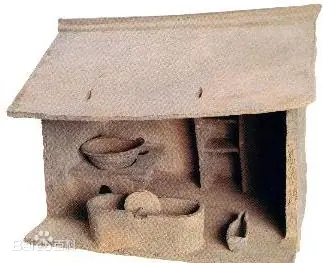
The Han Chinese buried their dead with miniature toilets that drained into miniature pigsties. The pigs ate the waste and then became fertilizer. The dead got the full agricultural cycle in ceramic, tucked into the tomb beside them. The objects are called 明器 (míngqì), spirit goods, and they were made specifically for burial. Real-world Han households kept the latrine built directly above the pigsty, a tight loop of human waste feeding pigs and pig manure feeding fields. When someone died, the family commissioned ceramic versions of the whole setup. Cooking stoves, granaries, wells, courtyards with little watchtowers, and yes, even the pigsty latrine. The logic is that the dead still need to food, shelter, and a working household economy in the underworld. A spirit tablet (which I talked about earlier) gives the ancestor a seat in the family home above ground. The míngqì give him his own functioning estate below. You can't skimp on this stuff because otherwise you send your father to The Beyond without a functioning kitchen.
Petruchio tweet mediaPetruchio tweet media
English
3
31
247
14.1K
Marco Pouget
Marco Pouget@make_boluo_·
@CiaoCiaota Constance Cook, Matters of the Heart in Early Chinese Manuscripts (2025) for a medical viewpoint.
English
0
0
1
44
Marco Pouget
Marco Pouget@make_boluo_·
@CiaoCiaota I mean, I am not aware of any specific research on the heart in chinese culture except for Harbsmeier and Bottéro, so why not...
English
1
0
1
26
Markus Samuel Haselbeck
Markus Samuel Haselbeck@CiaoCiaota·
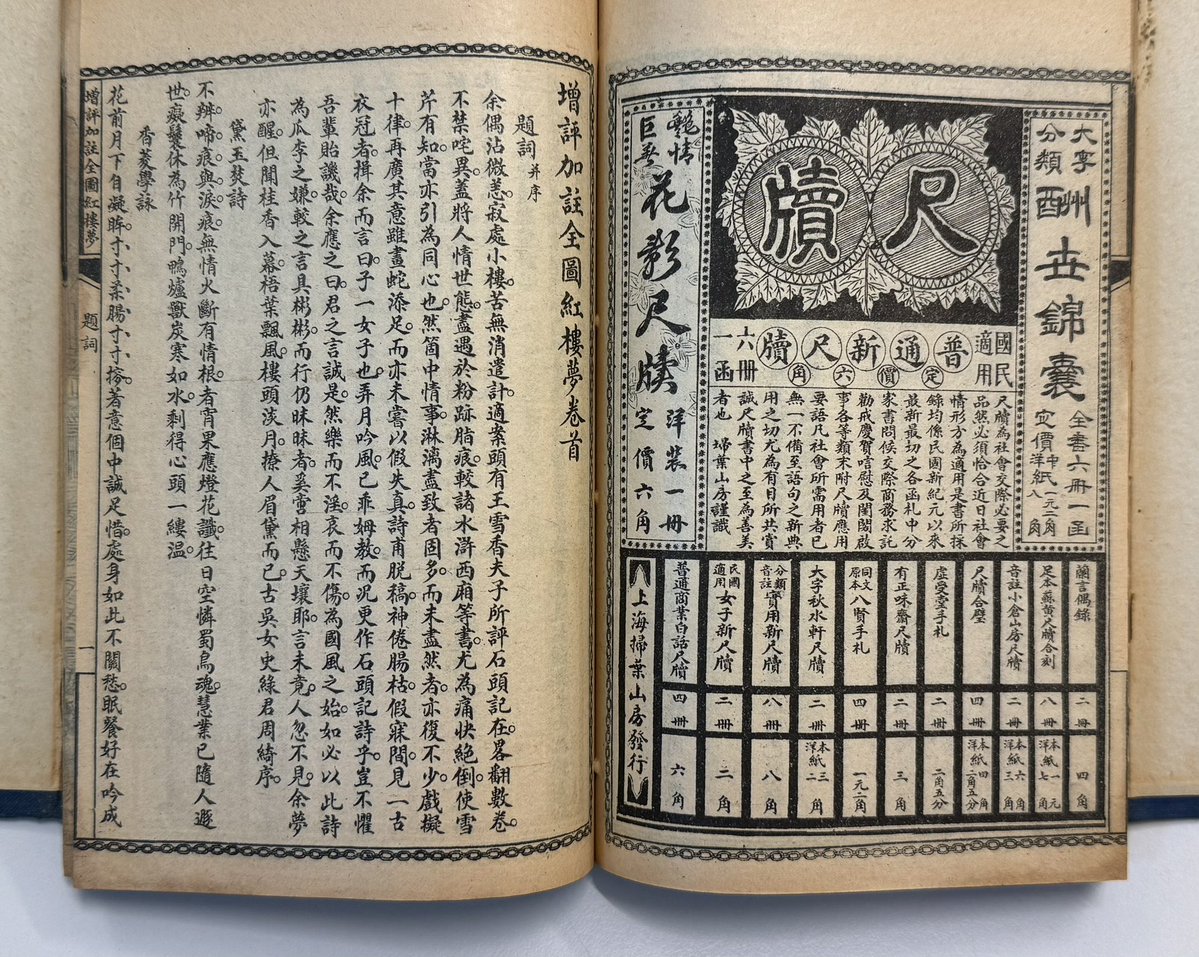
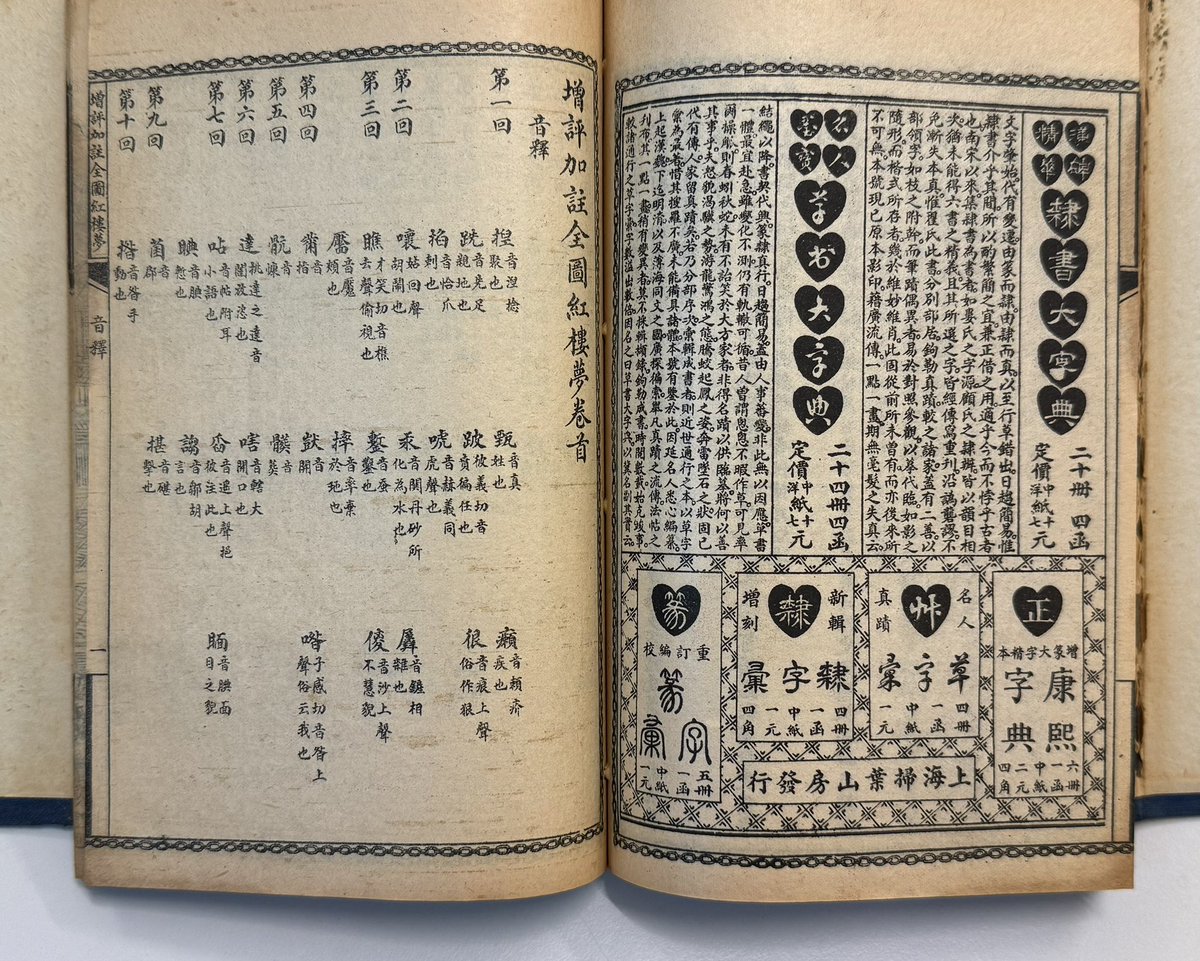
I enjoy publishers’ ad designs in #RepublicanChina books, at the front/end of volumes or the casing. But this ad in the mid of a prefatory volume (首卷) is a first—a 1925 掃葉山房 print of 紅樓夢. And they must love dictionaries judging from all the hearts! #ChinaBooks #Sinology
Markus Samuel Haselbeck tweet mediaMarkus Samuel Haselbeck tweet media
English
3
13
58
5.9K