Matěj Myška

2.4K posts

Matěj Myška banner
Matěj Myška

Matěj Myška

@matejmyska

pic: Jiří Kropáč header: https://t.co/WtYglf4SgL…

Katılım Mart 2013
566 Takip Edilen811 Takipçiler
Matěj Myška retweetledi
Luiza Jarovsky, PhD
Luiza Jarovsky, PhD@LuizaJarovsky·
🚨BREAKING: Singapore releases the report "Model Al Governance Framework for Generative Al - Fostering a Trusted Ecosystem," and it's a must-read for everyone interested in AI policy & regulation. Important information: ➡️The report outlines 9 dimensions to "create a trusted environment – one that enables end-users to use Generative AI confidently and safely, while allowing space for cutting-edge innovation." These are the 9 dimensions: ➵ Accountability ➵ Data ➵ Trusted Development and Deployment ➵ Incident Reporting ➵ Testing and Assurance ➵ Security ➵ Content Provenance ➵ Safety and Alignment R&D ➵ AI for Public Good ➡️Interesting quotes: "Responsibility can be allocated based on the level of control that each stakeholder has in the generative AI development chain, so that the able party takes necessary action to protect end-users. As a reference, while there may be various stakeholders in the development chain, the cloud industry7 has built and codified comprehensive shared responsibility models over time. The objective is to ensure overall security of the cloud environment. These models allocate responsibility by explaining the controls and measures that cloud service providers (who provide the base infrastructure layer) and their customers (who host applications on the layer above)respectively undertake." (page 7) - "There is, therefore, a need to work with key parties in the content life cycle, such as working with publishers to support the embedding and display of digital watermarks and provenance details. As most digital content is consumed through social media platforms, browsers, or media outlets, publishers’ support is critical to provide end users with the ability to verify content authenticity across various channels. There is also a need to ensure proper and secure implementation to circumvent bad actors trying to exploit it in any way." (page 25) - "Industry, governments, and educational institutions can work together to redesign jobs and provide upskilling opportunities for workers. As organisations adopt enterprise generative AI solutions, they can also develop dedicated training programmes for their employees. This will enable them to navigate the transitions in their jobs and enjoy the benefits which result from job transformations" (page 30) ➡️Read the full report below. ➡️To stay up to date with the latest developments in AI policy & regulation, subscribe to my newsletter (link below).
Luiza Jarovsky, PhD tweet media
English
17
338
962
165.2K
Matěj Myška retweetledi
Andres Guadamuz
Andres Guadamuz@technollama·
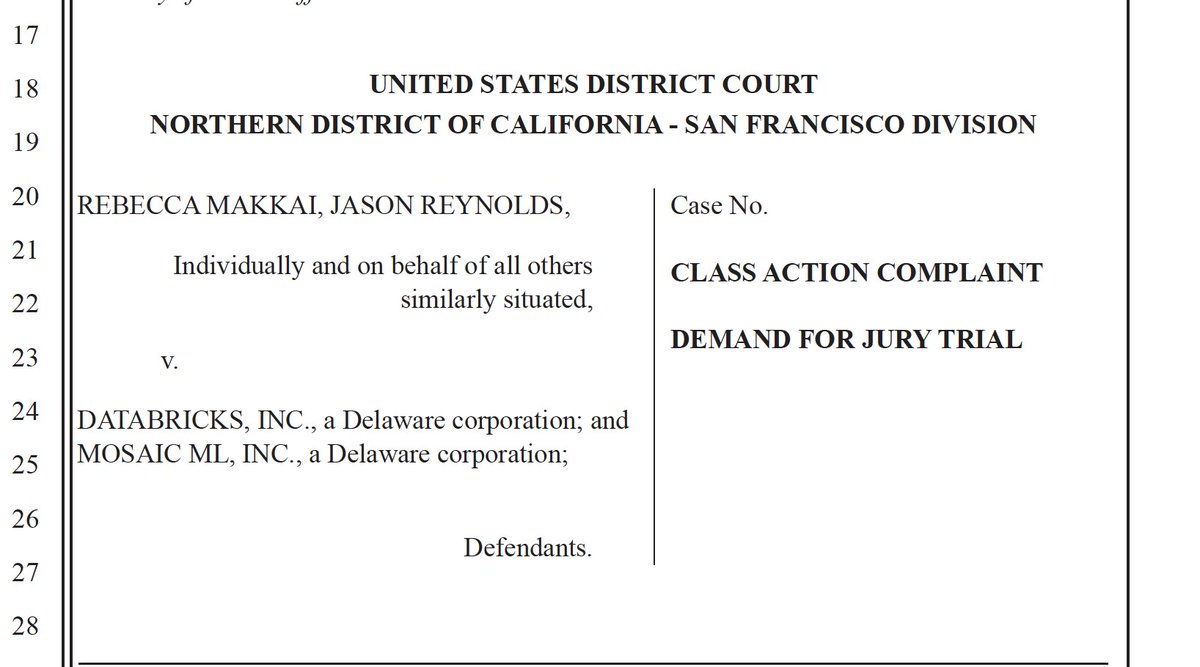
Another day, another generative AI lawsuit, this time against Nvidia and Databricks, who are being sued by writers who are in Books 3. Both Megatron and MosaicML models were trained using the Pile, which contains that dataset. Nvidia complaint: drive.google.com/file/d/1GnHT5l…
Andres Guadamuz tweet media
English
2
16
37
4.1K
Matěj Myška retweetledi
Luiza Jarovsky, PhD
Luiza Jarovsky, PhD@LuizaJarovsky·
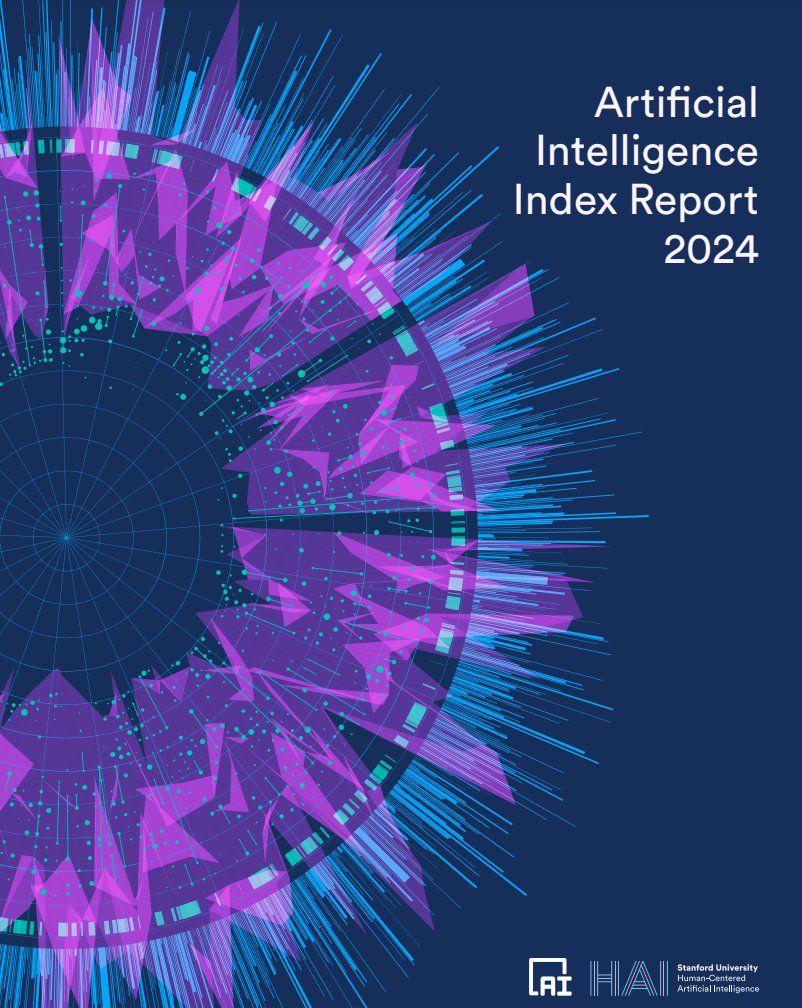
🚨BREAKING: The @Stanford Institute for Human-Centered AI publishes its Artificial Intelligence Index Report 2024, one of the most authoritative sources for data and insights on AI. Below are its top 10 takeaways: 1. AI beats humans on some tasks, but not on all; 2. Industry continues to dominate frontier AI research; 3. Frontier models get way more expensive; 4. The United States leads China, the EU, and the U.K. as the leading source of top AI models; 5. Robust and standardized evaluations for LLM responsibility are seriously lacking; 6. Generative AI investment skyrockets; 7. The data is in: AI makes workers more productive and leads to higher quality work; 8. Scientific progress accelerates even further, thanks to AI; 9. The number of AI regulations in the United States sharply increases; 10. People across the globe are more cognizant of AI’s potential impact—and more nervous. ➡️Read the @StanfordHAI report below. ➡️For more information on AI policy & regulation, subscribe to my newsletter (link in bio).
Luiza Jarovsky, PhD tweet media
English
18
685
1.8K
230K
Matěj Myška retweetledi
Luiza Jarovsky, PhD
Luiza Jarovsky, PhD@LuizaJarovsky·
🚨EXCELLENT AI PAPER ALERT: "Theory Is All You Need: AI, Human Cognition, and Decision Making" by @teppofelin & Matthias Holweg is all you need to read about AI today. Quotes: "The differences between human and machine learning—when it comes to language (as well as other domains)—are stark. While LLMs are introduced to and trained with trillions of words of text, human language “training” happens at a much slower rate. To illustrate, a human infant or child hears—from parents, teachers, siblings, friends and their surroundings—an average of roughly 20,000 words a day (e.g., Gilkerson et al., 2017; Hart and Risley, 2003). So, in its first five years a child might be exposed to—or “trained” with—some 36.5 million words. By comparison, LLMs are trained with trillions of tokens within a short time interval of weeks or months. The inputs differ radically in terms of quantity (sheer amount), but also in terms of their quality."  (pages 12-13) - "But can an LLM—or any prediction-oriented cognitive AI—truly generate some form of new knowledge? We do not believe they can. One way to think about this is that an LLM could be said to have “Wiki-level knowledge” on varied topics in the sense that these forms of AI can summarize, represent, and mirror the words (and associated ideas) it has encountered in myriad different and new ways. On any given topic (if sufficiently represented in the training data), an LLM can generate indefinite numbers of coherent, fluent, and well-written Wikipedia articles. But just as a subject-matter expert is unlikely to learn anything new about their specialty from a Wikipedia article within their domain, so an LLM is highly unlikely to somehow bootstrap knowledge beyond the combinatorial possibilities of the data and word associations it has encountered in the past." (page 16) - "AI is anchored on data-driven prediction. We argue that AI’s data and prediction-orientation is an incomplete view of human cognition. While we grant that there are some parallels between AI and human cognition—as a (broad) form of information processing—we focus on key differences. We specifically emphasize the forward-looking nature of human cognition and how theory-based causal logic enables humans to intervene in the world, to engage in directed experimentation, and to problem solve." (page 37) Link to read the paper below.
Luiza Jarovsky, PhD tweet media
English
28
257
1K
152.8K
Matěj Myška retweetledi
Luiza Jarovsky, PhD
Luiza Jarovsky, PhD@LuizaJarovsky·
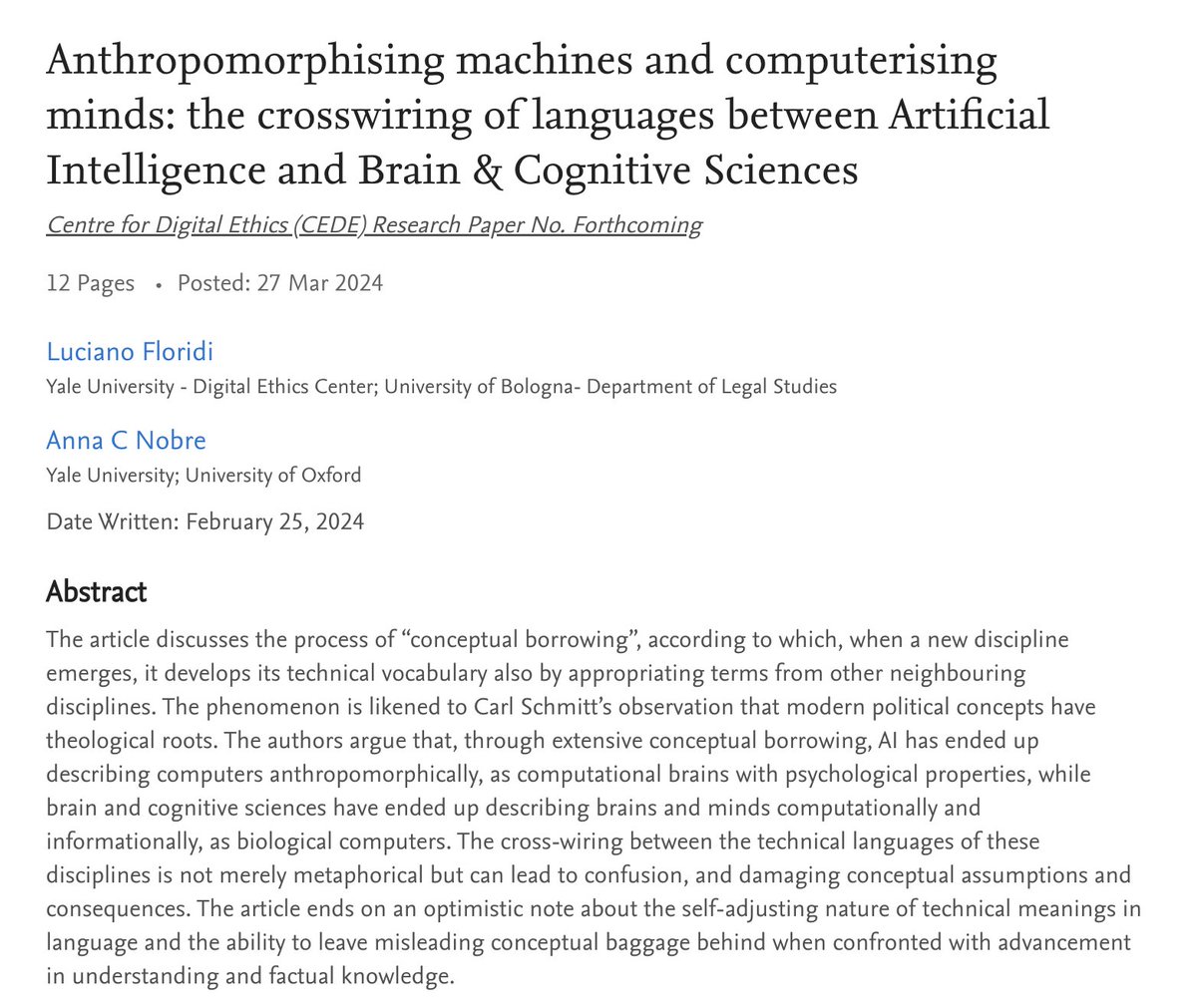
🚨FASCINATING AI PAPER ALERT: "Anthropomorphising machines and computerising minds: the crosswiring of languages between Artificial Intelligence and Brain & Cognitive Sciences" by @Floridi & @KiaNobre. Interesting quotes: "AI scientists speak of 'machine learning,' for example. The term was coined (or perhaps popularised, the debate seems open) by Arthur Samuel in 1959 to refer to 'the development and study of statistical algorithms that can learn from data and generalize to new data, and thus perform tasks without explicit instructions.' But this 'learning' does not mean what brain and cognitive scientists mean by the same term when referring to how humans or animals acquire new behaviours or mental contents, or modify existing ones, as a result of experiences in the environment." (page 2) - "The phenomenon of AI’s conceptual borrowing from BCS (brain and cognitive sciences) has been growing since the work of Alan Turing (Turing 1950), who influentially drew parallels to human intelligence and behaviour to conceptualise how machines might eventually mimic some aspects of biological cognition. But, perhaps the most problematic borrowing came with the generation of the label of the field itself: 'Artificial Intelligence.' John McCarthy was responsible for the brilliant, if misleading, idea. It was a marketing move, and, as he recounted, things could have gone differently" (page 5) - "What can be done to tackle this conceptual mess? Probably nothing in terms of linguistic reform. Languages, including technical ones, are like immense social currents: nobody can swim against them successfully, and they cannot be contained or directed by fiat. AI and BCS will keep using their terms, no matter how misleading they may be, how many resources they will make one waste, and how much damage they may cause in the wrong hands or contexts." (page 10) ➡️ The paper is an excellent exploration of the intersection between AI, philosophy, and human cognitive neuroscience. Link below.
Luiza Jarovsky, PhD tweet media
English
4
59
173
14.4K
Matěj Myška retweetledi
Tim Christiaens
Tim Christiaens@TimChristiaens5·
Just finished reading this article on coloniality and the production and maintenance of AI by @james_muldoon_ and Boxi Wu in Philosophy & Technology. Excellent piece for anyone interested in an overview of the post- and decolonial critiques of AI. link.springer.com/article/10.100…
English
3
25
75
7.9K
Matěj Myška retweetledi
Luiza Jarovsky, PhD
Luiza Jarovsky, PhD@LuizaJarovsky·
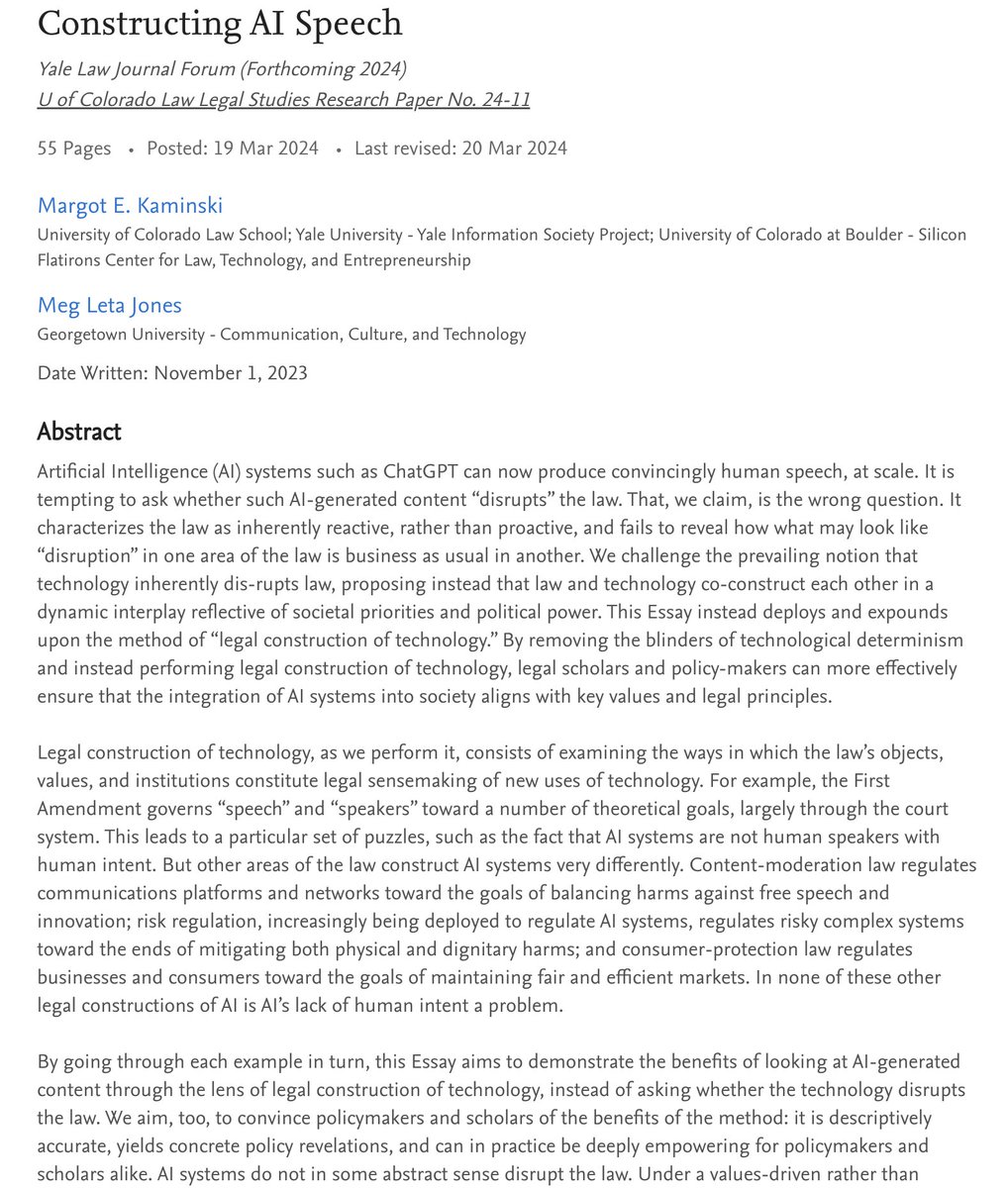
🚨FASCINATING AI PAPER ALERT: @MargotKaminski & Meg Leta Jones have recently published "Constructing AI Speech" and you can't miss it. Interesting quotes below: "(...) First Amendment doctrine constrains defamation law such that to show defamation of a public figure, one must show not just that speech is false but that a speaker has actual malice—that is, knowledge of or reckless disregard for the falsity of its assertions. What does it mean to show that an AI speaker—or more probably its developer or user—has knowledge of, or has shown reckless disregard for falsity? This analysis is further complicated by the fact that AI systems are not individual speakers at all but are complex human-machine systems developed using complex supply chains" (page 25) - "For the most part, then, speech-at-scale construction will treat AI-generated content just as it treats human-generated content, as a problem of content at scale, solved by systems aiming toward efficient fairness. Perhaps policymakers will intervene in any number of ways: to require that AI-generated content be identified as such, or to recalibrate notice-and-takedown policies to adapt to faster content generation by AI systems. But these changes are neither inevitable nor required by the development of AI technology. The law may adapt, but once again, it does not break." (page 35) - "The law makes meaning of the social uses of technology—it constructs them. That’s not to say that’s all the law does. Law is construction with consequences. It conducts sensemaking through language, through institutions, through policy tools, and through motivating theories. Legal actors are not passive, even when they fail to enact new law. They have substantial agency in how AI is and will be legally constructed. A technological-exceptionalist approach to technology law can inaccurately characterize technology policymakers as unduly incapacitated and reactive. At the same time, technological exceptionalism can afford technology-law scholars and policymakers a degree of exceptionalism that detracts from what they can learn and sometimes transplant from practices across a wide array of other areas of law." (pages 54-55). It's an extremely innovative and deep discussion at a time when we are still struggling to tackle emerging AI-related challenges. It also makes me optimistic that scholars, lawmakers, policymakers, advocates and so on - we are all building the future of technology together. Link to the full paper below.
Luiza Jarovsky, PhD tweet media
English
3
18
78
7.8K
Matěj Myška retweetledi
Jeremias Adams-Prassl
Jeremias Adams-Prassl@JeremiasPrassl·
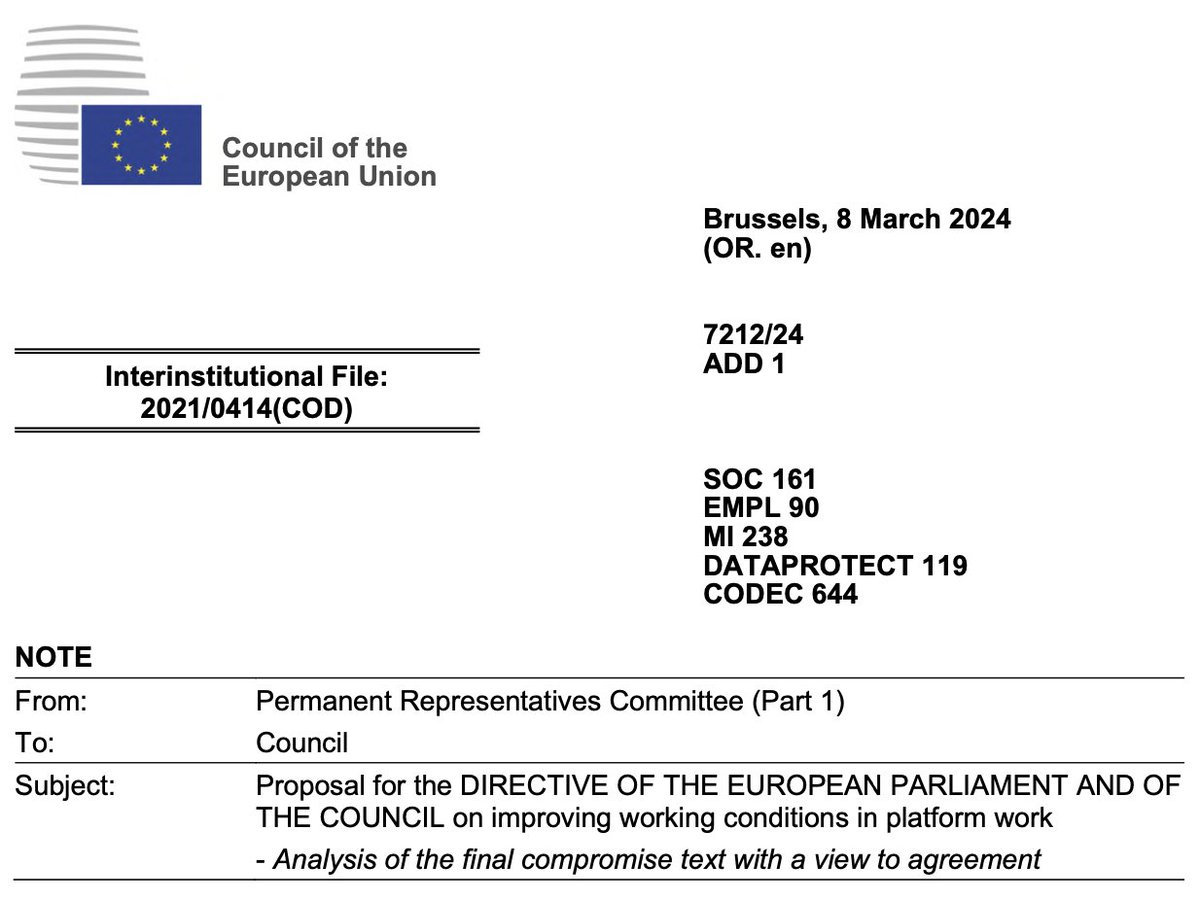
📢BREAKING NEWS - The Platform Work Directive has been agreed! This is great for #gigeconomy workers and platforms alike: MS will introduce presumptions of employment, and most importantly - it's the world's first comprehensive set of rules on #algorithmic #management! 🎉
Jeremias Adams-Prassl tweet media
English
6
87
191
83.6K
Matěj Myška retweetledi
Andres Guadamuz
Andres Guadamuz@technollama·
Very interesting report from Michaela MacDonald, Gaetano Dimita, et al. "IP and Metaverse(s)". gov.uk/government/pub…
English
0
3
14
975
Matěj Myška retweetledi
Andres Guadamuz
Andres Guadamuz@technollama·
A defence has been filed in the Getty Images v Stability AI case in the High Court of England and Wales. The defence is complex and merits a blog post, but here are a few highlights. drive.google.com/file/d/1HIS9jM…
Andres Guadamuz tweet media
English
4
56
101
24.1K
Matěj Myška
Matěj Myška@matejmyska·
@BohdanWidla But alas! "Quietly" as perceived by the Retrievers or humans? Who is the "receptive customer" (C-135/10, para. 98)? :D
English
0
0
0
40
Matěj Myška retweetledi
Przemek Palka
Przemek Palka@PrzemekPalka·
📰new paper published🤓 Check out our data article (links in the comments) describing the annotated set of 100 terms of service of online platforms, created with @RadoslawPalosz @katwwis & Andrzej Porębski. Both the paper and the data are open access 🔓on a @creativecommons license, free for everyone to read and re-use. Why should you? 1⃣ Our data provides rich insight into the contents of the Terms of Service of online platforms operating in 16 market sectors 2⃣ It allows for comparison of contents based on several criteria, including the corporation’s jurisdiction of origin, whether the service is free, or whether the company is publicly listed 3⃣ It is suitable for many data analysis methods, such as cluster analysis, dimensionality reduction, classification, and scoring. They can be used for both research and teaching purposes 4⃣ It can be reused by social scientists attempting to understand the dynamics of the digital markets and normative scholars, like lawyers or political philosophers, attempting to create algorithms for scoring online consumer contracts 5⃣ It can also be reused by various market participants, including developers willing to market their products in a consumer-friendly way, as well as consumer organizations attempting to raise consumer awareness. The research leading to these results has received funding from the Norwegian Financial Mechanism 2014–2021, project no. 2020/37/K/HS5/02769, titled ‘Private Law of Data: Concepts, Practices, Principles & Politics.’ Thanks, 🇳🇴 @EEANorwayGrants & 🇵🇱 @NCN_PL!!! 🩷 #empiricalcontracts #consumerlaw
Przemek Palka tweet media
English
1
8
38
2.5K
Matěj Myška retweetledi
Arvind Narayanan
Arvind Narayanan@random_walker·
Will AI transform law? The hype is not supported by current evidence. The areas that would be most transformative if AI were successful are also harder for AI, and more prone to overoptimism due to evaluation pitfalls. aisnakeoil.com/p/will-ai-tran… New paper with @sayashk @PeterHndrsn
English
6
61
148
29.5K
Matěj Myška retweetledi
Nathan Baugh
Nathan Baugh@nathanbaugh27·
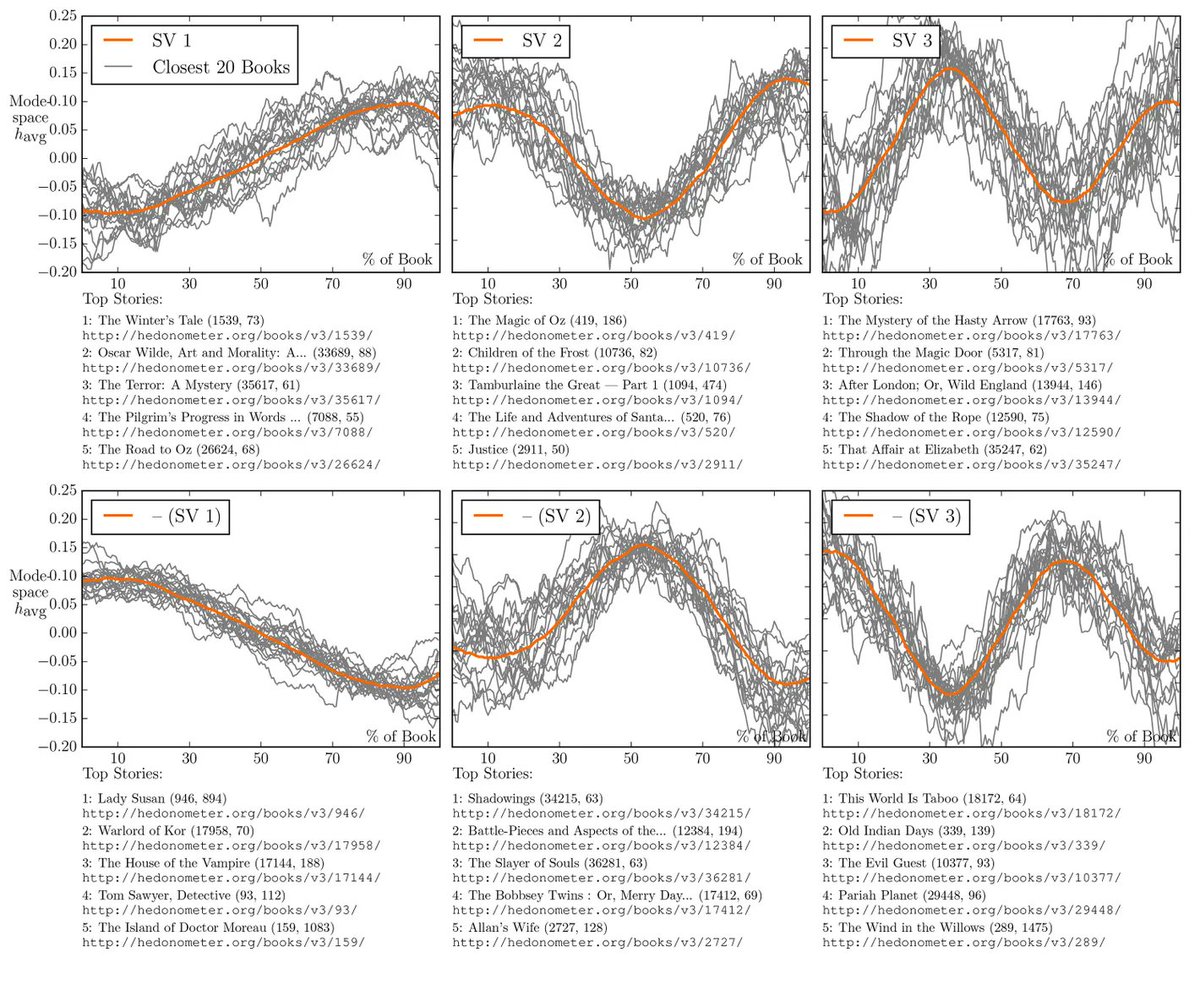
In 2016, researchers at the University of Adelaide tested Kurt Vonnegut's theory that, "There’s no reason why the simple shapes of stories can’t be fed into computers." They took the emotional arcs of 1300+ novels from Project Gutenberg, turned that into data, used modern tech to analyze the emotional arcs, and then identified 6 patterns seen over and over again in western storytelling. Here they are: 1. Rags to Riches (rise) Your classic underdog tale. A humble, hardworking peasant climbs the mountain to pull the sword from the stone. • Rocky • King Arthur • The Pursuit of Happiness 2. Riches to Rags (fall) Maybe the saddest story of them all. A journey from the highest of highs to the lowest of lows. • King Lear • Citizen Kane • Scarlet Letter 3. Man in a Hole (fall then rise) A character’s doing fine, gets herself into a huge problem, but figures out how to overcome it. They often end up better than they started. “You see this story again and again,” Vonnegut says. “People love it, and it is not copyrighted.” • The Martian • The Hunger Games • Shawshank Redemption 4. Icarus (rise then fall) The hero goes on a meteoric rise up New York (or some other) society, calls everyone “old sport,” and throws the wildest parties in town. Then reality sets in, and he realizes he’s too close to the sun. • Macbeth • Great Gatsby • Death of a Salesman 5. Cinderella (rise then fall then rise) I’ll leave this description to Vonnegut: “We’re gonna start way down here. Worse than that, who is so low? It’s a little girl… the shoe fits, and she achieves off-scale happiness.” • Red Rising • Slumdog Millionaire • The Count of Monte Cristo This is my personal favorite. 6. Oedipus (fall then rise then fall) Up until the ~70% mark of the story it looks like things are sunshine and rainbows. Walter White goes from high school teacher to king of the drug lords, if you will. Then all goes wrong. The original fall is often not their doing while the final fall is. • Hamlet • Gone Girl • Breaking Bad My 3 takeaways: 1. Rags to Riches, Oedipus, and Cinderella rank as the three most popular with consumers. AKA, those books sold the most copies. 2. When you think through a story, give it an emotional shape. Literally draw it. X axis: Time Y axis: Ill fortune to good fortune You might be surprised how much it helps you craft your plot (I was shocked). 3. Vonnegut was a damn genius.
Nathan Baugh tweet media
English
124
1.3K
6.5K
997K
Matěj Myška retweetledi
Daniel J. Solove
Daniel J. Solove@DanielSolove·
FINAL published version of my article “Data Is What Data Does: Regulating Use, Harm, and Risk Instead of Sensitive Data” ssrn.com/abstract=43221…
Daniel J. Solove tweet media
English
0
28
71
6.6K
Matěj Myška retweetledi
enricobonadio
enricobonadio@enricobonadio·
happy to share a recent paper on 'Fandom and copyright' I co-authored with Mahak Kansara and Giuseppe Martinico @martinicogi. It will be published soon in the European Intellectual Property Review (Issue 2024/4) papers.ssrn.com/sol3/papers.cf…
English
1
4
10
769