

Stefan
5.7K posts

@matics28
I wanted much; I began much; but the gale of the world carried away me and my work.


Over $20,000 already donated in just a few hours, & just in time for Make a Wish day! 🥳 All of this money is the result of a crypto token on @solana called solana:2ssMotVbTUfRJev2UnibHzHsoeszPzgwbfsTZPSHpump ✨ @MakeAWish can you challenge our community to raise more? $100,000? 🤔

@jowyang @JoshConstine I too believe that if the person is not starving that they should have no right to complain.


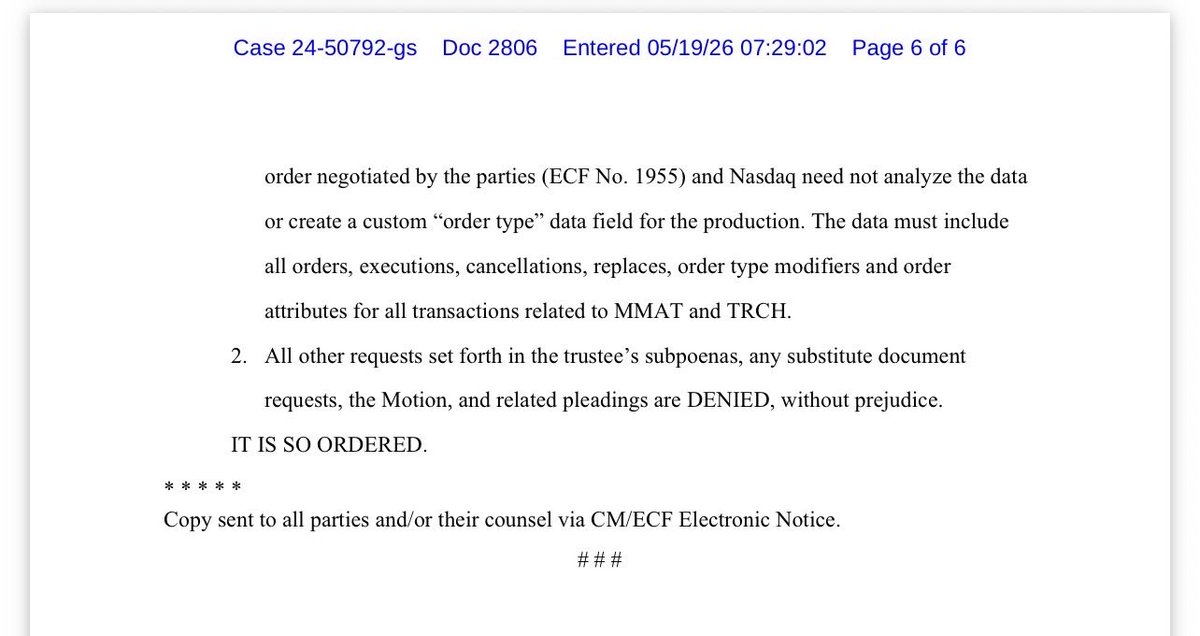
The SEC seems to be saying, in effect, “15c2-11 is an OTC equity rule, let’s stop pretending it is a general quotation rule for every security” BUT… What I find even more interesting is Commissioner @HesterPeirce longer statement 2 hrs ago and this part: “They highlighted that the 2020 rule amendments relied entirely on OTC equity data and did not even mention the term “fixed income” once. They noted that they were unaware of Rule 15c2-11 ever being applied to fixed income securities. And they warned that the application of the rule would gravely harm the fixed income market and investors, with no discernable reduction in fraud” The keyword is “fixed income” #MMTLP There is a more strategic interpretation in my opinion. More to follow, thank you Suzy! sec.gov/newsroom/speec…


A real financial genius wouldn’t concentrate heavily in illiquid small-cap stocks that later collapsed. Yet Jeffrey Epstein’s 2014 holdings were heavily concentrated in thinly traded microcap companies whose share prices later collapsed, reverse merged, were delisted, or became defunct, including Rainmaker Systems, Titan Energy Worldwide, ZaZa Energy, Transgenomic, Ziopharm Oncology, and ModusLink Global Solutions. Many of these price collapses occurred while trading was routed through FINRA-controlled market centers. DOJ-released brokerage records show Epstein actively trading Torchlight Energy Resources (TRCH) in 2014, with the position appearing 67 times in his TD Ameritrade account. TRCH later reverse merged with Meta Materials. As part of that transaction, TRCH shareholders received a Series A Preferred Dividend that was intended only to represent a future interest in oil and gas assets and was never designed or approved to trade. Despite that, the dividend began trading publicly under the ticker MMTLP, routed through FINRA-controlled venues, before being halted and deleted without a mandatory close-out, trapping 65,000 plus investors in a security that should never have been tradable. Epstein’s TD Ameritrade statements were mailed to his U.S. Virgin Islands address, while the trades executed in U.S. markets, raising obvious compliance and AML questions. The Epstein files themselves reference active trading on the Over-the-Counter Bulletin Board (OTCBB) and include FINRA-related OTC market complaints. The same FINRA-operated OTC infrastructure appears repeatedly in the trading histories of companies whose share prices later collapsed. If Epstein was a financial genius, why did his documented investments align so closely with companies that collapsed through FINRA-operated OTC markets, and why do those same venues appear inside the Epstein files themselves?