Matt Pfeffer

6.2K posts

Matt Pfeffer banner
Matt Pfeffer

Matt Pfeffer

@matjen1

Lawyer, finance dork, music snob, raconteur.

Katılım Nisan 2009
1.4K Takip Edilen165 Takipçiler
Matt Pfeffer retweetledi
AG
AG@AGHamilton29·
Illogical conspiracy theories that used to reside only on the internet, now circulate in the media, brought there by irresponsible journalists who flout evidentiary standards, ignore basic notions of fairness, and disregard common sense and the truth. thefp.com/p/the-new-york…
English

5
18
86
6.7K
Matt Pfeffer retweetledi
Captain Allen
Captain Allen@CptAllenHistory·
This real-time 1948 article from The Economist completely destroys the modern “Nakba” narrative that was invented decades later as political propaganda. Straight from British eyewitnesses in Haifa, October 2, 1948: “Jewish authorities urged all Arabs to remain in Haifa and guaranteed them protection and security ... However, of the 62,000 Arabs who formerly lived in Haifa, not more than 5,000 or 6,000 remained. The most potent factor was the announcements made over the air by the Arab Higher Executive, urging the Arabs to quit ... those who remained and accepted Jewish protection would be regarded as renegades.” They didn’t flee because of “Zionist ethnic cleansing.” They fled because Arab leaders ordered them to get out of the way so their armies could “drive the Jews into the sea.” Then they lost the war they started — and spent the next 77 years rewriting history to blame the Jews. The “Nakba” you were taught? Pure revisionist fiction.
Captain Allen tweet media
Captain Allen@CptAllenHistory

The word “Nakba” (catastrophe) wasn’t invented by Palestinians to describe Jewish “ethnic cleansing.” It was coined in 1948 by a Syrian Arab historian, Constantin Zureiq, in his book The Meaning of the Disaster. He used it to describe the humiliating failure of the Arab world — their leaders’ arrogance, their lies to their own people, their military incompetence, and their refusal to accept a Jewish state. Zureiq wrote that the Arabs had “imaginary victories” and put their public “to sleep” with boasts — until the real disaster hit: they couldn’t wipe out the Jews. The original Nakba wasn’t about refugees. That a rebrand from several decades later. It was about the Arab leaders’ catastrophic decision to launch a war of extermination ... and lose. They’ve spent 77 years rebranding their own failure as Jewish guilt. That’s the only real "Nakba" they can’t forgive.

English
255
4.9K
12.7K
544.7K
Matt Pfeffer retweetledi
Josh Wolfe
Josh Wolfe@wolfejosh·
Truth. Pure truth.
English
2
14
232
8.6K
Matt Pfeffer retweetledi
Oren Barsky
Oren Barsky@orenbarsky·
As usual, Bill Maher cuts through the hypocrisy and exposes the rise of antisemitism in the U.S. like nobody else can.
English
2
19
114
1.7K
Matt Pfeffer retweetledi
The Vigilant Fox 🦊
The Vigilant Fox 🦊@VigilantFox·
Bill Maher just dedicated the end of his show to throwing his own party under the bus for defending every minority group except Jews. “There is a frothing anxiousness for the literal extermination of this one group. And Democrats, where are you?” “If any other minority group was being talked about this way, you’d break out the Kente cloth and have 10 benefit concerts.” “But because you see that so many of your brainwashed-by-TikTok constituents now have an unfavorable view of Israel, you indulge them when you should be correcting them.” “All the people likely running for president now on the Democratic side want it known they don’t take money from AIPAC, the Israeli lobby… You take money from crypto and factory farmers and big tech, from Diddy and Weinstein and Epstein, but AIPAC is too far?” “Let me just say this to all who ask me, ‘Why are you harder on the Democrats than you used to be?’ Until you fix this whole issue, stop asking me.”
English
721
5.4K
29.6K
815.3K
Matt Pfeffer
Matt Pfeffer@matjen1·
@SowingAlphaSeed @svrnco The movement to diminish the role of standardized testing in college admissions was one of the most outrageous policies ever. Championed by the "Left" and all it did was punish the type of talents who didn't know how to play the admissions game. Sad.
English
1
0
3
67
Matt Pfeffer
Matt Pfeffer@matjen1·
@choffstein @bennpeifert Because he blocked everyone who even politely disagreed with some of his odious politics and he was arrogant. Running your mouth and being thin skinned and then blowing up is a bad combo.
English
7
0
108
3.6K
Corey Hoffstein 🏴‍☠️
I don't understand the grave dancing on QVR's downfall. It's tough to build any business and sad to watch a few bad months sink 5+ years of hard work. I hope everyone there lands on their feet. I really don't get the pile-on against @bennpeifert personally. He's contributed tons of education to the discourse on options/volatility on this hellsite. You can dislike his politics/personal choices without cheering his downfall.
English
124
38
1K
168.4K
David Burge
David Burge@iowahawkblog·
It's been 90 days since my last cig so I'm sadly declaring myself an ex-smoker. Goodbye ol' pals, we had great times together
David Burge tweet media
English
237
42
2K
62.4K
Matt Pfeffer retweetledi
The Long View
The Long View@HayekAndKeynes·
Benn Eifert’s QVR is winding down after a painful YTD drawdown
English
129
41
824
630.2K
Matt Pfeffer retweetledi
Dominic Pino
Dominic Pino@DominicJPino·
The American stock market isn't only larger than the European ones. Its extraordinary wealth is more widely shared with households. And it would be even more widely shared if the U.S. had adopted George W. Bush's private accounts for Social Security two decades ago.
Dominic Pino tweet media
English
22
104
496
24.6K
Matt Pfeffer retweetledi
Pierre Rehov
Pierre Rehov@rehoov·
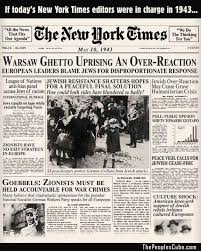
The New York Times and Israel: Anatomy of a Long Decline On Monday, May 11, 2026, The New York Times published in its opinion pages a column by Nicholas Kristof, a two-time Pulitzer Prize winner, titled “The Silence That Meets the Rape of Palestinians.” The piece asserts that sexual violence against Palestinians is part of Israel’s “security apparatus.” It draws on fourteen testimonies. It describes, among other allegations, rapes committed with batons, metal rods, carrots. And then, buried in a paragraph, comes the sentence that pushed the article from contestable reportage into obscene fable: Kristof, citing “reports,” writes of dogs trained by Israeli forces to rape Palestinian prisoners. Kristof himself concedes, in his own text, that “there is no evidence that Israeli leaders order rapes.” He adds that when it is suggested to him that Palestinian witnesses might fabricate accusations to smear Israel, this strikes him as “far-fetched.” Here, then, is the evidentiary standard of a piece published by America’s most prestigious daily: no physical evidence, no forensic expertise, no independent corroboration, and an explicit presumption of truth granted to testimonies whose sources include, as NGO Monitor has documented, Euro-Med Human Rights Monitor, whose founder Ramy Abdu has been photographed repeatedly alongside senior Hamas officials, including Ismail Haniyeh in 2011 and Osama Hamdan in 2013. Israel’s Ministry of Foreign Affairs, on its official account, called the article “one of the worst blood libels ever to appear in the modern press.” Deborah Lipstadt, former U.S. special envoy for combating antisemitism—a Holocaust historian, not a barroom pundit—asked the Times publicly: “Have they no sense of decency and journalistic responsibility?” “Blood libel,” that old medieval antisemitic fantasy according to which Jews used the blood of Christian children for their rituals, is not a term Israeli diplomacy uses lightly. It is reached for when a narrative crosses the line separating political criticism, however fierce, from dehumanization. Dogs trained to rape humans—can a man of sound mind publish such a thing in the opinion section of a paper of record? The answer is yes. And the editor can, the very next day, defend the article on X by arguing that it is “backed by independent studies,” when those “independent studies” are, for the most part, reports issued by an NGO whose ties to Hamas have been publicly documented for more than a decade. The timing of publication, on its own, is worth pausing over. On Tuesday, May 12—the day after the Kristof column—came Silenced No More, a nearly 300-page report by the Civil Commission on October 7 Crimes Against Women and Children. The document draws on more than 430 interviews and testimonies, the review of more than 10,000 photographs and videos, to establish the systematic nature of sexual violence committed by Hamas on October 7, 2023, and against hostages held in Gaza. Twenty-four hours before that report was released, The New York Times published a column placing on the same plane, in the same paragraph, the documented rapes of October 7 and the “rape dogs” drawn from the reports of a Hamas-linked NGO. Professor Gerald Steinberg, founder of NGO Monitor, asked the question publicly on X: what are the odds the timing was coincidence? He answered himself: “I’d say zero.” One may judge the accusation excessive. One may also ask, more modestly, what editorial sequence leads a newspaper to publish that text, on that day. A Pattern, Not an Accident The Kristof episode is not isolated. The Times’s record of errors, corrections, and apologies on Israeli and Jewish subjects has thickened at an accelerating rate in recent years, to the point that it traces not a string of accidents but a trajectory. Let us run through the markers. September 2000. A wire photo distributed by the AP and reprinted by the Times shows a bloodied young man on his knees, and an Israeli policeman with a baton in hand. The caption identifies the young man as “a Palestinian victim of the new intifada.” His name, in fact, is Tuvia Grossman. He is an American Jewish student from Chicago, and he has just been beaten by a Palestinian mob. The Israeli officer was protecting him. Grossman’s father wrote to the paper immediately. It took several corrections, spaced out over time, before the caption was set right. April 2019. The international edition publishes a cartoon in which Benjamin Netanyahu appears as a guide dog, a Star of David hanging from his collar, leading a blind Donald Trump wearing a kippah. The paper will speak of an “error of judgment,” then issue a fuller apology, take internal disciplinary action, and eventually eliminate political cartoons from its international edition altogether. No one at the Times has explained how such a cartoon was approved in the first place. The iconographic codes it deployed—the Jew pulling the strings of power, the animalization—belong to a register every serious journalist is supposed to recognize at a glance. October 17, 2023. A few days after October 7, the Times publishes—as a mobile alert, in a banner headline, across social channels—the claim that a Gaza hospital, al-Ahli, has been hit by an Israeli airstrike with hundreds killed. The source is Hamas. Within hours, U.S. intelligence, then French military intelligence, then a Human Rights Watch investigation, then open-source analysis converge on a different conclusion: this was, in all likelihood, a failed Palestinian rocket launch. The Times eventually publishes an editor’s note, reproduced in full by Nieman Lab, acknowledging that its initial coverage “relied too heavily on claims by Hamas” and “left readers with an incorrect impression” of what was known and how credible the account was. The correction comes after the false information has already traveled the world, fueled protests, triggered the cancellation of a regional diplomatic summit. In modern journalism, the first headline is almost always the final headline. The Times knows this. It published anyway. December 22, 2023. A Times headline: “Gaza Deaths Surpass Any Arab Loss in Wars in Past 40 Years.” False. Trivially false. Anyone with a passing knowledge of recent Middle Eastern history—the Iran-Iraq war, the Syrian civil war, Iraq, Yemen—knows that Arab casualties over the past four decades run into the hundreds of thousands. A correction was published on December 28: it should have read “the heaviest loss on the Arab side in any war with Israel in 40 years.” The correction came too late to undo what the headline had already done: produce the impression that Israel’s war in Gaza was, by itself, more lethal than anything the region had seen since 1983. That is false, and the falsehood is precisely what was useful. July 2025. Front-page photograph, maximum emotional mobilization: a skeletal Gaza child in his mother’s arms. The image becomes the global emblem of famine in Gaza. It will go on to win a Pulitzer Prize. A few weeks later, the child’s doctors and medical records make clear that he suffered from pre-existing congenital conditions, omitted from the original presentation. The Times ultimately appends a note. But the image had already done its work. And the Pulitzer remained. Stack these cases now: Grossman, the 2019 cartoon, al-Ahli, the December 2023 headline, the July 2025 child, and now the rape dogs of May 2026. Six cases, more than twenty-five years, but with a clear acceleration since 2023. Every time, the same pattern: a spectacular first-instance claim, unfavorable to Israel, thinly sourced or stripped of context; a quieter correction later, after the damage is done. This is what common-law lawyers call a pattern of practice. It is no longer a series of errors. It is a method. The Precedent: Sulzberger and the Universalizing of Genocide This method has a history. And that history is unsettling, because it traces back to the moment when, more than any other, the American paper of record should have been equal to the task. Under the leadership of Arthur Hays Sulzberger, owner of the Times during the Second World War, the paper made choices on the persecution of Europe’s Jews that today rest on an overwhelming scholarly consensus. The work of the historian Laurel Leff, in particular her book Buried by The Times, has established that the paper did not, strictly speaking, argue for the exclusion of Jewish refugees from the United States. It did something subtler, and in some respects graver: it systematically de-Judaized the persecution. Its editorials spoke of the “refugee problem” as a “test of civilization,” as “a problem of mankind,” and went so far in July 1939 as to insist it was “neither a Jewish problem nor a Gentile problem.” But it was precisely a Jewish problem. Jews were being persecuted as Jews. Refusing to say so stripped the argument for rescue of its own moral force. The intellectual mechanism is exactly the one we find today, mirrored: where in 1939 the goal was to dissolve Jewish specificity into the “problem of mankind,” the goal now is to inflate Palestinian suffering until it becomes the deadliest event of the modern Middle East, or to draw it close, by way of the baton and the dog, to the horror of October 7. In both cases, one does not exactly lie. One distorts the frame. And in a paper whose every word sets precedent for millions of readers, that is infinitely more effective than a frontal lie. Honesty requires acknowledging—and the historical record acknowledges—that the Times of 1939–1945 also published editorials sympathetic to the refugees of the St. Louis, and in March 1943 called for revision of the “chilly formalism” of American immigration law. Not everything was dark. But Sulzberger, himself a Jew, had one fixation: never to appear “a Jewish paper.” Out of that fixation came an editorial policy that, in practice, contributed to burying news of the extermination on inside pages, diluting its specific character, depriving the case for rescue of the urgency without which no policy is possible. There is a direct line between that refusal to write “Jews are being killed because they are Jews” and the intellectual ease with which, today, one publishes a column placing in the same sentence October 7 and a canine fantasy. The Warning from Bari Weiss In July 2020, Bari Weiss—the opinion journalist recruited by the Times precisely to broaden its range of voices after the paper’s predictive collapse in 2016—resigned with an open letter. That letter is today an essential document for understanding what is happening inside the 8th Avenue building. Weiss describes a paper that has become “a performance space,” where stories are chosen and told “to satisfy the narrowest of audiences” rather than to allow a curious public to draw its own conclusions. She writes, in so many words, that she had learned to “brush off comments about how I’m writing about the Jews again.” She describes internal Slack channels where, under the gaze of masthead editors, colleagues posted axe emojis next to her name. She describes an implicit norm by which Twitter—not the editor in chief—has become the paper’s true editor. Reread that letter in the light of Kristof, of the December 2023 headline, of the July 2025 photograph, and one understands better how such texts make it through the editorial process. They make it through because the newsroom no longer has, internally, any friction mechanism. The voices that might have asked, in a meeting, the awkward question—“Is this source really independent?”; “Is it biologically possible to train a dog to do this?”; “Does this headline say what we actually want it to say?”—those voices have left, or have learned to keep silent. What the Times No Longer Is One must conclude with measure, because measure is the only effective weapon against a newspaper that has lost the use of it. The New York Times still has excellent journalists. Its economic, scientific, and cultural reporting remains, often, of the first rank. This is not a militant pamphlet. What it is, is more disquieting: an institution that, on certain subjects—Israel chief among them, but not Israel alone—has lost the ability to distinguish itself from activism. It no longer knows, or no longer wishes, to tell the difference between a testimony and a piece of evidence, between an NGO source and a political actor, between legitimate emotion and a framing that distorts. And when a paper of this stature renounces that distinction, the social cost is not small. Demonstrations gather around headlines that will be corrected three days later. New York synagogues find themselves surrounded by crowds quoting, sometimes verbatim, sentences that appeared in its pages. The Times is not an antisemitic newspaper. To say otherwise would be easy and would be false. What it has become is a newspaper for which the idea that Jews, and the state they have built, might have their own legitimate account of their own history is now, at best, a hypothesis treated with permanent suspicion. That suspicion, accumulating article after article, headline after headline, caption after caption, ends up producing something that looks a great deal like bias. And bias in a newspaper that styles itself as objective is not a respectable opinion. It is a breach of contract with its readers. On Monday last, that contract was torn in two by a text in which someone dared write, in the columns of the paper Adolph Ochs founded with the promise that it would welcome “all shades of opinion,” that dogs were being trained to rape prisoners. At this point only one question remains. How many more such episodes will it take before the word “of record,” attached to The New York Times, becomes, simply, a joke?
Pierre Rehov tweet media
English
27
186
429
15.2K
Matt Pfeffer
Matt Pfeffer@matjen1·
@ptuomov This to pound out miles in fast comfort and the old 911 for grins?
English
1
0
1
76
Ptuomov
Ptuomov@ptuomov·
Summer wheels and tires on:
Ptuomov tweet media
English
5
0
32
3.4K
Matt Pfeffer retweetledi
AG
AG@AGHamilton29·
For those keeping track, Kristoff's piece: - Was published to pre-empt a detailed report about sexual violence by Hamas, full of actual evidence. - One of his main quoted Israeli sources says Kristoff misrepresented his take. - The article omits context about the background of its sources. - Several of his cited victims have a clear record of significantly changing their story. Kristoff omits any explanation for these changes. - The main source of the most significant abuse claim is a terrorist-tied org that has pushed constant insane conspiracies. A group that denies extensive evidence of widespread sexual violence by Hamas and had an interest in pre-empting the report mentioned in the first point. - The article promotes a central claim from that group about dogs being trained to rape people, which is biologically unlikely and has almost no supporting evidence. Kristoff has since misled followers about the medical evidence to support the possibility. Another primary linked source for the claim is an online grifter known for making stuff up, sexually harassing women, and sending inappropriate photos to minors, while having no firsthand knowledge to support the claim. The NYT fired several people for publishing a Tom Cotton op-ed with a very mainstream view about preventing mob violence, but Kistoff knows there will be zero consequences for any of the above because the NYT consistently adopts the view that journalistic standards don't apply when publishing anti-Israel content.
English
114
982
4.7K
166.3K
Matt Pfeffer retweetledi
Israel Foreign Ministry
Israel Foreign Ministry@IsraelMFA·
Months ago, the Civil Commission approached the New York Times with a report on Hamas’ systematic sexual violence on Oct. 7 and after. The @nytimes said it was not interested. This comprehensive and well-documented report was published this morning by CNN and other international outlets. Aware of the report and its release date, the night before its release the NYT ran a shameful attack on Israel, belittling Hamas’ sexual crimes. That tells you everything about the NYT's agenda.
English
345
1.5K
5.9K
497.6K
Matt Pfeffer
Matt Pfeffer@matjen1·
@SowingAlphaSeed I learned a hard lesson with $CSCO back then. Have been MCW/Quant&Hold ever since.
English
0
0
1
53
Matt Pfeffer
Matt Pfeffer@matjen1·
@SowingAlphaSeed It was way crazier then because things we take for granted now were brand new then. The internet was new, online trading was new. Prior to the late 90s you couldn't sit at your desk and get in and out of positions. Normies "day traded" and thought they were geniuses.
English
2
0
7
348
Matt Pfeffer
Matt Pfeffer@matjen1·
@cullenroche You don't even get the moral high ground other than in your own loser, envious head and with others similar to you.
English
0
0
3
258
Cullen Roche
Cullen Roche@cullenroche·
Attacking the wealthy residents in your own town is just bad math. It’s like pissing off the grouchy grandfather who’s about to leave you an inheritance. You get the moral high ground and they take the capital elsewhere. Who do you think is winning there?
English
3
4
49
6.8K