Matt McCord

21.8K posts

Matt McCord banner
Matt McCord

Matt McCord

@mattMD

Physician anesthesiologist | Cofounder & ED, Opioid Free America/Solutions | AngioREGEN | 33 yrs in healthcare—zero tolerance for the status quo.
Ann Arbor, Michigan Katılım Kasım 2008
5K Takip Edilen3.9K Takipçiler
Matt McCord retweetledi
Mark Cuban
Mark Cuban@mcuban·
Props to those who have said that big hospitals are the problem. In this case you are definitely right. Props to Cynthia Fischer at @PtRightsAdvoc You are making a difference! wsj.com/health/healthc…
English
43
65
482
78.3K
Matt McCord
Matt McCord@mattMD·
Life does indeed, find a way. Has fungus evolved to harness ionizing radiation for energy, e.g. “radiosynthesis” in Chernobyl? What of the protective effects of melanin? Chernobyl Fungus Seems to Have Evolved an Incredible Ability : ScienceAlert sciencealert.com/chernobyl-fung…
English
0
0
0
4
Matt McCord
Matt McCord@mattMD·
So true.
Adam Bruggeman, MD@DrBruggeman

“I didn’t write those penalties.” - Pete Stark The Stark Law prohibits a physician from referring patients to an entity in which they have a financial interest. That sounds neutral but it isn’t. A hospital-employed orthopedic surgeon who refers every post-operative patient to the hospital’s owned SNF, physical therapy, imaging center, and home health agency has a financial interest in every one of those referrals. His salary, his productivity bonus, and his continued employment depend on staying within the system. None of that triggers Stark. The bona-fide employment exception covers it entirely. An independent orthopedic surgeon who owns an MRI with two partners? Well, they would have to go through a full stark analysis and legal review with complex written arrangements and ongoing compliance infrastructure. One technical violation of Stark and the False Claims Act exposure is existential. These scenarios show the same financial conflict with radically different legal treatment. The consequences for patients are hard to ignore. A recent NORC survey found that 61% of employed physicians have moderate or no autonomy to make referrals outside their system, and nearly half said they adjust treatment options based on organizational incentives. Hospital employment doesn’t eliminate the financial conflict of the referral relationship. It just hides it inside a compensation structure Stark never touches. Marc Greenberg, MD, an orthopedic surgeon in Baltimore, put it plainly in Becker’s this week: “We’ve created a system where for-profit entities can have healthcare ownership. But the people who took an oath to serve the patient — who’ve shown a commitment to caring — can’t.” There is no federal prohibition on hospitals requiring employed physicians to refer within the system. No law prevents health systems from structuring compensation, call coverage, or scheduling to steer referrals to owned facilities. No equivalent of Stark governs the institutional referral relationship at all. Congressman Stark was trying to protect patients from corrupted referrals. What his law produced was a system where the most powerful referral relationships in American healthcare are completely unregulated and the physicians most accountable to patients are the ones most restricted.

English
0
0
0
46
Matt McCord retweetledi
Marion E Mass, M.D. #patientsfirst #scrubsnotsuits
Rankings based on 19 metrics, the most highly weighted: -Compensation -Hospital situation ( number, quality, safety rating) -coverage situation ( % of pts covered, whether covered by employer, Medicare or other) -malpractice situation You can see how they fully came up with the rankings here: wallethub.com/edu/best-and-w…
Marion E Mass, M.D. #patientsfirst #scrubsnotsuits@mass_marion

Pennsylvania is #41 This is NOT good for our patients

English
0
3
9
2.9K
Matt McCord retweetledi
The Omaha Archive
The Omaha Archive@TheOmahaArchive·
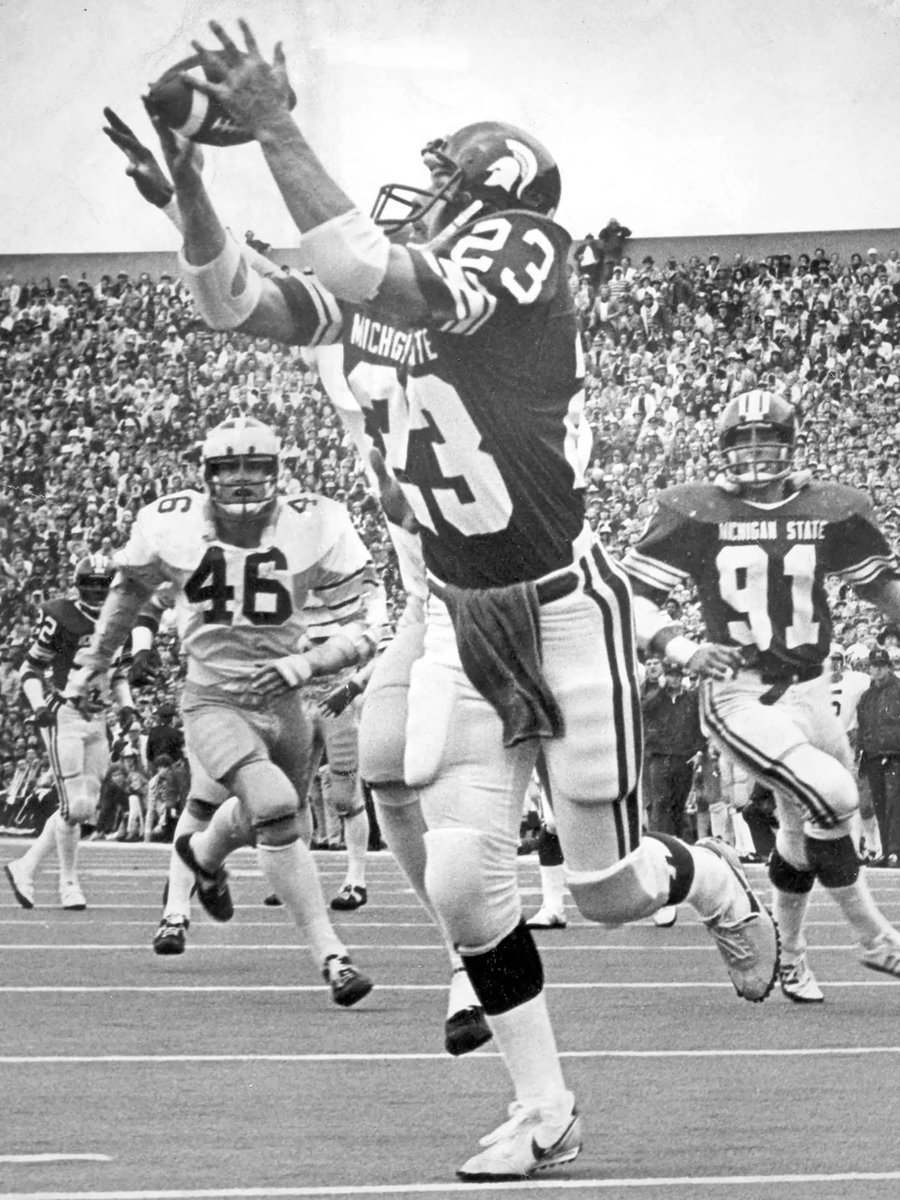
Kirk Gibson was an All-American wide receiver at Michigan State. His senior year, Spartan football coach Darryl Rogers suggested he play baseball. In his lone season on the diamond, Gibson hit .390 with 16 home runs and 52 RBI. He was then drafted in the 1st round by the Tigers.
The Omaha Archive tweet mediaThe Omaha Archive tweet mediaThe Omaha Archive tweet mediaThe Omaha Archive tweet media
English
13
63
621
38.6K
Matt McCord retweetledi
The Vigilant Fox 🦊
The Vigilant Fox 🦊@VigilantFox·
Dr. Andrew Huberman stuns Bill Maher with an anti-phone brain hack that instantly helps you outperform your peers. A landmark study looked at 3 sets of people: • One group had their phones sitting in front of them • Another had phones tucked away • And the last group had their phones in another room The study found that the closer your phone was, the more mental energy it drained just to stay focused. “So when the phone’s out of the room, you see what looks like a boost in cognitive performance. It’s actually just getting people to baseline,” Dr. Huberman explained. Quoting David Goggins, Huberman said: “It’s never been easier nowadays to outperform your peers, but it’s mostly a function now of what you DON’T do.” “Just putting your phone away gives you what looks like a cognitive boost, but it just puts you on par with all the generations before you that didn’t have phones in the room.” BILL MAHER: “Wow.” If that Huberman health hack stood out to you, there’s a lot more where that came from. See it all on the main page: @VigilantFox
The Vigilant Fox 🦊@VigilantFox

Dr. Andrew Huberman just confirmed a “wild conspiracy theory” about incandescent lights and LED bulbs. The long wavelengths found in incandescents increase your metabolism and “charge your mitochondria.” Conversely, the LED bulbs that most of you have in your house are “causing disruptions in mitochondrial function.” DR. ANDREW HUBERMAN: “Your mitochondria function better, you increase ATP production, your metabolism increases in the presence of red light, long wavelength light to the skin.” “Shine long wavelength light on somebody, watch blood glucose levels in a blood glucose test, and it’s blunted.” “Now, the LED lights that are commonly used now… that short wavelength light, in the absence of long wavelength light, has been shown to damage the mitochondria.” “This used to be considered crazy. This was like chemtrail crazy, right?” “But now we’re starting to see from animal studies and human studies, from Glenn Jeffreys and others, that people’s vision gets better when they get in front of an incandescent bulb once a day.” “If they get sunlight, which also has long-wavelength light, your vision improves because of improvements in mitochondria.” The Biden administration quietly pushed incandescents out of the market through aggressive energy regulations. But you can still find them online today if you look hard enough. If that health insight stood out to you, there’s a lot more where that came from. (See post below) This page finds the moments they don’t want going viral, with captions that tell you exactly why they matter before you even hit play. See why 2 million already follow: @VigilantFox

English
48
421
3.6K
668.1K
Matt McCord retweetledi
Robert Lufkin MD
Robert Lufkin MD@robertlufkinmd·
There's a $101 million competition happening right now to extend human healthspan. Not in mice. Not in worms. In people. XPRIZE Healthspan launched in 2023 and runs through 2030. The goal: develop a therapy that restores muscle, cognitive, and immune function — all three — by 10 to 20 years in people over 50. The treatment must take one year or less. robertlufkinmd.substack.com/p/744-teams-ar…
Robert Lufkin MD tweet media
English
17
39
200
47.1K
Matt McCord retweetledi
Howard Luks MD
Howard Luks MD@hjluks·
Exercise doesn't just strengthen your body — it changes your brain. Resistance training and aerobic activity promote BDNF production, improve brain glucose metabolism, and appear to reduce the risk of cognitive decline. The muscle-brain connection is one of the most important things I've learned in the last decade of medicine. howardluksmd.substack.com/p/brain-health…
English
1
16
106
6.9K
Matt McCord retweetledi
Mary Talley Bowden MD
Mary Talley Bowden MD@MaryBowdenMD·
I just had 2 MRIs at @HoustonMedImage. I was in and out in about an hour. I paid $1250. Katie the technician was kind, professional and efficient. Parking was incredibly easy. Same tests would have cost $3032 at Houston Methodist Hospital.
Mary Talley Bowden MD tweet media
English
96
289
1.6K
34.1K
Matt McCord
Matt McCord@mattMD·
Awesome. Best wishes Elisabeth. Healthcare in America is begging for disruption.
Elisabeth Potter MD@EPotterMD

The American Healthcare system almost broke me last year. There was a point where I was losing energy, feeling the weight of insurance, the marketplace, and a system that has become so business-driven it can feel soul crushing. And when I looked for support in the places you’d expect… I kept hearing the same thing, “we can’t help you.” Last week at @sxsw, I got to be in a room with people who are actually willing to face the mess of American healthcare and do something about it. Leaders. Builders. People who aren’t just talking. The energy was palpable. The vibe was boss ladies, yes, but also generosity, fierce kindness, and a real commitment to doing the hard work to get something big done. That kind of room changes you. @wearfigs , you kept me afloat this year. And now we are stronger than ever, ready to tackle the next challenge. Literally. And to this crew… I’ve got your back and I know you’ve got mine. We’re not just sitting in the mess. We’re fixing it.

English
0
0
0
30
Matt McCord retweetledi
Great Lakes Great Sports
Great Lakes Great Sports@GLakes_GSports·
Tom Izzo will go down as one of the last, if not the last genuine program builder in D1 basketball. Guys stay, develop, and get rewarded. Complete opposite of what college athletics has become everywhere else.
English
104
527
6.7K
296.3K
Matt McCord retweetledi
Mary Talley Bowden MD
Mary Talley Bowden MD@MaryBowdenMD·
Patient today came to see me to discuss possible tonsillectomy. @TexasChildrens quoted her $15,000 as a "discounted cash price." My price is $3760. Every physician and hospital in the country could list their prices on their website. It's not hard.
Mary Talley Bowden MD tweet media
English
194
1.5K
5.2K
59.3K
Matt McCord
Matt McCord@mattMD·
Very well stated and true.
Special Interest Media@thoughtson_tech

DiGiorgio's framing is precise, but the mechanism that makes it true is older and more layered than most people in the consolidation debate realize. The paperwork burden and revenue starvation aren't accidents. They're the downstream output of a regulatory stack that was assembled one improvised fix at a time over 80 years, each law a rational response to a real problem created by the previous law, none of them designed to work together. The Stark Law is the load-bearing wall here. It was built to stop physicians from self-referring to entities they owned, which was a real and documented cost problem for Medicare in the late 1980s. But strict liability plus civil penalties up to $15,000 per service and $100,000 per circumvention scheme created a compliance apparatus that independent practices can't afford to maintain. Adventist Health paid $118.7 million in 2015. Halifax paid $85 million. The cost of getting it wrong is existential, so the cost of staying compliant becomes a fixed overhead that scales with complexity, not revenue. Large hospital systems absorb that cost across thousands of beds. A five-physician independent practice absorbs it across five salaries. CMS itself acknowledged in 2020 rulemaking that Stark's ambiguities have "frozen many providers in place, fearful that even beneficial arrangements might violate the law." That's the regulator telling you the regulation is suppressing coordination. Then layer on CON laws in roughly 36 states that function as incumbent protection rather than cost control, Salkever and Bice showed no significant savings back in 1976, and the ACA's closure of the whole hospital Stark exception that killed the one ownership pathway physicians had at scale. The ACA scored that closure at $500 million in deficit reduction over ten years, which tells you the CBO understood physician-owned facilities were generating real economic activity. Congress chose to eliminate the competitive pressure rather than fix the cherry-picking problem. The sell-to-a-hospital pipeline DiGiorgio describes isn't a market failure. It's the market responding rationally to a regulatory architecture that makes independent operation progressively more expensive while making acquisition by a system progressively more attractive. The cage wasn't built all at once, but every bar points the same direction.

English
0
0
0
33