

Matt Johnson
4.6K posts
Matt Johnson
@matt_j2
Developer of iOS game @spectre3d. HTMX CEO. Aspiring F# evangelist. Dev streams & more: https://t.co/xIVsRt9d6Z
Katılım Nisan 2011
916 Takip Edilen210 Takipçiler



What kind of retro game would you like to see remastered?
English

I had been using Ubuntu for 10 years.
Last time I applied to Canonical for a job to develop Ubuntu itself in Rust. Before the interview, they asked me to write a 20-page essay about my life, aspirations, philosophy and whatnot.
Anyway, this is my desktop now.

English

Another case of programmers making all UIs into a terminal. Command palettes are a huge UI cop-out. I hate apps that have commands that are only available in these things. Most people will never discover them. That’s why we invented menus and buttons. Design actual UI!
Nic Barker@nicbarkeragain
I'm completely convinced at this point that the "Command Palette" is a fundamental UI concept, and should be in all applications. It should also be a built in browser concept, there should be an API for websites to push items to the command palette ("new post", "muted words" etc)
English
I get anxiety with a +100 diff of my OWN code.
Stone Tao@Stone_Tao
genuine question. how do you debug code and ensure good quality when coding models spit out 1000s of lines i still cannot feel comfortable not understanding what every generated line does, reducing the productivity gains coding models should be giving me
English
@fjzeit "your job isn't to review every line before deploy. your job is to build systems where agents observe outcomes - mrr, analytics, error rates, user behavior - and self-improve."
These words wouldn't leave my mouth unless I had total contempt for the customer
English

the crash and burn of this era is going to be spectacular. Chesterton’s Fence applies heavily in this context.
Elvis@elvissun
this thread is what mass cope from legacy devs looks like. i talked to @FastCompany about why @garrytan's "AI slop" is actually the future of software engineering. the mass code review. the line-by-line gatekeeping. the "craftsmanship" that was really just slow iteration disguised as rigor - that era is over. and the engineers who built their entire identity around it are panicking. @gregorein brags about burning 3 billion tokens last year while dunking on garry for flexing lines of code. i've burned 6.6 billion in the past three months on codex alone. by his own logic, i'm 8x as credible. see how silly that sounds? yes, he found real issues. yes, they got fixed. that's exactly the point. karpathy's autoresearch proved this already - AI agents can solve very complex problems just by operating inside feedback loops, iterating to optimize a loss function. this is what software engineering is now - gradient descent. ship, measure, self-correct, repeat. all by the agent itself. this is the new startup playbook. your job isn't to review every line before deploy. your job is to build systems where agents observe outcomes - mrr, analytics, error rates, user behavior - and self-improve. the engineer's role shifts from gatekeeper to building the machine that builds the machine. you could run this level of audit (using AI) on any production site and find the same issues - most just don't have a billionaire CEO attached for virality. mocking the people who adapted is easier than adapting. but the craft is evolving whether you like it or not.
English
@ThePrimeagen - Odin game engine
- 2 games that compile for both modern platforms (raylib), and 16-bit MS-DOS
- simple VM that allows for custom scripting logic to run on on the above DOS games
- compiler that converts .ts AST to VM bytecode
Basically I can script my DOS games with TS
English

Hey, you got a cool project that you are building? Link it
I want to yap about cool projects
English
@TheGingerBill Really enjoying the addition of classes in the latest PR as well! Thanks!
English

Hay there! We're announcing the Official Package Manger for Odin, Sleipnir.
Reflecting the language's commitment to providing truly stable packages.
Letting you take the reins by spurring on development.
We were bullheaded about this before, but hay, we can herd our ways.
English
They're doing wonders for my impostor syndrome
Mario Zechner@badlogicgames
at this point i'm labeling this as performance art
English
@SandyofCthulhu I miss the days when people at Microsoft did research
English

I was laid off from MicroProse in early 1993. I joined id Software and began working on Doom that summer. I created or reworked 20 of Doom’s levels.
Just before Doom’s release I took a trip back to MicroProse, and showed them a pre-release version of Doom, so they could see what I’d been working on.
They were so jealous. I really felt I’d landed on my feet. Later I heard that multiple games at Microsoft had been delayed up to 6 months because the devs “needed to research” i.e., play Doom.
Yorch Torch Games@YorchTorchGames
The modern audience doesn't want you to accept this. But DOOM 1993 got everything right. No cutscenes. No hand holding. No corporate slop. Just brutal combat, genius levels and a metal soundtrack. Woke trash disappears within days. DOOM is still here.
English
@revenant_MMXX Some of the best music I’ve written was powered by an expensive dark chocolate mocha
English

"Weed makes you creative" is one of the most monumental copes ever devised and you know because there's like one actual creative person for every million loser potheads
Zino@ZinoXBT
@revenant_MMXX I don’t even smoke anymore But if weed puts you in “low power mode” instead of making you creative and stops your mind from going at 100mph Then it’s simply a sign of low intelligence
English
@isaac_saas erm excuse me but it's kind of hard to play on your nintendo switch with a baby crying. ruined my trip to Disneyland with my wife and her boyfriend
English

A crying baby on a plane is an even better litmus test than the shopping cart.
If it genuinely makes you angry, you have no empathy. No compassion. No soul. No ability to put yourself in someone else's shoes. You are the epitome of what's wrong with the modern world.
English

@markcecchini I looked into these, but found I could hand-wash and put 8 of the short bottles in a normal steam sterilizer which was vastly higher throughput
English

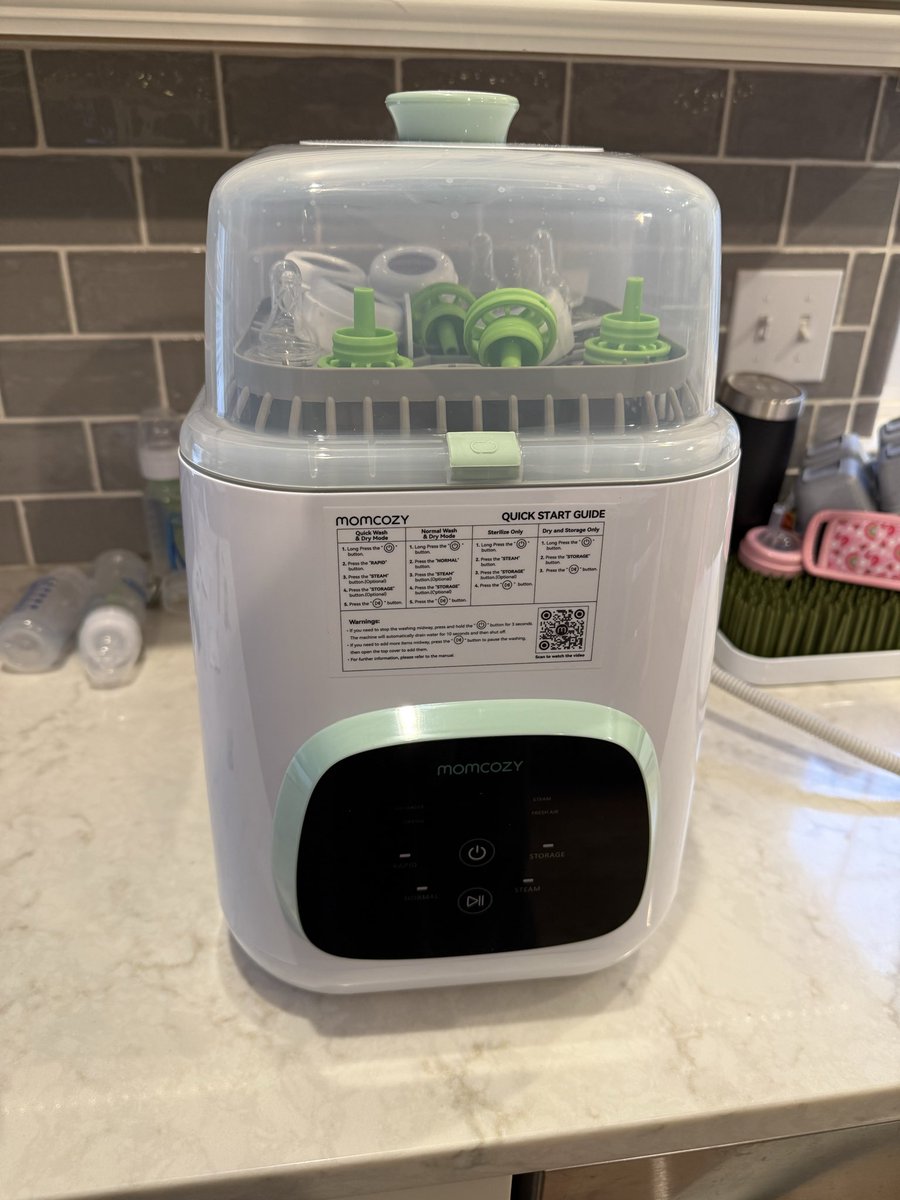
thanks to late stage capitalism and the relentless millennial consumer complex I now get to be a proud owner of whatever this is
English
@rfleury "My oneshotted Javascript music player worked so LLMs will solve car computers soon"
English

The “programming is over” crowd is going to make sure every experience with a computer is like this
Ryan Fleury@rfleury
English
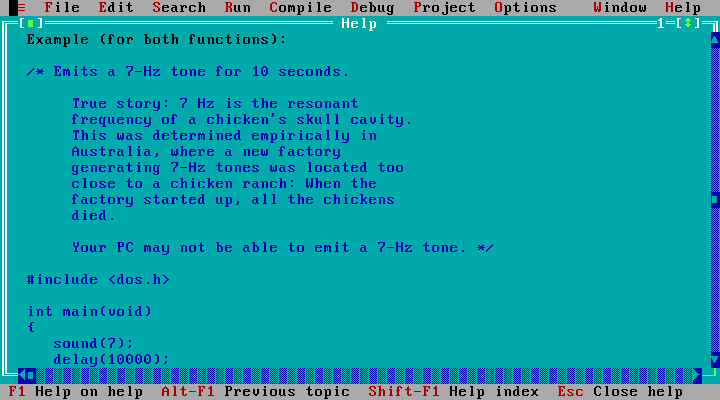


Anyone have recommendations for a good open source DAW for Linux?
English

@lhtness66060 @atmoio Yep, I don’t see how this isn’t the definition of adding to your workload and frustration.
English


Software engineering was once fulfilling and deterministic.
Now it’s managing a fleet of junior engineers who constantly lie to you. Meanwhile your ability and willingness to code atrophy exponentially.
At this rate you won’t lose your job to AI, but to someone *not* using AI.
Rohan Paul@rohanpaul_ai
New Harvard Business Review research reveals that excessive interaction with AI is causing a specific type of mental exhaustion ( or AI brain fry), which is particularly hitting high performers who use the tech to push past their normal limits. A survey of 1,500 workers reveals that AI is intensifying workloads rather than reducing them, leading to a new form of mental fog. While AI is generally supposed to lighten the load, it often forces users into constant task-switching and intense oversight that actually clutters the mind. This mental static happens because you aren't just doing your job anymore; you are managing multiple digital agents and double-checking their work, which creates a massive cognitive burden. The study found that 14% of full-time workers already feel this fog, with the highest impact seen in technical fields like software development, IT, and finance. High oversight is the biggest culprit, as supervising multiple AI outputs leads to a 12% increase in mental fatigue and a 33% jump in decision fatigue. This isn't just a personal health issue; it directly impacts companies because exhausted employees are 10% more likely to quit. For massive firms worth many B, this decision paralysis can lead to millions of dollars in lost value due to poor choices or total inaction. Essentially, we are working harder to manage our tools than we are to solve the actual problems they were meant to fix. --- hbr .org/2026/03/when-using-ai-leads-to-brain-fry
English