мaʇʇ
2.4K posts

мaʇʇ
@mattcheau
"In three words I can sum up everything I've learned about life: it goes on."
Katılım Nisan 2009
309 Takip Edilen74 Takipçiler

мaʇʇ retweetledi

@JMagnant @GrapheneOS why do you need the GEICO app? serious question...
English


Our latest 2025032500 release greatly improved our built-in network-based location. It's usually better than Google's network-based location in urban areas where Apple has competitive data. Unlike Google's service, position estimation is done locally by fetching location data for nearby networks.
You can enable this feature via the toggle we added at Settings > Location > Location services > Network location. You can optionally enable the standard Wi-Fi scanning toggle in the Location services menu to allow Wi-Fi scans when Wi-Fi is otherwise disabled to keep network-based location working.
Our implementation is currently based entirely on Wi-Fi Access Points (APs). Location data for nearby APs is fetched in batches from either Apple's service or a GrapheneOS proxy server. We also ask the service for up to 100 nearby APs which it provides with a reasonable density over a large area.
Our implementation caches location data for up to 10000 APs in an in-memory Least-Recently-Used cache with 15 minute expiry after last usage of an AP. This avoids persisting a local location history while enabling semi-offline usage. We can make these parameters user configurable in the future.
Most navigation apps use the fused location service providing the best result from GNSS (GPS, Galileo, etc.) or network-based location (when it's enabled). Other apps often prefer network-based location for lower power usage and quicker results not requiring GNSS reception. Some apps can't use GNSS.
Most apps on the Play Store use the Google Play services location service instead of the OS provided location service. By default, our sandboxed Google Play compatibility layer reroutes location requests from these apps to the OS location service so there's no need to give Location to Play services.
Nearly all users on Google Mobile Services devices have their network-based location enabled. This means some apps assume it's always available. For improved compatibility, our default enabled rerouting emulates the presence of network location with GNSS when the OS network location service is off.
In the near future, we'll be making several major improvements to our network location service including Wi-Fi RTT (Round-Trip-Time) for improved distance estimation and cell tower fallback to make it work better outside cities. There will also be a lot more efficiency and other improvements to it.
Longer term, we'll be providing our own location service rather than only a proxy along with full offline support via database downloads. It already works offline for a while based on the cache. We'll be using data from Apple's service to bootstrap our service, but we'll also be using other sources.
English
мaʇʇ retweetledi

As an emissary of humanity who will continue traveling into the cosmos long after I lose contact with my team on Earth, a certain phrase seems poignant today and always. Maybe you know it.
Live long and prosper. 🖖
-V1
English
English

@JFKeese @Junior_Baines and/or the CEO is the main dev on the product. Good thing the DoD probably uses this in production!
English

It's been 5 days since CrushFTP publicly disclosed a new vulnerability. But no CVE assignment. It's within VulnCheck CNA scope to assign so we figured it would be helpful (see: CVE-2025-2825). Sent CrushFTP a courtesy email. 🤷♂️

English
@some_dude_wtf @mullvadnet basically, Apple restricts 'Always On VPN' functionality to iOS devices "managed through an MDM solution and supervised using Apple Configurator for Mac, Apple School Manager, or Apple Business Manager." support.apple.com/guide/security…
English

We'd love to make the iOS more secure - but there are some roadblocks.
Read about our experience with trying to improve privacy for the iOS app: mullvad.net/blog/why-we-st…
English
мaʇʇ retweetledi

Right now there are a lot of new eyes on Signal, and not all of them are familiar with secure messaging and its nuances. Which means there’s misinfo flying around that might drive people away from Signal and private communications.
One piece of misinfo we need to address is the claim that there are ‘vulnerabilities’ in Signal. This isn’t accurate. Reporting on a Pentagon advisory memo appears to be at the heart of the misunderstanding: npr.org/2025/03/25/nx-…. The memo used the term ‘vulnerability’ in relation to Signal—but it had nothing to do with Signal’s core tech. It was warning against phishing scams targeting Signal users.
Phishing isn’t new, and it’s not a flaw in our encryption or any of Signal’s underlying technology. Phishing attacks are a constant threat for popular apps and websites.
In order to help protect people from falling victim to sophisticated phishing attacks, Signal introduced new user flows and in-app warnings. This work has been completed for some time and is unrelated to any current events. If you’re interested in learning more, this WIRED article from February 19th (over a month ago) goes into more detail:
wired.com/story/russia-s…
Signal is open source, so our code is regularly scrutinized in addition to regular formal audits. We also constantly monitor security@signal.org for any new reports, and we act on them with quickness while also working to protect the people who rely on us from outside threats like phishing with warnings and safeguards.
This is why Signal remains the gold standard for private, secure communications.
English
мaʇʇ retweetledi

the good news is signal actually is secure provided you don't invite the editor-in-chief of the atlantic to your group chat
English
мaʇʇ retweetledi

Sen. @MarkWarner on Signal chat story: "It's also just mind-boggling to me...nobody bothered to even check...who are all the names...this is one more example of the kind of sloppy, careless, incompetent behavior..."
English
мaʇʇ retweetledi

I wouldn’t say that Will and I are battling but I do disagree. Because there are big differences between Signal and WhatsApp.
Signal is the gold standard in private comms. We’re open source, nonprofit, and we develop and apply e2ee and privacy preserving tech across our system to protect metadata and message contents. Check out to see just how little data we are able to provide in response to the subpoenas we’re not able to resist.
Now, WhatsApp licenses Signal’s cryptography to protect message contents for consumer WhatsApp. Not on WhatsApp for business. Neither consumer nor business WhatsApp protects intimate metadata—like contact list, who’s messaging whom, when, profile photo, etc. And, when compelled, like all companies that collect the data to begin with, they turn this important, revealing data over.
Don’t misunderstand—we love that WhatsApp uses our tech to raise the privacy bar of their app. Part of Signal’s mission is to set, and encourage the tech ecosystem to meet, this high privacy bar.
But these are key differences when it comes to meaningful privacy and the public deserves to understand them, given the stakes. Not have them clouded in marketing.
Cybernews@Cybernews
Meredith Whittaker, president of Signal, disagrees with Will Cathcart's claim of little difference between WhatsApp and Signal. #Signal #WhatsApp #app #marketing cnews.link/whatsapp-signa…
English

YouTube
English
@GrapheneOS Are there any 9a compatibility concerns with currently available info? Or is it expected to be a straightforward port?
English


Consultas de la semana | ¿Cómo se escribe la letra en casos como «la regla de las tres “R”»?
En casos como ese, lo más indicado es utilizar los nombres de las letras: «la regla de las tres erres (reutilizar, reciclar y reducir)», «las cinco uves dobles de periodismo»…

Español
мaʇʇ retweetledi

Too old for Snapchat, too young to have been able to see Daft Punk live.
(🎥: Remastered Memories/YouTube)
English
мaʇʇ retweetledi
24 years ago today, Daft Punk gave us ‘Discovery’
The official introduction of them as the robots
There will never be another tracklist like this 🐐


English
мaʇʇ retweetledi

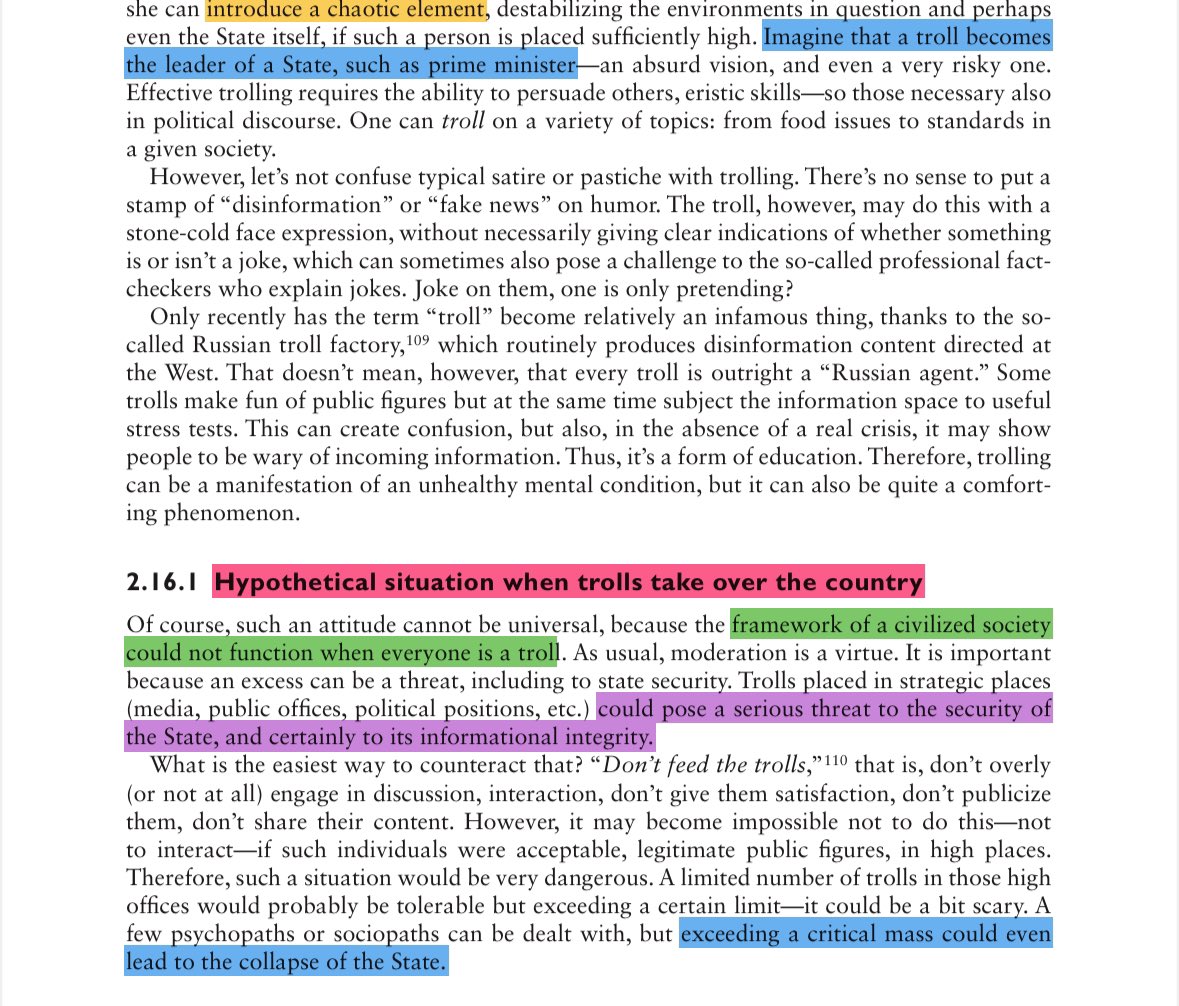
When I wrote this in my book, I wasn’t thinking of any specific person—just a process and phenomenon. And yet, here we are. The rise of trolling as a political strategy, the weaponization of disinformation, and the erosion of state integrity… all unfolding before our eyes. ⚠️
English
мaʇʇ retweetledi