
Farid Matuk

128K posts

Farid Matuk banner
Farid Matuk

Farid Matuk

@matuk

: ESTUDIOS https://t.co/hM1Putxf3h & https://t.co/xuwQWUMhk3 / FUNCIONARIO nueve años / CONSULTOR once años / CATEDRATICO doce años

WhatsApp: +51 999 350 650 Katılım Nisan 2008
374 Takip Edilen52.2K Takipçiler
Farid Matuk
Farid Matuk@matuk·
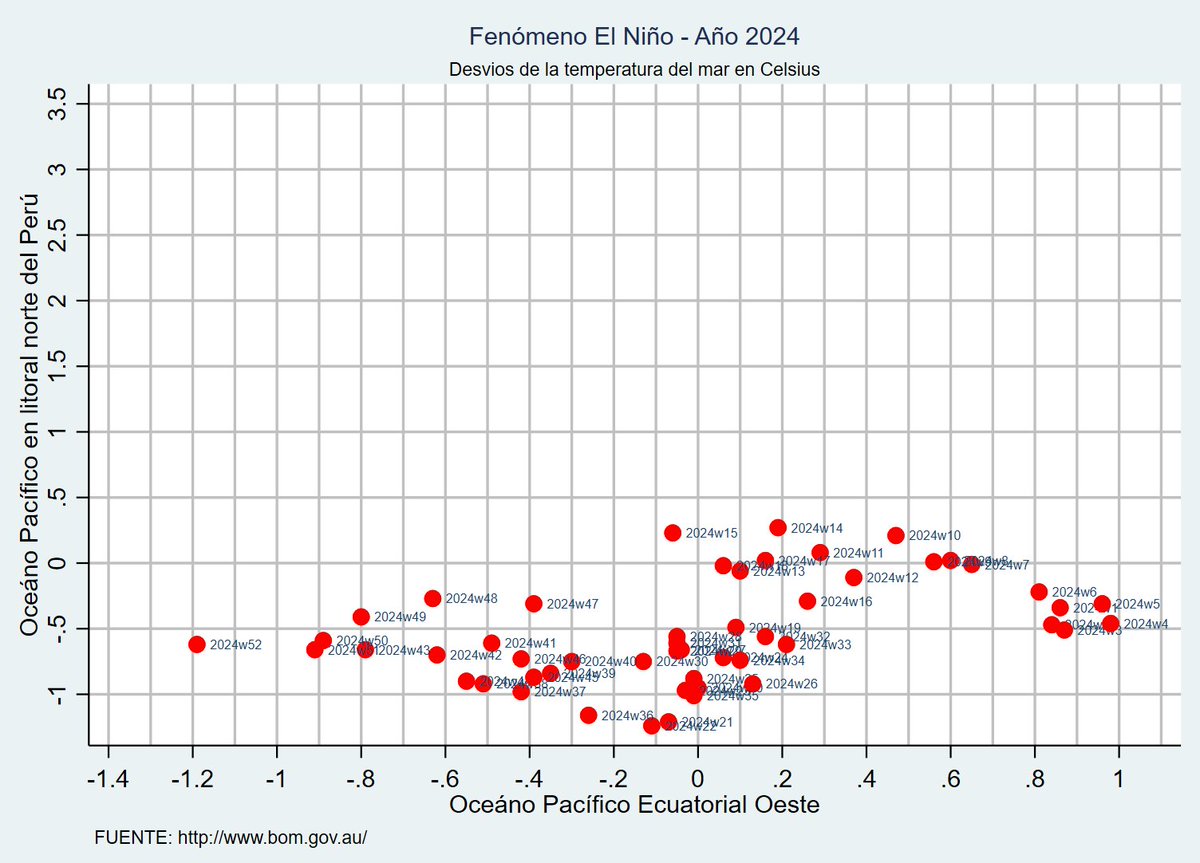
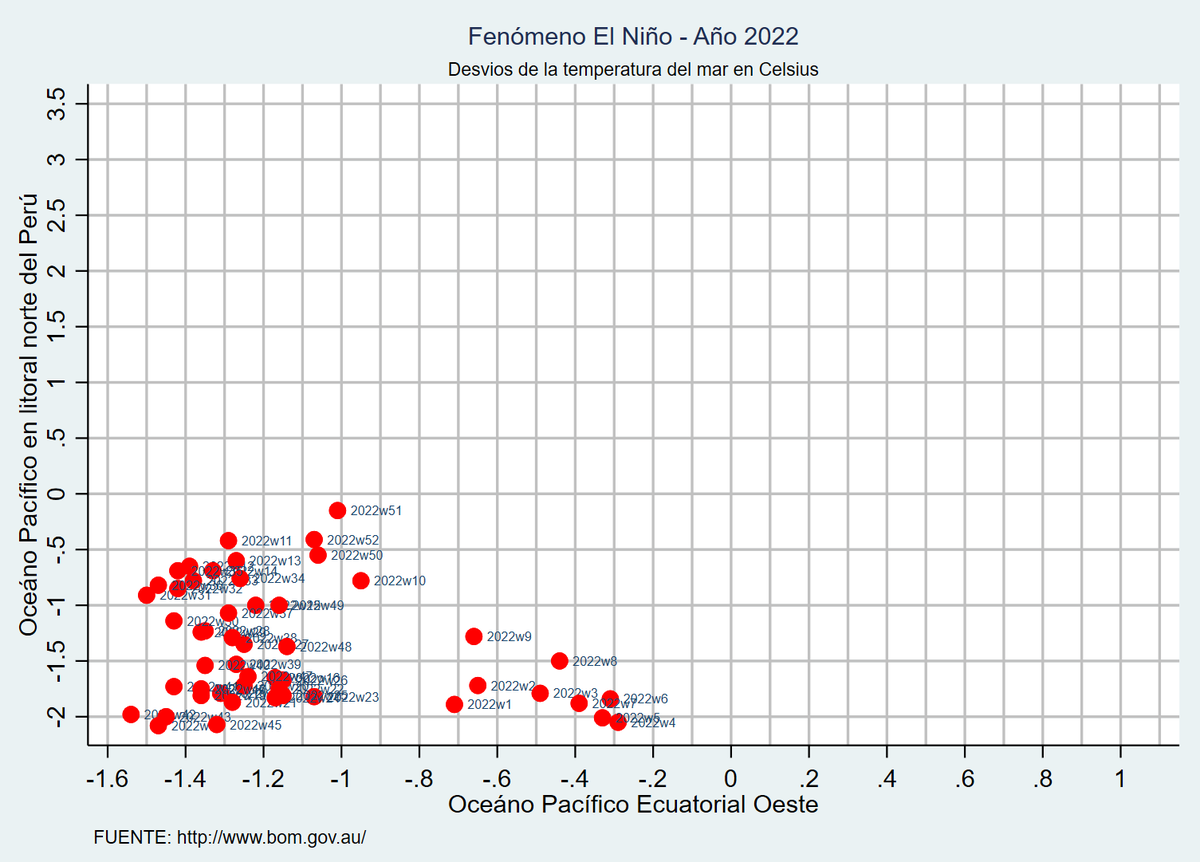
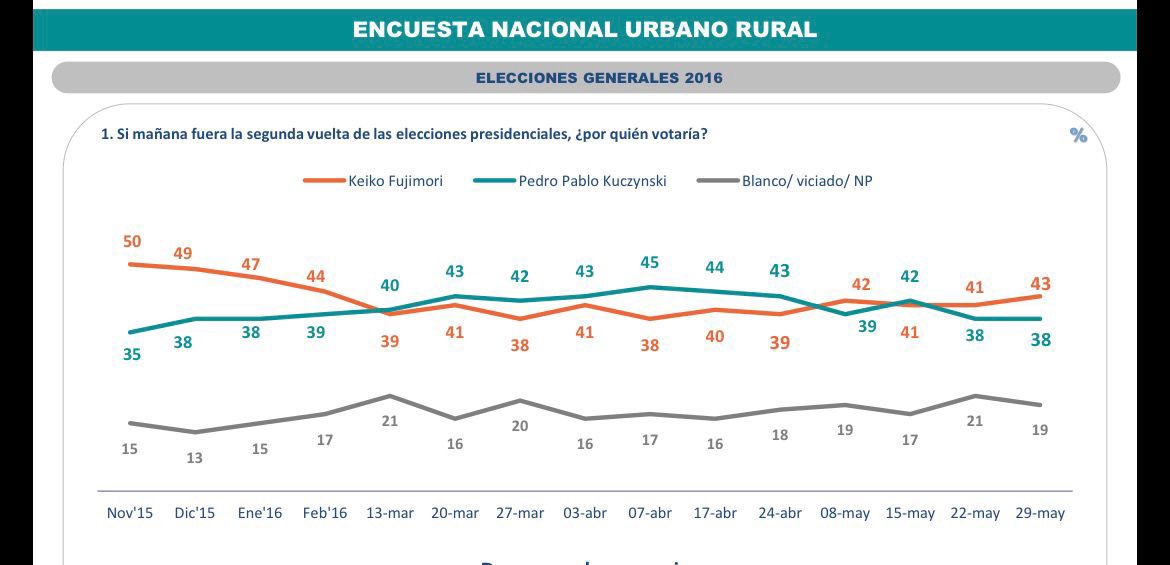
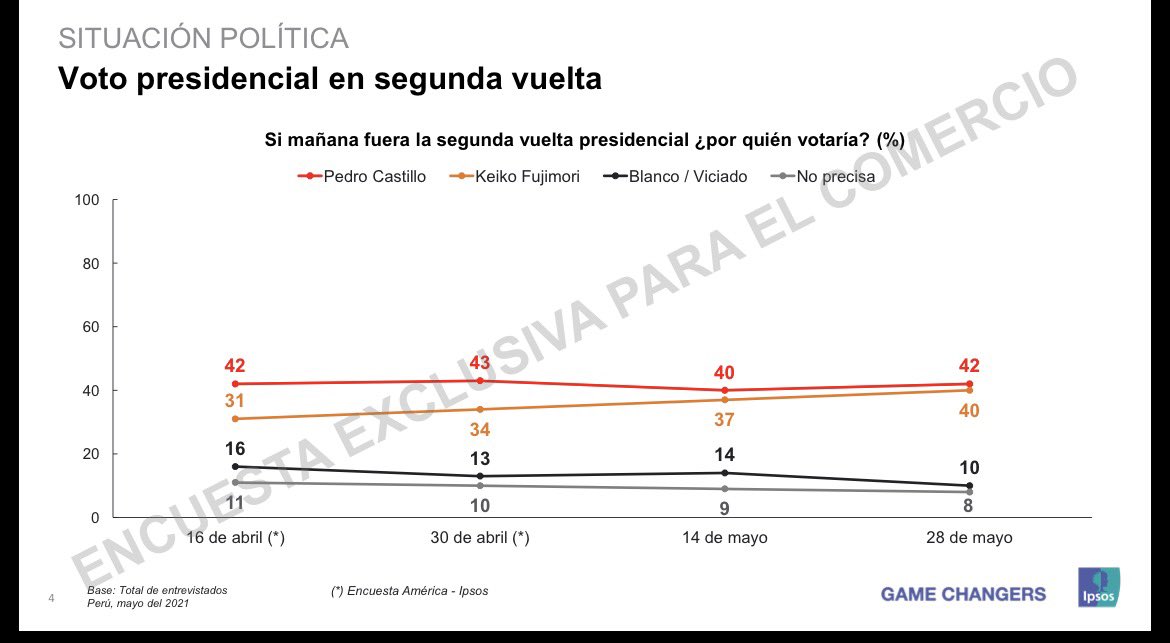
Abajo la temperatura semanal para 2025, 2024, 2022 y 2021 que fueron años que no hubo El Niño.
Farid Matuk tweet mediaFarid Matuk tweet mediaFarid Matuk tweet mediaFarid Matuk tweet media
Español
0
0
0
164
Farid Matuk
Farid Matuk@matuk·
#CLIMA En la semana 20 de 2026 se ha cruzado el umbral canónico de El Niño. Aunque ya van 4 semanas consecutivas al alza de la temperatura del mar. aún estamos lejos de los niveles de 2023 para tener lluvias catastróficas. Al presente aún es imposible predecir el Verano 2027.
Farid Matuk tweet media
Español
1
0
1
316
Farid Matuk retweetledi
ricardo fort meyer
ricardo fort meyer@fortunafort·
No llama la atención que los Fujimoristas quieran revivir Pronamachcs. En los 90s se utilizó como herramienta para el clientelismo político en zonas rurales, con múltiples acusaciones de mal uso de fondos y corrupción.
Español
1
18
45
1.3K
Farid Matuk retweetledi
ricardo fort meyer
ricardo fort meyer@fortunafort·
Pocos saben más de infraestructura en el Perú que @GGG_pe . Clara intervención y prioridades.
Español
0
6
23
1.3K
Farid Matuk retweetledi
IMF
IMF@IMFNews·
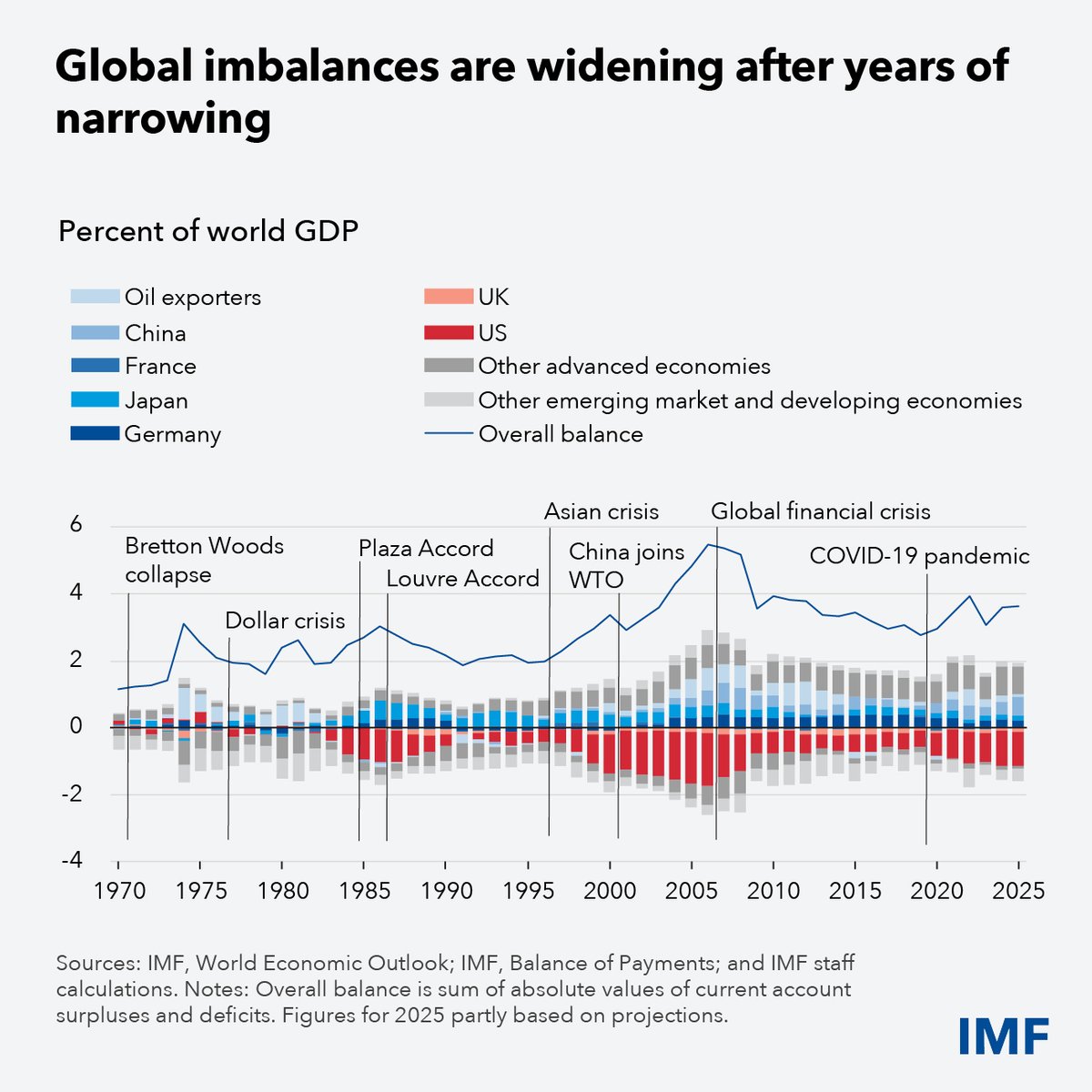
The gap between countries running large trade surpluses and those running large deficits is growing. Sound domestic policies, not trade barriers, remain the path to durable rebalancing. See our blog for more. imf.org/en/blogs/artic…
IMF tweet media
English
10
80
204
28.6K
Farid Matuk retweetledi
Tymofiy Mylovanov
Tymofiy Mylovanov@Mylovanov·
Thank you for reading this post! Please also consider donating to support Ukrainian students who study during the war if this cause resonates with you. foundation.kse.ua/en/donate-to-e…
Tymofiy Mylovanov tweet media
English
5
30
226
37.2K
Farid Matuk retweetledi
Tymofiy Mylovanov
Tymofiy Mylovanov@Mylovanov·
Petraeus: The U.S. has not remotely learned the lessons it should from Ukraine. This is the future of war: Ukraine alone uses 10,000 drones a day, and 90% of Russian casualties are caused by drones. That should force institutional change. 1/
English
174
1.9K
9.3K
984.6K
Farid Matuk retweetledi
Laura Rozen
Laura Rozen@lrozen·
“The more significant point is that the exchange has now moved through multiple rounds of attack and counter-attack within a single 24-hour period. That pattern is harder to contain than a single incident.”
Hamidreza Azizi@HamidRezaAz

#Iran’s Account of the Latest Exchange of Fire with U.S. Forces 🔹CENTCOM confirmed overnight clashes with Iranian forces near the Strait of Hormuz, describing U.S. operations as defensive responses to unprovoked Iranian attacks. The statement provided limited details on the sequence of events or casualties. 🔹Iranian sources offer a different – and more detailed – account of what happened. According to that account, the exchange unfolded in several rounds over roughly 24 hours. 🔹It reportedly began when U.S. forces attacked two IRGC naval boats, killing four Iranian military personnel. Iran responded with anti-ship missiles targeting U.S. vessels. Iranian air defense systems then shot down at least one – some reports say three – U.S. drones operating in the area. 🔹The U.S. subsequently struck Iranian anti-ship missile launch sites and air defense systems. Iran responded again, firing multiple anti-ship missiles at U.S. vessels in the Arabian Sea. 🔹Independent verification of these claims – including the casualty figures and the extent of damage on both sides – remains limited. The competing narratives follow the familiar pattern in which each side frames its actions as a response to the other’s aggression. 🔹The more significant point is that the exchange has now moved through multiple rounds of attack and counter-attack within a single 24-hour period. That pattern is harder to contain than a single incident. It also raises the question of how this cycle interacts with the indirect negotiations currently underway…

English
3
31
103
20.5K
Farid Matuk
Farid Matuk@matuk·
#POLITICA Orden es cuando cualquier persona es ejecutada (de manera planificada) por agentes del Estado cuando es: 1) Estudiante de La Cantuta 2) Comunero de Accomarca 3) Residente de Barrios Altos
Farid Matuk tweet media
Español
25
11
28
704
Farid Matuk retweetledi
Ihtesham Ali
Ihtesham Ali@ihtesham2005·
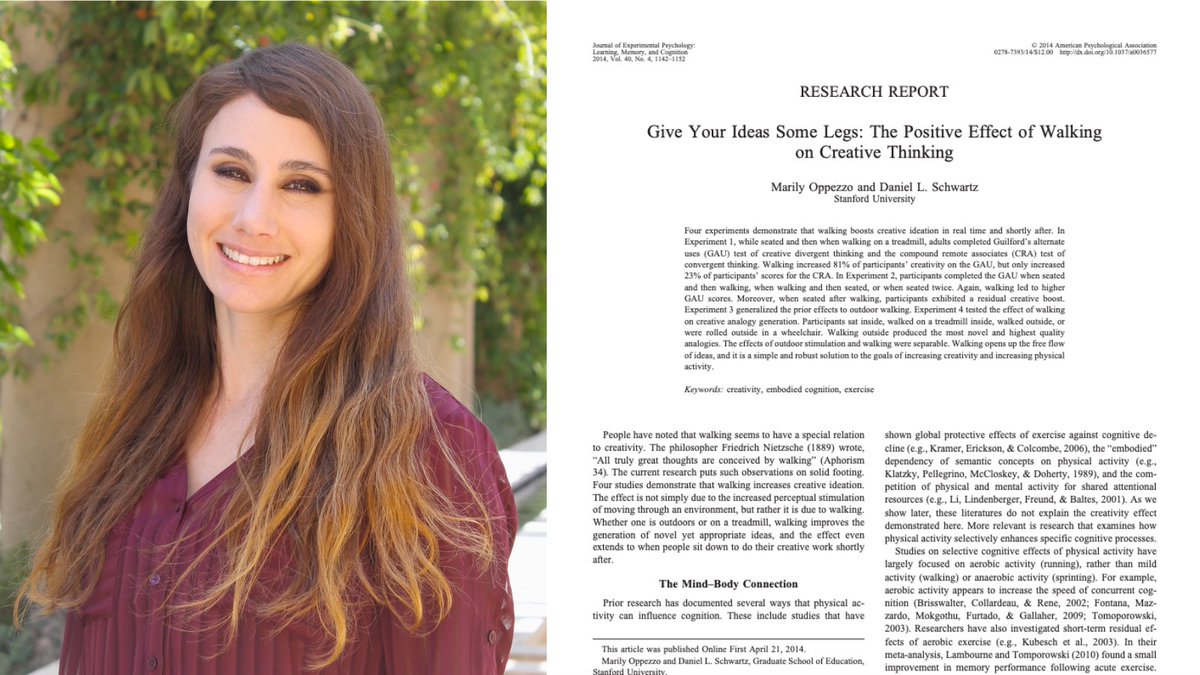
A Stanford psychologist spent 4 years proving that the simple act of walking generates 60% more creative ideas than sitting, and the experiment she designed to kill every alternative explanation is one of the most decisive findings in modern psychology. Her name is Marily Oppezzo. She got the idea for the study while walking with her advisor at Stanford to discuss her thesis topic, and the paper she eventually published in the Journal of Experimental Psychology in 2014 is sharp enough that it should have ended the seated meeting on the day it came out. She ran 4 experiments on 176 people. Same person tested twice. Once sitting, once walking. The creativity tasks were the standard ones psychologists have used for decades to measure how good a brain is at generating novel useful ideas. The result was almost too clean to publish. 81% of participants in the first experiment produced more creative ideas while walking than while sitting. In the second experiment, 88%. In the third, 100%. Every single person walked into a more creative version of themselves. On average, people generated 60% more novel useful ideas the moment their legs started moving. The skeptical question is the obvious one. Maybe it was the fresh air. Maybe it was the scenery passing by. Maybe it was the change of environment doing the work, not the walking itself. Oppezzo killed every one of those explanations with one experimental decision. She put people on a treadmill facing a blank wall. No scenery. No fresh air. No environmental change. Just legs moving in place while staring at white drywall. The 60% boost held. Then she ran the experiment that closed the case completely. She took participants outside in two conditions. Half of them walked through a Stanford courtyard. The other half were pushed through the exact same courtyard in a wheelchair. Same outdoor stimulation. Same scenery passing at the same speed. The only difference was whether the legs were moving. The walkers produced dramatically more novel high-quality ideas than the wheelchair group. The outdoors did almost nothing on its own. The walking did everything. This is the part of the study that hit hardest when I read it the first time. She also tested the opposite kind of thinking. Convergent thinking. The kind where there is one right answer and you have to narrow down to it. Word puzzles where 3 words share a hidden fourth word that connects them. The seated participants did slightly better on these. Walkers got slightly worse. Walking is not a general intelligence enhancer. It does one specific thing. It opens up the divergent search inside your brain. The part that generates options. The part that produces unexpected connections. The part that takes a problem and finds five ways into it instead of one. When you need to converge on the single right answer, sit down. When you need to find the answer in the first place, get up. The mechanism is now well understood. Walking selectively activates what neuroscientists call the default mode network, the system inside your brain that runs when you are not consciously focused on anything. The DMN is where mind-wandering happens. Where memories cross-reference each other. Where ideas that have been sitting in separate folders inside your head finally bump into each other. When you sit at a desk and force yourself to concentrate, you suppress the DMN. When you walk at a natural pace, the executive part of your brain gets just busy enough handling the walking that the DMN comes online and starts doing the work that focus was blocking. The most useful finding in the entire paper is the one almost nobody quotes. The boost did not turn off the moment people stopped walking. Participants who walked first and then sat back down stayed elevated. Their next round of seated creativity work was still significantly better than people who had been sitting the whole time. The rest lingered for at least several minutes after the legs stopped moving. You do not need to do creative work while walking. You need to walk before the creative work. The brain holds the state. The history of this is the part that should haunt anyone who still does meetings in chairs. Charles Darwin built a gravel loop behind his house in Kent called the Sandwalk and walked it 3 times a day for the rest of his life. The theory of evolution was developed one lap at a time on that path. Nietzsche walked up to 10 hours a day during the years he wrote his most important books and openly said the work was conceived on his feet. Beethoven composed for the morning and walked for 5 hours every afternoon with a pencil in his pocket for when something landed. Kahneman said the best thinking of his Nobel Prize-winning career happened on leisurely walks with Amos Tversky. Steve Jobs refused to take important conversations sitting down. He held them on foot. Every one of them was using the system Oppezzo would not measure until 2014. They just did not know what to call it. The question worth sitting with is the one almost nobody asks. Every meeting you have ever attended sitting around a table was a meeting held at a fraction of the brain power that was actually available to the people in the room. Every brainstorm that got stuck inside a conference room. Every problem you tried to solve at a desk and gave up on. Every idea you could not quite get to. The intervention is the easiest one in modern science. No supplement. No app. No subscription. No training program. Just a pair of legs and 15 minutes. The Stanford lab proved it. The philosophers knew it. The neuroscience explains it. And almost everyone reading this is still trying to think their way out of problems sitting completely still.
Ihtesham Ali tweet media
English
169
1.7K
6.7K
541K
Farid Matuk retweetledi
Kenneth Roth
Kenneth Roth@KenRoth·
Peruvian journalist Geraldine Santos is only 30 years old, and she is already preparing for her funeral because she has received so many threats while reporting on cocaine trafficking and environmental crimes in the Amazon jungle. trib.al/Nl8JjXW
English
25
1.7K
2.6K
70.2K
Farid Matuk retweetledi
Julie Tsirkin
Julie Tsirkin@news_jul·
Senior Administration Official tells me NO IRAN DEAL TODAY. "The Iran agreement will not be signed today, but there has been progress on a deal."
Julie Tsirkin@news_jul

NEW from President Trump -- no deal (yet) on Iran, and he doesn't want to "rush" Trump says Iran's government "must understand" that they can't develop a nuclear weapon. So that point has not been agreed to. Blockade in the Strait of Hormuz remains. @realDonaldTrump/posts/116629952973301768" target="_blank" rel="nofollow noopener">truthsocial.com/@realDonaldTru

English
53
22
193
80.2K
Farid Matuk retweetledi
Jesus Chrysler
Jesus Chrysler@JesusChryslerII·
Something All Must Witness To Believe For those of you itching to see Puddles the Clown combine The Who’s “Pinball Wizard” with Johnny Cash’s “Folsom Prison Blues,” this is for you. Enjoy. Or hate. It’s a free country. Well, relatively, anyway.
English
205
921
5.4K
433.7K
Farid Matuk
Farid Matuk@matuk·
#POLÍTICA Hace exactamente cinco años, en Puente Piedra hubo la presentación del equipo de Plan de Gobierno. (un Sublime para el que sepa en que fila/columna me encuentro )
Farid Matuk tweet media
Español
2
1
0
261
Farid Matuk
Farid Matuk@matuk·
#CLIMA Todos estudiamos en el colegio sobre la Corriente (fría) de Humboldt. Si la medimos como la temperatura del mar desde el Callao hasta la frontera sur, su temperatura se incrementa cuando la Corriente del Niño irrumpe.
Farid Matuk tweet media
Español
0
1
7
592
Farid Matuk retweetledi
Love Music
Love Music@khnh80044·
43 years ago, Bananarama released “Cruel Summer” 🎶✨❤️ A timeless ’80s classic that never lost its magic.
English
124
1.3K
8.3K
305.6K