Mayur Rustagi

1.3K posts

Mayur Rustagi

Mayur Rustagi

@mayur_rustagi

Entrepreneur by Day, Developer by Night. @sigmoidinc @adobe @iitkgp

India Katılım Nisan 2012
526 Takip Edilen428 Takipçiler
Mayur Rustagi
Mayur Rustagi@mayur_rustagi·
@puspesh Every enabler has the same issue starting with Coal, electricity, semicondutor to internet and now possibly AI. It's delulu land
English
0
0
0
19
Mayur Rustagi retweetledi
UK (Utkrishta Kumar)
UK (Utkrishta Kumar)@youkaey·
@oolka_ai was founded on a simple belief. Every Indian deserves access to affordable credit. Over time, that belief evolved. Our mission today is to democratize financial outcomes for every Indian through AI. We are building India’s default AI agent that helps every user take charge of their financial life. Today, I am excited to share that Oolka has raised $14 million to accelerate this mission. The round was led by @Accel , with continued support from @LightspeedIndia and @z47_vc . Also, grateful to @viditaatrey and @barnwalSanjeev for doubling down on our mission. Welcoming Abhinav Chaturvedi, Sarthak Singh and Manasi Shah to team Oolka and thanking Harsha Kumar, Vikram Vaidyanathan, Anish Patil, Priyal Motwani and Dhairen Tohliani for standing by us through the journey and continued belief in our mission. Most importantly, this milestone belongs to the team. A team that embraced uncertainty. A team that chose the hard path again and again to stay true to our mission. We have already served millions of users and are gearing up to serve many more. We will not stop until every Indian has a real shot at financial health. We are assembling our Avengers to play an infinite game. Apply now - binary.so/oolka
UK (Utkrishta Kumar) tweet media
English
5
6
29
7.6K
Mayur Rustagi retweetledi
Paul Graham
Paul Graham@paulg·
There's never been an investment like the investment in railroads. (This graph has a log scale!)
Paul Graham tweet media
English
233
922
8.4K
782.2K
Mayur Rustagi retweetledi
Startup Archive
Startup Archive@StartupArchive_·
Jony Ive recounts the time Steve Jobs called him vain Jony recounts the time he asked Steve Jobs to be less harsh in his critique of a piece of work. When Steve asked “why?”, Jony replied: “Well, because I care about the team.” Steve then said, as Jony puts it, “this brutally, brilliantly, insightful thing”: “No Jony, you’re just really vain. You just want people to like you. And I’m surprised at you because I thought you really held the work up as the most important—not how you believe you are perceived by other people.” Jony reflects on the remark: “I was terribly cross because I knew he was right.” Video source: @VanityFair (2014)
English
11
70
829
134.7K
Mayur Rustagi
Mayur Rustagi@mayur_rustagi·
Energy/technology & now intelligence follows Jevons Paradox: increased efficiency in using a resource leads to higher consumption. Reason: these are leverage instruments which give you 10x of what you pay for, increased efficiency means now you get 20x so you end up using more.
English
0
0
0
31
Mayur Rustagi
Mayur Rustagi@mayur_rustagi·
Coal miners treatment and conditions tells us that no great expansion happens without immense struggle. As much as east India company exploited world wide, local exploitation was also quite bad.
English
1
0
0
34
Mayur Rustagi
Mayur Rustagi@mayur_rustagi·
You can listen to one podcast this year make it this one [5+hrs investment ] youtu.be/Yxn1H-Zyogg?si… some take aways on top the excellent ones in the podcast
YouTube video
YouTube
English
1
1
1
83
Mayur Rustagi
Mayur Rustagi@mayur_rustagi·
@arnav_kumar Proverbial saying is " if you are running Flipkart only if you get a call from Lee, you shouldn't be running it in the first place". Kind of pitch 101 is it not?
English
0
0
0
188
arnav
arnav@arnav_kumar·
Nothing good has ever come out of an international call from an unknown number. It is bait. The only exception is Lee Fixel calling Flipkart's customer service number to put in $1Mn. God bless whoever picked that call. Imagine that call going to IVR and Lee Fixel getting busy with life. No flipkart. No startup funding cycle. And yours truly would be running in an investment bank, running Monte Carlo Simulations and eating Black Scholes for dinner. Thank for reading this rambling stream of thought
arnav tweet media
English
2
0
26
3.8K
UK (Utkrishta Kumar)
UK (Utkrishta Kumar)@youkaey·
Since 2020, I have had a 31st December ritual: welcoming the new year by reading a new book through the night. I have read the fewest books this year, so trying to make up for it. This is tonight’s pick.
UK (Utkrishta Kumar) tweet media
English
1
0
8
307
Mayur Rustagi
Mayur Rustagi@mayur_rustagi·
Govt spending would be more scrutinized if instead of subsidy or tax rebate its reported as YOU are going spend 30 billion dollars on car companies to keep produce expensive cars or "YOU" chose to spend 10 billion to keep mixing Ethanol in gasoline
Milton Friedman Quotes@MiltonFriedmanW

Milton Friedman: “Keep your eye on one thing and one thing only: how much government is spending, because that’s the true tax.” “If you’re not paying for it in the form of explicit taxes, you’re paying for it indirectly in the form of inflation or borrowing.”

English
0
0
0
52
Mayur Rustagi retweetledi
UK (Utkrishta Kumar)
UK (Utkrishta Kumar)@youkaey·
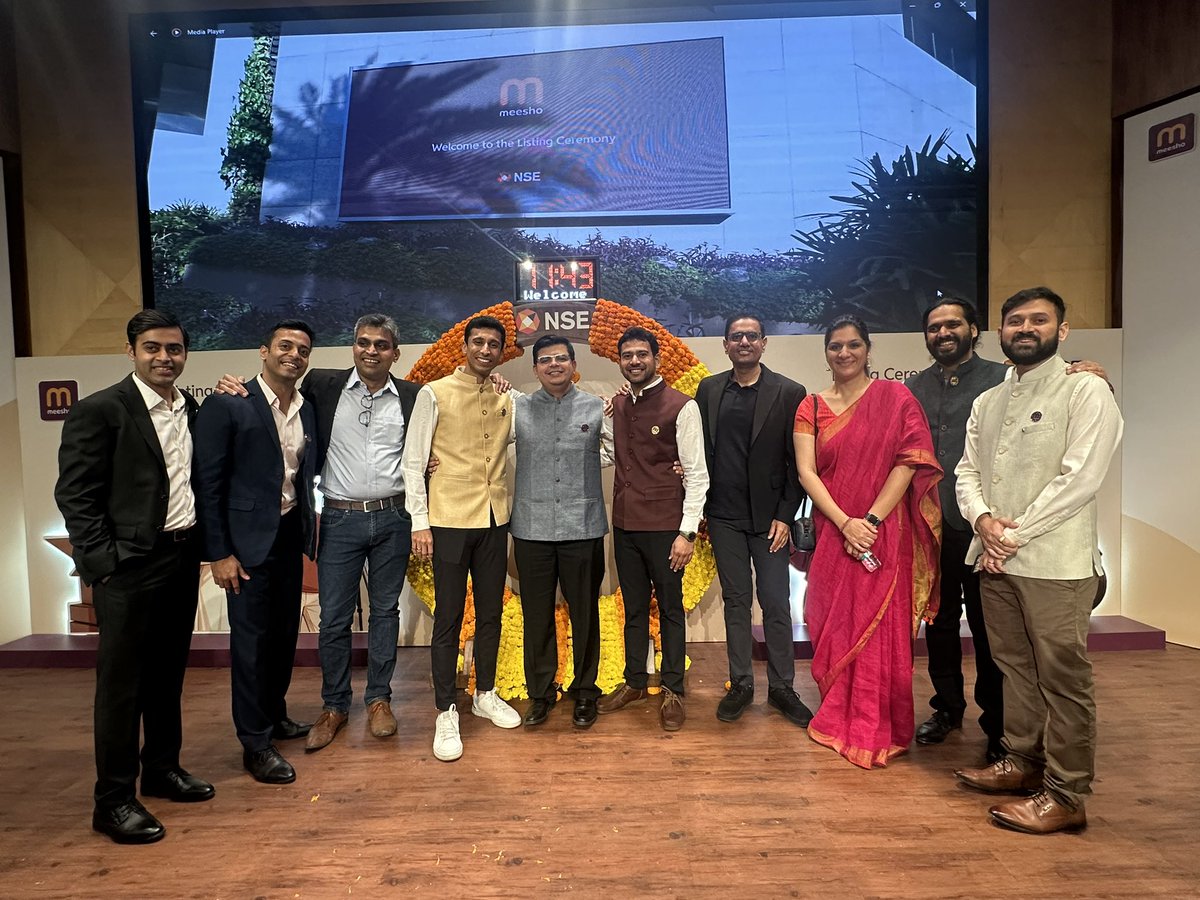
No words, only emotions. Meesho IPO listing at NSE today.
UK (Utkrishta Kumar) tweet media
English
0
2
84
4K
Mayur Rustagi retweetledi
Alexis Ohanian 🗽
Alexis Ohanian 🗽@alexisohanian·
As the son of an undocumented immigrant (my mom overstayed an au pair visa for years before marrying my dad, a U.S. citizen), it’s deeply personal: Reddit wouldn’t exist if ICE had come for her. I do think border security matters. But it shouldn’t come at the cost of crushing lives. A sensible amnesty / legalization policy (like what Reagan offered in 1986!!) could strike a better balance: Path to citizenship for law-abiding, hard-working undocumented immigrants <>. Order and accountability; those who don’t step forward for the pathway should face enforcement under due process. This isn’t open borders, it’s smart borders + humane immigration reform. The guys up at the crack of dawn in the Home Depot parking lot <> or the women hustling their home-made food on the corner are <> the men & women we want contributing to this great nation. We shouldn't be rounding them up at gunpoint.
Paul Graham@paulg

Later we'll find it hard to believe that masked thugs were dragging people off the street at gunpoint. At least I hope we will, since the other alternative would be to decline into the kind of country where that's normal.

English
6.8K
1.9K
16.7K
9.8M
Mayur Rustagi
Mayur Rustagi@mayur_rustagi·
@kpowerinfinity @amazon You probably do, just havent realized it yet. A lot of recommendation is about waiting for users to wise up to it. :)
English
1
0
2
22
Krishna Mehra
Krishna Mehra@kpowerinfinity·
Sorry ⁦@amazon⁩ we do not need bananas and avocados just because I’m buying patio furniture, drill or plumbing supplies!
Krishna Mehra tweet media
English
1
0
0
107
Mayur Rustagi retweetledi
SheetalArcher
SheetalArcher@ArcherSheetal·
World Champion - the world title is ours. With all my heart, for my country. ♥️🇮🇳🏹
SheetalArcher tweet mediaSheetalArcher tweet media
English
2.3K
12.2K
84.1K
2.2M
Mayur Rustagi
Mayur Rustagi@mayur_rustagi·
Conviction isn't something you can fake or borrow.
English
0
0
3
82
Mayur Rustagi retweetledi
Shane Parrish
Shane Parrish@shaneparrish·
12 Lessons from my conversation with former chairman and CEO of Pepsi Indra Nooyi: 1. Leave the Crown in the Garage: The day Indra became president of PepsiCo, she rushed home to share the news. Her mother cut her off: "The news can wait. Go get milk." Indra returned furious. Her mother's response was surgical: "You may be president of PepsiCo, but when you come home, you're a wife, a mother, and a daughter. Nobody can take your place. Leave that crown in the garage." Someone else can fill your role at the company. Nobody else can be you at home. Leave your title at the door. 2. Zoom In Before You Zoom Out: As a consultant, Indra visited factories, walked manufacturing lines, and talked to R&D teams. "My philosophy was zoom in before you zoom out," she says. Some call it micromanaging. She calls it micro-understanding. "If you don't understand the business down to where the rubber meets the road, you can make decisions at the top which are not implementable." You can't fix what you don't understand. Most leaders stay at 30,000 feet. The best descend to ground level first. 3. The Right Side of the Decimal: When you're the CEO, you think in millions. But money is made in pennies. Steve Reinemund taught her about "the right side of the decimal"—the tiny costs that compound. Can you remove a penny from each delivery route? Half a cent from packaging? "I'm selling a 25-cent bag of Doritos," her team would say. "Don't talk about millions." The micro-pennies add up. If you want to be great, you need to master both sides of the decimal. 4. Know the Politics, Don't Play Them: "Where there are people, there's politics," Indra observed. "Understand the politics, but don't play in the politics." Know who doesn't like whom. Understand how meetings really work. Then focus on the job. Once you meddle in politics and gossip, you become a negative force. Most people get sucked into the game. The best observe it and opt out. 5. There Is No Such Thing as Balance: When I asked her about work-life balance, she laughed. "What balance? It doesn't exist. It's juggling all those roles. It's not even harmony, as sometimes it's not very harmonious." You juggle and hope the most important balls don't crash and burn each day. They're all full-time roles. "You don't get to be CEO by being the perfect mom, the perfect wife, the perfect everything. You do the best you can." Most people seek balance. The honest ones admit it's juggling. 6. Signal Without Static: Indra learned to be surgical with feedback. Tell them what they did well. Tell them what they didn't. Tell them exactly what to improve. Be clear. Be direct. Be kind. No leaving people guessing. When someone rolled their eyes or cut someone off in a meeting, she'd call it out immediately but gently: "Can you let her finish?" Most managers bury the message in comfort. The best deliver it clean. 7. Passion Looks Like Crazy: Steve Jobs taught her to show passion. When he hated a campaign, he'd throw things and demand a new one by morning. "I don't utter four-letter words and throw things around," Indra says. But she learned to say "I hate it" when she hated something. "If you care about something, show your passion." Most people hide their intensity to seem professional. The best let it show when it counts. 8. You Can Always Find the Data: While working on a competitor's plant expansion, Indra needed specific details. The site was hidden in woods. Traditional sources had nothing. So she filed a Freedom of Information Act request for satellite photos at different altitudes. Got them in days. Could see the bays, estimate the products. "Don't tell me you can't get the data," she says. "Find a way." The data exists somewhere—directly, indirectly, tangentially. Most people stop at the first obstacle. The persistent find another angle. 9. High Agency Means No Blame: The best people at PepsiCo raised their hands for difficult assignments. If something went wrong, they didn't look for someone to blame. They'd say, "I could have led differently" or "I could have staffed my team differently." These people constantly looked for ways to improve the company, not chase the next promotion. They put company before career. Most people dodge hard assignments. High-agency people volunteer for them. 10. Complaining Is Not a Strategy: Indra grew up in post-colonial India, where everyone was pushing their kids. "Satan has work for idle hands," her family would say. When she wanted to complain, there was nowhere to go. Every aunt and uncle pushed their kids the same way. "If I complained to an aunt or an uncle, they'd say, 'Oh, I'm doing the same with my kids.'" The entire community operated on one frequency: work harder. All the energy you spend complaining comes at the expense of working with reality as it is. 11. Take the Blame, Give the Credit: "Blame flows upwards. Credit should flow downward." When something goes wrong, Indra takes responsibility. When something goes right, the team gets recognition. After driving a major product launch as "program manager," she made sure the team got all the credit. "You couldn't have done it yourself," she says. Most leaders do the opposite. The best flip the script. 12. When the Environment Changes, Change Your Mind: Indra led the spin-out of bottlers in the '90s, then led the charge to bring them back. "People say, 'Oh, you flip-flop.' No, the environment changed." When markets grew, independent bottlers thrived. When growth slowed, they fought over a shrinking pie. Strategy isn't dogma. It's a response to reality. "You cannot be dogmatic about your strategic direction." Most leaders stick to decisions to seem consistent. The best adapt when the facts change. Indra Nooyi: Lessons from the Top of PepsiCo and the Cost of Getting There [The Knowledge Project Podcast Episode 234]
English
11
40
240
77.5K