Shadow

42.3K posts

Shadow banner
Shadow

Shadow

@mchellap

Founded three start-ups. MSME, DPIIT. Clean Tech. Automotive Controls. Football Coach. Foreign policy enthusiast.

Katılım Eylül 2009
998 Takip Edilen1.8K Takipçiler
Sabitlenmiş Tweet
Mohandas Pai
Mohandas Pai@TVMohandasPai·
Minister @nitin_gadkari needs your attention
Normal Guy@Normal_2610

India pays a premium for the privilege of not learning anything :) Every Indian car Tata, Mahindra, Maruti, all of them has a tiny computer inside called an ECU (Engine Control Unit) This computer decides everything - how much fuel to inject, when to shift gears, how brakes work, how the battery behaves in an EV. Think of it as the car's brain. India makes zero of these brains for passenger cars. All of them come from foreign companies, mainly Bosch (Germany). If you don't control the brain, you don't really control the car. Indian OEMs can't even add a simple valve to their own engine without asking Bosch for permission. They can't change a single line of code. They are selling cars with someone else engineering inside. This isn't really about technology being too hard. It's a business model designed to keep you dependent. Three layers lock you in :) First, every new car programme needs Bosch to do setup work (Rs 10-30 crore). Second, you pay full price for software Bosch already developed for Volkswagen so Bosch gets paid twice for the same work. Third and this is the killer every time you want to change anything in the software, even something tiny, it costs around $500,000. So Indian OEMs simply stop trying to innovate. They accept whatever Bosch gives them. The calibration trap means tuning the car's brain for Indian conditions, how should the engine behave in Ladakh cold vs Chennai heat? Indian OEMs outsource even this to AVL in Austria. AVL reuses work they already did for European cars, charges India full price, and transfers zero knowledge. So Indian engineers never even learn how their own cars work from the inside. What Korea did is Hyundai faced the exact same situation in 1987. They set up Kefico as a joint venture with Bosch, learned everything from the inside, and by 2015 they owned the full technology themselves. The sequence was simple - first learn calibration (tuning) → then write your own software → then build your own hardware. It's a ladder. India never climbed the first rung. Why India didn't do this - It's not a talent problem Indian engineers design ECUs at Bosch offices worldwide. It's a combination of things like Indian OEMs won't fund Indian startups to develop alternatives. They demand that Indian suppliers first prove themselves in Europe before getting a chance at home (while European companies protect their own). Middle managers won't risk their careers backing a Pune startup when they can safely pick Bosch. India spends 0.64% of GDP on R&D vs Korea's 4.9%. Private sector funds only 36% of India's R&D, in Korea it's 79%. SEDEMAC - the one exception - One Indian company (IIT Bombay founders, Pune-based) actually makes ECUs for two-wheelers and generators. They have real IP, real patents, millions of units shipped. But even they couldn't break into passenger cars. Tata Motors is literally in the same city and doesn't use them. EVs are simpler to control than petrol/diesel engines. This should have been India's fresh start. Instead, Mahindra's new EV platform has Bosch (Germany), Valeo (France), BYD (China), Mobileye (Israel), Continental (Germany) - zero Indian ECUs. The dependency just migrated from ICE to EV with different foreign names. swarajyamag.com/technology/the…

English
19
76
296
29K
Shadow
Shadow@mchellap·
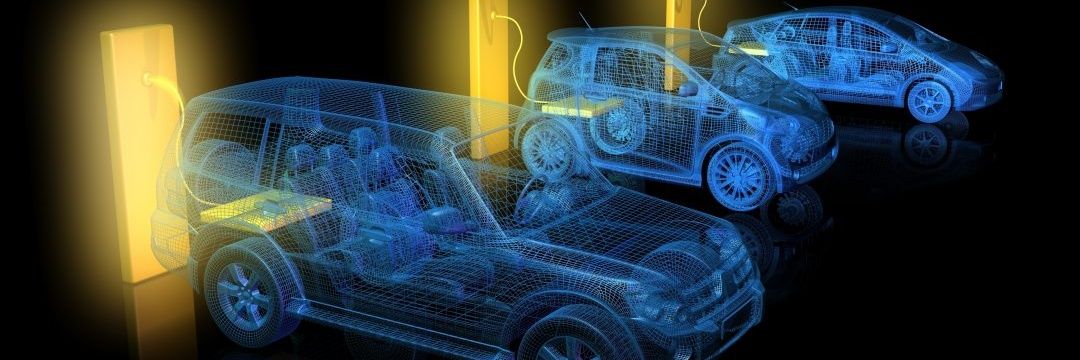
@monke_20 @amargov @astrokaran Layers of the onion really. We may address the software soon but think the answer partly is in your banner pic!
English
0
0
0
75
Shadow retweetledi
Prince Sahu
Prince Sahu@ps1291628·
@mchellap @amargov @astrokaran This is such an important question. We always talk about factories, brands, and production numbers. But the real power in any industry is who owns the design, IP, and engineering talent behind it. That’s where the long-term advantage actually sits.
English
0
1
0
175
Shadow
Shadow@mchellap·
@kansaratva @amargov @astrokaran Yes indeed, and thanks 🙏 This is a story of no villains but a sort of deadlock that needs a shake up. Let's hope we just triggered that!
English
0
0
1
108
Kansaratvam
Kansaratvam@kansaratva·
@mchellap @amargov @astrokaran Great to see such a response for a fairly technical subject, and very well-written as well. I hope the discussion leads to better, more dependable solutions.
English
1
0
2
184
Shadow retweetledi
Mountain Rats
Mountain Rats@mountain_rats·
India’s UPI payment system now processes more daily transactions than Visa and Mastercard combined globally
English
30
747
7.6K
76.6K
KarthikM
KarthikM@mkarthik798·
@mchellap @amargov @astrokaran Liked your article, thank you My thoughts: Could have highlighted the necessity of having a well structured eco system as well ECU demands deep tech in: Electronics Semi conductor capabilities Chip design Hardware (Microcontrollers, sensors interface)
English
1
1
6
247
Shadow retweetledi
chartspeak
chartspeak@chartspeak_P·
@mchellap @amargov @astrokaran Indeed eye opener world forth largest auto market is struggling to make locally brain of iC engine.
English
0
1
1
170
Shadow
Shadow@mchellap·
@RahulMZad @SwarajyaMag Thank you 🙏 The goal is to hopefully impact a change of direction because we have highly capable engineering talent that needs better leadership.
English
1
0
2
56
Rahul Zad
Rahul Zad@RahulMZad·
@mchellap @SwarajyaMag Thank you for the article and the research undertaken for the same. Its due to people like you, that the general population can actually see the reality of Indian companies.
English
1
0
1
65
Shadow
Shadow@mchellap·
My piece in @SwarajyaMag Where I address what I think is the single biggest roadblock to Automotive innovation in India: Our lack of control of, and even access to, the brains and central nervous system of a modern automobile! If Electronic Control and Software defined vehicles are the future, India is around 20 years behind. The good news: With AI, Autonomy, Electrification and much more converging, the case for taking control of IP has never been stronger. But read on and get a sense of where we are today! Comments welcome.
Amar Govindarajan@amargov

The engine India never built was a failure of ambition. The electronic controls India never built is the same failure, compounded. Read this investigation by @mchellap swarajyamag.com/technology/the…

English
7
29
145
4.2K
Shadow
Shadow@mchellap·
If the article helps spur some collaboration with Indian OEMs, and some Indian startups getting a look in, we will have achieved our purpose.
English
0
2
21
652
Shadow
Shadow@mchellap·
Thanks for weighing in. I wrote this after a decade of fighting the good fight - there is hope however, as it is not a case of a fundamentally difficult problem like ASML's photolithography for instance. If the article helps spur some collab and some Indian startups getting a look in, we will have achieved our purpose.
English
0
0
5
70
Subhash Kak ☀️ सुभाष काक
"There is a huge cost to not learning anything"
Normal Guy@Normal_2610

India pays a premium for the privilege of not learning anything :) Every Indian car Tata, Mahindra, Maruti, all of them has a tiny computer inside called an ECU (Engine Control Unit) This computer decides everything - how much fuel to inject, when to shift gears, how brakes work, how the battery behaves in an EV. Think of it as the car's brain. India makes zero of these brains for passenger cars. All of them come from foreign companies, mainly Bosch (Germany). If you don't control the brain, you don't really control the car. Indian OEMs can't even add a simple valve to their own engine without asking Bosch for permission. They can't change a single line of code. They are selling cars with someone else engineering inside. This isn't really about technology being too hard. It's a business model designed to keep you dependent. Three layers lock you in :) First, every new car programme needs Bosch to do setup work (Rs 10-30 crore). Second, you pay full price for software Bosch already developed for Volkswagen so Bosch gets paid twice for the same work. Third and this is the killer every time you want to change anything in the software, even something tiny, it costs around $500,000. So Indian OEMs simply stop trying to innovate. They accept whatever Bosch gives them. The calibration trap means tuning the car's brain for Indian conditions, how should the engine behave in Ladakh cold vs Chennai heat? Indian OEMs outsource even this to AVL in Austria. AVL reuses work they already did for European cars, charges India full price, and transfers zero knowledge. So Indian engineers never even learn how their own cars work from the inside. What Korea did is Hyundai faced the exact same situation in 1987. They set up Kefico as a joint venture with Bosch, learned everything from the inside, and by 2015 they owned the full technology themselves. The sequence was simple - first learn calibration (tuning) → then write your own software → then build your own hardware. It's a ladder. India never climbed the first rung. Why India didn't do this - It's not a talent problem Indian engineers design ECUs at Bosch offices worldwide. It's a combination of things like Indian OEMs won't fund Indian startups to develop alternatives. They demand that Indian suppliers first prove themselves in Europe before getting a chance at home (while European companies protect their own). Middle managers won't risk their careers backing a Pune startup when they can safely pick Bosch. India spends 0.64% of GDP on R&D vs Korea's 4.9%. Private sector funds only 36% of India's R&D, in Korea it's 79%. SEDEMAC - the one exception - One Indian company (IIT Bombay founders, Pune-based) actually makes ECUs for two-wheelers and generators. They have real IP, real patents, millions of units shipped. But even they couldn't break into passenger cars. Tata Motors is literally in the same city and doesn't use them. EVs are simpler to control than petrol/diesel engines. This should have been India's fresh start. Instead, Mahindra's new EV platform has Bosch (Germany), Valeo (France), BYD (China), Mobileye (Israel), Continental (Germany) - zero Indian ECUs. The dependency just migrated from ICE to EV with different foreign names. swarajyamag.com/technology/the…

English
5
12
55
2.3K