Mithat Can Ulubay

104 posts

Mithat Can Ulubay banner
Mithat Can Ulubay

Mithat Can Ulubay

@mculubay

Founder, CEO @Magnos_AI | Co-founder, President @FloraForGood | Former PE Investor, Tech M&A @GoldmanSachs, MBA @StanfordGSB

New York, USA Katılım Kasım 2009
989 Takip Edilen320 Takipçiler
Sabitlenmiş Tweet
Mithat Can Ulubay
Mithat Can Ulubay@mculubay·
Fragmented data. Manual workflows. Slow decisions. Millions left on the table. After a decade as a Goldman Sachs banker, PE investor, and 8-figure operator, I kept hearing the same problem from CEOs and finance leaders. Today, we’re launching @Magnos_AI to solve it. 👇
English
1
0
2
160
Mithat Can Ulubay
Mithat Can Ulubay@mculubay·
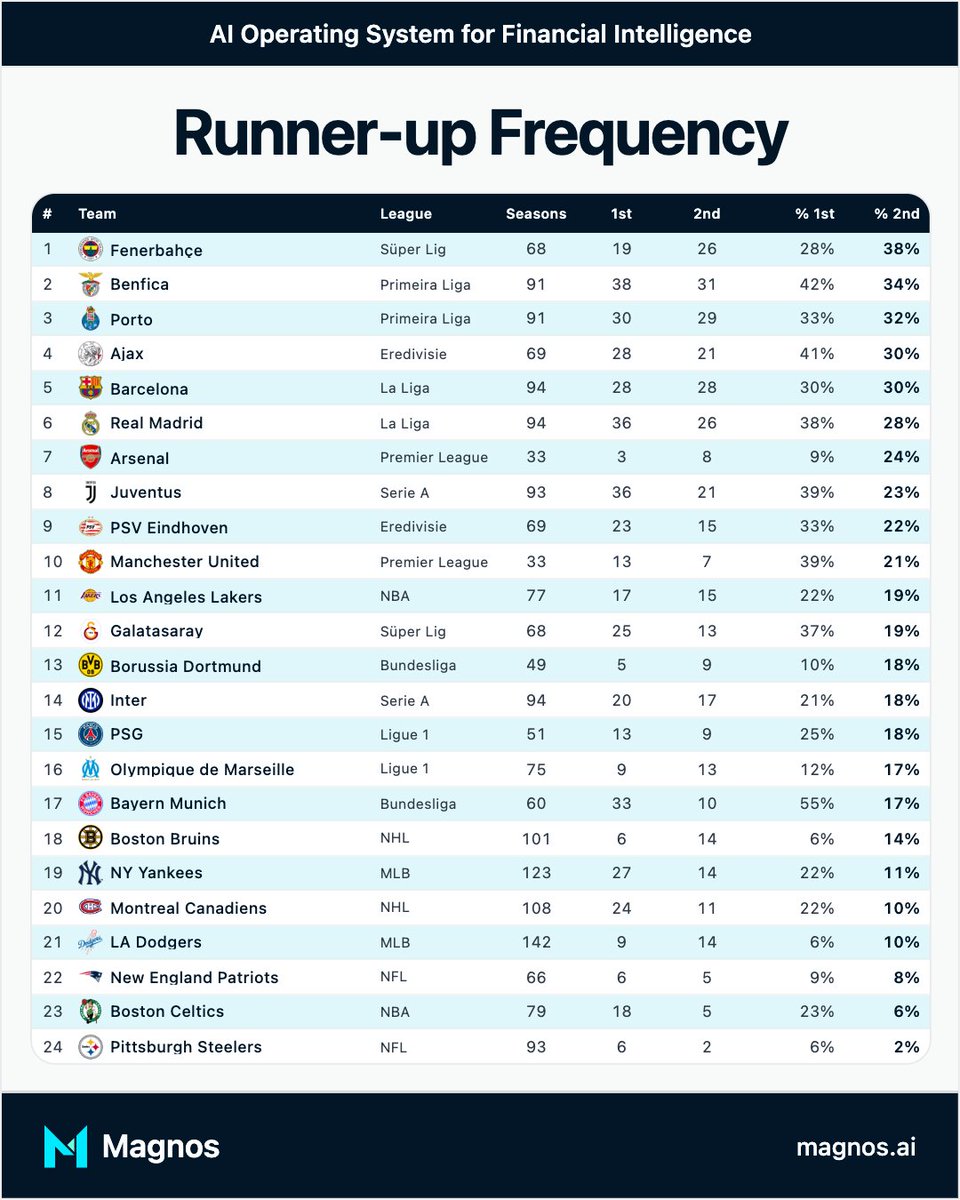
You should always bet on @Fenerbahce fans. Why? Because no club trains resilience like this one. Among teams across top global leagues, Fenerbahce has the highest runner-up frequency at 38%, with 26 second-place finishes in 68 seasons. My high school is the birthplace of our main rival, @GalatasaraySK, yet I stayed loyal while many friends switched sides. We have won 19 titles, but have not been champions for 11 years. That is exactly the point: Fenerbahce fans keep showing up even when the trophy does not. Fans of @FCBarcelona, @Arsenal, @BVB, @OM_Officiel, @Lakers, or @NHLBruins will understand. That kind of loyalty is rare. Great businesses are not built by winning every day. Some days a customer walks away, a target is missed, or a great team member leaves. The people who stand out are the ones who stay committed, take the hits, and keep building anyway. If you are a @GalatasaraySK, @FCBayern, @realmadrid, or @juventusfc fan, share this post and enjoy life on easy mode.
Mithat Can Ulubay tweet media
English
0
0
0
136
Mithat Can Ulubay
Mithat Can Ulubay@mculubay·
@a16z published their Big Ideas for 2026, and the first one is exactly what we’re building at Magnos for finance teams. Turning unstructured data from disconnected systems and spreadsheets into a real-time operating model that agents can use to make critical decisions with financial impact is at the core of what we’re building. To make that work, 3 things need to happen: 1. Multi-agent Collaboration In a world where agents work side by side, you need an agent to call the shots when a procurement agent needs approval for a purchase order or a product agent wants the green light on additional headcount for a new initiative. @aleximm is right that today, most AI still operates in silos. Magnos is building the coordination layer, integrated across a company’s data sources, context, and financial objectives, that enables an orchestrator agent to make the big decisions. 2. Controlling the Intelligent Execution Layer @sarahdingwang mentions that the long-term leverage will not come from owning another passive system of record. It will come from owning the layer where data, context, and decisions come together. And which function is best positioned to own this? Finance. Finance teams already own reporting, planning, and performance analysis. What they often lack is the infrastructure and analytical capacity to do this continuously and at scale. Magnos gives them the operating layer to move from reporting the business to helping run it. 3. Solving the Context Problem I agree with @JasonSCui, this is one of the hardest problems to solve. OpenAI or Claude don’t understand how your business actually works. They don’t know your definitions, your operating logic, your constraints, your market, or how your company makes money. Simply plugging your data into a model only gets you so far. Reliable AI requires the right business definitions, relationships, and context across systems, teams, and external signals. At Magnos, we’re building internal agents that automate data integration and context enrichment, compressing operating model build times from months into days and compounding the quality of recommendations over time. If you’re interested in building one of a16z’s big ideas, we’re hiring. Let’s chat.
English
1
0
1
59
Mithat Can Ulubay
Mithat Can Ulubay@mculubay·
We already serve several 8–9 figure companies, saving them hours of manual reporting, planning and analysis while uncovering millions in growth and cost-saving opportunities. If you’re a Series A+ founder, CEO or finance leader who wants to move faster, let's connect!
English
0
0
0
23
Mithat Can Ulubay
Mithat Can Ulubay@mculubay·
Magnos is not another ERP, FP&A, or BI tool. Magnos agents are an always-on team of data engineers and finance analysts, built to optimize performance by: - understanding your objectives - building plans - tracking performance - running analyses - recommending actions
English
1
0
0
34
Mithat Can Ulubay
Mithat Can Ulubay@mculubay·
Fragmented data. Manual workflows. Slow decisions. Millions left on the table. After a decade as a Goldman Sachs banker, PE investor, and 8-figure operator, I kept hearing the same problem from CEOs and finance leaders. Today, we’re launching @Magnos_AI to solve it. 👇
English
1
0
2
160
Mithat Can Ulubay
Mithat Can Ulubay@mculubay·
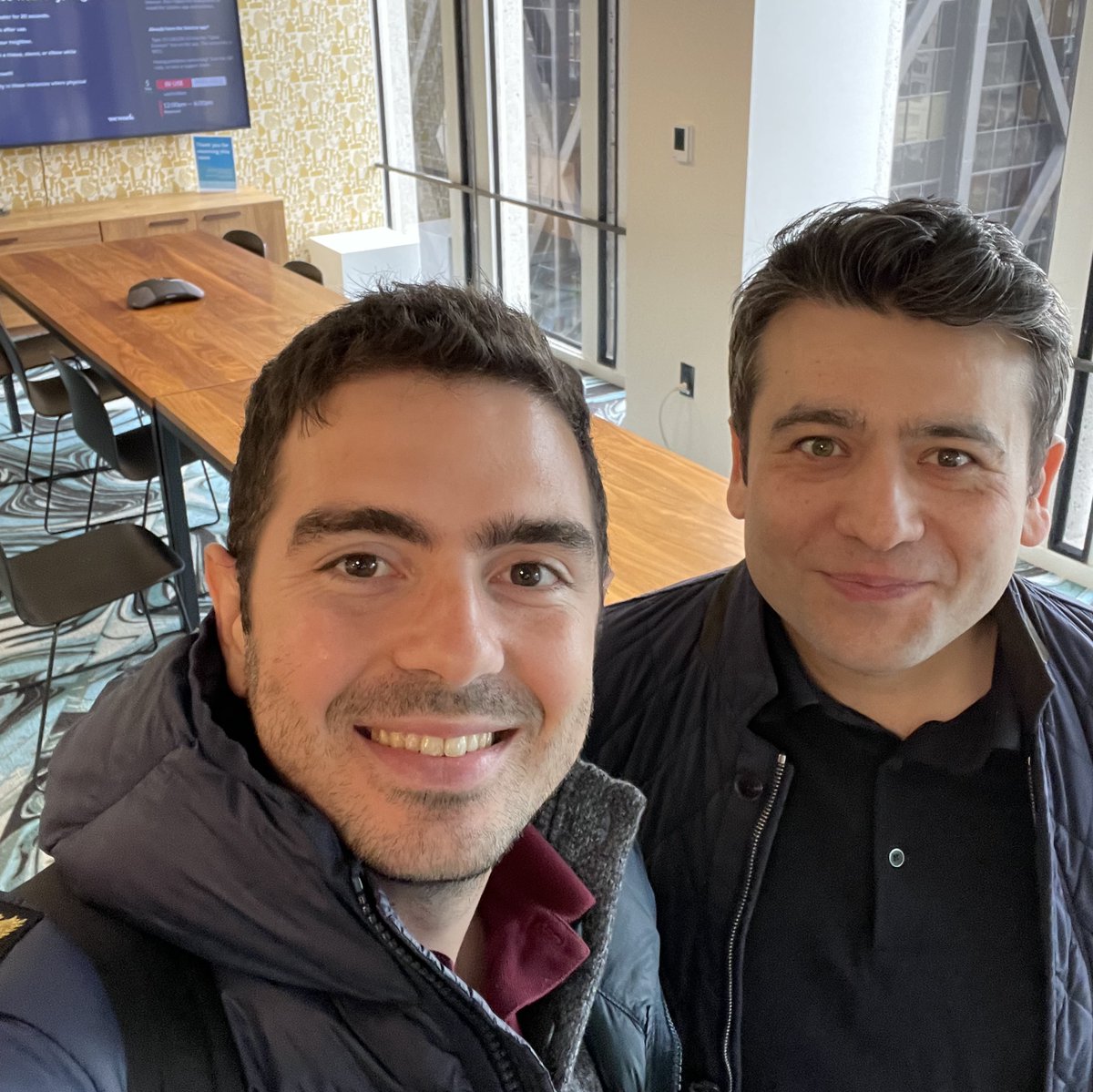
Five years ago, I came to America with a dream: build healthy, sustainable products people love. That dream became @FloraForGood. Today I’m starting a new chapter. 🚀
Mithat Can Ulubay tweet media
English
1
0
5
174
Mithat Can Ulubay
Mithat Can Ulubay@mculubay·
Next, I’m building in AI to solve the biggest challenge I’ve faced as an investment banker, investor, and operator. More next week.
English
1
0
2
61
Ashwinn
Ashwinn@Shwinnabego·
I think one reason MBA types struggle in ecomm and consumer is the early winners look relatively low status. Look at brands like hollow, primal queen, gruns, true classic, etc. No $250k brand book. No aesthetically optimized site or brand. Often “cheap” looking and unserious. Creator partners and tiktok shop affiliates that aren’t well known. Face to camera founder ads that they aren’t willing to make. Near impossible to do when all your friends are working at prestigious shops or companies.
English
29
6
260
52K
Mithat Can Ulubay
Mithat Can Ulubay@mculubay·
As a trilingual, this blows my mind. In Turkish you build a mental model of sounds and can read almost anything right away; I did the same with English and French, just with many more exceptions. Now I finally see why some Americans struggle so much with foreign names.
Niels Hoven 🐮@NielsHoven

Why so many schools started telling kids to guess at words instead of sounding them out: In the 1960's a woman in New Zealand named Marie Clay thought that good readers read by guessing at whole words from context (the words around them, the letter they start with, or any pictures). This theory meant teachers wouldn't have to spend time drilling letter sounds, so it becomes very popular even though it's completely false. Marie Clay's Reading Recovery program spread across the US in the 1980s and 1990s. Marie Clay becomes an education mini-celebrity. Other programs begin to appear, selling these same "whole-word" guessing strategies to schools. Fountas and Pinnell (started by Irene Fountas and Gay Su Pinnell) is one of the most popular programs and convinces many schools to adopt the "3-cueing" strategy. In 3-cueing, students are told to use context, syntax, and pictures to guess at a word, instead of using the letters to sound it out. This "word guessing" approach becomes deeply embraced by the field of education. Lucy Calkins is the professor who founded the prestigious Teachers College at Columbia University in 1981. She believed that kids would learn to read and write naturally, the same way people learn to talk. This is a strange thing to believe, given that there are many, many people who can't read (1 in 3 fourth graders now can't read at a basic level) but almost no one who can't talk. Nevertheless, it becomes an incredibly popular belief and even today there are still teachers in my replies loudly claiming it's true. Lucy Calkins loves Fountas and Pinnell's approach, and she tells teachers that all they have to do is help students acquire a love of reading. Teachers don't need to drill letter sounds, or teach kids to sound out words. They just need to build cozy reading nooks, have a lot of books in their classroom, and read to their students. Obviously, this is an incredibly appealing idea, and through the 1990's and 2000's it sweeps through the field of education. Lucy Calkins becomes almost a cult-like figure and holds revival-style training institutes in churches. Her supporters call her books "bibles". Songs are written about her. But at the same time, neuroscience is advancing. New research and brain scans make it clear that Lucy Calkins, Fountas and Pinnell, Marie Clay, and all of their teachers that they trained are completely wrong. Trying to memorize whole words is briefly effective when a beginning reader only needs a few words, but quickly becomes an inefficient and ineffective way to read. It turns out that learning 44 English sounds is way more efficient that memorizing 100,000 English words (why did the field of education need decades of neuroscience research to tell them this?) When readers have a solid phonics foundation, their brains more easily map the connections between written words and their spoken forms (even when those written representations are imprecise like in English). With a phonics foundation, most readers only need to see a new word 1-4 times to remember it (this is called "orthographic mapping"), as opposed to trying to memorize every word as a separate "picture". So in 2000, George W Bush decides that schools should teach reading with methods that are supported by scientific evidence. Phonics actually becomes part of the Republican party platform. And of course this is where everything goes off the rails. Opponents of the phonics regulation said it was just a way to push money to political cronies. Some people decided that if the Bush administration was pushing phonics, they didn't want anything to do with it. Even today, progressive school districts tend to be much more opposed to phonics. Southern states (Mississippi, Louisiana, Tennessee, and Alabama) are switching to systematic phonics instruction and seeing good results, and progressive commentators are trying to explain those results away. The best reporting on this entire debacle is the recent podcast Sold a Story. It's won a number of awards and is actually driving legislative change by exposing the absurdity of the situation. If you want a quick video explainer, John Stossel also did a recent segment on the topic (I'm in it!) Ultimately, the important thing to remember is that "sounding out words" didn't disappear from schools because that's what people wanted. It disappeared because people weren't paying attention. Modern education policy (getting rid of phonics, banning middle school algebra, eliminating honors classes, prioritizing equalization instead of education) isn't happening because that's what families want. These policies happen when families and voters aren't paying attention, and if we want schools to switch their focus back to education and excellence, it will only happen if families and voters demand it.


English
0
0
2
104