

Mel
9.2K posts
Mel
@mefmind
~Your Jack of All Trades~ “Great minds discuss ideas; Average minds discuss events; Small minds discuss people” ~Eleanor Roosevelt
28.530661,-81.414412 Katılım Ocak 2011
286 Takip Edilen578 Takipçiler
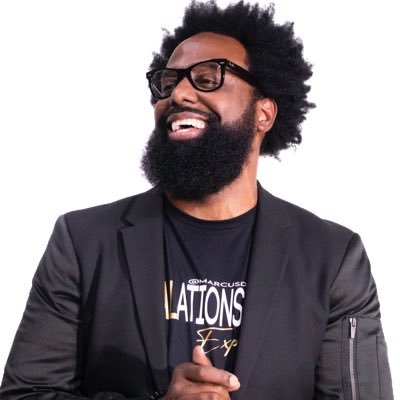
Last high school game. Go be great in all of your endeavors, son.
English
Mel retweetledi

GM.
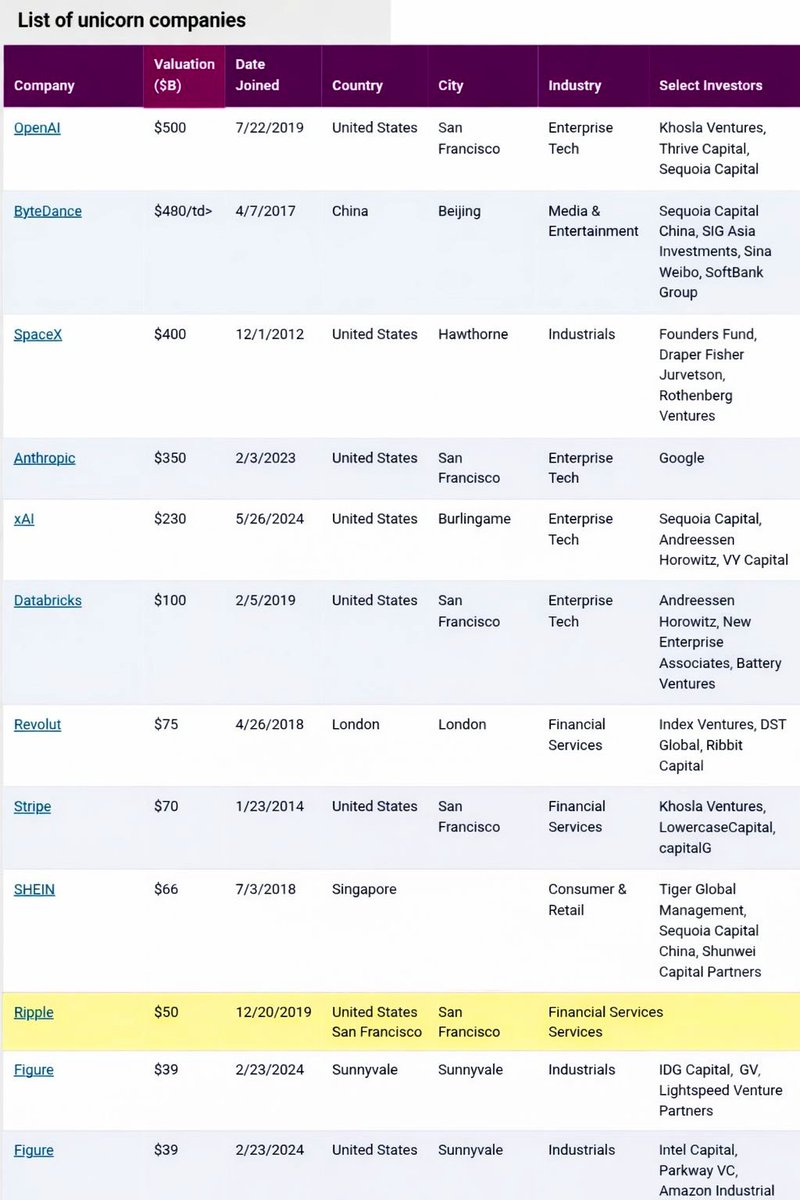
@Ripple is now officially in the top 10 most valuable companies in the world, and your still doubting $XRP.
Let that sink in.
$XRP
English
Mel retweetledi

Happy belated New Year! I just hit send on Ripple’s quarterly shareholder email. To say that 2025 (and Q4) were successful for Ripple feels like saying @TomBrady was just a great quarterback!! (#theGOAT)
Our two major acquisitions - Ripple Prime and GTreasury - greatly accelerate and expand our ability to deliver on our vision, enabling the Internet of Value. XRP has been (and will continue to be) the heartbeat of that vision.
With truly the most comprehensive licensing portfolio (and now today UK’s EMI license added) we are poised to make 2026 even more consequential.
Building and using crypto infrastructure, updating our global financial plumbing, and rethinking legacy systems – none of this happens overnight. At Ripple, we’re going to continue taking the long view of what crypto-based assets – like XRP and RLUSD – can do, rather than chasing cycles and hype.
Bring on 2026. We are firing on all cylinders. It’s happening!
English
Mel retweetledi

This is what you get when you mix the best selling single of the king of pop with the lately departed queen of MAGA: "MTG Has Broken Cover" 🎶🕺
- with a shout out to @awzurcher & colleagues for helpful coverage (despite, ya know, BBC awkward situation)
English
Mel retweetledi

Last month, @Ripple completed the acquisition of Hidden Road (now Ripple Prime) who serve 300 institutional customers, clearing $3 trillion across all markets annually 🚀
@Ripple is now the first crypto native company to own a global, multi-asset prime broker (FX, digital assets, derivatives, fixed income + more)
We have already seen significant growth since the announcement, and XRP & RLUSD will be used as collateral for institutional clients 🚀
The institutional era just leveled up
#RLUSD #XRP
English
Mel retweetledi

These arguments that ripple is only worth their XRP holdings and therefore is worthless because xrp is worthless and all the people who own xrp have been duped and lack agency requires fairly stunning amounts of cognitive dissonance to pull off.
Laura Shin@laurashin
Ripple just raised $500 million from a group of marquee investors. But here’s how outside VCs see it: “[The company] is not worth anything outside of XRP holdings. No one uses their tech. No usage on the network/blockchain.” @steven_ehrlich investigates unchainedcrypto.com/are-investors-…
English
Mel retweetledi

It was a late afternoon in London, inside a private boardroom overlooking Canary Wharf. Around the table sat senior executives from three of the world’s largest banks, along with representatives from Ripple. I was there as one of the directors overseeing cross-border settlement strategy.
The discussion was clinical, not speculative. Spreadsheets, cost models, and projected efficiencies were all laid out in front of us. The data was irrefutable.
One XRP equals one million drops.
An average transaction consumes around ten drops, or 0.00001 XRP.
As long as those ten drops remain valued below one dollar, the cost efficiency is unmatched. Every executive in that room understood what it meant. Profit margins could be widened, client fees reduced, and settlement times reduced from days to seconds.
The only challenge left on the table was compliance — KYC, AML, and identity verification frameworks. Once those are fully synchronized with the XRP Ledger, it will deliver what every global banker has pursued for decades: instant settlement, institutional transparency, and scalable profitability across borders.
That afternoon in London, it was clear to everyone present. The future of global payments had already been engineered.
English
Mel retweetledi

This should be run as TV ads NOW‼️ SHARE‼️ REPOST‼️
English
Mel retweetledi

NewsMax talking about the USGOVT buying XRP to pay off the national debt. That's all!
Lock in. 😎👇
𝓐𝓶𝓮𝓵𝓲𝓮@_Crypto_Barbie
🚨 HUGE NEWS: NEWSMAX IS DISCUSSING THE POTENTIAL USE OF #XRP TO ELIMINATE THE NATIONAL DEBT! 📺 Video credit: @JOLLY__R0GER
English
Mel retweetledi
With today’s close of Hidden Road (now Ripple Prime), Ripple has announced 5 major acquisitions in ~2 years (GTreasury last week, Rail in August, Standard Custody in 2024, Metaco in 2023). As we continue to build solutions towards enabling an Internet of Value – I’m reminding you all that XRP sits at the center of everything Ripple does. Lock in.
Ripple@Ripple
Introducing Ripple Prime: We’re pleased to share that our acquisition of Hidden Road is officially complete, making Ripple the first crypto company to own and operate a global, multi-asset prime broker – bringing the promise of digital assets to institutional customers at scale. ripple.com/insights/rippl…
English
Mel retweetledi

“XRP sits at the center of everything Ripple does. Lock in.”
you heard it.
from the man himself.
it’s happening 👇
Brad Garlinghouse@bgarlinghouse
With today’s close of Hidden Road (now Ripple Prime), Ripple has announced 5 major acquisitions in ~2 years (GTreasury last week, Rail in August, Standard Custody in 2024, Metaco in 2023). As we continue to build solutions towards enabling an Internet of Value – I’m reminding you all that XRP sits at the center of everything Ripple does. Lock in.
English
Mel retweetledi

Mel retweetledi

After a week of meetings with lots of partners in Singapore I’m more convinced of the utility of what Flare is building that at any point in the past. 🐂
English
Mel retweetledi

Texas pastor @jamestalarico flips the script on anti-trans attacks: “we’re focused on the wrong 1%.”
English
@Naturejab Can you start a GoFundMe for a formal military security detail!!! Bruh we need at least a 3 man team with you at all times!
English

I will always work, I will always build. Nothing will stop me. 🦾
English
Mel retweetledi

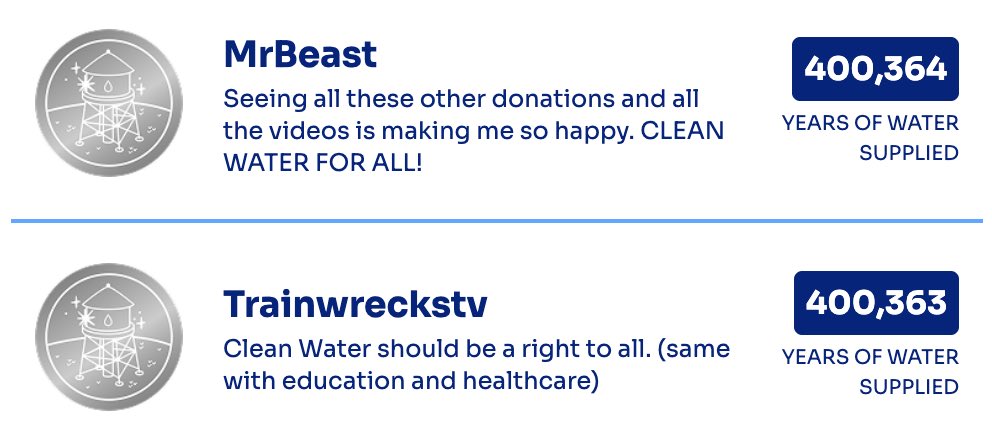
I just donated $400,364 to TeamWater!!
($1 more than @Trainwreckstv so I could be above him 🤪)
English
@XRPwallets Humm if Hidden Road volume & Permissioned Domains will allow Ripple Volume on-chain soon! XRPL will funnel more than that through the ledger and DEX! Yea we going to the moon!
English

Crazy. $10B IN would buy up the 1.9B Retail XRP and we would be at $90 based on this.
TheCryptoBasic@thecryptobasic
#XRP Market Cap Model Shows XRP Needs $10B in Buy Orders to Hit $90. #Ripple🧵🧵🧵
English

Mel retweetledi

Tired: Paying high transaction fees for international payments.
Wired: Reducing costs up to 90% by offering pay with crypto for payments.
✅ Reduce international transaction fees by up to 90%
✅ Offer 100+ cryptocurrencies and eligible wallets at checkout
✅ Get immediate access to funds
We’re making all of this, and more, easily accessible and available through Pay with Crypto, a new payment method that allows merchants to reach more than 650 million crypto users and allow them to pay using any of hundreds of eligible wallets and cryptocurrencies: newsroom.paypal-corp.com/2025-07-28-Pay…

English

🚨 BREAKING: Bank of America teams up with Ripple to use RLUSD for internal transactions.
Backed by BNY Mellon. Integrated with River & OpenPayd.
$XRP is becoming an RWA giant. 🚀

English