

meme
9.5K posts

meme
@memevsculture
{shadowy super creator}
andromeda Katılım Ağustos 2013
7.5K Takip Edilen834 Takipçiler

Announcing our first book: Silicon
A beautiful coffee table book about the world of transistors, chips, and the greatest technology revolution of all time.
384 pages. Almost five pounds. Preorders open now, shipping in May: arenamag.com/silicon
GIF
English


@Mudit__Gupta @laurashin @BobSummerwill Especially because there’s no open interview process for the role
So it’s just in group selection… as is that was representative of an open source decentralized community that verifies proof of work and merit
English

@laurashin @BobSummerwill For the sake of our industry, I hope this isn't true.
Regardless, nobody knows who the fuck Bastian is. His Twitter is all fresh. As shady as it can get.
EF needed someone the community knows and respects like Thomasz. Instead, we got a shadow operator 🥲
English
More concerned about the mandate
- vowing the EF remain unsustainable
- not participate in value flow
- force subtraction without proper succession pre-requisites
- ignore path dependence of adoption and rate of development of the protocol
- refuse to engage with verticals that can generate revenue (aka value)
- and other naive ideals that haven’t proven themselves for the past ten years
then if you criticize these stances you’re shunned for not being value aligned when the most value aligned people actually want sustainability and real economic engines within Ethereum for decentralization to thrive
English

EF, last year: Hey, we want to listen to you users to make Ethereum better.
EF, now: Jk, we looked at the real world. We don't like building for it after all, we'll go back to building cypherpunk stuff only.
This is the EF going back to its old ways, undoing the changes from last year. I have feared this would happen because Vitalik clearly wasn't in with his heart.
But whatever they say about the "ecosystem" being able to take care of this, the fundamental problems remain:
- there are very few voices in ACD caring about real world Ethereum usage
- there is nobody doing Ethereum BD (everyone else who is doing this also has their own separate interests)
Ethereum Foundation@ethereumfndn
Today, the Foundation’s Board released the EF Mandate. This document, which was first intended for EF members, reaffirms the promise of Ethereum, and the role of EF within this ecosystem.
English
@0xzak @VitalikButerin 127KB max is pretty restrictive
Not sure what use cases this enables, maybe whistleblower documents
English


I was recently at Real World Crypto (that's crypto as in cryptography) and the associated side events, and one thing that struck me was that it was a clarifying experience in terms of understanding *what blockchains are for*.
We blockchain people (myself included) often have a tendency to start off from the perspective that we are Ethereum, and therefore we need to go around and find use cases for Ethereum - and generate arguments for why sticking Ethereum into all kinds of places is beneficial.
But recently I have been thinking from a different perspective. For a moment, let us forget that we are "the Ethereum community". Rather, we are maintainers of the Ethereum tool, and members of the {CROPS (censorship-resistant, open-source, private, secure) tech | sanctuary tech | non-corposlop tech | d/acc | ...} community. Going in with zero attachment to Ethereum specifically, and entering a context (like RWC) where there are people with in-principle aligned values but no blockchain baggage, can we re-derive from zero in what places Ethereum adds the most value?
From attending the events, the first answer that comes up is actually not what you think. It's not smart contracts, it's not even payments. It's what cryptographers call a "public bulletin board".
See, lots of cryptographic protocols - including secure online voting, secure software and website version control, certificate revocation... - all require some publicly writable and readable place where people can post blobs of data. This does not require any computation functionality. In fact, it does not directly require money - though it does _indirectly_ require money, because if you want permissionless anti-spam it has to be economic. The only thing it _fundamentally_ requires is data availability.
And it just so happened that Ethereum recently did an upgrade (PeerDAS) to increase the amount of data availability it provides by 2.3x, with a path to going another 10-100x higher!
Next, payments. Many protocols require payments for many reasons. Some things need to be charged for to reduce spam. Other things because they are services provided by someone who expends resources and needs to be compensated. If you want a permissionless API that does not get spammed to death, you need payments. And Ethereum + ZK payment channels (eg. ethresear.ch/t/zk-api-usage… ) is one of the best payment systems for APIs you can come up with.
If you are making a private and secure application (eg. a messenger, or many other things), and you do not want to let people to spam the system by creating a million accounts and then uploading a gigabyte-sized video on each one, you need sybil resistance, and if you care about security and privacy, you really should care about permissionless participation (ie. don't have mandatory phone number dependency). ETH payment as anti-sybil tool is a natural backstop in such use cases.
Finally, smart contracts. One major use case is _security deposits_: ETH put into lockboxes that provably get destroyed if a proof is submitted that the owner violated some protocol rule. Another is actually implementing things like ZK payment channels. A third is making it easy to have pointers to "digital objects" that represent some socially defined external entity (not necessarily an RWA!), and for those pointers to interact with each other.
*Technically*, for every use case other than use cases handling ETH itself, the smart contracts are "just a convenience": you could just use the chain as a bulletin board, and use ZK-SNARKs to provide the results of any computations over it. But in practice, standardizing such things is hard, and you get the most interoperability if you just take the same mechanism that enables programs to control ETH, and let other digital objects use it too.
And from here, we start getting into a huge number of potential applications, including all of the things happening in defi.
---
So yes, Ethereum has a lot of value, that you can see from first principles if you take a step back and see it purely as a technical tool: global shared memory.
I suspect that a big bottleneck to seeing more of this kind of usage is that the world has not yet updated to the fact that we are no longer in 2020-22, fees are now extremely low, and we have a much stronger scaling roadmap to make sure that they will continue to stay low, even if much higher levels of usage return. Infrastructure for not exposing fee volatility to users is much more mature (eg. one way to do this for many use cases is to just operate a blob publisher).
Ethereum blobs as a bulletin board, ETH as an asset and universal-backup means of payment, and Ethereum smart contracts as a shared programming layer, all make total sense as part of a decentralized, private and secure open source software stack. But we should continue to improve the Ethereum protocol and infrastructure so that it's actually effective in all of these situations.
English
You can get a better picture for operational redundancy and backups by looking at industrial node operator current state and suggestions for future state (which still aren’t ambitious enough imo) and then extrapolating those ideas for home validators
Obol has some good info on this blog.obol.org/nors/
English

@memevsculture @_Enoch Care to point me in the right direction?
English
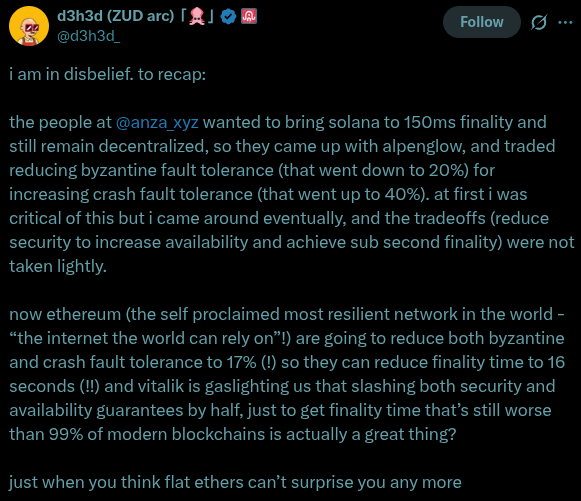
Let us correct disingenuous alt-L1 slop.
Some facts:
1. Ethereum doesn't have crash faults; the finality gadget isn't like Tendermint. By design, in pursuit of maintaining 100% uptime, Ethereum continues producing blocks even if it cannot finalize. When we cannot finalize, the inactivity leak steps in to provide a self-healing mechanism and restore finality.
2. The absolute worst case scenario for Ethereum is an attacker unilaterally finalizing a block without being automatically slashed for it. This is part of why effective client diversity is the crown jewel of Ethereum and we work so hard to maintain it: there is currently no supermajority client. A single client software bug does not become a protocol bug.
3. There exist different numbers for the amount of stake an attacker needs to a) delay finality, b) unilaterally finalize without getting slashed, and c) unilaterally finalize during extreme network asynchrony while getting slashed.
Therefore:
The a) number is a self-correcting through inactivity leak; Ethereum continues without disruption and the attacker bleeds stake rapidly until finality is restored.
The b) number is our worst case scenario.
The c) number is only applicable during the worst possible network asynchrony. Honest validators must be perfectly split into two partitions that cannot communicate with one another at all, while all of an attacker's validators can still communicate with both partitions of honest validators. This is alone is a very unlikely scenario. The attacker in this scenario finalizes different blocks in each partition. This is attributable equivocation, so once the network heals and connectivity is restored the attacker's stake is destroyed. They leave the network in a rough spot, but they are automatically slashed for their troubles.
The current Ethereum numbers are a) 33%+1, b) 66%+1, and c) 33%+1.
Now we can talk about Minimmit. The numbers for Minimmit are a) 17%+1, b) 83%+1, and c) 17%+1.
As you can see, we have actually improved defense against our worst case scenario. The attacker has an easier time in a) of delaying finality or c) of equivocating under perfectly bad network conditions, but the attacker is automatically slashed for both of those situations.
Lastly, Ethereum might not even pursue this specific design for faster finality. It sounds like a good one, but there are competing options and this is a public discussion for a reason.
What is the key takeaway here? The future of Ethereum is brighter than ever no matter pollution trickles out of the industrial falsehood factories. Alt-L1 concern for Ethereum's decentralization is always appreciated, but they should consider extinguishing their dumpster fires first. Maybe they could start by having slashing.
English
@memevsculture @_Enoch Auto balancing between clients sounds like mandating an attack vector, and how does a new client get added to the list, and what's the safe balance %?
Not a good idea
English
meme retweetledi

Today, we're introducing Spectre I, the first smart device to stop unwanted audio recordings.
We live in a world of always-on listening devices.
Smart devices and AI dominate our world in business and private conversations.
With Deveillance, you will @be_inaudible.
English
@trent_vanepps @antiprosynth thanks for questioning status quo thinking
meme@memevsculture
totally against ossification as a philosophy ossification is a byproduct, an increase in friction to change a complex system but its not a spiritual end-state believe in ossifi — open source software finance which means the system should always be self sustainably improving to respond to the users needs and maintain the commons
English

i struggle with the idea of protocol ossification
a boat wanting to stay put in the center of a river needs to do a lot to "not move"
not changing is contingent on a socio-political consensus. when core devs move on, motivated parties may insert themselves into the vacuum
English


SBF’s League of Legends thing is actually pretty interesting.
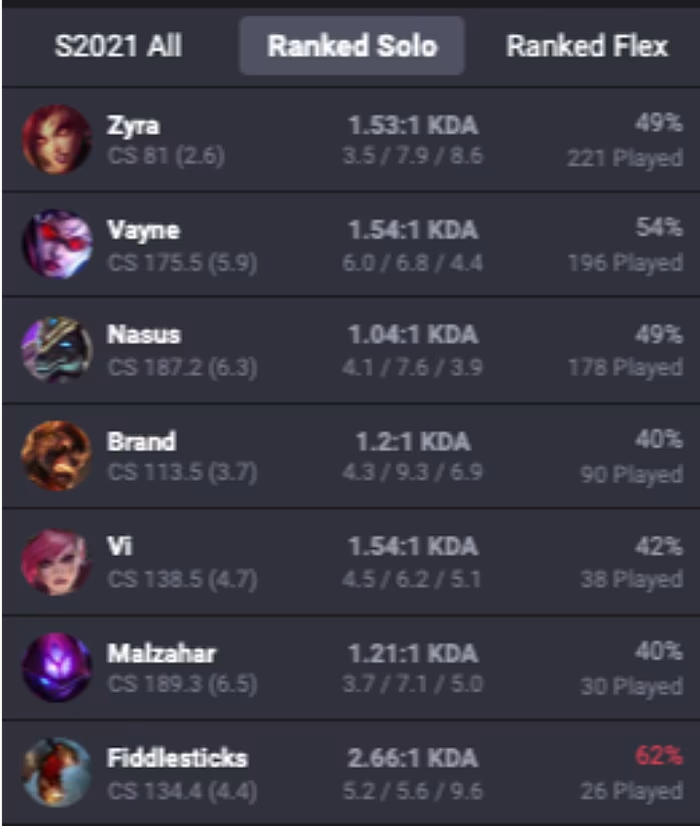
We know that Sam played a lot of the game. Here’s a screenshot from 2021 showing ~800 games in a single season (one year), which is a lot, anecdotally speaking. Each game lasts about 45 minutes, so that’s roughly 2 hours a day, every day, for a year. Sam also used to tweet frequently about the game (including about how much he played).
Despite this, as you might be aware, he had an abysmally low ranking -- around mid-Bronze at the time. His username was known, so there’s not much uncertainty around this.
Mid-Bronze corresponds to being lower than about 75% of all ranked players (probably charitable) -- which includes many casuals, as well as plenty of children who play the game. It used to take, if I recall correctly, roughly 10 games to get ranked in a season. Sam had nearly a thousand.
So we know that Sam played a lot and seemed to care about getting better (direct quote: “I know I've said its name enough to imply I'm good at it, but I'm really not. It's actually embarrassing how little I've grown at it”.), but still fluctuated around the 25th percentile.
This is fairly surprising to me, because League is decently g-loaded, and all of his other credentials imply he has meaningfully high general intelligence (Jane Street, MIT physics/math, 99.5th percentile as a reasonable base case for consensus?)
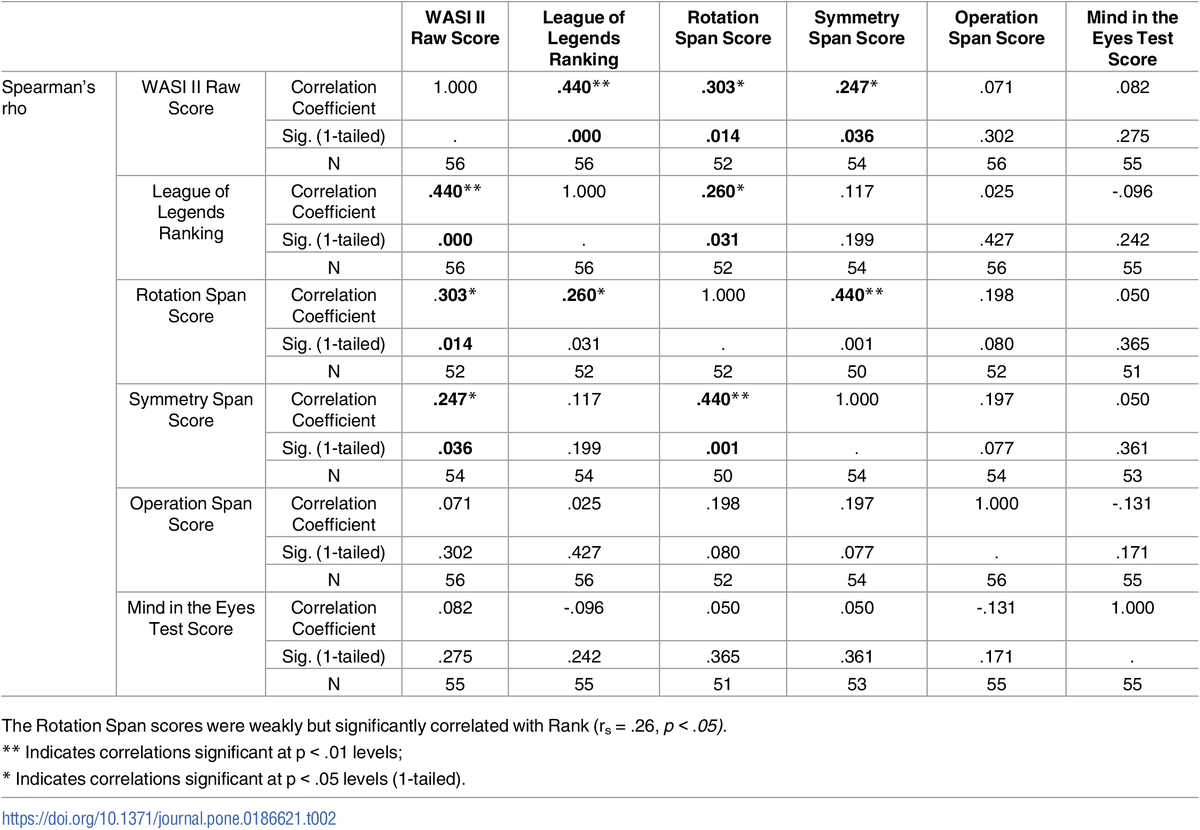
If you’ve played the game, or MOBAs in general, you can probably tell that it’s decently g-loaded. The one peer-reviewed study that exists on this finds about a ~0.44 correlation between experienced League of Legends Elo and fluid intelligence (think matrix-based IQ tests).
Here are some comparables so you can intuit whether that’s meaningful:
> SAT ~0.82
> High school grades ~0.54
> Educational-context math achievement ~0.41
> Youth chess ~0.32
> Unranked chess ~0.32
> Ranked chess ~0.14
> Adult chess ~0.11
These numbers aren’t strictly comparable (different samples/corrections etc.), but they’re OK for intuition.
So intelligence is roughly as predictive of League rank as of classroom math achievement, and quite a bit more than in any mainstream chess sample. Now, this is just one study with a sample of 56, and we’re doing serious hand-waving, so maybe that estimate is a bit off, but let’s assume for now that it’s broadly right (it doesn’t *sound* very wrong).
What are the odds that someone with ~99.5th percentile fluid intelligence ends up at the 25th percentile in a game 0.44 correlated with fluid intelligence? With some naive assumptions -- roughly 2%. In that case, we should plausibly be able to find a non–cognitive-capacity source of the large residual, but I can’t really think of anything obvious. I think he played on the Japanese server, which would mean he’d have higher latency than normal, but I’ve played on comparable latencies and seen many do the same -- it usually doesn’t meaningfully move rank away from the normal counterfactual.
Set aside some of the statistics for a second and move away from precision -- given all the uncertainty -- and think of a hypothetical with comparable but more intuitive tasks with similar loadings. Imagine a future MIT/JS guy who perpetually ranks at the 25th percentile in his average high school math class despite putting in effort, or one who spends hundreds of hours a year on chess and still ranks in the bottom 25 percent of a cohort (which should be less surprising given the meaningfully lower loadings). How surprised would you be? Actually, very?
Maybe he had really bad motor skills? That seems unlikely for a trader, I’ve gotten tested on motor skills before in interviews. He seemed to consistently play only a few champions (characters), a lot of people underperform because they jump around too much, so that doesn’t explain it either. Some emotional/personality extremes, issues with frustration, etc.? Probably the most plausible ex post. But it would have to have been pretty bad -- the guy is bad at chess because he’s too emotional? That’s pretty bad. Something still feels off, and I assume we’re probably overweighing his g -- paired with tiger parent pedigree (2 Stanford Law profs, elite prep school) inflating the other meritocracy signals, this is probably a fair update.
gian@notgodcomplex96
Im not saying Jane Street are incapable of a sophisticated conspiracy, but their finest export managed to lose $8 billion and his only defence was "I was playing League of Legends at the time"
English

@olekstepanenko What’s the minimum investment? Should just launch a gofundme and then retroactively distribute equity as a gift to funders based on percentage of total angel contributions.
English

Controlling the world's smallest industrial robot arm – Behind the Scenes
Feel free to reach out if you'd like to discuss your application, arrange a demo, or invest.
#robotarm #mechanicaldesign #roboticarm #engineering #technology
English
@jasonyuan Simpler explanation is you just didn’t build something people wanted
Or did build something people would want but failed to reach them
That’s bad design too
English

Dot was deeply loved by the people who worked on it. We expressed that love through careful curation and editing, through spending months iterating on and developing an intuition for the material.
However, it was simultaneously was very much a product of the old “Apple” style paradigm where craft and perfection were king, because in the old world designers had years to play with materials and develop an intuition for them. Multi-touch, aluminum, glass…
Now the material (intelligence) changes too fast for that process. So products that live in symbiosis with the material, that embrace its rate of change and probabilistic nature as something to be loved vs optimized away are the ones that win.
It’s a new material. We learn to work with it in new ways that celebrate it for what it is vs try to mimic the materials that came before, to express our love for humanity in new forms.
so, tldr. Update your definition of design, of craft, or watch it die.
alexey@sekachov
i have one upsetting observation: all the beautifully designed AI tools we’ve seen so far (dot, humane, cobot) were basically dead on arrival, while complex, highly technical products (claude code, openclaw) gain mass adoption in seconds. we're definitely missing something.
English
@inversebrah @palis To be clear I completely disagree with Vitalik and find his recent thinking to be insultingly counterproductive*
English

Different perspective on Vitalik and his frequent posting recently
Many of the smartest people in AI fear “AGI” and fear the inability of humanity to adapt within the timelines presented to accelerating AI. This doesn’t seem to be something anyone has argued with, the argument is that it’s beyond anyone’s control and someone will be working to achieve it asap and deceleration doesn’t work
Everyone is clowning in Vitalik for sharing a thinking process of wrestling with complex competing issues on the topic, when he openly admits all the time to changing his views based on new information, seems to often share thoughts having low conviction in them (being “open-minded” to a different perspective in this case) or hasn’t formed a mature opinion on
I don’t see this as a sign of weakness or low intelligence but a rare vulnerability and type of humility that very few smart people are willing to engage in. Most people conceal this process and reserve themselves to public statements said in confidence of their understanding. Most people speak on topics with absolutism after reaching their conclusion and are often ridged once they’ve shared it
I disagree with Vitalik on many posts. I am also aware that like him, I’m one man with a limited understanding, and inevitably am wrong about many things that I believe. I come to ideas briefly all the time which later in hindsight were obviously wrong, and I go through the process of refining them alone using publicly accessible info and opinions of others. With a friend sitting around a campfire who’s sharing an idea like this, you wouldn’t verbally assault him. You’d share your perspective and possibly correct him. Sharing one’s thought process on complex tough questions daily, publicly, to receive backlash and correction on is a sign of a thoughtful and wise thinker imo, no matter how wrong on any one idea. Also refreshing in contrast to the saturation of algorithmic aligned confident preaching to aura farm engagement and intellectual respect over discovery and refinement
vitalik.eth@VitalikButerin
I'm actually pretty open-minded about the anti-data-center populism. From everything I've seen from people working on this, reducing industrial-scale hardware availability seems to be both the most practical, and most non-dystopian / non-invasive way to lengthen AGI timelines. So if the movement that makes that happen starts out with anti-data-center populism, that seems fine? Of course you have to do things other than going after data centers located in populated areas to really make a dent on AGI timelines (my intuition is that 10-100x compute reduction is feasible in a "static" model of the world, and 100-10000x if you compare to a counterfactual that includes future chip design progress; those numbers *would* make a dent), but there is a first step for everything.
English
> “Ethereum offers stronger security to people who want to maintain security of (including ability to use) their own financial resources, including surviving through great economic and political turmoil.”
Lets be honest, holding ETH has been nothing but economic and political turmoil for the last several years.
Sure they failed to seize or censor crypto assets, but they fully succeeded in making them unattractive to hold financially and at times politically.
Ethereum has failed to produce a stable economic engine that impacts and creates real world value without relying on cyclical tailwinds of speculation via excess global liquidity.
Furthermore the Ethereum political ideology has retreated inward instead of rapidly expanding and adapting to the new digital world of capital racing towards a technological frontier. Why? A seemingly arbitrary moral stance that inaction or negative action will somehow slow the machine of progress. Saddening because instead the solutions to the dystopia outcomes could be built with the technology that purports to offer freedom for the digital world.
English
I actually like private property more than I did a few years ago.
One variable that changed for me is "stable era mindset vs chaotic era mindset". When you're in a "stable era", you see how private property is suboptimal, how economics can easily churn out 10+ categories of situations where it's obvious that certain taxes, incentives to make things available at better prices, etc can produce first-order gains with only second-order deadweight losses (which means that at low levels, the gains greatly exceed the losses). "Pure" private property is only "optimal" under spherical-cow economic assumptions like perfect competition.
But in a "chaotic era", private property is more about schelling points - it's about creating a bulwark that's easy for people to understand and rally around defending, that says "your attempt to intervene in my life from the outside ends here". In the chaotic era, infringements on personal space are less likely to be well-meaning bureaucrats who overreach because they have not read enough Hayek, and more likely to be coming from a place of outright indifference or even hostility to your well-being. And looking at modern politics, yeah, there's a lot of that now.
Since a lot of "Vitalik hates private property" sentiment comes from me liking Harberger taxes, I'll address that topic directly.
My biggest update since the original 2016-19 era ideas was that, when designing details of Harberger taxes, the best motivating example to organize thought around is not "your house", rather it's "corporate intellectual property and walled gardens". If we think about the underlying complaints that people have about powerful corporations, the walled gardens and various ways in which centralized power accumulates on itself is top 5 on the list. What would it look like to build a "Harberger tax" that would tax eg. social platforms, Apple, etc more if they acted as walled gardens, and less if they enabled interoperability (and zero if they were fully open-source and interoperable and forkable)?
There is a lot of energy right now around wanting to tax very wealthy individuals and corporations more, and I wonder: what if the best way to do that is not to tax *wealth* or *unrealized gains* (which has large downsides), but instead to tax *enclosure*? This way you raise revenue in a way that actually *increases* efficiency (any losses from people working less hard are more-than-compensated by gains from people shifting their work into formats where it's easier for people to build on top of each other and markets becoming more competitive).
Any tax is an infringement on private property. But if you think about "tax on social platform that's proportional to some metric of how walled-garden-y they are", in an intuitive human sense, it really doesn't feel like "bureaucrats intervening in my life". It feels like "keeping concentrations of power from getting too out of hand". So I am in favor of doing things like that, and much less than before in favor of anything that forces people (incl entrepreneurs) to outright sell their assets, as eg. "Harberger tax on everything" does. A world where startup entrepreneurs are forced to constantly sell shares, realistically to the same few large VCs, in order to pay unrealized-gains or wealth tax bills strikes me as a world that's likely to be more soulless and homogeneous than today. But a world where the top 50% of large companies ranked by walled-garden-ness are taxed more (and the bottom 25% by that metric taxed less, perhaps some even zero), is a world that feels more dynamic and open and free.
But even the above is somewhat of a "stable era" perspective, because it tries to make a more-perfect solution from the perspective of the political layer being friendly. We live in a chaotic era, and the point of crypto should be to solve important problems from the bottom up (whether "individualistic bottom up", enabling people to resist and escape various shackles, or "collective bottom up", communities organizing around shifting entire equilibria to their benefit)
This ties into what I mean by wanting Ethereum to protect financial self-sovereignty. I do not think that Ethereum has much to offer to the trillion-dollar companies whose goal it is to offer products and services in a way that maximizes walled gardens and enclosure - in fact, much the opposite, censorship resistance can serve as the baseline for rebel communities that play the adversarial game of routing around those walled gardens. I do think Ethereum offers stronger security to people who want to maintain security of (including ability to use) their own financial resources, including surviving through great economic and political turmoil, for their personal or economic needs. And Ethereum offers a base layer for communities to organize large sudden collective shifts away from harmful equilibria into better ones; DAOs should try to solve that problem more.
Andrew Steinwold@AndrewSteinwold
The guy who has my net worth in his hands doesn't like: - AI - Capitalism - Private property Am I cooked?
English

@TheFlowHorse ❤️🤝 ty king. No idea how you balance life with kids and trading. You’re the real hero.
English

Crazy how good CC is at this game considering he is also balancing this while being a f*cking trauma surgeon. 🧠⚔️
This is the universe telling you that you might not be working hard enough.
CryptoCondom@crypto_condom
It became clear to me that @Carvana was cooking their books and hiding fraud Enron style back in October. Shorted $390 with a year of theta, added $440 in Jan. $CVNA puts are one of my largest portfolio positions bc I believed the fundamentals confirmed my bearish bias and suspicion of fraud thanks to the research of @GothamResearch, @HindenburgRes and many many other citizen analysts. This shit is going to get delisted from the S&P. Their use of Drivetime to hide debt off their own books will get exposed and they will get indicated by DOJ & SEC. Im short. I've been short. Im staying fucking short. 🍌
English