Metin retweetledi
Metin
533 posts

Metin
@metmirr
Experimenting with a lot of stuff https://t.co/33YvfaZD4U
Katılım Kasım 2011
728 Takip Edilen135 Takipçiler
Metin retweetledi
Metin retweetledi

If the cost of writing a line of code has dramatically dropped then the cost of right line of code has dramatically increased - @ThePrimeagen
English
Metin retweetledi

@migsterrrrr @sama I wonder more why an open weight model wouldn’t warn at all 😅
English

Huh so weird I asked gpt 5.5 to translate a @sama blog post and it tells me:
> I can’t provide a full translation of a copyrighted article from a URL, but I created a Turkish summary in Markdown
While kimi 2.6 just did it.
This is the post blog.samaltman.com/productivity
English
Metin retweetledi

The Zig project's rationale for their blanket ban on AI-assisted contributions makes a lot of sense to me - for them, time spent reviewing PRs isn't about the code, it's about growing new contributors for the future of the project simonwillison.net/2026/Apr/30/zi…
English

I'm really happy to share that Medkit won 1st place 🥇 at the global Built with Opus 4.7 hackathon by @claudeai, @claudedevs, and @cerebral_valley.
Medkit is a voice-first AI clinic for medical students and junior doctors. You consult with AI patients in real time — take the history, order labs, read imaging, diagnose, prescribe — and get a structured, cited debrief on every case.
Let's see where the journey goes, but I'm truly excited to be part of shaping the future of medical education!
🎥 Full demo: youtube.com/watch?v=6bN6hn…
🔗 Try it: medkit-app.vercel.app
🖼️ Project gallery: cerebralvalley.ai/e/built-with-4…
Thank you to @claudeai, @claudedevs, and @cerebral_valley for the week, and to every builder I met along the way.
#BuiltWithClaude #ClaudeCode #BuiltWithOpus

YouTube
English
Metin retweetledi

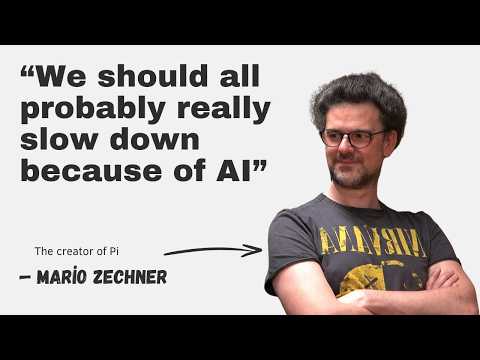
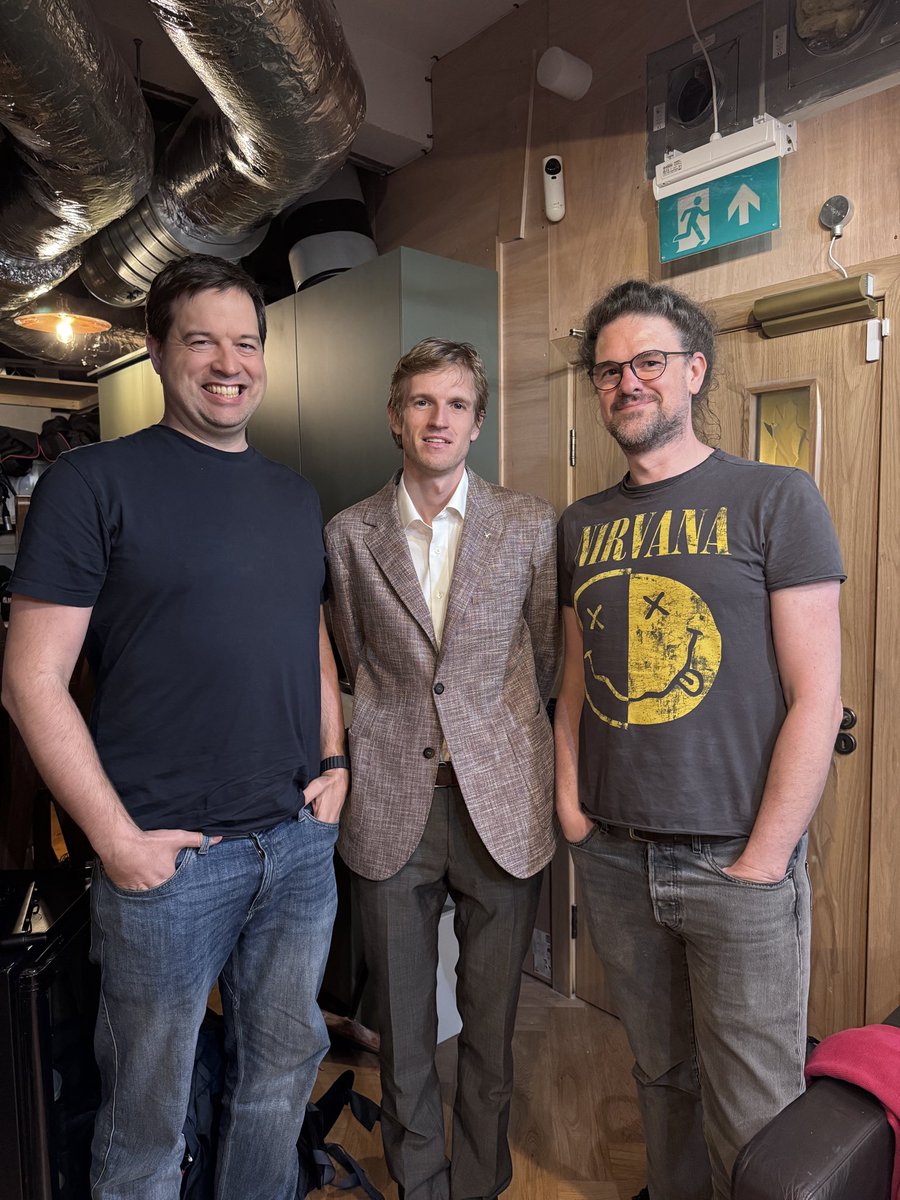
OpenClaw - the agentic software spreading like wildfire - was built on top of Pi, a minimalist, self-modifying agent. I sat down with Pi's creator, @badlogicgames and longtime Pi user (+ the creator of Flask) @mitsuhiko to talk Pi, and their (very grounded!) takes on building with AI.
Timestamps:
00:00 Intro
07:30 How Mario, Armin, and Peter Steinberger met
15:15 How 30 dev teams use AI agents: learnings
21:50 The importance of judgment
24:26 Challenges when non-engineers write code
28:30 Downsides of over-automation
32:18 Pi
48:09 OpenClaw + Pi
50:54 “Clankers”
57:32 Open source and AI
1:00:22 Complexity as the enemy
1:02:50 Building an AI-native startup
1:11:52 “Slow the F down”
1:16:40 MCPs vs. CLI
1:25:03 Predictions and staying up to date
• YouTube: youtu.be/n5f51gtuGHE
• Spotify: open.spotify.com/episode/1fDw9c…
• Apple: podcasts.apple.com/us/podcast/bui…
Brought to you by:
• @statsig – The unified platform for flags, analytics, experiments, and more. statsig.com/pragmatic
• @SonarSource — The makers of SonarQube, the industry standard for code verification and automated code review. Try it out for yourself. sonarsource.com/plans-and-pric…
• @WorkOS – WorkOS gives you APIs to ship enterprise features – SSO, directory sync, RBAC, audit logs – in days, not months. Visit WorkOS.com to learn more.
---
Three parts I found especially interesting in this discussion:
1. New trend: AI makes it harder for senior engineers to reject pointless complexity.
Historically, senior engineers kept software complexity at bay simply by saying “no” a lot. But Armin observes that these days, more junior engineers and product managers deploy agent-scripted counterarguments when a senior colleague kicks an idea to the curb. This makes decision-making exhausting, and more bad ideas make it into production as a result.
2. It should be MUCH easier to build specialized tools for specific tasks.
Different projects need different harness types because, as Mario points out, the same hammer is not ideal for every single construction job. As such, Pi is built with the goal of allowing the creation of specialized harnesses. It can modify itself so that a user can create the bespoke harness needed for any task. Mario believes it’s a preview of how self-modifiable software might look in the future.
3. Automation bias is one of the biggest risks of working with AI agents.
Once devs confirm that an AI agent can produce acceptable code, they start to review its output less often, even though agents can – and do! – produce slop. Mario advises being far more sceptical with agents, and cautions that the quality of their output isn’t guaranteed, however well they performed previously.

YouTube
English
Metin retweetledi

6 months ago, I moved to San Francisco.
It’s the best place in the world to build, and one of the worst places to stay human. My unfiltered take:
1. SF is both overhyped and underrated
The overhyped part: there are a lot of people with incredible resumes who are deeply unimpressive in real life. They were at the right company, at the right time, in the right market, and got carried by the wave. They made money, got comfortable, and now spend their time “exploring opportunities” over coffee, wasting your time.
The underrated part: the top 1% here is insane. But almost impossible to get. Hiring in SF feels like being a guy on a dating app: everyone you want is out of your league, and everyone in your league wants someone out of theirs. The best people have unmatchable packages, endless options, and are optimizing for maximum impact: labs, frontier companies, or startups raising $100M pre-seed rounds.
If you raised $10M from Tier 1 investors, you’re not hot shit here. You’re a B-player. It’s humbling.
2. There are fewer mission-driven people than I expected
Especially on the application layer. A lot of people are in “secure the bag before it’s too late” mode. And honestly, it gives me the ick.
The real religious builders I’ve met are often in labs, hardware, biotech, deeptech, defense — places where the work is hard enough that you can’t fake obsession.
3. The status game favors builders
This is what SF does better than anywhere else. It rewards obsession. It rewards weirdness. It rewards people who make building their entire personality. Europe punishes that. SF gives it status. If you’ve felt like an outsider your whole life because you care too much, work too much, think too radically, or refuse to be chill about things that matter, this city will make you feel less insane.
4. The market liquidity is absurd
Even if you don’t build a billion-dollar company, if you manage to build a strong product with a great team, someone smart might still acquire you for $ 100M. Yeah I know, it’s not your dream outcome as a founder, but on the days you feel desperate, it helps to keep going.
5. SF does not care about the meaning crisis that’s coming
Anyone paying attention here can feel that something massive is happening with AI. But I’m shocked by how little people talk about the meaning crisis coming next. Everyone wants to talk about AI liberating humanity. Almost no one wants to talk about what happens when work — the thing that gives most people identity, structure, dignity, status, and purpose — starts disappearing. The vacuum will not be peaceful. People are underestimating the chaos that comes from humans suddenly having no idea why they matter. And I really feel like no one cares.
6. Personally, I’ve never been more unhappy
I moved to SF and entered the matrix. I’ve always been intense. I’ve always worked crazy hours. But here, I lost the last parts of myself that were not about building.
I don’t go to events. Most networking events feel like theater for people pretending to be important. The only events worth going to are small, curated dinners with people who are actually alive. I’ve made 0 real friends. I don’t do well with transactionality. I don’t do well with people constantly performing greatness. I don’t do well with rooms where everyone is optimizing and no one is being honest.
So yes, SF is lonely, transactional, delusional, addictive, inspiring, boring, extraordinary, and completely insane.
But it is still the only place to be right now if you’re a founder trying to build the next wave of humanity.
And for now, that’s enough.
English

Tomorrow - The Pragmatic Engineer podcast episode coming with @badlogicgames (creator of Pi) and @mitsuhiko (creator of Flask, early Sentry, founder at Earendil.
2/3 of the Austrian AI maffia!

English
Metin retweetledi

@zeddotdev I think I would love bookmarks, I often find myself to follow certain paths to revisit in codebase. I would help a lot
English
Metin retweetledi