Michael Laha

3K posts

Michael Laha banner
Michael Laha

Michael Laha

@michael_laha

Tweets: innovation policy & 🇨🇳's role in the 🇪🇺-🇺🇸 Prev: German Chancellor Fellow of @AvHStiftung based @merics_eu & @AsiaSociety RT≠endorsement

Berlin, Germany Katılım Ekim 2015
4K Takip Edilen1.1K Takipçiler
Sabitlenmiş Tweet
Michael Laha
Michael Laha@michael_laha·
My report "China’s Endless Frontier: 'Organized Scientific Research' & the Quest for Technological Self-Reliance" is out! Based on research I conducted during my @AvH German Chancellor Fellowship & now part of @UCIGCC & @merics_eu series. Read: shorturl.at/jzP08 🧵/6
English

2
18
46
6.8K
Michael Laha retweetledi
Kyle Chan
Kyle Chan@kyleichan·
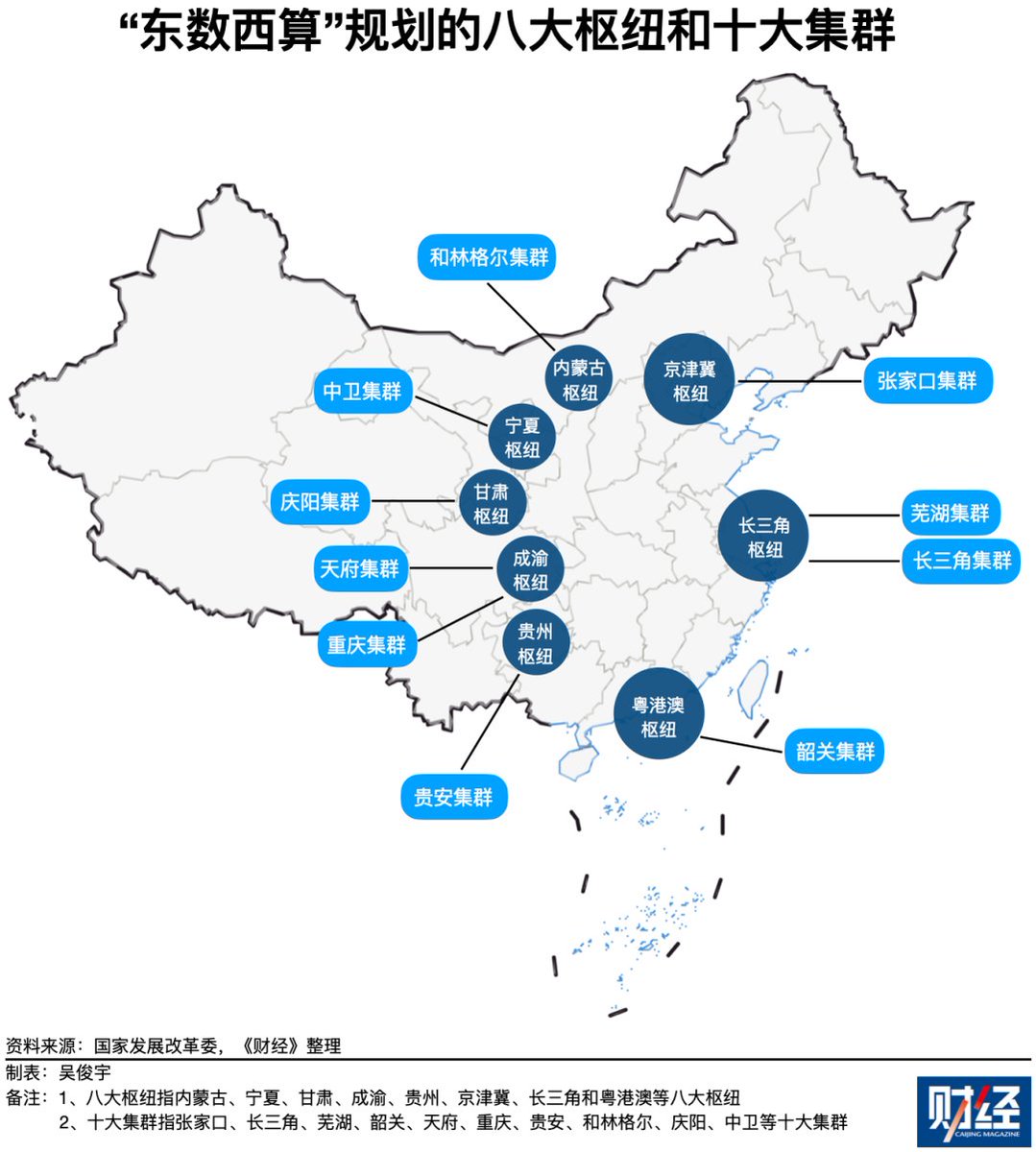
China is building a National Integrated Compute Network 全国一体化算力网络 to help allocate compute resources across the country and turn compute into public infrastructure. But there are many differences with similar projects for water or electricity, as this NDRC expert explains: 电是标准化的同质产品,无论是水电还是火电,进入电网后都是相同的电子,不仅容易计量,也容易替代。 但算力是高度异构和非标准化的。比如,英伟达、华为的AI芯片架构不同,这些AI芯片和通用的CPU(中央处理器)架构也不同。因此,不同的芯片,无法像水电那样简单混合使用,这给调度带来了极高的适配难度。 此外,水和电的传输是相对单向的,且“无状态”。算力调度是双向传输且“有状态”的。“有状态”指的是,计算任务需要输入数据,计算完成后还会产生新的数据结果,且对网络延时极度敏感,毫秒级的抖动都可能导致计算失败。 "Electricity is a standardized and homogeneous product. Whether it comes from hydropower or thermal power, once it enters the grid it becomes the same electrons. It is easy to measure and easily substitutable. Computing power, by contrast, is highly heterogeneous and non-standardized. For example, AI chips from NVIDIA and Huawei use different architectures, and these AI chips also differ from general-purpose CPUs (central processing units). As a result, different chips cannot simply be mixed and used interchangeably like electricity, which creates enormous complexity for scheduling. In addition, the transmission of water and electricity is relatively one-way and “stateless.” Compute scheduling, however, involves bidirectional transmission and is “stateful.” “Stateful” means that computational tasks require input data, generate new output data after processing, and are extremely sensitive to network latency—even millisecond-level jitter can cause computation to fail." Very interesting discussion (in Chinese) originally in Caijing: eu.36kr.com/zh/p/368000759…
Kyle Chan tweet media
English
6
124
447
34.6K
Michael Laha retweetledi
Kyle Chan
Kyle Chan@kyleichan·
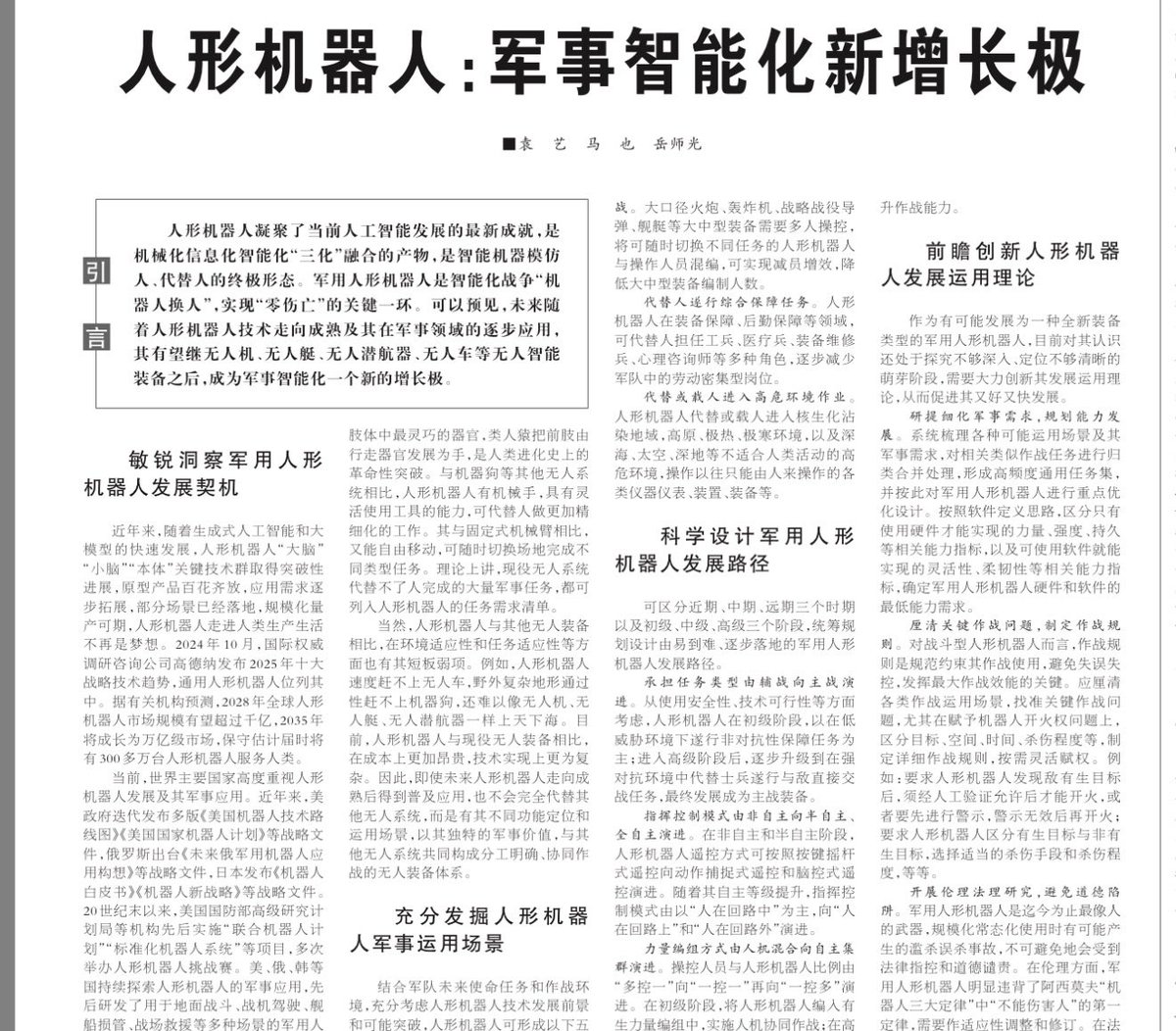
The People’s Liberation Army Daily 解放军报 published a piece last year discussing possible military uses for humanoid robots, including replacing human soldiers in combat roles. Some highlights: “Military humanoid robots are a key component of ‘robots replacing humans’ in intelligentized warfare, enabling the realization of ‘zero casualties.’” 军用人形机器人是智能化战争“机器人换人”,实现“零伤亡”的关键一环。 “Replace or operate in coordination with humans in ground combat. Ground warfare is the most brutal form of combat and results in the highest number of casualties. Deploying combat-type humanoid robots with overall fighting capabilities approaching those of humans to replace infantry in urban and field environments could significantly reduce personnel losses.” 代替或与人协同地面作战。地面作战是最残酷、造成人员伤亡最多的作战样式,以综合作战能力接近人的战斗型人形机器人代替步兵在城市和野战环境中与敌人作战,可大幅减少人员伤亡。 “Command-and-control models will evolve from non-autonomous to semi-autonomous and fully autonomous modes. In the non-autonomous and semi-autonomous stages, the remote-control methods for humanoid robots may progress from button-and-joystick control to motion-capture control and even brain–computer interface control. As their level of autonomy increases, command-and-control models will shift from being primarily “human-in-the-loop” to “human-on-the-loop,” and ultimately to “human-out-of-the-loop.”” 指挥控制模式由非自主向半自主、全自主演进。在非自主和半自主阶段,人形机器人遥控方式可按照按键摇杆式遥控向动作捕捉式遥控和脑控式遥控演进。随着其自主等级提升,指挥控制模式由以“人在回路中”为主,向“人在回路上”和“人在回路外”演进。 “In the advanced stage, once humanoid robots are produced, they must undergo systematic “eye–brain–hand” coordination training tailored to various military missions. Through individual learning and collective collaborative learning, they can achieve rapid self-evolution and continuously enhance their combat capabilities.” 在高级阶段,人形机器人生产完毕后,要针对各种军事任务进行系统的“眼脑手”协调训练,通过个体学习和群体协同学习,实现快速自进化,持续提升作战能力。 Original article published July 2025: news.cn/milpro/2025071…
Kyle Chan tweet media
English
7
31
113
38.8K
Michael Laha retweetledi
Steve Hou
Steve Hou@stevehou·
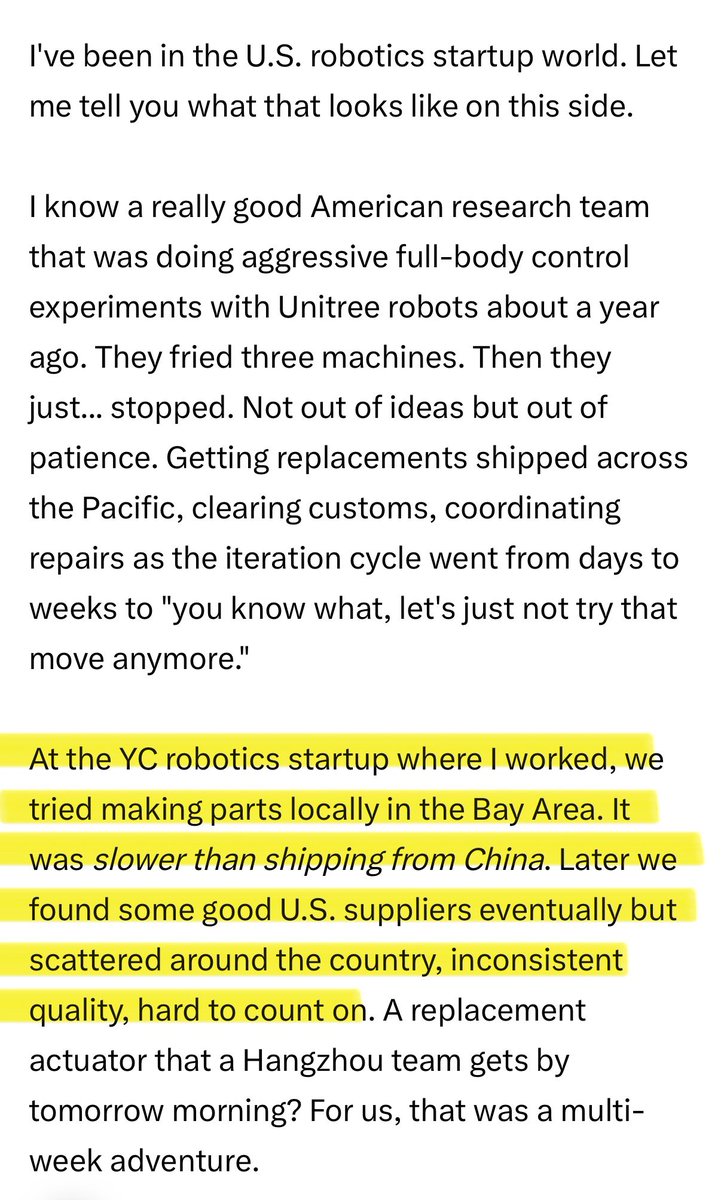
Great article why the US lags behind China on robotics from an engineer who has worked at top labs in both countries. The reason: supply chain, years if not decades worth of it. There’s a “scaling law” for everything incl robotics bc iteration is recursive and multiplies.
Steve Hou tweet mediaSteve Hou tweet mediaSteve Hou tweet mediaSteve Hou tweet media
Rui Xu@xu545302

x.com/i/article/2023…

English
32
162
739
145.2K
Michael Laha retweetledi
Thorsten Benner
Thorsten Benner@thorstenbenner·
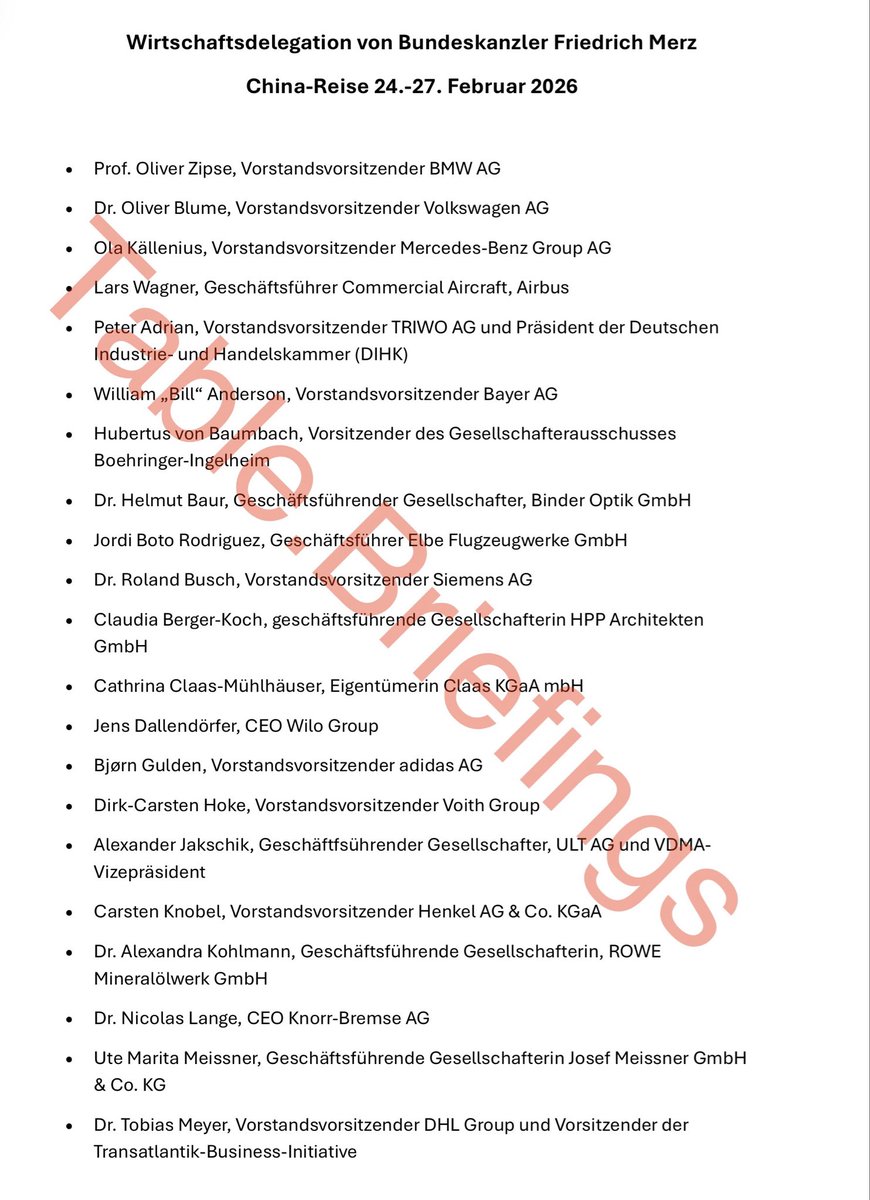
Größte Wirtschaftsdelegation seit Merkels 1. Amtszeit begleitet Merz. Doch Ähnlichkeit trügt. Heute sind Unternehmen wie VW & Mercedes auch chinesische Unternehmen. Was ihrer "in China, for China & rest of world"-Strategie zugute kommt, hilft deutschen Arbeitern nicht unbedingt.
Thorsten Benner tweet mediaThorsten Benner tweet media
Deutsch
3
7
42
7K
Michael Laha retweetledi
Tiezhen WANG
Tiezhen WANG@Xianbao_QIAN·
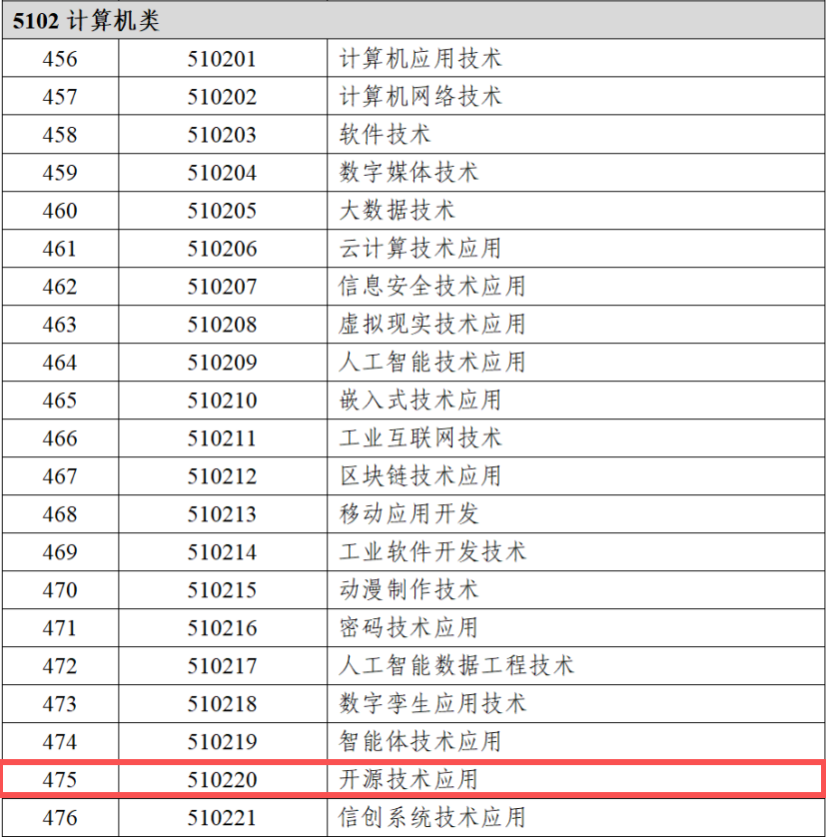
This is official: Open source technology has became a real major in Chinese colleague of Vocational Education. Link: moe.gov.cn/s78/A07/zcs_zt… Looking forward to see more developers in the community in the upcoming years!
Tiezhen WANG tweet media
English
1
7
33
4K
Michael Laha retweetledi
Kyle Chan
Kyle Chan@kyleichan·
India’s Reliance Industries wanted to move into battery cell production, backed by state incentives. They were negotiating a tech licensing deal with China’s Hithium. But that stopped after China imposed export controls on LFP battery technology. This is a catch-22 situation for countries trying to build their own battery industries. It’s difficult to compete with Chinese battery makers. One of the best approaches is to build on Chinese technology. But the question is whether Beijing will allow it. bloomberg.com/news/articles/…
English
65
132
819
262K
Michael Laha retweetledi
Paul Triolo
Paul Triolo@pstAsiatech·
GOP effort to thwart chip sales to China gains steam The BIS STRENGTH Act would authorize Commerce to appoint 25 “highly qualified technical experts and offer competitive compensation, within existing federal pay limits, to attract and retain top-tier talent.” axios.com/2026/01/09/gop…
English
1
1
11
2K
Michael Laha retweetledi
Poe Zhao
Poe Zhao@poezhao0605·
China awarded 222 data center projects worth over 100 million yuan in 2025, spanning 29 provinces and 87+ cities. The monthly trend reveals notable volatility. August saw a sharp drop to just 8 projects, likely reflecting policy adjustments. December surged to 33 projects—the highest of the year—suggesting a year-end rush to deploy infrastructure. Beijing, Xinjiang, Shanghai, and Anhui led in project volume. The geographic spread reflects China’s push to balance compute infrastructure between established tech hubs and emerging regions with cheaper land and power. Two observations: First, the volatility indicates this market is still heavily influenced by policy cycles rather than organic demand. Second, the December spike suggests many projects were approved but execution timelines remain uncertain. China’s data center buildout continues at scale, but the path forward looks less linear than the aggregate numbers suggest.
Poe Zhao tweet media
English
1
5
22
4K
Michael Laha retweetledi
Kyle Chan
Kyle Chan@kyleichan·
China-Europe collaboration on fusion is beneficial to both sides. “The findings could be applied to the International Thermonuclear Experimental Reactor (ITER) — a global effort to build the largest such fusion reactor — to make it more powerful… Study co-author Ping Zhu, a nuclear-fusion researcher at Huazhong University of Science & Technology in Wuhan, China, says that the team will make a proposal to repeat its experiment at ITER in southern France.” Source: nature.com/articles/d4158…
Kyle Chan@kyleichan

Chinese fusion researchers at the Experimental Advanced Superconducting Tokamak (EAST) in Hefei have broken through what was long considered an impossible plasma density ceiling—the so-called Greenwald limit—in a new article in Science Advances.

English
0
13
49
9.1K
Michael Laha retweetledi
Gerard DiPippo
Gerard DiPippo@gdp1985·
China announced guidelines for "AI+ Manufacturing" under the AI + initiative. The plan aims to embed 3-5 foundation models into manufacturing by 2027, creating 1,000 industrial AI agents and 500 applications. It's a diffusion strategy backed by industrial policies. 1/
Gerard DiPippo tweet media
Washington, DC 🇺🇸 English
4
23
70
11.2K
Michael Laha retweetledi
David Lee
David Lee@DavidLe76335983·
Most people did not expect China to ban rare earth export to Japan in fear of Japan banning export of photoresist to China The fact that China is reportedly considering full rare earth ban to Japan means there is likelihood China has achieved breakthroughs in its domestic Photoresist supply base to replace import Photoresist is light sensitive polymer used in light lithography for semiconductor. It has multiple categories for wavelength based photoresist 1. G-line/I-line: Older technologies, higher localization in China 2. KrF (Krypton Fluoride) & ArF (Argon Fluoride) (Deep UV/DUV): Essential for mainstream chips; Japan dominates. Several Chinese companies like Hubei Dinglong, Xuzhou B&C Chemical, and Nata Opto-electronic are progressing from R&D to commercialization for ArF and KrF photoresists, securing domestic orders and expanding capacity to reduce reliance on foreign suppliers 3. EUV (Extreme Ultraviolet): Crucial for advanced chips (under 7nm); almost entirely controlled by Japanese firms like Shin-Etsu Chemical and JSR. China is actively developing its own EUV photoresists, with universities like Tsinghua and companies like Skyverse showing breakthroughs to counter reliance on Japanese suppliers (JSR, Shin-Etsu). China cannot import EUV from ASML and locally developed EUV machine is still under testing, so EUV photoresist needs to be developed and commercialized in near term to support the rollout of China EUV machines in 2027/28
English
10
79
523
50.2K
Michael Laha retweetledi
Kyle Chan
Kyle Chan@kyleichan·
“Officials have started identifying standout companies and reviewing AI-related technologies developed by Chinese researchers, with the aim of adding those of strategic importance to an export-control list, the people said.” wsj.com/tech/china-war…
English
1
6
31
3.5K
Michael Laha retweetledi
Marco Castelli
Marco Castelli@macastel3·
Chinese drug makers signed 157 out-licensing deals with global pharmaceutical firms last year versus 94 a year earlier Already most of basic ingredients are from China, but now they are moving up in the value chain scmp.com/business/china…
English
2
16
91
8.2K
Michael Laha retweetledi
Poe Zhao
Poe Zhao@poezhao0605·
China just launched a ¥100bn venture fund designed to mobilize a trillion-yuan pool with a 20-year horizon and no geographic quotas. On paper, it’s a genuine evolution in state capitalism. The real question: can audits and incentives tolerate losses when career advancement depends on avoiding visible mistakes? I examine the architecture, the strategic logic, and what foreign investors should watch in my latest FlashPoint column.
Poe Zhao@poezhao0605

Beijing’s new ¥100bn venture fund promises 20-year patience and tolerance for failure. The architecture is sophisticated. But can state bureaucracy overcome its own DNA? My latest FlashPoint examines the trillion-yuan gamble: where capital allocation meets cadre incentives. hellochinatech.com/p/china-state-…

English
0
1
3
705
Michael Laha retweetledi
Rui Ma
Rui Ma@ruima·
A friend just shared this chart of robotics companies at CES. Quite a large group of exhibitors from China. Enjoy!
Rui Ma tweet media
English
38
150
617
39.9K
Michael Laha retweetledi
Poe Zhao
Poe Zhao@poezhao0605·
Interesting signal from China's regulators: Unitree Robotics, a leading humanoid robot maker, had its fast-track IPO approval pulled. The listing itself isn't canceled, just moved to the regular queue. The reason? Officials want to cool down the robotics sector. "The bubble is too big," according to sources. This matters because Unitree would be China's first publicly traded humanoid robotics company. The fast-track process (a special mechanism to speed up IPO approvals for strategic sectors) was clearly meant to support the industry. Now regulators are tapping the brakes, even as multiple robotics companies (Deeprobotics, Leju) are lining up for IPOs. It's a classic Chinese policy move: encourage an industry, then step in when speculation gets ahead of fundamentals. Worth watching how this affects capital flows into China's robotics sector in 2026.
English
5
24
179
20.3K
Michael Laha retweetledi
Paul Triolo
Paul Triolo@pstAsiatech·
China’s CXMT in crosshairs of South Korean prosecutors over Samsung tech leak Prosecutors in Seoul indict 10 people, including ex-Samsung executives, for allegedly leaking the firm’s technology to memory chipmaker CXMT sc.mp/t00ba?utm_sour… via @scmpnews
English
1
5
17
1.8K