

Michael Zhu
364 posts

Michael Zhu
@michaelbzhu
exploring | prev: @retool @dormroomfund @ucberkeley
San Francisco, CA Katılım Şubat 2020
831 Takip Edilen1.2K Takipçiler
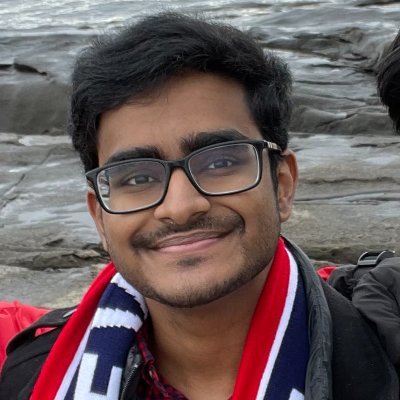
Very bittersweet, but I'm leaving Apple.
Anyone who knows me knows how much I admire Apple's story and ethos. The iPhone captured my imagination as a kid, and never let go. And getting to spend the early innings of my career here, working on brand new interfaces on Vision Pro, has been a gift I'll spend a long time trying to repay ❤️
A few things I’ll never forget:
(1) Design around the magic moment: Building a good product is really about finding the one moment that does the convincing and building everything else around it. You'll know you've found it when someone smiles without meaning to. I'll never forget the first time a butterfly landed on my finger inside Vision Pro, and my body believed it before my brain did.
(2) It takes research to will products into existence: Most people treat research and product like a handoff, where researchers figure out what's possible and the product team figures out what to do with it. The best work happens when both sides are in the same room arguing about the same thing. You don't know what the research is for until someone shapes how a person uses it, and you don't know what to shape until the research tells you what's possible.
(3) The best products are arguments, not compromises. Every product is the output of thousands of decisions, and at most companies, each one gets averaged. The result is defensible in every meeting and exciting in none. Great products feel like someone meant them. The work isn't making good decisions, it's protecting the ones that matter from being negotiated into mush.
Thank you to everyone who taught me, pushed me, and trusted me with hard problems. You know who you are (and by that I mean more of you should be on X haha)
We're at a real shift in how products work, and in the interfaces we'll use to build and interact with them. These shifts only come around every couple of decades, and I couldn't imagine a more exciting time to be a builder. Excited to share what's next soon!!

English

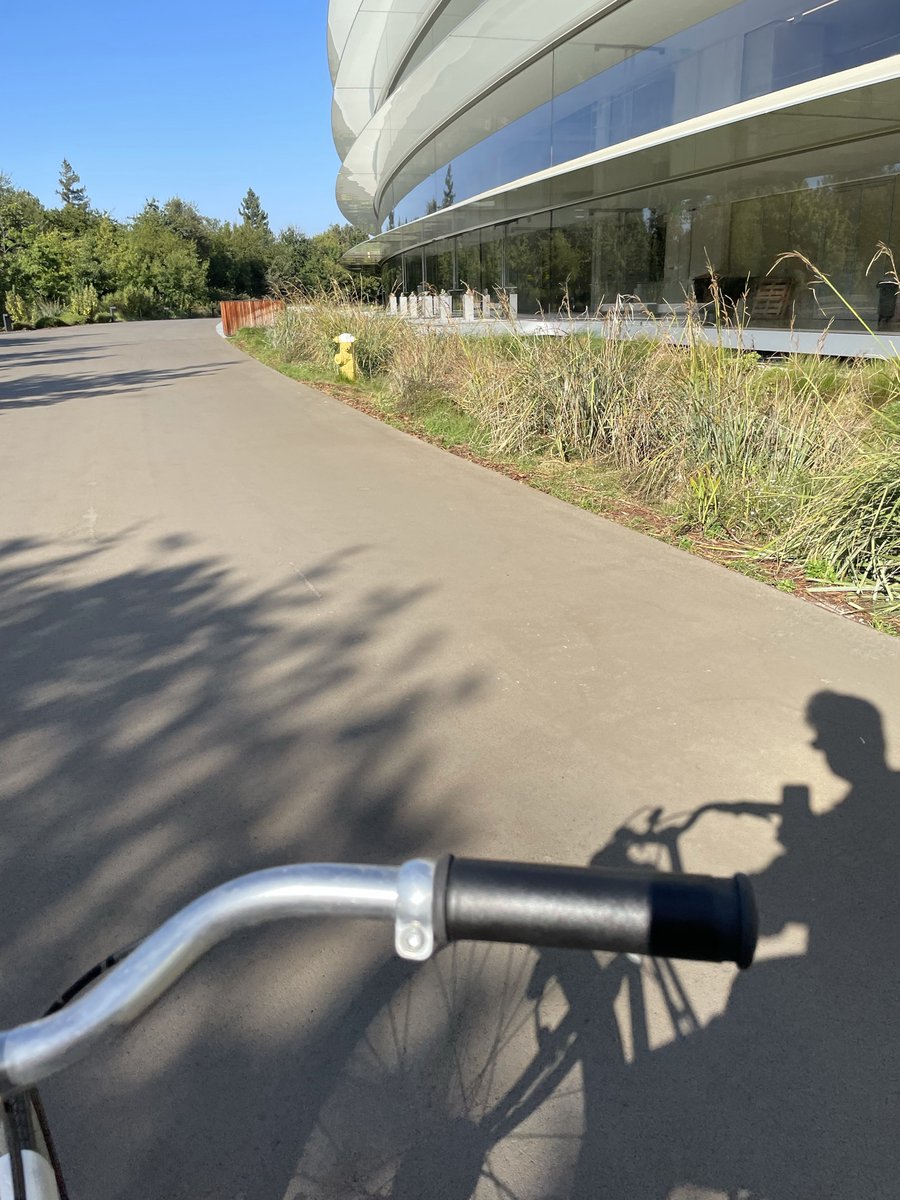
I am leaving the Foundational Research team at DeepMind!
I just wanted to take the time to reflect on this truly amazing journey. It was such an intense and fulling ride that I will always cherish.
Two efforts shaped me in particular: the reasoning work and building the continual learning infrastructure for robotics. They taught me what it takes to turn ambitious ideas into real systems. Here are some of my biggest takeways:
1. Iteration speed, iteration speed, iteration speed: the teams that win arent neccessarily the smartest but the ones able to execute on a thousand ideas in the time their competitors excute on five. This became way more obvious when we were working on reasoning for humanoids where the iteration contains hardware in the loop. You have to really deeply think about what it takes to test your hypothesis and how to greatly simplify the iteration loop to move faster.
2. Building scalable infrastructure from day 1: Researchers sometimes think that moving fast means building unscalable infrastructure. My time at DeepMind taught me that there is always one more experiment that requires refactoring the entire repo, as those come up, we should figure out how to better build the stack from the ground up to support more and more wacky experiments.
3. Having fun is probably the most important thing at work: When you truly enjoy your colleagues’ company and you are motivated by the success of the larger team, the late nights become memorable, not exhausting. I never truly understood this until the 1am nights at work all huddled near one of our humanoids trying to figure out why its behaving this way.
I’m especially gratefJ to my mentors @sippeyxp , Jie Tan, @Kanishka_Rao, and @carolina_parada for constantly finding harder challenges for me and pushing me to grow.
Peter Pastor, @keerthanpg, and Stefani Karp thank you for the late-night hacking sessions and the PEAK dinners. Those are some of my most treasured memories!
@claudiofantacci, Alex Lee, @Sumeet_Robotics, and Ken Caluwaerts thank you for teaching me how to build scalable infrastructure, from building the new inference stack to scaling experiments.
@Stacormed, @xiao_ted, @ColinearDevin, and Giulia Vezzani I learned so much from you. Thank you for entertaining all my hypotheses (especially the weird ones) and helping me learn through them.
I can go on and on.. I just can’t thank each one of you enough. Truly thankful for the time we spent together!
Will share more soon 👀


English

I’ve left Google DeepMind.
The last two years have been an incredible whirlwind.
A couple years ago, I joined a small startup called Codeium. There, I got to ship Windsurf, train SWE-1 (a frontier agentic coding model), go to DeepMind in the $2.4B acquisition. Now, I decided to leave the acquisition money and DeepMind.
I’m grateful to the mentors, teammates, and friends I worked with along the way.
At Windsurf, thanks to @_mohansolo and Douglas Chen, I got to see what a fast moving startup that ships relentlessly and builds for the future looks like. I learned from @thenickmoy how excellent research leadership can drive outsized innovation.
At DeepMind, I got to push the frontier of agentic coding, be part of the amazing team that shipped Antigravity and contributed to Gemini 3. DeepMind is a rare place: deeply curious people, exceptional research taste, and access to enormous compute and Google-scale infrastructure.
A few things that I learned:
1. Finding the right hill to climb. Now more than ever, there are a multitude of directions to push the frontier in AI research. It’s easy to optimize for the wrong benchmark or capability. You should step back regularly to question if you are climbing the right hill, and adjust course often.
2. The secret to being a fast-moving team. Moving quickly is not just about working hard and long hours. It requires making concrete bets about where the world will be in 6 months, aligning around them, and cutting everything else. This was our journey from the Codeium Extension → Windsurf IDE → SWE-1 → Antigravity → Antigravity CLI
3. Silicon Valley is small. Since the split of Windsurf to DeepMind and Cognition, many of my colleagues have gone to other exciting places - Thinking Machines, OpenAI, xAI, Cursor, fast-moving startups, or started their own companies. I’m grateful to have worked with so many talented, hungry people whose stories are not yet finished.
So what’s next?
We are living in one of the most exciting and powerful times in human history. Just like we transformed software engineering, soon every industry, every unit of work will be radically transformed, democratized, accelerated. With this comes new challenges, and new doors of frontier research to be opened.
More soon.
English

Long-overdue update: I joined @ThinkyMachines! Excited to share a preview of what we've been building around real-time Human AI Collaboration x.com/thinkymachines…. Demos of our Interaction Models in thread 🧵👇
Thinking Machines@thinkymachines
People talk, listen, watch, think, and collaborate at the same time, in real time. We've designed an AI that works with people the same way. We share our approach, early results, and a quick look at our model in action. thinkingmachines.ai/blog/interacti…
English
English

Introducing Altara: the scientific intelligence platform for the physical world.
Today @evatuecke and I are excited to announce our $7M seed led by @GreylockVC, joined by @Neo, @BoxGroup, @Liquid2V, and angel investors including @JeffDean and leadership from OpenAI & AMD.
We’re already working with early customers in semiconductors, batteries, and advanced materials. More below.
English

will be sharing more about the agents we’ve built and deployed soon, but this essay finally convinced me to join Aakash and move to SF (👋 !)
it’s a bit long – here’s my selected tl;dr:
“Value accrues to the layer closest to the customer outcome
Shopify's success stemmed not from being a better SaaS product but from a revenue model perfectly aligned to its customers' outcomes […] they won by being the platform that made its merchants sell more stuff and then getting paid a percentage of every sale.
The AI companies that win won't just win by having the best model, they'll win by being the platform that replaces their customers' most expensive cost centers and getting paid a percentage of every dollar saved or every dollar earned.
Our growth so far is a direct consequence of value alignment. When your agents result in more loans originated than a human team, the customer doesn't need to be sold on expanding the contract, the results sell themselves.
The mortgage workflow doesn't care which LLM powers the income verification step, it cares whether the loan funds, and the healthcare coordination workflow doesn't care which model generates the phone call to the insurance company, it cares whether the prior authorization gets approved.
The model is an input. The outcome is the product.”
Aakash Thumaty@letsleverup
I wrote this internal memo to convince @spenciefy to join us + articulate our right as a startup to exist in a world with Anthropic and OpenAI (it also ended up being the "deck" we raised our seed round on)
English

The new homepage I designed for mobile is finally out! As our app becomes the go-to place to kick off work from your phone, this is the first step in making chats and meeting notes feel like first-class primitives alongside pages and databases.
Notion@NotionHQ
Your mobile homepage just got a refresh! Now, your home, AI chats, meeting notes, and inbox… are just one swipe away. Take it for a spin and tell us what you think.
English
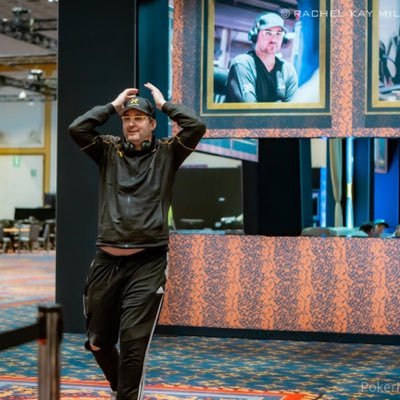
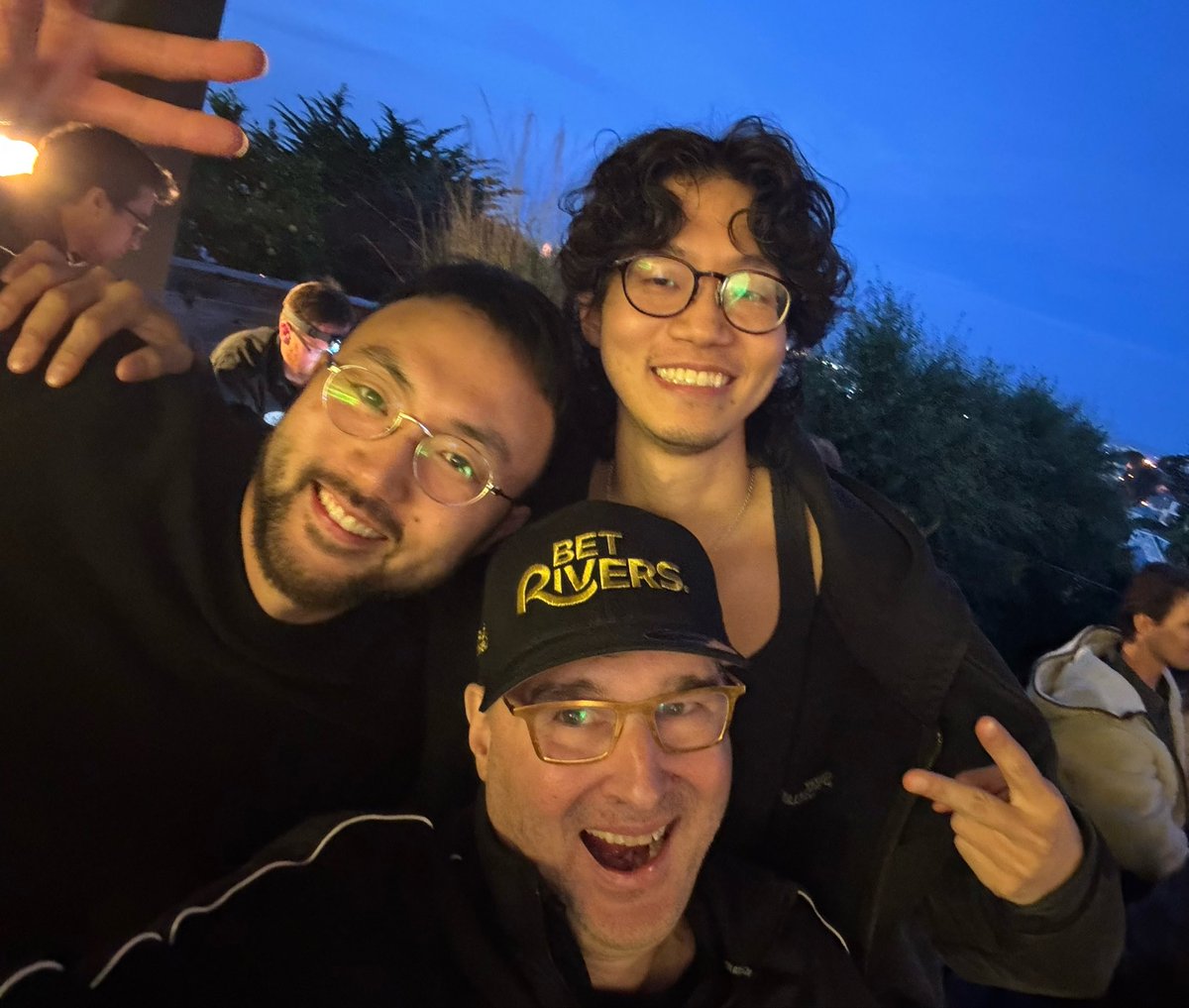
Last night:
my guy @realnikhy Founder/CEO @corridorbrokers wins the “Young Tech Star” poker tourney in San Fran
Fun night!
Picture w Will and Eric Wei co-Founders of @trykarat (Karat)
#POSITIVITY
English
Victor Cardenas Codriansky@victorcardenas
We (@slashapp) raised a $100M Series C at $1.4 billion valuation to build the world's most powerful business banking platform.¹ The round was led by @RibbitCapital, and co-led by @khoslaventures & @GoodwaterCap. And we're releasing Twin: the world’s first AI private banker.
QME
QME

We (@slashapp) raised a $100M Series C at $1.4 billion valuation to build the world's most powerful business banking platform.¹
The round was led by @RibbitCapital, and co-led by @khoslaventures & @GoodwaterCap.
And we're releasing Twin: the world’s first AI private banker.
English
QME

We raised $6.5M to build the agent for professionals.
When your reputation is on the line, you need an agent that's reliable, secure, and one step ahead.
Try it now at serif.ai
English

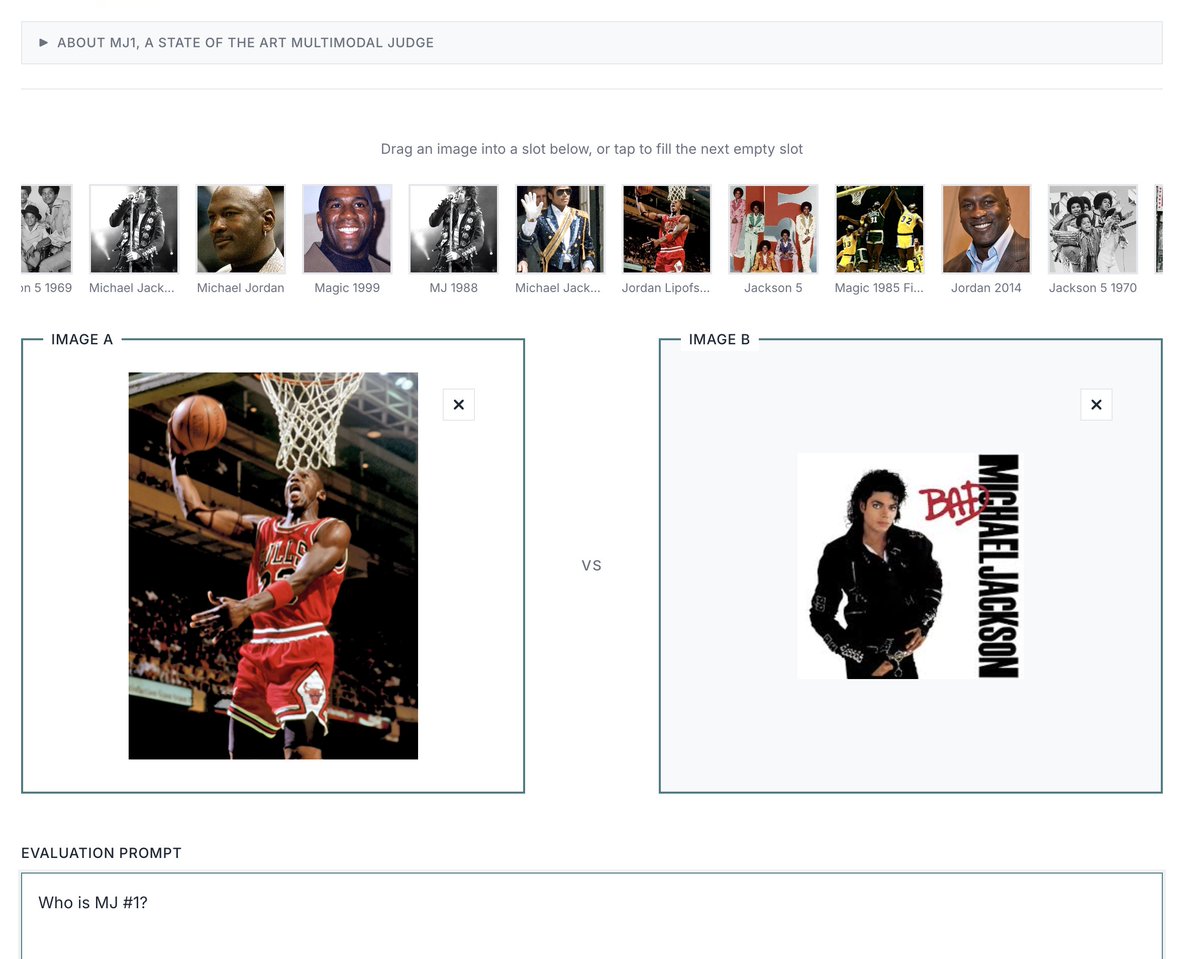
Hello MJ1: The World's TASTIEST Judge Model
Agent verification is the bottleneck to AI's progress. The field's ability to verify visual output lags far behind that of text, especially in matters of ~taste~.
So we built the world's tastiest multimodal judge model, MJ1.
English

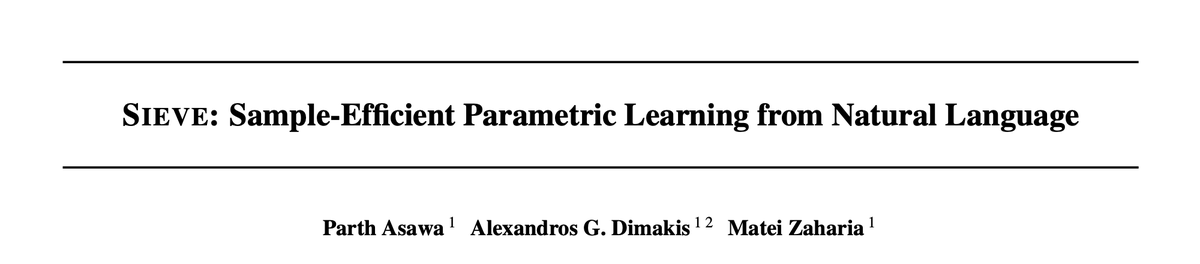
Continual learning from natural language is data-hungry. Can we make it sample-efficient? SIEVE distills natural language context (instructions, feedback, rules, etc.) into model weights using as few as 3 examples only of queries—outperforming prior methods and even in-context learning baselines. (1/n)
English

Hitting $1M ARR was an important moment for us, but our ambition doesn’t stop there. To build what we’re aiming for next, we need to grow.
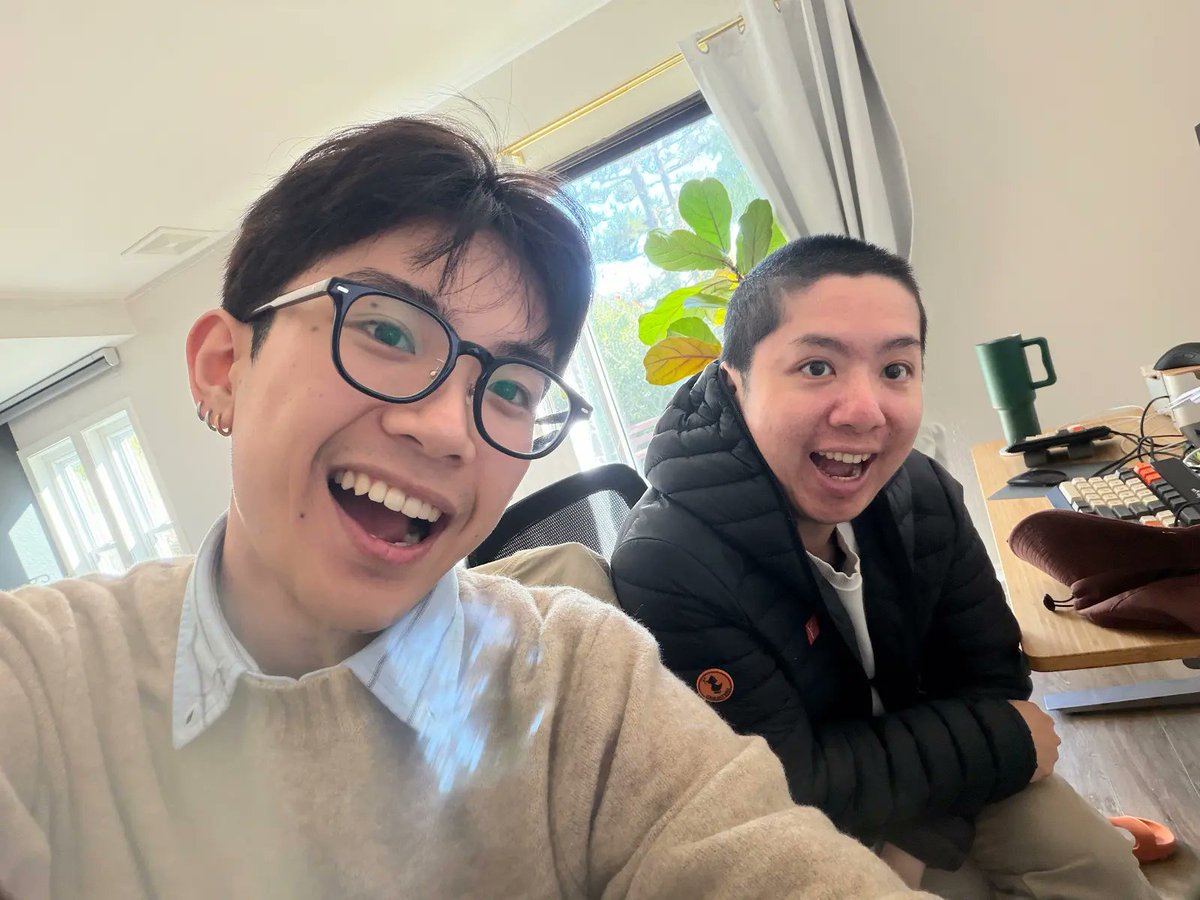
Today, we’re welcoming our first full-time hire, Adrian Yumul, as our Founding Growth Marketer.
Adrian is genuinely passionate about media and storytelling, but what stood out to me most is that he brings his real self to his work. That honesty shows up in his content, and it mirrors how we build at Floot: real products, built for real people, that actually work.
Until now, we’ve mostly been focused on building and shipping. As Floot grows, it feels important that how we show up and tell our story stays just as real as the product itself.
He already got me to take a selfie (not usually my thing), so expect more of this kind of stuff as we grow.
This feels like the start of a new chapter for @floothq .
Welcome to the team, Adrian.
English
@AlexGuuu @varun_jindal8 best part of this is getting to hang with Alex and Varun
English

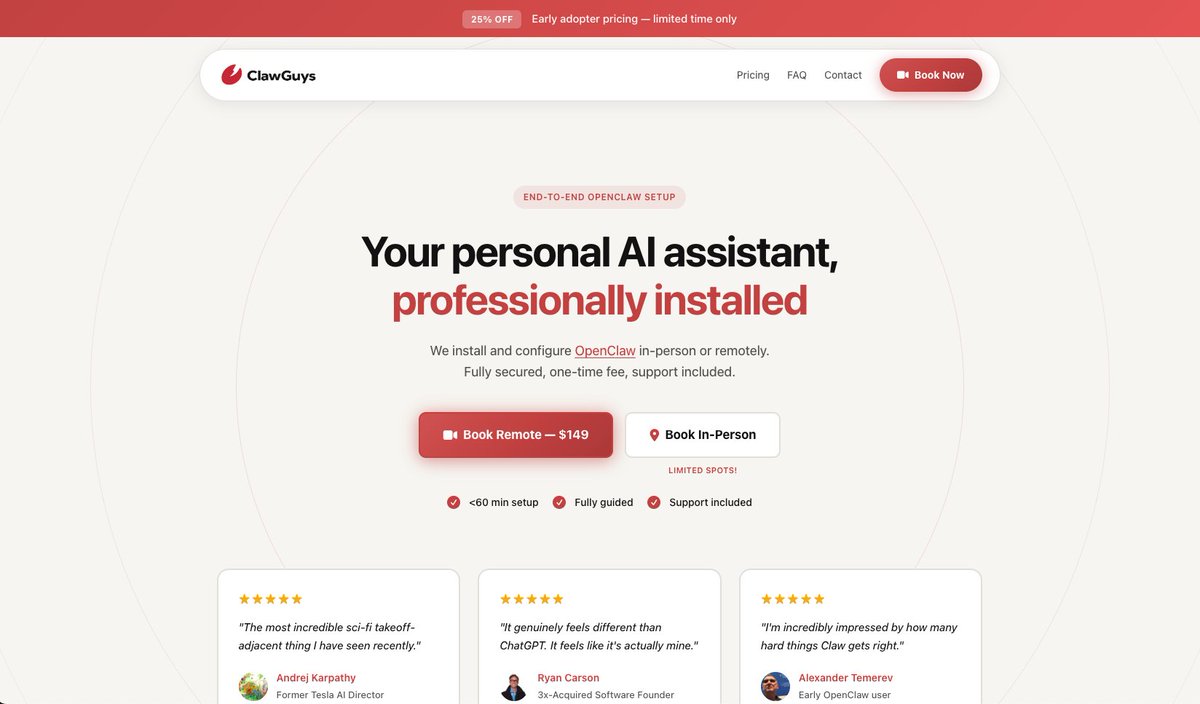
Meet clawguys.com
It’s a service where @varun_jindal8 & I show up and personally set up OpenClaw at your apt/office, all in <1 hour.
Available remote or NYC
English

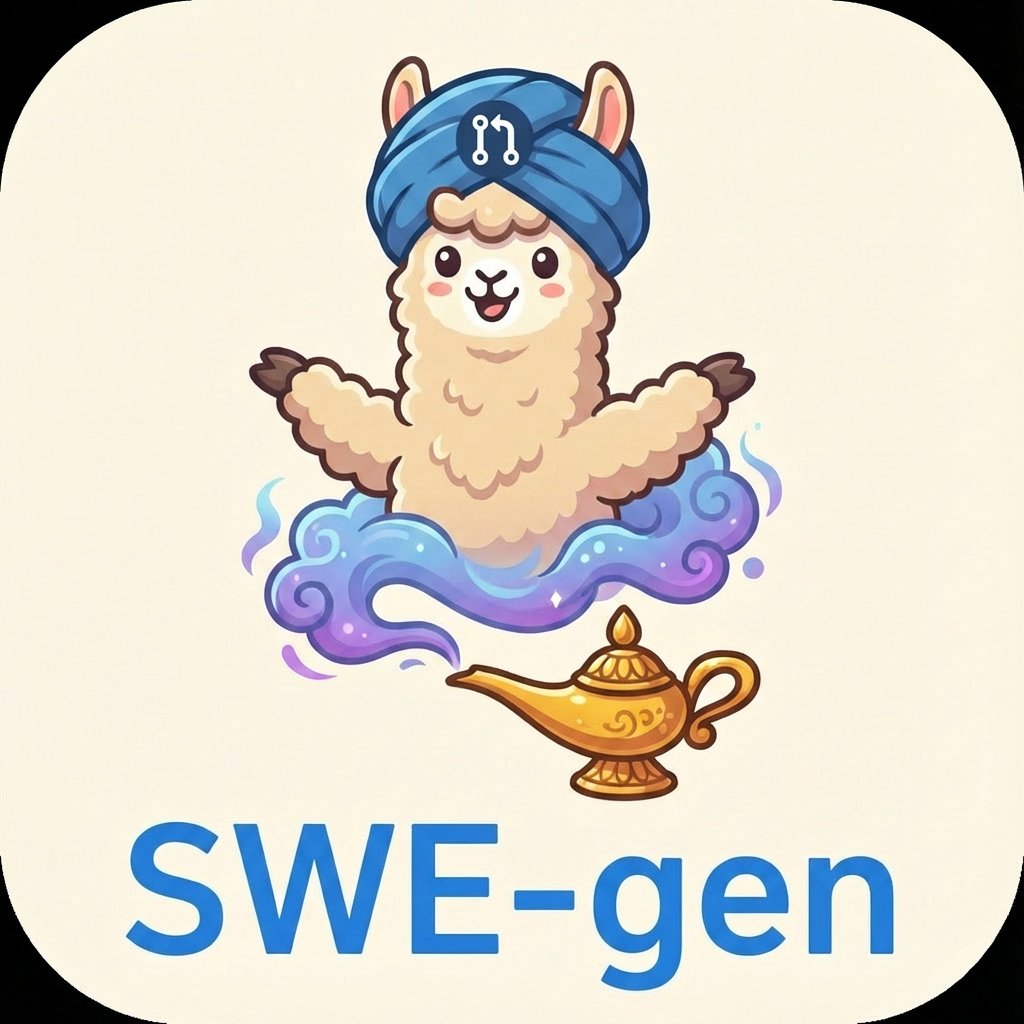
Excited to introduce SWE-gen 🚀
• Turn GitHub PRs from any repo into SWE-bench–style RL envs.
• Generate 1000s of eval-quality tasks per week
• Fully open-source
English
My first ever RL project was back in sophomore year of college, training a model to play rocket league using PPO, almost melted my RTX 3060 gaming laptop doing rollouts, I had so much fun.
Never thought I'd get to do this as a full time job
English


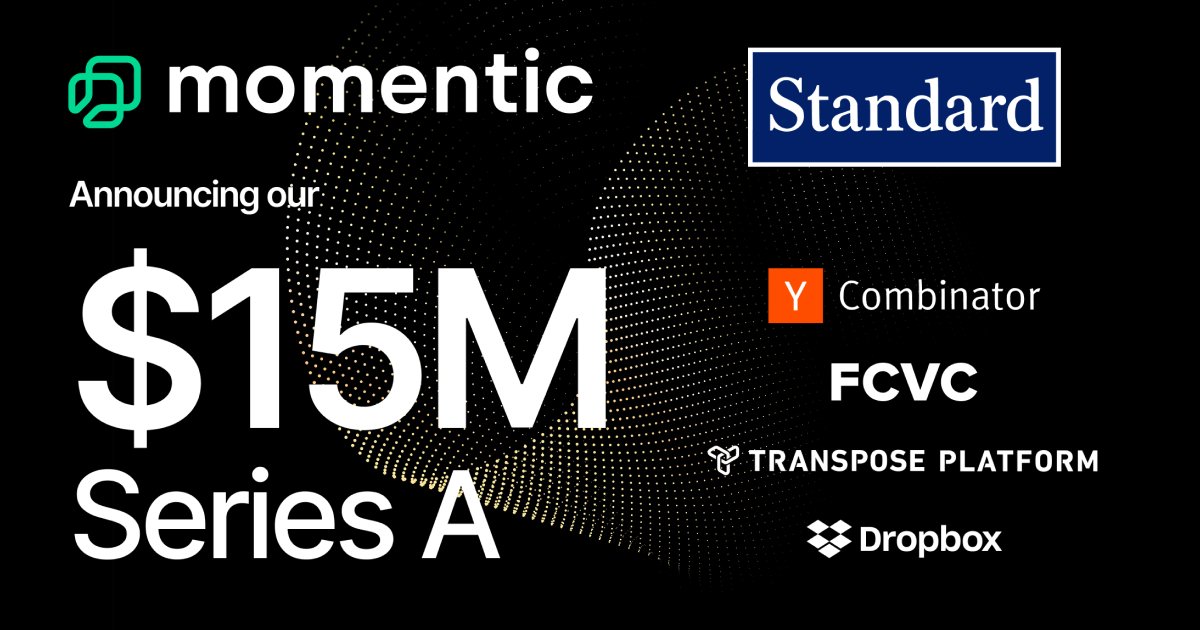
Proud to share we've raised a Series A led by Standard Capital!
We started out with a simple idea: make end-to-end tests not suck.
But as AI coding tools exploded in popularity, that kernel quickly evolved into a broader mission: to build the source of truth for how software should work.
We've already executed over 2 billion AI-powered steps on our platform.
We've prevented an estimated 400K bugs from reaching production.
Companies like @NotionHQ, @Xero, and @Quora trust us to validate every deployment before releasing.
And we're just getting started.
I'm beyond stoked to begin this next phase of our journey, as we grow the team and transform how software is built around the world! 🚀
English