Privateequityguy

1.1K posts

Privateequityguy

Privateequityguy

@midmarketPEguy

Private equity investor sharing real time learnings and offering advice where I can be helpful

Katılım Temmuz 2022
371 Takip Edilen12.6K Takipçiler
Sabitlenmiş Tweet
Privateequityguy
Privateequityguy@midmarketPEguy·
When evaluating deals, I like to have multiple ways to win. There are 4 main ways to generate a return. Organic growth, cash flow, buying m&a below your basis, and multiple expansion. You don’t need a fancy model to know how much value these impact your return by. See below
Privateequityguy tweet media
English
37
91
987
187K
Privateequityguy
Privateequityguy@midmarketPEguy·
There is no way the margins are correct here unless there’s a ton of capex in which case your free cash flow margin is way higher. Maybe they did it in one year, but I’m sure that’s not the normalized margin, it doesn’t back out lots of capex, or they benefitted from super cheap inventory that’s not sustainable
English
0
0
1
21
Shawn Gorham
Shawn Gorham@shawngorham·
I def haven't done due diligence and have no idea what the business actually is. But $1mm in ebitda on $2.2mm in revenue is prob....??? Not many service construction trade services are doing almost 50% NET margins, in fact does pest control do that well? My point is $2.7mm in debt for a business only doing $2.2mm in revenue in a small market is risky and can be duplicated for a lot less. This is the classic buy vs build - clearly we dont agree.
English
1
0
3
108
Privateequityguy
Privateequityguy@midmarketPEguy·
His math on the LTV was of apex doesn’t make sense - he has no backup for why he said it should trade at 39… it’s not intellectually honest. Yes he makes some good points on misalignment if incentives re fees but his analysis is flawed. Many of these companies have comps where if they needed to sell at a discount you’d still be in the equity and the debt would be at par
English
1
0
4
740
Kieran Goodwin
Kieran Goodwin@kieranwgoodwin·
Borrowing from @patrick_oshag, Nick is a maniac on a mission! ... MUST FOLLOW! The variance in business ethics in PC is very wide. Some like $BX doing the right thing but shenanigans are everywhere!! Stale marks, Extend and pretend so marks go from 100 to 0, public BDCs trading at 50% NAV that won't buy back stock, affiliated transactions that don't make sense ... WE NEED MORE TRANSPARENCY FROM MANAGERS!
Nick Nemeth (Mispriced Assets)@NickNemo17

$CCLFX. $32.5 billion. The largest interval fund in America. In 2021, ZERO borrowers were paying interest in IOUs. By September 2025: 188. And they thought: no losses, no redemptions. Read this. Cliffwater tells investors: "96% first-lien senior secured." "10% distribution yield." "Minimal losses." I parsed every position in their N-CSR filings on SEC EDGAR. All of them. I cross-referenced borrower names across every semi-annual filing. At least 53 borrowers were cash-pay in earlier filings. They used to pay cash interest. Then they couldn't. The loan was amended to PIK to avoid a technical default. Amend and extend. Cliffwater marks most at par. $1.24 billion. Five names that tell you everything: 1. WEALTH ENHANCEMENT GROUP — manages $136B in client assets. Can't service interest on its own subordinated debt. Holds a $23M tranche at 15% PIK — zero cash on that tranche. CW blended mark: 82c. My mark: 42c. The wealth managers can't manage their own leverage. 2. APEX SERVICE PARTNERS — HVAC rollup, 200+ companies, 43 states. Was cash-pay 2021-2024. Now holds 14.25% PIK sub-debt tranches paying zero cash. CW: 90c. My mark: 39c. Your AC repairman's parent company is paying its subordinated lenders in IOUs. 3. CPF DENTAL — dental chain. SOFR + 9.25% plus a 4.25% PIK component. All-in rate: ~18%. Maturity: December 31, 2025. The loan was due three months after the filing date. CW marked it at 99.7 cents. My mark: 64c. 4. PPV INTERMEDIATE HOLDINGS — healthcare. The name is the evidence: "Intermediate Holdings" = structural subordination. Sub debt. 13.75% PIK tranche, zero cash. CW: 97c. My mark: 37c. Behind SBA loans, revolvers, equipment lenders, tax liens, pension obligations, and every operating company creditor. Sixty cents of overstatement on a tranche paying nothing. 5. iCIMS — HR tech/SaaS. Was cash-pay from Mar 2022 through Sep 2024 in every filing. Now 10.07% PIK. The software company can't pay its interest bill. CW: 96c. My mark: 84c. Generous. Very generous. Even with a modest haircut, that's a confirmed credit event they won't recognize. The playbook: Borrower can't pay (SOFR went 0% to 5.3%) --> Amend to PIK (no default recorded) --> Extend maturity --> Mark at par (97% Level 3, no market price, Cliffwater sets its own marks) --> Book PIK as income ($57M of PIK interest in six months ended Sep 2025 alone) --> Collect fees Why they do it — the incentive: Cliffwater charges a 1% annual management fee on net assets. At $32.5B, that's $325 million a year. Every dollar of markdown reduces the fee base. Permanently. The incentive to not mark down is $325M/year. And here's the fund-of-fund layer they don't talk much about: six of their top ten holdings are CLOs, BDCs, and fund vehicles that charge their own fees underneath. Silver Point CLO ($1.4B), Barings Private Credit Corp ($919M), BlackRock Shasta CLO ($600M), Golub Capital, Blue Owl, AGTB. Your grandmother is paying Cliffwater 1% to invest in other funds that charge another 1-2%. Fees on fees on fees. On assets marked by the people collecting the fees. Cliffwater reports a non-accrual rate of 0.42%. I identified at least 53 borrowers that converted from cash-pay to PIK — borrowers that stopped paying cash interest. That is not 0.42%. That is systematic restructuring to avoid classification. Amend the loan before it hits non-accrual, and the number stays low. "First-lien senior secured" — on hundreds of holdco/intermediate/bidco positions, the collateral is equity of the subsidiary. Not the factory. Not the receivables. Not the cash. In liquidation: IRS eats first. Pensions eat. SBA eats. Revolvers eat. Equipment lenders eat. Employee claims eat. MCAs eat. Trade creditors eat. Then maybe the holdco "first lien" gets the scraps. They call that 96% senior secured. 97% of this fund is Level 3 — no observable market price. Cliffwater determines the value. Cliffwater collects the fees. Cliffwater reports the yield. And investors see 10% distributions and think it's safe. Remember that they went after unsophisticated investors. Retirement accounts. Your grandmother's financial advisor put her in this. First out gets the most out due to Cliffwater's bogus marks. Redemption requests just hit 14% in Q1 2026. The fund caps quarterly repurchases at 7%. This is the beginning. Every data point from their own N-CSR filings on EDGAR. CIK 1735964. Verifiable.

English
8
9
97
50K
SMB Attorney
SMB Attorney@SMB_Attorney·
Call me old fashioned but unless blocks was wildly inefficient with a bloated workforce doing very little (possible), I don’t think moves like this will age well. I honestly don’t think AI tools are there yet. This feels like over-exuberance that will get walked back with time.
Aakash Gupta@aakashgupta

A company with $24 billion in revenue and 24% gross profit growth just cut 4,000 people while raising 2026 guidance to $12.2 billion in gross profit. Stock ripped 20% after hours. The market added roughly $6 billion in market cap. That's ~$1.5 million in enterprise value created per eliminated role. Block is the canary in the coal mine. And they're not alone. ASML cut 1,700 jobs last month while reporting record orders and said they were "choosing to make these changes at a moment of strength." Salesforce cut 5,000 after AI agents started handling 50% of customer interactions. Amazon cut 16,000 in January on top of 14,000 in October. Every one of these companies was growing when they did it. Dorsey said the quiet part out loud: intelligence tools paired with smaller teams have already changed what it means to run a company. He chose one massive cut over repeated rounds because, his words, gradual cuts destroy morale and trust. The restructuring charges are $450-500 million. At the operating income Block is guiding, that pays for itself in two quarters. After that, pure margin expansion. That's why Wall Street rewarded it instantly. Here's what's coming. Goldman estimates AI is already responsible for 5,000 to 10,000 net monthly job losses in exposed U.S. industries. Citigroup is planning 20,000 cuts. Dow just slashed 4,500. 40% of employers surveyed say they expect to reduce headcount because of AI. 30,700 tech jobs gone in the first six weeks of 2026 alone. Block went from 10,000 to 6,000 while growing revenue and raising guidance. Every CEO running a company with more than a few thousand employees is doing this math tonight. The canary just stopped singing.

English
51
0
79
37.6K
Privateequityguy
Privateequityguy@midmarketPEguy·
This is well said. Everyone who talks about buying for 4-5x don’t realize that a 4-5x multiple business is low quality. I’d rather pay 6-7x for a better quality business where platforms of scale trade for 15x to PE than a 4-5x business that PE doesn’t want (project based/other risks) or where PE platforms of scale trade for significantly lower multiples
Ben Bortner@Slackwatercap

Yesterday I announced to our investors that Slack Water Capital and our affiliates will no longer be allocating to new self-funded search opportunities. This decision is based on my belief that the environment for self-funded searchers, and self-funded search investors particularly, has deteriorated significantly since I first came up with the idea to launch a fund 3 years ago. While I still have a deep respect and admiration for the self-funded search model, having been a successful self-funded searcher myself, I believe the opportunity set today is no longer as attractive as it was even just 18-24 months ago for the self-funded search investor. When I first started investing in this space, the opportunity set was very different. High-quality businesses with recurring revenue, low customer concentration, and $1 to $2 million of EBITDA could routinely be purchased for 3-5x. Competition for these deals was relatively limited. They were too big for the average buyer but too small for most private equity. Today, there are far more buyers chasing these same types of SMBs. Private equity firms and their portfolio companies have come down market; family offices have proliferated and are looking for uncorrelated long-term holds with strong cash flow yields; and there is an exponentially growing number of aspiring ETA entrepreneurs looking to get in on the perceived gold rush. The results are predictable. Valuation multiples for quality businesses with $1 to $2 million of EBITDA have expanded materially. Deals that once traded at 3 to 5x, now routinely sell for 6 to 8x...and sometimes even higher! The 70-80% SBA loan, 10-20% seller financing, and 10-20% equity self-funded search model of the past simply doesn't work at these valuation levels. Thus, the self-funded searchers, on average, are left picking through the scraps left behind by other more experienced and better capitalized buyers. These scraps are typically the lower quality businesses with high customer concentration, greater economic sensitivity, more project-based revenues, greater key-person risk, and/or more operational complexity. And valuations for these businesses have moved up as well. These are primary types of businesses that are trading for 3-5x today. I do think there are still some opportunities in the sub $1 million EBITDA range for self-funded searchers. However, it is really hard to deploy a meaningful amount of capital into these smaller deals due to a small total equity check and the SBA's 20% ownership threshold. While these can be good opportunities for searchers and individual investors, they don't really move the needle for a fund. The typical self-funded searcher profile has also changed. The self-funded search model has been heavily marketed and romanticized on social media and podcasts. As a result, it now attracts a much wider pool of people than it did in the past. Many of the new crowd are not as well equipped to perform what is essentially a leveraged buyout of an incredibly fragile small business. Many of these new buyers underestimate how hard it is to successfully operate a small business while also servicing a significant amount of debt. They underestimate just how savvy the current business owner is, how hard they work, and how many roles they fill on a daily basis. Many searchers think they are buying passive income and can operate from behind a spreadsheet. Nothing could be further from the truth. Finally, when I started building Slack Water, there were only small handful of funds or larger investor groups focused on investing in self-funded deals. At the time, I felt like I was filling a real gap in the market. However, I no longer believe that to be the case. There are now dozens of funds and investor groups targeting the space. There was a period of time in 2025 where it seemed like there was a new fund focused on self-funded searchers being launched every week. In my opinion, there are just not enough "large", high-quality, self-funded search deals for all these funds to deploy that much capital in this space unless everyone is going to write a lot of $50k-$100k equity checks. And how much due diligence can you perform, and impact can you have post-closing, across 100 portfolio companies? This flood of new capital, and shortage of quality deals of size, is naturally causing these funds to compete for what limited deal flow there is. This competition is naturally pushing investor terms in an unfavorable direction. Less governance. Less downside protection. More aggressive structures. Higher entry multiples. Less equity participation. In my opinion, the combination of these 3 changing dynamics is not a great recipe for future returns for the space as a whole... Yes, there will still be exceptional operators who find those needles in the haystack, build great companies, invent innovative capital structures, and achieve extraordinary outcomes through self-funded search. I believe that strongly. However, in my opinion, returns for the "asset class" as whole over the next 3-5 years will likely not be what they were over the past 3-5 years. Rather than force capital into what I believe is a deteriorating environment, I believe the disciplined decision is to step aside. Personally, I've also discovered that I actually enjoy operating more than I enjoy being a passive investor. I enjoy the messy process and challenge of building something. The daily battles that inevitably popup. And, selfishly, having the final say on strategic direction. As a result, going forward Slack Water will focus on building our own platforms and explore new ETA models while remaining open to opportunistically investing across both private and public markets.


English
3
0
12
5.6K
Privateequityguy
Privateequityguy@midmarketPEguy·
@PEoperator I won’t take a side here except for noting both should be treated the same
English
1
0
1
214
PEoperator⚡️
PEoperator⚡️@PEoperator·
I have yet to hear a strong case for why "carried interest" income should get preferential treatment. Private equity managers earn carried interest (carry), which is a share of the investment profits above a threshold. Their entire job is to produce these returns. Carry is taxed at the capital gains rate, even though there is no associated personal investment. Meanwhile, folks with regular jobs pay ordinary income taxes. The conventional argument is it somehow promotes risk taking by PE... 1) I'm not sure that's a good thing and 2) is there really marginal risk taking from getting cap gains vs ordinary income tax treatment? Make it make sense.
English
15
2
58
17.4K
Privateequityguy
Privateequityguy@midmarketPEguy·
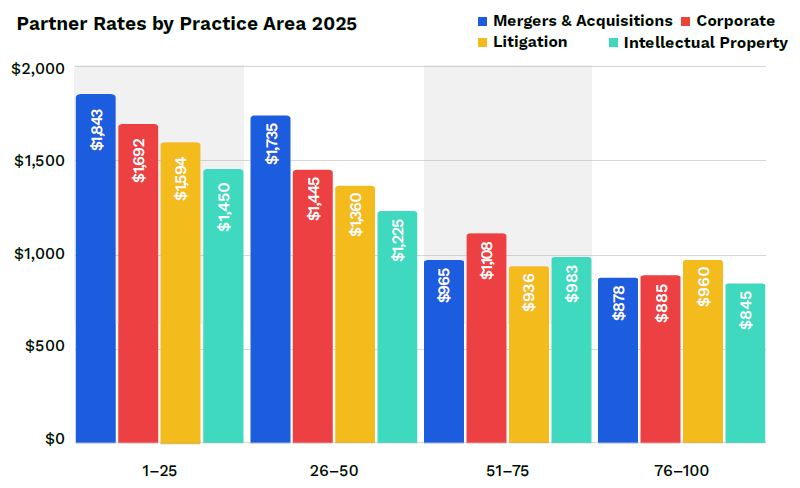
@Eli_Albrecht They are paying these rates bc it’s CYA. No one gets fired for hiring K&E. Also K&E has great T&E
English
0
0
2
270
Eli Albrecht
Eli Albrecht@Eli_Albrecht·
BigLaw Partner rates are between ~2,000/hour. I want to make one point: No one is paying these rates because they are fools. They are paying these rates because they know something many don't realize: A good lawyer makes you more money than you pay them.
Eli Albrecht tweet media
English
29
9
190
120.7K
Privateequityguy
Privateequityguy@midmarketPEguy·
@John_Hempton @W98AB Combs is giving up his board seat as he moves into the new role… had the same thought re ceo successor given he’s only 54
English
0
0
0
310
John_Hempton
John_Hempton@John_Hempton·
I mean the company will have a few exec directors. Linda Bammann is former head of risk management, not coming back. Dimon obviously respected her. But not next CEO. Jamie Dimon is obviously an exec director. Even Barnum, the CFO, is not on the board. He will be the only other exec director.
English
3
1
5
5.4K
Privateequityguy
Privateequityguy@midmarketPEguy·
@TKopelman @AllStWealth If I understand this right you are getting 2.8% fee on aum? That seems high unless you are not a fee only ria and selling other products?
English
1
0
0
199
Thomas Kopelman 💵
Thomas Kopelman 💵@TKopelman·
2025 has been an incredible year for us at @AllStWealth Here’s a quick recap of 2025: - 65 new clients added - 14 clients off boarded who weren’t great long term fits - 3 new clients signed already for 2026 with 10+ prospects on the calendar for Jan - AUM growth from just under $20mil to $64m In 2024, we did about $750k in revenue Our goal this year was: - low goal: $1mil - mid goal: $1.25mil - stretch goal: $1.5mil With a ton of hard work, we crushed $1.5mil this year And are hoping to get to $2mil next year (ARR of $1.8mil right now) It’s wild how efficient a team of an enrolled agent (he’s also a licensed financial advisor), director of ops, and a lead financial planner can be when we are all in our area of excellence Let’s keep building!
English
15
1
114
9.6K
Privateequityguy retweetledi
Blueprintsmb
Blueprintsmb@blueprintsmb22·
Chenmark on the Ivy League Paradox.
Blueprintsmb tweet media
English
10
12
187
25.6K
Privateequityguy
Privateequityguy@midmarketPEguy·
@STLChrisH Service mix? If it’s heavy service 7x if its install would not buy.
English
1
0
3
750
Chris Hoffmann
Chris Hoffmann@STLChrisH·
What would you pay for this? Industry: Residential Irrigation Service & Installation Revenue: $9 million Gross margins: 43% EBITDA: $1.1 million Founded: 2002 Team size: 43 Location: Missouri Seller wants to roll 20%, but NOT be the GM post closing
English
9
0
8
4.9K
Privateequityguy
Privateequityguy@midmarketPEguy·
@CVW_IV @Eli_Albrecht A first closing isn’t a fund. That first closing could be half the size of fund 2 which means they are basically dead. The post was raised as had a successful fund 3
English
1
0
3
307
CVW 4
CVW 4@CVW_IV·
@midmarketPEguy @Eli_Albrecht Totally realistic. You have a couple early exits from fund 1 that look good. Your losers all sit unrealized and you have some paper marks to show in fund I and II. Fund III is probably the breaking point. You won’t get a fund 4. And may not get your 2nd or 3rd closing in fund 3.
English
2
1
2
1.1K
Eli Albrecht
Eli Albrecht@Eli_Albrecht·
I have a friend who is invested in a PE Fund who is now raising their third fund. They have acquired 6 platforms and not one of them has been successful. He is incredulous they are raising a third fund when he gets the quarterly reporting and none of the acquisitions have been successful. Each acquisition the PE group insists on Sellers rolling 30% into the deal in Rollover. Then, they lever up the business, pull acquisition fees, management fees, and mismanage the business to the extent the rollover is worth nothing. My friend said to me, they are really good at fundraising and really bad at running businesses. But they are now raising Fund III. How long can this last?
English
49
11
346
79.2K
Privateequityguy
Privateequityguy@midmarketPEguy·
@Eli_Albrecht A few of the portcos may not be meaningful in the context of 3 funds. Just not realistic.
English
2
0
6
1.6K
Eli Albrecht
Eli Albrecht@Eli_Albrecht·
@midmarketPEguy All the principals come from established groups and to be clear they are now raising a third fund. I can share the group name, privately, but know for a fact this is accurate at least as it relates to a few of the portcos.
English
1
0
6
4.1K
Privateequityguy retweetledi
Chris Hoffmann
Chris Hoffmann@STLChrisH·
If you run a home service company (or aspire to someday), you need to read this. Here is why I am launching a newsletter on June 1 (subscribe in comments): Countless entrepreneurs are wanting to dive deeper into what it takes to scale beyond $100M… without raising capital. - how to blend “high performance” with a purpose driven culture - how to lead the way in technology + artificial intelligence - where to invest… and what to avoid - how we design systems & processes to drive improvements in targeted KPIs - how we approach acquisitions + our post-closing integration work - how I think about competing - and WINNING - in the face of intensifying competition from large consolidators - how we leverage our long term orientation to outperform our peers - how I think about working with family members to include my dad and brother - how we finance our business & investing activities … and many more tactical + strategic insights. Grateful for my founding sponsors… really excited to share exclusive content in collaboration with category leaders across software, AI, financing, and more.
Chris Hoffmann tweet media
English
85
20
326
204.3K
Privateequityguy
Privateequityguy@midmarketPEguy·
Depends on the IS. The benefit of IS sponsor deals is they can start a lot smaller. PE funds typically need to pay up for a platform (teens multiple) and buy that down thru m&a. IS can start at 1 of ebitda so your blended valuation is never north of 6-8x depending on industry pre corporate. The former may be less risky if it’s a diversified platform. The latter if has more risk bc you are creating a platform out of thin air but if they can execute that, your risk adjusted return is way better by starting small with a much lower valuation. When it’s an IS I know, I typically prefer to do that than a middle market firm buying 7-20 of ebitda for 13-15x
English
0
0
1
956
Chris Hoffmann
Chris Hoffmann@STLChrisH·
Am I missing something? Investing with independent sponsors rarely makes sense. You get PE-like fees, management fee + carry, without PE resources and expertise. If I’m going to pay a “2 & 20” it should get me more than a deal arranger with little relevant experience.
English
24
1
54
56.9K
Privateequityguy
Privateequityguy@midmarketPEguy·
Looking to partner (acquire a 51% stake) with other bookkeeping / fractional CFO firms. Would appreciate any intros. We have a unique approach to m&a / partnerships and would be excited to explain it to anyone who might be interested and aligns well culturally
English
5
0
19
5.4K
John Norton
John Norton@jnortonma·
Have any of my smart friends owned or looked at larger excavation companies? I'm looking for multiple range on a $60-70MM biz with $6MM+ in Adjusted EBITDA. I just need multiples, not the factors that impact them, thanks :) cc: @sohaventures @midmarketPEguy @thomasince
English
3
0
0
280