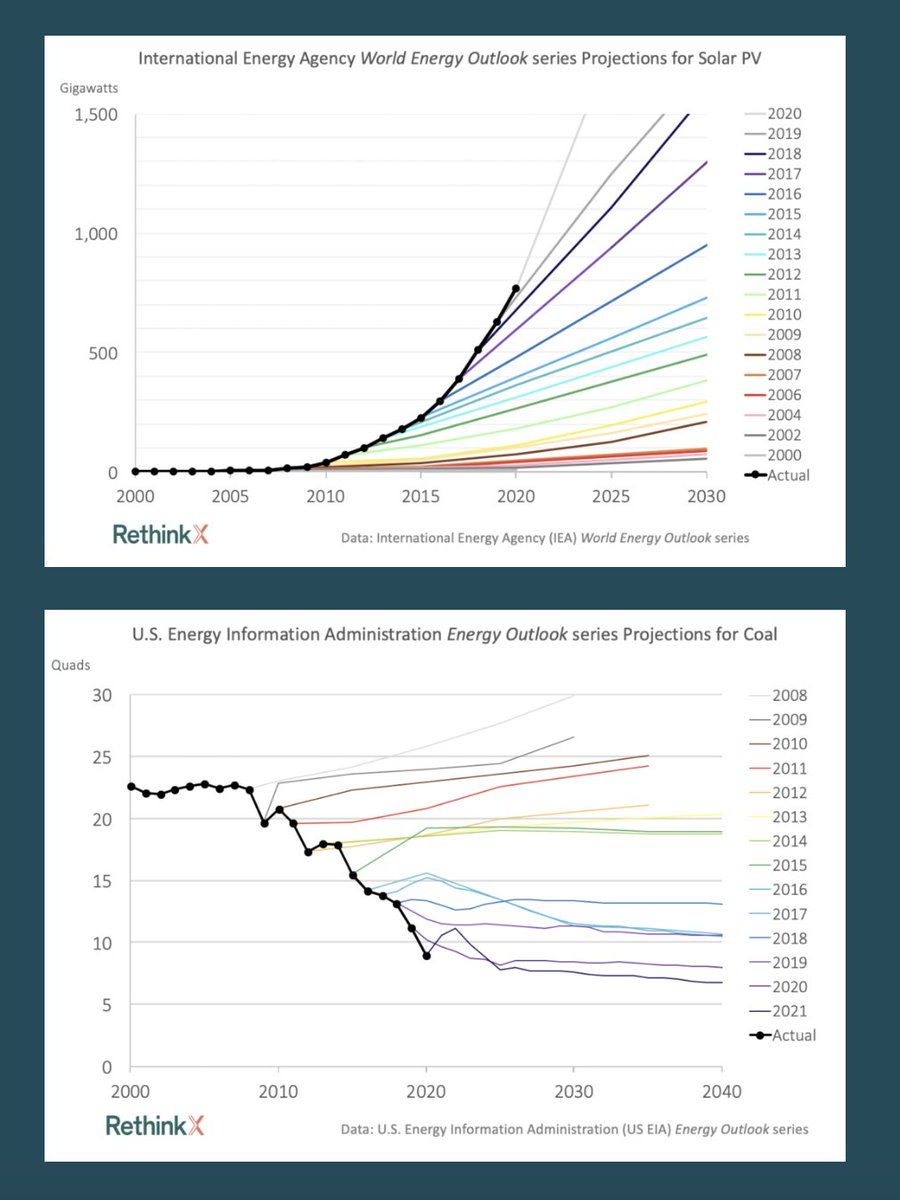
@azeem Marginal cost under economies of scale? Why wouldn’t capital cost follow one of the most fundamental laws of econ?
English
Martin Spindler 🛰
840 posts

@mjays
Senior Advisor | Asymmetric Competition, Unfair Advantages, Patterns Analysis | Systems are my favourite toys

New York City paid Mckinsey $4m to conduct a feasibility study on whether trash bins are better than leaving garbage on the street. The deck is 95-slides long and titled “The Future of Trash”. Some highlights: ▫️The official term is “containerization”, which is the “storage of waste in sealed, rodent-proof receptacles rather than in plastic bags placed directly on the curb.” ▫️Two main types of containerization: 1) individual bins for low density locales; 2) shared containers for high-density. ▫️NYC needs to clean up 24,000,000lbs of garbage a day ▫️Containerization has only become the norm worldwide in major cities in the past 15 years. ▫️New York City first considered containerization in the 1970s but never conducted a feasibility study until now (Mckinsey’s sales team has been dropping the ball) ▫️Key considerations for container viability: • POPULATION DENSITY: NYC has 30k residents per square mile (more dense than comparable big cities) • BUILT ENVIRONMENT: Few places to “hide” containers due to history of infrastructure development. • WEATHER: Snow creates challenges for “mechanized collection” in the winter. • CURB SPACE: Mostly taken up by bus stops, bike lanes, outdoor dining and fire hydrants. • COLLECTION FREQUENCY: NYC needs to double frequency of pick-up for estimated speed of trash that bins would accumulate. • FLEET: A new garbage truck will needs to be designed to collect rolling bins at scale. ▫️ The proposed solution (literally garbage bins and shared containers) covers 89% of NYC streets and 77% of residential tonnage. ▫️The three case studies — because you gotta have solid case studies — are Amsterdam, Paris and Barcelona. ▫️There is a slide called “Why containerization matters” and three reasons are “rats”, “pedestrian obstruction” and “dirty streets” (the 21-year intern that did this slide billed at prob $10k an hour is my hero). The study is actually pretty interesting. I have no idea if $4m is a rip-off to learn that “yeah, we should put garbage in bins so rats don’t eat it” but I would have happily done it for 10-20% of that budget (and come to a similar conclusion).
I talked to a few ex-McKinsey folks after our response with @KentBeck on McKinsey’s software dev claims got traction. An open secret in these groups: Customers often pay $$$ to McKinsey so McKinsey “formalizes” what they already want to do, but now they can point to McKinsey.








While the power of computers has dramatically increased the past 40 years, the general public's uses for computers has dramatically decreased in ambition and creativity.
I’m not debating Slack has far more features, needs less maintenance (none for infra), checks important compliance boxes etc. Them - and other SaaS solutions with self-hosted alternatives - might need to get better at making it clear what additional stuff you get vs self-hosting