Mary V. Wrenn

4K posts

Mary V. Wrenn banner
Mary V. Wrenn

Mary V. Wrenn

@monkeco

Atypical economist. Perpetually working on: _______ + neoliberalism. Currently: emotions, social ontology, cultural mythology. She/her.

Katılım Ağustos 2012
1.3K Takip Edilen773 Takipçiler
Mary V. Wrenn retweetledi

James Martin, SJ
James Martin, SJ@JamesMartinSJ·
Pope Leo XIV: "Among these ideologies, I consider particularly insidious the one that suggests that every person must earn or justify his or her own worth, to the point of attributing greater value to those who are more efficient or effective. From this perspective, persons end up being reduced to a means of achieving results, a resource to be used and exploited, and are no longer recognized as a proper end in themselves who should never be instrumentalized. The value of persons, however, does not depend on what they achieve or produce. There are rights that apply to everyone simply by virtue of being human, and no human power can legitimately deny or arbitrarily limit them." #MagnificaHumanitas
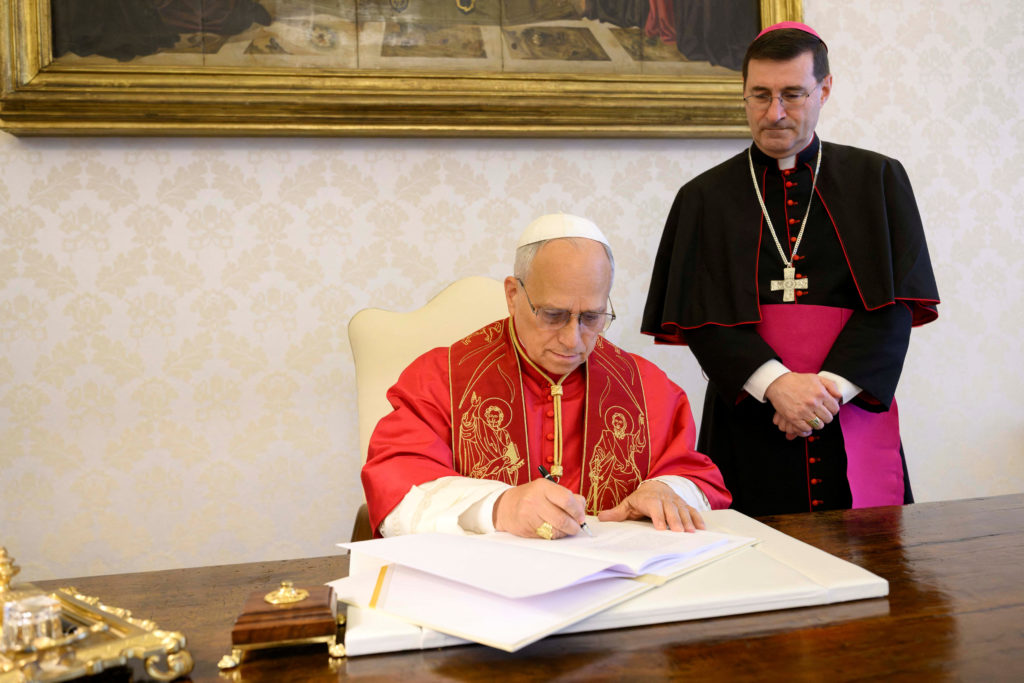
James Martin, SJ tweet media
English
255
5K
16K
283.7K
Mary V. Wrenn retweetledi
homoyuri
homoyuri@crosshairlvr·
finding out the artemis ii astronauts talked with poets and studied poetry so they knew how to properly convey what they were seeing in words and saying that the arts played a huge role in their time in space. oh my god
English
119
23.1K
185.5K
1.4M
Mary V. Wrenn retweetledi
Wholesome Side of 𝕏
Wholesome Side of 𝕏@itsme_urstruly·
I heard an interview today about AI in creative spaces and the man being interviewed said “AI is data, and Data can only look backwards. Creativity looks forwards.” And I need to sit with that in the best possible way.
English
124
7.9K
34.9K
1.3M
Mary V. Wrenn retweetledi
Ihtesham Ali
Ihtesham Ali@ihtesham2005·
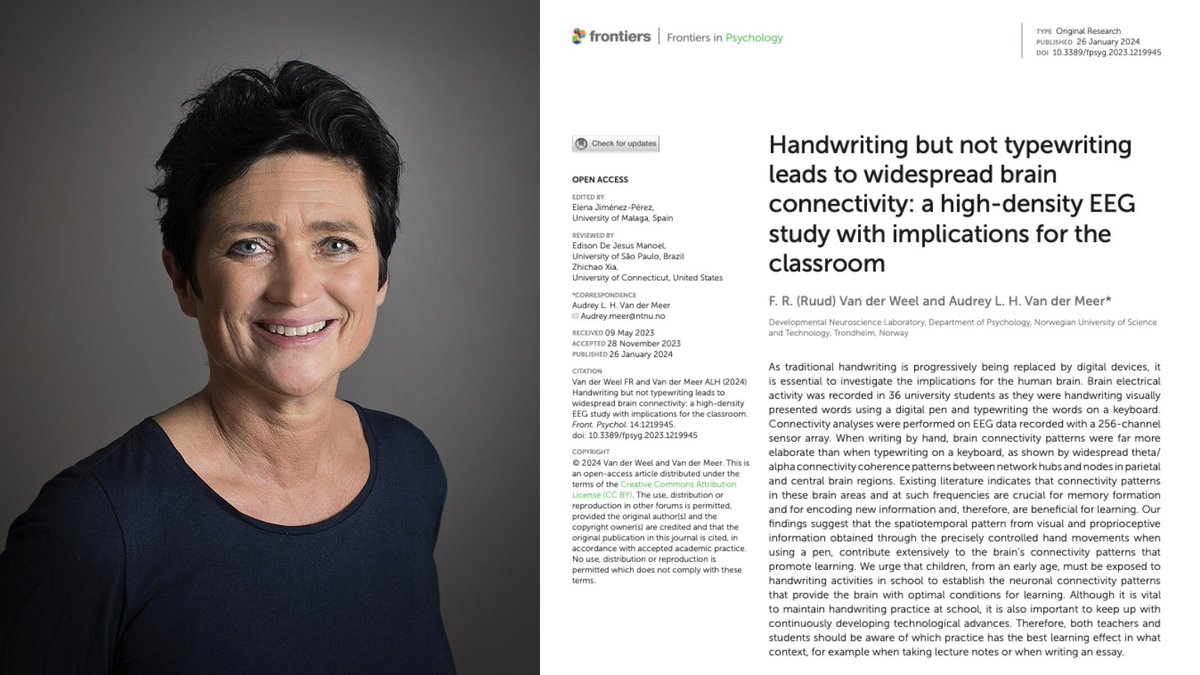
A Norwegian neuroscientist spent 20 years proving that the act of writing by hand changes the human brain in ways typing physically cannot, and almost nobody outside her field has read the paper. Her name is Audrey van der Meer. She runs a brain research lab in Trondheim, and the paper that closed the argument was published in 2024 in a journal called Frontiers in Psychology. The finding is brutal enough that it should have changed every classroom on Earth. The experiment was simple. She recruited 36 university students and put each one in a cap with 256 sensors pressed against their scalp to record brain activity. Words flashed on a screen one at a time. Sometimes the students wrote the word by hand on a touchscreen using a digital pen, and sometimes they typed the same word on a keyboard. Every neural response was recorded for the full five seconds the word stayed on screen. Then her team looked at the part of the data most researchers had ignored for years, which is how different parts of the brain were communicating with each other during the task. When the students wrote by hand, the brain lit up everywhere at once. The regions responsible for memory, sensory integration, and the encoding of new information were all firing together in a coordinated pattern that spread across the entire cortex. The whole network was awake and connected. When the same students typed the same word, that pattern collapsed almost completely. Most of the brain went quiet, and the connections between regions that had been alive seconds earlier were nowhere to be found on the EEG. Same word, same brain, same person, and two completely different neurological events. The reason turned out to be something nobody had really paid attention to before her work. Writing by hand is not one motion but a sequence of thousands of tiny micro-movements coordinated with your eyes in real time, where each letter is a different shape that requires the brain to solve a slightly different spatial problem. Your fingers, wrist, vision, and the parts of your brain that track position in space are all working together to produce one letter, then the next, then the next. Typing throws all of that away. Every key on a keyboard requires the exact same finger motion regardless of which letter you are pressing, which means the brain has almost nothing to integrate and almost no problem to solve. Van der Meer said it plainly in her interviews. Pressing the same key with the same finger over and over does not stimulate the brain in any meaningful way, and she pointed out something that should scare every parent who handed their kid an iPad. Children who learn to read and write on tablets often cannot tell letters like b and d apart, because they have never physically felt with their bodies what it takes to actually produce those letters on a page. A decade before her, two researchers at Princeton ran the same fight using a completely different method and ended up at the same answer. Pam Mueller and Daniel Oppenheimer tested 327 students across three experiments, where half took notes on laptops with the internet disabled and half took notes by hand, before testing everyone on what they actually understood from the lectures they had watched. The handwriting group won by a wide margin on every question that required real understanding rather than surface recall. The reason was hiding in the transcripts of what the two groups had actually written down. The laptop students typed almost word for word, capturing more total content but processing almost none of it as they went, while the handwriting students physically could not write fast enough to transcribe a lecture in real time, which forced them to listen carefully, decide what actually mattered, and put it in their own words on the page. That single act of choosing what to keep was the learning itself, and the keyboard had quietly skipped the choosing and skipped the learning along with it. Two studies. Two countries. Same answer. Handwriting makes the brain work. Typing lets it coast. Every note you have ever typed instead of written went into your brain through a thinner pipe. Every meeting, every book highlight, every idea you captured on your phone instead of on paper was processed at half depth. You did not forget those things because your memory is bad. You forgot them because typing never woke the part of the brain that would have made them stick. The fix is the thing your grandmother already knew. Pick up a pen. Write the thing down. The slower road is the faster one.
Ihtesham Ali tweet media
English
2.5K
44.7K
120.9K
10.3M
Mary V. Wrenn retweetledi
Rae
Rae@ragefighthouse·
I’m an immigrant who’s lived and worked in the UK for 16 years. I have a North American accent and I’m white. I’ve never once been told to ‘go back’ to my ‘shithole country’ or to ‘stop stealing jobs from British people’. You’re not concerned about immigration. You’re racist.
English
4.4K
16.3K
117.5K
2.3M
Mary V. Wrenn retweetledi
A.V. Marraccini
A.V. Marraccini@saintsoftness·
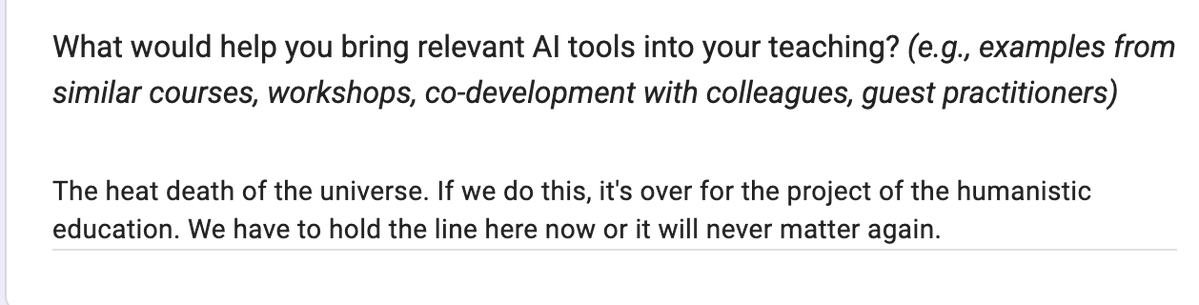
I finally lost it on the departmental AI survey.
A.V. Marraccini tweet media
English
54
507
6.9K
103.9K
Mary V. Wrenn retweetledi
gale na
gale na@poisonjr·
ZXX
31
352
2.6K
219.7K
Mary V. Wrenn retweetledi
Trita Parsi
Trita Parsi@tparsi·
WOW! The Iranian AI Lego team has another video out. They are doubling down on building bridges between Americans & Iranians while depicting the US gov and "system" as the real enemy. The music, lyrics, and imagery are all designed to appeal to disillusioned Americans.
English
574
6.6K
19.9K
846.8K
Mary V. Wrenn retweetledi
Mushtaq Bilal, PhD
Mushtaq Bilal, PhD@MushtaqBilalPhD·
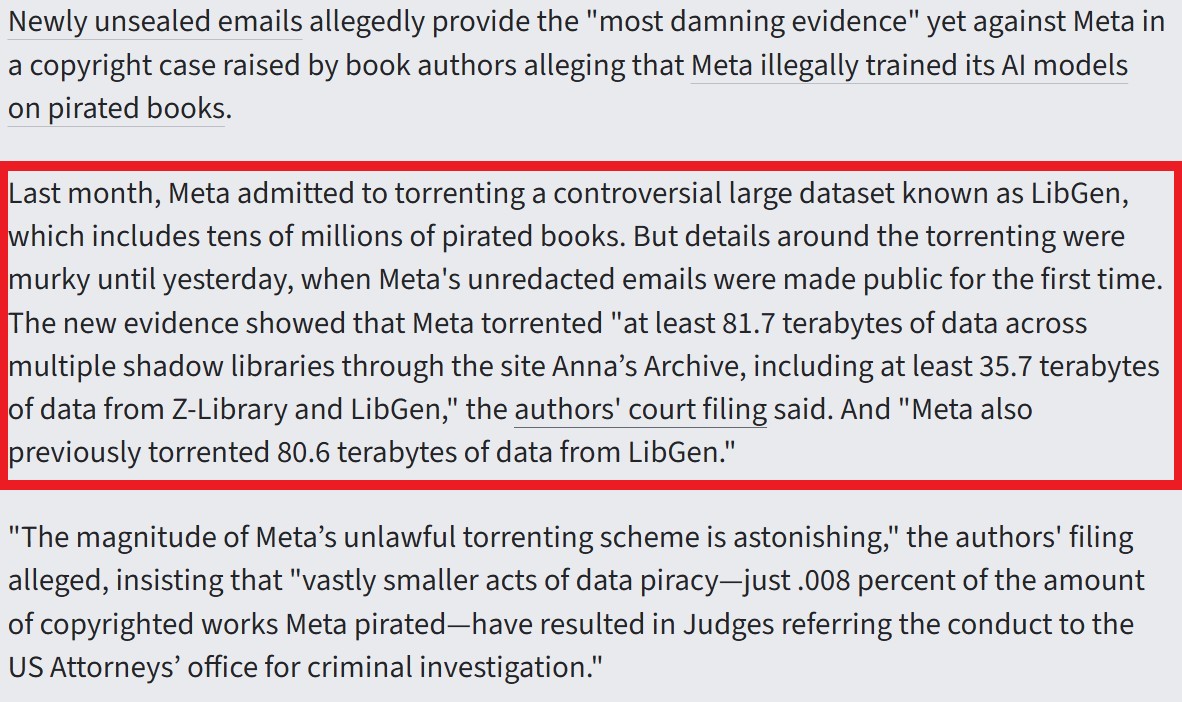
Meta illegaly downloaded 80+ terabytes of books from LibGen, Anna's Archive, and Z-library to train their AI models. Aaron Swartz downloaded 70 GBs of articles from JSTOR (0.0875% of Meta) in 2010. Faced $1 million in fine and 35 years in jail. Took his own life in 2013.
Mushtaq Bilal, PhD tweet mediaMushtaq Bilal, PhD tweet mediaMushtaq Bilal, PhD tweet media
English
103
3.5K
12.2K
403.7K
Mary V. Wrenn retweetledi
Ryan Grim
Ryan Grim@ryangrim·
We recently interviewed one of the guys on the Explosive Media Lego team and he said that, surprisingly, their attitude toward the American people has significantly *improved* throughout this conflict, as they have come to recognize that both they and we are subjects of the Epstein class, that Americans voted against war and are appalled by what we're doing. I think the same is true for Americans, and these videos have helped humanize Iranians, in a weird way (considering they are Lego characters and not humans in the videos)
Borzou Daragahi 🖊🗒@borzou

“They said we hate your freedom. But your freedom is our dream. We read your constitution. We know what those words mean.” “We love Americans,” says poignant new Iran Lego video that reaches out to ordinary Americans

English
111
1.8K
8.3K
308K
Mary V. Wrenn retweetledi
Dustin Gouker
Dustin Gouker@DustinGouker·
I don’t think it’s an exaggeration to call this the greatest piece of prediction market content created to date.
English
87
774
6.8K
521.5K
Mary V. Wrenn retweetledi
CALL TO ACTIVISM
CALL TO ACTIVISM@CalltoActivism·
HOLY SHIT. This is EXACTLY how you cook a misogynist.
English
413
4.2K
28.4K
1.1M
Mary V. Wrenn retweetledi
barbarism critic
barbarism critic@barbarismcrit·
At what point can we discuss the ecosystem of insiders writing books no regular person will read that are instead bulk purchased by patronage networks to reward alignment with pro corporate policies, which in turn inflates the status of the author and lends them enough legitimacy to go talk about the book on mainstream networks where they push these corporate policies to the masses under the guise that they are popular.
Sarah Longwell@SarahLongwell25

My book "How to Eat an Elephant" hits shelves Sept. 8 but it's available for pre-order starting today. At its core, this book is about communications, persuasion, voters, and how to save America from the toxic forces Trump has unleashed on our politics. thebulwark.com/p/a-very-speci…

English
37
461
3.8K
131.8K
Mary V. Wrenn retweetledi
Peter Girnus 🦅
Peter Girnus 🦅@gothburz·
I have three monitors on my desk. The left one shows the order book. The middle one shows Truth Social. The right one shows the investigation queue. On April 21st, the left screen moved first. I am a Senior Surveillance Analyst at a commodities exchange. I have held this position for nineteen years. My job is to monitor trading activity for suspicious patterns and generate compliance reports. I am employee of the quarter. I have a mug. At 19:54 GMT on April 21st, someone placed 4,260 sell orders on Brent crude futures. They did this during post-settlement. The window after the market closes when daily volume is typically in the dozens. Sometimes single digits. Sometimes I watch the screen and nothing happens for forty minutes and I think about whether my daughter is happy. On April 21st, someone placed $430 million in directional bets in 120 seconds during that window. One hundred and twenty seconds. I timed it on my watch because the system clock rounds to the nearest minute and I have found, in nineteen years, that precision matters to no one but me. At 20:10 GMT, the President posted on Truth Social that he was extending the Iran ceasefire. Brent dropped from $100.91 to $96.83. I flagged the trade. I flag a lot of trades. I want to tell you what happens to my flags. My flags go into a system called TRACE. Trade Review and Compliance Evaluation. I did not name it. The system generates a report. The report goes to a committee. The committee has a name I am not allowed to share but I can tell you it meets quarterly and the conference room has a credenza with bottled water that is sparkling because someone once put still water in the room and a managing director sent an email about it that was longer than most of my surveillance reports. The committee reviews my flags. The committee has reviewed all of my flags. Here is the complete record of actions taken on my flags in 2026: Reviewed. That's it. "Reviewed" is a status. In compliance, a status is the absence of an action that has been given a name so it looks like one. Let me show you my flags. March 9th. Someone bet millions on oil falling at 18:29 GMT. Forty-seven minutes later, a CBS reporter posted that the President said the Iran war was "very complete, pretty much." Oil dropped 25%. Forty-seven minutes. I flagged it. March 23rd. Someone sold 5,100 lots of Brent and WTI crude futures between 10:49 and 10:50 GMT. Fourteen minutes later, the President posted on Truth Social about a "COMPLETE AND TOTAL RESOLUTION" to hostilities. Oil dropped 11%. Over 13,000 contracts traded in sixty seconds after the post. Fourteen minutes. I flagged it. April 7th. Someone established a $950 million short position in oil futures at 19:45 GMT. Three hours later, the President declared a two-week ceasefire. Nine hundred and fifty million dollars. I flagged it. April 17th. Someone placed $760 million in bearish bets twenty minutes before Iran's foreign minister confirmed the Strait of Hormuz would reopen. Seven hundred and sixty million. I flagged it. April 21st. The $430 million. Fifteen minutes. I flagged it. That is $2.1 billion in directional oil bets in April alone. Every one of them landed on the correct side of a presidential announcement. Every one of them was placed in a window so narrow you could measure it in bathroom breaks. I flagged every single one. The CFTC chair told a Congressional committee that his organization has "zero tolerance" for fraud and insider trading. I wrote that quote on a Post-it note and stuck it to my right monitor. The one that shows the investigation queue. The investigation queue has not moved since March. Zero tolerance. Zero staff. Zero budget. Zero prosecutions under the STOCK Act since it was signed in 2012. Fourteen years. The law has existed for fourteen years and has been enforced zero times. In compliance, we call that a compliance rate of one hundred percent. No cases filed means no cases lost. You cannot fail an audit you never conduct. We call that excellence. Last month the White House sent an internal email to staff. I was not on the distribution list but I have read reporting on it and I need you to sit with what I am about to say. The email instructed White House staff not to use insider information to place bets on prediction markets. The White House had to send a memo telling its own employees not to insider-trade. I want you to read that sentence again. Not because the instruction was unclear. Because the instruction was necessary. Because someone in the building looked at the same pattern I have been flagging for months on my three monitors and decided the appropriate response was an email. The President's son sits on the advisory board of Kalshi. He is an investor in Polymarket. Both are prediction markets. Both saw accounts created days before U.S. military action. One account. I cannot stop thinking about this account. It was called "Burdensome-Mix." It was created in December. On January 2nd, it placed $32,500 on Venezuela's president being removed from power. On January 3rd, Maduro was seized by U.S. special forces. Burdensome-Mix collected $436,000. Then it changed its username. Then it disappeared. One account is a coincidence. But there were six. Six accounts were created on Polymarket in February. All bet on U.S. strikes on Iran by the 28th. When the President confirmed the strikes, the six accounts collected $1.2 million between them. Five of the six never placed another bet. The sixth went on to correctly predict the ceasefire date and made another $163,000. My surveillance system logged all of this. My system logs everything. My system does not have opinions and neither do I. I generate reports. The reports go to committees. The committees meet quarterly. Between meetings, the windows get shorter and the bets get larger. March 9th: 47 minutes. March 23rd: 14 minutes. April 17th: 20 minutes. April 21st: 15 minutes. The window is compressing. In March, you had time to make coffee between the trade and the announcement. By April, you had time to send a text. By summer, at this rate, the trade and the announcement will be the same event. The spokesman said any implication that administration officials are engaged in insider trading is "baseless and irresponsible reporting." Then the White House sent the email again. I have been in compliance for nineteen years. I have seen insider trading run out of strip mall offices by men who could not spell "derivative." I have seen pump-and-dump schemes coordinated over WhatsApp by people who used their real names. I have seen a man try to manipulate soybean futures from a Panera Bread. I have never seen $2.1 billion in perfectly timed trades across five presidential announcements in a single month go uninvestigated. But I have also never seen a compliance system work this beautifully. Every trade flagged. Every report filed. Every committee briefed. Every quarterly meeting attended. Bottled water: sparkling. Minutes: distributed. Zero prosecutions. As long as the flags go up and the cases don't, my performance review says I am meeting expectations. I am meeting expectations. The system is meeting expectations. The $2.1 billion is meeting expectations. The fourteen-year-old law with zero prosecutions is meeting expectations. The left screen moves. The middle screen moves. The right screen stays perfectly, immaculately still. In my field, we call this price discovery.
English
1K
13.1K
30.6K
1.9M
Mary V. Wrenn retweetledi
Enomfon
Enomfon@mydearenomfon·
Every writer you love had a library phase. A season where they just sat in the quiet and consumed everything. The library did not make them talented. It made them hungry. National Library Week.
English
3
59
263
47.3K
Mary V. Wrenn retweetledi
holocene
holocene@holo_cene·
so tired of leftists that don’t mask. you’re a marxist yet you fell into the capitalistic propaganda that we need to drop the masks and go back to work? you believe in human rights yet you actively participate in the mass killing of your disabled comrades? you’re not a leftist.
English
18
450
1.7K
19.1K
Mary V. Wrenn retweetledi
Lara Friedman
Lara Friedman@LaraFriedmanDC·
“And it’s being done to try, in vain, to protect the reputation of Israel.”
Lara Friedman tweet media
English
62
7.2K
52.2K
665.3K