d. zazel

11.9K posts

d. zazel banner
d. zazel

d. zazel

@moshed323

The MPAA doesn't cut the film to get an R, but they give you the scissors. I reject those scissors. -- Pedro Almodóvar

Katılım Ağustos 2010
416 Takip Edilen75 Takipçiler
d. zazel retweetledi

David 'JoelKatz' Schwartz
I went to see Project Hail Mary. Great movie, I highly recommend it. The less you know about it going in, the better. Trust me. The guy in front of me in the theater brought his dog in to see the movie with him. I think it was a service animal. But the dog really seemed to be enjoying the movie, it was strange. So I said to the guy afterwards, "I know this is going to sound strange, but it seemed like your dog really enjoyed the movie." He said, "It is strange. He hated the book."
English

422
1.5K
41.2K
1.2M
d. zazel retweetledi
Doctor X
Doctor X@doctorxisme·
I couldn't hold it in😂😂😂😂
English
50
622
4.6K
359.9K
d. zazel
d. zazel@moshed323·
@michaelstepchuk Instead of retweeting, why not contact your elected representatives? Or organize and protest and draw the attention of the media?
English
1
0
0
54
d. zazel
d. zazel@moshed323·
@PaulStewartII What should Canadians do? Organize? Write/call their elected representatives for new legislation with real teeth?
English
1
1
2
77
Paul Stewart II
Paul Stewart II@PaulStewartII·
This post points to a much bigger Canadian problem.¹ ² ³ Industrial-scale foreign influence can move through social media, while the platforms carrying it still face no broad in-force legal duty in Canada to detect, stop, or label it as a general matter.² ³ ⁴ The scale is already disconcerting. DOJ’s Tenet case alleged a roughly $10 million covert influence scheme. Europol’s Latvia SIM-box takedown last fall involved 1,200 devices, 40,000 active SIM cards, and about 49 million fake accounts.¹ ⁵ These are not fringe numbers. They point to manipulation at industrial scale. And there is no natural ceiling here once the system is automated. When influence operations can be financed covertly, distributed across platforms, and multiplied through fake or automated accounts, the practical limit is money, infrastructure, and whether anyone with real authority stops it.¹ ⁵ That is what should concern Canada. The deeper root is the platform model itself. Social media grew inside a U.S. legal framework shaped by Section 230, which broadly protects online services from being treated as the publisher or speaker of third-party content.² Traditional channels do not operate that way. In Canada, broadcasters are expressly responsible for the programs they broadcast and control.⁶ That difference changed incentives at the foundation. Newspapers, broadcasters, theatres, and other traditional channels generally operate inside ordinary legal responsibility for what they choose to publish, present, or program. Social-media platforms, by contrast, built enormous businesses around hosting, ranking, recommending, and monetizing other people’s content while avoiding much of that publisher-style responsibility.² ⁶ So platform “self-regulation” is exactly that: self-imposed. Voluntary. Changeable. Selectively enforced. It is not a binding substitute for law. If a platform writes anti-bot rules or anti-manipulation rules, it can still define the problem, decide when to act, and decide how much enforcement effort to invest unless public law requires more.² ³ Canada has tried to respond, but only in pieces. Bill C-70 created the Foreign Influence Transparency and Accountability Act. That is a transparency-and-registry framework for certain foreign influence arrangements tied to political and governmental processes.⁴ ⁷ It is narrower than the platform problem, and important provisions are still not in force.⁴ ⁷ ⁸ Canada also proposed a broader platform-accountability regime. Bill C-63 would have moved closer to real platform duties, and Ottawa explicitly said it would have required labelling of certain harmful content when it was artificially amplified by bots or bot networks.³ ⁹ But the bill died on the Order Paper with the dissolution of Parliament in January 2025 before becoming law.³ That means the broader legal duty framework remains absent. That is a real gap. We recognize foreign interference as a serious threat.⁸ We have partial transparency tools.⁴ ⁷ We do not yet have a broad in-force legal regime requiring major platforms, as a general matter, to detect, stop, or label covert foreign-influence style amplification while it is happening.³ ⁴ Bottom line: when you combine industrial-scale manipulation with little broad legal liability for the platforms carrying it, the whole social-media environment is vulnerable to infection.**¹ ² ³ ⁵ Too much platform discretion. Too little public duty. And Canadians remain exposed. See second post below for sources and footnotes. 👇 x.com/sentdefender/s… l
English
5
41
66
2.4K
d. zazel retweetledi
derek guy
derek guy@dieworkwear·
Many jackets can cost $2k and more. Much depends on the material and how it's made. You don't see this bc you are disconnected from the production process and only think about clothes as objects. Marx called this commodity fetishism. IG ninapenlingtonbespoke and sartoria_salino
Dave Meltzer for WWE Hall of Fame@JamesLaChan1

@dieworkwear No jacket should cost 2 grand. Sorry. Capitalist nonsense.

English
46
164
3.8K
554.1K
d. zazel retweetledi
derek guy
derek guy@dieworkwear·
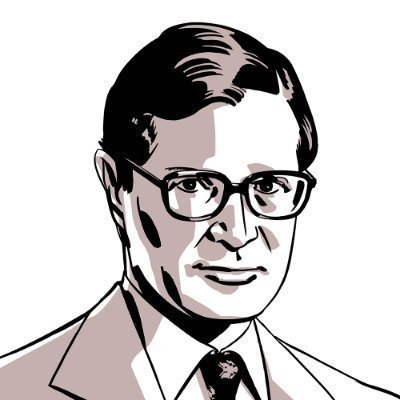
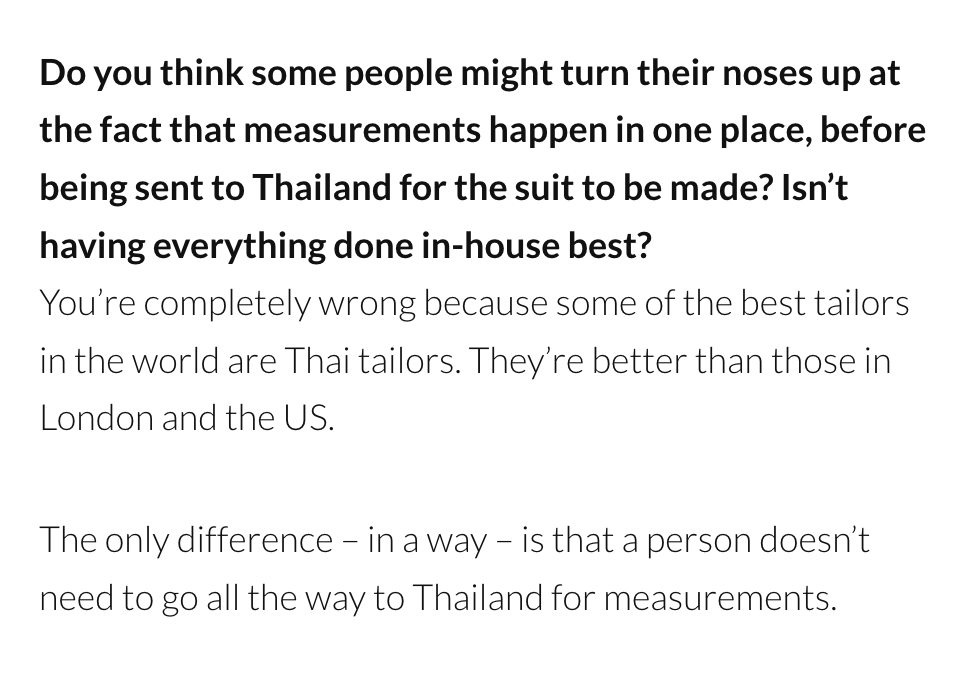
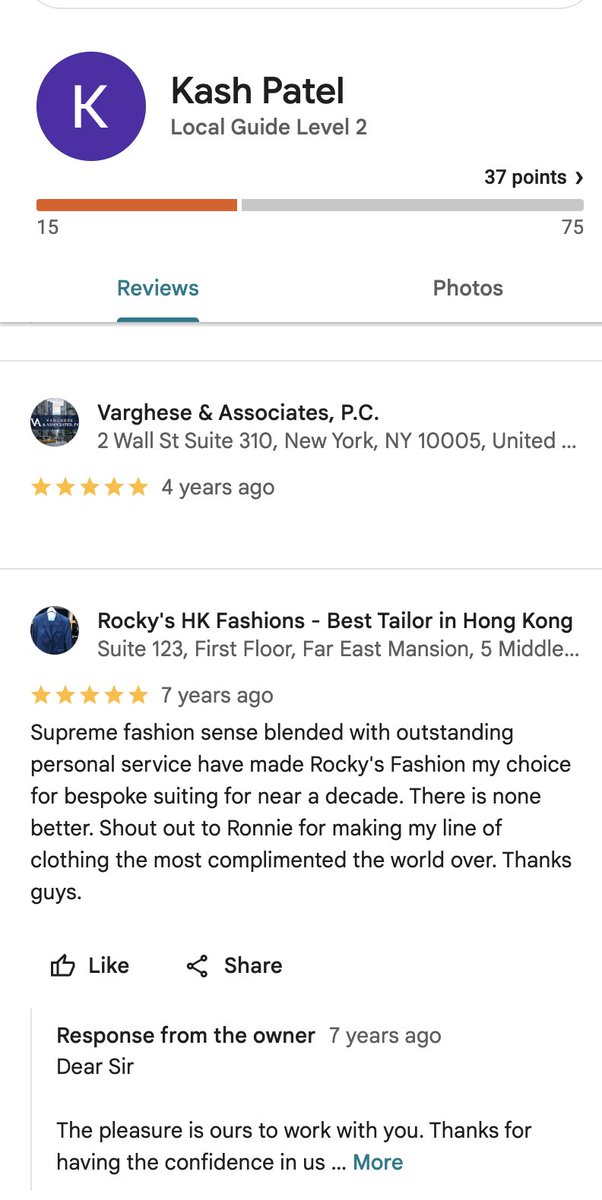
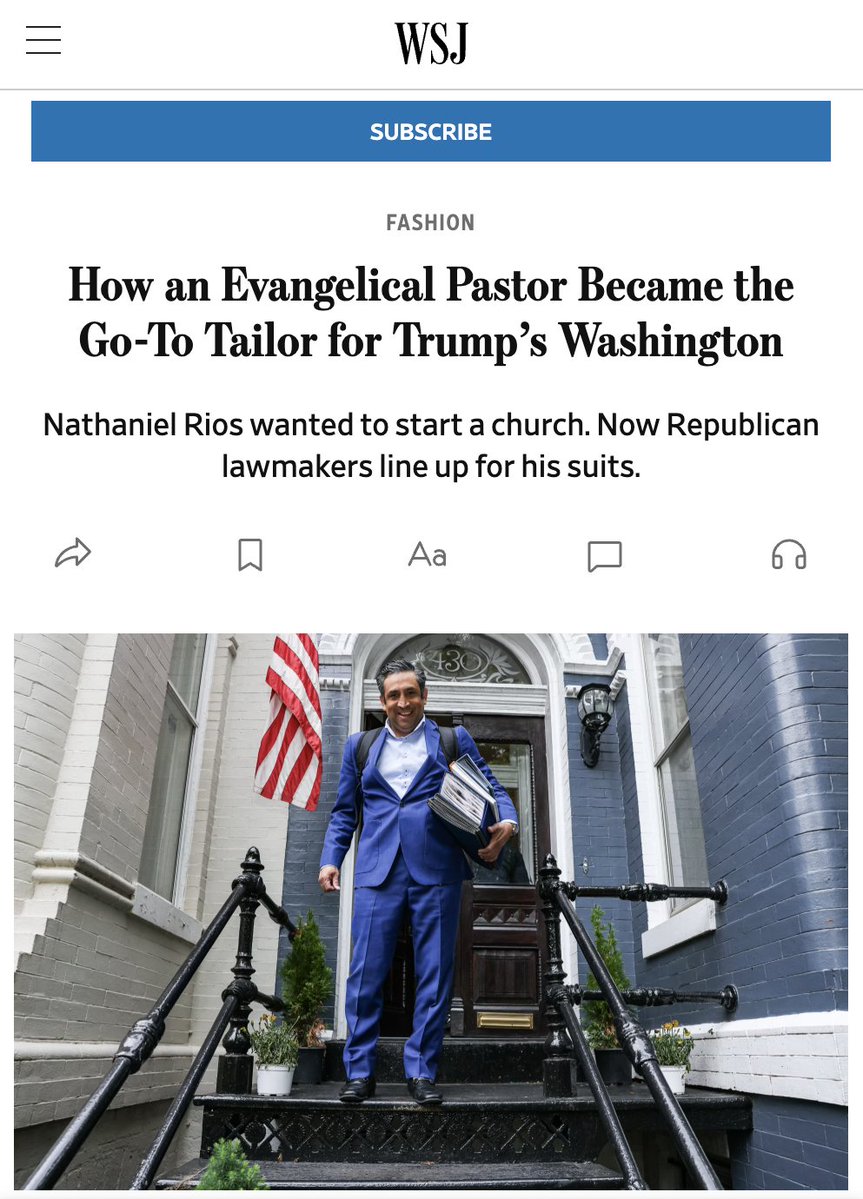
Not true. Pete Hegseth's clothes are custom-made. A few years ago, my friend and I had a debate about whether you can spot custom tailoring. This friend has more than 30 years of experience working with some of London's best bespoke tailors. He believes that an educated eye can spot the difference between a custom and an off-the-rack suit. I don't think you can, assuming certain conditions (too detailed to get into here). Ultimately, we agreed on one thing: you can spot custom tailoring when the clothes are so ugly that no designer would ever make them. This explains a lot of the clothing you see nowadays. On a television segment aired long ago, Pete Hegseth said he used a company called Book a Tailor. And in the recent email hack, it was revealed that Kash Patel's email address was linked to this online clothing review, indicating he uses Rocky's HK Fashions. Long ago, Gavin McInness also talked about his tailor. They all share one thing: they wear clothes that were made in low-wage East Asian countries. I should note at the outset that there's nothing inherently wrong with East Asian tailoring. In fact, some of the world's best tailoring is done there, including at firms such as WW Chan (Hong Kong) and Atelier BRIO (Beijing). I would stake my reputation on saying that some of the best East Asian tailoring today rivals that of Savile Row. Seoul is also a tremendous hub for quality custom tailors (e.g., Assisi, The Finery Company, B&Tailor, Hamin Kim, among others). However, these people are not using such firms. Instead, they are relying on a new system developed sometime in the late 20th century that has since taken off with the development of digital information technology. In this system, someone with little experience in the clothing industry will set up a custom clothing company. For the sake of discussion, let's call this person Mark and the company "Custom Threads." Mark doesn't know much about tailoring, but he likes suits and wants to make money. So he contacts one of these factories in East Asia and sets up a partnership. Mark meets with clients in the US. Since he's wearing a suit and has a tape measurer around his neck, customers assume he knows what he's doing (some may even refer to him as a "tailor," even if he's not one). He takes detailed measurements of these clients, jots down their fabric choice, and sends the information to his partners in East Asian. The garment is then made by adjusting the block pattern, sewn straight to finish, and delivered to Mark, who presents it to the customer for a fitting. Small adjustments are made here and there — maybe taking up the sleeve or nipping the waist. But since Mark is not actually a technically trained cutter, he may miss things, such as a wrongly placed neckpoint that makes the jacket scissor in or out. If the customer is very far off from the block pattern, it may not fit him at all. But Mark is not in a good position to address these matters — he neither has the skills nor the margins to put this customer in a proper garment. If Mark is not very well educated on tailoring, then his customers are even less so. Thus, the customer is just happy with the crude hallmarks of custom-made goods, such as the monogram he asked for. Or the contrast colored buttonhole that he believes makes him stand out in a good way. The customer doesn't know how to check for more meaningful issues, such as front-back balance, so it's the blind leading the blind. This system is very different from the system of your grandfather's generation. If a man wanted a custom suit, he would have gone to a custom tailoring shop, which may have been owned by someone who wasn't a cutter, but the cutter would have seen you in person and thus been able to address technical issues. At the very least, the person running the "front of house" would have had more experience in the clothing trade (e.g., Tommy Nutter). Last year, The Wall Street Journal did an article about a pastor-turned-tailor. He, too, relies on this system: he measures customers and sends the info to an overseas factory, where the clothes are made in China, Thailand, and Vietnam. Again, there's nothing inherently wrong with Chinese or Thai tailoring. But when the starting price is $300 for a suit ($500 after Trump imposed his tariffs), you can be sure he's not using the best shops. This is why Hegseth's suits look the way they do. He got his clothes from someone with little experience in the clothing trade and has no technical tailoring skills. Thus, both he and the company owner are easily led by stale trends (e.g., short jackets, tight pants, low-rise, etc.). Hegseth has little experience with custom tailoring and a low level of personal taste, so he checks every possible custom option — funky lining, contrast buttonhole, etc. This is why I often tell people that they should try ready-to-wear first. Custom tailoring is not a guarantee of quality tailoring, especially not in this new system where people with no experience or technical skills are just sending measurements to a distant factory. Hegseth also demonstrates the one bit of common ground I found with my friend during our debate: you can tell clothes are custom-made when they are so ugly, no designer would ever make such a thing.
derek guy tweet mediaderek guy tweet mediaderek guy tweet media
Mohsen S. Mirtaher@MMirtaher

@dieworkwear He's not that sophisticated. He wears off the rack.

English
48
217
3.1K
803.8K
d. zazel
d. zazel@moshed323·
@sarobertsonca I'm curious about Canadian media. Why are they giving air time to a guy who is essentially just an American political commentator? He has no official position or power. Who cares what his opinion is?
English
0
0
1
42
Scott Robertson
Scott Robertson@sarobertsonca·
Former US Democratic Presidential candidate Andrew Yang on the need for a third party: "I talked to my Canadian friends who described living there as living in the apartment above the meth lab, which unfortunately is what American politics can feel like."
English
3
5
42
7.3K
d. zazel retweetledi
patrick.
patrick.@imPatrickT·
here's one hour of cinematographer Greig Fraser explaining how they shot PROJECT HAIL MARY
English
22
296
2.2K
60.1K
d. zazel retweetledi
ProPublica
ProPublica@propublica·
When an insurance company is deciding whether to pay for your medical treatment, it generates a file, which should contain all records associated with your case, including documents explaining why the claim was denied. You have a right to see this file. propublica.org/article/find-o…
English
6
523
1.5K
142.5K
d. zazel retweetledi
Jacobin
Jacobin@jacobin·
The question "Does Israel have a right to exist?" isn't a real inquiry about the rights of nations. It's a manipulation of discourse, a litmus test that forces Palestinians to offer theoretical assurances before their real political grievances can even be heard. jacobin.com/2026/04/israel…
English
250
866
2.7K
207.4K
Patricia Marins
Patricia Marins@pati_marins64·
This doesn’t look like the work of someone stuck in the Stone Age or on their way back to it. They seem way too confident and have good scriptwriters, we have to admit.
English
142
1.1K
6.5K
194.1K
d. zazel retweetledi
鈴森はるか 『haruka suzumori』 🇯🇵
🇯🇵 We use a lot of English loan words in Japanese for fruit... but then there's random Japanese words thrown in there just to confuse you. 🤷🏻‍♀️
English
152
705
7.6K
142.9K
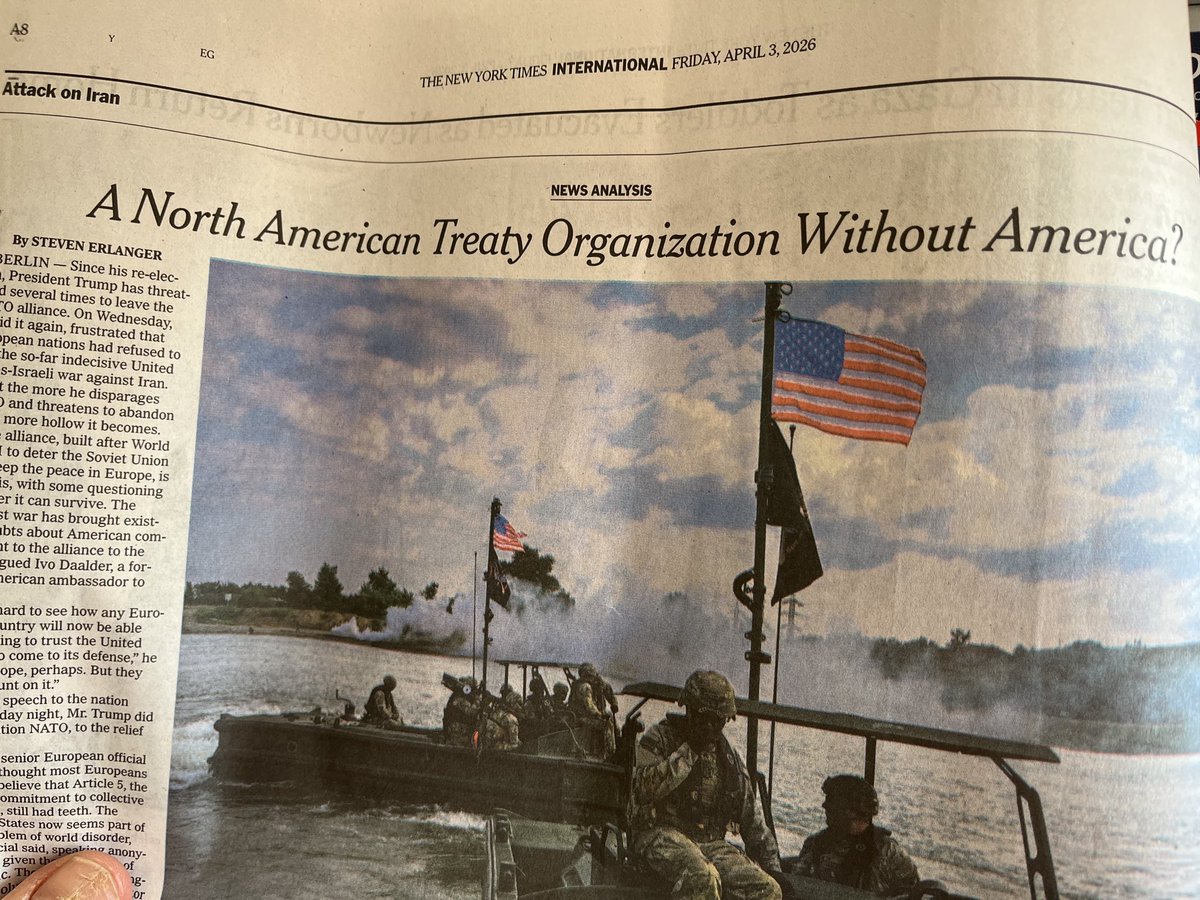
NYTimes Communications
@sissenberg @nytimes A correction will appear in tomorrow's print edition: "A headline with an article on Friday about President Trump’s threats to leave NATO misstated the full name of the body. It is the North Atlantic Treaty Organization, not the North American Treaty Organization."
English
1.7K
764
4K
1.8M
d. zazel retweetledi
Lilith Morningstar
Lilith Morningstar@justatmethen·
I was absolutely flabbergasted when that nincompoop tried to bamboozle me with his shenanigans and tomfoolery, leaving me completely discombobulated. Don't lollygag with your malarkey…I see right through it. Now skedaddle before you cause a whole kerfuffle. 🤣
SubRosa )✿( Magick @subrosamagick.bsky.social@SubRosaMagick

Be honest… does ANYONE actually use these words in real life? 🤣 Bamboozled Flabbergasted Discombobulated Shenanigans Cattywampus Lollygag Malarkey Kerfuffle Brouhaha Nincompoop Skedaddle Tomfoolery Flibbertigibbet Pumpernickel

English
241
2.1K
9.1K
203K
d. zazel retweetledi
derek guy
derek guy@dieworkwear·
hmm
derek guy tweet mediaderek guy tweet media
34
1.2K
7.6K
150.6K
d. zazel retweetledi
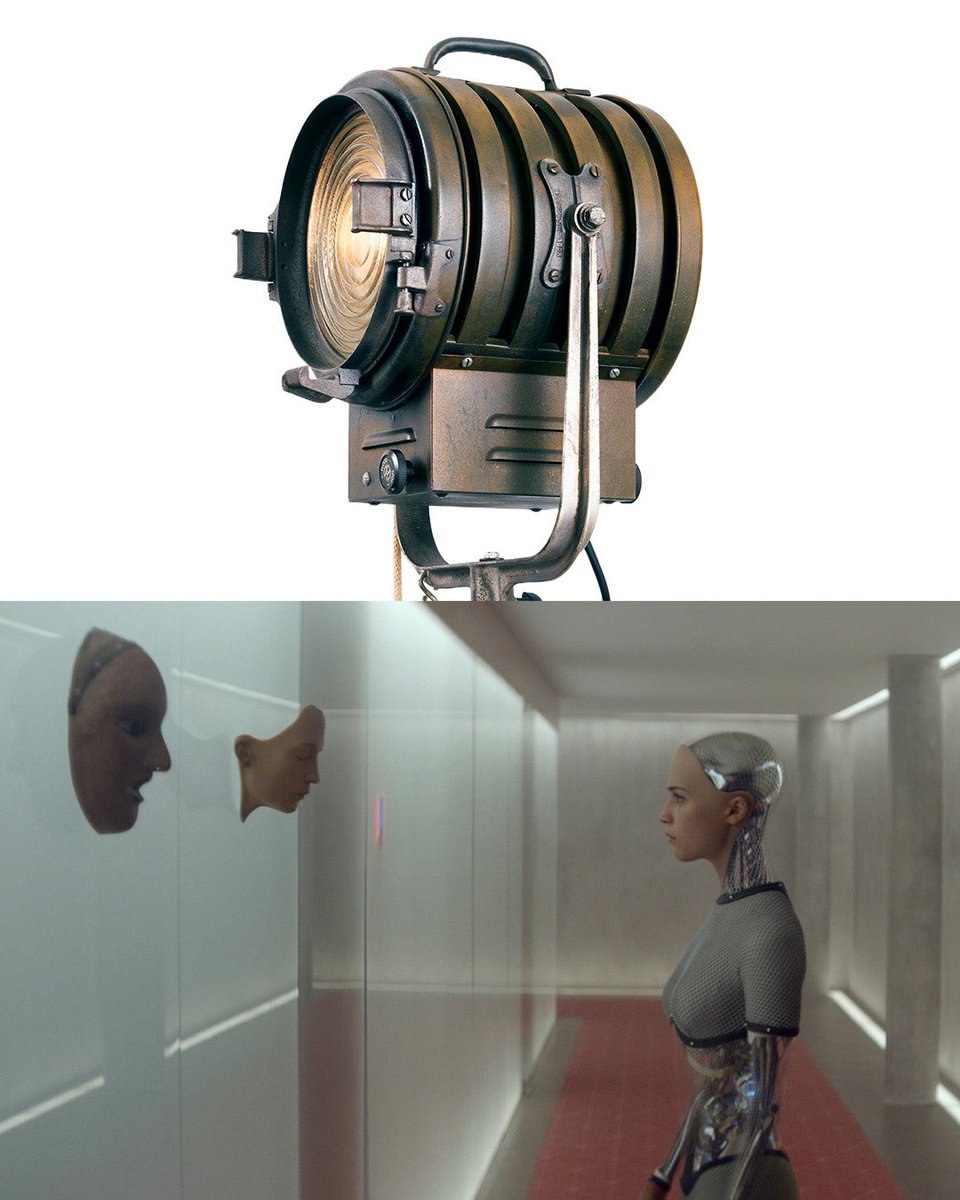
Noam Kroll
Noam Kroll@noamkroll·
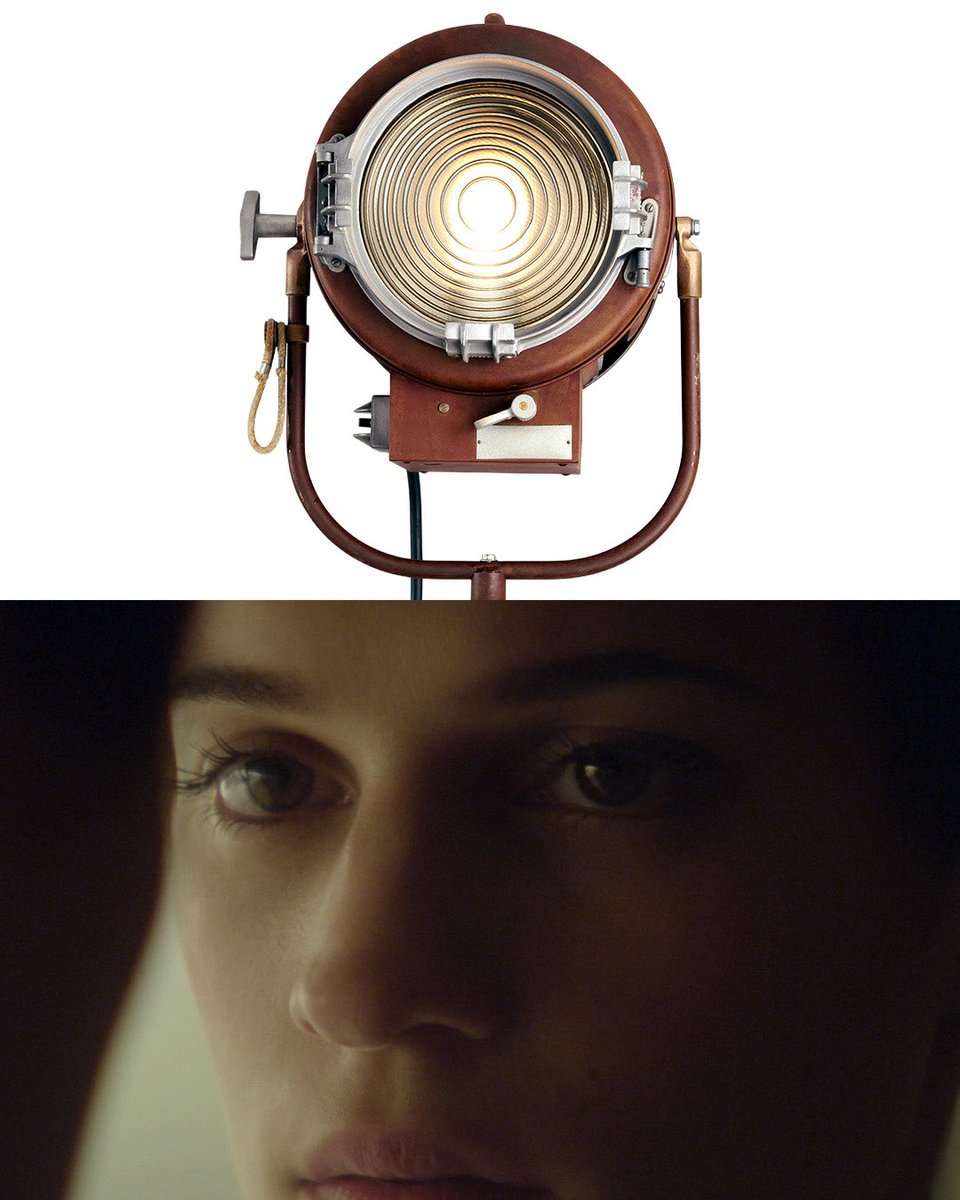
Tungsten lighting is one of the secret ingredients that made EX MACHINA look so good. While 99% of productions opt to use LED sources, cinematographer Rob Hardy took a more vintage approach. He used warm, tungsten sources almost exclusively throughout the entire film, which brought an unmistakeable human touch and warmth to the otherwise sterile and futuristic environment. The goal was to use the light to bridge the gap between Ava’s synthetic body and her human-like consciousness. He also set up over 15,000 tungsten “pea bulbs” that were built into the sets. This helped create a more gauzy and atmospheric look: “I think smaller units have a softer feel. When you have a numerous amount of them and you put them through enough diffusion, they tend to give a certain kind of light. I don’t want to feel like I read the lights. I want it to feel like it emanates from the frame rather than it being placed there. I liken it to the difference between Vermeer or Rembrandt. With Vermeer, you look at those paintings and you can see the source of the light and there’s nothing wrong with that. They’re incredible paintings. However, if you look at Rembrandts, you can’t really tell where the source is, but it has an amazing mood and I find it much more subtle and much more interesting, and for me personally it elicits much more emotion.” - Rob Hardy
Noam Kroll tweet mediaNoam Kroll tweet mediaNoam Kroll tweet mediaNoam Kroll tweet media
English
2
44
552
18.7K
d. zazel
d. zazel@moshed323·
@tbonier @davepl1968 Many schools did this because Christa McAuliffe, a civilian and a schoolteacher, was one of the astronauts aboard the Challenger.
English
0
0
7
187
Tom Bonier
Tom Bonier@tbonier·
@davepl1968 What makes you think almost no one was watching it live? In my elementary school they brought us all into the cafeteria and we watched it live.
English
24
4
398
10.8K
Dave W Plummer
Dave W Plummer@davepl1968·
99.9% of people who "experienced" the Challenger disaster saw it on replay and now remember it as live. Almost NO ONE was watching. Everyone thinks they were. It's a fascinating collective false memory.
Jeremy London@SirJeremyLondon

Anyone who experienced the Space Shuttle Challenger explosion, like I did, is probably a bit hesitant to get too excited about the Artemis II launch today. I truly hope our children don’t have to experience such tragedy. May the Universe welcome them and return them safely home 🙏

English
4.5K
54
1.6K
1M
d. zazel
d. zazel@moshed323·
@sugatradamus As a big Park Chan-wook fan, I LOVE this homage to Old Boy.
English
0
0
2
308
sen
sen@sugatradamus·
they did this for cinephile armys
English
70
6.3K
24.8K
206.3K
d. zazel retweetledi
patrick.
patrick.@imPatrickT·
stop blaming digital cameras for flat cinematography
English
41
296
2.9K
214.2K