你没看见吗

309 posts

你没看见吗 banner
你没看见吗

你没看见吗

@mqh3d

Katılım Haziran 2019
88 Takip Edilen10 Takipçiler
你没看见吗
你没看见吗@mqh3d·
The outstanding features of Beijing, Shanghai, and the Yangtze River Delta region do not lie in the fact that the average intelligence of their residents is significantly higher than that of other regions, but rather in their relatively substantial economic capital and early accumulation.
你没看见吗 tweet media
English
0
0
0
11
Jonathan Cab
Jonathan Cab@shadowcrewtroll·
@Linahuaa B-S-J-Z China refers to select high-performing urban provinces (Beijing-Shanghai-Jiangsu-Zhejiang), not a full national or strictly “middle class” sample. Cry more.
English
5
1
23
1.1K
LinaHua
LinaHua@Linahuaa·
White Americans are literally closer to Blacks in PISA score than they are to middle class Chinese. Now think about it: What do you think about a typical "nigga" at school? Not much, right? And the Chinese think the exact same thing about typical White Americans. Sorry if it comes off as racebaiting. That sincerely wasn't my intention. I'm just presenting the facts. The numbers don't lie.
LinaHua tweet media
English
77
6
89
21.8K
你没看见吗
你没看见吗@mqh3d·
国家平均IQ、精英威权与混合民主——中国发展路径的实证思考 这张图的核心论点非常清晰:中国拥有较高的国家平均IQ,却在过去较长时间内GDP较低,现在正在快速追赶。这说明均值IQ对一个国家的长期发展和繁荣具有决定性影响。图片同时指出,这个“异常”正在颠覆整个现代世界秩序,也提醒人们在边界被大规模低能力人群涌入时必须认真思考。人民不是可以随意互换的单位,均值IQ在现代复杂社会中作用极大。 中国之所以能实现如此快速的发展,根本原因就在于图中所揭示的高平均IQ所提供的人力资本基础。东亚国家普遍具备较高的认知能力平均水平,这为大规模工业化、 urbanization 和技术追赶提供了必要条件。但仅有高IQ还不够,真正让潜力转化为现实的,是精英威权与自由市场的结合。 市场是配置资源最有效率的方式。它通过价格信号和竞争机制,把资源从低效利用者手中转移到高效利用者手中,实现整体资源的最优配置。精英威权下的竞争上岗机制与之本质相通:通过绩效考核和选拔,把重要位置和权力配置给更能干的人,避免资源浪费在低能力者身上。两者都是把“蠢人”的资源和机会向“聪明人”集中,从而推动整个系统的高效运转。中国过去几十年的高速增长,正是市场激励与精英威权执行力共同作用的结果。 相比之下,单纯的民主制度容易陷入问题。民主在实践中往往只会执行多数人的提案,而在认知能力分布上,英雄与狗熊所见虽可能略同,但狗熊的数量远远大于精英。当重大复杂决策由多数低认知选民主导时,短视、情绪化和利益集团绑架就容易占据上风,导致政策偏离长期理性轨道。 精英民主集中制则能有效避免这一缺陷。精英内部通过讨论、竞争和选拔形成共识,再集中执行,既保证了决策质量,又维持了执行效率。精英不会集体犯系统性错误,因为选拔机制本身就是筛选过程,优秀者会不断涌现并相互制衡。 最好的制度安排,应该是把精英民主与全民民主有机结合——一半精英民主,一半全民民主。精英民主负责创造更高的上限:处理复杂战略、科技产业升级、长期制度设计等需要高认知能力的事务,让真正有能力的人主导决策。全民民主则负责守住底线:保护基本权利、防止精英滥用权力、提供政权合法性。两者分工明确、优势互补,既发挥了高IQ人群的才能,又避免了大众完全被排除在决策之外。 这种混合模式,正是中国过去成功经验的延续,也是未来可持续发展的方向。它承认认知能力差异的现实,同时通过制度设计最大化发挥优势、守住风险。均值IQ决定了一个社会能达到的高度,而精英威权与市场的结合,则是把这种潜力高效转化为现实的最优路径。
你没看见吗 tweet media
中文
0
0
0
15
你没看见吗
你没看见吗@mqh3d·
中国是当今全球可再生能源发展的绝对领导者。2025年底,中国可再生能源总装机容量达到约2340吉瓦,占全国电力总装机的60%以上,建成全球最大、最快发展的可再生能源体系。其中太阳能装机突破1200吉瓦,成为世界上首个超过1000吉瓦的国家;风电640吉瓦,水电约450吉瓦,风光合计已历史性超过火电装机。中国在2025年新增风光容量超过430吉瓦,占全球新增的很大比例,远超其他国家总和。 与世界其他地区相比,中国规模优势极为突出。全球可再生能源总装机约5149吉瓦,中国占比近44%。美国位居第二,但总量仅为中国的四分之一左右;欧洲各国稳步增长,却在绝对规模上难以匹敌;印度和巴西等新兴市场虽增速较快,但基数和增量仍远落后于中国。中国不仅新增容量全球领先,还主导了太阳能、风电设备及电池储能的全球供应链,2025年电池储能新增占全球40%以上,有力推动了世界范围内可再生能源成本下降。 在发电结构上,中国清洁电力(可再生能源加核电)占比约42%,与全球平均水平43%接近。其中风光发电占比达到22%,高于全球和亚洲平均水平。2025年太阳能发电量达336太瓦时,同比增长40%。尽管煤电仍占一定比例,但清洁能源已能覆盖大部分新增电力需求,风光发电增长对全球清洁电力增量贡献巨大。 总体而言,中国通过大规模部署、产业链优势和持续投资,正在成为全球能源转型的核心引擎。它不仅在装机和新增上遥遥领先,还通过“一带一路”等方式带动其他地区发展。不过,面对电网消纳、储能配套以及煤电有序退出等挑战,中国仍在持续优化能源结构,为实现碳中和目标和全球气候治理贡献关键力量。
中文
0
0
0
47
ChinaPower
ChinaPower@ChinaPowerCSIS·
The waste-to-sand plant paving the way for China’s zero-waste coal goal - SCMP buff.ly/rtM1oMN While China is shifting to renewables, it still relies heavily on coal. Since 2011, China has consumed more coal than the rest of the world combined: buff.ly/PE5fRPv
ChinaPower tweet media
English
3
7
18
2.1K
Mr. Suds
Mr. Suds@Nomad052025·
@RichardHanania nope, US patient will not get cancer treatment because it would be bad for business
English
1
0
0
65
Richard Hanania
Richard Hanania@RichardHanania·
By enacting smart reforms, China has become a world leader in biotech. Many in Washington are concerned about this. I explain why you should celebrate their success. If Xi Jinping finds a cure for cancer, you're probably going to get it too. richardhanania.com/p/americans-sh…
English
10
10
120
26.1K
Bin Xie
Bin Xie@bxieus·
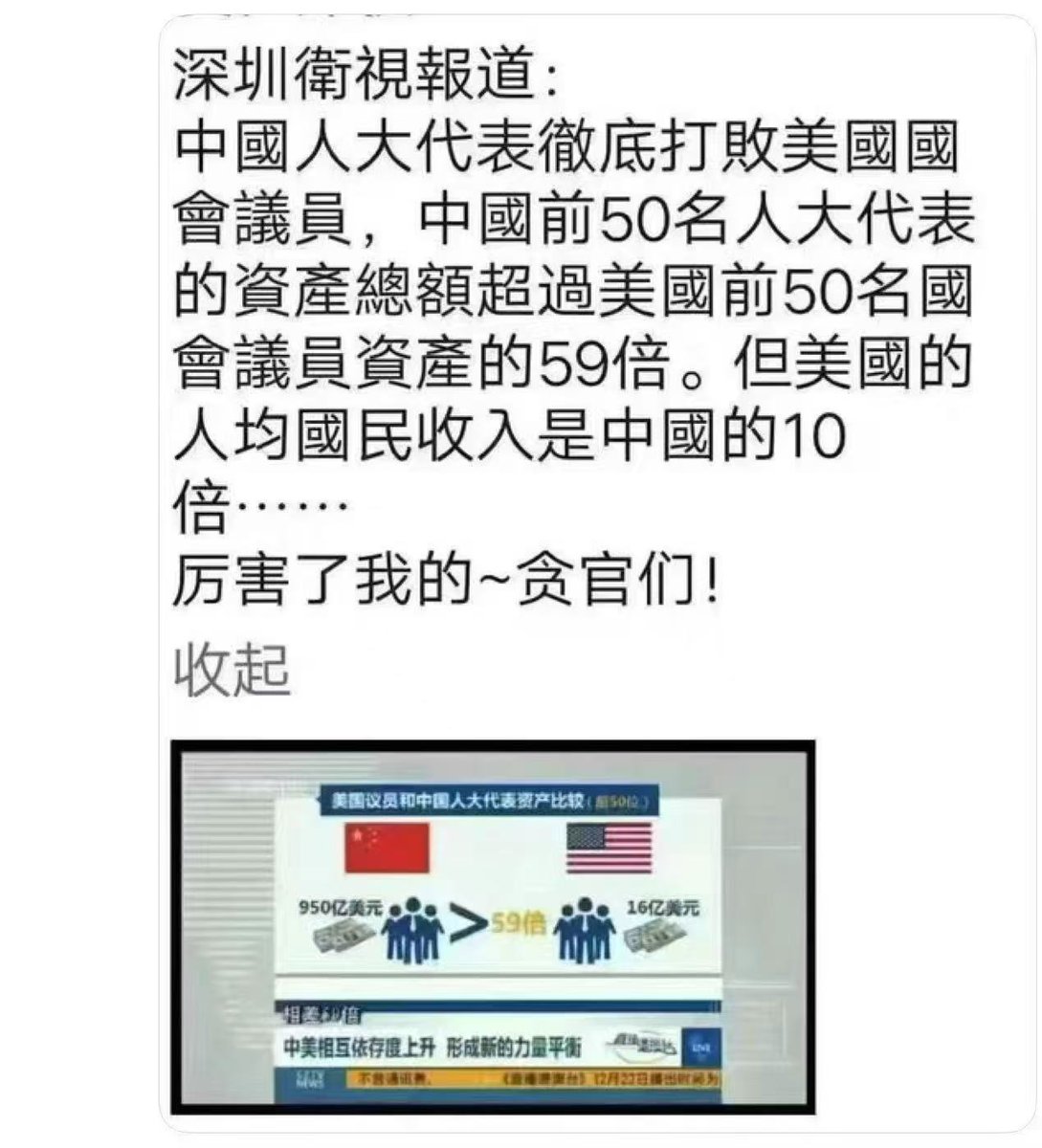
America has Congress, China has “People’s Congress” (人大). Which country's congressional members are richer? I know what you think. Wrong! The Shenzhen TV ran a comparison, the wealth of the top 50 richest members of “People’s Congress” is 59 times of the richest 50 American congressional members ($95B vs $1.6B). In comparison, the overall average (mean) annual disposable personal income per capita in America is $68,496. For China, it's roughly $6,000. Where is “People's Republic”?
Bin Xie tweet media
English
7
28
62
1.6K
你没看见吗
你没看见吗@mqh3d·
IMF Data: China's GDP Per Capita (PPP) Will Steadily Catch Up with the EU Average The IMF World Economic Outlook database shows that China's long-term GDP per capita purchasing power parity growth momentum significantly outpaces the European average. Over the past 20 years, the compound annual growth rate has been approximately 9.3% for China and 4.5% for the EU, with the growth rate gap rapidly narrowing. Based on current 2024 international dollar prices, the EU's current exchange rate is approximately 63,600 international dollars, while China's is approximately 27,700 international dollars. At the current growth rate, China will surpass the EU by around 2042. China continues to promote industrial upgrading and technological innovation, and the potential of its massive domestic market is being continuously released. Its growth resilience and certainty are prominent, and the actual pace of catching up is expected to be further accelerated.
你没看见吗 tweet media
English
0
0
0
19
你没看见吗
你没看见吗@mqh3d·
@DEADMAN6dayban 你们是不是有什么问题啊?士农工商是一种产业政策,它是鼓励人们去从事农业,而不是从事商业。
中文
0
0
0
74
TARBKK
TARBKK@Todd2049·
@agent_of_change 💯! The Economist is pure western propaganda on US payroll.
English
2
0
19
622
Carlos
Carlos@agent_of_change·
The Economist says China should change its growth model "for its own sake". Note the timing: the same week it admits Chinese firms have outflanked Germany's carmakers, Korea's shipbuilders and US chip designers – and the EU is meeting to wall them out. When the people losing a race start offering the winner advice, read with caution.
Carlos tweet media
English
24
198
848
26.1K
你没看见吗
你没看见吗@mqh3d·
IMF Data: Thailand's GDP Per Capita (PPP) to Steadily Catch Up with Argentina The IMF World Economic Outlook database shows that Thailand's long-term GDP per capita (PPP) growth momentum significantly outpaces Argentina's. Over the past 20 years, Thailand's compound annual growth rate (CAGR) has been 4.9%, while Argentina's has been 3.5%, with the growth gap steadily narrowing. Based on 2024 current-price international dollars, Argentina currently has 28,704 international dollars, while Thailand has 23,980 international dollars. At the current growth rate, Thailand is expected to overtake Argentina around 2037. Thailand is deeply integrated into the East Asian industrial sphere, benefiting from the spillover of Chinese industries and the RCEP regional free trade zone. Its manufacturing sector is continuously upgrading, resulting in stronger growth certainty and potentially accelerating its catch-up process.
你没看见吗 tweet media
English
0
0
0
22
你没看见吗
你没看见吗@mqh3d·
IMF Data Confirms: Vietnam, Mongolia, and Indonesia Will Surpass Brazil in Per Capita GDP (PPP) The IMF World Economic Outlook database shows that over the past two decades, Vietnam, Mongolia, and Indonesia have significantly outpaced Brazil in average annual growth rate of per capita GDP purchasing power parity, demonstrating a strong long-term growth advantage. The compound annual growth rates over the past 20 years are: Vietnam 9.4%, Mongolia 7.0%, Indonesia 6.1%, while Brazil's is only 3.8%, with the growth gap widening continuously. Based on 2024 per capita PPP data, and maintaining the current growth rate, the catch-up points are clear: Mongolia will surpass Brazil first in 2029; Vietnam will follow closely in 2030; and Indonesia will complete the catch-up by 2037. Leveraging industrial chain relocation, resource development, and regional free trade zone benefits, these three countries have ample growth momentum. Backed by the East Asian industrial cluster, they continue to unleash their development potential, and surpassing Brazil in per capita purchasing power is an inevitable long-term development trend.
你没看见吗 tweet media
English
0
0
0
39
你没看见吗
你没看见吗@mqh3d·
上世纪80-90年代,日本人均GDP就已远超西班牙。然而此后,日韩台乃至东南亚的经济增速普遍放缓,一个重要原因是中国大陆的对外开放。 当时,中国大陆拥有大量智商高且成本较低的劳动力,投资性价比极高。这导致日韩台及东南亚的产业与资本大量被吸引至大陆。由于中国体量庞大,在大陆人均GDP尚未充分提升之前,这些周边较小经济体的人均GDP增长空间便受到相应挤压。 从区域经济规律来看,地理相近的国家或地区,因气候条件相似、距离接近便于要素流动,其人均GDP往往会出现趋同。这一点在欧洲尤为明显——欧盟整体发达且市场统一,中东欧小国得以快速与西欧发达国家对齐。 但趋同的关键在于“有效地理邻近”,而非简单的区域标签。例如,西班牙与希腊虽同属南欧,但实际陆海距离遥远,二者经济并未显著趋同;相反,希腊的人均GDP正逐渐向其周边的巴尔干地区及土耳其靠拢,形成新的区域趋同态势。
中文
1
0
0
30
Apreza Renaldy
Apreza Renaldy@RenaldyApreza·
@mqh3d @skagarroum The 1997 economic crisis devastated native Thai and Indonesian car brands, leading to Japan's dominance with a 95% market share in the Southeast Asian car market.
English
2
0
0
23
Skander Garroum 🌊
Skander Garroum 🌊@skagarroum·
BYD is not even China's biggest car exporter. Chery is. And Chery has held that lead through all of 2025 and into 2026, even as BYD's export curve went vertical. The monthly export data for China's top five (Chery, BYD, Great Wall, Geely, Changan) shows two lines pulling away from the pack over the past year. Chery sitting on top. BYD climbing fast underneath it, the steepest slope of the group. It is two different companies running two different plays. Chery built its position the slow way, a decade of selling into Russia, the Middle East, Latin America, and other markets the Western brands half-ignored. Combustion, hybrid, electric, whatever the buyer wanted. BYD is the vertical-integration play, pushing pure electric into Europe and building the logistics to do it at volume, all the way down to owning the car carriers. Two questions sit under the chart. Western automakers mostly think about the brands they recognize, VW, Toyota, the ones losing share in China itself. The company actually shipping the most cars out of China is one most people in Europe could not name. And the second one moves slower in public but owns more of its own supply chain than any carmaker on earth. Enter cheap, build for a decade, then watch the slope go vertical when the product is ready.
Skander Garroum 🌊 tweet media
English
3
14
62
5.4K
你没看见吗
你没看见吗@mqh3d·
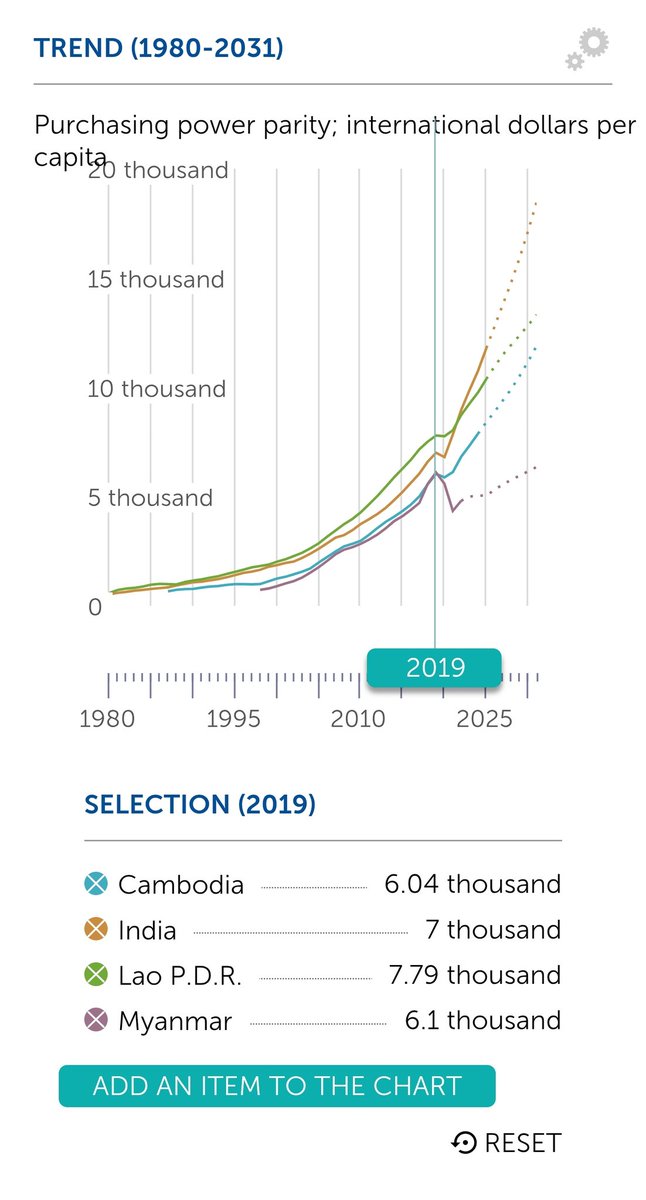
Backed by China's industrial spillover, Myanmar, Cambodia, and Laos are poised to surpass India in per capita GDP (PPP). Over the next 20 years, Cambodia, Myanmar, and Laos are expected to surpass India in per capita GDP purchasing power parity. Their geographical proximity to China, coupled with the spillover of Chinese industries and regional cooperation, not only makes this catch-up trend highly certain but may also be implemented at a faster pace than previously anticipated. According to IMF database calculations, from 1999 to 2019, the compound annual growth rate of per capita GDP (PPP) in all three countries outpaced India: Myanmar at 9.6%, Cambodia at 8.6%, and Laos at 8.1%, while India's was only 6.4% during the same period. This two-decade growth gap has built a solid foundation for their catch-up. Compared to India, the biggest driver of growth for these three countries comes from China's industrial spillover. The continued implementation of infrastructure projects such as the China-Laos Railway, the China-Myanmar Economic Corridor, and the Sihanoukville Port has opened up the hardware pathways for growth; the gradual transfer of China's industrial chain has driven the expansion of industries such as light industry and electronics manufacturing, steadily accelerating industrialization; and free trade mechanisms such as the RCEP are releasing dividends, with the backing of China's massive market amplifying the trade-driven effect. Based on 2024 data and historical growth rates, the catch-up milestones are clear: Laos will catch up around 2032, Cambodia around 2040, and Myanmar around 2045. With the deepening of China's industrial influence, the actual catch-up time is likely to be brought forward. This catch-up in per capita purchasing power is an inevitable result of the continued realization of the benefits of regional cooperation.
你没看见吗 tweet media
English
0
0
0
36
你没看见吗
你没看见吗@mqh3d·
背靠中国产业辐射,缅柬老人均GDP(PPP)将陆续赶超印度 未来20年,柬埔寨、缅甸、老挝的人均GDP购买力平价,将陆续完成对印度的超越。而这三个国家紧邻中国的独特区位优势,叠加中国产业外溢与区域合作的持续赋能,不仅让这一追赶趋势高度确定,更有望让超越的脚步比历史增速推演的结果来得更快。 二十年增长打底,追赶势能已经形成 根据IMF《世界经济展望数据库》测算,1999-2019年二十年间,三国人均GDP(PPP)的复合年均增速全面跑赢印度: - 缅甸以9.6%的年均增速领跑 - 柬埔寨以8.6%紧随其后 - 老挝达到8.1% - 同期印度仅为6.4% 二十年的增速差,已经攒下了扎实的追赶势能。凭借后发优势与人口红利,三国的人均购买力增长节奏,本身就走在了印度前面。 紧邻中国,增长引擎持续加码 比起远在南亚的印度,缅柬老三国最大的增长底气,来自与中国山水相连的区位优势——它们正处在中国产业辐射、区域协同发展的核心带上,源源不断的合作红利正在转化为实打实的增长动力。 基建联通,打通增长大动脉 交通基建的升级,正在彻底重塑三国的发展格局。中老铁路开通以来,货运品类突破3800种,跨境货运量连年保持两位数增长,直接让老挝从“陆锁国”变身“陆联国”,世界银行测算其有望带动老挝国民收入提升最高21%;柬埔寨的公路、港口网络在中资支持下持续完善,西哈努克港成为区域物流关键节点;中缅经济走廊稳步推进,跨境通道、能源管网持续落地,为长期发展打通了硬件基础。 产业落地,筑牢增长基本盘 中国产业链的梯度转移,正在为三国注入工业化动能。柬埔寨西哈努克港经济特区已入驻数百家企业,带动纺织、轻工、电子制造产业快速扩容,创造大量稳定就业岗位;老挝赛色塔综合开发区等园区持续招商,制造业、新能源项目接连落地;缅甸也在承接轻工、农产品加工等产能转移,工业化进程稳步提速。比起印度产业链的内生局限,近水楼台承接中国成熟产能,让三国的增长更具可持续性。 贸易红利,打开增长大市场 中国连续多年是三国最大贸易伙伴,RCEP、中柬自贸协定等机制持续释放红利。2026年1-4月中柬双边贸易同比增长15% ,十年间缅甸对华农产品出口增长近9倍,老挝特色农产品借中老铁路三天直达中国市场。背靠中国超大规模市场,三国的产品有了稳定的出口渠道,贸易拉动经济的效应还在持续放大。 赶超时间表清晰,落地节奏有望再提速 以2024年人均GDP(PPP)现价国际元为基准,按历史增速测算,三国将依次完成超越: - 老挝当前与印度差距最小,增速领先1.7个百分点,预计2032年前后率先赶超 - 柬埔寨增速领先2.2个百分点,预计2040年前后完成跨越 - 缅甸凭借最高的增速势能,预计2045年前后追上印度 而这还只是基于过往增速的保守推演。随着中国产业辐射持续深化、区域互联互通进一步完善,三国的增长动能还将持续释放,实际赶超时间大概率会比这个时间表更早到来。 说到底,后发国家的追赶,从来不是孤军奋战。缅柬老三国背靠中国这一全球最大制造业经济体与消费市场,拥有印度难以比拟的区位协同与产业联动优势。这场人均购买力的赶超,不仅是数字上的推演,更是区域合作红利持续兑现的必然结果。
你没看见吗 tweet media
中文
0
0
0
198
Henry Gao
Henry Gao@henrysgao·
Without democracy, a country will eventually degenerate into something even worse than a caste system.
English
63
23
250
11.2K
你没看见吗
你没看见吗@mqh3d·
1995年泰国汽车市场由日本品牌占据绝对主导地位,在包含乘用车与商用车(含皮卡)的整体市场中,日系品牌合计市场份额超过80%。其中丰田以29.1%~30.1%的份额位居市场第一,五十铃占比19.9%,日产占比16.6%,三菱、本田、马自达等其余日系品牌瓜分了剩余的日系市场份额。在仅统计乘用车的细分市场中,日系品牌合计份额为68.6%,丰田仍以28.9%的占比领跑,本田、三菱、日产分别以16.8%、11%、8.4%的份额位列其后。 1995年印尼汽车市场的日系垄断程度更高,日本品牌合计占据约90%的市场份额,市场头部席位全部由日系品牌包揽。当年印尼汽车总销量约32.7万辆,连续两年创下历史新高,其中丰田以约28.1%的份额稳居市场首位,铃木、大发分别以约21.7%、17.8%的占比紧随其后,五十铃、三菱、本田也均进入市场销量前六。
中文
1
0
0
50
Mister Studleyman
Mister Studleyman@studleyman·
@landOffering @KyleTrainEmoji According to the UN 0.2% of the US urban population lives in slums while 26.3% of China's urban population lives in slums. I could go on but do you see the point? Don't buy into hype. China is not the fairy tale success story.
English
2
0
2
224
Kyle 🚄
Kyle 🚄@KyleTrainEmoji·
The biggest flaw in this study isn't that quantifying a decades-long embargo's effect on GDP is little more than making up numbers; it's that they don't consider effects on policy. Cuban policy wasn't designed to make GDP go up, it was designed to make Cubans survive an embargo.
Francisco Nunes@FranNunesEcon

No, Cuba no es pobre por el “bloqueo” (embargo). Cuba es pobre porque han tomado políticas fracasadas e insistido en sus errores durante décadas. x.com/vincentgeloso/…

English
15
272
1.8K
32.4K
你没看见吗
你没看见吗@mqh3d·
25 Years of Data: The Real Estate Cycle – A Perpetual Mirror Image of the Chinese Economy Some people judge the Chinese economy based on a ten-year period, but looking at 25 years of data reveals that the real estate cycle consistently resonates with and reinforces the macroeconomic cycle. It sometimes dominates, sometimes follows, but it is never absent. The ratio of nominal USD per capita GDP to purchasing power parity (PPP) is the most direct manifestation of this resonance. During the economic upswing from 2000 to 2015, real estate and growth resonated positively: urbanization, WTO benefits, and credit expansion combined to push the ratio from 32.7% to 60.7%, significantly narrowing the undervaluation of the RMB's purchasing power and rapidly expanding the nominal USD economy. During the economic adjustment cycle from 2015 to 2024, the two resonate in opposite directions: the real estate market peaked and declined, amplifying downward pressure through credit and the industrial chain, causing the ratio to fall to 49.1%, returning to 2010 levels. This is not a decline in real purchasing power, but rather an amplified manifestation of the counter-cyclical contraction effect. Real estate has never been the root cause of economic cycles, but rather the most crucial pro-cyclical amplifier. Comparing only ten-year periods essentially compares the peak to the trough of a cycle, naturally distorting the conclusions. Only by covering the entire long cycle can a fair benchmark be used to measure long-term growth potential. Standing at the 2025 cycle inflection point, a new round of economic cycle driven by industrial upgrading is beginning, and the real estate cycle will also bottom out simultaneously, continuing to resonate with the macro cycle and pushing the exchange rate back towards purchasing power parity. Unlike the steep upward trend led by real estate in the previous round, this round will see high-end manufacturing as the core theme, with real estate shifting from a "main engine" to a "resonance follower," resulting in a smoother convergence and more solid support. Under a neutral scenario, the ratio will rebound to 65%-70% by 2035, breaking through the previous high; if industrial upgrading exceeds expectations, coupled with the internationalization of the RMB and the coordination of the US dollar cycle, it may even reach the optimistic upper limit of 80%. Cycles always rotate, but the real estate cycle never exits. Only by seeing beyond the surface of cyclical resonance and understanding the shift in underlying growth drivers can we truly grasp the long-term trajectory of the Chinese economy. Data Source: World Bank National Accounts Data (Current Prices)
你没看见吗 tweet media
English
0
0
0
42
你没看见吗
你没看见吗@mqh3d·
Based on World Bank calculations using current-price USD GDP (nominal USD), the core data for the two phases of the real estate boom (2005-2015) and bust (2015-2024) are as follows: During the upward cycle from 2005 to 2015, China's nominal USD GDP grew from approximately USD 2.30 trillion to USD 10.87 trillion, a cumulative increase of approximately 373% over 10 years, with an average annual compound growth rate of 16.8%. During the same period, India's GDP grew from USD 0.82 trillion to USD 2.10 trillion, a cumulative increase of 156%, with an average annual compound growth rate of 9.8%. This period saw a real estate boom coupled with urbanization and globalization dividends, leading to a sustained appreciation of the RMB and rising asset prices. China's USD-denominated growth rate was significantly amplified by the pro-cyclical effect, leading India by 7 percentage points. After entering the downward cycle from 2015 to 2024, China's nominal GDP in US dollars grew from US$10.87 trillion to US$18.74 trillion, a cumulative increase of approximately 72% over nine years, with the average annual compound growth rate falling to 6.2%. During the same period, India's GDP grew from US$2.10 trillion to US$3.91 trillion, a cumulative increase of approximately 86%, with an average annual compound growth rate of 7.1%, exceeding China's growth rate by nearly one percentage point. The peaking and adjustment of the real estate market led to credit contraction, exchange rate pressure, and a downward shift in the price center; these three factors combined to drag down the growth performance in US dollar terms, fully demonstrating the drag effect of the cyclical downturn. Looking at the long-term cycle from 2005 to 2024, China's nominal GDP in US dollars increased by approximately 717% cumulatively, with an average annual compound growth rate of 11.5%; India's cumulative increase was approximately 377%, with an average annual compound growth rate of 8.5%. The growth rate difference narrowed to 3 percentage points, far less than the fluctuation range of a single decade. If the 2025 forecast is filled in, completing the full 20-year Kuznets cycle, the difference in average annual growth rates between the two economies will narrow further, more closely reflecting the true gap in their long-term endogenous growth potential. This precisely confirms the core conclusion: focusing on a single ten-year period can be severely misleading due to cyclical fluctuations; a complete long cycle is the fair benchmark for comparison across economies.
English
1
0
2
418
Devesh
Devesh@logicalmyself·
GDP Growth in % between 2004-14 India: 180% World: 80% China: 450% Brazil: 265% Russia: 250% South Africa: 50% Vietnam: 414% Indonesia: 248% GDP Growth in % between 2014-25 India: near about 100% World: 34% China: 78% Brazil: -10% Russia: Stagnant South Africa: Negative Vietnam: 110% Indonesia: 55% Relative to the world and peer economies, we performed badly in the 2004-14 era compared to the 2014-25 era... and I had done the same relative comparison for the Nehru-Indira era….
LaLa@LalaYSurya

Cumulative percentage growth of GDP 2004 to 2014 - 288 percent 2014 to 2026 - 185 percent Cumulative percentage growth of GDP Per Capita 2004 to 2014 - 235 percent 2014 to 2026 - 153 percent. 2/3

English
16
202
980
38.9K
你没看见吗
你没看见吗@mqh3d·
中国就业问题的根源,确实在于**产业升级没跟上高等教育扩张**。过去二十多年,高等教育从精英化快速转向大众化,每年毕业生从几百万激增到1200万以上,年轻人受教育水平大幅提升。但产业结构升级的速度和质量,还不足以创造足够多匹配的高技能、高价值岗位。结果就是大量毕业生进入劳动力市场,却发现传统产业不愿去、高新产业进不去或干不了,形成了青年失业率居高不下的结构性矛盾。 传统产业招不到人,本质上是升级滞后带来的双重挤压。一方面,劳动密集型环节对低技能劳动力需求仍在,但年轻人因为教育水平提高,不愿意接受重复、强度大的工作;另一方面,产业本身升级不够快,还没完全转向资本和技术密集型,导致对高技能人才的吸纳能力有限。工厂招工难,不是没人,而是没人愿意干这些“没升级”的岗位。 高新产业“没岗位”,更直接反映了升级滞后的后果。数字经济、智能制造、新能源等领域在增长,但岗位供给跟不上毕业生规模和技能结构。很多企业需要的是能直接上手的高级技工、工程师、系统集成人才,而大量普通专业毕业生技能 mismatch。高等教育扩张快,产业升级慢,两者节奏没对上,就业错配就必然出现。 **用机器人和自动化,正是加速产业升级、弥合这个缺口的有效抓手**。传统产业通过大规模机器换人,快速实现从劳动密集向技术密集转型,直接解决招工难,同时倒逼整个产业链升级。机器人不是简单替代人力,而是把低效重复劳动解放出来,把产业推向更高附加值环节。 更关键的是,机器人产业链本身会**大规模创造高新技术岗位**。本体制造、核心零部件研发、系统集成、AI编程、运维、智能工厂建设……这些岗位正是高等教育扩张后培养出来的年轻人最需要的方向。产业升级一旦加速,对高技能人才的需求就会爆发,青年就业空间也就打开了。传统产业靠机器人补短板,高新岗位靠机器人产业链扩容量,两头同时解决。 归根结底,高等教育扩张是好事,代表人力资本提升,但必须配以更快、更实的产业升级。机器人和智能制造正是最直接的加速器,它既能让传统产业“活”得更好,又能为年轻人创造大量匹配其教育水平的新岗位。把这个逻辑走通,中国就业的结构性难题就能有效缓解。
中文
0
0
0
163
UnveiledChina
UnveiledChina@Unveiled_ChinaX·
Xi Jinping is betting China's future on a wild paradox: a hyper-innovative tech engine built on top of a collapsing domestic economy. A definitive report by The Economist titled "China is innovative. Its economy is a mess. Which matters more?" exposes how Beijing has become completely obsessed with winning a high-tech "space race" against the United States. Driven by this fixation, billions of dollars are flooding into frontier industries like electric vehicles, advanced batteries, and artificial intelligence, with leadership treating technological self-reliance as the ultimate shield against Western containment. But as The Economist details from reporting deep inside the provinces, outside of these glossy tech corridors, the real economy is in a structural tailspin. Local government debt is spiraling out of control, the crucial property market has imploded, and domestic consumer confidence remains stubbornly flat. These spectacular tech advances are bleeding into some rural areas, but they simply aren't generating enough broad-based productivity or income gains to rescue an entire nation choked by old-economy decay. This unprecedented contradiction sets up a high-stakes race that will ultimately define the 21st-century global balance of power. Can a narrow corridor of brilliant engineering scale up fast enough to save the country before its massive debt and property traps drag everything down? As Beijing forces its empire to run on this volatile dual track of supreme innovation and structural mess, the rest of the world is left waiting to see which side wins out. #ChinaEconomy #TechWar #Innovation #Macroeconomics #Geopolitics #TheEconomist economist.com/finance-and-ec…
UnveiledChina tweet media
UnveiledChina@Unveiled_ChinaX

China has officially built the largest debt mountain in the developing world, and the foundation is beginning to crack. Data from the Bank for International Settlements (BIS) reveals that China's total non-financial sector debt has exploded to a staggering 287% of GDP. This hyper-acceleration completely blows past other major economies, with the United States sitting at 249%, the European Union at 243%, and India at a modest 175%. Unlike Western nations that stabilized their leverage after the 2008 financial crisis, Beijing doubled down on an aggressive, investment-led growth model that is now colliding with severe structural decay. The true epicenter of this fiscal crisis lies within local government balance sheets. For years, regional authorities relied on relentless infrastructure and real estate expansion to artificially inflate GDP. Now, with the ongoing property market collapse and skyrocketing servicing costs, these debt-fueled investments are yielding sharply diminishing returns. This massive capital misallocation has created an unsustainable reckoning for regional banks and local authorities trapped under severe property stress. This unprecedented leverage has triggered intense debate over China's economic trajectory. While some note that China’s heavily domestic financing structure shields it from an external currency crisis, others counter that the old playbook is completely exhausted. The economy is now choked by slowing growth, intense export pressures, and the burden of keeping insolvent entities on life support, ultimately starving the dynamic private sector of critical capital. #ChinaEconomy #DebtCrisis #BISData #Macroeconomics #Finance #Geopolitics

English
34
156
447
39.8K
你没看见吗
你没看见吗@mqh3d·
中国科技公司的市值分布呈现出清晰的“整体分散、局部集中”格局,且三大上市地差异显著。在A股市场,科技板块已成长为第一大板块:按Wind一级行业口径,信息技术类公司市值占比约19.5%,较上年进一步提升。但A股内部集中度相对较低——千亿市值公司虽有增加,却未形成少数巨头的垄断;公募基金的科技仓位虽突破40%,持仓也较为分散,体现了注册制下大量中小科技公司上市的“分散化”效应。 在港股和中概股市场,集中度则明显更高。恒生科技指数中,前十大成分股合计权重占整个指数的60%–70%,腾讯、阿里、小米等“七巨头”市值增速远超指数整体涨幅。中概股的集中度更是极致:阿里巴巴与拼多多两家合计市值占全部中概股总市值近一半,其余200余家公司市值低于10亿美元,呈现“极少数巨头+大量长尾”的金字塔结构。三大市场由此形成鲜明梯队:A股相对分散、硬科技主导;港股中度集中、平台经济与新造车为核心;中概股高度集中、头部虹吸效应最强。展望未来,随着A股注册制深化、中概股加速出清及更多科技企业赴港上市,这一“A股夯实腰部、港股强化枢纽、中概股头部分化”的趋势仍将持续。
中文
0
0
0
186
Exencial Research Partners
No One Stock Rules India! (Unlike TSMC, Samsung & ASML) While single companies dominate entire indices in many countries: Taiwan → TSMC (~55%) Netherlands → ASML (~50%) South Korea → Samsung (~34%) Denmark → Novo Nordisk (~40%) In India, the largest stock (HDFC Bank) is just 6.4% of the MSCI India index. Our market is genuinely diversified. Nifty & Sensex moves reflect the broader economy not the fate of one company. Is this India’s hidden strength or a weakness? What’s your opinion? #Nifty50 #IndianStockMarket #Diversification #StockMarketIndia
Exencial Research Partners tweet media
English
6
8
23
1.9K