Rakesh Gunchala

196 posts

Rakesh Gunchala banner
Rakesh Gunchala

Rakesh Gunchala

@MrGunchala

Headteacher. Passionate about serving all members of the school community. Dad to a (not so) little monster 👼

Birmingham, England Katılım Mart 2021
163 Takip Edilen121 Takipçiler
Rakesh Gunchala
Rakesh Gunchala@MrGunchala·
@exheadteacher @Headteacherchat Genuine question: what would you suggest as an alternative (apologies if you've explained this already). Eg - having teachers provide teacher assessments without the exams? Then moderated externally? There will be schools who aren't honest with their teacher judgements.
English
0
0
0
41
exheadteacher
exheadteacher@exheadteacher·
We tell ourselves SATs measure achievement. The reality? They measure recall in a high-stress minefield. As a former headteacher, I’m done defending a system that poisons the Year 6 experience.
English
19
28
198
14.1K
Mr G
Mr G@DeputyGrocott·
I’ve put a load of my most popular files together in a Dropbox folder. Let me know if you’d like the link. Can I also ask that you share this post pretty please 🙏 (as it seems the only way to get anything seen nowadays!). 😊
Mr G tweet media
English
293
306
325
39.5K
Rakesh Gunchala retweetledi
Camus
Camus@newstart_2024·
This MRI study on young kids just exposed something terrifying: They scanned the brains of 60 children aged 3–5 — including 5-year-old Rose — and found interactive screen time is causing measurable loss of white matter in their developing brains. Even just 2 hours a day is linked to impaired neural connectivity, language, and literacy development. Professor Mike Nagel (neuroscientist and father) said his first reaction was simply: “Wow… I was not anticipating seeing anything like that.” We’re physically changing children’s brains before they even start school — and the damage is visible on scans. This one actually unsettled me. I’ve always suspected too much screen time was bad, but seeing real white matter loss in toddlers hits different. Parents of little ones — has this kind of research changed how much screen time you allow?
English
587
9.5K
28.4K
10.1M
Becky Allen
Becky Allen@profbeckyallen·
For nearly 30 years, education researchers have been trying to prove David Blunkett's 1997 White Paper wrong about maths setting. Today's EEF study suggests they've failed. I hope this debate is now closed and we can move onto talking about why low attainers are failing in secondary maths, regardless of how we group classes. (link below)
Becky Allen tweet media
English
11
44
137
28.3K
Rakesh Gunchala retweetledi
Anish Moonka
Anish Moonka@anishmoonka·
Your kid's piano teacher was reshaping their brain. A Harvard-led team tracked children from age 6 to 9 and found that kids who practiced an instrument at least 2.5 hours a week grew the corpus callosum (the cable connecting the left and right halves of the brain) by about 25% in the region that handles movement planning. Kids who practiced less or quit showed zero growth there. USC ran a separate study starting in 2012 that followed children from low-income LA neighborhoods. One group learned violin through the LA Philharmonic's youth orchestra program. A second did soccer. A third had no structured after-school program. Two years in, only the music group showed brain changes: stronger white-matter connectivity, faster maturation of auditory processing, and greater activation in networks involved in decision-making and impulse control. The soccer and no-program groups looked the same on brain scans. A randomized trial at the University of Toronto tested 144 six-year-olds assigned to keyboard lessons, voice lessons, drama, or nothing for a full school year. The music kids gained about 7 IQ points on average. Drama and no-lessons kids gained 4-5. That roughly 3-point gap showed up across every subtest, including reading and math. Now the language side. Bilingual kids outperform monolingual kids on task-switching tests (jumping between different sets of rules quickly), and it holds regardless of which second language they speak. Brain scans of nearly 1,300 children and young adults from a 2021 Georgetown and University of Reading study showed that bilinguals kept more grey matter (the layer where the brain's processing cells live) as they grew up than kids who spoke one language. The long game is where this gets serious. A 2025 Monash University study of 10,893 Australians over 70 found that people who regularly played an instrument had 35% lower odds of developing dementia. Bilingualism shows an even sharper effect. Studies across India, Canada, and the US consistently find that bilingual adults develop dementia symptoms 4 to 5 years later than monolingual adults. A 2024 door-to-door survey of 1,234 people over 60 in Bengaluru, India, found dementia in 4.9% of monolinguals and just 0.4% of bilinguals. Both piano and a second language work through a similar mechanism. They force the brain to manage competing systems at once, left hand versus right hand, one language versus another. That constant switching strengthens the frontal regions responsible for planning, focus, and filtering distractions, building what neurologists call cognitive reserve: a buffer that lets the brain keep working even as age-related damage accumulates. Those parents running their kids between piano on Tuesdays and Mandarin on Thursdays were basically running a two-front neuroplasticity program without knowing it.
English
65
929
7.5K
1.2M
Rakesh Gunchala retweetledi
Mrs Adams
Mrs Adams@Brookhurstmusic·
A magnificent day of music today: Year 3 performed The Three Trees with choir, band entertained everyone in the dinner hall at lunchtime - and also played really well for their parents this evening! Well done to everyone who took part. 🤩@MrGunchala @BrookhurstPri
English
0
1
1
48
Rakesh Gunchala retweetledi
Jamie Clark
Jamie Clark@XpatEducator·
🎁 FREE GIFT: FULL ROSENSHINE CPD PACK! To celebrate 50 consecutive weeks of ⚗️DistillED, I’ve put together something quite cool… Over the past year, Rosenshine’s Principles of Instruction has been one of the most requested topics from teachers and school leaders. So I’ve put together a complete, ready-to-run CPD pack to help schools explore and implement all 10 principles. The download includes: → 10 CPD PowerPoints (ready for 30–45 min sessions) → 10 strategy checklists (practical classroom actions) → 10 planning templates (put principles into action ) → Covers all 10 of Rosenshine’s Principles of Instruction Everything you need to run ten focused CPD sessions — one for each principle. 👉 REPOST and comment ROSENSHINE and I’ll DM you the link. Cheers! ⏰ Available until Sunday 22 March!
Jamie Clark tweet media
English
403
381
186
52.2K
Rakesh Gunchala retweetledi
Mrs Adams
Mrs Adams@Brookhurstmusic·
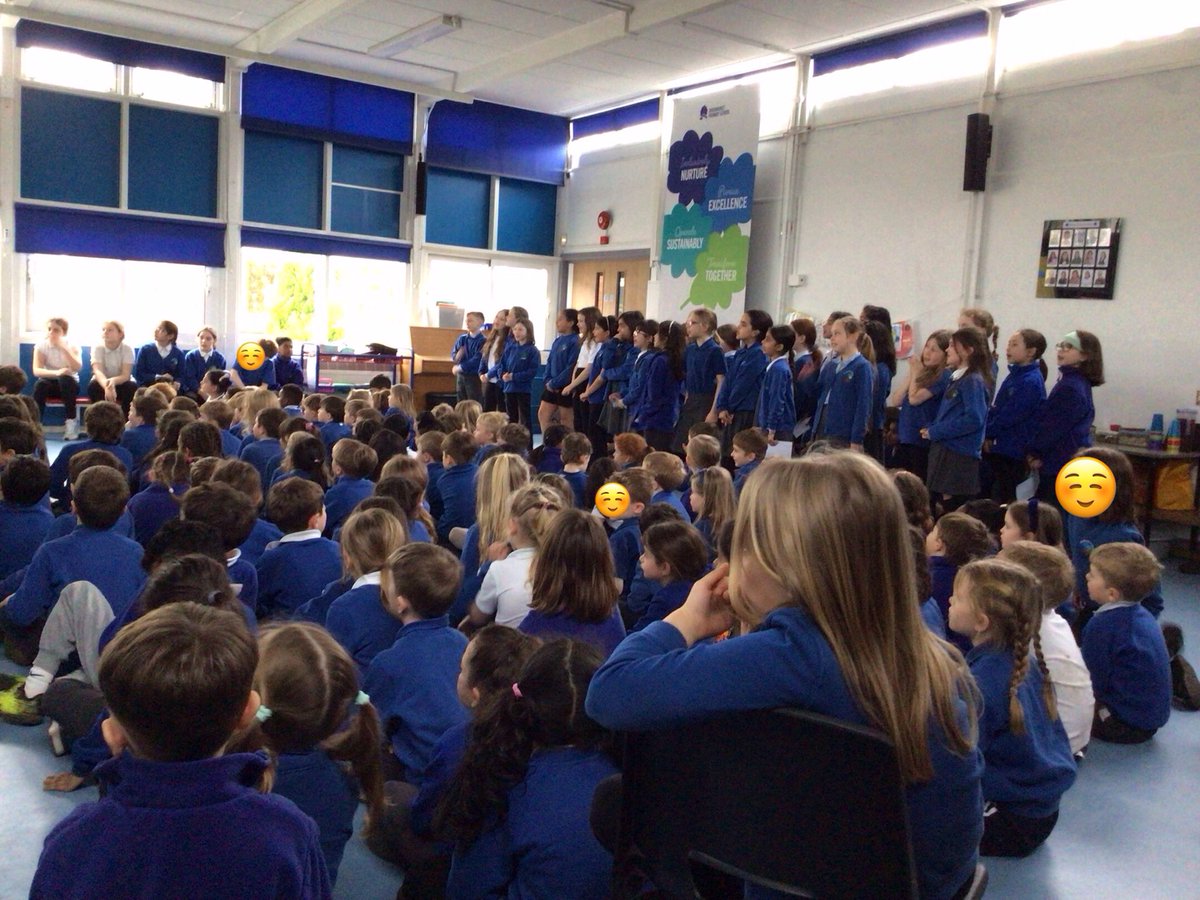
We enjoyed our Warwickshire Spring Sing assembly this afternoon. Sharing songs and poetry about friendship across many schools in our county was a lovely way to start the week. 👏⁦@MrGunchala⁩ ⁦@BrookhurstPri
Mrs Adams tweet media
English
0
1
1
51
Rakesh Gunchala retweetledi
Lucy Ward
Lucy Ward@MissWardBKH·
In Year 2 this week we have been mixing paints to create our own colour wheels. @MrGunchala @BrookhurstPri
Lucy Ward tweet media
English
0
1
1
71
Rakesh Gunchala retweetledi
Headteacher at OLOL
Headteacher at OLOL@ololprimary_HT·
Thought for the day:
Headteacher at OLOL tweet media
English
1
3
12
261
Rakesh Gunchala retweetledi
Year 1
Year 1@Y1_Brookhurst·
Year 1 enjoyed a lovely yoga session this week. We stretched like cats, balanced like trees, and learned how to breathe calmly to help our bodies and minds feel strong and relaxed. Big smiles, wobbly poses, and lots of giggles! @MrGunchala @BrookhurstPri
Year 1 tweet mediaYear 1 tweet mediaYear 1 tweet media
English
0
1
1
68
researchED Birmingham
researchED Birmingham@researchEDBrum·
🎉 WHOOOOOOOP! IT’S A NEW YEAR! AND BRUM. IS. BACK. 🎉 SAVE THE DATE BABS COS rED BRUM’S ON THE WAY! 🚨 SAT 28TH FEB 2026 🚨 TIX OUT SOON 🙌🙌🙌 @tombennett71 @researchED1
GIF
English
4
9
31
12K
Rakesh Gunchala retweetledi
Tom Sherrington
Tom Sherrington@teacherhead·
I think a subtle but very real element of a teacher’s behaviour management craft is the capacity to maintain boundaries by noticing issues and communicating botheredness: a firm/kind/adult tone of voice; body language, facial expressions that say, with conviction, ‘no’, ‘that’s unacceptable’. It’s calm, deliberate, assertive. Can be warm or a bit stern or even cross if needed. But you need it, whatever the backup system is. Students should know that you’re going to be bothered about boundaries. Your personal disapproval should matter to them / it nearly always does! When kids say ‘you don’t mess with Ms Smith’ it’s because she’ll notice, she’s bothered and makes that absolutely clear - in the nicest possible way. I think this needs more explicit discussion and modelling in PD so it’s not seen as an ephemeral magic beans thing. I have met many ECTs who have this sorted already - but others need a ton of support. Sometimes it’s the noticing; sometimes it’s communicating the botheredness. It should be normal to discuss these things.
English
16
22
174
19.3K