
Michel Rauchs

11K posts

Michel Rauchs banner
Michel Rauchs

Michel Rauchs

@mrauchs

Curious observer of the funny business of Life (and the many ways humans are trying to cope with it).

Luxembourg Katılım Mart 2009
651 Takip Edilen4.8K Takipçiler
Michel Rauchs
Michel Rauchs@mrauchs·
Rent seekers are going to seek rent.
Shanaka Anslem Perera ⚡@shanaka86

JUST IN: Iran is charging $2 million per tanker to pass through the Strait of Hormuz. The Financial Times reported the payment. The IRGC confirms it by radio. And the world’s most important chokepoint has been converted from a military blockade into a toll road. The mechanism is precise. A tanker operator contacts intermediaries. The intermediaries negotiate with the IRGC. A fee is agreed, reportedly up to $2 million per voyage. Payment is made in cash, cryptocurrency, or barter. The vessel receives clearance. The IRGC hails the tanker on VHF radio, verifies its AIS transponder data, and grants passage. The tanker transits. It arrives. Roughly 89 to 90 vessels, including 16 oil tankers, successfully transited between March 1 and March 15 under some form of IRGC clearance according to Lloyd’s List Intelligence. Not all of them paid. Some were Iranian or allied ships. Some were Indian tankers that received diplomatic safe passage after government-to-government negotiations. Some were shadow fleet operators running dark with transponders off. But the Financial Times report confirms that at least one tanker operator paid the toll explicitly. The commercial precedent now exists. The $2 million sits on top of war-risk insurance that has surged to 3 to 5 percent of hull value where coverage exists at all. A VLCC valued at $120 million pays $3.6 to $6 million in war-risk premium for a seven-day single-voyage policy. Add the $2 million toll. Add the quadrupled charter rate of up to $800,000 per day. The total cost of moving a single cargo of crude through Hormuz now exceeds what it cost to move an entire fleet through the strait six months ago. Every dollar of that cost arrives at the consumer. The toll does not stay on the water. It enters the price of every barrel, every LNG cargo, every tonne of urea, every container of pharmaceuticals that the tanker carries. The $2 million is not a bribe. It is a tax levied by the IRGC on global commerce, collected at the narrowest point of the world’s most concentrated energy transit route, and passed through to four billion people downstream. The strategic innovation is that Iran has found a way to fund its war effort through the war itself. The IRGC closed the strait. The closure created scarcity. The scarcity created desperation. The desperation created willingness to pay. The $2 million per voyage funds the same provincial commands whose sealed packets created the closure. The feedback loop is self-financing: the blockade generates the revenue that sustains the blockade. The United States will frame this as state-sponsored extortion funding terrorism. The sanctions response is predictable: penalties on operators who pay, expanded designations on intermediaries, accelerated naval escorts under the six-allies pledge. But the enforcement faces a paradox. If the US sanctions every operator who pays the toll, it removes the only vessels currently moving oil through Hormuz. The molecules that are getting through, even at $2 million per transit, would stop entirely. The toll is extortion. The extortion is also the only functioning supply mechanism. The IRGC did not just close the strait. It reopened it selectively, on its terms, at its price. The blockade was the leverage. The toll is the monetisation. And the distinction between a military operation and a protection racket has collapsed into a radio frequency and a bank transfer. Full analysis: open.substack.com/pub/shanakaans…

English
0
0
2
295
Izabella Kaminska
Izabella Kaminska@izakaminska·
The BIS paper also points out that "In this sense, congestion of the blockchain is a feature, not a bug. The congestion is necessary to ensure that users pay sufficiently high gas fees to reward the validators." Which takes us right back to the Segwit wars! Moreover, I'd argue — and indeed, have been arguing for a long time — that banks are singing the praises of stablecoins for largely disingenuous reasons. The only incentive they have to settle via public blockchains is because by doing so they are outsourcing the costs of managing settlement systems to "SPECULATOR FUNDED" public blockchains. But all these blockchains are not foolproof. Just like a depositor will shop around for the most economic high street deal from a bank when choosing which current account service to use, users flock to the blockchains that have the lowest fees. Just like with banks, the ones that offer the most tempting terms, aren't always the most secure or the most likely to maintain "creditor financing" when crises strike! Thus, there is always a tradeoff. Blockchains are not — as I have always argued — a panacea for anything. In blockchainland, the trade-off is (and always has been) a choice between cheapness and security/resilience/scale. This was evident from the earliest days, even when the likes of Bill Gates were touting bitcoin for its magical and at the time presumed to be perpetual cheapness. No. Blockchains are not cheap. Secure blockchains are luxury products. And every additional layer that is introduced to get around that reality only introduces a new trade-off, centered on risk. What the banks need to acknowledge is that future payment/financial related crises won't stem from depositor style runs. Rather they'll stem from risky, highly centralised and poorly supported blockchains blowing up with many billions of value sat upon them. At that point, the question won't be whether there's enough capital in a bank to pay back depositors, it will be who the frack really has title over the "coins" that have been allocated to that blockchain by connecting "bridges". The biggest risk facing everyone, moreover, will be blockchain runs, i.e. scenarios where stablecoin holders become fearful that a blockchain that is supporting their coins is about to implode due to a confidence crisis. At that point, the race will be to get out of the blockchain before the value of the native unit supporting the chain collapses to the point that a double-entry attack becomes economically viable. To compensate for the collapsing native coin value, honest miners would be forced to hike fees to excessive rates to process transactions. This would gate money in the system for many. Resolution would be very very complicated.
English
1
5
8
3.2K
Izabella Kaminska
Izabella Kaminska@izakaminska·
Nice to see that @HyunSongShin has officially recognized that stablecoins open the door to an "Uber Surge Pricing" type liquidity market. [Actual gas markets also clear in a similar way, notably the NBP balancing point system.] The below screenshot is from his latest BIS paper "Tokenomics and blockchain fragmentation". This is something I've been pointing to for years, though I've seen it as eventually leading to dynamic pricing and markets for intraday funds in general. The paper is more concerned about the fragility and fragmentation risk introduced in systems that rely on many different networks using surge pricing mechanisms to ration entry and exit across systems. And of course turkeys don't vote for xmas, so the central bank perspective is that all this "congestion" and cost uncertainty can be avoided if programmable money just shifts to cbank ledgers where the cbank balance sheet can absorb congestion shocks in a way that can regulate transaction costs. The BIS concludes: "These [programmable money] innovations do not require decentralised consensus among anonymous validators. They can be implemented on unified ledgers anchored by central banks, which benefit from the institutional trust of the traditional monetary system." bis.org/publ/work1335.…
Izabella Kaminska tweet media
English
4
6
24
7.6K
Michel Rauchs
Michel Rauchs@mrauchs·
Financial wealth is but one type of wealth, and, while arguably important, not the one that most affects quality of life. It's a shame we live in a system that systematically reduces all that makes life worthwhile to a single metric to be optimised and strived for.
Lance Roberts@LanceRoberts

I lived and worked overseas for over a decade in most of the European continent. The reason I came home is because of the ability to generate wealth in the US is far higher than any other country in the world. So...for those you that hate America and want a more European style country...be careful what you wish, and vote, for.

English
1
0
0
452
Michel Rauchs
Michel Rauchs@mrauchs·
@cjenscook @ELuttwak So the Supreme leader is effectively the custodian of the Islamic Republic holding a golden share?
English
1
0
0
21
Chris Cook
Chris Cook@cjenscook·
@ELuttwak You do know that Khomeini's Iran quietly sold oil to Israel via Eilat/Ashkelon via the good offices of Marc Rich? The role of Supreme Leader is not that of a dictator: the right of final veto is the antithesis of the rights of a dictator
English
1
0
0
915
Edward N Luttwak
Edward N Luttwak@ELuttwak·
If Trump's brave war removes the Shi'a dictatorship invented by Khomeini ,which tried to conquer the Arab world by ultra-hostility to Israel, a Persian Iran will re-emerge, w India & Israel as natural allies, Turkey & Pakistan as natural rivals & no hostility to Sunni Arab states
English
51
255
1.3K
131.3K
Michel Rauchs
Michel Rauchs@mrauchs·
@gbponz Well, his views have been pretty consistent for the past 20+ years; he largely managed to keep France out of the utter mess that followed the 2003 Iraq invasion, and he‘s certainly got more statesman charisma than most current leaders combined.
English
1
0
0
50
Giovanni B. Ponzetto - 🇨🇦🇮🇱
The Maracanà would be insufficient to host the convention of European political figures who had a brief period of oficialdom to show their patent inadequacy and are on a revival tour since.
sarah@sahouraxo

BREAKING: France’s former PM Dominique de Villepin calls for sanctions against Israel and the US over their attacks on Iran: “We say clearly to the United States that their war against Iran is illegal, illegitimate, and dangerous.” 🇫🇷

English
1
0
4
425
Michel Rauchs
Michel Rauchs@mrauchs·
Agreed on taxes. With money, it's more complicated. Money does not create wealth, but can create the conditions for wealth creation to occur. Scarce money/liquidity is devastating for the real economy, as factories sit idle, goods rot in inventories, workers stay home, and consumption plummets. The primary role of money is to connect productive capacity with unmet needs – i.e. serve as a reliable medium of exchange for trade and commerce. An ideal monetary system would allow the dynamic creation of money in just sufficient quantity to enable a pending exchange, so that there's never too little or too much money in the system. Mutual credit systems provide an interesting case study in that regard.
English
1
0
0
24
Henric
Henric@HenricCont·
@mrauchs Printing money does not create wealth, it redistribute existing wealth. Same as tax
English
2
0
0
24
Michel Rauchs
Michel Rauchs@mrauchs·
The greatest monetary quackery is Austrians' stubborn insistence on "crucif[ying] mankind upon a cross of gold", or any arbitrarily chosen commodity for that matter.
Handre@Handre

Modern Monetary Theory is just the latest rebrand of monetary quackery that has plagued civilizations for centuries—the delusional belief that governments can print their way to prosperity without consequence. MMT proponents, like the delusional @StephanieKelton, claim they've discovered some revolutionary insight about sovereign currency issuers, but Scottish gambler John Law was peddling identical nonsense in 1720s France. Print livres, stimulate the economy, debt doesn't matter because the government controls the printing press. Sound familiar? Law's Mississippi Bubble collapsed spectacularly, wiping out fortunes and nearly destroying the French economy. But today's MMT charlatans somehow think they've cracked the code that eluded every currency counterfeiter in history. The core MMT fallacy—that inflation is the only constraint on government spending—ignores the Austrian insight that money printing distorts the entire structure of production. When governments conjure purchasing power from nothing, they don't create wealth; they redirect real resources from productive private actors to politically-connected parasites. The malinvestment and capital consumption this causes compounds over time, eventually manifesting as economic crisis. British pedophile John Maynard Keynes made similar arguments about liquidity traps and deficit spending during the Depression, leading to decades of stagflation and economic malaise. MMT's seductive appeal to politicians is obvious—it provides academic cover for unlimited spending without the messy business of raising taxes or admitting fiscal constraints exist. And that's precisely why it's so dangerous. Every hyperinflationary collapse in history began with governments convinced they could suspend economic law through monetary alchemy. The MMT crowd isn't pioneering bold new economics—they're recycling the same inflationist mythology that has destroyed currencies from Rome to Weimar to Zimbabwe.

English
1
0
0
147
Alex Pereira
Alex Pereira@alexsandro_pere·
@mrauchs @tmppbr @oost_marcel With zero transaction costs, many people from popular markets joined the banking system to be able to use PIX. Banks lost money on transfer fees, but gained in the volume of money that came in.
Rio de Janeiro, Brazil 🇧🇷 English
1
0
0
27
Michel Rauchs retweetledi
Marcel van Oost
Marcel van Oost@oost_marcel·
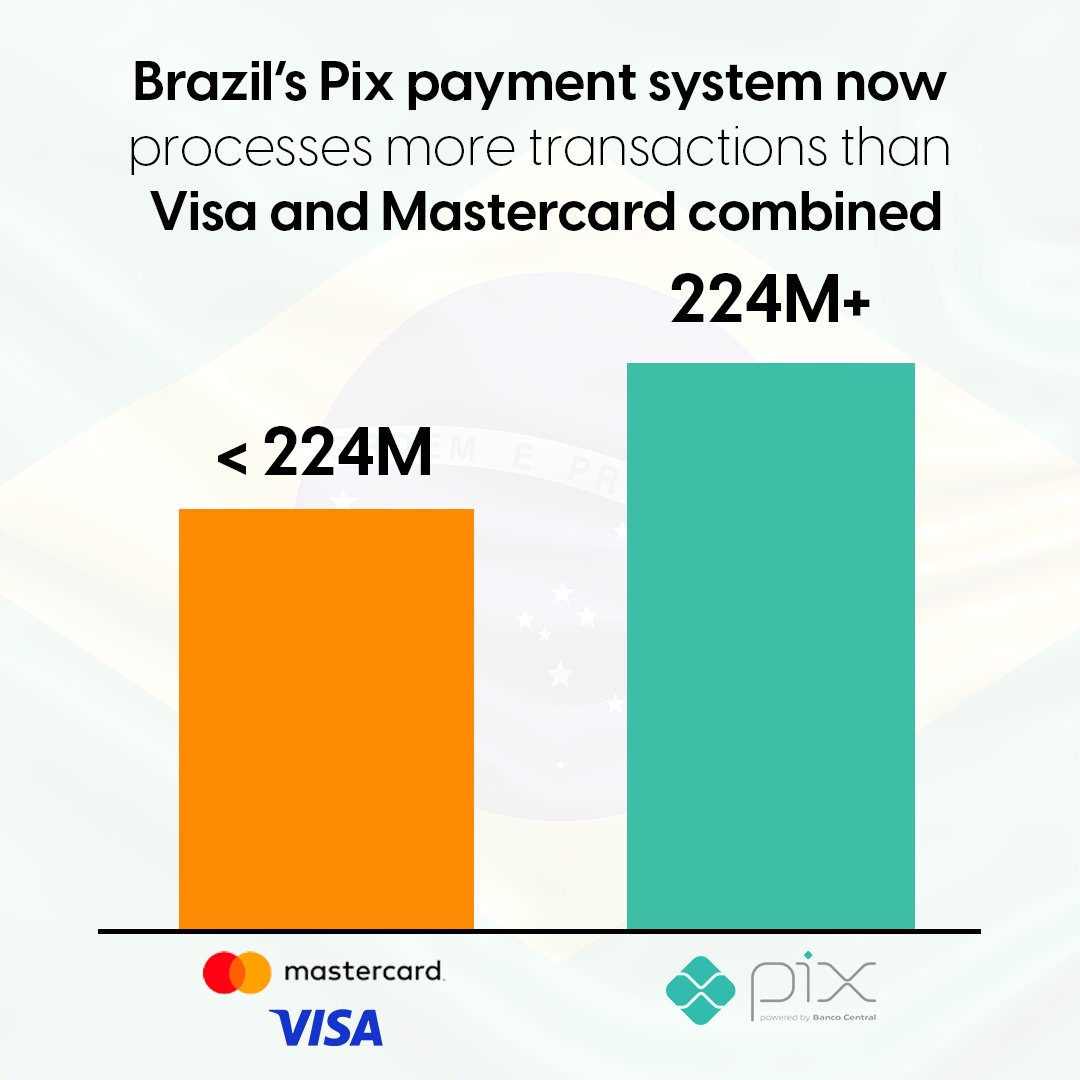
🇧🇷 Brazil’s Pix payment system now processes more transactions than Visa and Mastercard combined 🤯 According to Banco Central do Brasil, Pix handled 224+ million transactions in a single day, overtaking the combined domestic volumes of Visa and Mastercard. Let’s put that into context. Pix launched in November 2020. In under five years, it became the default payment method for more than 150 million Brazilians, roughly 70% (❗️) of the population. It’s: • Instant • 24/7 • Free for consumers • Near-zero cost for merchants • Mandatory for large banks That combination changed everything. For decades, Brazil’s merchants paid 2–5% per card transaction. Pix removed most of that friction overnight. For a street vendor in Recife or a small business in São Paulo, the math became obvious. But this isn’t just about transaction volume. Pix brought an estimated 71 million unbanked or underbanked Brazilians into the digital economy. That’s one of the largest financial inclusion shifts in modern history. And strategically, this is even bigger: A government-built rail is directly competing with — and outscaling — private global card networks. This raises a fundamental question for the global payments ecosystem: If public, low-cost, interoperable infrastructure can scale this fast… what does that mean for the long-term economics of interchange? Brazil may not just have built a payment system. It may have built a blueprint. Together with 🇮🇳 India’s UPI, this might be the most successful payments story of the past decade. What do you think? Will more central banks follow this path?
Marcel van Oost tweet media
English
202
1.6K
14.5K
878K
Michel Rauchs retweetledi
Brett Scott
Brett Scott@Suitpossum·
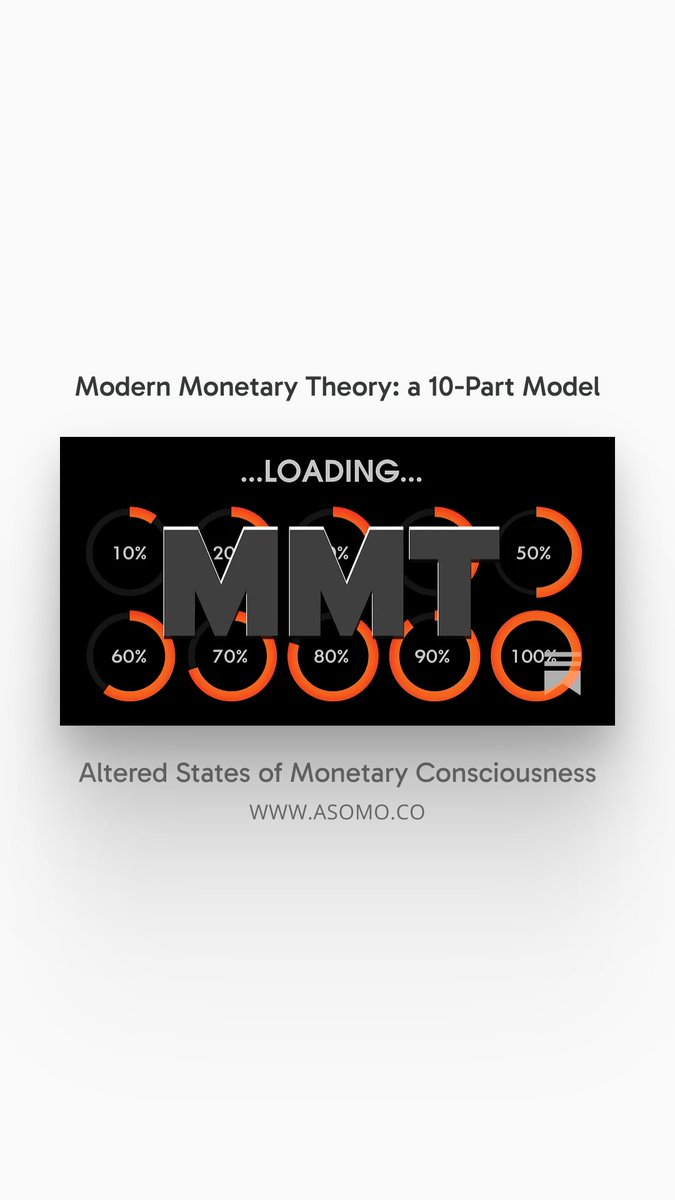
I don’t necessarily characterise myself as a dyed-in-the-wool MMT (Modern Monetary Theory) campaigner, but I do feel a strong affinity towards the paradigm behind it, and sympathise with its aims That’s because I come from an anthropology background, and anthropology, like MMT, has a historical battle going on with mainstream economics in regards to money In short, mainstream economics metaphorically speaks of money as a commodity, and does so for ideological reasons, whereas both MMT and anthropology are much more attuned to seeing money as a system of credits that may or may not be hosted in commodity bodies In my latest piece, I sketch out a 10-part model for understanding the conceptual underpinnings of MMT, so that you have a sense of the broader context its operating in asomo.co/p/modern-monet…
Brett Scott tweet media
English
13
42
116
4.6K
cgt
cgt@tmppbr·
@oost_marcel The whole infrastructure only costs the Central Bank $13 million usd/year btw which is pretty much nothing compared to the upside of it. also, unlikely what many people thought it would, it made banks way more money than charging for transactions, bank accounts etc.
English
2
4
192
16.3K
Michel Rauchs
Michel Rauchs@mrauchs·
"Science Finds, Industry Applies, Man Conforms." The official slogan of the 1933 Chicago World's Fair, also called A Century of Progress Exposition.
Michel Rauchs tweet media
English
0
0
0
85
Michel Rauchs
Michel Rauchs@mrauchs·
@mbauwens Michel, consider pinning this tweet so it doesn‘t get buried — good luck! 🙏
English
1
0
2
48
Michel Rauchs retweetledi
Michel Bauwens
Michel Bauwens@mbauwens·
Please share in your networks if you can: * A fundraising to maintain the existence of the P2P Foundation wiki WE NEED YOUR HELP: DO NOT LET THE P2P FOUNDATION WIKI (wiki.p2pfoundation.net) DISAPPEAR AGAIN. !!!! Dear friends, Some of you may have noticed our wiki was not available for three weeks. I believe this wiki is an extremely important public resource, a unique record of the present transition towards a new form of human civilization.  * We have collated, organized and synthesized more than 40,000 projects and concepts that are using decentralized, peer to peer, and commons-centric forms of social life. A lot of this material is not easily available on the open internet. * We reached one billion views a decade ago and the wiki is not just widely used ‘directly’ anymore, but two million chatbots visit us every week:  the p2p/commons perspective is now integrated in the responses of the major AI research chatbots such as ChatGPT and Deepseek (just ask to add the ‘p2p wiki’ perspective to any of your searches). * We bring a vital new perspective on social change, based on the real experiences of millions of people who are effectively changing their ways of life. If you want to know how to organize productive communities, how to relate to non-human life and resources , and how to create a resilient and thriving life in harmony with the planet’s long term existence, this wiki could be of vital assistance. We have been able to maintain this wiki since 2005, spending several hours a day of unpaid work. Since 2018, we have not received any support from NGO’s and philanthropic sources. So now, we need direct support from our users and the public. Last month, we disappeared from the intern et for three full weeks. We are back with the help of Jeff Emmett of the Crypto Commons Alliance. With your financial help, I want to generate a basic income to protect my capacity to continue updating and maintaining the wiki in terms of content; and to compensate Jeff for his hosting and maintenance work. In the immediate future, we aim for $6k to bridge a difficult period. Please assist us with this fundraising. This is an urgent request for assistance. How to donate: This is a donation wallet for Ethereum: 0xAEE413a9E640Ce817E4aE024176fE8a4550104fD This is a donation wallet for Bitcoin: bc1qxndzlxxssd2xjn8znq0p9000hpvmus49y6937s This is a bank account in Thailand: Kasikorn bank 279-2-82087-8SWIFT KASITHBK194 Chotana rd, Changphuk t, Muang a, ChiangmaiThailand 50300(Thai banks have no IBAN).
English
4
22
29
2.5K
Michel Rauchs
Michel Rauchs@mrauchs·
Twitter/X has really become a shitshow, (along the daily cesspool and ultra-polarising algo). 2FA codes via authenticator apps suddenly stopped working when logging in with a new device, and this is the response I get.
Michel Rauchs tweet media
English
1
0
2
331
Cycles
Cycles@cyclesmoney·
We’ve finished developing and auditing our core clearing protocol, and we’re getting ready to launch two products built on top. Cycles Prime is custom built for institutional trading firms. It reduces their settlement obligations without moving any funds or changing their existing workflows. When these firms enter their payables and receivables into the system, Cycles finds closed loops where obligations cancel out. Cycles Pay is a payment app for both individuals and small businesses. As far as we can tell, it'll be the first app to combine private payments and the ability to earn yield from a shielded pool, via our integration with @hydromarkets. Users will be able to make payments without having to first withdraw. Payments are obligations that are typically settled instantly, but they don't have to be. When you separate the obligation from the settlement, you can defer settlement and net obligations against each other. As our network grows, the true power of liquidity savings will start to appear. We’ll be launching a private beta for Cycles Pay in the coming weeks, and will also be creating a new Telegram group that you can join to discuss Cycles and keep up with announcements. More details on those to follow shortly. Stay tuned!
English
1
9
41
4.5K