James M

891 posts

James M banner
James M

James M

@mtja2020

History Buff, Science Dork, Excel Guru, Beer Maker, Dog Walker, Cookie Monster, & Running Buddy.

Seattle, WA Katılım Mayıs 2020
451 Takip Edilen92 Takipçiler
James M
James M@mtja2020·
@petergyang All good comments above… but also think about creatine if you haven’t started that yet.
English
1
0
0
2.4K
Peter Yang
Peter Yang@petergyang·
I think eating enough protein daily to grow muscle is harder than actually working out
English
115
10
379
253.6K
James M retweetledi
Phillip Muñoz
Phillip Muñoz@VPhillipMunoz·
Harvard, apparently, is about to adopt a new policy to combat grade inflation. I devised my own anti–grade inflation policy 25 years ago. I’ve shared it with provosts and deans, to no avail. Here it is: The Muñoz Plan Against Grade Inflation The plan has three key components:
English
130
196
2.4K
854.4K
James M
James M@mtja2020·
@SecretCFO I can think of at least three times in my life where otherwise smart business people were literally stopped in their tracks by a lack of understanding working capital. Under appreciated topic!
English
0
0
0
77
The Secret CFO
The Secret CFO@SecretCFO·
Now look… I know the content has been pretty AI-heavy the last two months. That was by design.  We are in a moment, and I felt it was time to put my marker in the ground on where it's all heading. But it is not the most important thing. Let’s get real, there’s a job to be done. And it’s not farting around with Claude Code. Businesses need strong finance leadership, more now than ever: - The Strait of Hormuz is effectively closed. Causing huge levels of supply chain disruption. - Inflation is back. Energy, inputs, fertilizer; the commodity shock is broadening, and the margin squeeze is coming for every business that can't pass it on. Suppliers hav already sent out immediate price increase and surcharge notices. - Global trade and tariffs remain deeply unstable. The rules of cross-border commerce are still being rewritten. - SaaS and subscription business models are facing the existential challenge of a lifetime. The growth vs cashflow math has changed. - Credit markets are tightening. Who knows where interest rates will head. Refinancing walls that looked manageable two years ago are looking a lot less comfortable today. So, sure, businesses need CFOs with one eye on the future. But the other eye, not to mention the head, heart, and both hands, needs to be firmly on the wheel. When things get uncertain the rules are always the same ... focus on cashflow, focus on the controlables. That is why during May The Secret CFO Playbook will feature a 5 week series: Working Capital Warfare. Here's what's in store: Post I. Series Introduction - A personal story of working capital hell - Defining working capital ... properly - Common failing in working capital management - Working capital as part of your business model Post II. The Physics of Working Capital - The tidal mental model for working capital - Daily, monthly, and seasonal cycles, and how they compound - The volatility corridor: why funding the average gets you killed - What good working capital forecasting actually looks like Post III. Working Capital is Your Business Model - The magic Costco working capital flywheel - The five working capital types, and how to spot yours - Why your working capital profile is a strategic choice, and how to bend it to suit you Post IV. How to Fund Working Capital - Nike the early years - Where does working capital stop and capital structure start? - Different types of working capital funding - when to use - Supply chain finance… crack for balance sheets - Working capital in M&A Post V. The Tactical Arsenal - The receivables playbook - The payables playbook - The inventory playbook - When to trade working capital for P&L - Reporting, KPIs, and the governance layer that makes everything else stick This is my favorite topic, and I can't wait to dig in. Please sign up to my newsletter using the link in my bio
English
6
1
56
9.2K
James M
James M@mtja2020·
@SecretCFO A personal favorite: working capital adjustments in M&A
English
0
0
0
47
James M retweetledi
Chris Chavez
Chris Chavez@ChrisChavez·
OMG. 🇰🇪 Sabastian Sawe becomes the first man ever to break 2 hours in a marathon (legal conditions) in 1:59:30 at the London Marathon! Yomif Kejelcha 🇪🇹 runs 1:59:41 in his DEBUT. Jacob Kiplimo 🇺🇬 takes third in 2:00:28 All under the previous WR.
English
265
2.7K
24.6K
3.9M
James M retweetledi
Dan Shipper 📧
Dan Shipper 📧@danshipper·
what we observe is never the model itself, only the model exposed to our method of questioning
English
20
8
156
10.6K
James M retweetledi
Orson Scott Card
Orson Scott Card@orsonscottcard·
You don't need advice from editors on rejected manuscripts.  My short story “Ender's Game” was rejected by Ben Bova at Analog back when that was the top market for a sci-fi story. Ben gave me feedback. He thought the title should be “Professional Soldier” and he said to “cut it in half.” But I knew he was wrong on both points and submitted it to Jim Baen at Galaxy. He sat on it for a year, and responded to my query with a rejection. There was some kind of explanation, but I don't remember what it was. I concluded at the time that Baen's comments showed that he had barely glanced at the story. So … I got feedback both times, but it was not helpful. I looked at Ben's rejection again. What was it about the story that made him think it should, let alone COULD, be cut in half? Apparently it FELT long. What made it feel long? Now, post-Harry Potter, I would call it the quidditch problem. I had too many battles in which the details became tedious. So I cut two battles entirely, merely reporting the outcomes, and shortened another. In retyping the whole manuscript (pre-word-processor, that was the only way to get a clean manuscript), I added new point-of-view material to the point that I had cut only one page in length. So much for “in half.” But I already knew that my manuscripts did not need cutting — if it wasn't needed, it wouldn't be there in the first place. Even the battles were still there, but instead of showing them, I merely told what happened (so much for the usually asinine advice “show don't tell”), which kept the pace going. Those changes made, I sent it to Ben again. I did not remind him of what he had advised me to do. I merely told him I liked my title, and said, “I have addressed your other concerns,” which was true. I figured he wouldn't remember what his exact words had been. My answer was a check. That revised story was the basis for my winning the Campbell Award for best new writer. Did Ben's feedback help? Yes — but his specific advice was not right, and I knew it. On my next two submissions, Ben hated my endings, and I revised as suggested. The fourth submission he rejected outright, and the fifth, and I thought, Am I a one-story writer? I went back to Ender's Game and tried to analyze why it worked. Then, deliberately imitating myself, I wrote “Mikal's Songbird.” Ben bought it, and it received favorable mentions. I was afraid then that I had consigned myself to writing stories about children in jeopardy. But in fact I was writing character stories rather than idea stories. And THAT was how I built a career, not by self-imitation, and not by following editorial suggestions. I did get wise counsel from David Hartwell on my novel Wyrms, but that was on a book that was already under contract, and it was story feedback, not style. I got wise counsel from Beth Meacham, too, on various books over the years — but again, only on books that were under contract. I also received appallingly stupid advice from the editor of my novel Saints, which temporarily destroyed the book's marketability; after that, I was allowed to go back to my original structure and save the book — now it's one of my best. Editors don't know more than you about your story. They especially don't know why they decide to accept or reject stories. YOU have to know what your story needs to be, and take only advice that you believe in. Your best counselor on a story nobody bought is TIME. Let some time pass and then reread the story. Don't even think about why it Didn't Work. Instead, think about what DOES work, and then write it again, a complete rewrite, keeping nothing from the previous draft. Find the right protagonist and begin at the beginning — the point where the protagonist first gets involved with the events of the story. Be inventive — the failed first draft no longer exists, so you're not bound by any of your earlier decisions. THAT is how you resurrect a good idea you did not succeed with on your first try.
English
273
963
10.8K
1.4M
James M retweetledi
Matt Walker
Matt Walker@sleepdiplomat·
If I could, this post Is dangerously wrong on numerous counts: Claim 1: “8-hour sleep was invented in 1938 by Simmons Beautyrest” False. “Eight hours’ rest” dates to Welsh reformer Robert Owen in 1817 and became the 19th-century labour movement’s rallying cry. Simmons launched its Sleep Research Foundation in 1946, focused on mattress comfort, not sleep duration norms. The 7–9 hour recommendation comes from an AASM/Sleep Research Society panel that reviewed 5,314 scientific articles across nine health domains (Watson et al., Sleep, 2015). No mattress company involved. Sorry. Claim 2: Biphasic “4+2+4” sleep was universal for 200,000 years = distorted. Historian Roger Ekirch documented pre-industrial “first/second sleep” — but the waking interval was roughly one hour, not two, and blocks were ~3–4 hours, not 4+4. This was documented primarily in higher-latitude, long-winter-night Europe — not universally across all human populations or time periods. Claim 3: Shakespeare wrote 1–3 AM; Mozart used “The God Hours” Both invented. No historical record documents Shakespeare’s writing hours. Mozart never used the phrase “The God Hours.” A famous letter portraying divine inspiration is now widely considered a 19th-century forgery by Friedrich Rochlitz. Claim 4: Kleitman faked studies, funded by the mattress industry = defamatory fabrication. Nathaniel Kleitman is the universally recognised “father of modern sleep research” — he established the first sleep laboratory. His archived funding sources: National Research Council, University of Chicago, Ovaltine’s manufacturer. Zero mention of mattress companies. What the epidemiology actually says re: how much sleep you need to survive and thrive…the evidence is overwhelming and drawn from millions of participants: ∙Cappuccio et al. (Sleep, 2010) — 1.38 million participants: sleeping under 6 hours raises all-cause mortality risk by 12%; the lowest mortality is consistently observed at 7–8 hours ∙Itani et al. (Sleep Medicine, 2017) — 5.1 million participants: short sleep raises diabetes risk 37%, cardiovascular disease 16%, hypertension 17%, obesity 38% ∙Shen et al. (Scientific Reports, 2016) — 1.5 million participants: mortality follows a U-shaped curve, lowest at exactly 7 hours, rising sharply below 6 and above 9 ∙Van Dongen et al. (Sleep, 2003): after 14 days at 6 hours/night, subjects performed as poorly as those totally sleep-deprived for 48 hours — and were unaware of their own impairment ∙Spiegel et al. (The Lancet, 1999): 4 hours/night for 6 nights reduced glucose tolerance by 30–40%, producing a pre-diabetic metabolic profile ∙IARC/WHO: night shift work — which chronically disrupts sleep — is classified a Group 2A probable carcinogen The optimal window is 7–9 hours of consolidated sleep, supported by the largest population studies ever conducted. Why waking at 2 AM is the opposite of creative: Sleep inertia is worst when waking from slow-wave sleep, which dominates the early night (Tassi & Muzet, Sleep Medicine Reviews, 2000). Waking at 2 AM places you at the circadian temperature nadir — prefrontal blood flow takes up to 30 minutes to recover, meaning executive function and creativity are maximally **impaired**, not enhanced. Fragmented sleep is also metabolically harmful even when total duration is preserved: Stamatakis & Punjabi (Chest, 2010) showed it drops insulin sensitivity by 20–25%. Calling insomnia a superpower ignores that it doubles depression risk (Baglioni et al., Journal of Affective Disorders, 2011), raises hypertension risk by 350–500% (Vgontzas et al., Sleep, 2009), and involves chronically elevated cortisol. CBT-I — not embracing 2 AM waking — is the evidence-based treatment, recommended by AASM, the American College of Physicians, and the European Sleep Research Society across 50+ RCTs. Bottom line: This post takes a real historical curiosity and wraps it in fabricated quotes, a defamed scientist, and medically dangerous advice. 🤷‍♂️
English
35
92
1.3K
353.7K
James M
James M@mtja2020·
@hemeon Geez proofread your AI slop
English
0
0
0
63
Marc Hemeon
Marc Hemeon@hemeon·
Middle management existed to pass information up and down the org chain. AI removes this middle management layer and flattens orgs. Great article suggests we only need 3 roles in an org: ICs (builders), DRIs (owners), and player-coaches (builders who lead).
jack@jack

x.com/i/article/2038…

English
29
41
792
287.8K
James M retweetledi
Cyrus Janssen
Cyrus Janssen@thecyrusjanssen·
The biggest difference between the Vietnam War and the Iran War is Trump had a plan to get out of the Vietnam War.
English
72
199
2.2K
117.9K
James M retweetledi
Aakash Gupta
Aakash Gupta@aakashgupta·
The air traffic controller cleared the fire truck onto the runway. Seconds later, the same controller screamed “stop, stop, stop.” The plane was doing 93 to 105 mph. Both pilots are dead. Everyone will frame this as controller error. One controller was simultaneously managing a United flight that aborted takeoff after an anti-ice warning, dispatching a fire truck across an active runway, and sequencing an inbound Air Canada landing at highway speed. At 11:40 PM. On a mandatory overtime shift at a facility that has been understaffed for years. A system that assigns one person that workload will produce exactly this outcome. The only variable is when. The FAA is short approximately 3,000 controllers. The headcount dropped 13% from 2010 to 2024 while flight volume rose 10%. Over 40% of the FAA’s 290 terminal facilities are understaffed. The New York TRACON, which manages the most congested airspace in America across LaGuardia, JFK, and Newark, has been chronically below target. Newark was operating at 59% of its staffing goal. LaGuardia handles 900 flights a day. The hiring pipeline is broken at every stage. Only 2% of applicants complete the full process. Training takes up to 6 years. The FAA Academy in Oklahoma City is a bottleneck, with roughly 35% of trainees washing out. Congress blocked legislation to build a second academy. In one recent hiring cycle, the FAA brought on 1,512 candidates and lost 1,300 in the same window. Net gain: around 160 controllers for an entire country. Three things need to happen and everyone who can make them happen has known for years. Congress needs to fund and authorize a second FAA training academy. One facility in Oklahoma City cannot produce enough controllers for 900 million annual passengers. Members of Congress from Oklahoma have actively blocked this. That needs to end yesterday. The FAA needs to cut certification time. Six years from application to fully certified controller is absurd. The agency’s own data shows tower simulators reduce certification time by 27%. They’ve installed them at 95 facilities. That should be every facility, and the simulated hours should count toward more of the certification requirement. The FAA needs to stop plugging staffing gaps with mandatory overtime. Controllers at understaffed facilities are working six-day weeks rotating between morning, mid, and night shifts. The NTSB has flagged fatigue repeatedly. The controller last night was managing overlapping emergencies during a nighttime operation. Overtime is not a staffing plan. It’s a countdown to the next runway collision. The controller said “I messed up” to a Frontier pilot who watched the whole thing. The pilot responded “No man, you did the best you could.” One of them is right. The answer determines whether this happens again.
BNO News@BNONews

WATCH: New video shows Air Canada flight crashing into rescue truck at New York airport

English
1.3K
8K
44.5K
9.3M
James M retweetledi
Dr. Jeffrey Lewis
Dr. Jeffrey Lewis@ArmsControlWonk·
At 4,000+ km, I would happily sit in a lawn chair on the tarmac at Diego Garcia with a bottle of wine while Iran fired two conventionally-armed IRBMs at me. My only hesitation would be the quality of the wine.
English
77
94
1K
230.2K
James M
James M@mtja2020·
@Phoenix00000111 @RonnieAdkins I had a CWO5 who insisted on getting rated for any injury, even if it was 0%, because it was easier to move the rating decades later than to go from non-rated to rated.
English
1
0
2
29
AmericaFolkTBD
AmericaFolkTBD@Phoenix00000111·
@RonnieAdkins A lot of veterans don’t know this that 0% is actually a rating. aA non-rating is not having any rating. 0% entitled the veteran, to free treatment for the underlying rating merited.
English
1
0
5
227
Ronnie Adkins
Ronnie Adkins@RonnieAdkins·
I don’t have much to say on the VA benefits thing. I’m unrated. I won’t be forever, but I can tell you that there is a very poor understanding of what 100% (or any other %) disabled means vs what it doesn’t. Regardless of if they “fix the fraud” or not, there will still be people at 100% disability rating walking around you normally. That’s simply because it doesn’t stand for how disabled you are, nor does it align directly to length of service and/or deployments. It’s a percentage of total benefit. If you’re purposefully or ignorantly misrepresenting that, especially with the resources available for you to educate yourself, we have beef.
English
107
91
1K
40.1K
James M retweetledi
Gregory Kennedy
Gregory Kennedy@gregorykennedy·
"Hear me out, we implement California's taxes, add Portland's weather, mix in Canada's anemic job market. But here is the real kicker, are you ready? We make it more expensive than all three! I call it the Seattle economic plan. It's genius."
Gregory Kennedy tweet media
English
31
210
2.1K
70.8K
James M
James M@mtja2020·
@bryanrbeal I’m was at Amazon and thought it was generally a good process for improving decision making. But it’s not magical and it requires a strong leader to call bullshit when the feedback is about form (grammar, punctuation) instead of substance.
English
0
0
0
36
Jackson Fyfe, PhD
Jackson Fyfe, PhD@jacksonfyfe·
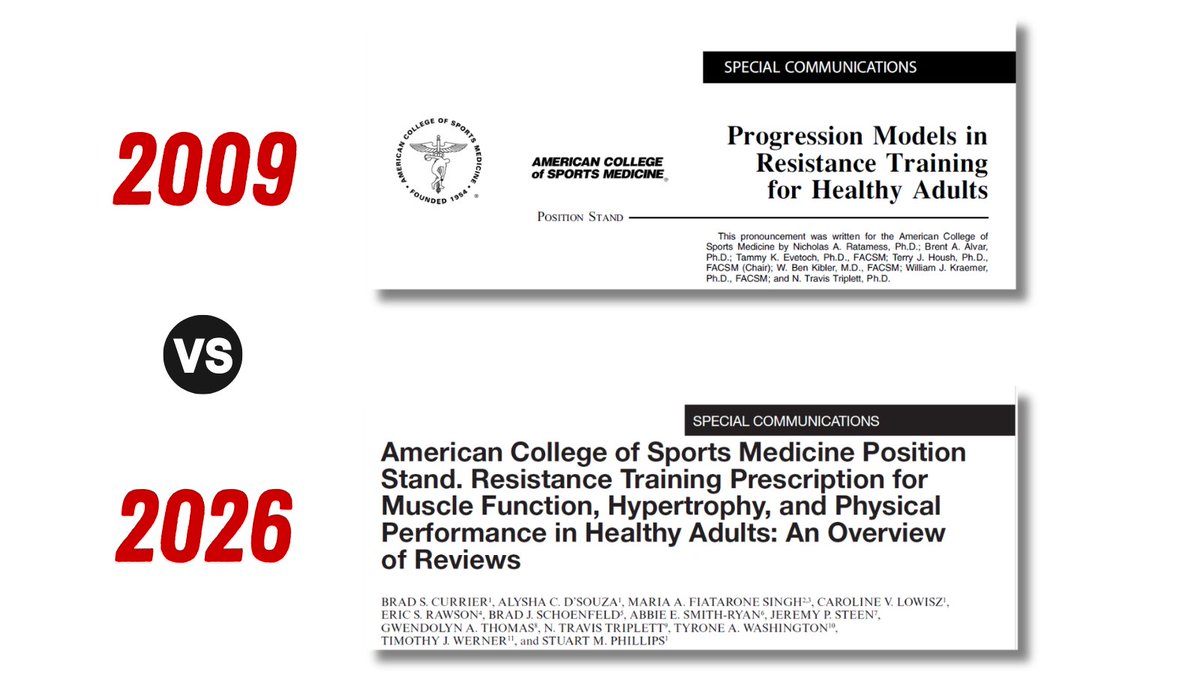
After 17 years, the ACSM just updated their resistance training guidelines. So, what's changed?
Jackson Fyfe, PhD tweet media
English
5
86
461
80.6K
Satyam
Satyam@stym06·
I asked claude for a prompt by reading this article. "Prompt: Write like a human, not an LLM Write as if you're describing something you've actually seen, remembered, or experienced. Every claim should be grounded in a concrete image, moment, or specific detail — not institutional abstractions. Avoid: Hedging constructions like "it's not just X, but also Y" or "rather than A, we should focus on B" — these signal you're not actually committing to anything Noun-cluster buzzwords: "stakeholder engagement," "transformative opportunities," "strategic initiatives," "inclusive excellence" — if you can't picture it, cut it Unnaturally perfect balance where every point has a counterpoint — real thinking is messier Anecdotes that serve the argument too neatly — add irrelevant details, uncertainty, even some cringe Smooth, performed humor — real wit requires the reader to do a little work Do: Use specific, concrete details (names, numbers, objects, moments) even when they feel unnecessarily particular Let the writing be a little unbalanced, opinionated, or unresolved Include at least one thing that doesn't obviously serve the argument — a memory, an aside, a weird comparison Write sentences that conjure an image: "she brought donuts instead of apologizing" > "conflict resolution approaches vary" Have a point of view and commit to it — don't hedge your way to safety Test: after writing each paragraph, ask — can a reader picture something from this? If not, rewrite it."
English
1
0
3
169
Malcolm Ocean 🏴‍☠️
Malcolm Ocean 🏴‍☠️@Malcolm_Ocean·
why ARE LLMs so addicted to the "not X but Y" framing? is there something in the latent space?
English
129
7
353
56.2K