Echa

1.2K posts

Echa banner
Echa

Echa

@mv_echa

Tomorrow's Physics

Worldwide Katılım Mayıs 2017
109 Takip Edilen130 Takipçiler
Echa
Echa@mv_echa·
@ThedawnIAM We created the truth in order to have fun rediscovering it.
English
0
0
1
7
Dawn
Dawn@ThedawnIAM·
Do humans create truth, or do we discover it..?
English
43
2
34
1.4K
Echa
Echa@mv_echa·
So many 'epicycles' will be thrown away on the completion of the second scientific revolution.
Massimo@Rainmaker1973

An Oxford physicist suggests that countless versions of you could exist right now in parallel universes. This idea stems from one of the most intriguing interpretations of quantum mechanics: the Many-Worlds Interpretation. According to this theory, quantum events do not produce just one outcome. Instead, reality branches into multiple parallel versions, with every possible result actually occurring in its own separate universe. As a result, somewhere out there, another version of you may have made a different decision, followed another path, or lived an entirely different life. Oxford physicist Vlatko Vedral has recently clarified a common misunderstanding about quantum physics’ famous “observer effect.” Many people believe that human consciousness magically creates reality simply by looking at it. However, physicists emphasize that this is not accurate. In reality, quantum systems change their state through any form of interaction — not only with conscious observers. For instance, when a photon strikes a pair of sunglasses, the interaction itself decides whether the photon passes through or bounces off. In the Many-Worlds view, both outcomes can continue to exist, each unfolding in its own branch of reality. This does not mean parallel universes have been proven. The Many-Worlds Interpretation is just one of several competing explanations for quantum behavior, and scientists continue to debate which one best reflects reality. Nevertheless, decades of laboratory experiments have repeatedly confirmed that quantum particles can exist in multiple possible states simultaneously until an interaction collapses those possibilities into definite outcomes. Quantum mechanics already underpins everyday technologies such as lasers, MRI machines, semiconductors, and the emerging field of quantum computing. Yet the true nature of reality according to quantum theory remains one of science’s greatest unsolved mysteries. If the Many-Worlds Interpretation is correct, new versions of you may be branching off every moment — each living out a slightly different story in its own parallel universe.

English
0
0
0
10
Echa
Echa@mv_echa·
@JuliaEMcCoy It is also forcing another question: what is intelligence?
English
0
0
0
8
Julia McCoy
Julia McCoy@JuliaEMcCoy·
AI is forcing the most important question humanity has ever faced: *Who are you when you’re not your productivity?* For centuries the answer was buried under work. Under obligation. Under survival. Now the machines can do the surviving for you. Which means you finally have to answer it. Most people are terrified of that question. The awakened ones? They’ve been waiting for it their whole lives.
English
82
27
139
5.1K
Echa
Echa@mv_echa·
@cosmicfibretion When we unify physics, all these mysteries will come into light.
English
0
0
1
101
maya benowitz 🕰️
maya benowitz 🕰️@cosmicfibretion·
I know the Soul exists because I can feel mine. Science, at present, doesn’t have the tools to explain the Soul, but that doesn’t mean one day it won’t. And I believe it will.
English
79
13
184
8.1K
Echa
Echa@mv_echa·
@ThedawnIAM Exactly. Future medicine will be deeply digital, reducing our reliance on herbs, drugs, and injections to cure diseases.
English
0
0
3
17
Dawn
Dawn@ThedawnIAM·
The future of medicine is reprogramming the software.
English
11
3
40
983
Erika 
Erika @ExploreCosmos_·
A new test of gravity has pushed one of physics’ oldest ideas into the largest arena yet: the cosmic web. Researchers studied how galaxy clusters move toward one another across enormous distances, reaching scales of hundreds of millions of light-years, to see whether gravity still weakens with distance in the way expected from Newton’s inverse-square law and Einstein’s general relativity. The result is strikingly conventional: gravity behaved as expected. Even across vast cosmic scales, the attraction between massive structures appears to fade with distance in the standard way. That does not mean Newtonian gravity replaces Einstein’s theory, because general relativity remains the deeper framework for modern cosmology. But it does mean that the familiar inverse-square behaviour still works extremely well as an effective description on scales far beyond the Solar System. The researchers used the kinematic Sunyaev-Zel’dovich effect, a tiny imprint left on the cosmic microwave background when its ancient light passes through hot gas around moving galaxy clusters. By measuring this subtle distortion, they could infer the motion of those clusters and test how strongly gravity pulls them together. The result matters because it puts pressure on some modified-gravity explanations for dark matter. If the missing mass problem were mainly due to gravity behaving differently on cosmic scales, we might expect to see deviations from the standard prediction. Instead, the measurements align closely with ordinary gravity. That supports the idea that unseen matter is really contributing extra gravitational pull, rather than the effect being easily explained by changing gravity alone. It does not solve the dark matter problem. We still do not know what dark matter is made of. But it strengthens the standard cosmological picture: gravity is behaving normally, even across some of the largest structures in the Universe, and the evidence for dark matter remains hard to dismiss. 👉share.google/a2Asm8EsbdKusf…
Erika  tweet media
English
30
54
307
8.5K
Echa
Echa@mv_echa·
@latestincosmos Earth is a ghetto and all our technologies have an ontological stench aliens can't stand.
English
0
0
0
15
Latest in Cosmos
Latest in Cosmos@latestincosmos·
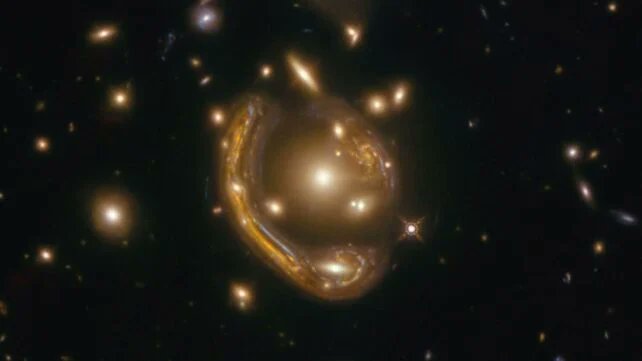
If aliens exist, why haven’t they visited Earth?
Latest in Cosmos tweet media
English
93
22
102
4K
Echa
Echa@mv_echa·
@mitchellvii They can't achieve these feats with quantum mechanics. That theory is a black box. They likely have a better theory.
English
0
0
0
58
Bill Mitchell
Bill Mitchell@mitchellvii·
What if aliens don't need to "travel" here? What if they have developed the technology to use quantum mechanics to go instantly from anywhere to here? That makes the Universe much smaller. The only reason their spaceships require propulsion is that the need to be able to get around once here. Perhaps the machine that makes quantum travel is so vast it can only handle the jump here and back?
English
93
12
124
11.7K
Echa
Echa@mv_echa·
@PhysInHistory And by our science we may be called the sons of God.
English
0
0
0
70
Physics In History
Physics In History@PhysInHistory·
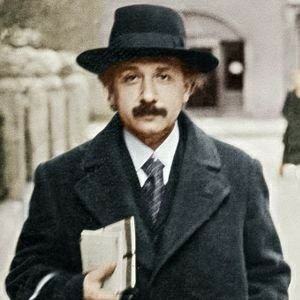
We, by our arts may be called the grandsons of God. -- Leonardo da Vinci
Physics In History tweet media
English
14
116
611
15.8K
Echa
Echa@mv_echa·
@thedarshakrana Intelligence is too physical, too substrate, that any shift, no matter how close, is already an abstraction.
English
0
0
1
389
Darshak Rana ⚡️
Darshak Rana ⚡️@thedarshakrana·
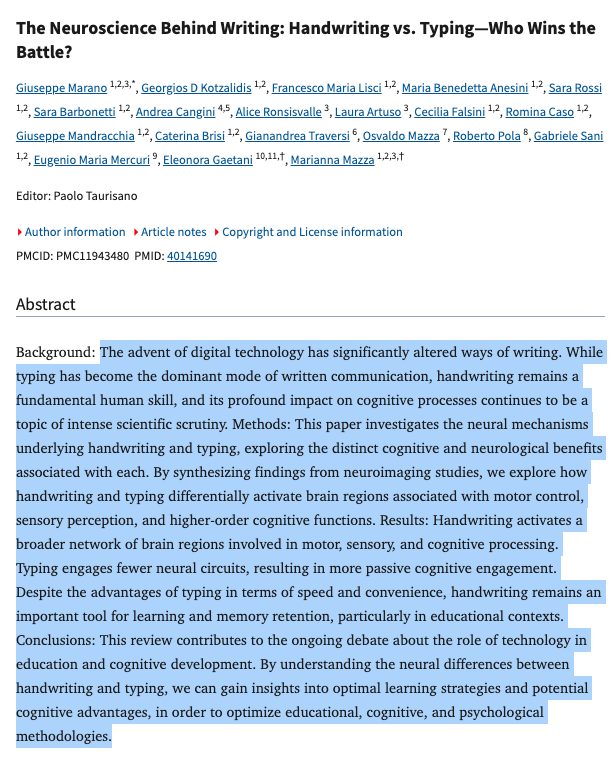
Your brain physically rewrites itself every time you pick up a pen. Neuroscientists at Norwegian University scanned students' brains while they handwrote letters versus typing the same letters on a keyboard. The results shattered decades of assumptions about how we process information. Handwriting activated massive networks in the sensorimotor cortex, the visual processing centers, and the hippocampus simultaneously. Complex neural symphonies lit up across multiple brain regions, creating rich interconnected pathways between motor control, visual recognition, and memory formation. Typing the same letters? The brain activity looked like someone had dimmed the lights across entire cognitive districts. The neural networks that flourished during handwriting simply went dark. The difference? When you form letters by hand, your brain constructs elaborate spatial maps of each character. The motor cortex learns the precise pressure, angle, and trajectory needed to create an 'A' versus a 'B.' Your visual system tracks the ink flowing from pen to paper in real time. Your parietal lobe integrates hand position with eye movement. Your hippocampus encodes not just what you wrote, but how the writing felt, where you paused, which words required more pressure. Typing activates almost none of that circuitry. You press a key, a letter appears. The motor movement is binary. The visual feedback is uniform. The spatial relationship between thought and symbol gets mediated by a machine that standardizes every character into identical fonts and spacing. Your brain treats these as fundamentally different cognitive tasks. The evolutionary context makes this obvious once you see it. Human hands developed for manipulation, creation, and fine motor control over millions of years. We painted on cave walls, carved bone tools, and shaped clay vessels long before we invented written language. When writing emerged 5,000 years ago, it built on top of existing neural infrastructure that already connected hand movement with symbolic thinking. Keyboards appeared 150 years ago. Touchscreen typing maybe 20 years ago. From an evolutionary timeline perspective, we started using them approximately yesterday. Our brains are still running ancient software that expects physical engagement with symbols. That software produces dramatically different learning outcomes. Students who take handwritten notes consistently outperform students who type the same information on memory tests, comprehension assessments, and creative applications of the material. The difference persists even when researchers account for typing speed, note length, and time spent studying. The act of forming letters by hand forces deeper processing at the moment of information encounter. You cannot handwrite as fast as someone speaks, so your brain must actively filter, summarize, and prioritize information in real time. The motor effort required to form each word creates additional memory traces that typing does not generate. Children who learn to write letters by hand develop reading skills faster than children who learn letters primarily through typing or screen interaction. The sensorimotor experience of creating letterforms helps their brains recognize those same letterforms when they encounter them in text. Adults who handwrite shopping lists, daily schedules, or meeting notes remember the information better than adults who type identical lists into phones or computers. The spatial memory of where you wrote something on a page provides retrieval cues that digital text does not offer. These findings collide directly with how education and work environments have evolved over the past two decades. Schools replaced handwriting instruction with typing classes. Offices converted from paper systems to fully digital workflows. Students take notes on laptops. Professionals draft documents on screens. We optimized for speed and efficiency while accidentally severing the neural pathways that evolution spent millions of years developing. The implications reach beyond memory and learning into fundamental questions about human cognition. If the physical act of forming symbols changes how your brain processes ideas, what happens to thinking itself when you remove the physical component? Digital text is infinitely searchable, instantly editable, and perfectly shareable. But it may be creating brains that process information more superficially, store memories less durably, and connect ideas more weakly than brains that regularly engage in handwriting. The neuroscience suggests we traded cognitive depth for technological convenience without realizing what we were giving up. Some of the most innovative thinkers across history were obsessive handwriters. Darwin kept detailed handwritten journals. Einstein worked through complex theories in handwritten notebooks. Virginia Woolf wrote her novels by hand before transcribing them. Steve Jobs famously took handwritten notes during Apple meetings even as he was building the most advanced computers on Earth. Perhaps they intuited something about the relationship between hand, brain, and insight that we measured in brain scanners but somehow forgot in practice. Your pen is literally a cognitive enhancement device that activates neural networks digital keyboards cannot reach.
Darshak Rana ⚡️ tweet media
English
101
1.4K
4.2K
170.2K
Echa
Echa@mv_echa·
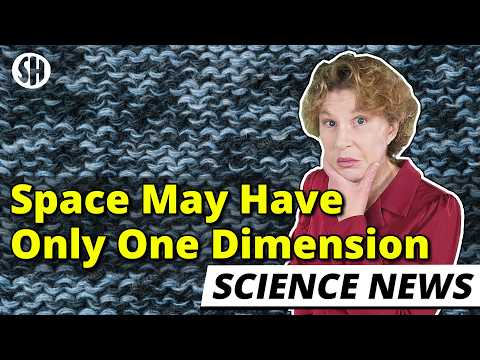
@skdh 1D space is less than our physical intuition. Possibly, there may be more to time than there is less to space, because it is easier for time to have properties hidden from our physical intuition than space.
English
0
0
0
196
Echa
Echa@mv_echa·
@Truthpole It's all superluminal physics. We are not there yet, but we shall.
English
0
0
0
177
T R U T H P O L E
T R U T H P O L E@Truthpole·
🚨 The deeper the UAP discussion goes, the less it sounds like “visitors from another planet” and more like something interacting with the fabric of reality itself. Some researchers now theorize UFOs may not be spacecraft at all, but anomalies in whatever system renders our perceived reality. Glitches, intrusions, or entities operating outside normal spacetime constraints. Strangely, that would explain why so many encounters seem to ignore physics instead of merely outperforming it. Thoughts?
T R U T H P O L E tweet media
English
133
151
1.4K
92K