Mark W Tebbutt

395.2K posts

Mark W Tebbutt banner
Mark W Tebbutt

Mark W Tebbutt

@mwt2008

IT professional. 0 direct carbon & air pollution home 2011 to 2015 & 2024 - onwards. Electric car driver since March 2011. Heat pump installed Dec-2024.

Chorley Lancashire UK Katılım Mart 2008
6.1K Takip Edilen8K Takipçiler
Sabitlenmiş Tweet
Mark W Tebbutt
Mark W Tebbutt@mwt2008·
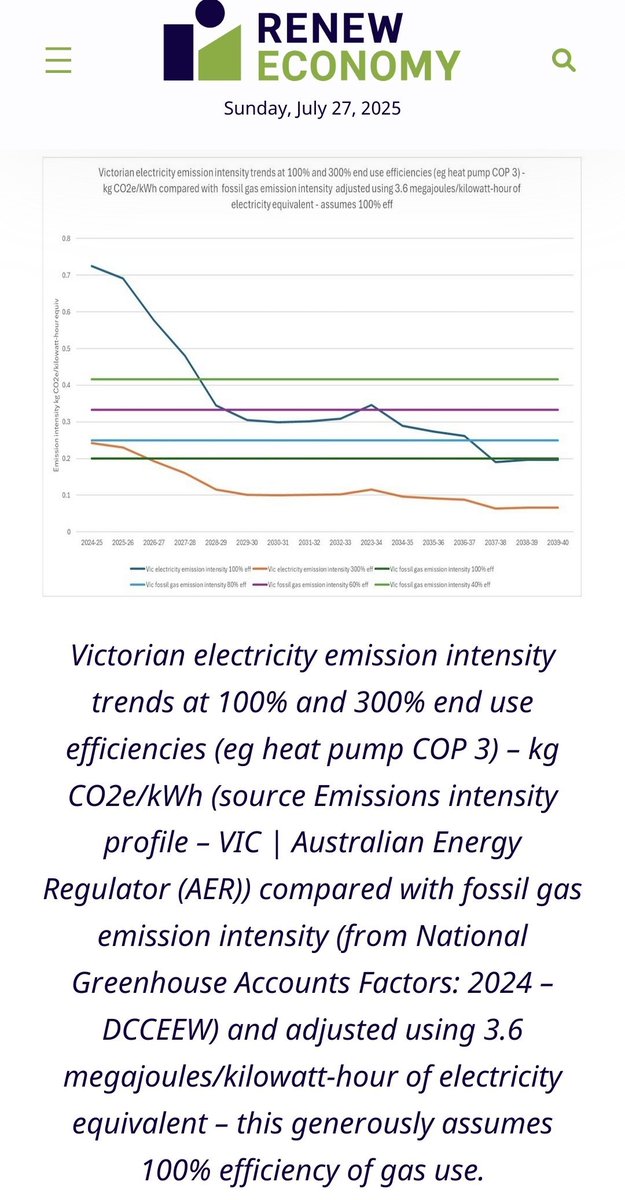
When will GB electricity prices fall? I asked ChatGPT at what percentage of gas generation GB power prices start to drop and when that happens. The answer is from 2028. Gas still sets UK power prices most of the time even though it was only about 26.8 percent of generation in 2025. That keeps bills tied to volatile fossil markets. The shift comes when gas falls into the 10 to 15 percent backup range and when renewables and storage begin to set the marginal price instead. Wind rises from 28 percent in 2023 to about 52 percent by 2030. Storage grows from 7 GWh in 2023 to about 100 GWh by 2030 which is about 12 percent of daily demand. Gas falls from 33 percent to about 8 percent by 2030 and then drops to about 5 percent by 2032. At that point gas no longer drives wholesale prices. Projects like Thurrock which combines a 300 MW 600 MWh battery with 450 MW of flexible engines show the direction of travel. Clean. Reliable. Flexible. Wind is now the UK’s cheapest new power. With storage it will undercut gas entirely. Ninety five percent clean power by 2030 is credible. It is practical. It is affordable. It is already underway. The blue band in the chart marks the point where gas falls below the level that sets prices which is when GB electricity prices will start to decline. #NetZero #Climate #Energy #EV #HeatPump #BESS #CleanPower #OffshoreWind #UKEnergy
Mark W Tebbutt tweet media
English
64
49
178
17.8K
Mark W Tebbutt
Mark W Tebbutt@mwt2008·
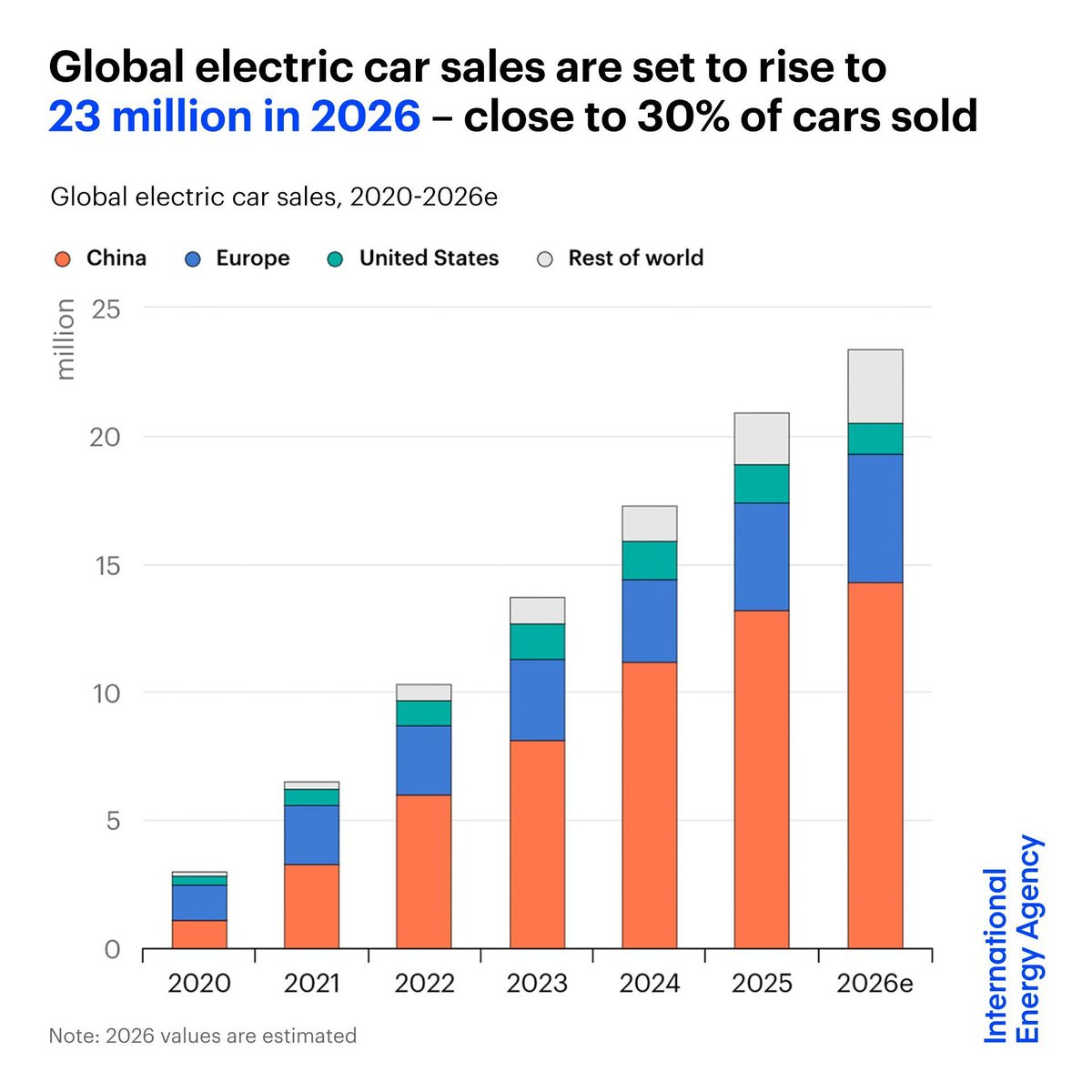
1.Gas sets the price The UK uses marginal pricing. The last unit needed to meet demand sets the price and that’s usually gas. It doesn’t need to be the majority, just the marginal plant. 2.Gas price ≠ electricity cost CCGT is ~47–50% efficient. So: • £50/MWh gas → ~£100/MWh electricity (fuel only) • Add carbon + costs → often £120–£180/MWh+ That’s why gas drives high power prices. 3.The real-world data is clear ~67% of the rise in UK electricity bills came from gas. Bills spike when gas spikes. 4.Your “2 weeks ago” point fails Bills lag wholesale prices due to hedging and the price cap. Short-term gas dips don’t immediately show up in bills. ⸻ Bottom line: Gas doesn’t need to dominate generation to dominate price. It just needs to be the last unit switched on and it’s an inefficient, expensive one. ⬇️
Mark W Tebbutt tweet mediaMark W Tebbutt tweet mediaMark W Tebbutt tweet media
English
1
0
0
13
Here&There
Here&There@here_there·
@mwt2008 @BjornLomborg 2 weeks ago gas was on real terms miles lower than 2019 yet my electricity bill was miles higher. Please explain how gas is driving my bill?
English
1
0
0
12
Bjorn Lomborg
Bjorn Lomborg@BjornLomborg·
The cheap green lie You are told that solar and wind are cheap But you need near-100% backup when no sun or wind, paying for two systems Data for 2024 shows that cramming in more solar and wind makes electricity overall more and more costly iea.org/data-and-stati… Threads&refs: x.com/BjornLomborg/s…
Bjorn Lomborg tweet media
English
51
256
664
27.3K
Mark W Tebbutt
Mark W Tebbutt@mwt2008·
Net Zero is bad for fossil fuel companies but great for humanity. Deloitte research reveals inaction on climate change could cost the world’s economy US$178 trillion by 2070 t.co/QGDsZFuQis By contrast, the global economy could gain US$43 trillion over the next five decades by rapidly accelerating the transition to net-zero
English
1
0
0
11
Mark W Tebbutt
Mark W Tebbutt@mwt2008·
No one is “paying my bill”. I export surplus electricity at 12p/kWh and shift my usage to cheap off-peak periods (~7p/kWh). That helps Octopus balance the grid and reduce their wholesale costs. If this didn’t save them money, they wouldn’t offer it. They operate in a competitive market. If export tariffs were loss-making, they’d either cut them or lose customers to cheaper suppliers. The fact they offer one of the best export rates shows it works commercially. Other suppliers offer far lower rates because they’re not as good at using flexibility. So this isn’t a subsidy. It’s a supplier using distributed generation and smart tariffs to reduce costs.
English
1
0
0
9
Jools
Jools@a_swift_half·
@mwt2008 @MatthewWielicki Your bill has been eliminated because everyone else is paying for it. Hope that helps.
English
1
0
1
21
Harriet Cross MP
Harriet Cross MP@HarrietCross_MP·
The Government know we need oil & gas. They just don’t want to use OUR oil & gas. 👉 End the ban on new licences. Now. 👉 Scrap the EPL. Now. 👉 Permit Rosebank & Jackdaw. Now.
English
34
303
1.4K
16.2K
Mark W Tebbutt retweetledi
FT Energy
FT Energy@ftenergy·
Trump’s war will boost the clean energy sector he detests ft.trib.al/x20Vj3X
English
49
356
1.2K
55.4K
Mark W Tebbutt
Mark W Tebbutt@mwt2008·
You can’t compare electricity prices with countries that are fossil fuel self-sufficient. The UK became a net importer in the early 2000s, so we’re exposed to volatile global gas markets. That’s what drove the price shock. North Sea output is in structural decline, so that exposure isn’t going away. That leaves 2 options: • Stay exposed to global fossil price volatility • Or build more domestic generation with stable costs The UK has some of the best wind resources in Europe. So maximising renewables isn’t ideology. It’s the most realistic route to energy security and price stability in a country that no longer controls its fossil fuel supply.
Mark W Tebbutt tweet mediaMark W Tebbutt tweet mediaMark W Tebbutt tweet media
English
2
0
0
26
Mark W Tebbutt
Mark W Tebbutt@mwt2008·
@here_there @BjornLomborg Remove the countries who are not net importers of oil and gas and then we’ll talk. These LCOE are so low they don’t need any subsidies. 🤷🏼‍♂️
Mark W Tebbutt tweet media
English
1
0
0
15
Here&There
Here&There@here_there·
@mwt2008 @BjornLomborg So your not comparing like for like Levalised cost of energy is pre subsidies and is meaningless
Here&There tweet media
English
1
0
0
16
Mark W Tebbutt
Mark W Tebbutt@mwt2008·
Do you really think they ignored it? High pressure, low wind events are one of the core scenarios grid operators plan for. They’re explicitly modelled in capacity margins and stress tests. That’s why the system includes: • Dispatchable generation • Interconnectors • Storage • Demand response And why gas still exists in the mix. Also worth noting: Offshore wind delivers ~40–50% annual load factors in the UK. That’s not guesswork, that’s measured performance over a decade. No one is assuming “wind always blows”. They’re designing a system that works when it doesn’t. Energy security isn’t based on one weather pattern. It’s based on managing variability across the whole system. Stick to New Zealand & let people actually live in the UK worry about UK energy system.
English
1
0
0
6
Paul Carter
Paul Carter@PaulCarter1958·
That's what happens when organizations like the OFGEM are driven by a narrative - they ignore the high-pressure elephant in the room. Nowhere in that presentation do they consider the critical case of high-pressure weather systems, right when you need the most power. It's pretty damning of them.
English
1
0
1
12
Mark W Tebbutt
Mark W Tebbutt@mwt2008·
.@bbcquestiontime #NHS costs are rising but not for the reasons people think. It’s not mainly “waste” or inefficiency. It’s structural. Here’s what’s actually driving it: 1.Ageing population Older people need far more care. A 75+ patient costs several times more than a younger adult. 2.More chronic illness The NHS now treats long-term conditions like diabetes, heart disease and cancer survival. These require ongoing care, not one-off treatment. 3.Medical advances Healthcare is better but more expensive. More people survive serious illness but need long-term treatment. 4.Staffing Around 50–60% of NHS costs are labour. You can’t cut costs without cutting people and that means cutting care. 5.Social care gaps If patients can’t be discharged, they stay in hospital beds which are the most expensive part of the system. ⸻ Now the key point: The UK doesn’t overspend. Per person: • US ~ $12,000 • Germany ~ $6,500 • UK ~ $4,500–$5,000 The NHS delivers universal care for less than most comparable countries. ⸻ So what’s really happening? Demand is rising faster than funding. Older population Higher disease burden More advanced medicine ⸻ Bottom line: NHS costs aren’t rising because it’s broken. They’re rising because modern healthcare in an ageing society is expensive. The UK just tries to do it cheaper than most. #bbcqt
English
0
0
2
35