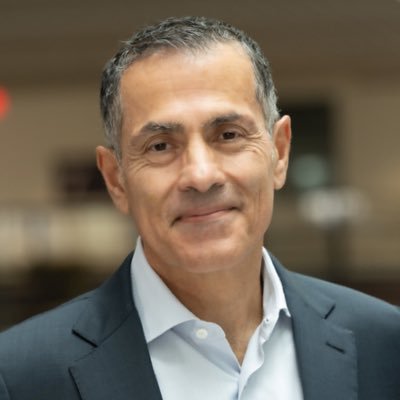
Mona Yacoubian

3.3K posts

Mona Yacoubian

Mona Yacoubian

@myacoubian

Senior Advisor and Director, Middle East Program @CSISMideast at @CSIS . Formerly @USIP, @USAID, @StimsonCenter, @StateDept

Washington, DC Katılım Ocak 2009
1.1K Takip Edilen2.9K Takipçiler
Mona Yacoubian retweetledi
CSIS
CSIS@CSIS·
"By hitting the Gulf where it hurts the most, Iran has imperiled the region’s existential imperative of economic diversification and forced the Gulf to take Iran’s equities into account," writes @CSISMidEast Director @myacoubian Read: csis.org/analysis/irans…
English

0
4
9
2.6K
Mona Yacoubian retweetledi
Ministry of Foreign Affairs - Qatar
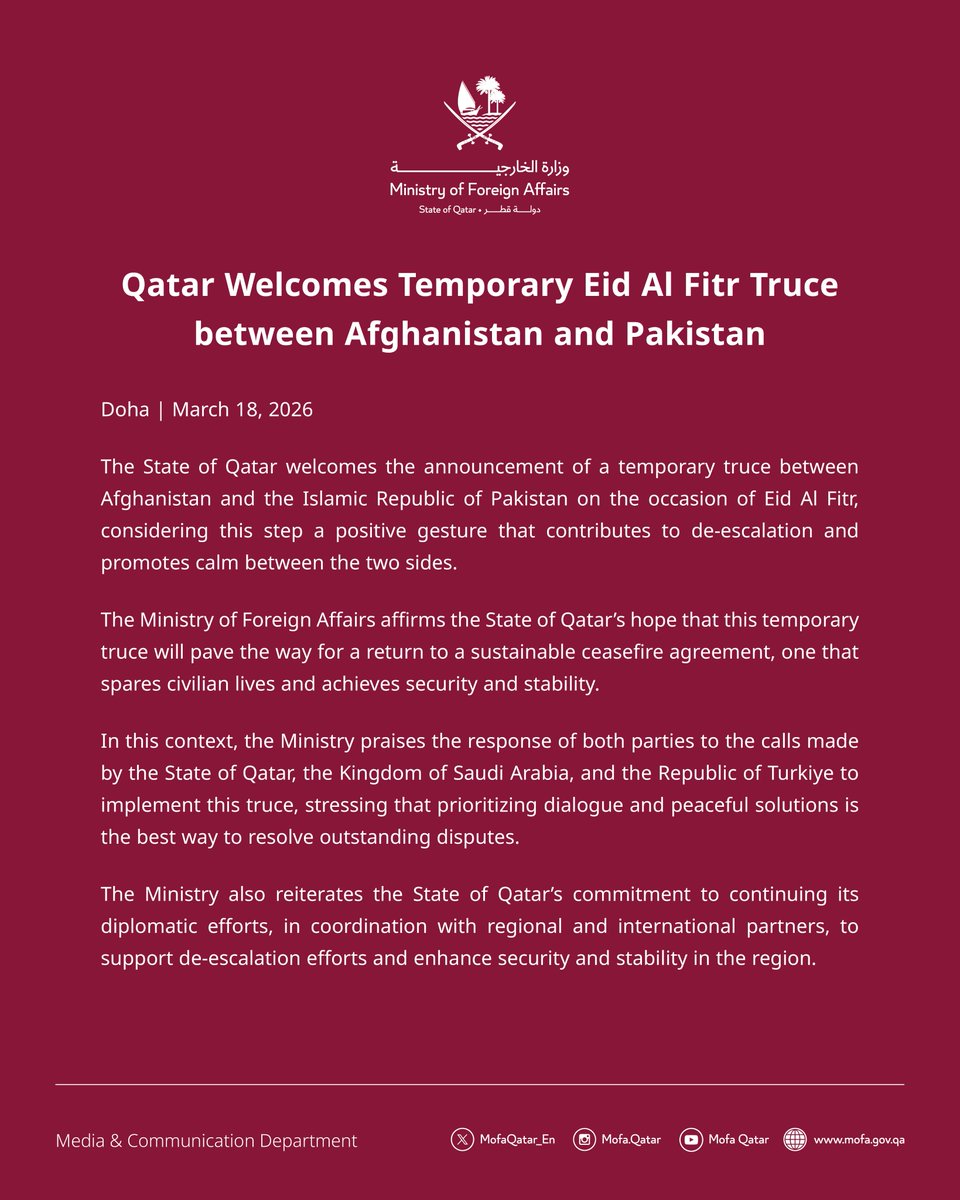
Statement | Qatar Welcomes Temporary Eid Al Fitr Truce between Afghanistan and Pakistan Doha | March 18, 2026 The State of Qatar welcomes the announcement of a temporary truce between Afghanistan and the Islamic Republic of Pakistan on the occasion of Eid Al Fitr, considering this step a positive gesture that contributes to de-escalation and promotes calm between the two sides. The Ministry of Foreign Affairs affirms the State of Qatar's hope that this temporary truce will pave the way for a return to a sustainable ceasefire agreement, one that spares civilian lives and achieves security and stability. In this context, the Ministry praises the response of both parties to the calls made by the State of Qatar, the Kingdom of Saudi Arabia, and the Republic of Turkiye to implement this truce, stressing that prioritizing dialogue and peaceful solutions is the best way to resolve outstanding disputes. The Ministry also reiterates the State of Qatar's commitment to continuing its diplomatic efforts, in coordination with regional and international partners, to support de-escalation efforts and enhance security and stability in the region. #MOFAQatar
Ministry of Foreign Affairs - Qatar tweet media
English
53
177
788
36.1K
Mona Yacoubian retweetledi
CSIS Middle East
CSIS Middle East@CSISMidEast·
Iran’s aggressive retaliation against U.S. and Israeli strikes highlights Tehran’s war strategy: eschewing calibrated retaliation for unbridled escalation. In a new Commentary, @myacoubian analyzes this escalation strategy. Read below: csis.org/analysis/irans…
English
0
1
0
185
Mona Yacoubian retweetledi
Vali Nasr
Vali Nasr@vali_nasr·
Larijani’s replacement will be appointed by IRGC. With every assassination U.S. and Israel engineering greater radicalization of Iran’s leadership. It will makes for a bleak future for Iran, Iranians, the region and ultimately makes it far more difficult for U.S. to disentangle itself from endless conflict in the region.
English
1.5K
1.9K
7.6K
1.5M
Mona Yacoubian retweetledi
Mustafa Salim
Mustafa Salim@Mustafa_salimb·
Another drone attack targeting US embassy in #Baghdad
English
9
136
369
94K
Mona Yacoubian retweetledi
Phil Stewart
Phil Stewart@phildstewart·
UAE temporarily closes its airspace as an exceptional precautionary measure (Reuters) - The United Arab ​Emirates' General Civil Aviation Authority announced the temporary and full closure of the country's airspace, as "an exceptional precautionary measure", amid rapidly evolving regional security developments, the state news agency reported on Tuesday. UAE's defence ministry said earlier on Tuesday it was responding to incoming missile and drone threats from Iran.
English
5
104
271
51.3K
Mona Yacoubian retweetledi
Hamidreza Azizi
Hamidreza Azizi@HamidRezaAz·
#Iran War Update No. 17 (focus on Iranian strategic narrative): 🔹Iran has again rejected reports of backchannel contacts with the United States. Iranian state media and officials say Washington is signaling openness to negotiations mainly to calm energy markets, while Tehran insists that no credible agreement capable of protecting its long-term interests is currently on the table. 🔹Iranian leaders also stress that the region will not return to the pre-war status quo, and that the new regional order will be in line with Iran’s interests. Some officials have reportedly suggested that any future negotiations could include demands related not only to Iran itself but also to the security of regional partners such as Hezbollah. 🔹Iranian strike patterns appear increasingly focused on Israel’s command structure and internal security institutions, including regional military commands and police facilities. Analysts close to the Iranian government argue that the goal is to weaken Israel’s home front and potentially create conditions for a Hezbollah ground push from southern Lebanon. But there’s no indication how successful – if at all – those strikes have been in actually undermining Israel’s home security. 🔹At the same time, Iranian analysts claim that some strikes have targeted refueling infrastructure supporting U.S. operations, reflecting an effort to disrupt American logistical capabilities in the region, particularly in light of growing concerns over a potential U.S. ground operation. 🔹Inside Iran, authorities are increasingly concerned about internal destabilization. A militant attack in Sistan and Baluchistan killed several police officers, while security forces in Khuzestan arrested a group accused of preparing armed attacks, raising fears that insurgent or sleeper cells could become active during the war. 🔹These concerns have led to tighter domestic security measures ahead of the Chaharshanbe Suri celebrations (a Persian new year’s eve celebration). Officials warn that large gatherings and fireworks could provide cover for unrest or covert operations by hostile networks. 🔹Meanwhile, Iranian tankers carrying crude destined for China continue to pass through the Strait of Hormuz even as the waterway remains effectively closed to most international shipping, highlighting the selective nature of Iran’s maritime restrictions. 🔹Iranian discourse increasingly frames the Strait of Hormuz as a strategic bargaining tool beyond the war itself. Pro-government commentary suggests the waterway could be used to extract compensation, sanctions relief, or broader economic concessions in the post-war order. 🔹Attacks on Gulf infrastructure continued, particularly in the UAE. Drone strikes reportedly hit facilities near Dubai International Airport and the port of Fujairah, a key hub that allows oil shipments to bypass the Strait of Hormuz. 🔹Tensions with the UAE have intensified further after Emirati authorities shut down Iranian schools, businesses, and institutions. Iranian officials also seem to believe that Abu Dhabi in actively financing the U.S./Israeli war efforts. 🔹Iranian officials are also closely watching U.S. force deployments. The presence of the USS Gerald R. Ford in the Red Sea and the movement of the USS Tripoli toward the region are seen as potential preparations for operations aimed at reopening the Strait of Hormuz or seizing strategic islands. 🔹Against this backdrop, Iranian officials warn that logistical centers supporting the Ford carrier group could become legitimate targets, raising the likelihood that the Houthis could soon open the Red Sea front. 🔹Speculation about a possible U.S. attempt to seize Kharg Island has also triggered a strong response inside Iran. Volunteers have reportedly offered to defend the island, and members of the Iranian parliament visited the island to emphasize its symbolic and strategic importance. 🔹In Iraq, tensions continue to escalate after U.S. strikes on Popular Mobilization Forces (PMF) positions. The killing of militia members and the death of a senior Kataib Hezbollah security figure have increased pressure on Iraqi Shia factions to respond. 🔹The situation is particularly sensitive along the Iraq-Syria border, where strikes near the al-Qaim crossing have fueled concerns that a broader campaign against Iranian-aligned forces could be emerging that could also involve the Syrian army. 🔹Recent messaging by senior Iranian figures suggests a loose division of labor at the top. Ali Larijani appears to be focusing more on broader strategic and political signaling, particularly toward Muslim governments and public opinion, while Mohammad Baqer Ghalibaf remains more visible in wartime messaging, threats, and direct responses to U.S. and Western statements. 🔹Meanwhile, Tehran is closely watching U.S. domestic politics. Iranian analysts interpret Donald Trump’s recent messaging and calls for international support to reopen the Strait of Hormuz as signs that Washington is facing growing pressure and struggling to achieve its objectives. 🔹Overall, the trajectory of the conflict suggests that Tehran believes time is now working in its favor, with its strategy centered on sustaining pressure long enough to impose economic, political, and military costs on its adversaries.
English
1
161
577
80.1K
Mona Yacoubian retweetledi
Joseph Bahout باحوط
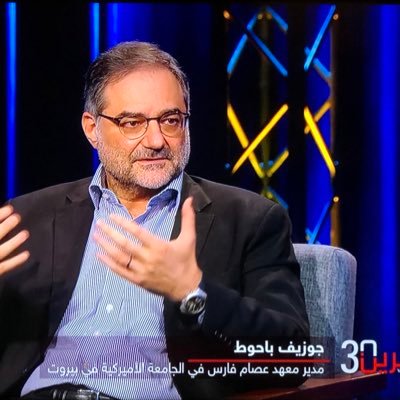
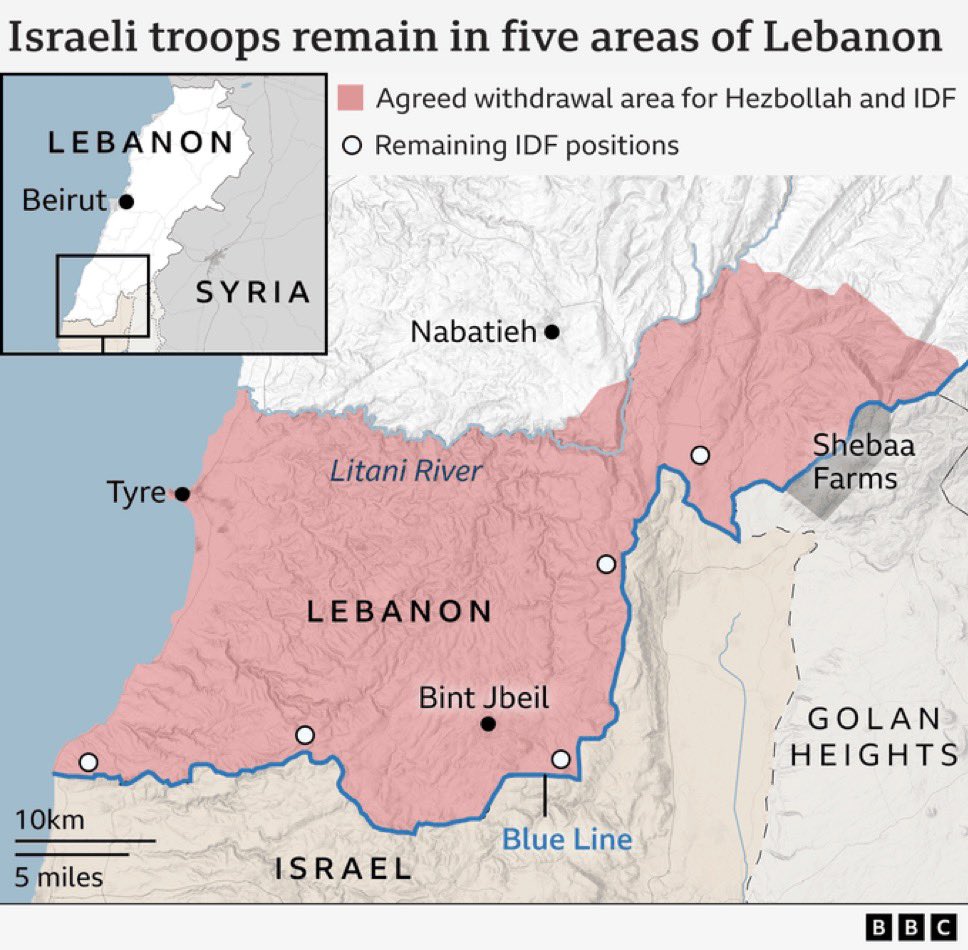
With #Israel’s official announcement of the start of its ground offensive in #Lebanon, many questions arise: - How far & deep will it go? What is the stretch of land that Israel considers to be enough for a «buffer zone?» -/-
Joseph Bahout باحوط tweet media
English
2
17
25
5.7K
Mona Yacoubian retweetledi
Hasan T. Alhasan حسن الحسن
For the Gulf states, no choice with respect to Iran is risk-free: do nothing, and Iran has no incentive to stop; retaliate and you run the risk of inviting further Iranian escalation. My latest 👇🏽
IISS News@IISS_org

Impatient with Iran’s attacks, the Gulf states have multiple options if they wish to increase the costs for Tehran, but they would run the risk of escalating the conflict. ➡️ Read the latest analysis by Dr Hasan Alhasan (@HTAlhasan): go.iiss.org/4lxrhIl

English
7
19
53
25.1K
Mona Yacoubian retweetledi
CSIS
CSIS@CSIS·
Iran recently experienced antigovernment protests, and in the aftermath of Ayatollah Khamenei's killing, President Trump urged Iranians to overthrow their government. But @CSISMidEast's @vali_nasr argues that the war has only weakened the position of Iran's political opposition.
English
4
3
7
3K
Mona Yacoubian retweetledi
Kristian Ulrichsen
Kristian Ulrichsen@Dr_Ulrichsen·
'Maritime chokepoints and risks to global shipping and energy security' - new paper by me and @jimkrane on the world's key maritime chokepoints, including (but not only) the Strait of Hormuz, and the geopolitical risks they pose to global energy trade. bakerinstitute.org/research/marit…
English
2
11
18
2.2K
Mona Yacoubian retweetledi
Javier Blas
Javier Blas@JavierBlas·
Further ominous developments today. For first time, Iran successfully targeted oil/gas production facilities (rather than refining, terminals and storage): Oil and gas field in the UAE (Shah) hit Oil field in Iraq (Majnoon) attacked Plus Saudi Arabia saw large drone swarms
Javier Blas@JavierBlas

Iran has started a new phase of its oil war: Tehran is clearly going after the Strait of Hormuz bypass route, with Fujairah (UAE) coming under attack. But so far, the Saudi pipeline bypass hasn't been attacked (and neither the Yemeni Houthis have tried to close the Red Sea).

English
83
1.1K
3K
712.1K
Mona Yacoubian retweetledi
CSIS
CSIS@CSIS·
Threatened by regime change and determined to deter future attacks, Iran is opting for unbridled escalation in its war against the United States and Israel, writes @CSISMidEast expert @myacoubian. Read more on Iran's escalation strategy: csis.org/analysis/irans…
English

2
14
25
6.9K
Mona Yacoubian
Mona Yacoubian@myacoubian·
This has created significant challenges for the Gulf. As many Gulf officials and analysts privately lament, Iran will forever be their neighbor. They must find a way forward that acknowledges Iran without rewarding its extortionist behavior.
English
0
0
0
47
Mona Yacoubian
Mona Yacoubian@myacoubian·
As the war with Iran enters its third week, various escalation scenarios are possible, with no off-ramps in sight: straight-line escalation, exponential escalation or asymmetric escalation
English
1
0
0
52